because a great anecdote doesn't leave people speechless it leaves them competing to tell a better version of the same thing and that's when a real writer just starts realizing okay there's a pattern and that can be turned into something really big what if there was a place you could go and get into a fight as casually as you would go ask someone to dance what would the rules be for that place and i would take the book and go through and use a highlighter to highlight all the stuff like i want to use i want
to use this i want to use that because the book has got a lot of stuff and it can't all go into the movie right and then sit down and stare at a blank screen for hours on end and be full of fear i start thinking about well what are what are some key scenes that i feel like would be in this project whether it's the climax or some other part of the film and i try to write those scenes first out of order as i call it the scent of blood what happens is you
are in it now and you didn't start unfaded it started as a uh it started on an afternoon at work two o'clock in the afternoon right after lunch and i wanted to write a short story and i wanted to experiment using rules as a transitional device so i just had to come up with seven rules just arbitrary seven rules what if what if there was a place you could go and get into a fight as casually as you would go ask someone to dance what would the rules be for that place so i came up
with these seven rules that would allow me to just jump around in time and place and topic uh as long as i came back in and touched on a rule and i wrote that story in half an hour and that became chapter six of fight club it was the first short story i ever sold to a magazine this is your first night at fight club you have to fight i had gone on a vacation i've been hiking and camping and i had gotten into a really big fight with some people over noise at night in
the woods you know some people who just had to camp right next to our camp just had to bring some huge radio up to 3000 feet on the pacific crest trail and have a some big blowout party in the middle of the night and i came back to work at the end of my vacation with my face just bashed my face was so awful and so trashed that nobody would acknowledge it because to acknowledge it somehow they would have to find out something about my private life they just did not want to know and so
for three months as my face slowly changed color eventually coming back to white people would look at at my chest and they would talk to my adam's apple and they would say so how was your weekend did you do anything interesting and i'd be looking at them with two huge black eyes saying no how about you if you looked bad enough no one would dare ask you what you did with your free time i showed this already my man here you liked it didn't you it was such a miserable time in my life i was
right out of college and i had a job doing something i i hated doing and i was so desperate that somebody said come join my church and when you're right out of college you've left behind all of your social structure you've lost all your friends and i was so desperate to be with people that i went to church and the church had a giving tree and it was covered with ornaments and you just plucked an ornament and one ornament that i plucked said take a hospice patient on a date the idea was that you would
go to a hospice and you would ask out someone who was dying and you would take them to see the ocean for the last time and more often than not it was will you take me to my support group i need a ride so i would drive them to their support group and i would have to stay at the support group and no matter how much i tried to hide people would assume that i had whatever everyone had and there was no polite way of saying whoa whoa whoa no don't have hepatitis good for you
but not me and so i started to kind of create this narrative in which a man attends these groups because the next day when i went back up to work i felt really good that no matter how shitty and boring my life it turned out with my journalism degree and all my student loans i still owed at least i didn't have cancer when people think you're dying and they really really listen to you instead of just instead of just waiting for their turn to speak and can you talk a little bit about the phenomenon of
the sort of popularity of it and then and then the sort of i guess a lot of people have started fight clubs i guess in the in the aftermath of it and that goes back to the cacophony society because cacophony was basically an organization of people who had really boring jobs they were letter carriers for the post office there were bookstore clerks at powell's there were people who had really you know very structured hourly job lives and they needed a way to have chaos in their lives for a very structured like window of time you
know if we do this kind of a theme party we can be crazy we can be insane anarchists from four o'clock until midnight on saturday night and so it was a way of having completely structured chaos in your life and being able to schedule that every week kind of an experiential potluck because people would host it people would come up with concepts the way you did when you were kids and you would play a game okay the boards the boards are safe but the ground is lava so if you touch the ground and you would
do that you just arbitrarily come up with rules you know the first rule of fight club is you don't talk you just come up with a rule and another rule and you invent the game instantly you have the freedom the authority to do that and and cacophony let us do that every week and give up our boring lives for two or three hours fifth rule one fight at a time fellas fortunately i sort of stylistically sort of melded with chuck palanik and um put in the stuff where i put in my own material it seemed
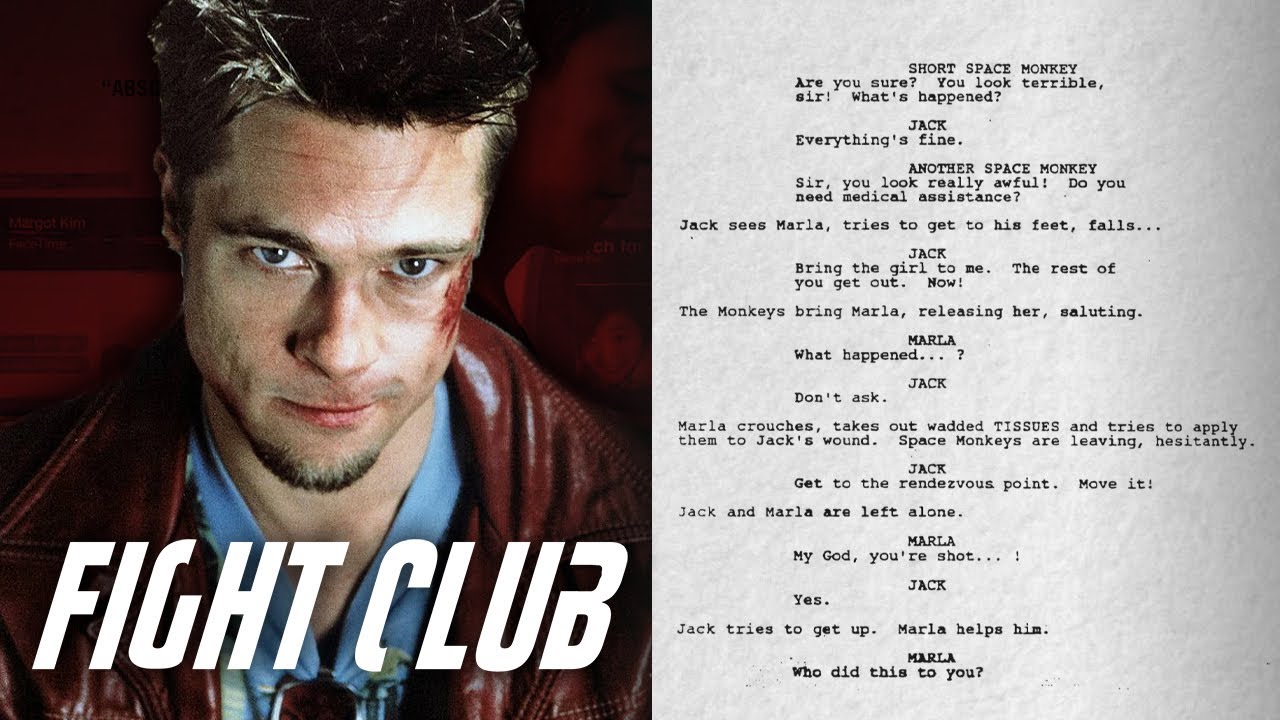
to mix with where i was using stuff from the book but the main thing was is this structurally i had to put together something that worked as a screen story and i would take the book and go through and use a highlighter to highlight all the stuff like i want to use i want to use this i want to use that because the book has got a lot of stuff and it can't all go into the movie right so um i would i would do that and then sort of use that as a guide and
then sit down and stare at a blank screen for hours on end and be full of fear well any novel has the advantage of being able to describe both external behavior and internal behavior as well as any exposition that can be ladled on right screenplays don't have that luxury at all it's watching external behavior so even if you're faithful to a novel and a scene feels like it's faithful to a novel if it works on screen you have made changes to it because you are not using an internal narrative to uh describe the interior process
and so i i just say that it's the thing that comes down with adaptations is you have to work as hard as you do on an original script because at the end of the day what people want that you're turning it into is a workable screenplay right if you turn into a producer director or studio executive an ungodly mess right that's really faithful to the novel you're going to be replaced by another rider i ran until my muscles burned and my veins pump battery acid now do you how do you find the voice of a
character like as a writer i mean i know every writer is a little bit different but how do you find your voice and your characters well i'll put two of them together in the house just start writing scenes um i like to do what's i call it writing outside the script and there's various forms it takes one is scenes that are well there are scenes that are not going to be in the script and sometimes they're just scenes that i put in any situation and sometimes there are scenes that would come before the story of
the script starts and sometimes i interview the characters where it's you know i type jim and i type my first question i type the character name the answer and i try to goad them provoke them get them angry then get them you know suddenly talking in a sentimental way about some memory or something and then get them joking and laughing and basically just get them all over the range with questions and um you know it starts off it's it's very very mechanical at first but they sort of start to come alive in an interview things
you own end up owning you during the the the writing over the crafting of it did you ever suffer kind of a roadblock or any any type of writer's block in the in the in the in just the the crafting of it or do you ever have you ever experienced that oh yeah yeah yeah um that happens a lot either before i start something um which is really in a way kind of worse because there's nothing that you're right blocked from that you need to get back to right you just you're blocked and you're not
starting something but in either case what i try to do is my experiments like my interviews with the characters um i also find that if it's an idea and i pretty much know the idea but i feel really blocked about how to shape it i start thinking about well what are what are some key scenes that i feel like would be in this project whether it's the climax or some other part of the film and i try to write those scenes first out of order and what happens is i call it the scent of blood
what happens is you are in it now and you didn't start on fade in right but you're you're in the script and it can kind of grow out from inside instead of page one right and that's i found it to be very effective to get through blocked so like i i find a lot of blocks happen sequentially right while you're going in linear fashion and you just can't figure out what the connective tissue or the transition is right at this part of the story i say skip it right go over to this part where you
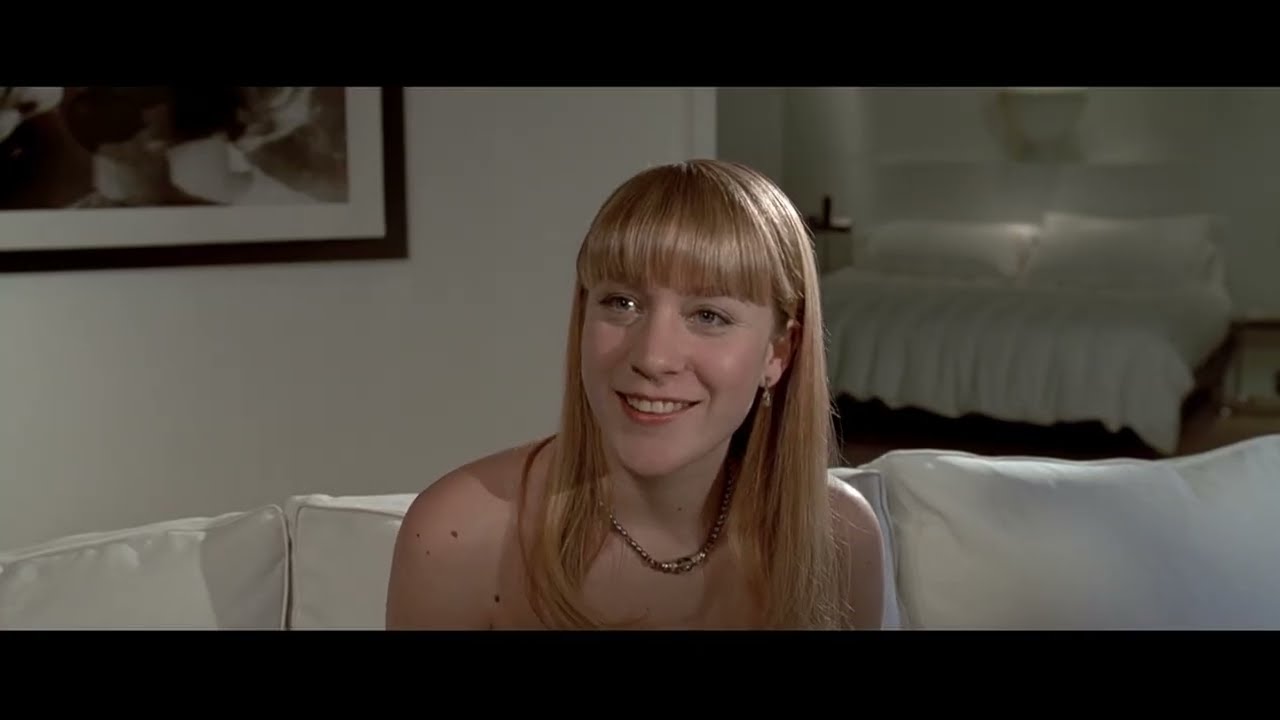
really have some feeling and write that and i think that's a good way of staying in it you met me at a very strange time in my life but unless you're ruffling feathers even within workshop you're not going far enough you know i loved writing that line in fight club where tyler and marla have sex for the first time and the most romantic thing that marla can say is i want to have your baby so what is the inverse so of course marla turns to him and she says i hope i got pregnant because i
really want to have your abortion and that's the line that the movie studio went around and around and even brad pitt said you know my mom's gonna see this movie i i don't want her to see this line and they shot that scene with so many different substitute lines and then finally fincher wrote the line and helena bonham carter says i haven't been [ __ ] like that since grade school and at that point 20th century fox said can we switch it back to the abortion line and so unless you're always kind of pushing to
kind of you know until you get some pushback you don't feel like you're pushing hard enough and so push back is not a bad thing it's just kind of a it's proof that you're doing your job and the [ __ ] that came out of this woman's mouth i never heard now when you approach a novel like that when you have a story like that that's brewing your head how do you decide what to pull the trigger on like do you just go on instinct did you just have a concept in your head and it
just seems more and more attractive and you just say okay this is it you know one really good test is if you can take it to a party and you can tell a very small part of it as much of it as you know at that point and people will vie for a chance to relate some aspect of their life that is very much like that but an even more extreme example of that so in a way they're they're fleshing out your theme with parts of their own lives and so you find yourself drawing from
the experience of dozens or hundreds or thousands of people and at the same time you're beta testing it you're kind of taking it on the road and you're seeing that it's an idea that res resonates with a huge number of people that everyone can relate to it hmm that's interesting so do you purposely like go to parties with like uh a couple like bullets in the chamber sometimes or sometimes i just go to the party and i listen to hear somebody tell that that personal anecdote that does evoke all those other anecdotes because a great
anecdote doesn't leave people speechless it leaves them competing to tell a better version of the same thing and that's when a real writer just starts realizing okay there's a pattern and that can be turned into something really big that's really interesting working jobs we hate so we can buy [ __ ] we don't need my classic thing is that there are so few social model novels or stories for men for women there are us you know every season there's a new joy luck club a new how to make an american quilt a new traveling sisterhood
of the yaya pants whatever just all these different models in which women can come together and talk about their lives and if you're a man you've got either fight club or you have the dead poet society and that is really it so we don't have a lot of narratives that that depict to men a role or a kind of script in which to come together and talk about their their shed another thing is jordan peterson back to jordan peterson he talks about that need for really rough play you know we've kind of fallen away from
this idea of consensual rough play and i think fight club resonated with that a lot and also the idea of joseph campbell's idea that there needs to be a secondary father in men's lives that you're born if you're lucky with a biological father that you do not choose and that is the the nurturing loving father that you eventually kind of have to reject but in doing so you have to choose a new father and that that father by choice typically is a a minister or a teacher or a drill sergeant or a coach one of
those fathers and you kind of put yourself in apprenticeship to the secondary father and you have to sort of consign your life to the secondary father and agree to learn what they're going to teach you just like in karate kid and that is getting harder and harder and harder to find so fight club was also depicting a new form of the secondary father with all these these kids that were showing up on the doorstep of this ramshackle old house so there was just so many aspects of men's lives that were not being addressed when fight
club came out and it sort of reinvented so many of those things that had fallen by the wayside trust me everything's gonna be fine you