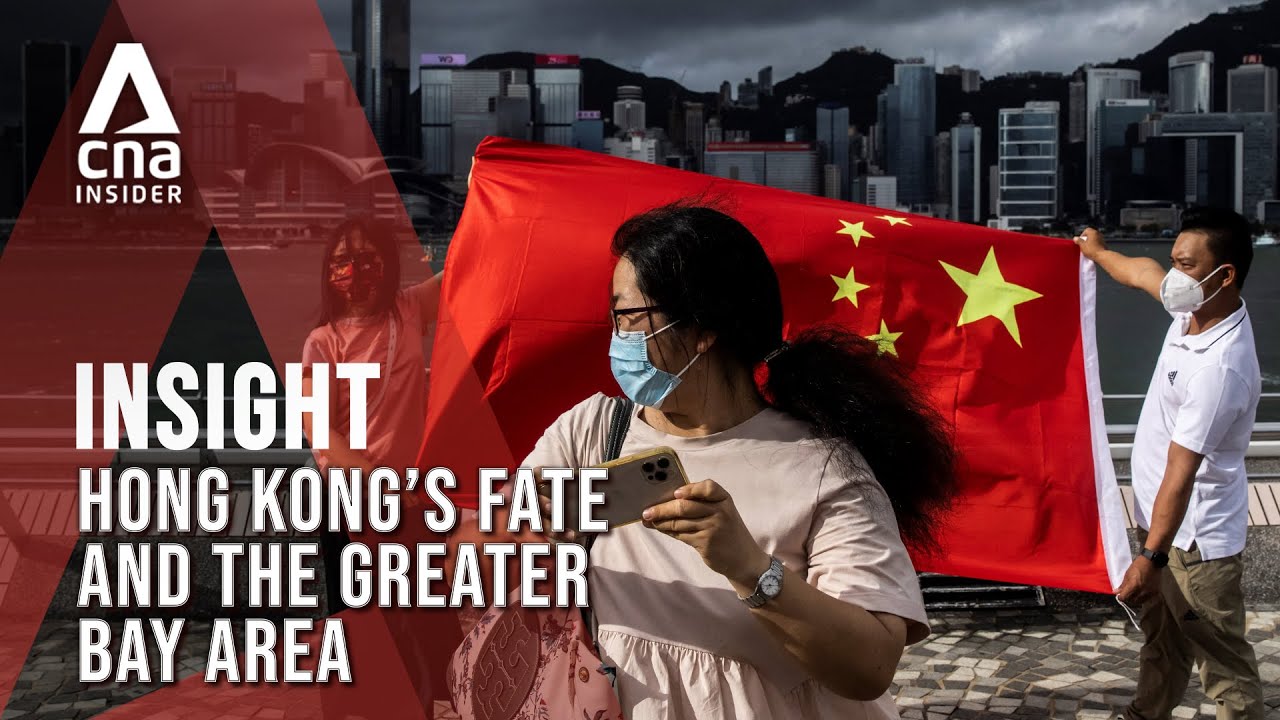
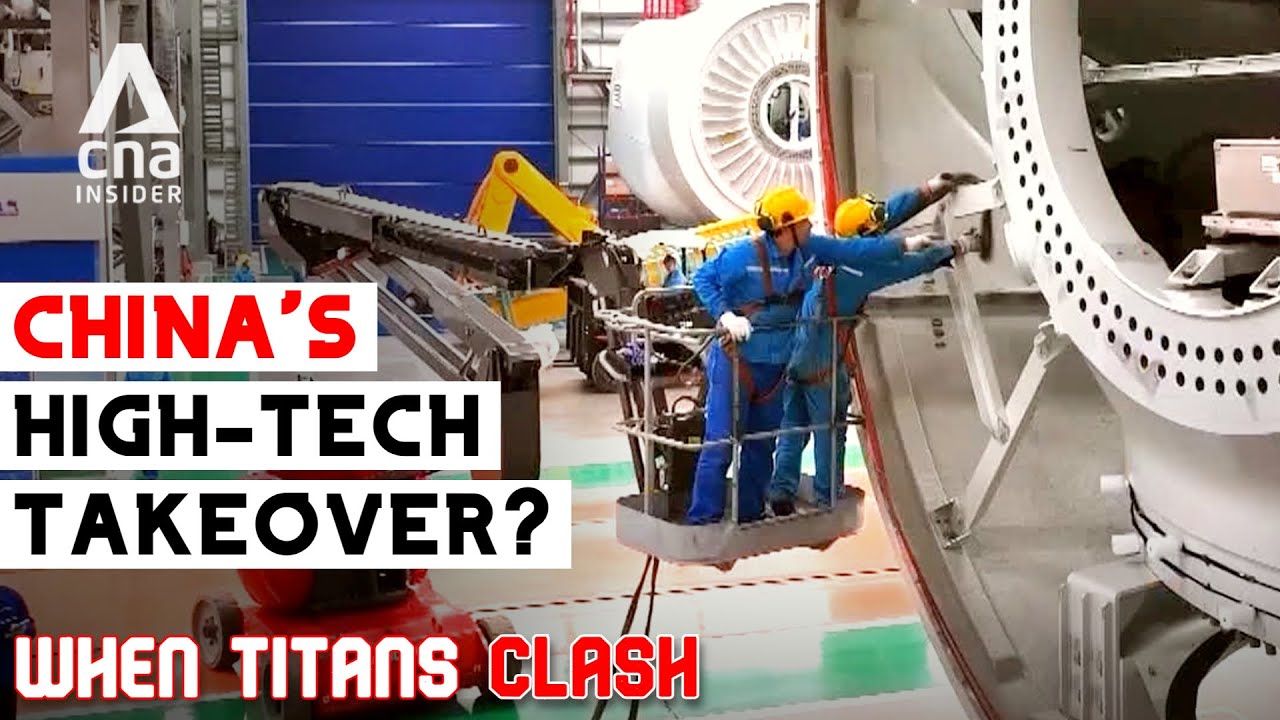
as China marks the 75th anniversary of the founding of the People's Republic a massive plan to connect 11 Southern Chinese cities with a combined GDP larger than South Korea turns five this year well the greater Bay Area comprises cities Inc wangong Province Hong Kong and Macau it's connected by an extensive network of Railways Bridges and ports including Mega structures like the shanong link and the Hong Kong juhi maau bridge China has two tier one cities in the GBA alone which means they each have a GDP of more than $300 billion well cna's Deborah Wong looks
at how the region is repositioning itself as it seeks to burnish its image as a Vanguard of Reform a new 24 km bridge now winds across the Paul River estery cutting travel time between two major Southern cities of shinon and Tongan by more than half the US $6.7 billion Mega structure has eight Lanes two Bridges two artificial islands and an undersea tunnel it's now become a symbol of the Region's Ambitions to take opening up to a new level as it positions itself as a key note in the Balon Road initiative with connectivity at its heart
here in the greater Bay Area that connectivity is meant to create a 1hour living Circle which means you can get to anywhere within the greater Bay Area within an hour and I've just taken a train from Hong Kong to shanton nor raway station excluding the time taken to clear Customs the actual commute was only 1880 minutes and the idea is to create a seamless flow of people not just across cities but across the border that's playing out in a quiet District on shon's West Coast where Hong Kong University just opened an academy for Tech entrepreneurs
the district is connected to Hong Kong by shenson Bay Bridge China had lofty Ambitions to turn TI High into the next Hong Kong with plans for unet information access but as proposals fell through more than a decade ago the district's appeal soon waned against the rise of central shenon it is now trying to revive development by giving tax subsidies to eligible firms and to Hong Kong residents working in the zone Pok Fu technology is joining the [Music] ranks it will be some time before tenai reaches the level of shinen as China's first special economic zone
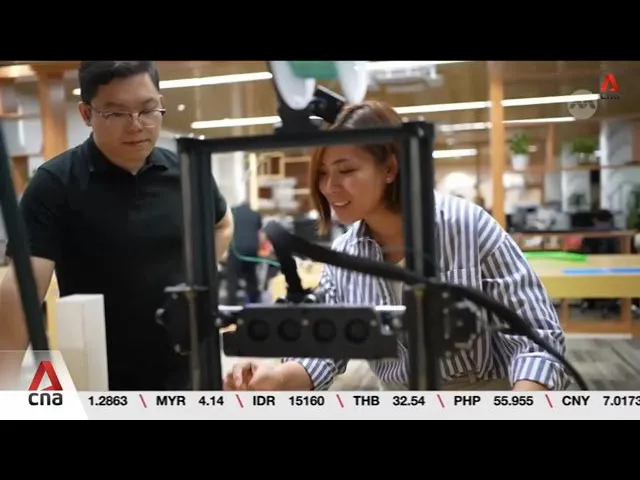
shinen set a high bar its GDP has now surpassed Beijing and Shanghai the new generation in China uh they are more educated more open-minded and there's a higher tendency of this young entrepreneurs or talents professionals wanted to seek and learn more about the global business people in shenen in guano they they can speak English they understand what they don't know and that they are eager to learn more Anway native Kevin Wong had a hit start entering the growing South he co-founded a 3D printing startup back in 2015 that's gained popularity in the US more and
more I see a lot a lot of entrepreneurs especially in shenin they are talking about building their own brand how to make that brand more popular uh build brand is is definitely going to help with your business growth it's a departure from the past given its reputation as the world's Factory guangong has long prioritized heavy production lines over brand building e-commerce has changed game in shinen they will have a policy uh for crossb e-commerce companies especially you are building up your own brand and have your own d2c website if you your sales revenue uh is
over certain standard for example like1 million Us doll per year it will give you 1 million RB as a reward for your uh business deeper integration has also taken place as new rules allow easier movement of people into the mainland talk about infrastructure but it's really the people that matters Hong Kong or maau who are nonpermanent residents can now apply multiple entry visas the same thing is happening with guong citizens within this GBA I'm bullish with where the country is heading into and for more on how the greater Bay Area will figure in China's next
stage of growth we are joined Now by CNA Deborah Wong and Professor hayy Tang director of Asia Global Institute at the University of Hong Kong well thanks very much for joining us uh both you let's start with you first Deborah I'm curious to know that China's laid out this ambitious plan right back in 2017 to turn this whole greater Bear area into a high-tech Powerhouse you know with 2035 as its Target to rival Silicon Valley and Tokyo bay can you give us an update um in terms of their progress I mean are they on track
to meet those goals or are their hurdles slowing down the progress so the GBA generated about 11% of China's GDP and that's significant but there are still institutional gaps so when we look at the GBA it comprises um cities in guangong and also two special administrative regions of Hong Kong and maau so what that means is uh we are seeing three distinct legal systems and capital account regimes and you know the main challenge is really coordinating these regulatory differences tax rates and controls to make it easier for businesses to BR uh to Branch out across
the region and we're seeing some progress on that front you know within the GBA uh cities are already offering tax subsidies to win some Hong Kong smmes over like what you saw in the story uh but there also limitations to crossborder data transfers due to different privacy laws so those are the challenges but on the flip side you know the the distinct system does allow some cities to retain the niche now uh Hong Kong for instance remains a viable place for uh investors from the mainland uh who wish to manage their private wealth outside the
mainland and I attended a conference by DBS group earlier this week where the group talked about its strategy in Greater China have a listen through this year we are opening close to 500 to 600 wealth individual accounts in Hong Kong mainly from GBA customers we are opening close to 700 accounts mainly from GBA umme customers every month uh every month that show shows you that even though the the economic growth is being questioned there is a substantial amount of Interest both on wealth individuals as well as smmes and and corporates to utilize Hong Kong as
a first place of uh account opening and then later on Diversified to uh asan so because of the common law system you know Hong Kong is relatively more International as a platform it it really in itself allows it to remain a Gateway given Mainland investors exposure to the international world right Professor Tang I want to bring you in here now we just saw how the the greater Bay Area they've been positioned to capture capital from these high-tech Enterprises um but is the GBA story um in your opinion appealing enough to stand against the geopolitics um
you know of the tech race that's happening as we speak this is a great question uh we know uh the reason for why uh many of the leading technology companies in China today are subject to export controls or uh you know sanctions from the US government is because of their successes uh and many of these leading companies are actually located in the greater Bay Area uh for example Huawei byd tensent uh so I think you know in general uh the market in the GBA is big enough uh you know we know there 86 million people
uh you know the average uh GDP per capita across cities is over 22,000 US Dollars uh which is much higher than China's GDP per capita this is also one of the youngest uh region in China uh you know it's also a region where you can find some of the best universities in Asia uh obviously many of them are located in Hong Kong so I see that this is actually a pretty resilient area with a pretty compx Supply chains a lot of young people a lot of educated people uh you know the next stage is actually
more collaboration across the 11 cities located in a greater Bay Area one example is you know there are a lot of research generated from universities here in Hong Kong but a lot of This research has not been transferred uh into actual Technologies or commercialized products and services so there got to be a lot more collaboration and currently I see that many of the cities in the GBA are seeing each other more as competitors than collaborat that's a good point you make there uh and and that's what it is right I mean deror we talking about
how ambitious this project is you know you're trying to integrate 11 cities millions of people trillions of dollars of economy and what professor said collaboration itself that is an issue but what are some of the other uh bigger risks involving in terms of trying to to fuse you know such diverse regions so rapidly you know if integration helps to bring about more even Regional developments then yeah it's a good thing but what you don't want to see is uh an uneven flow of people to more prosperous cities after the connectivity gets improved you know although
China has designated a niche for each of the of the city within the GBA there are still some similarities that might result in intense competition you know shinzen and shenhai they have a similar niches in the commercial fintech even Professional Services fields and and you know shanhai is well connected to the CBD in shinon it's it also has an airport uh that's close by it's also close to a bridge that connects to Hong Kong so when you look at all these assets you know on paper it is an attractive place to be but it's quiet
it's quiet because most of uh foreign businesses are currently concentrated in central shingon where it's more mature you know you have the and then also you have the strain on tourism like for instance in Hong Kong a lot of day Trippers from China they come to Hong Kong but they rather return to shunsen to stay for the night just because it's cheaper and that's causing a strain on the domestic consumption uh now Professor I have a question for you you know with the gb's rapid rise we seeing a big shift uh in Asia's economic landscape
and given the already fragile ties between us and China do you think this could accelerate economic decoupling or is there going to be a sort of new balance of power between these two juggernauts you know Deborah is very hard to be optimistic uh about the geopolitical situation especially when it comes to uh the relationship between the US and China uh as I have said right the success of the GBA or generally the success uh of the economic transformation or technological catchup of China would only lead to more tension more frictions uh between the two biggest
economies uh in the world uh so I guess uh you know decoupling uh is not going to be uh feasible uh you know I wish there are more sort of functional decoupling uh for example on Technologies I'm not uh hoping that you know there will be collaboration between uh us companies and Chinese companies uh but you know on sustainability uh on you know sort of like traditional uh manufacturing I hope that you know the two countries will see uh each other as partners rather than competitors some people may even say that uh we are converging
to a world uh which is called one world two systems rather than one country two system that we have in Hong Kong I think you know you're going to see uh separate development uh of Technologies you know on it standards uh one one part of the Technologies obviously is going to be used on this part of the world and other kind of standards and technologies will be used uh on the other side uh with us being the uh sort of central driving force yeah I like how you've coined it a professor one world uh two
systems and we've been talking about this rather Grim geopolitical situation I want to take the tone down a little bit uh speak to Deborah about actually your experience you know traveling around the greater beay area I mean the the the the trains itself look very comfortable but I'm wondering just exactly how convenient uh is it so just by the variety of options you know it's convenient um where I am based currently in Hong Kong I have the option of taking a bus highp speed rail or even the regular train the mtrs when I I make
my way across the land border um but within the mainland you know so within the mainland it actually does fulfill that 1H hour living Circle but there are administrative challenges uh Foreigners for instance including business Travelers we still must um stand in line at the land boarders for a long time you know it's common to see many people missing their trains and because of that you know people have to add um about 1.5 hours to the commute and then we have the problem also with uh the Hong Kong's southbound travel scheme for Mainland registered Vehicles
now Hong Kong plans to limit the number of vehicles entering the city uh from the mainland and maau to ease the traff congestion and so what they're doing is that they're building about a th000 car park lots on the Hong Kong to high maau bridge and it's already a scaled down figure from the earlier proposed 6,000 Lots so cars must park there and then after that they have to uh take a coach into the City and and you know it's kind of counterproductive because drivers are saying that it's inconvenient and man all just take the
highs speeed rail right into the city so the whole idea to manage traffic congestion is actually uh going to be counterproductive to optimizing the mega structure yeah so still quite a fair bit of waiting time huh all right well I'm afraid that's all the time we have for today's discussion but thanks so very much de Wong as well as you a professor hey Tang director of Asia Global Institute at the University of Hong Kong