all right uh to ensure uh the validity of examination results in the laboratory we need to perform internal as well as external QC and internal QC uh detecting problems during routine uh laboratory operation but we also need to participate in eqa external quality assessment and this is where group of Laboratories analyze the same specimen and submit the results to an external facility and it Compares your laboratory performance to a peer group with regards to accuracy of your method and types of eqa can be peer comparison or it can be proficiency testing now the benefits of
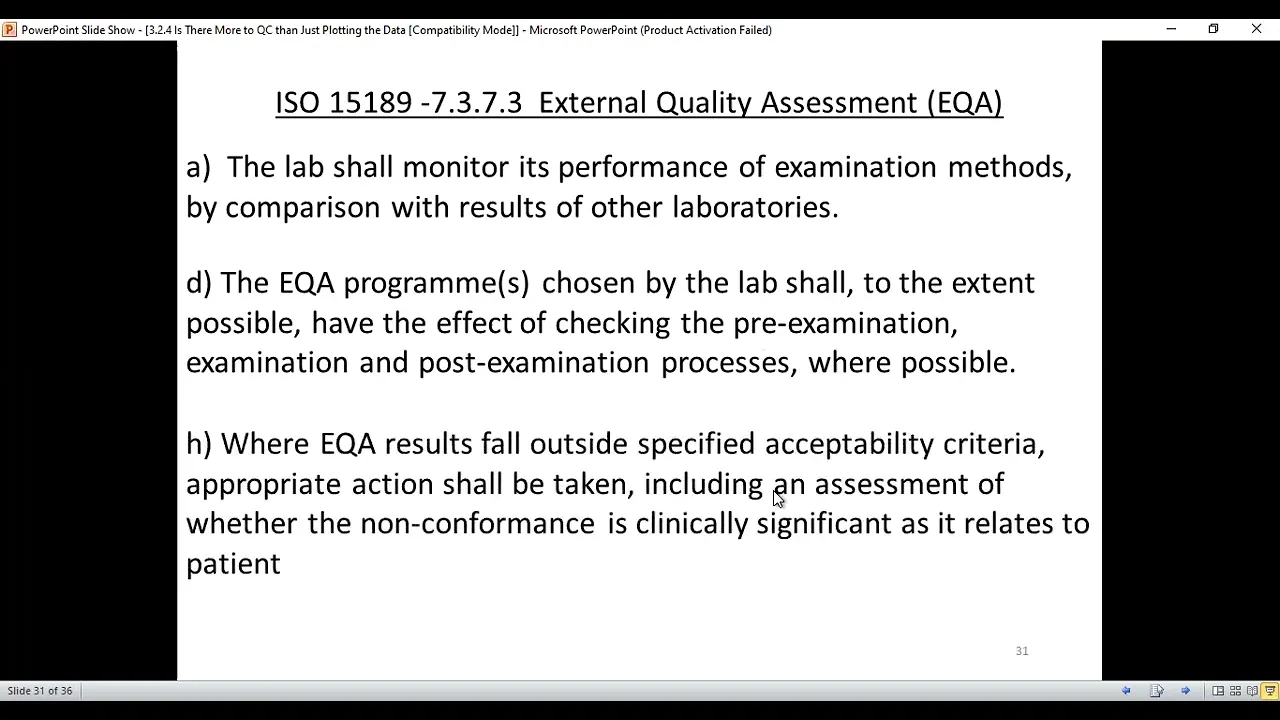
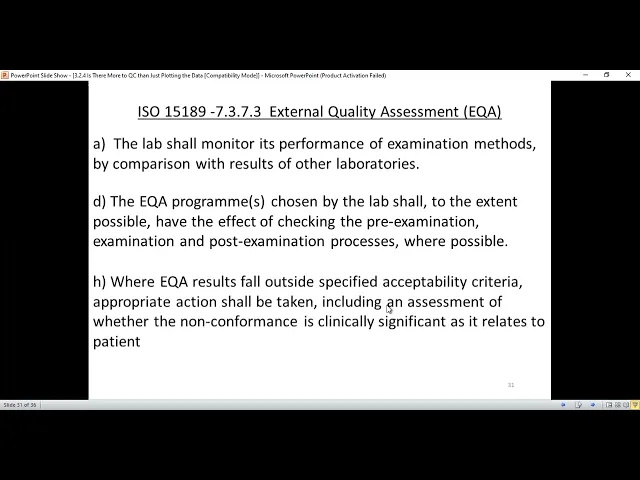
participating in eqa are the following demonstration of technical competence I identify potential areas for improvement increase confidence in the accuracy of Laboratories testing results and of course verification of the effectiveness of training all right let us review what the standard is asking us to do um on 7.3.3 external quality assessment starting with letter A it says the laboratory shall monitor for its performance of examination methods by comparison with results of other Laboratories and letter D the eqa program or programs chosen by the laboratory shall to the extent possible have the effect of checking the what
checking the whole path of workflow from pre-exam examination and postexamination processes where it is possible and letter A uh it says where eqa results fall outside the specified acceptability criteria appropriate action shall be taken including an assessment of whether the nonconformance is clinically significant as it relates to the patient all right there are two job AIDS that are related to eqa and PT and the first one is job aid one PT General guidelines and please read and review this one and it's very helpful and very useful General guidelines for proficiency testing the second one job
A2 is a proficiency testing failure checklist again you can adapt this one so that you will have your own uh proficiency testing failure checklist you can adopt head up please do not abandon












![Morning Joe First [6AM] 10/14/24 FULL HD | 🅼🆂🅽🅱️🅲 Breaking News October 14, 2024](https://img.youtube.com/vi/xkKvWhbLMpg/maxresdefault.jpg)