Today we have a very special bonus video for you guys. It's a collection of four claustrophobiainducing diving stories. Now these four stories, even if you've heard or seen them before, they have been completely re-edited. So it's like a brand new viewing experience for everybody. But before we get into those stories, if you're a fan of the strange, dark, and mysterious delivered in story format, then you've come to the right Place because that's all we do and we upload once a week. So, if that's of interest to you, please offer to housesit for the like button
while they're away on vacation, but instead of taking care of their house, simply burn it to the ground. Also, please subscribe to our channel and turn on all notifications so you don't miss any of our weekly uploads. Okay, let's get into today's stories. [Music] [Music] For any diver who can stomach the risks, Bushman's Hole is a world-class diving spot. It's located on a privatelyowned game farm in South Africa. In the middle of the farm's 11,000 acres sits this massive crater in the ground that from rim to rim is hundreds of feet wide. If you hike
down the crater to the middle, there's this little tiny basin of water that almost looks like an oversized puddle. This is the entrance to Bushman's Hole. Once you step into this little puddle and push your way through the very claustrophobia inducing entrance, you open up into the biggest freshwater cave in the world that goes down to nearly 900 ft. For the people that have been in there, they say it's unbelievable and it's like spacew walking. For young South African Dion Dryer, the pull to go to Bushman and explore it was irresistible. Dion had always been
a bit of an adrenaline Junkie. By the time he was 17, he was racing cars and building motorcycles. And by the time he was 20, he had picked up a new activity, cave diving. Dion had logged about 200 dives before he was invited by a diving group to go to Bushman's Hole and explore it on Christmas break 1994. They were planning a descent to 492 ft, so about the halfway point of the cave. And they needed one more diver. And so Dion was thrilled to go. The dive was going Great, but on the way up
as they were making their ascent, the diver ahead of Dion looked back at him and Dion seemed fine. He gave the hand signal that everything was going great. He had his flashlight out and then about 30 ft higher in the water, that same diver turned around to check on Dion and Dion wasn't there anymore. And in fact, this guy saw his flashlight that was still attached to him basically wavering as it sunk farther and farther down Bushman's Hole. This diver immediately stops the group above him and he turns around and starts swimming as fast as
he can down to try to get to Dion. But Dion was sinking so so quickly that this diver realize that it's a suicide mission if I try to go down there. I will either pass out or run out of air. And so deeply saddened, this group of divers had to turn around and leave Dion at the bottom of Bushman's Hole. Although the other divers didn't know for sure, they told Dion's parents that most likely he had suffered from a deep water blackout and then had drowned. When authorities were notified about what happened to Dion, they
sent a robot down to the bottom of Bushman's hole to just locate his body before they sent a person down there. But they never could find his body. They could only ever find his helmet. Dion's parents are devastated. They're never going to see their son again. And since they don't have a body to bury, they Decide to go down to Bushman's Hole and put a plaque up next to the entrance to commemorate their son. 10 years later, Dave Shaw, who was a 50-year-old extremely audacious cave diver, was passing the 800 ft mark inside of Bushman's
Hole, becoming the third person ever to reach this depth. Shaw touched down on the sloping bottom of the cave. He detached from the cave reel, took out his flashlight, and began swimming around the bottom. As he was Scanning around, he looked about 50 ft to his left, and he saw something. and he immediately recognized it was a human body. They were on their back with their arms stretched out towards the surface and when Shaw went over to them, he immediately recognized that this is Dion Dryer. Ever since Dion died inside a Bushman and had never
been recovered, any diver that went in there was keeping their eye out in case they saw him. Shaw examines Dion to see if he's going to be Able to be pulled to the surface, if he's solid enough to be pulled to the surface. And he can tell that his hands have skeletonized as well as his skull. Although his mask is still placed directly on his skull, but his wets suit and his tanks had kind of kept the rest of his body pretty tight, which gave him some mass, which meant he'd be able to move him.
But as soon as Shaw tried to move him, he couldn't get him to budge because his tanks were caught on Something. And so Shaw stayed there for a minute trying to get him free, but he couldn't do it. And that's when Shaw started to think, "Okay, this is getting irresponsible. I'm going to die down here, too, if I don't start making my ascent soon." So, he ended up tying a line to Dion's body so he could be located again. And then Shaw began the very slow ascent back to the surface. On the way back up,
Shaw felt an extreme sense of connection with Dion. He really Felt bad for this kid. And all he wanted to do was get him back on land to give back to his family, to give them some closure. And so, when he got on the surface, he immediately contacted authorities and said, "I'm going to go back down and I'm going to get him." And Shaw also called Dion's parents and told them, "I am going to retrieve your son." and his parents were apparently overjoyed. They couldn't believe they were going to get to see their son Again.
After lots and lots of planning, Shaw's recovery of Dion was scheduled for January 8th, 2005. The dive was going to take 12 hours. And it wasn't just going to be Dave doing the retrieval. It was going to be like a relay race. Dave would be the first one down, and a couple minutes after he entered the water, another diver would go in who would stop about 100 feet above Dave and then a third diver would go in and stop 100 feet above the second Diver and so on and so forth. Dave would put the body
bag over Dion and then carry his body up to the first guy who would turn around, bring the body up to the next guy and the next guy to the next guy until Dion was out of the water. At 6:13 in the morning, Shaw entered the water with a camera on his helmet to film the operation. Shortly after he submerged, Dion's parents walked down to the edge of the water to watch. They showed up intentionally late So as not to put added pressure on Shaw. Shaw dropped very quickly to the bottom of Bushman's hole. He
actually arrived about a minute and a half faster than he expected to. As soon as he got down, he shined his light and he found Dion's body. He went over to him. He got the body bag out and he got to work. 13 minutes after Shaw had submerged, the diver who was slotted above him that would be the first to receive Dion's body began looking for signs that Shaw Was done and was moving up towards him. But when he looked down, he saw Shaw's flashlight wasn't moving. This diver continued to watch the flashlight very intently
to make sure his eyes weren't playing tricks on him. And after a couple of minutes and still no movement, this diver begins going deeper and deeper to try to get a better look at Shaw to see what's going on. And when he got a little bit closer, it became very clear that Shaw was not moving. This Diver immediately goes into rescue mode and starts going straight down to get to Shaw to try to help him if he still can. And as he's moving down, he hears this fizzling sound and he looks at his wrist and
he can tell that one of his gauges has broken. And this gauge was vital to the dive and it meant he would not be able to get down there. And so with a heavy heart, he had to turn around and go back up. And because of the depth at which they were diving, he could not Just go right to the surface and tell everybody what had happened. He needed to stop at various decompression stops along the way. But he had a slate and on it he wrote in his grease pen, "Dave's not coming back." And
he swam the slate up to the next diver who would have received Dion's body, but instead receives the slate. He takes the slate up to the next diver, to the next diver, to the next diver, all the way up to the surface. Bons are coming. As soon as this message was read out loud to the group standing around Bushman's hole, which included Dion's parents, there was 30 seconds of stunned silence. No one could believe this was happening. And then after the silence, Dion's parents are beside themselves. Not only are they not going to see their
son probably ever again, but they feel like they are somehow responsible for Shaw's death. Eventually, by the end of The night, all of the other divers that were in the water that day successfully exited the cave and were just fine. As for Shaw, much like Dion, there really wasn't a good way to get him out. And so, everyone came to terms with the reality that he was going to be down there with Dion probably forever. The news was so devastating that the team decided to leave all their equipment in place. Eventually, they did need to
go down and collect their gear. So, Everybody goes down to the edge of Bushman's Hole. And before they begin retrieving all of the lines, they sang Amazing Grace in memoriam for the lost diver. Afterwards, they started pulling up the lines. And as they're doing that, they notice all these bubbles coming up from the bottom of the cave. And they looked a little bit closer and it was Shaw's body and Dion's body. Basically, Shaw had been attached to this line. And he had managed to free Dion before he Had passed. And so when they pulled the
line, both of them were freed and they floated to the surface. And so even though Shaw would die doing it, he was able to get Dion out of Bushman's cave for his family. After the two bodies were taken out, they noticed that the camera on Dave's head was still intact and it had filmed everything all the way through his final moments. And so they took the tape out and they watched it forward and backwards, slow-mo, frame by Frame, and they analyzed it to the point where they understood what happened. When Shaw gets down to Dion,
Dion's body that had previously been stuck. And that was the reason Shaw had not been able to free him the first time. Somehow he's become unfree and he's now free floating. And Shaw is having a really hard time trying to control this free floating body. And his body is literally breaking apart in front of him. As Shaw is trying to wrangle his body, you can Hear him start grunting. His breathing is getting elevated and he's totally losing control of the situation. And the bottom of this cave is slanted and it's all silty and muddy. And
so in the camera, you see all this mud and silt getting kicked around and the visibility is very poor. And after it clears, you see Shaw has gotten completely tangled in some line that's also tangled on Dion. So basically, Dion has become his anchor. At this point, Shaw shifts his Focus to try to get the lines off of himself. And you can hear his breathing now is becoming much more desperate. It almost sounds like he's gulping for air. And probably at this point, although we don't know for sure, he's suffering from narcosis, which is a
condition that divers will run into where it's like you've drank a whole bunch of alcohol on an empty stomach. It's like you're totally drunk and you're confused. And it's clear that he's becoming a little Bit disoriented. And instead of going away from Dion's body to try to go back up and save yourself, instead he turns and starts fumbling with Dion's midsection. And then he gets out a pair of scissors, but he doesn't use them. He just holds them. Finally, he turns away from Dion because it's clear you're not going to be able to get him
out at this point. And with the scissors in hand that he never used because again, he's probably suffering from narcosis and He's confused. He starts beginning to make his way over to the area where you can go back up, but he starts slowing down. His breathing becomes tragically desperate and then it becomes silent and then there's no more movement and Dave Shaw is dead. 10 days after the bodies were recovered from Bushman's Hole, Dion's parents, although they are absolutely devastated about what happened to Shaw and they feel very guilty, but at the same time, they're
so Excited because they get to go to the morg and see their son again for the first time in 10 years. They don't care what state his body's in. Just the fact that he's actually here, that their actual son is going to be in front of them was just overwhelming for them. And when they went in, they were really fixated on the fact that he had underwear on that they both recognized. Apparently, they had bought him a set of jockey underwear and he was wearing Jockey underwear. As strange as it is, it was like they
got to bond with their child one more time. As many of you may know, aside from telling stories on this YouTube channel, I also tell stories on my podcast, the Mr. Ballin podcast, Strange, Dark, and Mysterious Stories. But that's not all. In addition to that podcast, under the Ballin Studios umbrella, there is a whole host of other podcasts that you can binge right now. And their content, all of them, fall into the strange, dark, and mysterious category. For example, if you're into baffling and horrifying medical mysteries, well, you should go check out my other podcast
called Mr. Ballins's Medical Mysteries. Or maybe you want to hear from some other voices within our studio like Luke Lammana. Luke Lammana is a military veteran. He has a super iconic, really deep radio voice and he has two shows. One is called Wartime Stories where he basically looks at strange, dark, and mysterious wartime stories. And his other show is called Redacted, where he looks at information that used to be classified and he dives into it with his military expertise and experience, and he basically shows you the lies and secrets and halftruths that the most powerful
institutions in the world have been keeping from us. We also have shows that are just plain creepy and unsettling, like Bedtime Stories, Hosted by Richard While, where he dives into the supernatural and cryptids and mysterious deaths. I mean, basically his whole kind of niche is things that keep you up at night. And then two other shows that fall into that sort of unsettling, creepy vibe, are Late Nights with Nexo, hosted by the famous YouTuber Nexo, where he dives into true crazy scary stories. And then we also have another show called RunFool, hosted by Rodney Barnes.
And Rodney is like an Icon in the horror genre at large. And on his show, he just dives into this wild chilling lore, like horror lore. People love that show. Or if you're a history buff and you really want stories that are really rooted in the fabric of our timeline. I mean, stories that are truly historically accurate, but still strange, dark, and mysterious, and crazy. Well, check out A Twist of History hosted by Joel. He's great, great voice. He's a very thorough host. Those stories all have really cool endings, big plot twists at the end.
So, if you're a fan of the strange, dark, and mysterious, go check out these shows. You can look for them either by name or simply by looking for Ballin Studios on any podcast platform. They are available right now. [Music] Enjoy. At 4:00 a.m. on February 25th, 2022, a 36-year-old father of three named Christopher Budram woke up inside Of his modest home in Point Pierre, which is a city on the Caribbean island of Trinidad and Tobago. After quietly getting out of his bed so as not to wake up his wife, who was still asleep, Christopher walked
into the other room and did his typical morning exercise routine. And then afterward, he made himself some breakfast in the kitchen. And by 5:30 a.m. he was out his front door into his car making the commute to work. Christopher was a professional Scuba diver and he had been for over 10 years. Commercial diving is a very broad field to work in, but generally it meant that Christopher was paid to do various tasks underwater, things like inspections or welding or just moving equipment around. For the last eight months, Christopher had been fortunate enough to be working
for a company that was located just 2 minutes drive from his house. It was an oil and gas company called Perea Fuel. And Christopher's Duties at Pereaf Fuel centered primarily on the upkeep and maintenance of several of these underwater pipelines that Pereaf Fuel used to get the oil off of their ships and onto land where it could be processed. These underwater pipelines, of which Korea had at least six, were basically U-shaped. They had these two vertical sections on either end that would jut out of the water. And then connecting these two vertical sections was a
1,200 ft long section of Pipe that ran along the seabed at roughly 60 ft below the surface. And so one of these vertical sections was out at sea. So 1,200 feet off the coast. And ships would literally come by this opening to the pipe that was out of the water and they would dump their oil into this opening. The oil would go down. It would shoot across this long horizontal section and then go up the other vertical section much closer to shore where workers could collect the oil and Bring it onto land to be processed.
So on this particular day in February of 2022, when Christopher arrived at Perea Fuel, he was not surprised at all to find out that he and his diving colleagues would be doing some maintenance on one of these underwater pipelines. However, there was something unique about the particular pipeline they'd be working on. It was called Birth number six. And unlike the rest of Perea Fuel's underwater oil transport Pipelines, this one had not been active since 2018. So for the past 4 years, it had just sat idle. Now, this was on purpose. For whatever reason, the company
had decided not to use birth number six. And so they put it into a sort of storage mode where the vertical section of birth number six that was out at sea was untouched. It was still just poking out of the water. No changes. However, the other vertical section of birth number six that was closest to Shore was first plugged up. Like imagine putting a cork inside of a wine bottle. That's basically what they did to this vertical section, except they used this huge inflatable cork. Imagine like a huge pool toy. They basically jammed it inside
of the vertical section and then they inflated it so much that it was completely airtight inside of this pipe. And then once it was all plugged up, they submerged this section of the vertical pipe underwater, maybe 5 or 10 Feet below the surface to kind of keep it out of the way of all the ships that would be moving around close to shore. And then also what they did is they put something called a habitat on top of the opening of this now submerged vertical section of birth number six. To understand it, you got to
picture something else. Okay? So, imagine you're in the bathtub and you have a bucket and you flip it upside down above the surface so there's nothing inside of the Bucket and you just take the bucket and push it straight down into the water. No matter how deep you push that bucket, as long as you don't rotate it to one side or the other and you just keep it steady, that air pocket inside of the bucket will remain. You can literally reach your hand under the bucket underwater and it will be dry. And so, basically, that's
what this habitat was. Korea Fuel took a huge bucket, if you will, and they lowered it straight into The water and pressed it down and anchored it right above the opening to this submerged vertical section. So there was a permanent air pocket over the opening to this pipe. And the reason for this is because if they needed to do work on this pipe, like for example, today they wanted Christopher and his colleagues to make this pipe active again, which meant doing work on it, the divers could swim down, get inside of this habitat, stand on
the little metal Platform they put in there, and then they could take off all of their cumbersome diving equipment and just work on the pipe while breathing air. It was really kind of a luxury. And so after Christopher and the four other divers he'd be with that day got their instructions, you know, to get birth number six active again, they began getting all their gear together and going over who would be responsible for what once they got down to the habitat. And then once they were all ready, they made their way out to the boat.
The four other divers that Christopher would be working with that day were men he had worked with many times before and men he would consider his friends. Their names were Kazim Ali Jr., Ysef Henry, Visel Kerban, and Rishi Nagasar. Once their boat had moved just off the coast and had stopped kind of roughly over the area where below the surface was this submerged birth number six vertical pipe And the habitat, the divers hopped off the boat and they swam straight down. They went up and under the side of this habitat wall and they entered into
this breathable airspace right around the entrance to this pipe. until they climbed up onto the platform. They took off all of their gear and then once they were just in their wets suits, they got to work. Now, the job was relatively straightforward. They just needed to basically pull a lever inside of the Pipe that would then deflate the big inflatable plug that had been set inside of this pipe to seal it. However, when one of the divers reached down and began to pull on the lever, it was jammed. And so, they needed a wrench to
kind of free the lever. And so Kazim volunteered to go back to the surface and get a wrench because no one had one inside of the habitat. And so Kazim put his dive gear back on. He dove out from underneath this habitat, swam back to the surface, He talked to the folks on the boat, they handed him a wrench, and then he swam right back down back inside of the habitat. And then once he poked himself back up, he handed the wrench up to the nearest diver. And that diver took the wrench, he turned back
around to face the pipe. He reached down inside and he began fiddling with the lever and eventually he freed it. However, the second this lever was activated, something horrific happened inside of That space. We don't know exactly how this happened or what exactly could have been done to prevent it, but in short, the second that lever was activated, it began to deflate this big cork that had been plugging up this inactive pipeline for the past 4 years. And when that happened, it broke the seal. And suddenly all this low pressure air that was sitting in
1,200 ft of pipeline made contact with the extremely high pressure air that was inside of this habitat. And Air likes to go from high pressure to low pressure. And so the second that seal was broken, the highpress air in the habitat expanded down into the pipe. But this happened so so quickly. It was almost instantaneous. It was almost like the pipe opening became the world's strongest vacuum and it sucked everything inside of the habitat, all the air, all the equipment, all five men into the pipe. And it also began sucking in seawater. Basically, everything was
Going in this pipe. And so these five men, they don't have their scuba gear on, went from just standing outside the pipe to feet first flying into this pipe with all of their heavy equipment all around them and there's seawater all over them. They're holding their breath. And so they get sucked down the vertical section. They turn the corner and they get rocketed out to sea. They are on the 12,200 ft long section, the horizontal section, just blazing a trail. Now think About this. All five of these guys have no idea what's happened. They're on
a breathold. They are shooting down a pipe. They can't see anything. The space inside of this pipe is so narrow. It's two and a half feet across. And so they're getting compressed. Their shoulders can barely fit inside of this pipe. And so you got to figure that all of them are expecting to die. But eventually the pressure in this pipe did equalize at which point this vacuum Phenomenon stopped up at the habitat and actually the habitat kind of refilled with air. And when that happened, all the seawater that was getting pulled into this pipe also
stopped. So no more air, no more sea water is going into this pipe. It's kind of like whatever went into the pipe, that's what's down there. And when this equalization happened, these men who by this point are on a several minute long breathold, they eventually begin to slow down and Come to a stop. And by some miracle, they came to stop in a section of this horizontal pipe that was not totally flat to the seabed. it was slightly elevated, which meant there was a small air pocket where they stopped. And so they come to a
stop and they just start gasping for air. And then they begin yelling out to each other. And they realize all five of them are alive. And they're all kind of roughly grouped together in this air pocket. And we know This because one of their cameras on their bodies was rolling when they were pulled into the pipe. And so we can't see anything cuz it's pitch black inside of this pipe. But we can hear them talking to each other once everything stops. And so over the course of this kind of chaotic initial volley of communication up
and down the pipe where again these guys are on their backs, you know, they can't move at all. They're completely kind of trapped in position And even though they're in an air pocket, there is water kind of close to their face. And so they have this little area to breathe in. They're panicking. They're screaming at each other. But in this volley, they're able to figure out that Christopher was the closest to the way they had come into the pipe. Meaning his head was closest to the vertical section closest to shore and all four other men
were right below him. And so Christopher knew if they were going to Get out, their best chance was to backtrack, head towards the way they came in, which meant Christopher would have to lead them. And so Christopher kind of found it within himself. Again, we can hear him on audio. And he told the others to calm down and link their feet onto the person below them's shoulders. And so to do that, the only way these guys could move in this tight little pipe is just by pushing with their heels. And so painfully, slowly, These guys
who are very badly battered at this point, I mean, they came flying in here surrounded by all their heavy equipment crashing into them. Guys had broken bones. They were really badly beat up. But they finally make their way until they're all linked, you know, feet under each other's shoulders. And then Christopher in the lead began kind of going in reverse, inching their way up the pipe back towards the way they came in. Now, the reason they felt strongly That they needed to act right away and not wait for rescue is because they didn't really understand
how this had even happened. They didn't know if at any moment more water was going to pour into this pipe. They also understood that there was limited air and at some point they would suffocate. And so with that in mind, they begin this journey. And right away, Christopher reaches the first flooded section of the pipe. Now, you have to understand, they have no Idea how long this flooded section of pipe is. And so once you start moving into this flooded section behind you, once you go underwater, you're either going to find another air pocket at
some point or you're going to drown. And so it would turn out that only Christopher and the guy right below him, Fisel, were willing and physically able to attempt this potential suicide mission. And so the others, they began panicking. The others who were not going to go, and They're screaming out for Christopher and Fisel not to leave them. You can hear it on audio. But Christopher and Fisel, they felt strongly that somebody has to go to the surface and get help. And so Christopher and Fisel linked together begin inching into this flooded section of pipe
pitch black. They have no idea what's going to happen. They're slowly going under the water and they just begin inching their way on a breathold. And by some miracle, this First flooded section they entered into was not very long. And so both Christopher and Fisizel were able to barely, you know, coughing and gagging get out the other side into yet another air pocket. And by an even bigger miracle in that new air pocket, Christopher above him, he managed to get one hand above his head. He felt scuba tanks, two of them. And he was able
to take one of them and somehow force it past the side of his body down to Fisel. And so both men suddenly had an air tank. Now, they had to kind of awkwardly pin the tank above their head. These tanks are not light. If you've not scuba dived, it's like pushing a pretty heavy weight. and they had the regulator, so the mouthpiece that actually gives you the air in their mouths, but they couldn't really hold the mouthpiece in place. It was this very awkward thing they were going to do, but this meant they could now
enter much longer flooded Sections of pipe and potentially make it out the other side. And so with their air tanks on top of their heads and their mouthpieces in their mouth, gripping down as hard as they can with their teeth, they continued to inch along with their heels and they entered into more and more of these flooded sections of pipe. As they're doing this, they know they have a scuba tank, but they have no idea how much air is in these tanks. They can't see the gauge. And so, it's kind of the same thing as
going in on a breathold. You don't know when you're going to run out of air cuz you don't know how long these flooded sections are. So, you can only imagine how terrifying this must have been. But, they kept on going and going. And finally after hours of this that Christopher and Fisizel are going through these terrifying stretches of, you know, hoping they can hold on to that mouthpiece and hoping they got Enough air. They get through these flooded sections, hit the next air pocket. You know, after hours of doing that, they reach this air pocket
where Fisel starts to kind of lose it and he starts yelling to Christopher in the total dark to stop, but he didn't have a reason, you know, and Christopher could kind of sense that, you know, Fisel is starting to lose it and we're running out of time here. And Christopher, I mean, he can hear the other divers that They had left behind in the beginning, screaming out all the way back down the pipe. And so Christopher, he stayed composed and he tried to get Fisel to calm down and come with him. But when it was
clear he wasn't going to, he told Fisel that, "Hey, I'm going to keep going alone then. I'm going to get us help and I'll be back for you." And so Fisel, he was still panicking and he yelled at Christopher not to go any further. But Christopher knew he had to Go. And so with the sound of his friends screaming out for him to stop, Christopher again cinched down with his teeth on the mouthpiece continued to push this air tank above his head and he inched his way closer and closer to the entrance of this pipe.
And after reaching a very long underwater section where he knows he's running out of air, his tank hit the kink in the pipe where it went vertical again, which meant right above him was the exit. The Habitat is right up there. And so Christopher was able to kind of turn and swim up this vertical section until he popped up. And it was again another air pocket except the water level in this vertical section was not close enough to the exit of the pipe to actually pull himself out. It was like Christopher was stuck at the
bottom of a well. Like there's nothing he can do. But luckily there was a chain that was dangling down in arms reach. And so Christopher Grabbed the chain and just had to wait having no idea if anybody was coming to get them. But eventually two rescue divers did get into the habitat and they reached down and they pulled Christopher out of the pipe and they saved him. And when they brought him up to the surface, Christopher saw that Perea Fuel had their emergency response team on site. The Trinidad and Tobago Coast Guard was there and
it's clear they're getting ready to do some sort of rescue Operation. And so Christopher, who's totally traumatized, he's badly hurt. He still ran up to authorities and told them, "All four of my colleagues are still alive. I heard them banging in the pipes. I know they're in air pockets. You got to go back down. You got to save them." But ultimately, the authorities decided it was not safe to send rescuers down into this pipe. And so when Christopher found out they were not going to try to rescue his friends, who Are literally banging the pipe,
he can hear them. He tried to jump back in the water to do it himself and they stopped him. And then Christopher was rushed to the hospital where once he was admitted to the intensive care unit, he tried to check himself out to go back to the water to save his friends. But again, Christopher was stopped for two whole days. After Christopher was rescued from this pipe, his colleagues, the four other divers, remained trapped in the Most claustrophobic, horrible situation imaginable, and they continued to bang on the pipe and make noises that could be heard
on the surface. But nobody did anything. And so finally on February 27th, the noises stopped inside of the pipe because all of the men died. They either died of suffocation because they ran out of air in the pipe or they died from one of their injuries or they attempted to do one of those long underwater sections of pipe on a Breathold because they didn't have scuba tanks and they drowned. On February 28th, three of the divers's bodies were recovered and the final body, the fourth diver, was recovered on March 3rd. It's unclear why Christopher and
the other divers did not do something to equalize the pressure inside of the habitat and inside of this pipe before undoing the plug because this vacuum effect which is known as delta P is actually easy to anticipate and relatively easy to Prevent. But the investigation into exactly what happened and who is to blame is still ongoing. However, the only survivor, Christopher, and many other people who are following this case, they believe the four deaths are directly attributable to Perea Fuel, who were primarily responsible for not allowing a rescue operation to happen in those first two
days where you could clearly hear the sounds of these divers banging on the pipe. And so to finish This story, I'm going to show you the final footage taken by one of the divers, Kazim, who was the one who got the wrench and brought it back inside the habitat, handed it off, and then that wrench was used to push the lever, which created the vacuum. You'll see in this video that it looks like nothing is going on and Kazim is just inside of this habitat and all the divers are fine and then it's like his
camera just turns black. What's happening there is he was Pulled so quickly into the pipe that it looks like it was a cut of the camera when in reality that's just how fast everything inside of that habitat was pulled into the pipe. This video is highly distressing. Viewer discretion is advised. [Music] [Music] Heat. Heat. Heat. Heat. Heat. Heat. [Music] [Music] Where are you going? [Music] [Music] situated an hour's drive from Johannesburg in South Africa lies Sturk Fontine Cave. The cave is famous for the fossils that have been found there and also for its underground lake
whose walls look like Swiss cheese. There's All these tunnels that spider all over the place. Many of them are unexplored and no one knows how deep the cave actually goes. In 1984, cave diver Peter Verhustle along with two of his friends decided they wanted to explore these passageways in the lake and specifically they wanted to check out a chamber called Milner Hall which was fairly far down in the lake. There was a guideline that was anchored from the surface of the lake all the way down into the Different sections that had been explored. And this
was so cave divers could hold on to it and make their way through without getting lost. Not that I've ever been cave diving, but from what I've read, there is one golden rule. You never let go of the guideline. And if you do, it better be extremely well planned, and you should do it with other divers present. Peter was a notorious risktaker and was the least experienced cave diver of the three. When they entered the lake, they were all holding the guideline, and Peter was the third back. And so, they began descending down into the
lake. And at some point, Peter's curiosity got the better of him and he left the line to go look at the wall where there was, you know, something he wanted to look at. And luckily, the other two divers noticed it. They saw him and they swam over and got him and brought him back to the guideline. And even though you can't Communicate underwater, I'm sure they looked at him like, "Come on, don't do that." And they kept going down. And then once again, Peter's curiosity gets the better of him. He leaves the guideline and goes
over and checks something else out. The other two divers notice again. They turn around. They grab him and they pull him back and now they're looking at him like, "You can't do this. No more." And so Peter's body language indicated that he got it and he Was back on the guideline. He's not going to do it again. And they continue down and they're getting closer to Milner Hall when the first two turn around to check on Peter and he's gone. And now previously when they found him those other two times when he left the guideline,
he was just over right against the wall and he was easy to spot. But this time he wasn't. They're looking around with their lights and he's nowhere to be found. and they're Not prepared to go leave into one of these tunnels to go looking for him because there was so many. It was like Swiss cheese down there with all these different tunnels he could have gone into. And they didn't know which one he went in. And so after kind of waiting and looking around for a couple of minutes thinking maybe he'll come back, they were
running out of air and they had to go to the surface. So the two men surface, they call the police, they Explain what happened. Rescue divers are sent to the cave to go looking for Peter, but by the time they even got there, it had been several hours. It takes a while to mount this type of search and Peter only had one tank of air and so if he hasn't surfaced by now, the thought is he's drowned at this point. But the rescue divers go into the lake, they head down to the area where Peter
was last seen and they look around and they can't find him. And they Surface pretty quickly and they say, "Look, we're just not prepared to look through all these different tunnels he could have gone in just to find his body because at this point there's no way he's alive. He's been down here for hours. He doesn't have enough air. And one of us, one of the rescue divers, is going to get trapped in one of these tunnels and we don't want to lose anyone. So, we're terminating the search. Peter's friends are devastated And they say,
"Hey, can you let us go down and look for Peter's body for his family?" And the police said, "No, we're banning diving in this cave." 6 weeks after Peter went missing inside of this lake, a group of dry cavers were doing some work in a chamber that was right next to this underground lake. and they were chiseling this wall when all of the sudden the wall kind of collapsed, revealing another chamber on the other side of this wall. They took their Flashlight out and they looked inside and it looked like a tunnel that kind of
weaved around the corner. And they shine their light on the ground and it looked like there were some muddy or sandy footprints that were left as if someone had been walking right there. The cavers were initially terrified. the idea that there's anything living behind the walls inside of a cave. But they stepped over and they walked around the corner and it revealed this huge air pocket that Clearly was connected to the underground lake because there was water right in the middle of this air pocket. And there was no other way in besides, you know, this
wall that's collapsed. And in the middle of the water, there was this island. It was like this sandy, muddy, rocky island right in the middle of this air pocket. And laying on the island was Peter. In a stroke of luck, after Peter went missing from his dive, he had discovered this air pocket and he had Surfaced and climbed onto this island. He knew he didn't have enough air in his air tank to get to the surface again. And so he figured, "Okay, I'll just sit on this island. There seems to be enough air in here
for me. I'll wait until my dive buddies invariably go get help and come down here and rescue me." He sat inside of that air pocket for 3 weeks waiting for a rescue that never arrived. Before he ultimately died of starvation, he wrote a message in the sand to his Mother and to his wife telling them that he loved them. To this day, diving is still prohibited inside of Stark Fontine [Music] cave. In 1938, a farmer in southeastern Australia decided to bring his horses to a watering hole on the other side of his large property. As
he was leading the horses across this big wide open field, one of his horses suddenly just collapsed to the ground. The farmer ran over to see what was going on. But as Soon as he got over to it, the horse had stood back up again and seemed totally unheard. The farmer was puzzled cuz he had no idea why the horse fell in the first place. And so he looked down to see if maybe it tripped on something. And he saw on the ground right beneath the horse was this small hole. And so he moved his
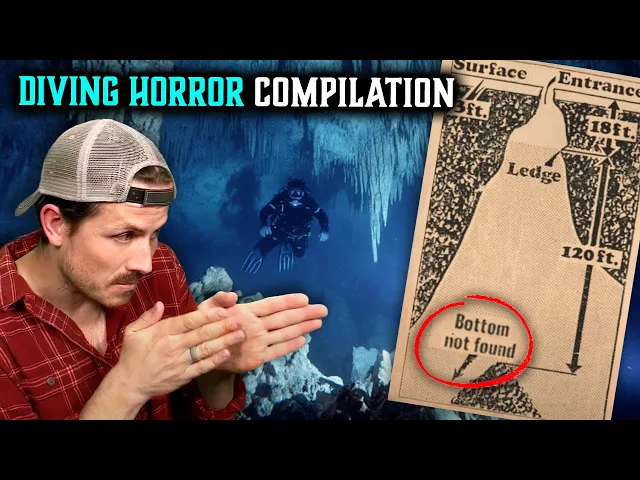
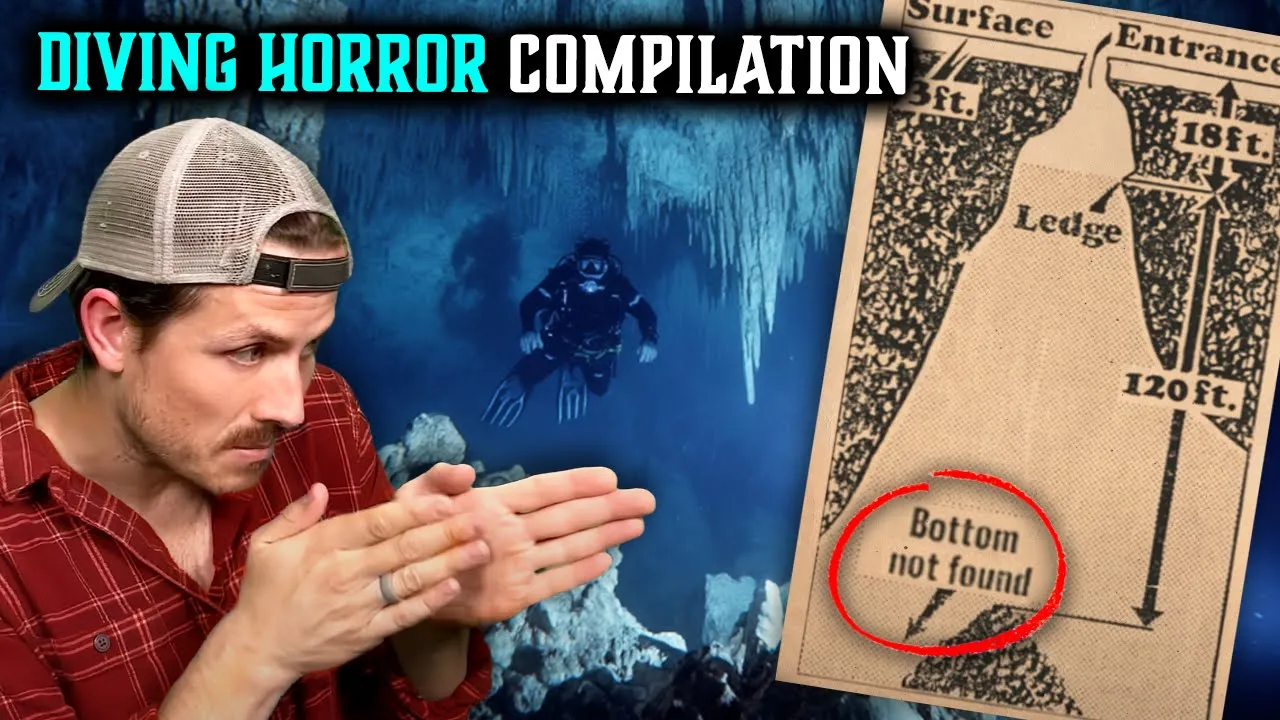
horse out of the way. And then when he came back to look at this thing, he saw it was only maybe a foot across. But when he peered down into it, he saw It was very deep. And so he got down on his hands and knees to get a closer look. And when his eyes adjusted, he could not believe what he was seeing. 10 or 15 ft below the surface was this huge pool of clear water. The horse had just stepped into the roof of an underground cave. And so the farmer was really excited to
see how big this cave was. And so he grabbed all his horses and he brought them back to the stable and he got this long measuring rope with a Weight at the end of it. So he runs back out to the hole. He puts the weight into the hole and he begins paying out this rope. And so down it goes 10 ft, 20 ft, 30 ft. It just keeps on going and going until finally the weight hits solid land at 120 ft. And so the farmer is like, "Wow, this is a huge cave." So he
pulls it back up thinking that's the bottom. But in reality, it wasn't. It actually extended down almost 300 additional feet. The farmer and his horse had just Accidentally found one of the most beautiful and deadly freshwater caves in the world called the Shaft. The reason it's called the Shaft is because the only way in or out of this underwater cave is through this hole in the middle of this field that this horse created. And it's literally a shaft that goes down 18 ft until it reaches the surface of this massive underground body of water. The
opening to this shaft is so narrow that cave divers, they can't get Into it with their gear on their backs. So, they literally need to be lowered into this cave by themselves and then their gear is lowered down after them and they put it on while they're treading water. the solid ground that the farmer's weighted line had touched at 120 ft when he believed he had reached the bottom of the cave. What he had actually touched was the top of something called the rock pile. The rock pile is basically this huge underwater Pyramid that looks
like a rock pile that sits at the bottom in the middle of this huge underwater cave. And from the top of this rock pile, you can go down it in all different directions. But once you get to the bottom, there's only two tunnels to choose from. There's one that goes west, basically down at an angle that dead ends at 260 ft. And then on the other side of this underwater pyramid is the eastern tunnel, and that's much more treacherous. It goes Down at a more steep angle to 400 ft. The few elite divers that have
explored the deepest recesses of this cave say there are three distinct stages to it. Stage one is from the surface down to 120 ft, the top of the rock pile. During this stage, the diver swims unobstructed in beautiful clear water with sunlight poking through the hole. It's a very easy section of the cave, and there's a safety line that's anchored from the surface straight down to the top of the Rock pile, so you have something to hold on to as you go down and back up. Stage two is where things get a bit dicey. Stage
two begins at the top of the rock pile and extends down all the way to the bottom of the westerly tunnel at 260 ft where it dead ends or down to the 200 ft mark of the easterly tunnel where you come to something called the drop off ledge. And it's quite literally a ledge in the middle of this tunnel where beyond it there's a fairly steep drop Off and it leads down to an area that's so treacherous it's got its own stage. Starting with stage two and then with stage three, there is no safety line
to guide you in the direction you need to go. So, you're on your own as soon as you reach the top of the rock pile. And so, you make your way down any direction you want down the rock pile until you reach either of these tunnels. And as soon as you go into them, you immediately start to lose visibility Because the sunlight cannot penetrate all the way into these tunnels. And so, the diver becomes increasingly reliant on their flashlight. As such, they have to be very careful as they navigate down stage two to not bump
into the walls because doing so will knock the limestone silt off of the walls. It will create a cloud of it in their face. It will blind them. It's like being in fog where a flashlight can't push through it. And so the diver has to either wait For the silt to clear, which could take a very long time, or they have to swim blind. Also, anyone entering stage two and stage three, they can't breathe regular air out of their tanks. There's too much nitrogen in regular air. The deeper you dive, the more nitrogen your body
will absorb. And if you have too much nitrogen in your system, it can give you something called nitrogen narcosis, which is like being really drunk. And in extreme cases, people have Been known to take their mouthpiece out and inhale water believing they're on the surface. Or they'll confuse the direction up with the direction down. And to get to the surface, they will swim straight down until it's too late and they can't get back up again. And so divers that are going to be in stage two or stage three of this cave will breathe a special
mix of gases that are low in nitrogen. The final stage of the shaft, stage three, is just from the 200t mark Of the easterly cave. So that drop off ledge all the way down to the bottom at 400 ft. This stage is unbelievably dangerous. As soon as you drop off that ledge, all the sunlight goes away. It is pitch black and the tunnel narrows considerably and stays incredibly narrow. In fact, many times divers have to squeeze themselves past sections where the rocks are too close together. And so, because you're inherently bumping into the walls all
through stage Three, you're pretty much guaranteed to be silted out the entire time. At this depth, nitrogen narcosis is virtually guaranteed, even if you're breathing a special low nitrogen mix of gases. And so, divers need to be ready to abort the dive at any moment if they feel symptoms coming on. Once the diver has turned around and is making their return trip, but they're still in the third stage section of the cave, they need to be careful of false domes. These are Offshoots on the ceiling only in this third stage that look like the way
out. And especially when things are silted out and it's dark, you're low on oxygen, you might be panicking. It'd be very easy to confuse these with the way out. But in fact, these false domes are exactly what their name implies. They are false. They are dead ends. They go nowhere. Stage three is reserved exclusively for extremely experienced cave divers who get special permission. In 1973, eight divers got permission to dive the first and second stages of the shaft cave. They did not get permission to dive the third stage of the cave. On May 28th of
that year, the eight divers arrived in that big open field near the cave opening and began prepping their gear. Their plan was to dive down all the way to the edge of the drop off ledge. So looking into the third stage and then once they got there look around for a minute and then turn around and Head back up to the surface. These eight divers were experienced divers, but their experience was all in open water environments. None of them had dove in a cave. And so they were confident divers, but they were a little bit
naive. They believed the dive down to the edge of the third stage was going to be fairly routine and would just be simple and fun. But before any of them had even gotten into the water, they had already made a critical mistake. Instead of Jamming their bottle with the special low nitrogen mixed gas that they would need since they were going into stage two and so that's a requirement, instead of doing that, they just jammed their bottles with regular air. So they were basically guaranteeing that they would get nitrogen narcosis. But once they had all
their gear prepped, they made their way over to the entrance to the shaft and one by one they were lowered down into the water and their gear would Follow. And then once all of them were all jocked up, they grabbed the safety line and they began their descent. It only took about 2 minutes to get down to the top of the rock pile. And there they spent about 5 minutes taking pictures of each other before heading down the eastern tunnel. Three of the divers were siblings, Glenn, Steven, and Christine, who were 25, 22, and 19,
respectively. And Glenn remembers after they made their way all the way down the eastern Tunnel and they reached the drop off ledge, he remembers seeing his sister, his brother, and all the other divers. Everyone seemed just fine. And everyone's just looking over this ledge. They're taking turns kind of peering down into this black abyss that is stage three. And then after 5 minutes or so, Glenn looked at his gauge and he saw his air was getting fairly low. Not emergency situation, but it was time to leave. And everybody else had the same Amount of air
as he did. And so everybody else was running low on air. And so Glenn was about to grab his sister who was several feet right in front of him. She was still looking over the ledge down into stage three. But when he reached out to grab her, she and all the other divers just suddenly jumped forward and dove straight down into the abyss out of sight. They dove into the stage three section. This was not something that Glenn was tracking Anybody doing. This was not something anyone said they were going to do. This was not
part of the dive. This was very dangerous and they weren't allowed to go down there. And so Glenn immediately swam down after them to try to grab his sister and stop her or grab his brother or grab any of them. But as soon as he went over that ledge, he saw it was totally pitch black and it was completely silted out from all these divers suddenly launching over the edge. And so Glenn knows he's not going to find them in the silt. It's also very dangerous for him alone to just dive down there. And so
he figures, you know what, I'm sure they're fine. They probably planned this out and they're just going to go down a little ways and they'll come back up again. And so I'll just go to the rock pile and wait for them. And so Glenn turns around and he goes up back over the drop off ledge. He makes his way to the rock pile and he Just sits there facing the eastern tunnel waiting for his brother, his sister, and the other divers to come back out again, but they don't. And finally, his air gauge gets so
low that he literally has to go to the surface. And he's thinking to himself, if my air is this low, what are they doing down there? 24year-old Larry Reynolds was one of the divers that went with Glenn's sister and brother and the other two divers into this forbidden third stage Section of the cave. Although he doesn't say this, it sounded like he and the others just wanted to go a little ways into this offlimit section, check it out, and then turn around and go back to the surface. And so Larry would say as soon as
they went over the ledge and they're in this third stage, it went completely pitch black and the tunnel immediately constricted dramatically. And so as they're going down this very tight and pitch black tunnel, they reach A section that's so tight, they're down on their stomachs, literally pulling themselves through. And so after a few minutes of the group forcing themselves into this unbelievably dangerous place, it's like they all collectively realized this is a terrible idea. We need to turn back. And so as they all began turning around, they realized their return trip just back up to
the drop off ledge, which was only maybe 25 ft, was completely silted out. And so Larry is In the back of this return trip line. And right in front of him is Christine. And so as soon as they all make their way into the silt, the only thing Larry can see with his flashlight is Christine's fins. And so he's staying right up on her and keeping his light on that fin to make sure he's going in the right direction. And so after only a few moments, Christine's fins just suddenly disappear. And so Larry's thinking, I
don't know where she went, but I don't Have enough time. I have almost no air. And so he just keeps on swimming, believing he's going the right way. And sure enough, he clears out of the silt and he goes up and back over the drop off ledge. and he shines his light back up the eastern tunnel, back up towards the rock pile, expecting to see Christine and the other divers he was just with. But he's looking and there's no one there. There's no silt. It's totally clear and there's not one diver In front of him.
So he looks at his gauge again and he's got a little bit of air, enough to maybe go down and make sure nobody is still down there because he's thinking, I don't think it's possible they could have swam all the way through this tunnel in this space of time. So he turns around, he goes back over the drop off ledge, back into the silt. And as he's moving very slowly and cautiously up ahead, he sees flashlights moving around on the ceiling of the Tunnel. And so he moves down towards this flashing light. And he realizes
the light is coming from inside of a false dome right above him. And so he looks up and he saw there was Christine and another man named Roberts who was 28 frantically swimming around shining their lights looking for the way out not realizing they're in this dead end. And so Larry was about to shine his light to get their attention when Larry's flashlight went out. And so now Larry is In complete darkness. He is completely silted out. He doesn't even know how much air he has left cuz he can't shine the light on it. And
so he's starting to panic. He starts banging on his flashlight and finally the light comes back on. And when it does, he shines it straight up again to try to shine it towards Christine and Roberts. But he had drifted farther down the tunnel. And so by the time he shined his light, he wasn't underneath the false stone. But When he shined his light in the other direction, he saw he was at the very far end of where the group had gone. And so farther down into stage three was clear. There was no silt. And so
he shined his light down into the stage three tunnel. And way down the tunnel, barely visible, he sees there is one diver with his flashlight out swimming the wrong direction down into oblivion. His name was John. He was 20 years old and he almost certainly had nitrogen narcosis. Larry knew he could not save him. And so Larry turned around and went back into the silt back up in the direction of the rock pile, touching the ceiling, looking for that entrance into the false dome to try to help Christine and Roberts. But he's not finding it.
And he's looking at his air gauge and it's getting critically low. And he knows if he doesn't go soon, he's going to die. And so at some point after not finding the entrance to this false dome, he decides He just has to go out and save himself. And so he manages to get out of the silt. He goes up and over the drop off ledge. He gets to the rock pile. He grabs the safety line and he fins himself up to the surface. And when he gets to the surface, he looks around and there's only
three other divers up there. One of which is Glenn. And Glenn, he looks visibly panicked and he yells to Larry, "Hey, have you seen my brother and my sister? Have you seen the others? Are they coming up after you?" And Larry looks at him and just shakes his head. He didn't know what to say. He knew they were gone. But for Glenn, this was his baby brother, his baby sister. He had to go back down. And so with the little bit of air he had left, he put his mouthpiece in. He turned around and he
dove straight down as fast as he could, staring towards the opening of the eastern tunnel, praying that his family members, that his friends are going to Come out of there. But as he's swimming down and he's running out of air, no one was coming out of that tunnel. And so finally, when his air was basically empty, he had to turn around. And on that return trip back to the surface, he realized his siblings and his two friends were gone. It would take 11 months and 11 days to finally locate and recover all four of the
bodies inside of the cave. John, the 20-year-old, who Larry saw swimming in the wrong Direction, was found fairly far down the eastern tunnel, laying on a rocky outcropping. Glenn's 22-year-old brother, Steven, was found just 50 ft from the entrance of the shaft, but it's believed he died at a much lower depth and then floated up to that position. Glenn's 19-year-old sister, Christine, and the 28-year-old man, Roberts, that she was with inside of the false dome, were found embracing each other just under the false dome inside of the Tunnel. Investigators believe when they were in there,
they couldn't find the exit and then realized that they had so little air that even if they found the exit, they would not get out in time. And so, knowing they were just minutes away from death, they abandoned looking for the exit and instead just embraced each other while they died. And then afterwards they floated down and out of the false dome. After this tragedy, the shaft was permanently closed to all Divers, but years later they would reopen [Music] it. In case you haven't heard yet, our newest graphic novel, Mr. Ballan presents Where Nightmares Live
is available for pre-order right now. It contains another nine heartstoppping, strange, dark, and mysterious stories, all based on real events. This was a passion project. It took a lot of time, a lot of people involved from the Artwork to the storytelling. I mean, this is a beautiful piece to add to your collection. So, you got to check it out. The book comes out on September 30th, but again, you can pre-order your copy at book.bballinsstudios.com or you can click the link in the description below. There are a limited number of hands signed copies available, but those
are going to sell out very quickly. So, please pre-order today because remember, Your nightmares are waiting. Thank you so much for watching. Let me know what you thought of today's episode in the comments. And remember, we have hundreds of videos for you to binge right now. But if you're looking for a recommendation from me of that one video that's worth your time, well, it's this one right here. So, give it a watch. All right, until next time. See you.