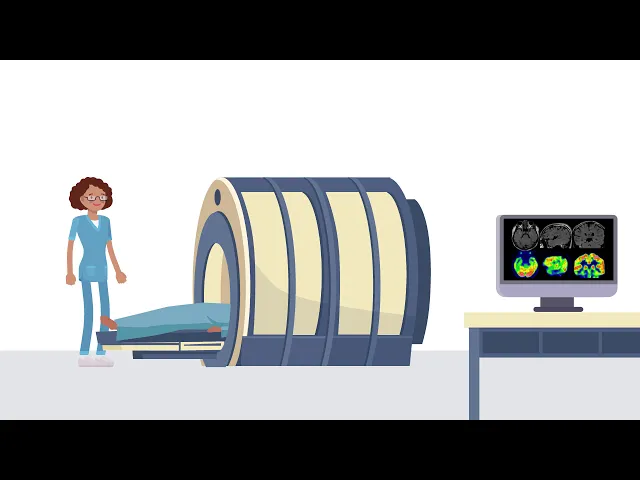
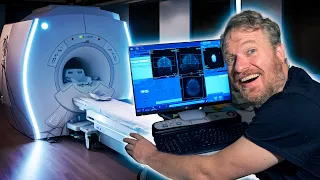
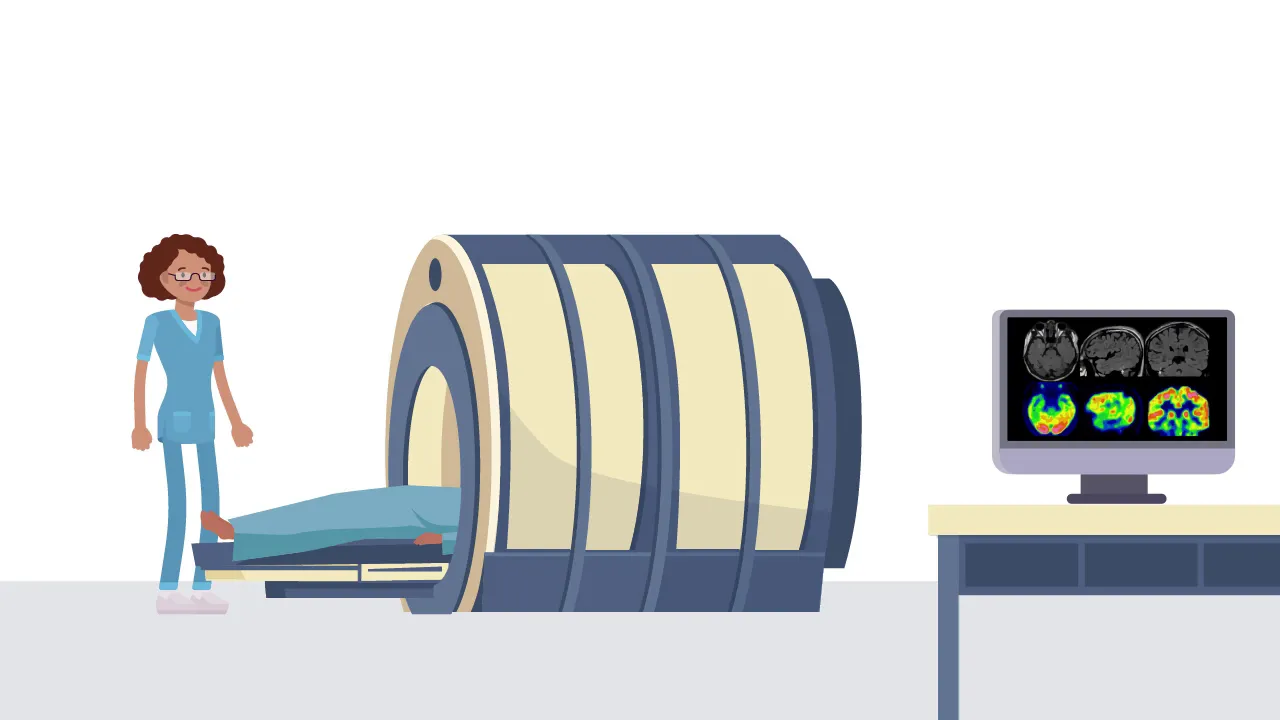
[Music] advancements in medical imaging allow us to study parts of the body including the brain like never before but how our MRI images formed non-invasively and without radiation the short answer by relying on physics and signal processing the science behind our digital lives magnetic resonance imaging or MRI leverages powerful magnetic fields so powerful that they are at least 60,000 times stronger than the standard refrigerator magnet this magnetic field targets hydrogen atom protons making each proton align with or against the magnetic field then repeated radiofrequency current pulses at just the right frequency are introduced when a
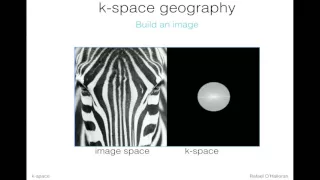
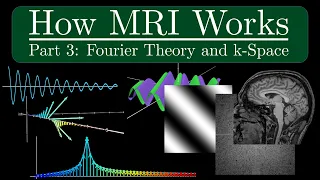
pulse is turned on it knocks the protons out of their alignment changing the direction of their tiny magnetic fields when the pulse is turned off the protons gradually realign to their original state and each emits a tiny signal as the radiofrequency pulse is turned on and off repeatedly millions of radio signals are generated from the combined output of the protons the scanner directs magnetic gradients to different positions so that the data from the protons eventually fills a grid in what is called the case base values in those locations represent the spatial frequency components of the
MRI image we apply a dominant signal processing algorithm known as the inverse of the fast Fourier transform on the case-based data to create the MRI image the fast Fourier transform or FFT is one of the most versatile tools for scientists and engineers and identifies the frequencies in a signal another common application of the Fourier transform is JPEG image compression which is used to reduce Internet file sizes but signal processing engineers are exploring ways to optimize the image construction process some MRIs take at least an hour or more to produce a perfect image this has two
negative effects logistical strain on the health care facility scanning a limited number of patients and patient discomfort in claustrophobia there is a need for a faster turnaround to create images faster certain frequency case based data is often omitted or truncated applying the inverse Fourier transform only on the remaining data however this results in aliasing artifacts including the Gibbs phenomenon which is a ringing that arises from truncating the case-based frequencies signal processing techniques to reduce these artifacts are being developed recently another state-of-the-art signal processing technique is being investigated compressed sensing compressed sensing uses sophisticated signal processing
techniques to construct an image from partial case-based samples resulting in faster image creation but without the Gibbs wringing these techniques are still evolving and are of an area of opportunity for signal processing engineers to collaborate with doctors and technicians to disrupt the medical imaging industry in fact Facebook's artificial intelligence research group and the NYU School of Medicine have partnered to explore how artificial intelligence can use parallel imaging to generate scans faster engineers are also leveraging signal processing in new innovative MRI techniques that study functions of the brain as these techniques evolve engineers can use these
signal processing techniques to determine which parts of the brain are active when you tell a lie develop wiring maps of neural connections in the brain which will aid surgeons in brain tumor removals improve mr spectroscopy another non-invasive test that measures biochemical changes in the brain especially the presence of tumors and advanced MRI diffusion imaging methods which are used to study Alzheimer's Parkinson's and ADHD and also predict who will benefit from a given therapy will you lead the next wave of signal processing that will transform the medical imaging industry to learn more about these technologies contact
the I Triple E signal processing Society image video and multi-dimensional signal processing Technical Committee [Music] you