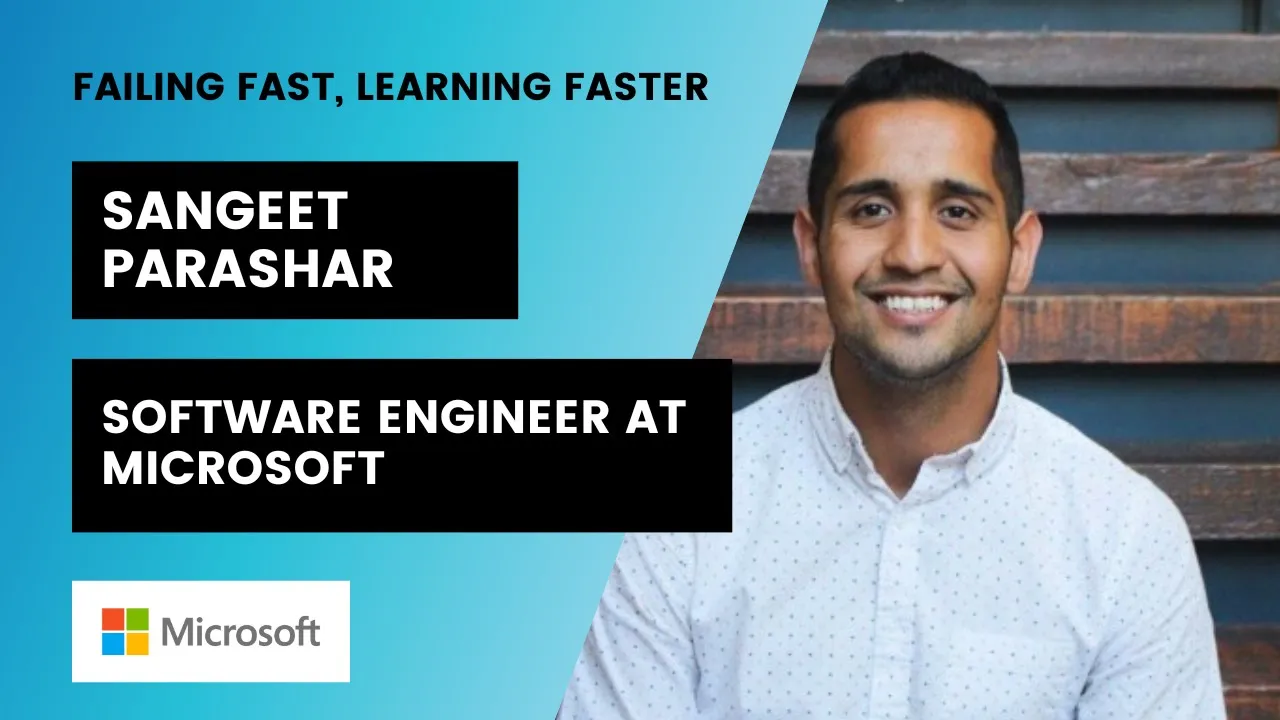
foreign [Music] welcome to the cast we're so excited to have you on today's episode and to learn more about your career Journey I'm going to jump right into the first question sangi we would love to hear more about your story and career development let's start from the very beginning how did your post-secondary experience lead you to where you are today oh oh we're getting right into the meat of it I basically filled my way into computer science and the reason is I went to University and my family came from a biology background where we're doctors
I was like naturally this is what I'm going to do as well so what is the University just wasn't getting good grades I want to say it was because I didn't have the right system to support Circle and enough interest in BIO to fail all of them but the reality is I did I went through biology Neuroscience accounting and then finally landed into computer science and luckily the TA that I had that was teaching me the fundamental computer science taught me something quite interesting that stuck with me until this day and has kept me interested
enough to pursue my career into it the saying was everything in life is an algorithm and if you can break it down into the simple building block you can create whatever you want and I stuck with me till this day and I try to follow him and tell everyone else about it as well definitely I love that saying that's the first time I'm hearing it and I'm definitely going to take that with me thank you for bringing us along on that Journey so I'd love to reflect more on that and ask you how does that
Journey differ from your initial expectations and did you envision this specific career path from a young age or did your aspirations change along the way yeah I mean it definitely differed quite a bit as a young kid I always thought I was going to be an athlete just like everyone else did and then after that I was like okay if not that I guess I'm going to be a psychiatrist complete polar opposite but that's what I truly thought I was very interested in when I switched into computer science I was like you know what I'll
be happy if I just got an engineering job made like 50 60 000 a year and I was just happy in my little corner so it's changed drastically since then and even being in engineering it's changed where now I've realized I want to learn different things and personally for me I want to be in the blockchain space which just means I need to be more flexible and learn and go deeper in the space a lot more so my aspirations keep changing but as long as I feel like I'm striving for the next level I can
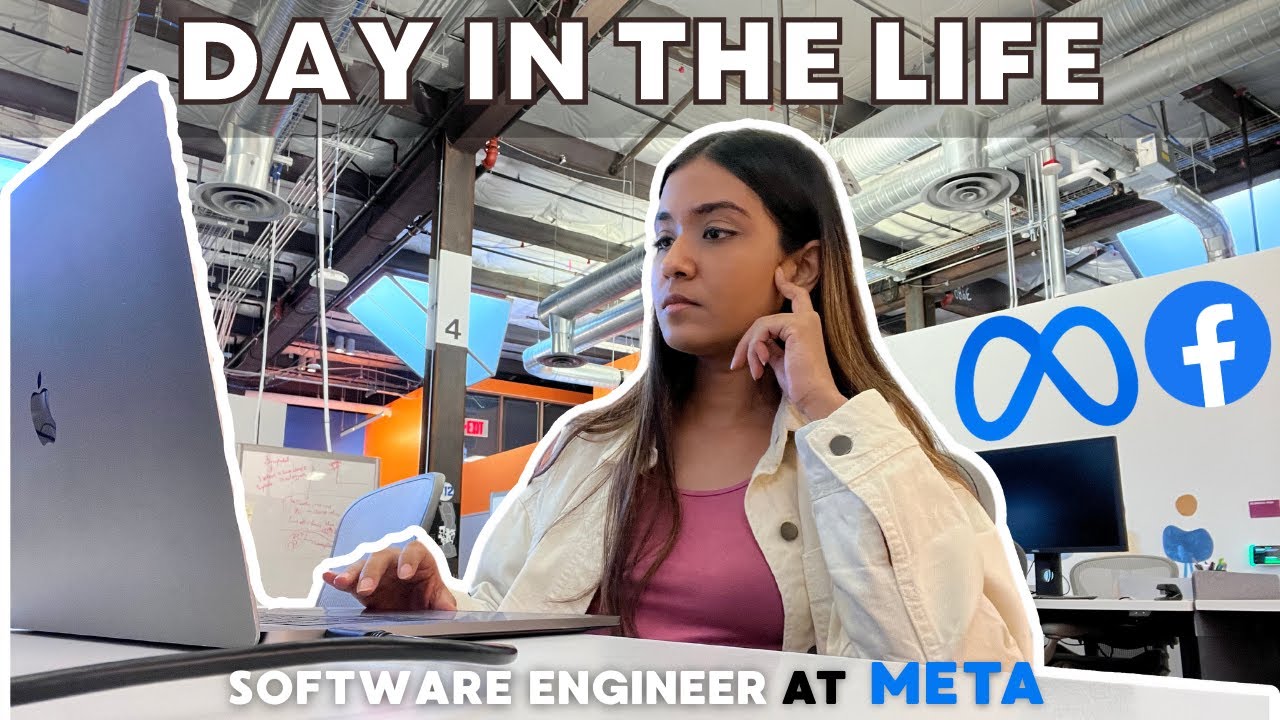
get there definitely I think it's important that aspirations are constantly changing and it's also important to reflect on the journey behind you and see what your goals were and what you ended up achieving you've definitely achieved a lot you've succeeded at multiple companies with Deloitte RBC Ventures and Microsoft so our next question I'd love to know what encouraged you or inspires you to move on to the next thing and how did you move from Deloitte to RBC Ventures and then ultimately how were you able to break into Microsoft from RBC well I guess the very
first point was when I switched into computer science I wasn't fully sure if this was going to be it for me if this is what my target goal was going to be but I remember writing this down on a piece of paper until this day it like stays with me which is I wanted to go deeper into engineering and build tools that will eventually have some sort of utility even if five people use it I would have been more than happy so that meant I wanted to do three things I wanted to be able to
build I wanted to be able to sell and I wanted to be able to scale and as you'll see in my journey that's where I've been so when I first started out I had a lot of imposter syndrome when I wasn't sure if I was ready for engineering altogether so I was like you know what I'm slightly technical but I want to be able to pitch to c-suite so that's where Consulting came in I was at Deloitte and once I felt like had enough understanding where now it was all about my reps that needed to
go in I wanted to learn how to scale startups so when I went to RBC Ventures I was one of the 10 Engineers on the team and our biggest problem was how do we make sure our services are scalable enough that they'll be useful and won't crash on users there on I learned that's not my favorite part and now what I wanted to learn is how do you handle true scale which is a billion users every single day and how will you get into the real nitty-gritty product development of a product that is fully fleshed
out and that was my journey into big Tech like that was where I thought I wanted to be it didn't matter if it was Microsoft Amazon Google anywhere in big Tech but that's where I wanted to be now in terms of breaking into Microsoft it's going to be a very boring answer but it's a numbers game it's you need to put in your work of doing lead code understanding your algorithm inside out it's like doing an mcad or any of the standardized test there's a clear-cut way you need to be able to pass and succeed
it so that's irrelevant of whatever happens and the next is and I'll put out this fact as well I mentioned it to a few people already I've done over 800 applications before I got my 10 interviews with big time I still have the Excel sheet with me where I remember applying every single day knowing as long as I was ready I forgot the interview I would pass and move on and yeah the boring answer is it's a numbers game and you need to put your reps in yeah definitely it might be a boring answer to
some but it's definitely important to all of our listeners especially who break into Microsoft themselves one day so thank you for sharing all those great points and now speaking more on your current role at Microsoft I know you mentioned on a call with me once that there are energy drainers and energy givers and so I would love to ask you Sangeet what those are for you in your current role and how you manage those tasks accordingly I'll do my dreams first because they're very evident for me one is I don't like the standard nine to
five even though that's basically what everyone's usually in so I would say it's continuous work without priority which is hey we need to work eight hours Let's just build something the second is repetitive task which falls in the same format once I've solved something I don't want to have to write it a thousand times and the last one which I'm currently just doing is test cases which is making sure the piece of code you build is actually secure enough now these are dreams that I know I need to do regardless but I don't really enjoy
and I guess my energy gains or givers will be my project style work which is I don't mind putting in 14 hours in a day if I need to whatever piece I'm working on will come to an end and I'll get a little breather the second is constantly changing my work environment and I'm notorious for it I'll like spend one day in the office two days at a cafe and two days at home as long as I can constantly move around and have a different view I'm happy and the last one is I guess a
bit more technical but I like to focus on design and architecture like that is what brings me true Joy and now how do I balance them because I don't really get to have all of it at all times I try to follow the 70 30 rule which is as long as I'm doing 70 of the fun work I can live with 30 boring so I primarily don't do nine to five and my managers are quite comfortable with it sometimes I'll start at 11 or 12 and go on much later I try to balance boring works
if I have test cases I am not starting at 9am I will make sure I start at 11 and I'll go on till 8 PM focus on test cases know that there's lunch coming up and I'll be very happy and then switch on to programming and try to do something more creative or if I need to actually go to a nine to five I'll make sure I finish my work early so I can work on my personal projects a bit later so yeah it's just all about the balance up at 70 30 will for me
yeah definitely it's a good Rule and I remember after that call I really valid the Insight that that outlook on work gave me and I agree with a lot of those points I think we have some similar energy givers and I do think it's a really important aspect of working full-time to stay motivated and sort of gauge that yourself so thank you for answering that question and I'm going to move on to our last question Sangeet and it's a little bit of a tough one but if given the opportunity what's something that you feel you
would have done differently in your career path what advice do you wish someone had given to you at your age I'll start with the advice because I think it's a bit easier I'll break it into three you can choose which one we want to dive deeper into or all of them but one is I wish someone told me to focus on competency and the three main pillars around it and the pillars would be how do you really learn how do you get past a 15 threshold and how do you build on top of it so
I wish someone told me that like that's would have been amazing I think what I would have done differently slash when I would still also tell other people to do is to fail really fast and I think I'm envious of people who are much younger than me because you have a lot more time to fail and it makes things easier so I think I would have not taken four years to go through three different Majors I would have liked to do them within two years taking a lot more electives Without Really it mattering but being
like I'm curious I want to do it I hate it I'm moving on and just the mindset would have helped me a lot more I still think I would have ended up in a very similar field because this was a very open-ended career for me so yeah if you want we can dive deeper into feeling faster or the pillars whatever you like I would say I'm interested to hear more about failing faster all right I've given this quite a bit of thoughts I'm pumped we're taught at a very very young age that great equals appreciation
so basically a school puts a huge emphasis on passing on getting good grades parents for not and I'm not trying to offend any parents but for not having a style of knowing better it's if you pass or get trophies we love you more if you feel there's a punishment Associated to it but the reality is if you're doing something new and you're doing something hard the expectation is you're gonna fail a lot more than you're gonna succeed because the moment you succeed you can move on to the next thing so I think that's a part
where our society or even like our school system and our incentives are set around that just it discourages people to take more risks especially when you're in like high school or university you have so much opportunity to fail and the biggest fear is who are you going to disappoint it's never you because you know that you'll be okay it's am I gonna at this point my peers or my parents or people I look up to but that's okay because there's going to be thousands of you when you hold someone accountable you put a pressure on
yourself that if I fail they'll judge me for it and trust me it's okay because a good Mentor will understand that feeling is just a part of the journey so yeah failing faster would have just been Step Zero except and internalize it yeah definitely it's really interesting to hear that advice I feel like it applies to me and also a lot of our our listeners just to take risks and fail while there's less on the line so I definitely agree with that and that concludes our last question I know that one was sort of a
difficult one but I do really think that that's personally my favorite one to ask I think our listeners benefit a lot from that what you would have told yourself is possibly what is helping them in the future as well so thank you I'm sure our listeners will really benefit from all the Insight that you've shared and it was truly a pleasure to ask all these questions to Sandy you can place your song like [Music]






![Visual Calculations in Power BI - DAX Made Easy! [Full Course]](https://img.youtube.com/vi/JITM2iW2uLQ/maxresdefault.jpg)