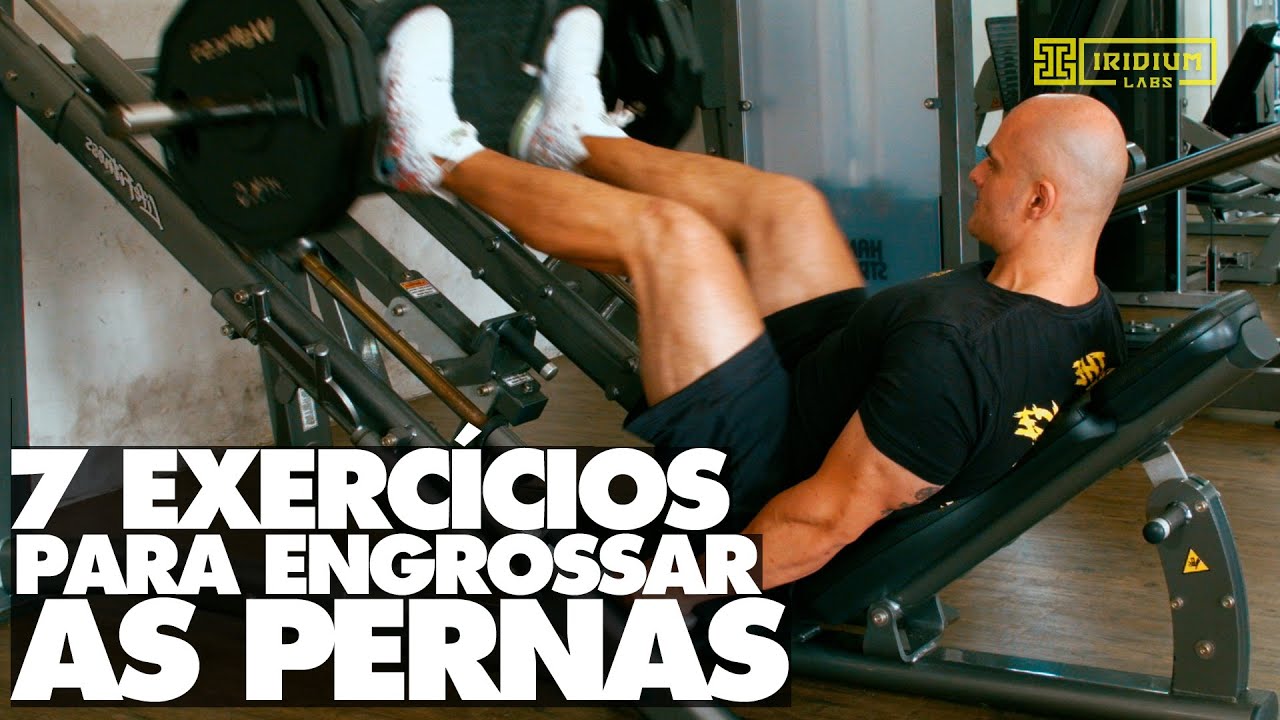
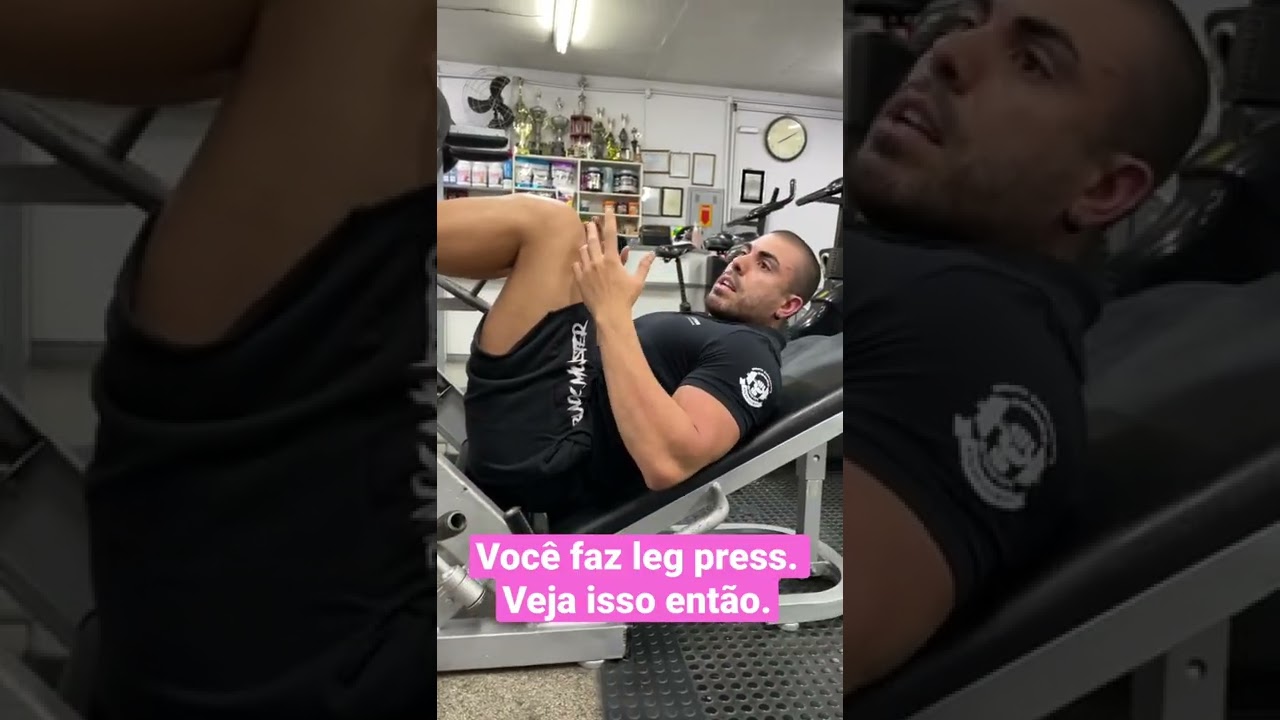
The leg press is one of the essential exercises in leg training. Exactly because it will be an adaptation of the squat, and when we talk about squats, we talk about the best exercise there is for you to work your thighs and glutes. The first mistake is not adjusting the machine properly.
We need to place the platform at the ideal height. All legs , or at least the vast majority of them, have two heights. If you are a shorter person, it is interesting to place the platform low, or a taller person, place it higher.
It is important that you do this before putting on weight. I've seen several times people carrying the leg and then asking someone for help because it wasn't at the right height. Now, something that is very important even for your safety.
- What's that, Ranizito? - The lock? - What's the lock?
- Of security. Of security! You can make it higher or lower.
Imagine that you are doing the leg, and there comes a moment when you lose strength. If it doesn't have a lock, it will crush you like when you make mashed potatoes. The 2nd mistake is something I see a lot and people don't pay attention to.
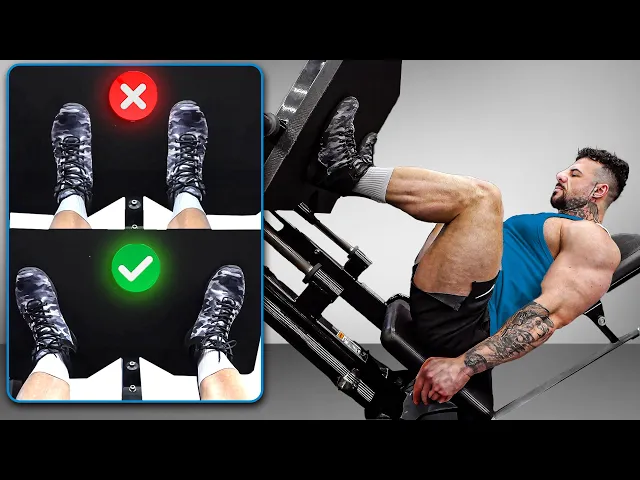
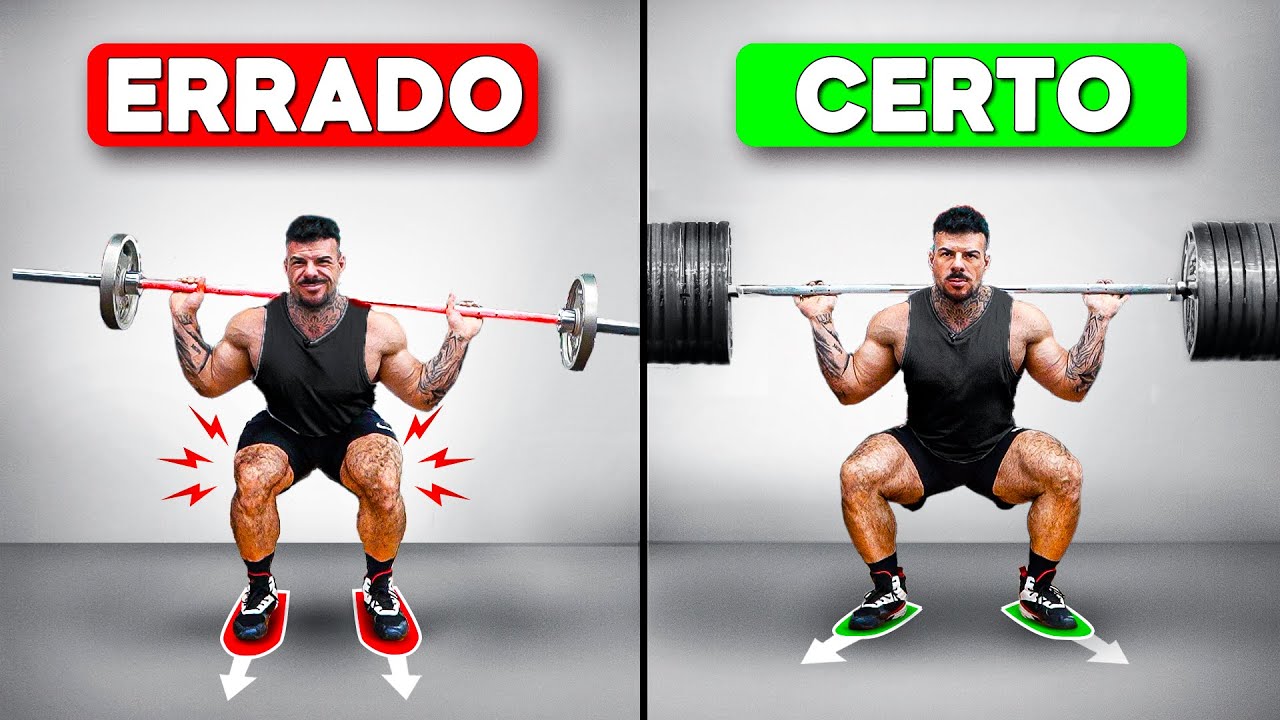
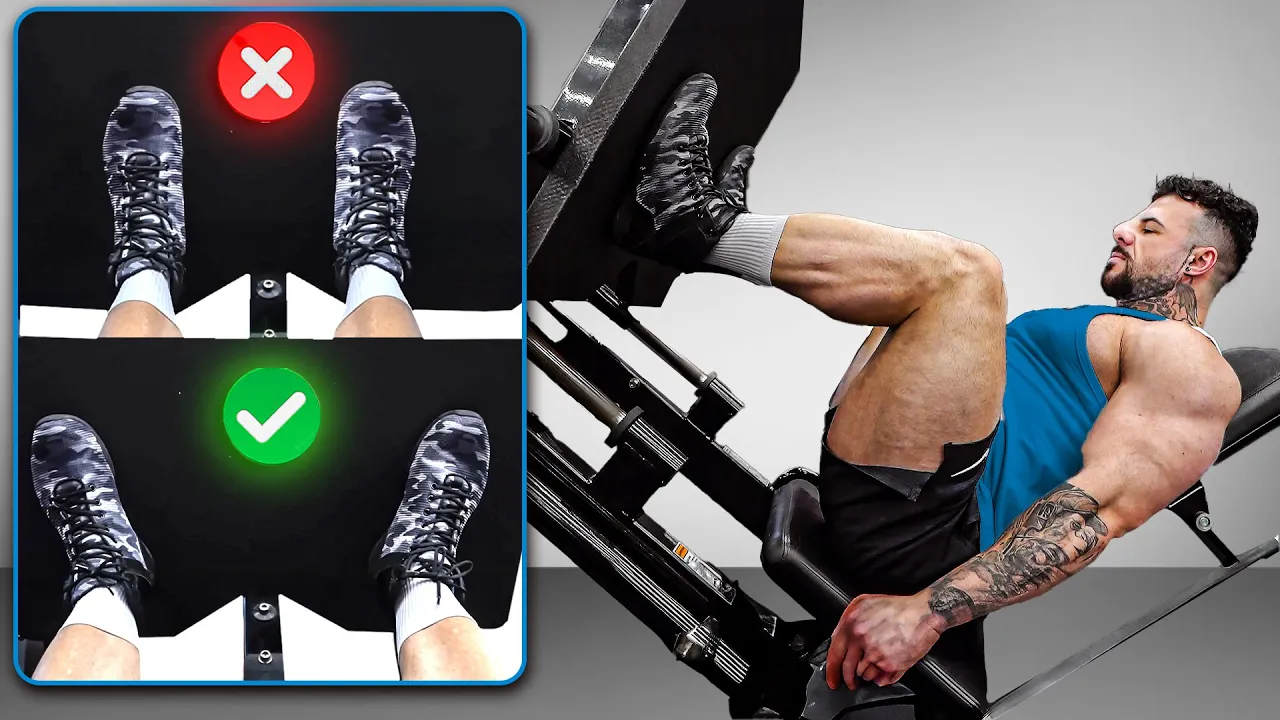
We are talking about the position of the feet. In many moments I see one foot further apart than the other, or one foot a little higher than the other, and all of this will considerably change the biomechanics in each leg. What's the idea?
Make sure you have both feet at the same distance from the platform, and both feet at the same distance from the top of the platform. Whether you place them higher or lower is another matter. There is still a point here that is a message, a tip.
Instead of leaving your foot completely straight, place the tip of your foot slightly apart. This gives you comfort while exercising. Because the bone in your leg, when we talk about the femur, it already has a slight outward inclination.
If you place your foot straight, you force a movement that is anti-anatomical. In other words, it is not natural for your body. You can leave the tip of your foot a little apart.
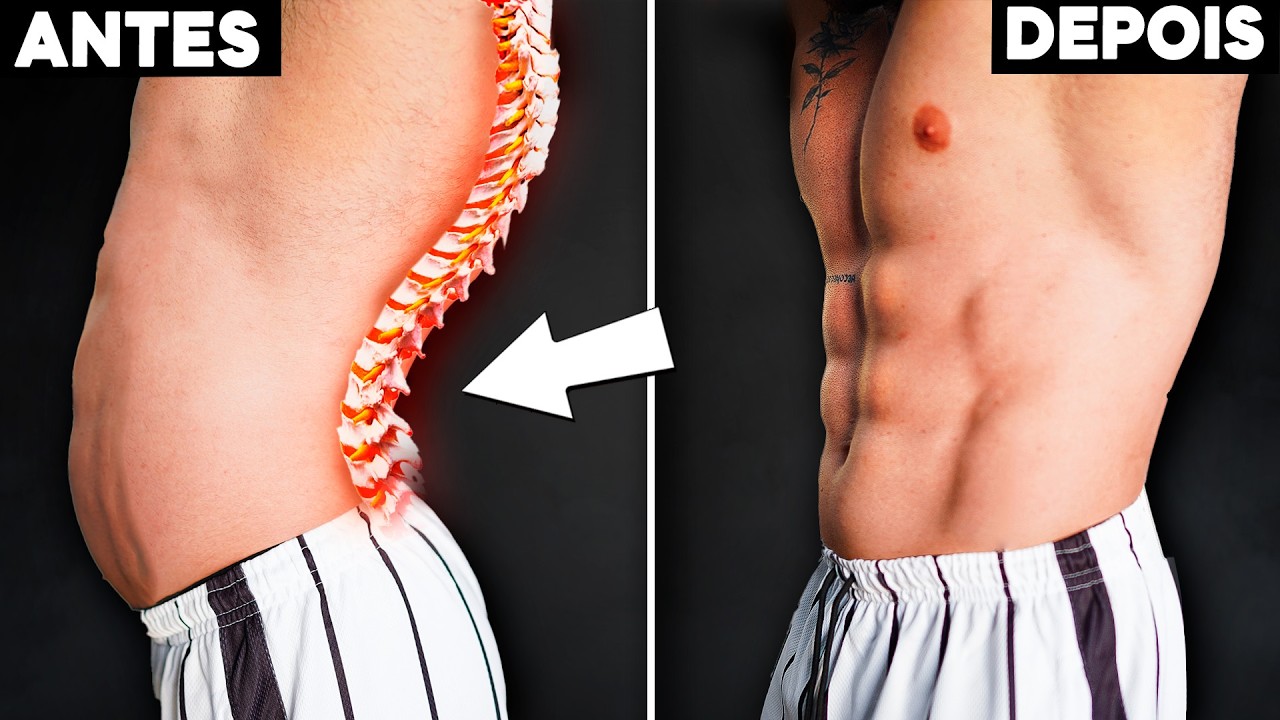
The 3rd mistake will hurt your lower back, and you may be doing it because you want to optimize your work. You know that the greater the range of motion, the better, and the more you stretch that glute, the more work it will take. But look what happens to my hips and my lower back.
My lower back rounds, and this movement is a danger to your lower back. You will notice that some people will be able to descend more, and others less, because this concerns their hip mobility. As you descend, you will use your hip mobility.
There comes a time when it reaches the limit, and if you want to go down even further, the hip, which is unable to cope, asks the lower back for help, which is a joint that should not make this movement. You need to go down as far as you can, but you will go down until your hips are still supported there. You go down, and when you feel that he wants to get up, you push again.
This here seems not to be the case, but it is an error. Do you see that my knee is completely extended? When the knee extends, look what happens to my leg: the muscles are relaxed.
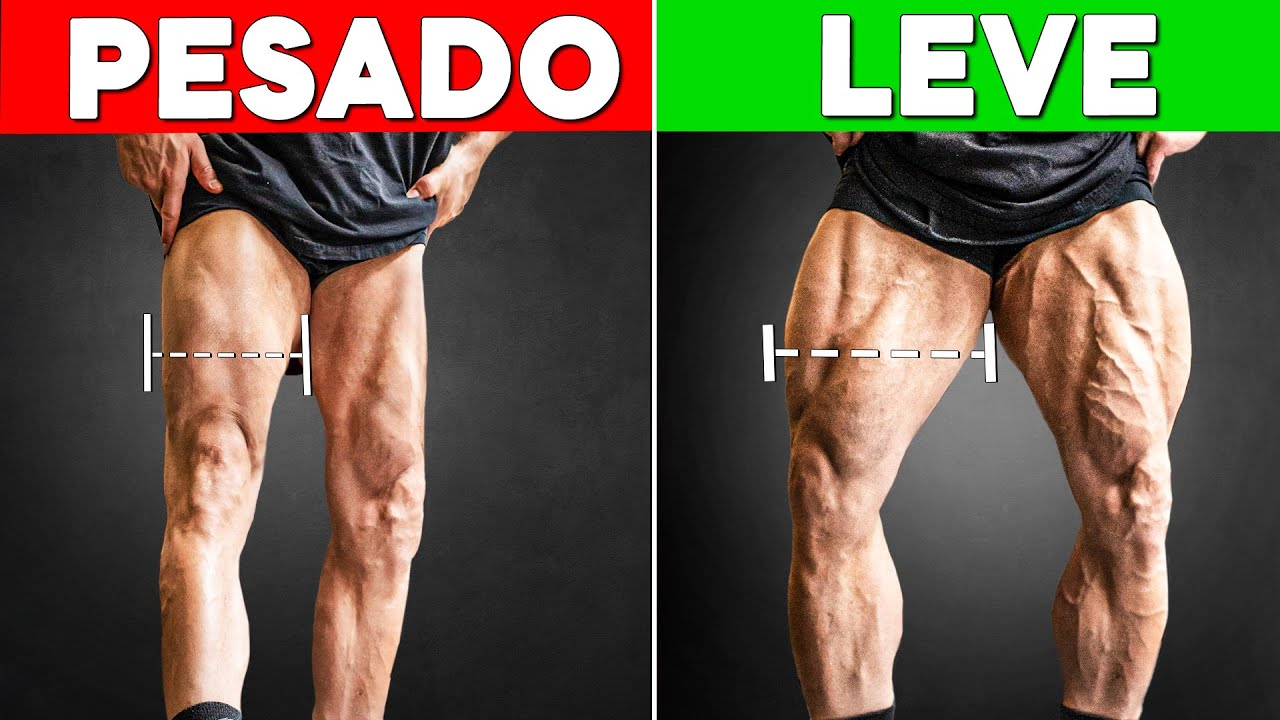
This is bad for hypertrophy, because during the series, if you do one repetition, you extend your knee and your leg relaxes, and this continues throughout the series, you will lose time under tension, which is an important variable for hypertrophy. , and I keep a close eye on this, to always provide you with maximum hypertrophy. It is exactly by applying these things to Muscle 60D that I can deliver a year of results to everyone in just 2 months.
This is my main program. The link is below, take a look. Instead of extending your knee completely when you go up, you remain with it slightly bent.
Look how interesting: he's extended, leg relaxed. Look what happens when I flex my knee just a little. Did you notice that your leg tensed?
You will go down as far as you can while keeping your hips, and you will stop moments before fully extending your knee, and some people do this by pushing the knee very hard, and with the load, you could have an accident. This is the 5th mistake. People, when going up, end up leaving the heel without pressure, and putting all the pressure on the toe.
This is very intuitive, actually. You notice that as it gets heavier, you tend to put more pressure on the toe of the foot, to the point that in many moments I was able to visually identify that the heel had even come off the platform. Why is this bad, and what harm does it do to you?
It will take work away from your thigh, and if you do this, the simple fact that you pay attention and put more pressure on your heel, you will feel an absurd amount of work on your quadriceps. What I need you to do, show me there, Ranizito, is for you to feel the weight on your entire foot. You need to be doing the exercise and feeling the pressure that the platform is causing on your heel and toe and because of this, it is important that you are wearing specific shoes for weight training.
This one, from RockFit, is developed for bodybuilding training. Specifically for leg training. Its sole will provide that sensitivity I'm talking about.
There's a link below, on the RockFit website, and you have a LALA discount coupon to pay cheaper. This mistake will hurt your knee. What happens is the following: the person goes down the platform, and when pushing, look what happens to the knee: it moves inwards.
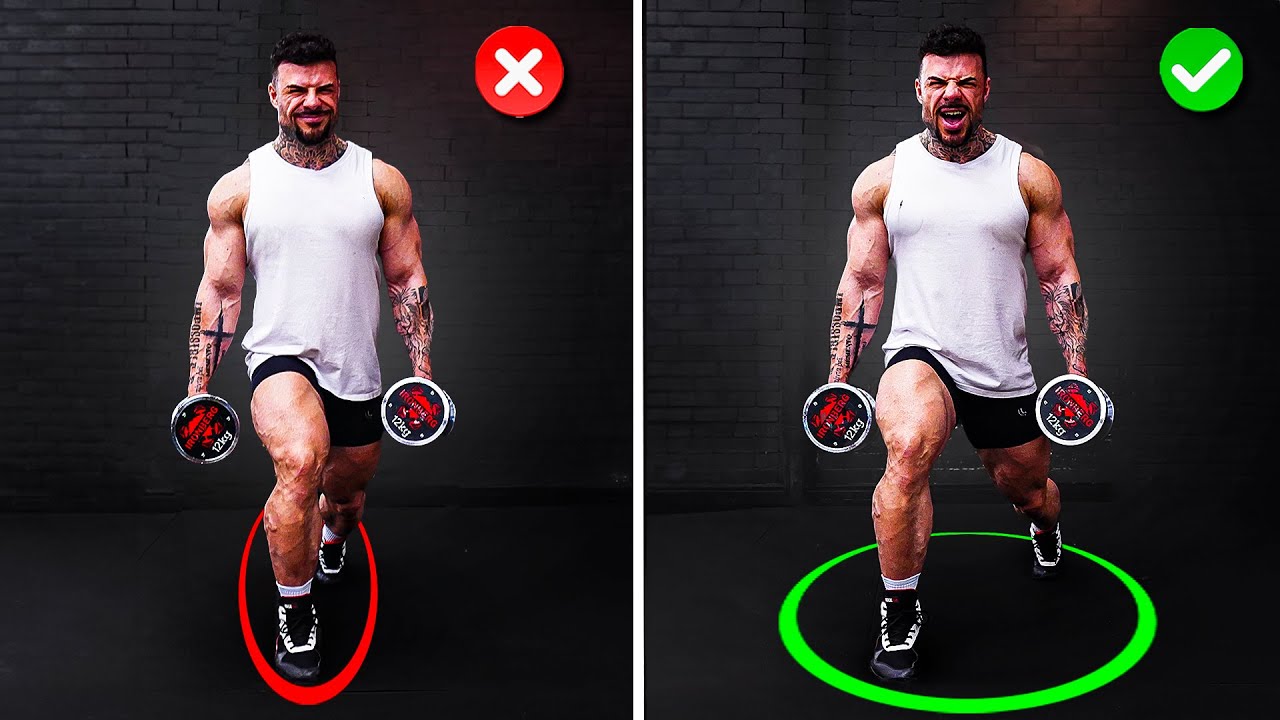
We call this movement dynamic valgus. We have, on the inner part of our thigh, a muscle called the adductor, and it is very strong. They help extend the hips.
When you need more strength, you end up using them. So far, so good, it's a muscle that helps with movement. However, he has a great ability to bring the knee inside.
This joint wasn't made for that, it just needs to bend and come back. If you move it sideways, you will hurt the joint. Springfield Cemetery.
When you make the movement, think about the following: do you see the position of the tip of my foot? I want you to imagine the tip of your foot, go down a line, and place it on your hip. Now, what you're going to do is keep your knee passing along this line.
Check it out: do you notice that he is leaning outwards all the time? Then, you will have it being used the way it was meant to be. One very important thing for your muscle to grow is to have maximum range of motion.
I see this happen very often here. Do you notice that the movement is short? Look how far I'm going down.
Look how far it could have gone. All this extra degree of movement will greatly influence how much this muscle will develop or not. When you're going down, it's important to go down as far as you can until your hip almost leaves the bench, and when you go up, you also go up a lot, keeping your knee almost at maximum extension.
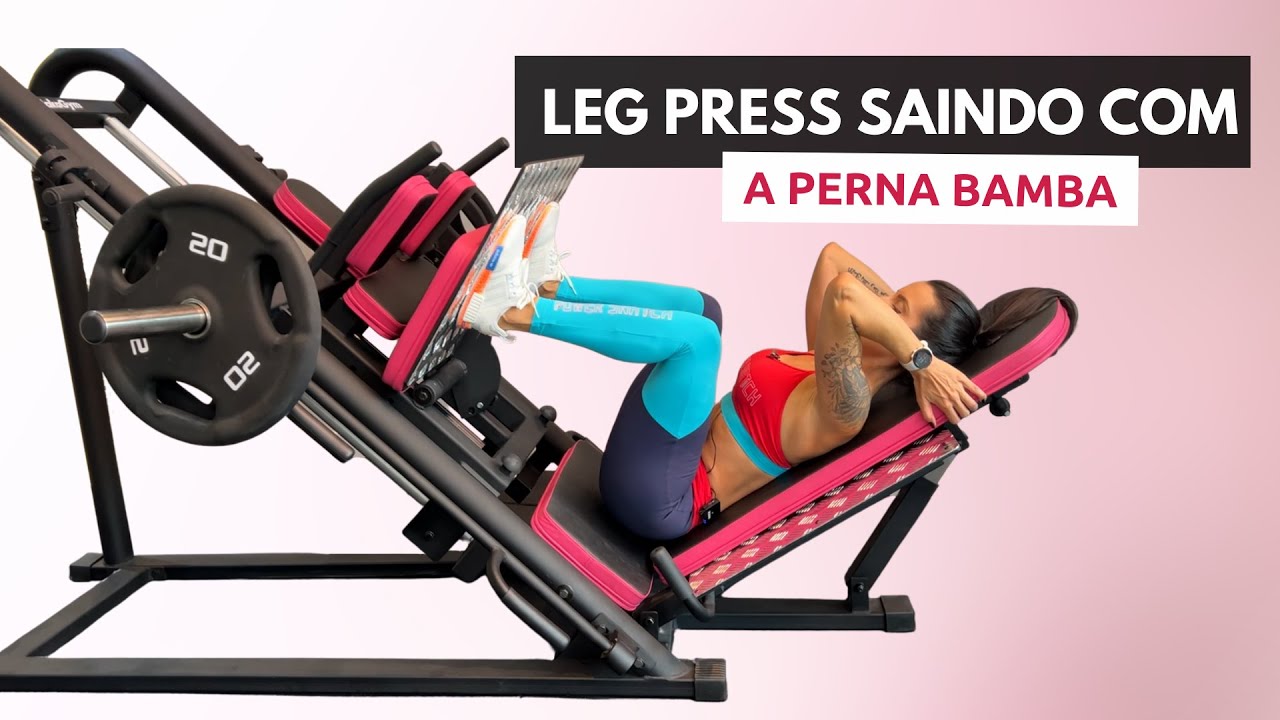
The first thing you have to do is adjust the seat so that it is comfortable for you. Then, make sure the platform is at the right height, and if it isn't, place it before loading it. The safety lock, you realize, is to keep you safe.
Lying down here, the position of the foot will be with the same lateral distance and from top to bottom, and the toe of the foot will be a little apart in relation to the heel. I pushed the platform and unlocked it here. I will go down the platform until the moment my hip remains on the bench.
Just look. When climbing, I need to keep my knee in the same line as the toe of my foot, and this helps me protect the joint. When you go up, you can't extend your knee all the way, so I keep it semi-flexed.
I went down to the maximum, went up, and kept it flexed a little. The tip of the foot, remember that the weight tends to go there ? Keeps the entire weight on the entire sole of the foot.
Distributing the weight across your plantar arch. In this exercise, you can include Lalá's tip . What are you going to do with the toe?
You're going to lift it, so you're going to put even more pressure on the heel. You go down, when your foot supports, and that will happen according to your ankle mobility, you supported and push with the heel. When you can no longer do it this way, you support the tip of your foot, leaving your entire weight on the entire foot, and do a few more repetitions.
For you to continue the work of making your thighs bigger, there will be this video here, where I teach you point by point how to do the squat in the best way, obtaining maximum hypertrophy and avoiding injuries.