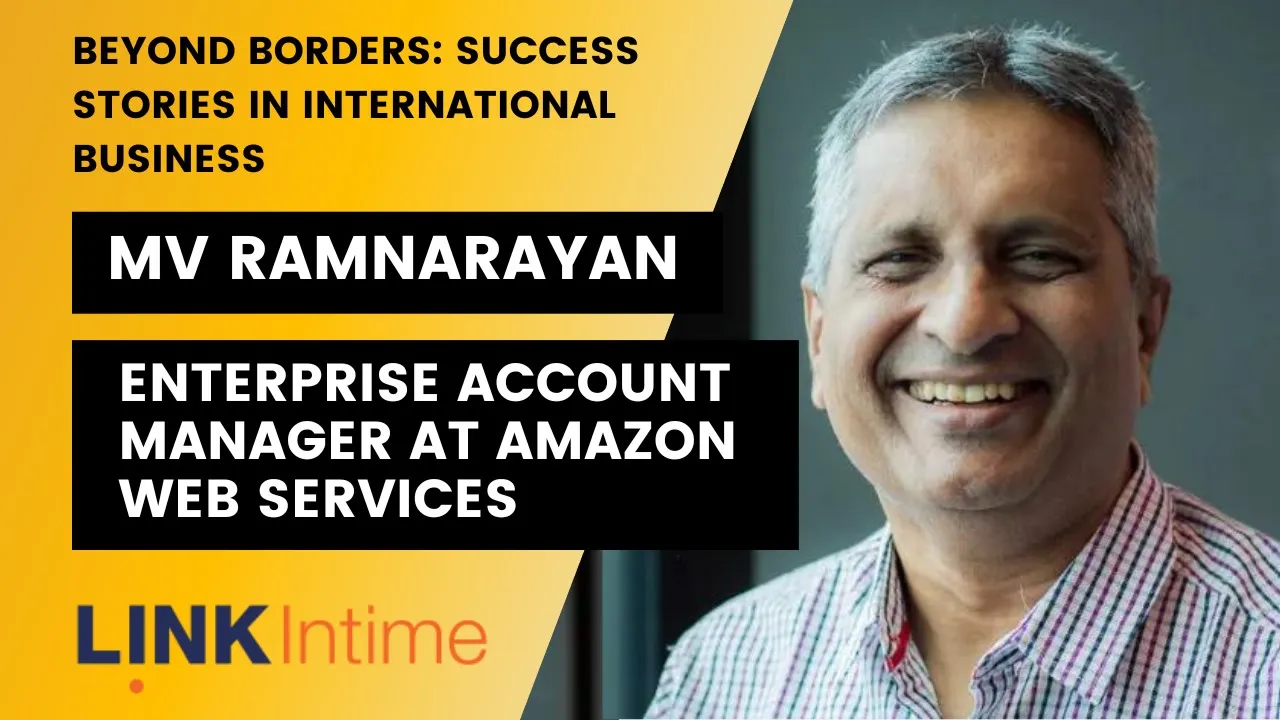
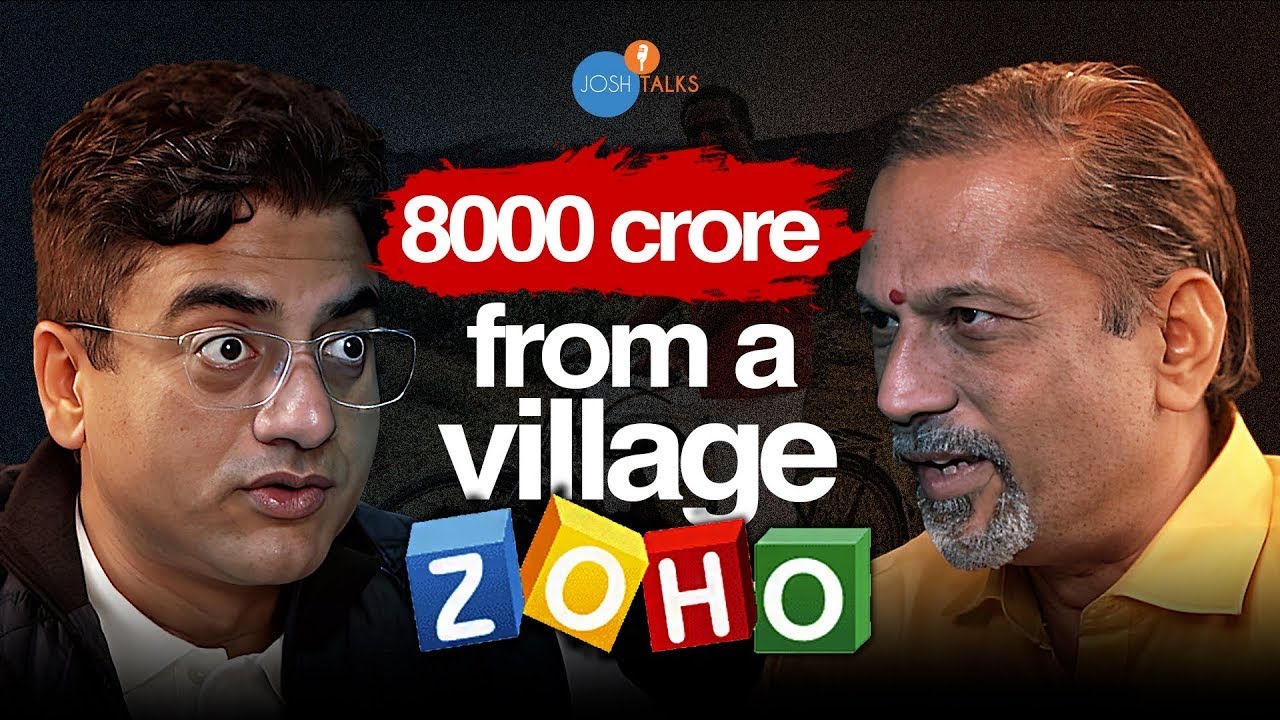
hello everybody I am your host ishan mukarji and joining me is our entrepreneurial guest Mr MV ramar so for those who don't know Mr MV ramnarayan is a retired Indian entrepreneur I would say but he's he goes by many titles but I think he would agree when I say that he was known for his time being director at linkoln time private India limited which was I think initial bundle of Capital Market startups in the 80s and which dealt with security initial public offerings and financial services and today it's a massive organization with over 7,000 employees
globally 90 million investors across countries from you know India Australia Singapore and the rest of the European markets and he's also a chairman and board investor of an upcoming School named B vidan but most importantly he is an entrepreneurial man with a story to tell so first off thank you for your time sir uh how have you been I'm been F fine thank you so Mr R I think it's really important to know you know entrepreneurs from the time that they've grown up from where they've come from because that ultimately shapes a lot of their
ideas their problem statements their their Vision so you if I'm not wrong came up in a country and continent that had just received Independence in India and that General workspace that idea The Innovation side the sort of thing of you know people are coming up with ideas and businesses is very different to how it is is today by a very different margin so tell me about a little bit about how it was growing up for you your family and were there sort of any issues or sort of problems that you identified and really stuck with
you for your business vision from the beginning yes we all grew up as a one family we have four brothers all cooped up in a 350 square ft uh room and a kitchen and while it was very crowded and very challenging to pursue studies we had great fun growing up together and I had my El brother who was a Dodge Bearer for the family who overcame a lot of struggles in his life and he pursued his goal of chared accountancy between me and him there was a 10e gap and I looked up to him to
for inspiration and how he wrote the challenges he was physically handicapped and he was not able to move without crutches so it's a very challenging world then it was a physically challenged world was not there and people didn't know how to you know it was not Chen physically challenge friendly country and even now there a lot of challenges for people to navigate but back then it was a big struggle growing up and he pursued his ched accountancy and so I determined in my life that I would also be a chared accountant so I followed him
and in 1977 I finished my chared accountancy the first attempt and there was no immediate plan to set up an Enterprise though I had behind me a vague feeling that I should do something independent and something not instead of being employed with somebody I should employ people so that that was a one liner with which I I I think the thought process started initially I did join a company though I I was in Union caride India which is became later famous for the Bal tragedy back but back then it was a 14 Factory 26 sales
Outlet in India country and whose battery was very famous brand throughout the country and I I have learned a lot from my at we had very sophisticated computer systems at back then and I was fascinated by what systems and proper processes can do so that started my I would say fora into learning about systems how computers can do things I eventually ended learning cobal programming and in 1982 I after about 4 and a half five years or so roughly of my corporate career I quit the job six months uh prior to my wedding and then
I said that look let me start something so with hardly any money in the purse we said my myself and my partner then we said we'll start up a computer Processing Company where we will you know process process data for clients and give them the outputs so that's how the journey started almost 42 years to this day because my company was incorporated on the 14th of June 1982 and today we are 15th morning your time so two years since we started that company and we had all sorts of trouble computers was not a known commodity
at that time and only the very big corporations used to have what we call the second generation computers was huge computer rooms and back then there was big premium on computer time availability we used to get slots a lot it to us and so all these things were big challenges but somehow we bought our first micro computer it used to be called personal computer PCS which was yeah just about you know about a 52 KB 256 KB RAM and machines and something you know which is very very very primitive by today's standard absolutely primitive and
we started with the dot matrix printer and a 10 MB hard disk and that's how we started for two floppy drives so we started processing data I got I was lucky enough we were lucky enough to get a first break almost within three months we acquired a client and that client was an newspaper so we designed a circulation Billing System and an advertising Billing System for them and that got implemented and it was much ahead of its time because the other major newspapers in Mumbai at that time we not having computerized billing for advertisement so
it was like almost a Trail Blazer at the time and we completed that that that implementation within six months so that gave me some confidence that look we are in business and we started with a very small office again a 250 square ft space where we housed all this and till 1984 and it was a big huge struggle just to acquire clients convince them to go for computer because I had to do concept selling at that time many companies didn't have computer so somehow we managed all that and 85 around things started slowly jelling after
two two and a half years of hard work we started Gathering some steam by the time the Entire Computer scenario world over changed yeah Ms do system came into play and in India the the importing policies got very liberalized so the computers which we bought for x amount became one by 10 yes absolutely so that became a huge challenge that I remember that in 1990 after about seven years I was paying the last installment for my bank loan for the first computer purchase which we made and each installment was equal to one I could buy
a whole new system with that installment so that that's the kind of Journey we had very exciting times so when we are doing this data processing we are doing financial accounting systems advertising billing we're doing payrolls we're doing inventory and we also Consulting by the side you know trying to get compies to implement their own computer systems and during that process we started processing share accounting dividends interest processing for fixed deposits for banks and others yeah that Journey started Us in the share registry field and while registry was mostly manually driven in those days but
the companies which were having many shareholders like some of the companies we process were having 20,000 25,000 sh and for them to process dividend was the task so we started with that in somewhere in 856 and that business that particular process business started getting Steam and getting more clients so by 1990 thereabouts we had about 15 to 20 clients who do he did share accounting and so in 1991 the Indian regulator sebi that is the Securities Exchange Securities Exchange yeah yeah so that came into existence in 1991 through a charting in the Parliament and all
we registers were had to get registered with sebi as a SE register intermediary and that became a compulsion in 1992 so so since we are doing this processing for many companies including the physical transfers and things like that we decided to wind down the other uh segments of data processing and systems consultancy which we are doing in my in a company Spectrum corporate services so uh we decided me and my fellow directors my partners decided that we will wind down that segment and concentrate entirely on share registry so that's how the yes by we already
did a couple of IPOs in 1991 92 in Canada and in the western Nations those volumes are not imaginable we process something around 700,000 plus applications these are present only in the Indian IPO Market it's very rarely seen in outside the Indian market because here we retailers can apply whereas abroad mostly Brokers apply and then a lot the so we had a huge first IPO in 1992 where I remember spending almost five nights a week in my office sorting out the various physical application forms so that was the journey and in 1993 we established ourselves
as a pure play registry company and thereafter one more important historical thing happened in the Indian Capital Market for the better the National Stock Exchange came into bu around that time and that was entirely a computerized version so you know that that changed the trading game t+ you know 15 became t+ 7 so a lot of things started changing around that time and the national Securities development that is the nsdl came into existence in 1996 which made dematerialization of shares as one of the major steps so that actually worked in our favor in my company's
favor because dmat or dematerialization demat as we yeah was something which was change the rules of the game for share registry yeah prior to that share regist were you know evaluated on what physical space they had how many employees they had and you know whether they could process so much physical paper in a given period of time and we were not very much on top at that time there were other major players who were having huge resources who had yeah huge officers and employees so we used to get sidetracked and we used to get the
B and C grade items there yeah but nsdl came we grabbed that opportunity and we were among the first three regist in the country to set up weats and get connected to the dmat bandwagon and that the scenario in our favor lot more companies listed companies became our clients by the end of 1997 and we became I think a very recognized company in the industry and we started to get clients from across India couple of clients joined us from Chennai bang so you know that started the expansion game but we still were not there were
you have to remember isan at that time there were about 300 registered regist in India of course yeah there is a lot yeah we were probably number 20 25 in that in that long list okay so we and another fellow company at that time 97 998 were competing for a lot of business lot of BDS used to pitch together and you know try to this thing one he will get when I will get yeah so this company and the owner owners of that company and our owner profile was very very similar and so I in
one of those meetings I called out to him and I said look guys why are we fighting each other there are big fishes in the market let's come together and let's make it one company and so that we can find the competition better so that happened in 1998 so we became from Spectrum we became in time Spectrum in time the other company and we joined forces and within two years we really became a force to reckon with because we we I think jumped right from the 20s 25s to the top five registry company in the
country so that changed the ball game and we were looked at from in the industry as very efficient very computers tech savvy very up toate and also very knowledgeable in the field because compliance and Regulatory we had expertise in all the areas so we became a register of choice for many of the companies and so that Journey continued and after the post 99 2003 there was a phase when the Indian markets were very very dull D 20034 upwards the markets look more IPOs came into being and we got a fair share of them we were
almost number two in the IPO market and we quickly became number one in 2007 and that is when the link group which was based in Sydney Australia yeah they started talking to us Computer Share which is another wellknown company in Australia already tied up with our major competitor so link wanted a piece of the action here so they came to Mumbai and we got talking in 2007 and well we decided like that that's a way to go so we needed International collaboration and they provided is that and then we were also looking for the succession
of the company I was getting well into my mid 50s and so was my so we looked at various other things were already 20 plus years 22 years in the business and so we said look this is a time to really uh look at uh de risking ourselves and the company and the employees so we joined hands with link in 2008 and that's when uh the link group uh bought St into us and we became Link in Time which is a which is so well known today and for the last 7 15 17 years we
have been about I think 10 times out of 15 we have been the number one in the in the rankings as far as the IPOs and transactions have been concerned so with the link group and coming in and with this thing it again changed our Horizons and we became truly forced to reckon with and I think we gathered stream became bigger officers bigger this thing number of employees grew up all those success stories came in and I assumed and and we we thought that okay this will last under three four years link will you know
we had an agreement for them to buy us out and we said I will retired at the age of 58 59 I was looking forward to doing person other things but that that because link the my Australian colleagues were very happy with the cabia so they said look is some this is a piece of action you guys have to manage so and we have become very friendly by that time and then it is like almost the same company so in my Sydney visits we used to jingly say that look I I think I should immigrate
to Sydney and set up shop here yeah kind of conversation so finally what happened was in 2015 the link group went public in Sydney in Australia they became a listed company so at that time they had a compulsion to buyers over fully because uh their rules would not agree to part time this so we we became 100% subsidiary of the link group in 2014 and in 2015 I and I also took over as the managing director of the engine operations and that lasted up to 2017 beginning at that time I I had to step down
I said look I have other interest to pursue yeah so I told my colleagues and so my sort of one phase of the journey ended in 2006 16 end and 2017 to 2019 three years I was uh only a director on the board and we were you know concluding some key transactions including takeovers of many of the Indian registry companies and we took over the Tata group TSL we took five six companies during the phase between 2015 and 2018 we acquired all those consolid all those businesses and today I'm very glad to tell you that
link in time is today an 800 9900 plus employee company Indian operations only group has more than 7,000 employees but in Indian operations in for the registry is 800 plus we have the link group India cell which CS to the global processing which is also has another 700,000 employees here yeah so it's been a very satisfactory Journey but right now as we speak in the link group has got again taken over by that's yeah so now it's it's called muf sorry this is very recent happening so they have of acquired the entire I think they
in the process of day listing if I already not day listed in Australia so now the Japanese the Mitsubushi Corporation has taken over they have got a very strong Global footprint and with that I think the company's po to grow even further up from here yeah and lot of Global transactions in India I think that will continue to grow but my journey ended towards the end of 2019 just before the covid struck I exited the board and I I had to concentrate on my other interests I was already involved in education and let me call
it quits there so that ended my corporate Journey the age of 65 I said time to yeah no absolutely I think I honestly if I have to tell you that story was excellent because it quite literally hit every single one of my questions and it gave an answer to every single one of them so I I I want to like I would like to break it down a little bit and just go into the specific nitty-gritty so and I think this links in very well if we're going to talk about let's start with the earlier
years first so I think you brought up a really good point with about Computing and that sort of innovation that you know it was not seen as natural at the time many people would like in terms of share registries you were talking about you know accountants these are very manual jobs that were you know really seeing slow traction but not fully adoption of technology and I think I'm sure I don't know I'm sure you've heard of the story but you know I was reading about Steve Jobs just as an Entre entrepreneur and just seeing his
own journey and you know I saw that you know he was an English student he had nothing to do with tech initially but it was the invention of the Polaroid camera and Polaroids that you know really got him going into Apple so would you say that you know the initial computers those personal comps was it was that your entry because you seem that from the get-go you and your partners were already on board with the technological wave that was going to come in for the next 50 years or so and you know it seemed so
yeah was that really the thing that said you know I this is going to stay we're here to stay if we go along with it just do you think that yes that yes that that really convinced me see when in the 80s 81 82 when we started this germ of an idea and said we'll do that Pro what we wanted to do was we wanted to be a bridge between the end user and the high the Tech chaps the used to be called the programmers at the time systems analysts and programmers yeah they used to
in jarg so they used to talk J and they used to that look these were and the the accountants or the inventory managers which is the commercial applications at that time scientific applications of course there but that was mostly in the research Labs but the the commercial applications and the users of it used to get lost so my job actually entailed in Union carard a bridge between between my it section and my users like I I I used to I one of the task which I did carried out there convinced me that look there's a
huge gap there I I had to you know in my marketing of the car company we had we the chemicals and plastic ju so we used to do that the coding system what was operating at that time and how the reports were coming all wrong so I told my boss that look I need to revamp this entire structure and make it more logical so that started my journey and I said that look we could be a bridge between the user and the technical so that's how the concept started PCS made it much more easier for
us to the personal computers which IBM PC first came launched in 1984 that became much more easier to convince especially the down the road middle uh level businesses who couldn't afford big setups so they said that look this is something which we can use so we started very basic systems telling them how they could simplify payroll how they could simplify accounting and by the time many of the larger corporations were already used to getting fanfold reports of computers either from some of the so it's not something insurance companies life insurance LC all had computerized so
we had a fair bit of like electrical I had an advantage isan two of my other brothers were in in systems departments computers so I I could go over to see their you know huge IBM 1401 370 machines and you know see what happens behind the scene there and so there was Advantage there was some technical competence in the family also so I could sort of Bounce some ideas and you know get going so these all help absolutely I think that's really important because I mean we're going into similarly when you had a tech boom
you know with the first computers we're now having a tech like a data analytics boom right now I think every every undergrad every college student these days has to know coding to some extent they need to know multiple program languages data visualization data processing these things have become so much more streamlined and also required and you mentioned you know some of your clients especially you know the big corporations that came to you and said you know we really want to take this on board and I think uh I wanted to touch on that which is
you know at that time I think HDFC and HDFC limited I think would have come to you initially and said that you know we're expanding this is post 91 obviously when India's had liberalization across its economy I think do you did you see that digitalization would you have foreseen that it was going to become so big that even forget about you know accountancy or payroll initiation entire jobs in the bank in terms of internal regulations and internal data processing and compliance all those things are getting viralized today there's a very real chance of that did
you foresee that to an extent or no yeah I I it would be you know we saw that coming in after 1985 86 isan see what happened then was the the we had huge we already had many of the startups at that time IID graduates I had my yeah friends in the industry we had started one of the companies which is very famous today and it's a Bist Company mtech Limited I had already started something for hotel software they were into that the group of course started in2 almost at the same time when we started
I mean they inor at the time so we had heard in the market infosis there's a company called infosis there's a company Al there was some established company PCS Tata consultany were already there in the in the field so there was a big a huge space where technical establishments and Computing it companies were already in the freight so not like it was not like a I mean so it was easy to foresee a wave coming in we what happened was in 19 84 the small computer Raj Gandhi liberalization did 85 was it made much more
affordable because slash duties and so we could get imported the personal computer so they started coming so there were Hardware companies who would get the you know the the basic systems and assemble the computers here in Goa or somewhere here and then sell it Rebrand it and sell it and that was allowed at that time so we had we had a huge number of Hardware companies coming into existence in that time yeah one company called Zenit computer there was I me these are all pure Hardware companies so we did see that and you know by
68790 by 90 Max I think most of the companies had sort of the typewriter had gone out and it was replaced by a personal computer it computers of course the keyboard yeah they all came in okay the way the way it came in and and then the internet started 1994 95 sometime like that the first internet the modem I saw physically was in in the year 1993 19923 I I saw an electronic mod and uh that was manufactured by a French company and and we tested out at at my office and he came with that
equipment and it took me two hours and then I I I was fascinated I said look this is going to change the world of course yeah it did and that it did and so I would not be IM modest if I say I did foresee a huge Revolution coming what form it would take I was not really predictive about that but I said that data will definitely rule the world and in the SLI we were in I said look we are in a good space we need to continue looking at technology use and adapt to
it so I we did see some of the things happening but the kind of the thing change after the smartphones came into exist kind became so Universal today that probably something which we were not really focused on at that time of course looking at internet coming in internet in fact you know my first email ID I still retain it with Yahoo which is you posted me today and that is something I think I got it registered in 97 somewhere long time yeah my email ID has changed since then yeah it was fascinating I used to
we used to you know Access Data from my residen at come know and and you know at night time I used to get a clearer link and we used to is a telephone modem and 8 and when I used to show it to people at home they fascinated so that came in 96 97 I did change the world so I mean yeah just I mean put it into context like 1996 that's nearly three decades ago which is incredible to think about but yeah I mean it's you know it's my age and some more just on
an email ID let alone a computer let alone a modem but I I wanted to just stick a little bit more we we'll get into the I think the more operational aspect but I think the time came for me to ask this question it's because we're just talking about data in general which is you know there's often a big debate about creative destruction as well as you know the idea that you know technology is is it going to assist us and make us more productive or is it going to wipe out jobs and you know
take away that sort of applicability in business and I I want to talk a little bit more about Finance because of course you have had the experience to work across a various amount of financial services you know it's not just accountant payrolls loans dematerialization initial public offerings these sorts of financial services no one some people are certain that it's going to change in the next 5 years or so some people see it changing across a a decade or two my question to you is how the impact on entrepreneurship do you think that sort of change
in the global markets that Digi digitization is it it's going to do you think it's going to maybe help it out and make it easier for entrepreneurship in the sense that it's going to become more accessible costs are going to reduce or do you think it's going to make it more difficult because then the competition is going to expand and you know systems are going to become more complex more heavy duty and that's going to require more specialization so do you what do you see there for entrepreneurship then from data and that expansion see there's
a lot of talk going on isan about artificial intelligence replacing humans yeah of course I in this journey of my lifetime I have seen technology only expanding the expanding the cake yeah I never seen it sinking that space you know of course so if you so when I when I look at the number of entrepreneurs number of startups which are there in India the world over and and the ideas consume and ideas which get going I I will not be pessimistic about technology redu using the space on the contrary I look at I look at
two developments today which is very important yeah one is one is qu Quantum Computing yeah now that is something which is which is going to impact very heavily on the the the applications world over because the the the Computing time for data crunching or analysis or meaningful analysis is going to be reduced by huge yeah it's going to be cut yeah absolutely so what's going to happen is it's going to impact on so many Industries like medical Diagnostics delivery of medical this thing and you know of course technology can be misused cont Computing can be
misused other things but then mostly likely I see an enormous change coming into data analytics AI is now coming into the four the usefulness of AI still not really I I not really delved into it in dep but I'm not very sure that it is it's it's going to be very very useful in the country like India for example because what happens is techsavvy people down the line I think it's going to help them imely and simple example you know the country better you know there are some 100 languages in this country I go will
help me to converse anywhere go anywhere I mean it's across the world but more relevantly in India and and I can talk to villages in their language they can understand and I don't need to really so so these are some of the applic so I do not think technology will kill businesses what will happen is it will challenge you to be more value driven you cannot just sell you know me to products so we will have to innovate we'll have to the the startups we have to think of how they can deliver faster in real
time products which are no there are virtual products there are things like for example the advertising advertising will change for sure because all it change it's no longer 20 years back advertising was a very different world today it's a very different world because it's digital it's Target so now now for example with the this thing coming in technology coming in it will be very very focused on what is your target audience it will have more real what I call very genuine data to work yeah so so I I think technology will help to help create
more useful startups some of them will fall by the way side because some of them may be too early in concept so that happens in every way but I think eventually we'll see a rise in value deliv I think that's yeah I think that's perfect which is in a sense it's going to drive competition and naturally of course startups also have to fail it's it's the law of the land that you know majority of startups do fail it's the truth but definitely as you bring bring up you know it's going to bring up a lot
of important ideas a lot of different concepts and it's going to make people think about you know think twice about how they're going to run their business and speaking of running their business I wanted to get a little bit more into that time especially you know from the 90s onwards you know into the early 2000s I think that was the time where I think you would agree as well it was the prime time for you in your entrepreneurial journey in the sense you know you had the liberalization you had the share Registries open up you
had India open up the economy you had different political crisis in sense or economic crisis because obviously in ' 96 you had the Asian crisis and then in the early 2000s you had the global slowdown because the do Bubble Burst and I that would have obviously affected the tech bubble enormously so I wanted to know a little bit more in terms of your what would you say I mean it's very difficult to ask this but what would you have said have been like the the climax of that sort of entrepreneurial Journey for you what would
have been potential trough you know that lower point that you would have bounced back from of course but that lowest point it doesn't even have to be in the '90s it could have been even before or after and just a little bit more about your own personal achievement yeah yeah yeah on a personal note my lowest point I would say came down somewhere in the year 91 somewhere around that time see we were already seven eight years into the business and we were struggling to sort of you know meeting our cash flows and clients would
come in pay and some of you staying afloat but of course I we were also challenged by lot of our competition and you know yeah price Cuts we do apologize just for the time being there has been a slight delay as a result of connection Mr Raman can you hear me oh dear I believe we have all right no worries yeah can you hear me and we we're back apologies for that go on lost you I don't know no worries we so what happened is yeah in that period in 19991 when we were transiting from
uh you know making our bread and butter business which was into share registry and doing other processing I we had a lot of companies which also none of my some of my key client companies one or two companies turned ttle at that time they lost out because they were into traditional manufacturing and they were lost out so I I had a lot of receivables which eventually I didn't recover they didn't get yeah that that period was financially very tough for meh and that was the exact time 91 I had to take a call to quit
some of the you know Revenue generating businesses because came in to take that very hard decision that look I cut off these businesses I had to tell many of my clients that look I cannot do your processing any longer I cannot do your consulting or I cannot do your any longer I giving you six months time years time so that was hard call to take and I was besieged by me and my partners were besieged by doubts this will sustain not sustain but he said we are to risk this and go forward so that was
I think very very tough times and one more challenge that time threw up was because there were lot of these professionals as today they were much more in demand at that time so guys would come to us I have there one or two years of learning and then some other companies will go go so it was every small entrepreneurs nightmare that I would train up the guys they would be just about being productive and returning in some money for me and they would quit the job in fact some of my guys are very senior Pros
in the industry in the US today so they keep in touch with me even so that's a different issue what I'm trying to say is that those yeah sorry we yeah go on please so 9193 was a phase which I would say some of the low points I hit and both financially as far as resource but things started changing after that slowly but surely yeah and I would say the most productive period for me as an entrepreneur was after we merg within time and we became one company we had set up solid base we had
covered up I think between the two of us we complimented each other very well all of our vulnerabilities were addressed and uh we said we were on a secure platform thereafter I think yeah that that definitely shows just because as you remember as you recall like you merge the compet yeah yeah we're still here I think can you hear me right apologies for that we're back but yeah I think I I think that was really as you were saying in 98 99 you're entering the New Millennium and you've merged the competition together and as a
result you are sort of you're kind of just taking up the market as as you speak but yeah so so would you say that that yeah so that biggest success moment for you would have been merging with in time and going into the new the new new New Year basically to capture the market that was strategically the best decision for both the companies at that of course I think we did the right thing and we quickly finished that merger it didn't take more than a week for us to you know wind up our discussions and
I remember I I I I finished the shaking hands and then I left for a holiday to to the east side actually very we went to Kolkata Puri and all at that time and then I said look I come back in 15 days and we wrap up the legalities of this so actually in a matter of two months I think we completed all the processes that is the best strategic thing which we did together of course because we de very quickly as a team we were very likemind our complimentary strengths are very much in evidence
and I think that was I think strategically one of the best decision decisions we made apart from the other strategic decisions in 91 which we made that look we concentrate only on one end of this business and probably that was another good decision of course so these were two things we did the subsequent things like what happened in link coming in that was more of a well thought out yeah on a promoter exit strategy rather than rather than Bas strategy of course understood and I think I think another thing that you brought up excellently was
the challenges you faced you know you were talking about the fact that you know talent that human capital side is so difficult to not only acquire but to keep and retain and similarly you talked about the physical like the monetary Capital side you the cash flows the fact that you obviously the economy was so locked in you had licensing you obviously there license r at that time as well it wouldn't have been easy to you know keep your costs stable and the physical capital to get also would have been incredibly difficult and you also mentioned
I think the techn technological part which is you know as the economy liberalized your technology became sort of out not outdated but it became older it became slower right and you needed to go with the times and that meant training again becoming productive again but do you think and I think those are the three main problems that all businesses face if you had to T if you had to you know make your liability you have to make it tangible but what are those sorts of intangible you know OB obstacles if you will those intangible Li
I mean it's not an accounting term as you know but those sort of intangible issues that you faced or obstacles that you might have felt that you know it's something that entrepreneurs ought to look at as well apart from the basics of physical human and you know Capital see one intangible which is a strength actually for all companies regardless of the business they are in is they focus on the customer okay now I'm saying this is like like you there are see we had our government regulations and those red tape challenges very early on in
we grew up in that environment so I I regarded as a great challenge I said this something to be put on the list and picked off as when it happen for example my first telepone connection came after six months I mean six months after you know after six months so it's almost year so initially the first one year I had to go to a public telephone booth and hire the services of that guy who was a blind operator and I used to give him 10 numbers so we used to stand and I used to do
my business course so know those kind of those kind of challenges are unimaginable today but those existed they were very very tangible challenges tangible challenge see this was fortunately for me we worked I started working in an industry which was very nent Computing it and data processing Securities were not really you know sort of understood and so the the government or you know no road blocks were there as such for that at that time after came the regulator came in there was challenges for us because we needed to be regulated and it was a market
which was getting regulated so we are part of that market so we had our this thing but initially also for the first 20 years the regulator also adopted a very you know collaborative role so I was part of some of the and things like that so we had suggested look don't go this way R don't rush this I me it was all all of us were in together in that game because we wanted to change the way Securities were traded in the Indian market and I was very fortunate I and my partners we are very
fortunate to have seen a full transition from an entirely physical Market with a listing after 70 days of an IPO opening to today where the IPO listing opens T plus2 today the IPO after 3 days it is getting listed so it's a huge change and tring is almost t plus 0 today so we used to have trades t+ 15 and then eventually t+ 7 t+ 3 t+ 2 so you know what I'm trying to say is we very fortunate to have gone through the entire gamut of course that market changes intangible challenges are will be
I think employee retainership you rightly put it on the head I think employee retainership is going to be a problem perally because Talent will not stick unless you compensate Talent well yeah yeah today esops are much more in vog when we started were not in vog at that time and probably we would have you know retained some of the tal but then the people who stayed with us yeah I mean there people who have stayed the entire Journey almost 35 years some of the employees still just on the verge of time so they these guys
benefited a lot because what happened was as we grew there profile grew and they also so employee retainership is one intangible challenge which every company will face yeah another another thing is this I think a challenge which every entrepreneur will have to fight is against against tiring against technology changes yeah one should not get tired of the technology changes yeah they should ad as we speak now yeah that's going to be something you cannot prevent so you better Embrace that and be ready so my first lessons when I told you that you know with my
last install that taught us a very big lesson in in the very first five six years that look I should not invest in a product which is totally new yeah okay and also I should look for obsoleting it in five years time so any comp Hardware any piece of technology which I buy I look at it as a three to five year stay yeah MH and even that that includes the software that includes the systems add so if you're serving a customer with your backbone with your Computing and with your systems you should not plan
for it to be there 3 years or four years down the line you should be making that changes incrementally 25% a year it gets of course that's that's one challenge which all entrepreneurs should plan for absolutely I think that's a very valuable lesson I think we have to embrace technology whether we like it or not I'm definitely want not I'm one that does not enjoy it but I have definitely taken the steps to adopt it because it's the it's the law of the land of course now as we as we are slowly but surely reaching
our time I do want to get into your sort of educational in uh Enterprise and I you know from going from you know IPOs Financial Services dematerialization now to education I think it's safe to say that your business Vision comes in many forms but what is your business Vision to you what is that sort of vision that you want to put across you know in anything that you do what is it see early on in 1985 87 I started printing school marksheets for one two three schools in Mumbai as part of my d process I
realized that look there is a whole lot of computing to be done there and they were just not aware about it so I started experimenting and we did school marksheets for about three schools in Mumbai for about couple of years and then I told them look this is how you do it and then know we're not getting paid much but I was doing more to them so we did that and I said look this is how you should do it so at that time it struck me that education and the use of Technology uh was
lagging behind they were not keeping up to times at the yeah true into with VI with my P Kendra in Kerala started in somewhere in 2006 when I went on a religious trip sharal at that time I stopped by in that Village and they told me to you know address the students there in in the quadrangle so I I got struck by the beauty of the place and I said look this something which was very close to our native Place yeah and I said look this which I should get involved and there was some key
people there and they bought a 12 acre land at that time where the new school was coming up so I decided to be part of the committee and that started my for into education in 2014 I became a trustee of my old Alam South Indian education Society mbai so I am the I've been a trustee and a council member for the last decade or so there and I now I'm the vice president there in the society so what happened there was again we run 14 institutions including an engineering College management degree college and we have
three Arts science and commerce colleges and we run two schools Institute of environment Management in of school of packaging a whole lot of Education institutions so here again the challenges have been the same adoption of technology to deliver education to administer and management is required Peter D one famously said that hospitals and schools also required Management in equal measure so of course that is something which has stuck with me so I said look let me devote my post reti time to giving back to society so this is all pro bono so these there are three
institutions with which I Associated one is the SES in Mumbai the the B Vidya ban in its Kendra and I also help out in office sometime and also there's a new thing called where we take care of old people and you know things like that so that's a social initiative so we I I want to my mission post retirement was to make uh qu ative change into as many people's lives as can be possible and being involved with sis and we address a large number of students we are on in si we are around 25,000
plus students in the campus all to so I think that that whatever we do strategically and you know that makes a big difference to the community and now we have the new educational policy in India so it allows a lot of flexibility so it's very exciting it's very a very good time to be in the field of education so absolutely lot ofes AI is going to throw a lot more challenges than go it so my constant appeal to my faculty and other people is just get going see how you can harness technology to deliver better
quality education because what you can teach should be things which is beyond what is there in the Computing in the technology world so absolutely no I think that's brilliant and I think that really gave a good piece of advice as well education is there to stay you know regardless of whether you're an entrepreneur in in India or across the world technology education two things that need to be managed two things that are con continuously evolving two things that someone ought to consider now I would one small one small thing I would like to add just
recently just week we just inaugurating the incubation Center for startups in sis we are fantastic yeah we are starting an incubation Center where we are going to you know get ideas evaluate them nurture the startups in their initial year see how the funding is to be arranged if the proof of concept is going through so we I just launched it it's a part of my project I said look let me I'm going to Pilot it for a couple of years and see this is with the I Ahmedabad and there's a wow okay association with them
C so we're doing that that's a that's a latest baby on the no fantastic yeah I mean Indian Institute of manag management definitely do give it a try do give it a check and I'm going to leave you with one last question Mr MV Raman for your time we've really appreciated your time here today because you've answered so many so I think business entrepreneurial techn technological motivational questions I mean just so many that I think do genuinely provide people with advice I'm I can tell you for sure I've taken a lot from this interview but
I wanted to leave it on a little bit more of a philosophical note and that is Mr MV Raman how would you like to be remembered that's the last question yeah oh oh gosh I not prepared for that question yeah I too tied up to really think about it yeah no I will I like to be remembered as somebody who helped to actualize the potential of fellow human beings yeah if you want to put one one sentence that is what it is I like my people around me to actualize that potential they are much capable
of delivering much more than what they think of and so if I am I if I am remembered as the guy who is a catalist to help you know people realize their potential I think that would be fitting enough yeah and touchwood of course that means that you know you will continuously be there for those ideas but I definitely wanted to see what you would like to leave as your image especially in your entrepreneurial journey and I think that's as it best which is harnessing and allowing people to flourish in their talent so thank you
so much for your time Mr MV Ram Naran we really appreciate it and that'll be it from here so everyone else have a good weekend thank you so much


![Business Analyst Full Course [2024] | Business Analyst Tutorial For Beginners | Edureka](https://img.youtube.com/vi/czymrnQV2p4/maxresdefault.jpg)

![Business Analyst Full Course [2024] | Business Analyst Tutorial For Beginners | Edureka](https://img.youtube.com/vi/1QKIvt05LmA/maxresdefault.jpg)