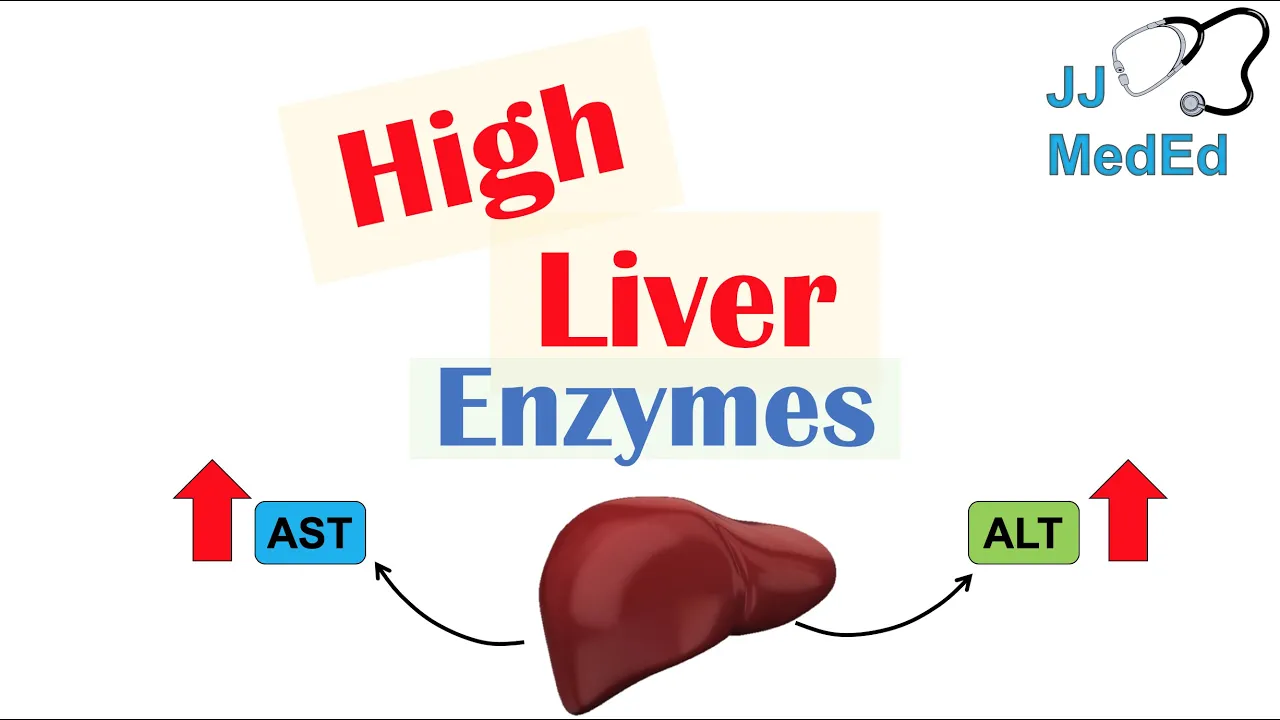
hey everyone in the system talk about liver enzymes like ast and alt and we're also going to talk about Trans Am and itis and what causes elevated liver enzymes so liver enzymes are aspartate aminotransferase or AST and alanine aminotransferase or alt so you might have heard of ast and alt what are these these are both enzymes that are important for specific functions in what aspartate aminotransferase does is it takes the oxaloacetate and an amino group to it and makes aspartate so it can add an amino group to oxaloacetate to make aspartate it can do the
opposite as well can remove the amino group from the aspartate and form oxaloacetate so it has reverse roles and it's important in the malate aspartate shuttle now with regards to alanine aminotransferase it takes alanine and it can either remove the amino group from alanine to make pyruvate or can add the amino group to pyruvate to make alanine so again it can go in both directions and it's important in the glucose alanine cycle so both of these are important with regards to these rules aspartate aminotransferase again is important in malate aspartate shuttle the alanine amino transferase
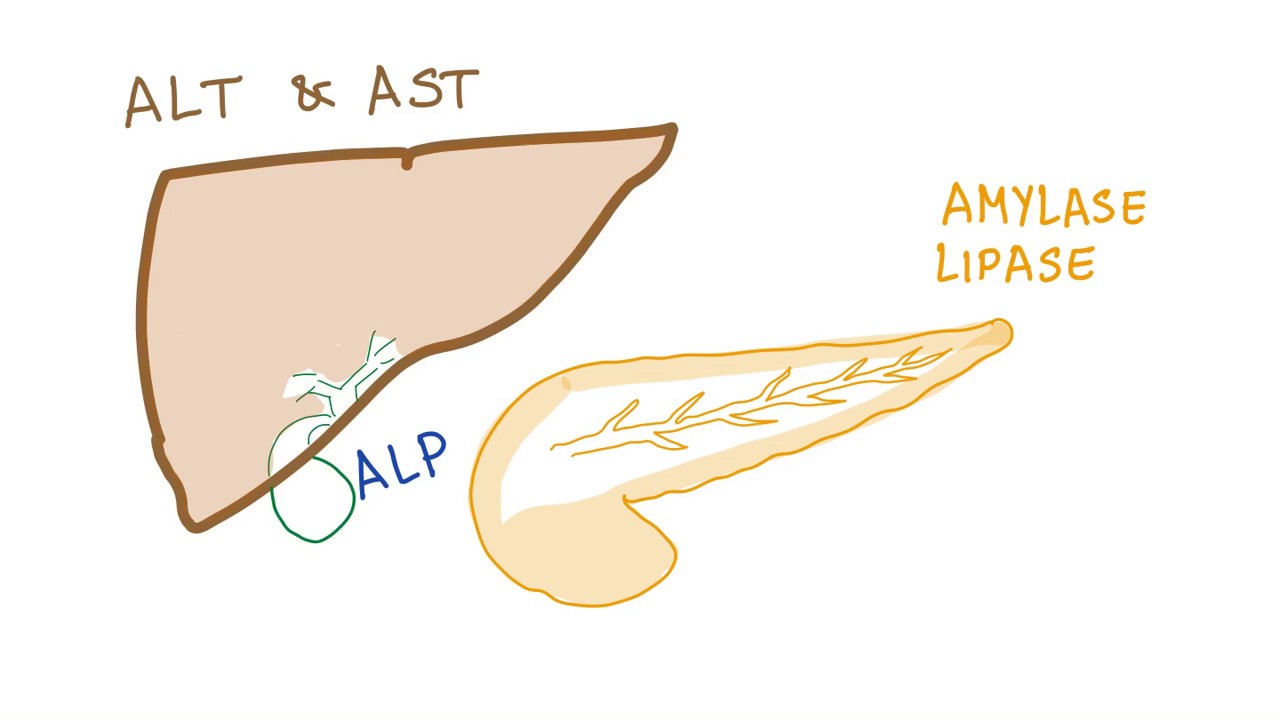
enzyme is important in the glucose alanine cycle so why are these called liver enzymes well these are both enzymes that are located in the liver so what can happen is if there's any damage or stress or inflammation that affects the liver can lead to damage to the hepatocytes in the liver and the hepatocyte scan essentially dump out ast and alt into the blood where we can measure them when we see elevations in ast and alt we use the term TransAm Unitas this is a term you may see in clinical practice trance emanate is essentially a
elevation in these enzymes and really the word comes from itis is inflammation and TransAm and means transaminases these two enzymes are transaminases so this is a term we use in clinical practice to essentially tell us that there's elevations in a tiene LT so talking a bit more about these enzymes more specifically aspartate aminotransferase has a half-life of 17 hours and it becomes important to know about when we look at trends in each of these enzymes so it has a shorter half-life than allying amino transferase and ast is located in the muscle heart and a liver
so is located in multiple organs whereas alanine aminotransferase or alt has a half-life of 48 hours so it has a longer half-life and the way you can remember this is L for longer and s for shorter and alanine amino transferase is more specific to the liver again easy to remember L for liver so the reason I bring this up is because a lot of times you might see individuals have high AST or high alt or both or just one or just the other and this can help us determine why that is and where the damage
might be coming from with regards to ast as I mentioned here we can find it in the muscle the heart and the liver so it's not specific to the liver so for instance in early stages of a myocardial infarction a heart attack we can actually see elevations in ast if we have muscle damage we can see elevations in ast so that doesn't help us determine if there's any liver damage or hepatocyte damage so alt is more specific for the liver so if you see alt or if you see ast we need to look at both
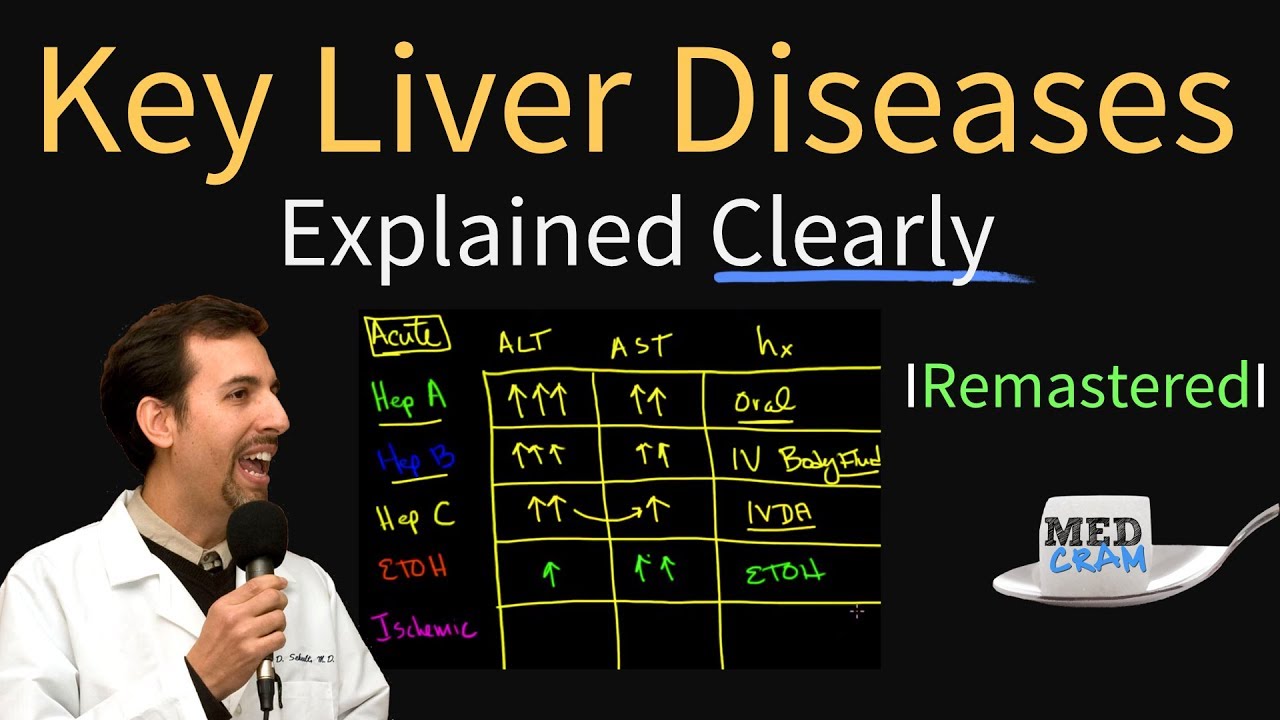
of these to determine what the source may be and how long it's been happening so because of this often times alt can be a better measurement to determine if there's any injury to the liver as opposed to these other muscle and heart so what are some of the causes of elevated liver enzymes viral hepatitis is one of the causes of elevated liver enzymes we can think about viruses like hepatitis ABC in II can think about EBV we can think about CMV so epstein-barr virus and the cytomegalovirus and the good thing about learning about the half-life's
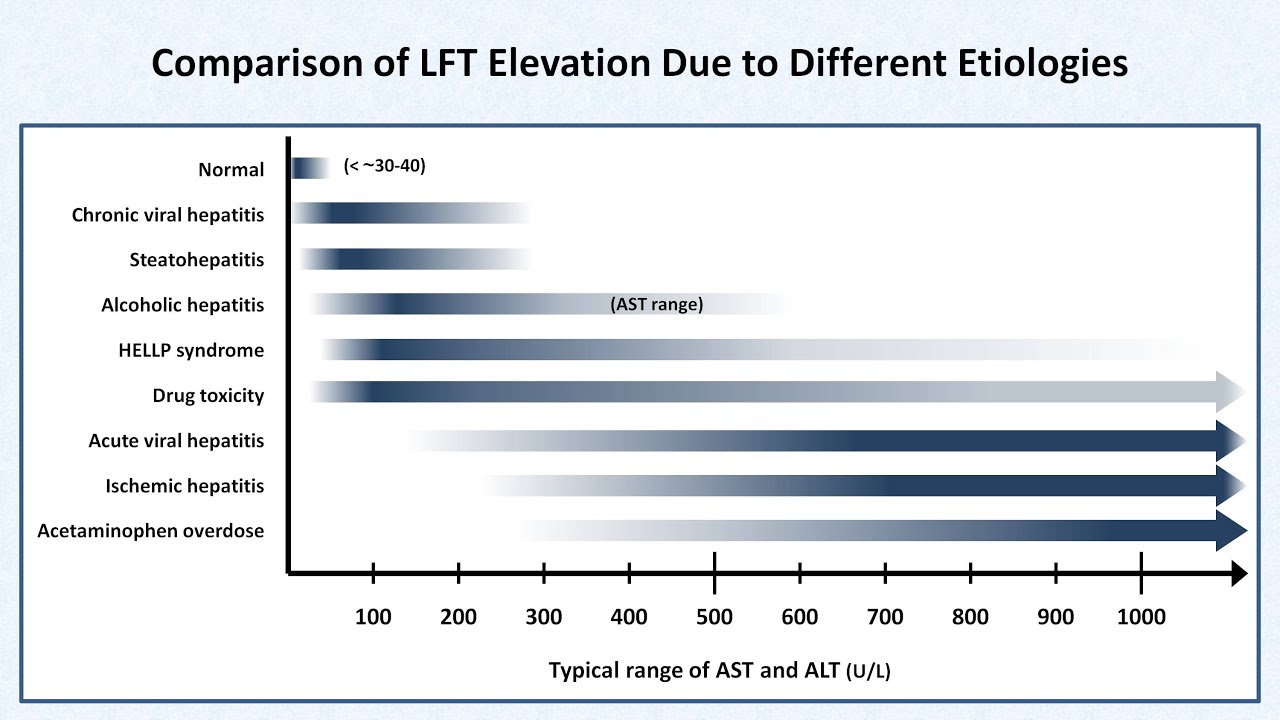
of each of these a Essene LT is that in viral hepatitis in the early phase of viral hepatitis we see ast being higher than alt but as time goes on because ASD has a shorter half-life it begins to be degraded and removed from circulation and we actually see alt be higher than ast so this can help us determine if it's early phase or late phase of injury so another cause of elevated liver enzymes is hepatic biliary obstruction and this can lead to about two to eight times increased from normal with regards to these liver enzymes
another causes chronic persistent hepatitis so it can lead to a moderate elevation and oftentimes we see ast 2 alt ratio being less than 1 which means there's more alt than there is ast because this is chronic there's gonna be more alt than ast because of that longer half-life with regards to alt another cause of elevated liver enzymes is biliary cirrhosis normally we see ast and alt being equal and these enzymes can be about 4 times higher than normal so those are some of the big cause I want to talk about this lesson but there's many
other causes of elevated liver enzymes that I want to discuss as well so one of those is non-alcoholic fatty liver disease very common in the Western world we can also see elevated liver enzymes in drugs medications and toxins and those include ethanol acetaminophen herbal teas and can be weight-loss drugs and other medications and drugs may not even think about how to talk about more about this in another lesson there's also autoimmune causes that can lead to damage to the liver and elevated liver enzymes and this is autoimmune hepatitis oftentimes leading to very very high levels
of liver enzymes and also see ischemia as well like shock liver but Kyary and infarction all of these again in the lead to very high levels of liver enzymes oftentimes in the thousands metabolic causes are it's also another category of causes that lead to elevated liver enzymes and metabolic causes include wilson's disease where there's copper deposition in the liver leading to damage and hemochromatosis is another example so this leads to iron deposition in the liver again leading to liver injury and damage so with regards to causes of elevated liver enzymes you want to think about
it broadly so you want to think about viruses you want to think about obstruction you want to think about a chronic persistent hepatitis biliary cirrhosis you want to think about non-alcoholic fatty liver disease drugs medications toxins you want to think about autoimmune hepatitis ischemic injury to the liver and you also want to think about metabolic causes as well so if you wanna learn more about other liver conditions please check out my gastroenterology playlist and if you haven't already please consider liking subscribing and click in the notification bowl that help support the channel and stay up-to-date
on future lessons and as always thanks so much for watching and I hope to see you next time