so Tim tell me about the history of the organizational lifecycle well I can tell you about that but I can also tell you about the history of the organizational levels and they're different two different things I think in my mind helpful helpful distinction yeah the life cycles model was first presented to me by my mentor and coach John Sherwood when he was alive in the 1980s in Australia early 80s actually probably 1981 and he used it he was he used to live in Cincinnati and he used it as a way of looking at life forces
that were at work inside organizations as systems and it starts with the decline phase and then the growth phase and it's a bit it's a bit counterintuitive but it is ever described that way the he says that you know organizations as systems go through different phases of doubt and you can characterize this by certain behaviors that go on in the system at those different levels on increasing doubt so things decay his fundamental presumption was that the decay is inevitable that all systems will grow and they will decline as usual yeah and that's part of the
rhythm of the universe so to speak and he said that you know when there when everything is hunky-dory we're in a state of what he call suspended doubt and then in the system what you find is people complaining that things are not working as efficiently or effectively as possible and at the same time management goes into some sort of denial that this is the case so you've got the employees on one side doubting the efficacy of what's being what's happening in the organisation and management in denial saying no it's fine and then at the next
stage if the complaint by the way if the complaints do proceed for long enough then management will probably appoint committee to investigate the problem and make some recommendations really deny it's another form of denial because they want to stay suspended in their disbelief that everything could be anything could be wrong then they believe everything is just perfect they we are the best company to work for there's one global oil company at the moment and one large professional services firm in the world that global want to to get the best employee ratings of any global company
between them on certain dimensions and I know from working in both those organizations but like us human individuals they are failed examples that but collectively the employees in each organization have suspended their disbelief about this and they think they're working in corporate heaven the next stage is that employees start to question the purposes and directions and management goes into denial also but it also takes on a defensive posture at this stage and says no no there's nothing wrong we're pursuing the directors this is what the corporate plan says we should be doing or this is
what the strategic plan that we worked out at some fancy retreat was the senior executives we're doing it this is the bottle and some consultants of course in so this is the Bible so it's a resort to fundamentalism in by management all the while in the hope that if they continue to deny the operational doubt that's in the system and or resort to the Bible for the ideological doubt things will quickly return back to a state of suspended doubt and then we come to the the third type of doubt which is ethical doubt its doubt
about the meaning of the system to people and their sense of belonging so it's both meaning and belonging or shared meaning I should it would be even better way of saying what John used to say and that is that people begin to decide enta fie with the organization they say you know once we were a team then we were a group of colleagues where now we're just a motel people come and go in the night we don't belong to one another and what would they say about leadership Oh leadership is disconnected from the workplace and
they're not responsive and they don't know what we're doing they're doing I should say and we have no way of identifying with them and then finally there's absolute death which is an alienated oppressed and depressed state of being where you have highly punitive responses from management to any questioning at any of the previous three levels and you have people just getting by okay they no longer identify with the system because they're they've been through their ethical doubt but now they actively dislike being in the system but they don't have any choice or any alternative so
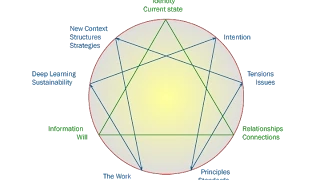
as we go down this curve we get to the bottom and that's absolute doubt but with a new company or a company that's regenerating itself or an organization or community or I dare say even a marriage there's some known and predictable stages of growth and I have best described by answering three questions which seemed to be answered in real life in this order who are we why we're here and how we're going to put into practice our understanding of who we are and why we're here the who is about our identity who do we want
to be and so you get next week I'm going to sit with a gold mining gold exploration company in Australia in the city of Perth and they want to focus on their vision and mission they're our new company and they are really sorting out who they are absolutely natural and appropriate they might expect that it's going to be set in stone but you and I both know it's it's this phase of their their life the second question why are we here is about their belief now the first phase the who are we John Sherwood called
the MIS level the second phase why are we here which is really about what our goals might be is the belief level the third level the top level when things are just below the stage of suspended out is how are we going to organize ourselves and do things that we should be doing or could be doing and that's the level of norm as in normative behaviors so on the decline side we have these three layers of doubt that a creep into the system which is operational ideological and myth and and ethical doubt and on the
growth side we have these three layers of building layer we built the myth you build a belief and you build the the normative system of the organization and so John argued that organizations communities and all social institutions go through this cyclical process of growth decay and regeneration of one form or another do they automatically go through a regeneration not necessarily and John and and in fact John was particularly insistent that and this goes to interventions a bit which is a little bit ahead of where we are but a problem at the normative or top level
can only be solved by an intervention at the belief level if there's up the ideological doubt you have to go for down further and rebuild the myth so these three things now he argued that management term he called it management by surprise through attention to weak signals and he argued that in every organization there were signals that if leadership was attentive to them could be the source of new beginnings of new inventions of reinventions of new ways of operating as companies and so forth and if you think of Apple pre the second coming of Steve
Jobs it was clearly at the bottom of the curve and under his leadership it reinvented itself and developed a new myth or an enhanced myth a new belief system and a new normative system to become well one of the most valuable companies in the marketplace value in the world he argued that if leaders can attend to those weak signals foster innovation and creativity and providing those signals are consistent with the underlying risk the company will never go down into ethical doubt it will surf across the top of the wave so to speak then Bob dick
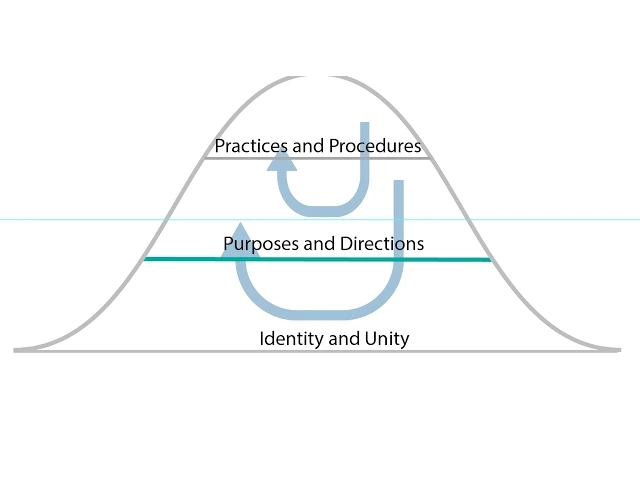
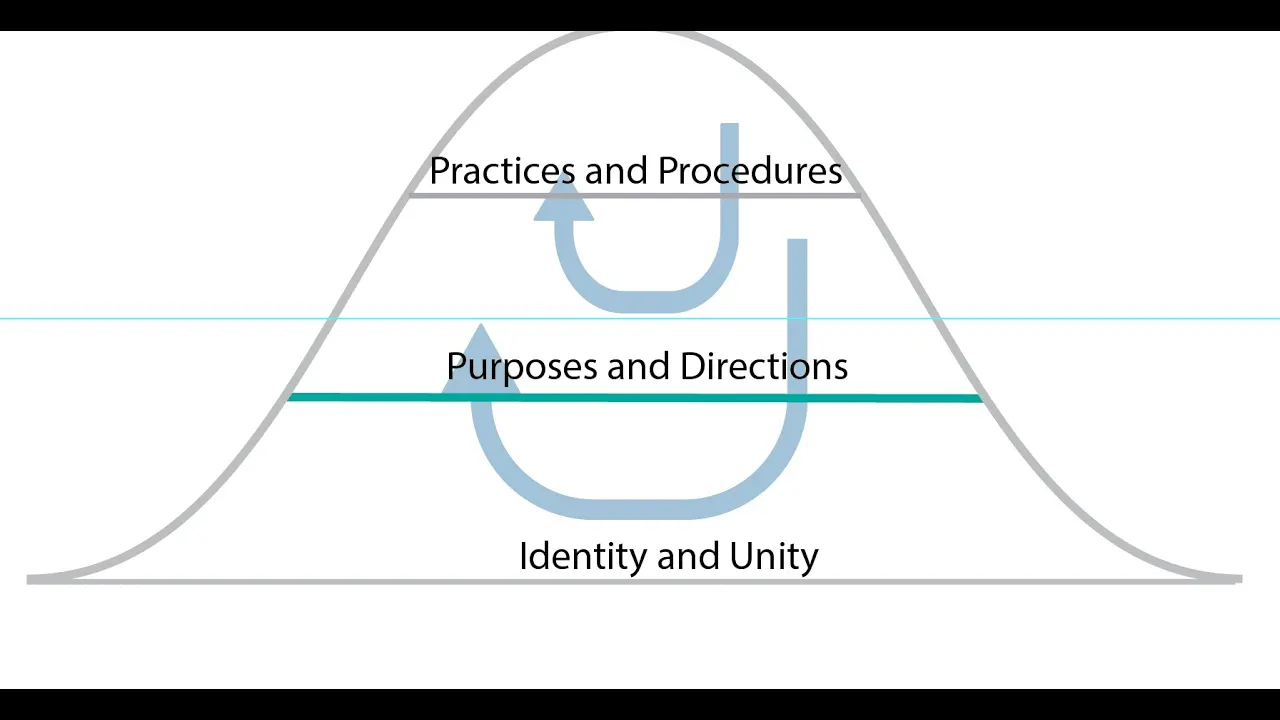
and I took this model at the suggestion of a friend and colleague called Andrew Ernie who had suggested to us but you know it doesn't have to be a cyclical model Tim he said it could actually be a model of layers or levels and Bob and I said well what is the first layer of could learn to the layer of operational down on one side and normative systems on there that's the level of what we call practices and procedures and the ideological on one side a belief on the other is is equivalent to what we
call purposes and directions and then the layer on the layer that's equivalent to ethical death which is the myth on one side on the other side we call identity and unity and so we thought yes it is a layered phenomena and then we realize that in truth there's a layer below that which is a layer of universal energies or what Plato originally but Carl only in particular Joseph James Hillman I should say afterwards has called archetypal forces at work so now we can think of four levels of work or four levels of phenomena in an
organization and they are practice and procedures purposes and directions identity and unity and archetypal energies well thank you thank you very much that was a wonderful explanation of a very powerful model and a great tool to use an organization you know welcome okay