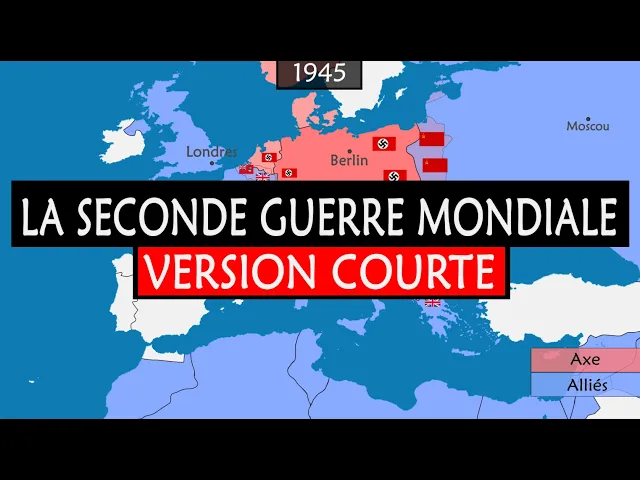
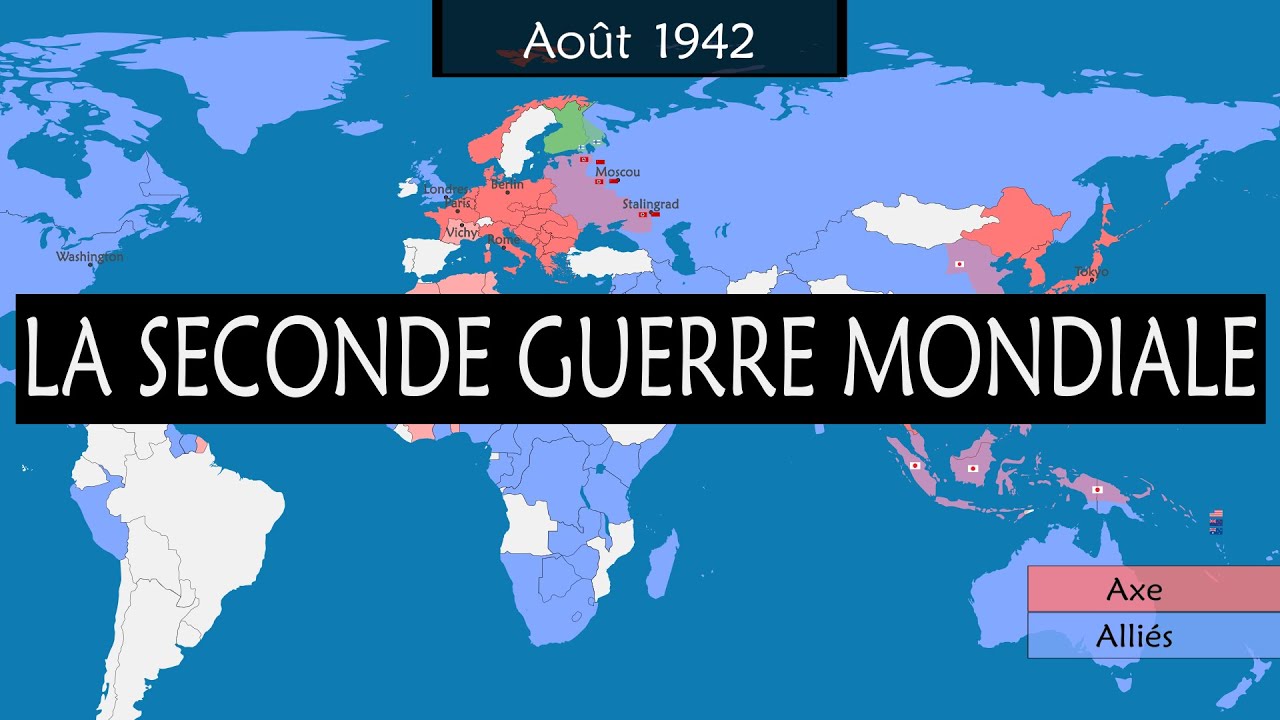
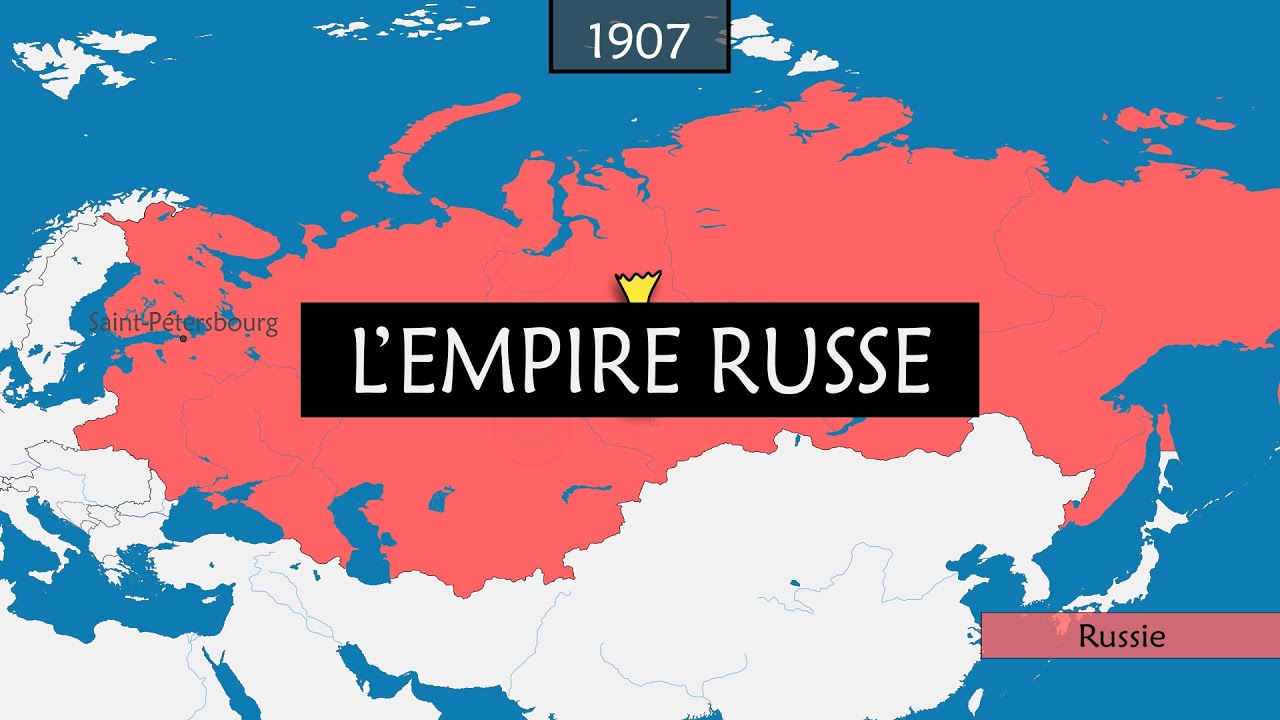
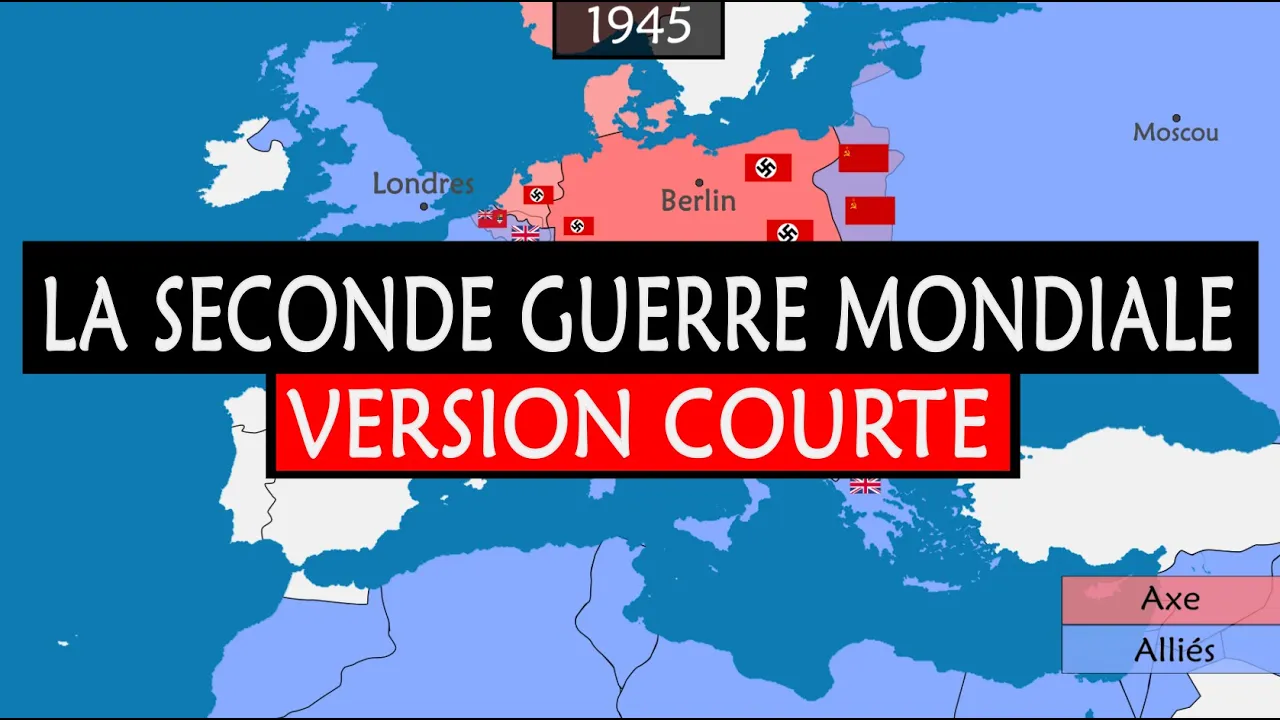
This is the largest armed conflict that humanity has known. A deadly war that has engaged dozens millions of fighters around the world. Let's look at maps, a summary of the big stages of the Second World War.
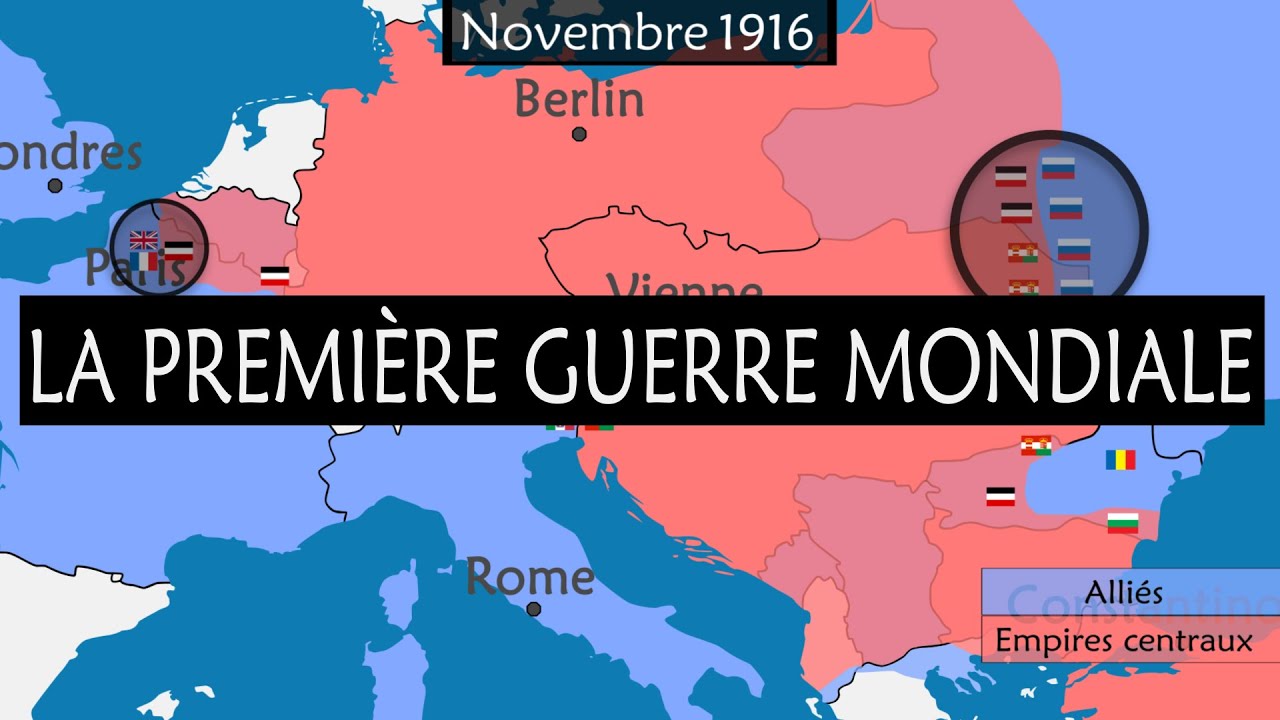
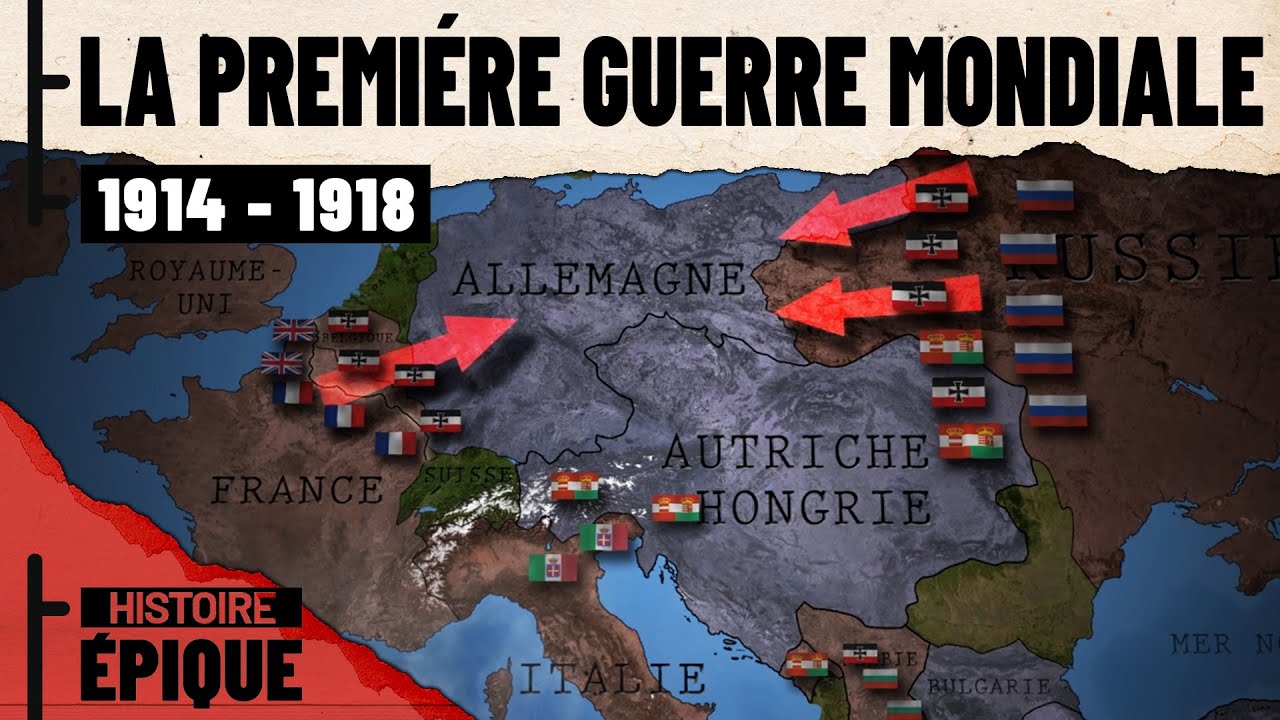
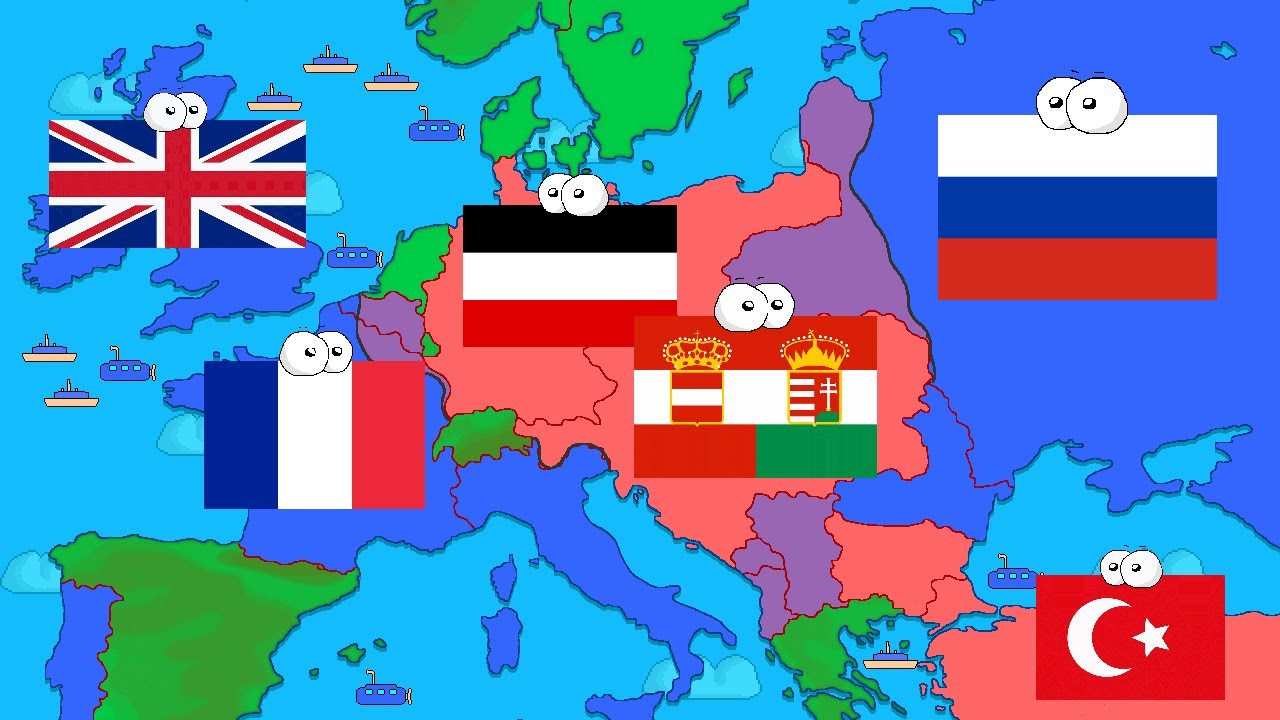
We start at the end of the First War World, Germany and its allies are defeated and are solely responsible for the war. Heavy penalties are imposed on them, the Austro-Hungarian and Ottoman empires are dismantled while Germany has to repay an unreasonable debt. Its colonies and part of its territories are ceded to the victors and to Poland which is recreated.
All these penalties are lived as a humiliation for the German people. The German economy is weakened by over-indebtedness and hyperinflation. The country then turns its boards to tickets, which causes a devaluation of its currency.
In November 1923, the value of Mark increased 1000 billion compared to 1914. Finally radical measures are taken as early as 1924 to stop inflation and then stabilize and revive the country's economy. But in 1929 takes place in New York the Wall Street crash, the most serious economic crisis of the 20th century.
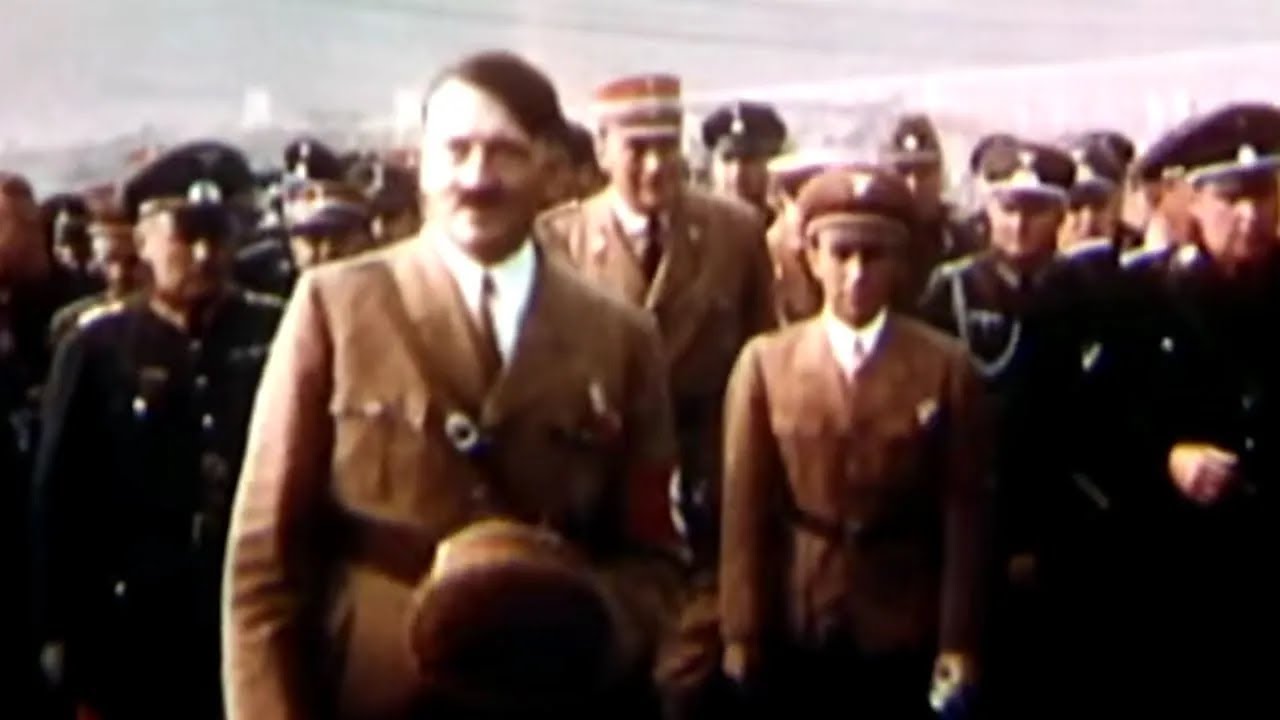
The impact is global, Germany is not not spared. In a few years, the unemployment rate is exploding. Weakened, Germany sees a rise of nationalism which allows in 1933 the arrival in power of the Nazi party with Adolf Hitler at his head.
The new totalitarian regime is rearming the country and restoring military service. The country is also starting an aggressive foreign policy with the dream of bringing all German-speaking peoples together in one nation. Italian side, despite the victory at the side allies during the First World War, the country is frustrated by the few territories earned.
Since 1922 and the coup fomented by the fascist party, the country is a dictatorship. Italy begins a colonial policy by seizing Ethiopia and preparing a future invasion in Albania. In Spain begin three years of war civilians who oppose the republican government supported by the USSR and international brigades, to the nationalist camp led by Franco and helped by Italy and Germany.
Both countries take the opportunity to test their armed forces and to get closer diplomatically. In Asia, Japan continues its expansionist policy. The country benefits from the civil war in China to invade new territories.
Japanese army makes use of chemical and bacteriological weapons and commits massacres of people. Germany is now powerful enough to begin its territorial expansion. It first annexes Austria with the support of the local Nazi party.
Then Western Czechoslovakia is invaded. The Slovak Republic becomes a German satellite state while Hungary is getting closer diplomatically. After the occupation of one end of Lithuania, the country signs a non-aggression pact and a plan for sharing Europe with the USSR then attacks Poland.
It's the invasion of too much for the UK and France who declare war on her, marking the beginning of the Second World War. Although German forces are concentrated in the East, Allied troops do not take any initiative in the West. France and the United Kingdom are trying rather to cut the strategic route of iron which passes through Norway and which provides in large amount the German military industry.
Germany reacts by invading Denmark and Norway. The country then seizes in a few days Luxembourg, the Netherlands and Belgium. His new military strategy called the Blitzkrieg consists in concentrating its armored vehicles in a point in order to disorganize the opposing defenses.
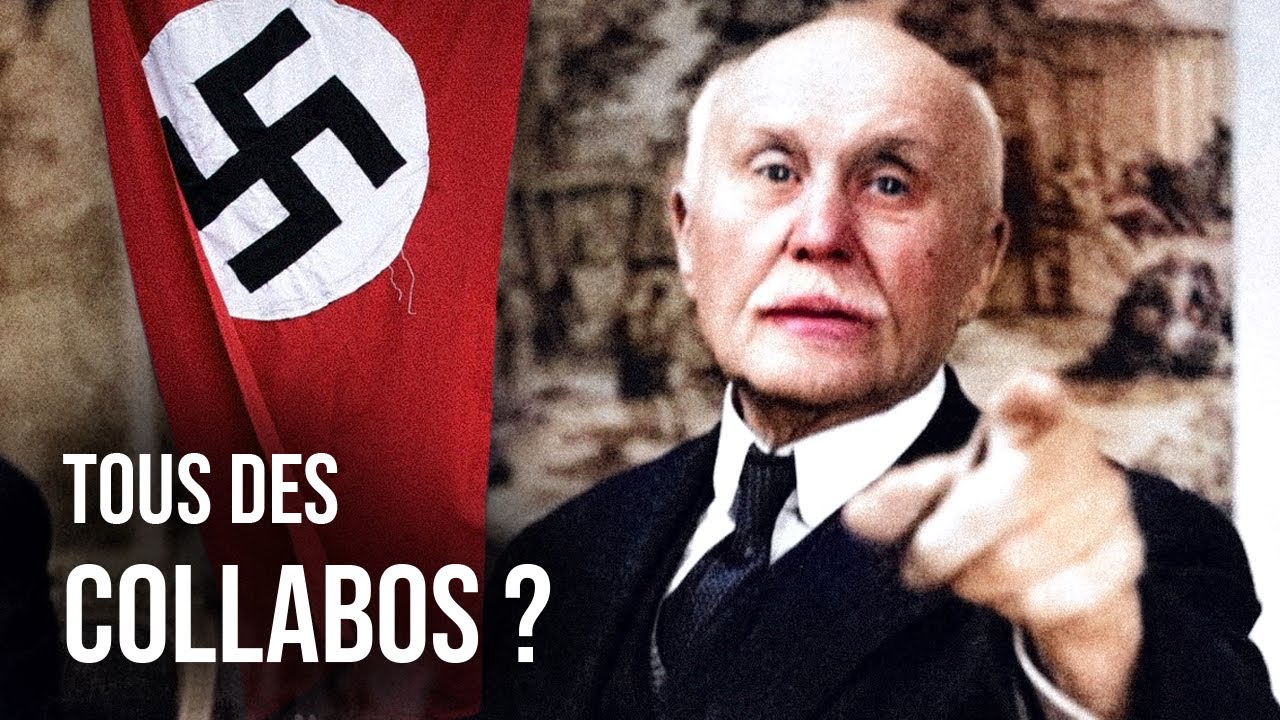
Faced with German domination, the forces British retreat, while the German army rushes on Paris. The French army is defeated and an armistice is signed with the new government of General Pétain. Germany occupies the North and West of the country and leaves the rest and the French colonies under the control of Petain who collaborates.
So Germany has indirectly hand on the colonies without having to send an army there. However, part of the French colonies and the Belgian Congo make the choice to stay in the allied camp. In London which already hosts several governments in exile, General De Gaulle creates free France who continues to fight Nazi Germany.
Brazzaville is the capital. In accordance with the agreements signed with Germany, the USSR seizes the Baltic States and a piece of Romania. Germany, Italy and Japan join forces to train the Axis Forces.
Opposite, all British dominions and colonies with the exception of Ireland enter the war. In Africa, fighting begins between Italian colonies and allied forces. While in Europe, despite the bombing massive aerial over British cities, Germany fails to submit the country.
Hitler then changes his plans he wants now invade the USSR. But the plan is delayed by Italy fails to invade Greece and who is now backing away from the allies. After the accession of Hungary, the Romania and Bulgaria to the Axis forces.
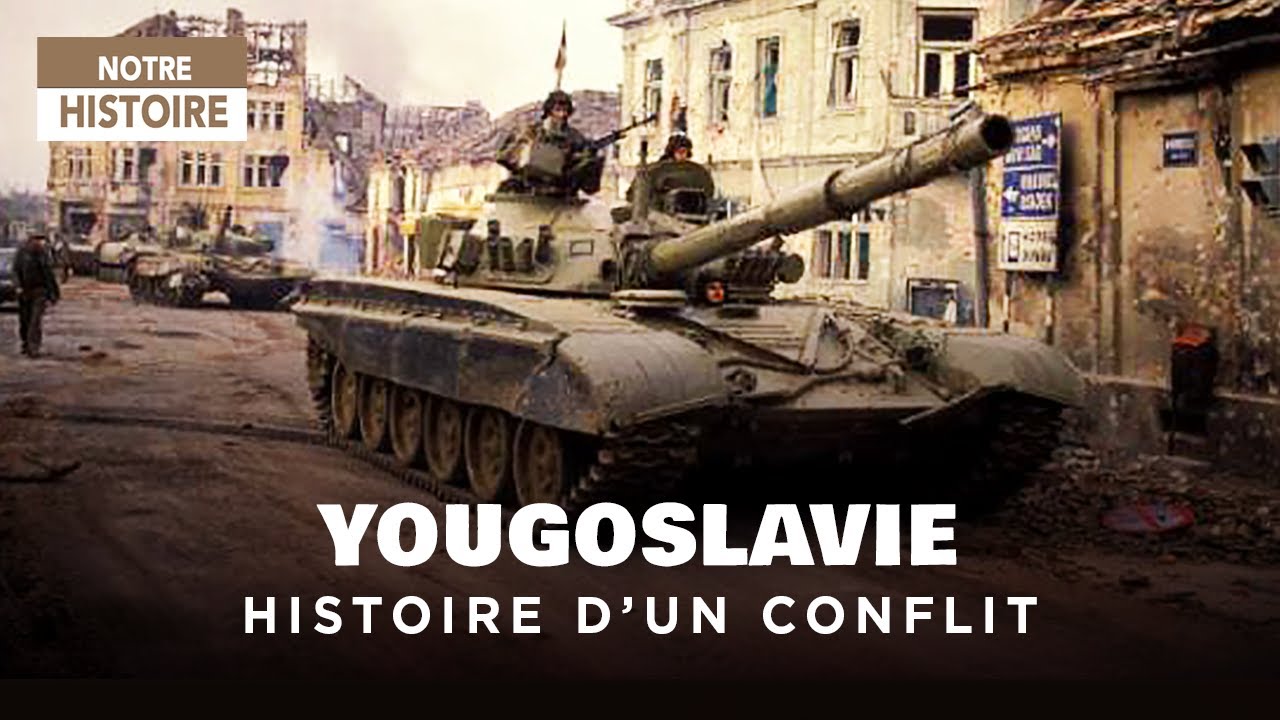
German armies move south to invade Yugoslavia and Greece. A little everywhere in Europe, the resistance is organized under different forms. It happens that the population organizes strikes, demonstrations or that it protects wanted people.
Some better organized groups make espionage for the allies, organize sabotage or print resistance diaries. In Eastern Europe, real guerrillas undermine the Axis forces. In Yugoslavia and Greece resistant groups Communists and royalists even clash with each other.
Germany is not spared by resistances antinazie, some will try to assassinate Hitler but will fail. On June 22, the Axis forces launch by surprise the biggest military invasion in history in the USSR that is de facto in the camp of the allies. The bulk of German troops, well equipped and motorized, rush to the East.
In order to support the Soviets, Iran is occupied by the allies, which opens a supply route via the Caucasus. German armies arrive in Leningrad and start the siege of the city that will last 872 days and will make over 1 million victims among the population. Further south, German troops are stopped at the gates of Moscow where they will live a harsh and deadly winter.
Behind the front line the SS massacre Slavic and Jewish populations. In Asia, Japan occupies French Indochina. To counter its expansionist policy, the country suffers a total embargo on oil and steel imposed by the United States.
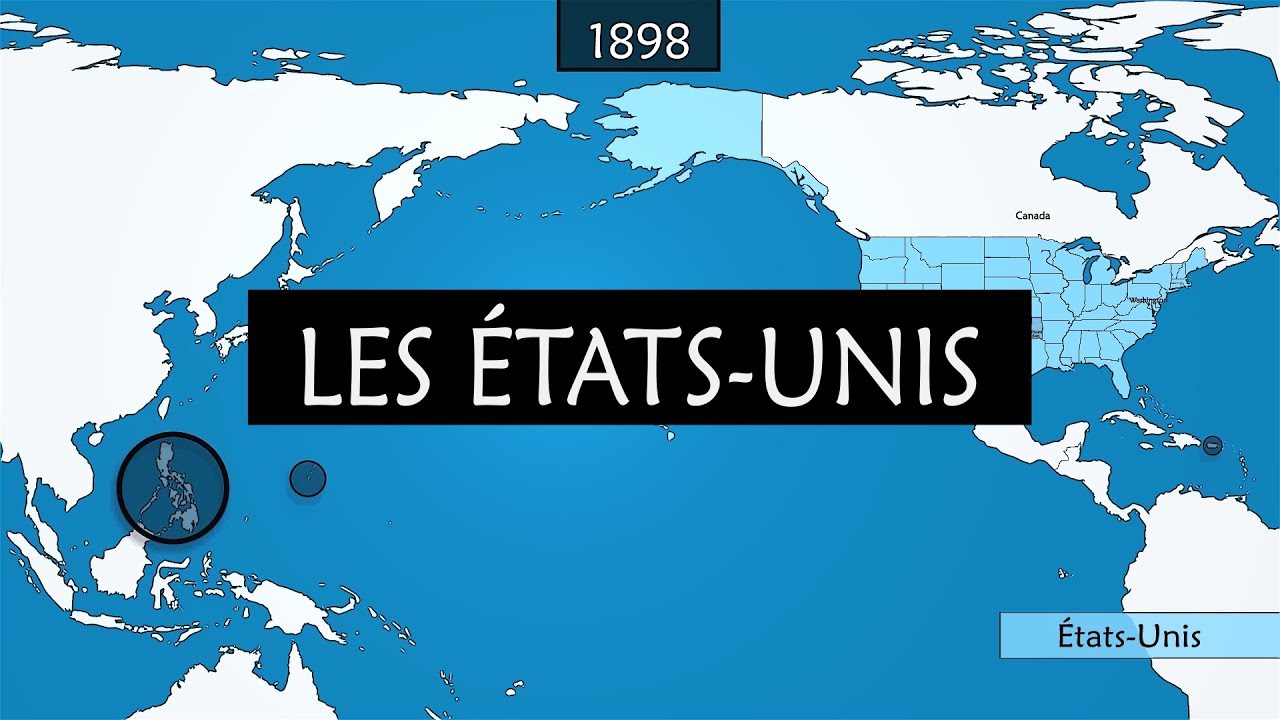
In response, Japan attacks by surprise the United States to Pearl Harbor. Massive aerial bombardment damages a big part of the naval fleet. The United States goes to war on the side allies.
At first they concentrate their forces on the Pacific front. The country also supplies the USSR who still resists the German advance. Japan then embarks on the conquest of the Pacific.
In addition to the massacres of the population, Japan sends 10 million Chinese civilians to forced labor camps. In Indonesia, millions of prisoners suffer the same fate on the island of Java. In Burma and Thailand, Allied prisoners are exhausted in the construction of a railway.
In addition, hundreds of thousands of women are forcibly enlisted in prostitution centers for the Japanese army. In Europe, concentration and extermination camps are built to massacre, among others, the Jews, the resistance fighters and political opponents, Gypsies, homosexuals and people with disabilities. Fearing a second front in Europe, Hitler has the Atlantic Wall built, a series of military installations that protect the coast from an invasion.
But the allies first land at Morocco and Algeria. Italian Libya finds itself caught between two fronts. Having lost control of his colonies, the Vichy regime is invaded.
In the East, the Axis forces are trying to cut the supply route of the Caucasus. But for the first time the offensive German suffered a major military setback. The Soviets take the initiative and cons attack.
Africa is now fully controlled by the allies who organize a landing in Sicily. The new Italian government demands the armistice, which is worth to him to be invaded by the German armies. The USSR is moving rapidly towards the West, forcing the bulk of the German army to concentrate on this front.
On June 6, 1944, the Allies landed in Normandy. Their armies quickly take over and free Paris. In the West as in the East, the countries are liberated one by one or change sides.
Victory being close, the powers Allies announce the future creation of the United Nations. Countries that declared war on Germany and Japan will be admitted to the founding conference. What triggers a wave of statements war but without major consequences.
On April 30, Hitler commits suicide in his bunker just before the arrival of the Soviets. 8 days later the country capitulates. The United States and the USSR then unite their forces to overcome the Japanese Empire.
The Soviets start a military invasion via Manchuria while the United States sends two bombs Atoms on Hiroshima and Nagasaki. On August 15, Japan abdicates in turn, which marks the end of the second world war. After 6 years of war, the human toll is heavy with at least 60 million deaths, mainly civilians.
Many cities are ravaged. Germany and Austria are divided and pass under the control of the winners. The old European powers are exhausted and ruined by the war.
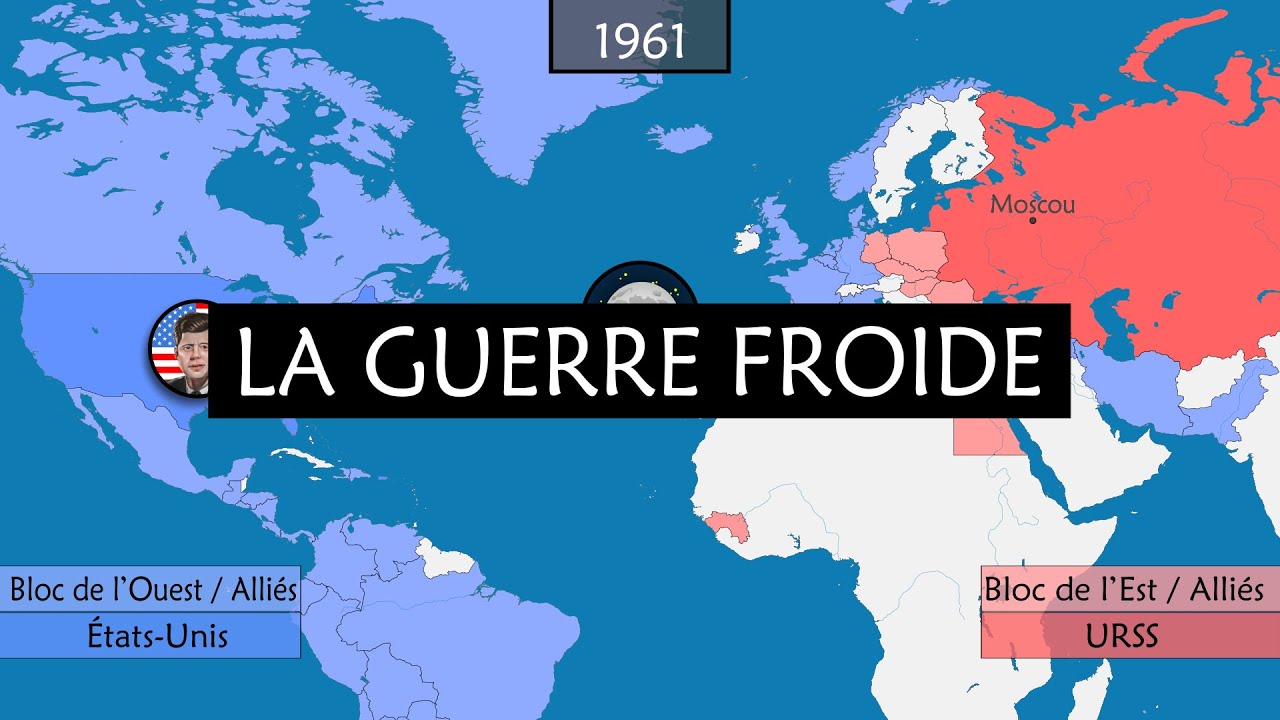
The United States and the USSR are then the last two superpowers. Despite the establishment of the United Nations which aims to maintain peace and international security, the two will quickly compete by playing their influence in the world.