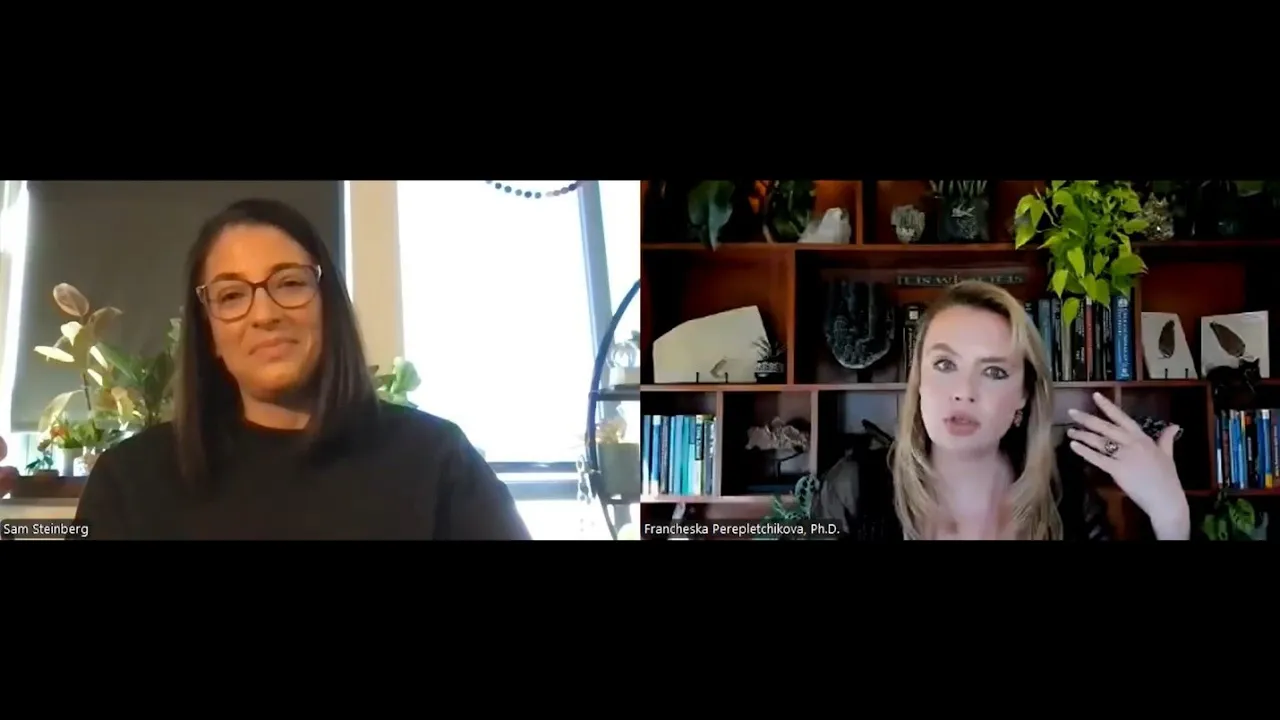
Do you have a neurodyiverse child? Boy, do I have a treat for [Music] you. Hello, this is Dr. Franchesca Pachikova. Today I have a special treat for all of us. We have a highly anticipated guest. Sam Steinberg is a clinical social worker from Capitol Youth Services right outside of DC. Correct? Yes. Yes. So, she is so highly anticipated because She's here to help us all understand how can we help autistic children. And Sam, am I saying it correctly? Autistic children, not children with autism. Yes. the uh autistic community uh prefers it in that order, right?
Um autistic and then uh the person um comes after unlike many other things. It's not uh a disord. It's not seen as a disorder or something that we're going to fix. Right. Exactly. Who part of who they are? So uh we used to say children with Autism spectrum just like we used to say people or continue to say clients a person with borderline personality disorder with depression with bipolar identifying that there's a person who has a psychiatric disorder. Autistic community is saying, "Wait a second. Just because we're not neurotypical just not just because, you know,
we are neurodeiverse. Why are we treating neurodyiverse as a disorder? Are we talking about if it's not Norm? Hello, what's happening here?" Right? Okay. So, autism is not a disorder. This is a neurodyiverse. Meaning a person has a different brain. Am I saying it correctly? All right. Yeah. And today we're going to talk about can we use what we know about uh psychological interventions to help artistic children improve their functioning, the way that they operate in this neurotypical world. So just because they're neurody diverse, It doesn't mean that they still don't need to operate in
a particular way in neurotypical world. Is that correct? Exactly. We're um here to talk about how we have found um ways to support these families and these kids. Excellent. Okay. So my first question is um you at least in in in in my understanding the way that I was um taught in my graduate school, right? We had different like levels of autism, High functioning, low functioning. So how do we relate to that now? What do we what what have we learned through the years? Yeah. So autism is definitely a spectrum. Um and every person who
or every autistic person um is different, right? And so what we see is that there's support needs in some areas or more support needed in some areas where there's less support in others. And so it's not like a totality of high and low Functioning all of the time, but we're looking in different areas or environments. Um, also, um, you know, we're learning so much more about autism. So, uh, we're picking up on it maybe a little bit later, seeing some of the behaviors or, uh, just things that we're observing as more normal when we're younger
or there are systems in place that kind of help um, naturally. Um, and then as relationships and things get more complex, as we, you know, enter Puberty and get into, you know, those pre-adolescence, those tween, we might be seeing, um, things that we might say, ah, all of these things together might actually make sense as autism, right? Instead of this thing here and this problem here and this problem, right? And you mentioned to me that um there is a u terminology wise you know autistic child sub autistic right what does sub autistic mean right is
that we are have a lot of The neurotype markers of an autistic individual but maybe aren't quite meeting the diagnosis right and so or we're not quite meeting it that doesn't mean that some of these strategies that we found to be helpful aren't going to help people just because you don't fully meet criteria right for the full diagnosis. Um so you know individuals that are neurodeiverse or right under right sub level still have some of those traits turned on. uh we have found this Can be really helpful too and um it's very very what what
you're saying is tremendously important and just as you said neurode divergent um means it's a range of things right it's a spectrum of things and when I talked about uh our super sensors and I always tell parents hey they have a different brain yes right they react differently. They have very low threshold for motion arousal. They react very strongly. They Have slow return to baseline. On the other hand, all the benefits of being able to read other people like an X-ray, right? Have a tremendous high level of capacity for creativity. They're also very compassionate in
between outbursts, right? They're very understanding and loving. So on top of that we have a lot of coorbidity with children who are emotionally sensitive as we call them super sensors. They also have ADHD right Very high cobility with ADHD. What is ADHD? ADHD means that the maturation of the brain does not catch up with maturation of the body and at some point it will and that's why a child can grow out of ADHD right and we have not as many adults with ADHD and adult ADHD is not as severe as child ADHD but also that
shows different brain the maturation of the brain plus we see that we can have an 18year-old super sensor who is at time functioning on a level Developmental cognitive level of a 10year-old and This is really there you know the impulsivity the reactivity not just necessarily stemming from emotional sensitivity but we also know that their cortical regions their frontal lobe they don't mature as fast as that of an average developing child with average level of emotionality. So that's some of the things that I'm talking about when I say they have a different brain and now the
term that you're using neurode Divergent in many ways may apply to our children who are super sensors. So they are indeed neurode divergent. It's just again a spectrum of autism spectrum disorders or or whatever functional impairment that you may have because of neurode divergent. Right? So all of that is within this spectrum. Am I saying absolutely? Yes. Absolutely. Like I have conceptualized a super sensor as neurode divergent you know from the beginning of doing this Treatment and learning from you. Um and you know some of our autistic kids are also super sensors um just as
you talked about and likely are right because there's they have hyper and hypo sensitivities just like our you know super sensors that are going to interact with their bodies and we know that all impacts emotions and responding and things like that. So, um, a lot of times if we don't have an autism diagnosis, just knowing and learning about being a Super sensor and connecting that to your brain is wired different, right? Like it's who you are. It's the temperament um that allows talk about validation. There's nothing wrong with you. Your brain, you have a different
brain that gives you challenges and benefits at the same time. Yeah, allows me to get in there with the parents and um you know, oftentimes parents find out about their brains and how they're wired differently um throughout this process and right um Some of the things that have have they learn help their kids end up helping themselves too, which is really cool to see. Absolutely. Absolutely. And when we're talking about this neurode divergence, so to speak, right? Um the techniques that we use for children uh who have emotional sensitivity um a lot of the time
uh kind of cross correspond with what we usually know that works for autistic children, right? Like we know like parent management training, helping Parents understand how to, you know, do contingency management and to reinforce adaptive behaviors and things of that sort, right? And so and on top of that a lot of children who are super sensors do come in with a diagnosis with of autism spectrum but may not necessarily have it because there's such an overlap between symptoms right you know super or vice versa right come in with the DMD exactly exact diagnosis right so
because there's so many symptoms that overlap right in Including uh sensory processing issues you know their ability to their not ability they our tendency to get stuck, right? Uh and and be very concrete at times and you know, psychological rigidity and thinking, you know, especially when they're emotional. There's just so many things that are similar. How would you what would be your rule of thumb if there is one to differentiate between a child who is neurodyivergent and emotionally Sensitive super sensor and child who indeed is autist autistic? Yeah. I mean like you were talking about
it's a spectrum right so there's those kids that kind of fall right along that line and right we really rely on additional assessments um including you know neurosych evaluations from psychologists um other sensory profiles and learning assessments to really kind of pick apart what is going on um I think just like most obviously when You're doing research a diagnosis is really important and we're treating the symptoms and um right the problems the things that are getting in the way of what they want in their life when they come into our office and so a lot
of those things can be very similar and so we may see similar things across the board right and so I think it's really through assessment figuring out wh where we can best support the child and the family right increasing um Accommodations adaptive accommodate accommodations not the maladapt, right? Um and um increasing also skill, right? Because just because a kid is autistic doesn't mean they don't also have emotion dysregulation. Um so they may have sensory meltdown. Interesting. And they also have emotion dysregulation, right? Because they're human, right? Already we already both end. Absolutely. So already you're
making the different the Differentiation between sensory meltdown and emotion dysregulation meltdown which may look exactly the same and one could lead to the other sometimes and one can lead to the other but what you're talking about uh is what is the function behind it right like as we said that children who are emotionally sensitive as children who are callous and emotional they may look exactly the same in terms of the behavior they may scream yell Punch, throw things, right? However, in exactly the same behavioral manifestations apply to how sensitive children respond, callous and emotional children
respond, right? So, how do you know which one? Look at the function for assessment. Yes, you need to ask what's the function exactly figure out the function sensitive the function of this you know behavioral dysregulation is reactive and it's coping because they just cannot withstand the uh intensity Of the emotional wave the tsunami that's overwhelming them and we all know that when we are very very angry what happens if we scream we feel a little bit better like it like steam coming out of a pressure cooker. And this and and children who are careless and
emotional, they don't need that coping. They're not indeed suffering from intense emotions. They're careless unemotional by definition. Right? So what they're doing it for is much more about What raw getting what they want. This is instrumental function because I learned that it works for me, right? as opposed to coping. So this is reactive, this is proactive. And knowing how to intervene, we can't just look at what the behavior is because we don't match interventions by behaviors. We match interventions by the function of the behavior, right? And we need to know the function as you say,
assessment, assessment, assessment to Understand which intervention to use. So the for emotional children, they don't need emotion regulation techniques, right? They need problem solving techniques, you know, how to get what they want without using force. While our super sensors do need emotion regulation techniques, distress tolerance techniques and all the other things. So, intervention by function. So, and I know that you allowed me to call you Sam. So, Sam, yeah. Yes. Please call me Sam. Please tell me um of what we know that works with super sensors. You know the the the intervention that I have
developed dialectical behavioral therapy for children that was specifically developed for emotionally sensitive children can be applied to other children as well. Specifically parent training component. Any child in this world will benefit from their parents being super parents whether they have psychiatric diagnosis Or not. Any child can benefit from that. So I think parent management training from DBTC any parent needs to know and we actually have this with the validation component. validation, how to validate your child, how to establish a relationship with your child that is based on acceptance, right? On reinforcement, on shaping, on validation,
right? All of this. I think all parents need to know that. And we have a course called super parenting. Exactly. For that reason. Now Sam, let me know what we know from DBTC for children. We know that it works for emotionally sensitive children. Now does it work for autistic children? So in our clinic we have had uh a lot of success um and so I have clinical right observations and data. Um thank you for underscoring it. We have not yet done research on that. What you're here to tell us about is your expertise within the
clinical real. Right. So we still do Research, but this is what you know clinically. So what is hopefully the research is up and coming. And do you see a lot a lot a lot of autistic children in your practice and you and your colleagues? Yeah, we actually have a a a pretty high um autistic client population. Um, I think it's something that we have really become passionate about in our clinic and have um a a few different providers that have um really done a lot of learning and specializing In it. Um, and so working together
um to figure out what's working and what's not and so you have the whole group of clinicians not you're not the only one who is seeing autistic children. So there's multiple clinicians within your group uh that are seeing autistic children and then you have your you know DBT consultation team where you come together and you discuss this and you share your experiences and you help each Other figure out what works and how it works what doesn't work. So the experience the clinical experience you're talking about right now doesn't just come from you it it comes
from the entire team of therapists. Correct. Yeah, exactly. And uh very lucky we have uh Sammy Escanio on our team and she's working with Lori Ritchell on adaptations to comprehensive DBT for the autistic neurotype. And so really being able to work um so closely with her um About the adaptation she's making in her comprehensive DBT. Introduce her to the audience. Who is she? Um Sammy Escanio is a clinical social worker and the DBT director at Capitol Youth Services. Um she's also an autistic clinician. Um and Lauren is autistic clinician. So she herself is autistic person.
Oh wow. Yes. So some good insight. Holy sensory. Yeah. What a feel. Oh my goodness. That that's tremendous. Yeah. Um, and then she's working uh with Lori uh who's in North Carolina at the TAP program and at UNC. Um, and so they're doing a lot of work about um adaptations to comprehensive DBT and DBTA. Um, and then I'm autistic clients. Exactly. And you're working on now adopting DBTC for autistic clients. Okay. Exactly. your combined experience, your combined expertise, what does it say? How Different, how similar um are there the adaptations needed to apply what is
empirically supported DBTC model to autistic population. Yeah. So what we have found is that a lot of it really is the same. Um, right. It's a parent first treatment. Um, we need parents to be emotionally regulated, skillful, super parents, right? We need them to be modeling um, effective behaviors and loving the kid That they have, right? That is utmost important in understanding the kid that they have, right? And so the basic um, premise, you know, and understanding of DBTC and how important that is, that does not change, right? Um, parents first. You parents first. Parents
first. You need to learn how to parent your specific child. All children are different. When parents come to me and say, "Okay, one of my child is fine. The other one is climbing walls. I don't Know what I did wrong because I parented them the same." And I said, "That's exactly what you did wrong because they're two different individuals and they need two different ways in which they need to be parent." And you as a parent not supposed to know that. If your child has diabetes, are you supposed to be born with knowledge of how
to treat diabetes in your child? No. You need to come to a doctor and figure it out with them, right? So, you're not Supposed to know, right? And unfortunately, we're learning is also so new. What did you say? I said what we're learning is also so new, right? And so I I tell parents that too. Like if what we're doing is right new um newish, right? your your research and your treatment like of course you wouldn't know like this is this is so counterintuitive and hard and really just being able to validate the parents Experience
because absolutely they're having to come it's so hard it's so hard and we're not born being super parents we're not this is something that's learned yeah well luckily we know what to do and we have all the available information so people can grab it if they want. Uh so Sam, you said that it's not that much different. Parents first is applicable here and here. Okay. So uh I I would presume a lot of other things are very similar. What's different? Tell Me what's different. Yeah, what is different is that we are really wanting to focus
on the environment. Um obviously we do that in DBTC with parents first but also looking at the um sensory sensitivities, the learning styles, right? The places where the autistic child needs more support versus less support, what makes things more difficult. And what we want to do is add what we were talking about those adaptive not maladaptive accommodations To the environment. Um, and what we have found is by adding these accommodations upfront, um, there's less likelihood of the dysregulation happening where they may even need to use the other skills that we're going to be teaching them,
right? Like distress tolerance and um, other skills that are helpful when we're disregulated because we've helped the environment better fit their neurotype. um and working to help them cope when the environment can't fit Their neurotype, what they may be able to bring to the table to make it more bearable. Excellent. Fantastic. Fantastic. Wonderful. One thing that when you and I were discussing that, we came up to this extension of the metaphor in DBTC. We say that children who are emotionally sensitive super sensors, they walk so to speak in double gravity, right? They double gravity. Yeah.
Meaning that not only they need to withstand the impact of the stressor, The challenge that comes their way, they also need to withstand the impact of the huge emotional reaction, right? On top of that stressor, double gravity meaning that both of those things kind of double gravity like walking with your own weight on your shoulders. Of course, it's going to be very difficult. And what we what we are offering them is not removing that double gravity. We can't. They will forever be emotionally sensitive, right? they will forever ever Have this brain that not necessarily is
typical, right? And their pluses and minuses. We don't want to get them away from you know uh uh being neurodeiverse and and and having emotional sensitivity because it also will take away all the benefits of emotional sensitivity such as ability to be a human x-ray ability and enhanced empathy enhanced creativity ability to experience positive emotions on a high level as well. Number one, we can't take it away. Number two, it would Really be a disaster, right? because we're taking away the gifts. So they will forever and ever walk in double gravity. What we need to
do is give them muscles, emotion regulation muscles, distress tolerant muscles, mindfulness muscles, cognitive restructuring muscles, muscles, mus. So they're like bodybuilders of emotion regulation. So they can like withstand the impact of that emotional wave tsunami like whatever I can handle it. And what we Talked about is yes, super sensors walk in double gravity. Autistic children walk in triple triple gravity. Triple gravity because still even if we do qualify super sensors as neurodyiverse, you know, they're still kind of like more in the middle of an average emotionality neurotypical person, autistic person. And our super sensor is
probably somewhere in the middle between these two worlds. So it's Easier for them to navigate in neurotypical world than it would be for children, you know, who are neurodyiverse to that end of the spectrum. So of course it's a triple gravity because also again we need to continue to remember these children are neurodyiverse and they still need to live in neurotypical world. Yep. Exactly. um and helping them do that in a way that is you know the has The least amount of pain or suffering involved in Yes. Yes. Yes. any other things that you would
like to highlight to the audience in terms of well number one so in your experience with children who may indeed have severe functional difficulties navigating neurotypical world um all of those interventions that we're using in DBTC with some adaptations and some additions to it as and as you said most of it is the same we just need to still right Like with in like adaptation of DBTC to different country in different culture right the same thing right and this is exactly is what's happening and people coming to me all of those clinicians and researchers that
are right now doing research in Latin America in Norway and you know uh uh in Israel all over the world um saying well just as you're saying it's pretty much the same you know of course it's the same because it's human brain human nature we just Know what we know and we apply what we know in terms of the human nature to help our clients and they're all humans with some variations in terms of the culture and neurodyiversity and stuff like that. So yeah like let's say like 80 90% of it the same and then
there is some variability that we need to come to and adapt. Um and with that all of these adaptations in mind, does it work for children who have significant difficulties in Functioning? So what um again no research data um mo some of our kids um come into our clinic with already having an autism diagnosis. Some of them don't. Right? And so it's something that through assessment putting some of the pieces together we are getting more assessments right having more testing done and so I this is these kids are that are autistic are you know functioning
right these are our these are verbal kids these are kids That maybe may have been misdiagnosed with autism or not right and um are struggling to uh navigate the neurotypical world, right? And keeping their emotions um the all the sensory input that's coming in. Um and with these uh kids and families, we in our clinic have found uh what we have done with DBTC and some of the adaptations to have a lot of success, you know, com from the changes, you know, from the presenting problems when they come in um To where they are now.
uh it's often times worlds of difference um as you have seen in your uh super in your super sensor family. So tons and tons of success um hoping to get more research data. Yeah. If tons of success if what is kept stable? Uh parents, parents, parents, again, we may not even see a client in in in our treatment room because some children want to come in or they come in and they're like, "I don't know. I don't Care." Right? One of my clients, I drew frogs on a whiteboard for six months and was working with
her mom and because of all the DBTC work and the adaptations uh for the autistic neurotype that we did um so many changes happened uh before the child learned anything from me or would talk to me. And so that just Yeah, that's exactly what it is. That's exactly what it is. We don't even need to see a child In the it would be much better. It would be a luxury. We call it child coming into therapy and engaging is a luxury. What is not a luxury? What is an absolute requirement is parents coming in with
an open mind to learn to learn how to parent that particular child. Just like you would not know what to do with your child if they had the diagnosis of you know uh uh I don't know some kind of physiological disorder right you would not know what to do with That right so you need to go to a doctor and you need to learn what to do right and that like diabetes I mentioned before the same is here you need to come to an open mind with to therapist with an open mind and say all
right I know that what I have been doing before, even if it's with the best intentions in mind, even if I read it in a parenting book, even if what my parents did to me and I'm just doing what they did to me and I'm fine. I'm All good and fine. I'm functional. So, that must have been an effective way of parenting. We're not disagreeing with any of that. What we're saying is you have an empirical evidence that all of that prior knowledge on parenting somehow does not work with your child. And the empirical evidence
of that is you're here talking to me otherwise you would not talk to me. Right? So coming with an open mind to learn a different way which is very hard and it's also and It's really hard because a lot of the families that were definitely not their first stop, right? And so yes, they go from tired and they're clinician to clinician, right? Yeah. Yeah. Well, listen, uh before I I I I did my randomized trials and published the research when was it 2017, I think the randomized trial, you know, we didn't know what to do
with children who were emotionally sensitive, right? They were misdiagnosed with having bipolar Disorder. They were treated with lithium and other, you know, very heavy medications. So and what we have learned from that research that we indeed can help these children emotionally sensitive children and help them without the use of medications. We can do that. Sometimes we really need medications but we can do it without it. Right. So, and what and of course we need to do more research on you know autism spectrum and how it Indeed have an empirical validation but what you're telling me
is that even in cases when the functioning is um so interfering with the day-to-day and being able to be adjusted in the neurotypical world even there we can really help those clients when parents are coming in and learning what needs to be learned even if the child is not part of treatment and then doing it when they go home. Yes. And they do it when they go home. So I want Your confirmation for our audience that this is the same not only for you know super sensors but also for autistic children parents are first. Absolutely.
Um, I don't want to say even more so, but just as importantly, probably even more importantly. Yeah. Because we are talking about triple gravity. Yep. And our and what we're teaching our parents is you need to be the protector for your child, right? And being a protector for your child, you Need to know what to do. You need to gain the capacity to do it. You need to not be afraid of your child like accommodation tiptoeing around the child being afraid of outburst and you know cannot cannot make your child afraid of you. Exactly. Right.
That's like prolonged punishment severe punishment. So the protective role is amplified for a child who is neurodeiverse living in the neurotypical world because this is like an alien from Mars coming to earth. how much more protection they would need, right? Adjusting to the earthling type of living. Did I did I do it any justice by using that metaphor? Uh, you know, I think you use that metaphor even with children in general, right? Like we have to consider doing anything. And so I, you know, for me it doesn't take offense because, you know, I I and
I consider even our parents um even when they have made lots of stops And tried lots of things as aliens from other planets and not as a bad way, but so that way like I don't have these assumptions that they should just know everything, right? And it makes sense that they don't know things. And so to me, you know, not problematic uh because of that. And um well that metaphor of an alien actually comes from my borderline personality disorder, right? Uh uh uh clients with with with with BPD because they come to me and they
say exactly That. I feel like I'm an alien because I don't know how people can just walk around, do shopping and work and do all of that stuff without melting down and getting overwhelmed. So I I don't know. I must be an alien. So this is the metaphor that I'm extending to and that and and and this is very hard for anybody who is emotionally sensitive and we all know that you know people with borderline personality disorder are also sensors. Right. Right. And it's very Very hard for them and it m it must be so
much harder for autistic children. Right. Can I can you tell us specifically in your mind just briefly why it would be harder for them? What is it that that makes them um less capable of just navigating this world? So every autistic person is going to be different, right? But what we understand is because of the neurode divergence, different learning styles, right? Different learning style, right? Or learning needs. Um so really explicit teaching is needed and um that implicit learning isn't always happening or generalization. um really sticky attention. Uh we see that with super sensors too,
especially in emotional states and and learning difference as well. Yes, super talk about a different brain. Super sensors also have a big coorbidity with learning differences and it used to be called uh a learning Disability and I always say it is a disability but it's a disability of a system. Yeah. Right. To teach and not not typical brain. Right. When you're trying to teach typ non-ypical brain with typical means, it doesn't work. So we all know that children who would learn differences, if you give them if you entrust them into the hands of a person
who knows how to teach that brain, they just it it they just bloom. And it also learning difference means What? You have different brain. Meaning that you're not going to see the world in exactly the same way. Creativity. What is creativity? Being able to see things differently and therefore have different ideas. You can synthesize things in a different way. Creative means not typical. Exactly. Yeah. So teach those children how to how to teach their own brain and they're going to indeed go to all the way to this Self-actualization of the beauty and the gift of
not being average. And we're also intervening in the environment, not just at home with the parents, but we're we're um coaching and teaching parents how to intervene on other environments so that they support the kid in the way that's their brain's going to learn best or function best when possible. Um and then helping the kid bring tools to an environment where that's not possible, right? to shape that up so that way when These kids are grown-ups, they know what they can ask for and know what works best in a schedule, right? Or, right, accepting things
that are needed. And so, um, intervening in other places um to be able to, you know, like school, right? This is what my this is what my kid needs in this place to be able to learn best. Can you help us do that? Right? And so, a lot of accommodations are act also happening in other environments besides just the home. Those adaptive accommodations. Absolutely. Oh, thank you so much for making such a difference between them because when we talk about accommodation DBTC, we're talking about tiptoeing around the kid, you know, trying to prevent outbursts, you
know, uh letting them do whatever to sit on the computer all day long. Of course, I'm extending it, but that's what we mean by accommodation. But again, everything has two sides. Yeah. And we use the word Accommodations again because the autistic community um that's their preferred language and we like to you know use preferred language of the community. Exactly. Even though it makes it a little confusing. So we just a little confusing. Absolut. But like in in standard model DBT we talk about avoidance. Avoidance can be adaptive as well. Yep. Distress. What is adapt? Think
about distress tolerance skills. All of that Is adaptive avoidance, right? how to not make the situation worse, right? Adaptive avoidance, maladaptive avoidance, adaptive accommodation, maladaptive accommodation, right? So, you just always need to qualify, right? This everything has two sides. And then to finish your question, the other thing that makes the world just I think more challenging or one other thing, there's probably lots of them, is um the hypo and hyper sensitivity. So Being more or less sensitive to all all the different sense senses we have including um proprioception like the way that we go about
the world and intraception the way that we experience our body sensations, our touch, the way we sound, right? Sight. And so in environments um that could the autistic community uses the spoon theory, right? and talking about how um we all have a certain number of spoons of energy um in our drawer. Uh one of my Clients is into tech and he um changed the spoon theory into the bars of a cell phone. And so I thought that was pretty creative. That's um and it going grocery shopping for instance takes me one or two spoons. It
may take someone who's autistic several more spoons because of the sounds, because of the clutter they're going to see, um, because of all the transitions it takes getting in the car, getting out of the car, right? Depending on where Their specific struggles are, right? Or where their sensory needs are. And so, um, knowing that just getting through life in general can be more difficult, what can we add, tools, accommodations to make it a little less difficult? and teaching you this DV all the other DBT strategies, right? Distress tolerance, emotion regulation, mind, interpersonal effectiveness, right? Right.
To get through too. Absolutely. And just for our audience who may not be familiar With the term spoons. Uh let me see if I got it correctly. Spoon is how much tolerance you have to stress. Right? So, let's say you have like a bowl with tolerance and that bowl has 20 spoons of tolerance, right? That's all you have for the day. Yep. And if or until you replenish by doing until you replenish. Exactly. Exactly. Okay. Okay. And what happens once you run out of spoons? Is that when the outburst is happening? What does it mean?
Way more likely, Right? Because if we think about in standard DBT, we always considered vulnerability factors. And we just want to make sure we're considering vulnerability factors even in a bigger way with our autistic clients and taking it further back, not necessarily the vulnerability factors right in that moment because they could have decreased spoons earlier in the day, right? And so just really kind of considering that, right? Um if we're coming to a situation With no tolerance left in our bowl, right? then our window of tolerance on our motion thermometer is much smaller, right? And
so then we're going to get into that dysregulation or um sometimes just not just but being more emotionally dregulated um or sometimes into an autistic meltdown um or sometimes emotionally disregulated into an autistic. Yes. Yes. And just as you said, it's not something that you just come in and you just use. You can Replenish it. Yeah. Right. And what is replenishment? Like for super sensors, the way that I conceptualize replenishment and I talk about it is that for example, children um who are super sensors a lot of the time, not all the time, but a
lot of the time they can behave really well at school with their friends kind of like keeping up appearances because I don't I don't want to risk right my friends not wanting to be with me. I don't want to risk Appearing like different or incapable at school. People think I'm weird, right? So they but what they're doing is they're holding on for dear life. They're white knuckling it, right? And they're holding on, holding on. And then they come home safe environment. Kudos to your parents for your children freaking out at in your house. That means
that the environment is safe and the child feels that they can like let it out and they start freaking out Sometimes in the car on the way from school to home, right? They open the door, mom did not even say anything. Child comes in and start freaking out, right? Screaming, yelling. So what's going on? They're releasing it. And what we because they're suppressing, suppressing, suppressing, suppressing. And when we're teaching them skills, emotional regulation, distress, that's no longer suppression. that we're teaching them a way to release it in a Way other than screaming and yelling. Adaptive
release versus maladaptive release. Right? So, and and when they release that, that means what? That they're replenishing their tolerance, right? They know they have they suppress, suppress, suppress, suppress. You can only fit that much. Sooner or later, you need to let it out, right? And when you use skills, it's just not that much that's suppressed, right? There's Not that much pressure. So, similar what you were talking about teaching our autistic children how to replenish those spoons. Exactly. And we replenish them on the back end, right? By doing activities that are maybe within your special interest.
Um or rest. Um sometimes, you know, being autistically burned out can be confused with looking depressed and we don't necessarily want to rest. We want behavior activation when we're depressed and rest for Autistic burnout is actually very much needed. And so making sure we have that space between um social engagements or whatever whatever the case may be, school. Um also we can re work on keeping the spoons in the drawer or right in the in the bowl um on the front end by providing those accommodations and support. So, um, loop earbuds, they, um, bring down
the sound a lot. And so, that has been helpful to a lot of my clients who have a lot of, uh, hearing Sensitivity. And so, in when it's a loud place, instead of it maybe have taken 10 spoons to get through that, maybe now it's only taking three plus their use of emotion regulation skills to stress tolerance and other strategies that we're teaching them in the moment, right? And so working on it from both ends and also very importantly uh differentiating and teaching the environment about the way autistic children relieve stress not suppress Stress. Relieve
stress right because somebody can do this somebody can tap and there's a term for that stimming. Exactly. Exactly. So and that can be very annoying to other people. Number one. Yep. Some of them, right? And and can indeed be sometimes conceptualized as he's trying to get my nerves, right? Or destructive, right? Depending on how intense the stem is. And can you give me examples of stem? Right. Exactly. Some people will think that This is actually a a beginning of the outburst or something else. Right. So they may interpret it in a way that is uh
destructive as opposed to what it is a very constructive way of dealing with stim over stimulation. Exactly. So can you give me examples of stmming? Um you gave some good ones. Right. Tapping, rubbing your fingers together, playing with your hair. Um humming. Um sometimes stems of right. They don't annoy the person that's Stmming, but they could really be problematic to other people. Um, absolutely. Some some more stims that may be more concerning, right, that we might think of as problematic are scratching, right? Even what about this? What about um you know, some of the more
typical ones think right spinning. Exactly. Yeah. Um, really anything that's going is changing the sensory Input of what's going on for the for the child or the individual. Um, and what we want to do is we want them to stem because it's so helpful, right? And we're not teaching them not to stem and we're helping environments tolerate stems that might be annoying but not destructive, right? That's what we're trying to kind of intervene on the environment to is accepting the kid you have and then teaching more adaptive less destructive stems when the Stem is becoming
problematic to the child themselves right I don't like that the problems that it's causing me or right I hurt myself um I had a kid that oftentimes banged his um the heels of his hands together and was hurting him, you know, after he was done. Imagine he came up when we got a fidget that had some padding to it and and you know, problem solve that. And so one of my kids currently is stomping uh like not marching pacing, but in a really Stomping way and doesn't want to do it in shoes, afraid that she's
going to trip. Um and so the parents are have intervened with the environment to put some mats on the ground, right, to prevent injury. Um and we are stomping in places that are not going to cause her problems in the long run, right? And what what does the child do when she needs to relieve that you know over u you know forgot the word over stimulation Over stimulation in the environments when she really cannot do that tapping what does she do instead for just to give the audience the yeah so we find other things uh
we keep we keep fidgets oftentimes on us so we um I in my office I have a huge basket uh not every fidget is preferred by every person So get you get to try them out and then figure out which ones might work better for you. Um we also practice other things. Would this would this maybe not work as well, But would this do something that could help you tolerate where you're at? Right. Or figure out maybe wait what Sam what you said is very important. So the so these ways unless it's hurting the child
themselves, right? uh if it's appropriate at home with people that they know, right, that they can engage in it as much as they need to relieve the over stimulation in the outside, right? That can cause all kind of social problems that can annoy people. People Be looking at you and say, "I don't want to be your friend because you're weird." All kind of things can happen. And so that can actually hurt the child even though it's not actually hurting physically the child because of the lack of understanding and acceptance. And in those situation they can
switch to a different way right that they can learn and figure out and they can uh try different things and see right experiment what works for them and or Right they can learn to accept let go and not engage in is that indeed possible. So, I think it depends, right, what your And I think that's sometimes where we're It's great to teach pros and cons, right? Like, what is your goal in this situation? Um, if you need to come out, I love it in DBTC, right? You're like, because we talked about the method, acceptance, stemming,
all of that. That's a method. And I said, is it possible? And you Said, wait a second, Francesca, tell me what's the goal. they tell me what's the competing goal then select the priority then accept the other side goal is not going to be you know um uh fulfilled therefore so yes so depending on the goal of course right like because there's going to be a cost to it and so if you are not going to stem where that's a place that that would be really helpful to you then there's going to be a big
cost when you Are out of that environment and so you may not have anything left in your day and so if you have things to do that may not be an option for you right If but if your priority is to be there without engaging in your simming behaviors, right, then we can come up with a plan to try to tolerate that by making sure we're not having anything to do with right these are what we're doing with the parents accommodating. We're not going to go out to dinner afterwards. We're not going to go right
grocery shopping. We're not we're going straight home straight to the room, right? Or wherever it may be in order to support that. So we are maybe going to remove them from well or remove yourself right for example you can be in a social environment you are engaging conversation you are accepting that you have this over stimulation and you're going on with this and you may be breathing maybe doing other techniques To relieve the stress and then you may actually excuse yourself for a bio break close the door in the bathroom and engage in your stemming
as as much as you need to and then you come out right so all of these things that of course you know, requires creativity, requires knowing the child, requires knowing what works and doesn't work, experimenting, trying, and most importantly, what's the goal? What's the goal? Anything else that is critically Important for for you to note before we end that you think that our audience especially parents of autistic children may want to know that we have not just um some of what we would refer to as like an autistic meltdown over emotional dysregulation is really outside
of awareness. And so processing behavior, expecting skill use um in those situations is probably really unlikely. Um and so those times we are going to be um co-regulating um giving a tool that We know can be sensory reducing um strongly suggesting you know a bath or something else that we that can be helpful again just to get us out of that meltdown and then we will be able to use more onbrain strategies that are needed for our brain. So during those meltdown a lot of distress tolerance strategies work but we can't necessarily expect our kids
to access them on their own. So two questions on what you said um no three Questions difference between the uh super sensor I'm emotionally overwhelmed I am like under this tsunami meltdown versus artistic meltdown. Second question for our audience to know what is co-regulation. And the third one is so yes they need to rely in those moments on other people. Can they still learn over time how to catch them? You said outside of awareness because they need to really rely on themselves at some point, right? Can they be can they Increase their mindfulness to the
degree of making unconscious conscious? So let's start with the first one. The difference between meltdowns. Um, so I think so, um, after an autistic meltdown, oftentimes it will be like out of sight, out of mind. So the intensity is not really even felt or understood of what the individual was feeling and the way that they can report back how intense, you know, an emotion dysregulation period felt. Um depending On the individual um we can have almost rapid thoughts during a meltdown or our or no thoughts. Um we oftenimes lose the ability to speak um or
kind of formulate words, process information. Um and so other strategies might be needed during those times too. Um, and so, you know, doing our emotion waves, uh, or a behavior, you know, a behavior chain, um, with an autistic meltdown is often not as not helpful because we can't really get what was happening. Exactly. Yes. Because it's not conscious. We can we can only do chains with conscious material. Chen analysis like whatever you already know whatever you are aware of which is helping the client to put it in the sequence of first that happened then I
felt this then I said that then I felt this then I thought that that's I did this right so yeah it's unconscious so how you okay got it so question number two what is co-regulation um it's helping someone regulate right And so it's using your own regulated self it's important why our parents have their own good emotion regulation during those periods of time. And it can be literally hugging, holding on, sitting right next to. So, we're using our breath to model, right? We're our our calm body. Um, that we have found oftentimes is really helpful
to autistic individuals. Um, and not expecting them to do it on their own. So when we're pla patiently waiting or planned ignoring That may be much more active and close. We're not engaging in problem solving or talking or anything else in that moment but we are sitting there. We're loving our kid and we're regulating right with them so they can kind of join into our body. Wow. And immediately my DBT think about a little baby right when they're crying. Yes. Yes. Yes. Yes. Yes. So now immediately my DBTC therapist behaviorist mind comes jumps in and
says, "Wait a second. The child is Having a meltdown and you're hugging the child. You're reinforcing the meltdown." Ah, yeah. So meltdowns aren't behavioral like that, right? And so they're they're happening outside of that awareness. And so we it it's not reinforcing the meltdown. It's loving the kids neurotype you have. Um talking about nothing too extreme. We always say if your child having a meltdown for super sensors, right? Talk about the differences, Right? In in in adapting the model to fit the needs. So if you have a child who is super sensor, not autistic child,
you it would never be recommended that you hug your child during the meltdown because you're going to reinforce that behavior. However, your child's meltdown is conscious level awareness. Yeah. Okay. Here we're talking about not conscious level awareness. The child is not fully together, right? And nothing too Extreme. There are actually circumstances in which you will hug your child during a meltdown. And there's times when you're not going to do hug your child during a disregulated moment, an autistic child, because we have assessed the behavior and some behaviors are fun like do have functions, right? Indeed.
Instrumental. It did. Yeah, they're instrumental, right? They're they're they've been learned over time and so we that so we So it just gets it's a little tricky, right? And so we do assessment is always ongoing and um if what we're doing is not working we go back and reassess right and so we must be missing something um of course right and not expect that the why isn't the kid just getting it right what have we missed and so sometimes we are we do want to use more planned ignoring with autistic kids but not during autistic
meltdown And I just want the audience to know you see how complic licated this is you see why now when we talk about DBTC model number one parents first number two the main goal of DBTC is not actually to make the child fully functional no the main goal of DBTC is to train the parent to become a therapist for their child not therapist in general therapist for their child and treatment ends not when the child is fully functional treatment ends When parents know what to do Exactly have the capacity to do it are no longer
afraid of their child right they're no longer accommodating child is not afraid of them right and they have learned sufficient of you know the the the tools of the therapist to continue to understand you need to match intervention by function you need to continue to assess the function of the child's behavior you know how to do this right Because treatment is done when the parent has that capacity, meaning that They can just continue to do it on their own. Yep. And come back when things change. We're done. We're done. See you. I'll see you maybe
once in a while for booster sessions, but other than that, great job. Because these children will continue to have challenges throughout their life, right? I don't want to see that child forever, right? because they're super sensitive or artistic, you know, with all developmental changes and different, you know, uh um uh uh Developmental needs and as they grow in, you know, developmental stages, they will have different challenges. And instead of me continuing to see that child forever, I entrust the parent to know how to do it and then I just say, "All right, now you are
a super parent. See you." Exactly. Yeah. So uh there was another question. Is there a way to bring the level of awareness for an autistic Individual be that child or an adult to the degree when they are unconscious artistic meltdowns they can actually manage themselves and be able to catch it and become aware of it. Yeah, I think that there's a lot of things that we can do right beforehand, right? decreasing those sensory sensitivities, making it less likely we're going to have meltdowns, you know, anyways. Um, knowing those warning signals and signs within your body
when you're getting Close so we can do what is needed, right? Our stop skill, proceed mindfully to decrease the likelihood of a mind of a meltdown. Um, and a lot of what we're doing too is hopefully shaping um, the willingness to get the tools or the strategies within a meltdown. It may not be with an awareness. So, we may need an accommodation. So, it may be like a meltdown checklist, right? That we're that when we're in meltdown, we're going to go look at and it says take a bath, Right? And so, I'm going to go
do, right? And so we may not actually be able to once we're in meltdown get to those things, but we may not always whether because our family's not around or on vac, right, or we're living on our own or whatever it may be, be able to rely on someone else. So what accommodations can we put in the environment that are going to make it more likely that you're going to be able to get to one of these tools or Strategies to decrease the length of time of your meltdown. Got it. So it doesn't Got it.
Got it. Got it. Got fantastic. Fantastic. Oh my goodness. This was so helpful. I learned even though we talked about it many times, even though I obviously know DBTC, I learned so much from you and I'm really really hoping that it and I know it will be extremely helpful to our autistic commutistic children community And the parents to know that yes, we can help them. Yes, it can be done. Yep. Sam, thank you so much. Any further words of encouragement to our parents who of autistic children who may be watching us right now or parents
of super sensors who are watching us right now? Yeah. Well, thank you for having me. I would just say that um your easiest day is a lot of parents uh sorry your yeah your easiest day is a lot of parents most difficult days and there Are strategies and ways that that can help right and not necessarily make it easy but really help yeah absolutely not about easy it will not be easy it will be hard because we all love your kid love the kid and through your what we are asking parents to do is reprogram
themselves, reprogram how they parent, right? This is hard. This is very hard. And we're not here for quick fixes. Quick fixes don't work. No. No, they don't. If you want lasting Changes, if you don't want to make it worse long term, right? As we always say, parenting is strategic, not tactical. Yeah. You need to really invest the time and energy in learning how to become that super parent. Yep. I tell parents there's a cost for everything we want either up front or on the back end, right? And yeah. Yeah. It's a hard one and so
absolutely. Thank you so much for coming in. This was for me. Such a Treat. Thank you. Did you like today's discussion? Did you find it helpful? If yes, please like and subscribe. If you're a parent or clinician and you would like to take some courses with me, please look at the description below. It contains all kind of very useful information. I'm sure I'll see you next week. [Music]