Hello, welcome to the Ópera com Sandra channel! Speaking of opera, here we go. In the previous video, I talked about two pieces set to music that stood out in the marriage of Maria de Medici with Henry IV: "The Abduction of Cephalus" and the second opera in history, "Euridice".
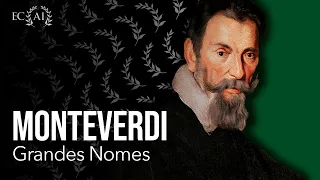
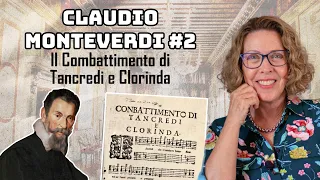
I also highlighted that the new recitative style or accompanied monody was flexible enough for the text and to characterize the emotions, but could become monotonous in the hands of less inspired composers. Someone needed to arrive to reform it and give it greater expression. Today I'm going to tell you about this someone: the composer Claudio Monteverdi.
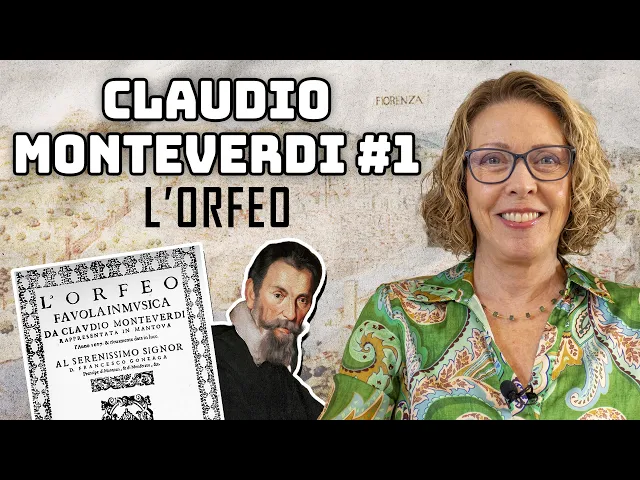
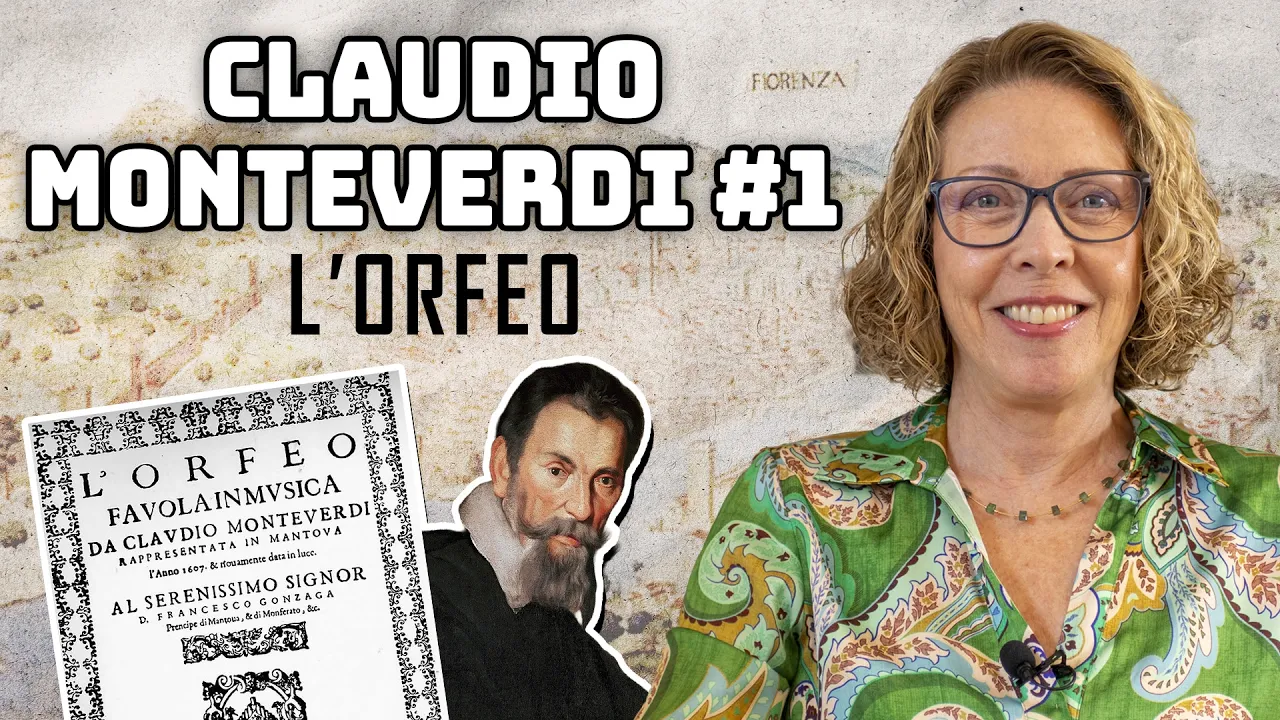
Let's go! Claudio Monteverdi was born in Cremona on May 15, 1567 and died at the age of 76 in Venice on November 29, 1643. He was the most important Italian composer of the first half of the 17th century and his legacy is one of the pillars of the history of Western music.
He published a vast body of work , including his eight books of madrigals. These books contain the most perfect synthesis of the evolution of musical language from the end of the Renaissance to the beginning of the Baroque. Monteverdi received his musical education in Cremona, the city of violins, and by the age of 20 he was considered a master and had already published his first book of madrigals.
In 1590 he went to Mantua, hired as a musician and violinist at the court of Duke Vincenzo Gonzaga, and from 1602 to 1612 he assumed the position of chapel master, becoming responsible for composing the music for the duke's court, among other duties. In 1600, on the occasion of the marriage of Maria de Medici with Henry IV, the Duke of Mantua and Alessandro Striggio, court secretary and occasional poet, were in Florence. It is believed that Monteverdi was also part of this entourage and that together they witnessed the performance of "Euridice" at Palazzo Pitti.
Seven years later, the Duke of Mantua, wanting to compete with Florence, requested a new work from Monteverdi. It was 1607, and Monteverdi, with his 39 years of musical experience, knew exactly what to do. He would write a composition with the same theme used by Peri: the fable of Orpheus.
Alessandro Striggio was responsible for writing the libretto, which from a poetic point of view was superior to that used by Peri. Monteverdi was thus able to work with structures more suitable for being set to music. "L'Orfeo", the first great opera in history, was born.
A work of art produced just 10 years after the creation of the genre, and which would not only consolidate the new musical language but would also serve as a guideline for new compositions. It was called by the composer a fable, as the term opera would only appear later. Monteverdi was truly the first to capture the essence of drama musically and to fully translate the characters' emotions through music.
He gave the recitative style an unprecedented melodic richness and used the choir with great musical diversity depending on the drama. His instrumental writing highlighted the voice as a fundamental part of the opera and used a large number of instruments, from 39 to 41. We don't know for sure, but something like this would only be seen 100 years later.
This arsenal of instruments was divided into groups to represent scenes and characters differently. For example, strings, harpsichords and recorders were used to represent the pastoral fields of Thrace with their nymphs and shepherds, while heavy metals illustrated the underworld and its inhabitants. "L'Orfeo" was composed in the transition from the Renaissance era to the Baroque era, and Monteverdi, with his great experience, used all the musical resources existing at the time.
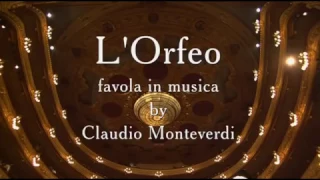
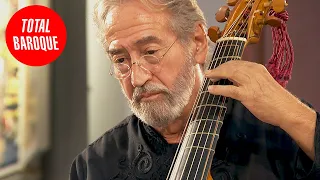
He was the first to mix styles to make the music underline the drama. Let us now listen to a short example of a madrigal sung by the choir at the wedding of Eurydice and Orpheus. We've just heard a snippet of Jordi Savall's production in Barcelona.
It has subtitles in Spanish and I'll leave the link below so you can watch it in full, if you wish. Let's now listen to a snippet of a monody sung by Orpheus to convince Charon to let him get on the boat and reach Hades. The two examples we heard give us an idea of the diversity of the work, which is considered the first great opera in history.
"L'Orfeo" represented the perfect union between music, the musical and scenographic resources of the time, text and music were married in a musical drama where the final ensemble was greater than all the individual parts. "L'Orfeo" consolidated all Camerata Fiorentina's aspirations in creating a new musical language. It was performed at the court of Mantua only twice, and in 1609 its score dedicated to Duke Francesco Gonzaga was published.
It is believed that it must have been performed in other Italian cities and even outside Italy, but there is only one confirmed staging, that of the Teatro Falcone in Genoa in 1646. Since then, "L'Orfeo" remained in obscurity for 300 years, It was revived in 1904 as a concert in Paris and is now part of the repertoire of all opera houses around the world. But while opera was developing in Florence, what was happening in Rome?
Well, I think you already know, right? This story will be for our next video. And if you enjoyed learning a little about Monteverdi, leave a like, share with your friends and, of course, leave me a comment and subscribe to the channel.
Thank you very much, have a good week and see you at our next meeting!