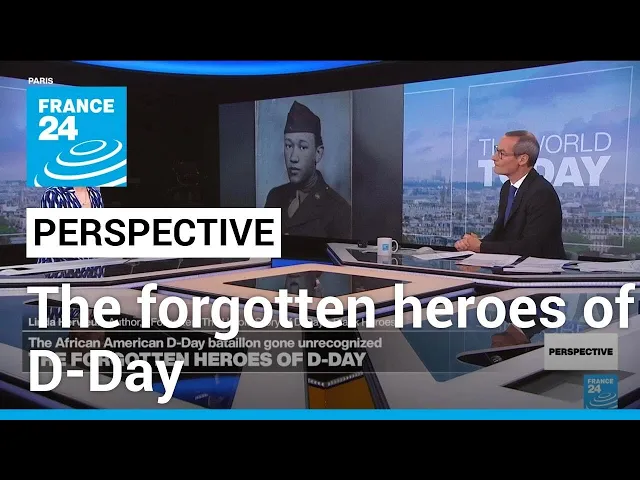
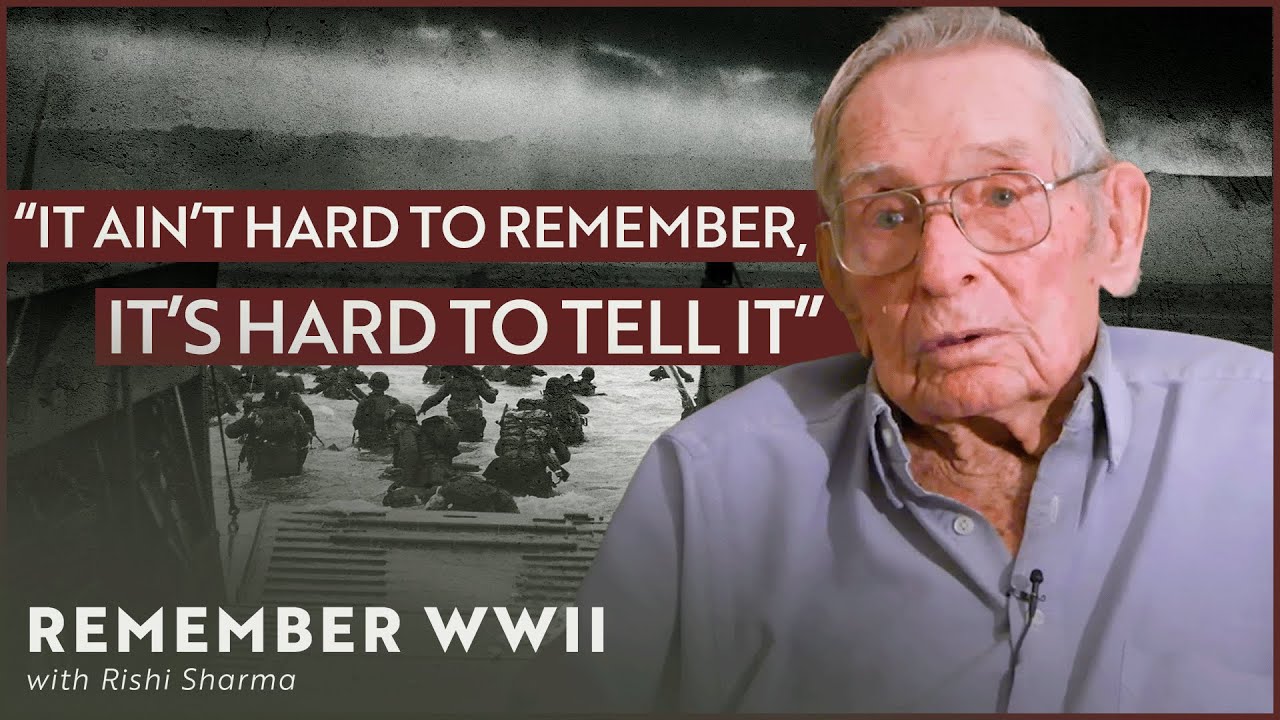
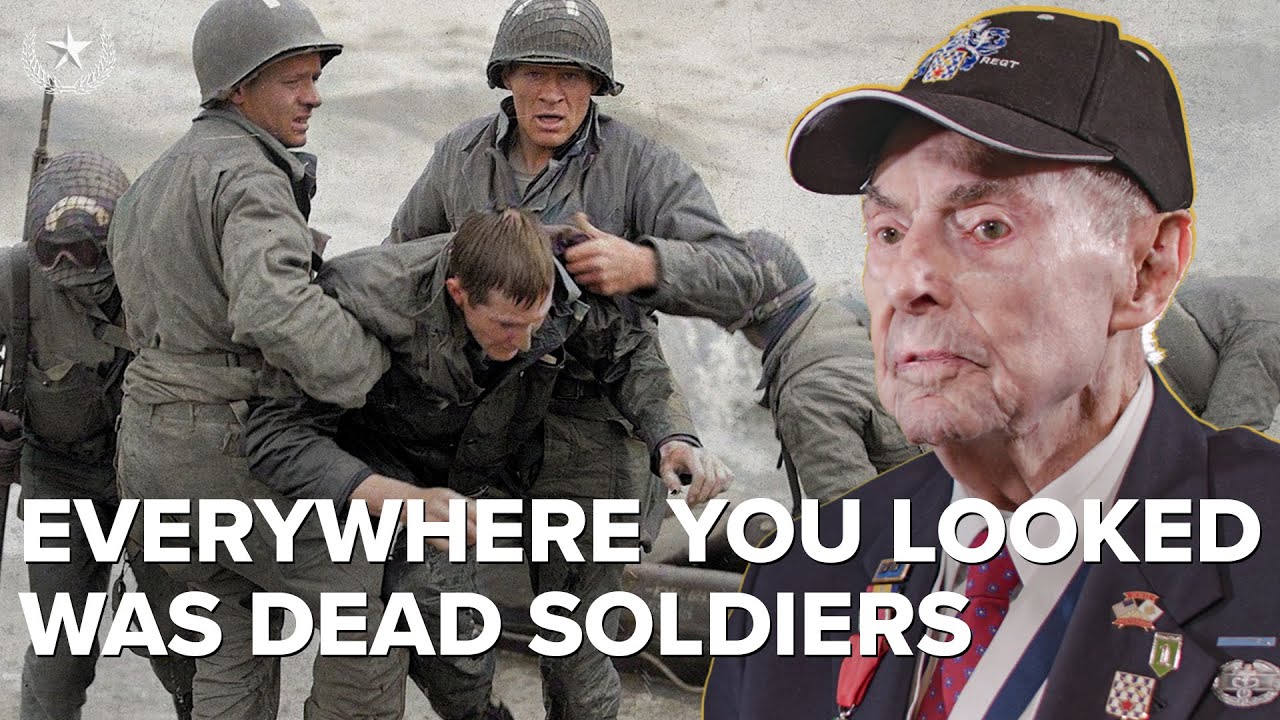
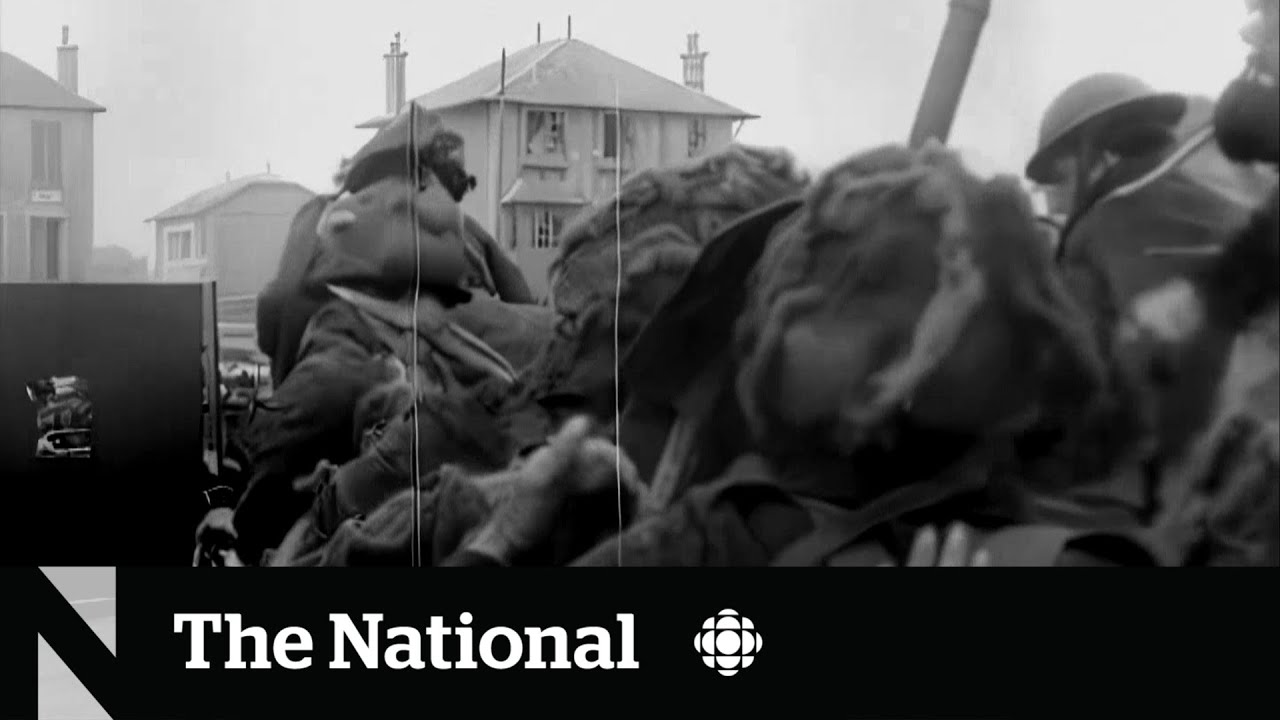
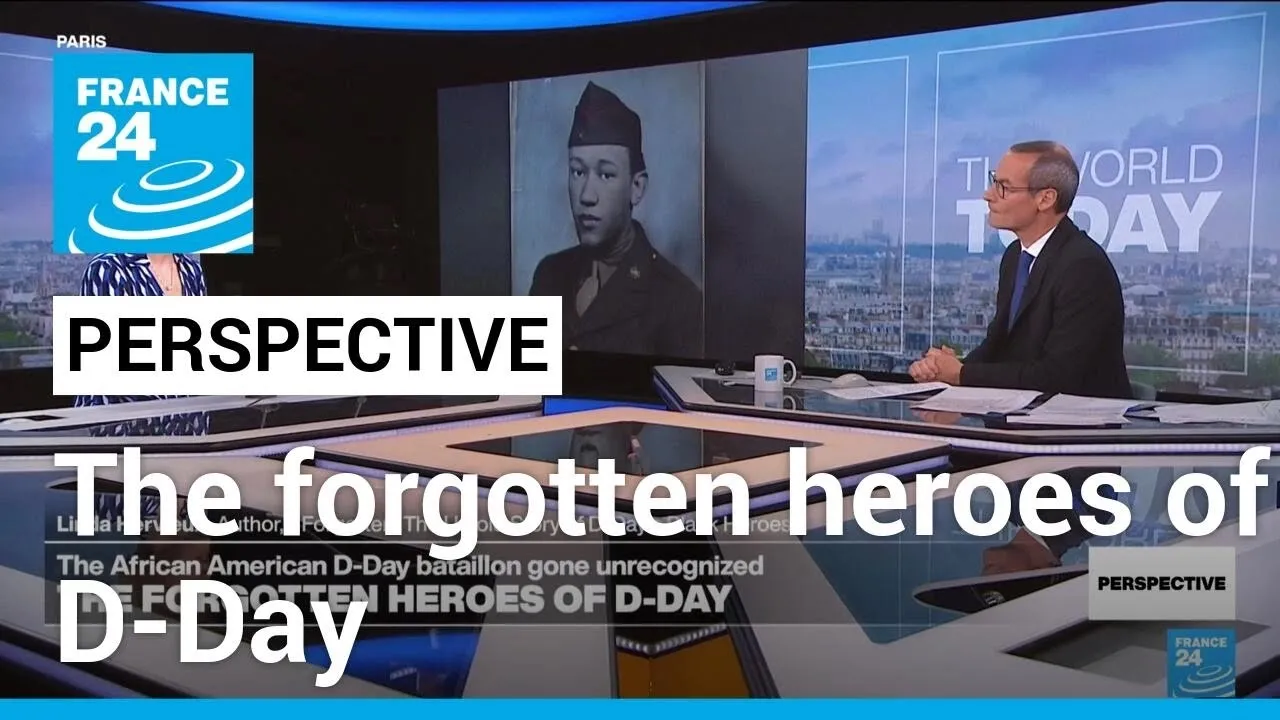
now it's time for our perspective guest on the program I'm sure you have in your time watched films of the D-Day invasion notably Dunkirk or Saving Private Ryan there are many others of course and when you watch them did you notice though any black soldiers amid anyone in the films well if there were there were certainly not at Center Stage but in fact there was an entire all black Battalion whose crucial contribution to D-Day has gone all but unrecognized in the early hours of the 6th of June 1944 the 320th barrage balloon Battalion a unit
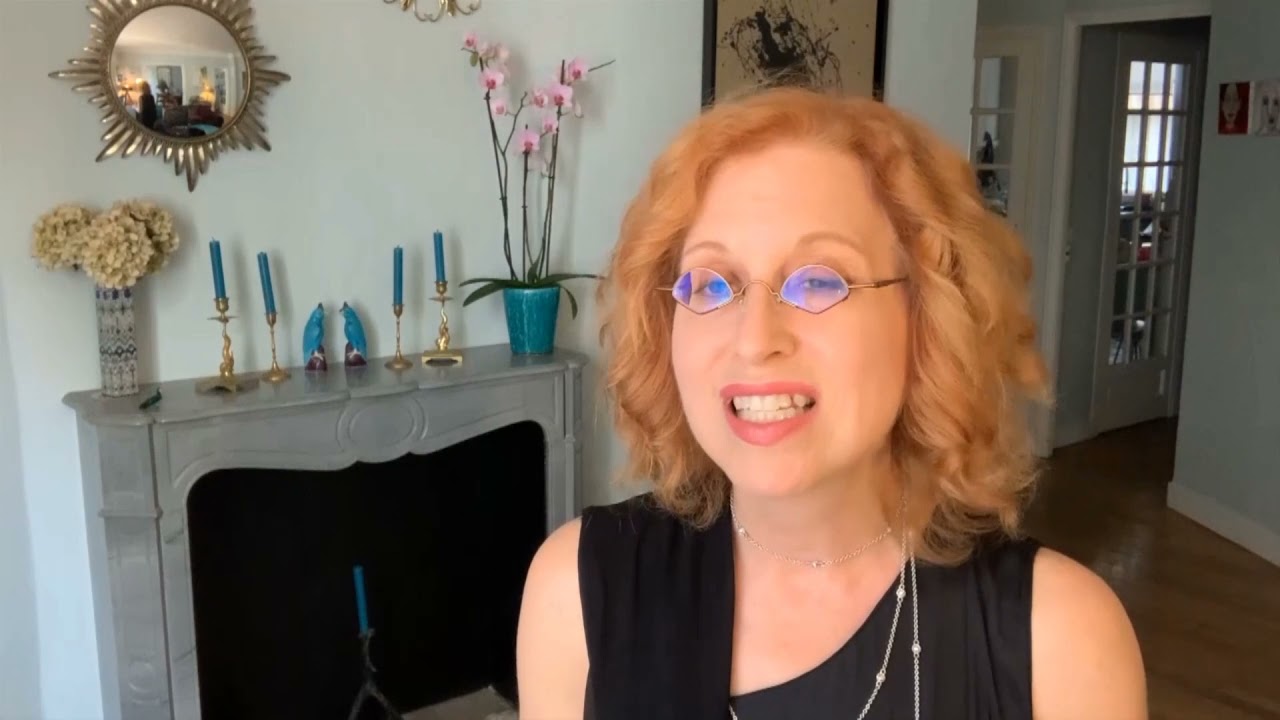
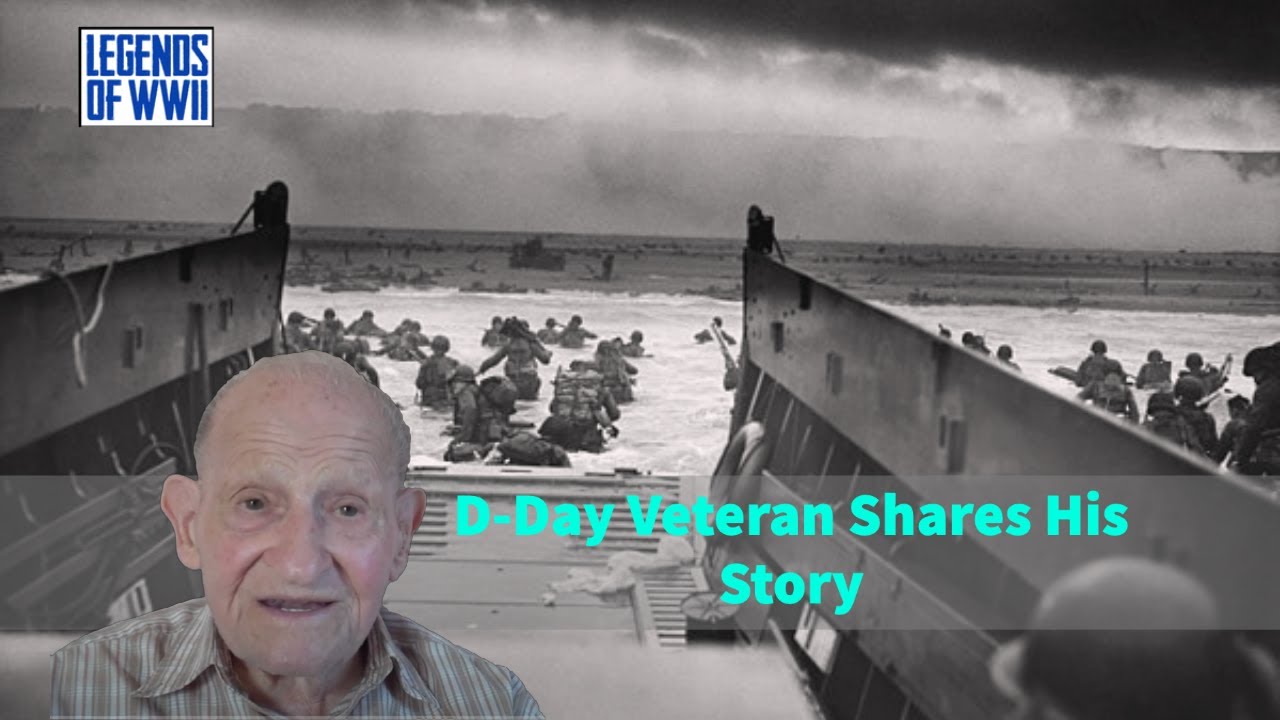
of African-American soldiers landed on the beaches of France now though the story is being told well this first of all was in a book called forgotten the untold story of d-day's black Heroes by Linda harier it's also now being turned into a documentary more about that in just a moment but she joins us now here on set thanks very much for coming in tell us first of all then what this Battalion was told to do so this the the 320th was the only African-American combat unit to land on the beaches of of of Normandy Omaha
and Utah they were 621 uh Americans who learned how to fly uh a a curtain of balloons the idea was that this would be a protective curtain and so the balloons flew from the ground and they um flew up into the clouds and they were on a steel cable and there was a balloon uh a little bomb that was tucked just underneath the balloon and so if an enemy plane tripped the cable um it could uh explode it could stall certainly just from the cable alone but uh for the actual landing at Omaha and Utah
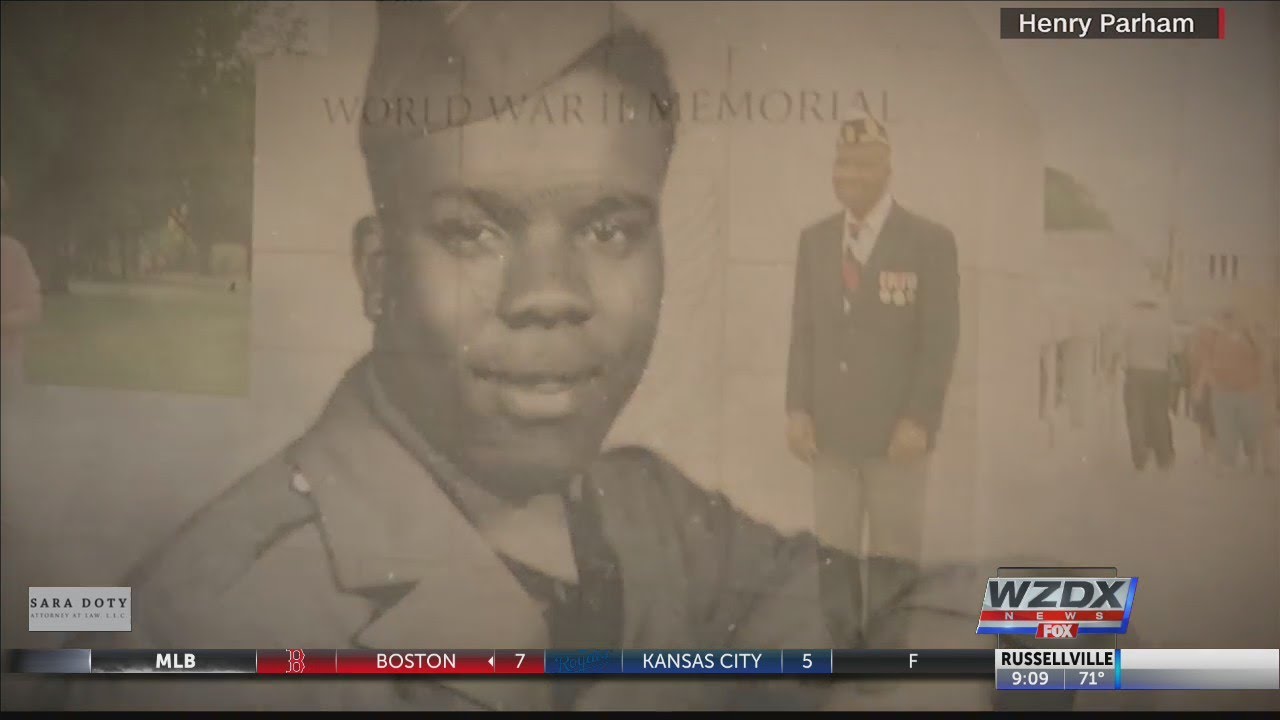
they were combat soldiers they landed with the Infantry did they succeed uh they succeeded they have a good record remember as an offensive weapon their job was to keep the German planes from strafing the beach from um they were protecting the men and the material that were coming in that was crucial for the Allied push through France and um and they did succeed and one uh member particularly Corporal Waverly B Woodson Jr of West Philadelphia he was even nominated wasn't he for the Medal of Honor an award though he never received why so no African-Americans
in World War II received the Medal of Honor until 1997 when President Clinton awarded seven of them there was clearly a concerted effort to keep decorations and awards away from black soldiers remember the US Army was segregated in World War II and segregation and racism was baked into Army policy and so for these men there was no chance they were going to get the promotions or the decorations they deserved but we have discovered uh since uh since the research on the book uh started that Waverly Woodson was in fact nominated and there is a campaign
now underway to write that and to get him the Medal of Honor and we hope that will succeed yeah I mean you talk about it being really ingrained it wasn't just was it when they actually were in action in D-Day I mean it happened very much in their in their training as well um people were were sent to the South right into you know the heart of segregation areas to to be trained yeah training was uh a big shock for the African-American uh recruits from the north who had not experienced legal Jim Crow that was
the legal separation of the races um and they had experienced of course Northern racism but soldiers like Waverly Woodson were in for quite a shock and uh that started right away when they had to segregate train cars and the black soldiers were um relegated to sitting next to Filthy coal engines and so they would arrive you know covered in soot already angry already demoralized so the reason why they were never recognized is obviously as part of that does it um surprise you shock you that they were never recognized given the the way the Army uh
was structured at the time and the US military in general racism was baked into the policy pseudo science black soldiers were uh studies said that they were less qualified that they were not as intelligent that they were not as Brave and of course none of this was true and when I when I look back at the history of that time some of the the treatment it was shocking even at the time and it wasn't accepted anywhere outside of the United States and so when these men went to Britain to train for the D-Day invasion they
had six wonderful months in Wales and in the towns in Oxfordshire in England where they were welcomed where they were were actually Stars the Americans coming and why did you or how did you come across this story and decide that you wanted to turn it into a book well we're in we're in Paris and it was thanks to the French government in 2009 for the 65th anniversary of D-Day the French government recognized one American an African-American named William Dabney who is one of the main subjects in this book and after writing about his story it
seemed quite obvious that there should be more written and uh 5 years later it became a book I mean it's incredible that that you managed to to do that and turn it into a book and as we've seen from some of the images appearing behind you it's now not just a book it's a documentary as well yes yes so we're very happy about that National Geographic Disney plus uh coming out June 3rd and then streaming from June 24th on on Disney plus and it's the story of these men but also other men who were written
out of the story and it's called erased World War II's Heroes of color and uh yeah we're hoping that that that will give more attention because some people still believed there were no African-Americans participating in one of the greatest U military operations of all time Linda harier great to have you with us on the program today uh look forward to seeing the documentary Discovery Channel and Disney plus we can give them a plug because it's a very worthy a worthy documentary to see I'm ass sure thanks very much for coming in and talking to us
on the program today