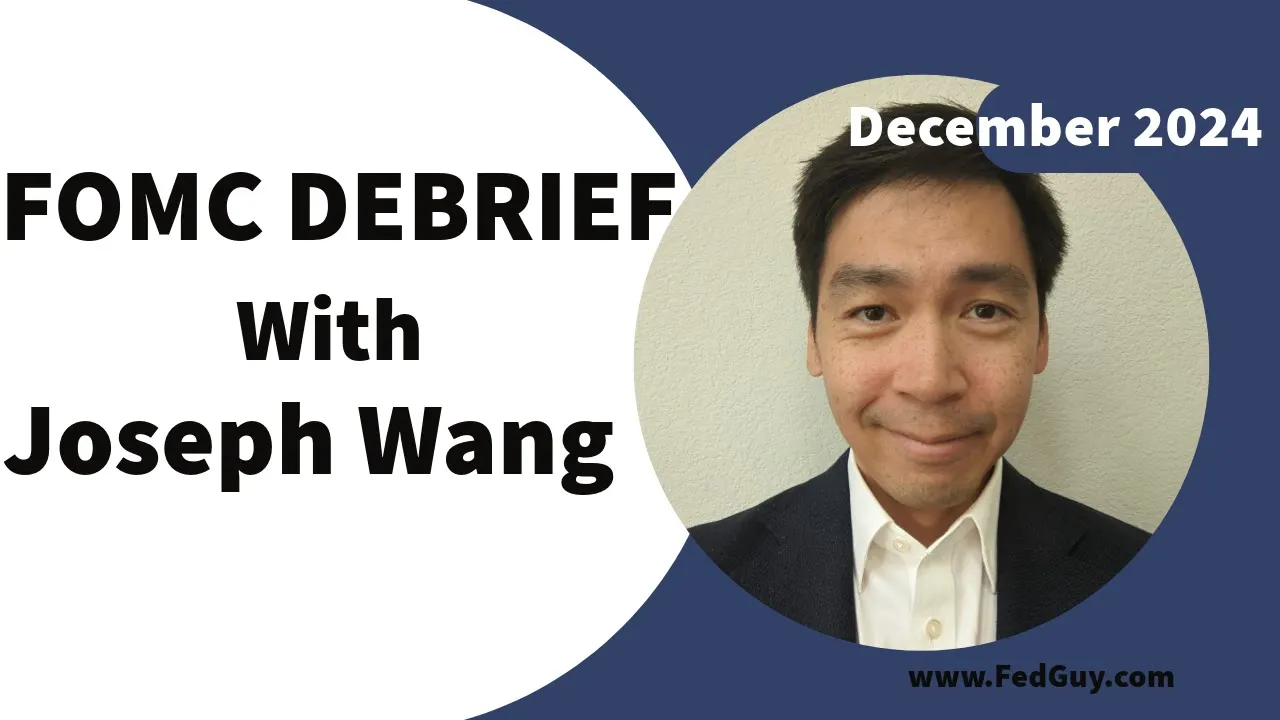
hello my friends today is December 18th and this is my December fomc debrief so we just had the last fomc meeting of this year and before we get into what happened let's take a step back and level stat so today was a meeting where we had a Dot Plot where the FED kind of gives you a sense of how they're thinking about the world the last time we had a do plot was in September and at that time the Fed was having a bit of a panic so in the September dotplot they were basically suggesting
that no GDP is going to slow a lot 2% unemployment rate is going to jump to 4.4% and inflation is going to come down basically they were in a panic that uh we would have a recession and so they were forecasting that we would have you know another cut today in December now between then and now uh economic data has consistently surprised to the upside we've had you know the unemployment rate know 4.2% below what they were expecting GDP growth close to 3% and inflation a little bit hotter than they expected now even after all
of this positive data the FED still decided to cut so a lot of people were kind of scratching their heads again why are they cutting today now to be clear the FED never surprises the markets or tries not to and so the market fully priced in today's cut already it was a little bit unsure a couple weeks ago but after Governor Waller came out and and gave his nod to rate cut and data continued to cooperate the market was pretty sure we' get a cut today and so today's meeting was unequivocally hawkish now I was
surprised I was thinking we would have a doish meeting but no it was unequivocally hawkish now the hawkishness comes largely through the feds dotplot now the market again last time they were penciling for cuts for next year heading into the meeting today the market pricing was suggesting two cuts next year and The Economist surveyed was suggesting three cuts on the Dot Plot but the Dot Plot today surprised the survey and it actually met the market at suggesting just two cuts for next year so again that is a hawkish surprise now the rationale behind this more
hawkish Dot Plot was that the FED all around upgraded their economic forecast uh they were thinking that growth is going to be better unemployment was going to be better and basically everything is going to be better next year than they had expected and so because of that they're thinking that they don't need to cut rates as much so many people are asking okay well if everything is fine why are you cut cutting rates at all now I think de digging deep into the conference I think the answer to that is that in his heart of
hearts chpa thinks that inflation is over so he's not really concerned about it and he is more concerned about the rise in unemployment women now we kind of had a taste of how chpa thinks about inflation at his November conference where he was basically you know pointing to 3-month annualized inflation is coming down six-month annualized is coming down a lot of inflation has just you know lagging shelter which we all know is eventually going to come down it's very very upbeat about inflation now between November and now we did have an inflation print that was
higher than expected so it seems like he uh he had to kind of reconcile that a little bit but what push came to show this is what he said I would say I'm confident that uh inflation has come down a great deal and I'm I'm confident in the story about why it's come down and why that portends well and and I'll tell you why you again you do see with Housing Services inflation which is one that we've really worried worried about it really has come down now quite steadily at a slower Pace than we thought
you know two years ago but it's nonetheless steadily coming down as as Market rents you know Market rents sort to equilibrate better with um you know new leases that turn over not not new tenants but new leases Market rents is new leases so that that's happening that process is ongoing pretty much as we expect Goods uh inflation which is another big piece of it has returned right to the range where it was before the pandemic just for some months this year it kind of moved up in a bumpy way because of used cars and things
like that but we think overall that should generally be in the range it was in that that leaves non-housing services and market-based non-housing services are in a in in good shape it's non-market services and those are those are services that are imputed rather than measured directly and uh and they don't we we think they don't really tell us much about the um uh you know about tightness in the economy They Don't Really reflect that uh I mean a good example is financial services which is really done off of asset prices uh and that just so
that's that's how that inflation Works none so the overall picture the story of why inflation should be coming down is still intact and basically he's saying that you know if we divide inflation into different components looking at Goods you know they're about where they were before the pandemic now looking at Services yeah yeah yeah they're a little bit hot but then you know you got to break out housing which we know is lagging and it's coming down and looking at non Housing Services we can further break that down into services that are that we have
transactional prices so market-based and services that are imputed which are basically done through a mathematical formula or or survey so he says looking at these services that are marketable let's say the price of meat price of eggs and stuff like that uh they're already you know on time towards 2% everything's okay the reason that Services is is high is because of this non-marketable impu imputed stuff for example uh imputed stuff would be stuff that is not actually transactional a very famous part of imputed stuff in pce is owner's equivalent rent where people are surveyed where
do you think your home would rent if you were to rent it basically trying to gauge how um homeowners are experiencing shelter inflation um again that's that's not Market based it's just a survey it's an imputed measure and that stuff seems to be keeping inflation High now what I take away from this is that Chow is kind of twisting himself into circles to kind of explain to everyone why that inflation although the index continues to show you know above 2% but when you look one level beneath looking at the components I it's really just stuff
that's either lagging or just stuff that's not really an accurate measure of inflation so again to me I take that my takeaway is that was really dobish again is not worried about inflation although to be clear when you are Fed chair you are the boss but you still have to manage a whole other people who whose opinion matters to varying degrees today's fomc meeting we did get one descent by a Fed president and this person was not even mentioned uh in the Q&A she's not particularly important but she is a very smart person uh but
I think it's just useful to know that again even after this hawkish thought plot but he was not able to get across the board consensus so some some degree of a little bit of a internal political um disagreement over there maybe she wasn't the only one so in any case the outcome was a more hakop plot now the other takeaway from this is how cha was thinking about unemployment so we all know that the unemployment rate has been gradually rising over the past a couple years now his view on this is you know somewhat upbeat
not totally now you could have a rise in the unemployment rate through you know more firings right that's what we don't want to see but he's saying that the rise in unemployment rate not so much increased firing it's just the hiring rate is really low and so as our population grows as new people graduate from the schools and enter the the workforce or as laid off people try to find new jobs you know that highing rate is really low and that's the reason why the unemployment R will continue well has been rising and from his
view will continue to tick up a bit every couple months so all in all the market again took a look at the Dot Plot again rates screamed higher you got the um across the curve rates screamed higher and that strengthened the dollar significantly that kind of took down a lot of you would say instruments that are related to the dollar like gold and of course the equity Market totally totally tanked so the market is is kind of in uh seems the market was in a bit of a shock today by this but um looking into
the conference qualitatively uh I didn't find it to be particularly hawkish and I still think that we are probably at peacock isness for the FED but I guess we'll find out in the coming months all right so that's all I prepared today I also did an interview with Felix of Ford guidance and that'll be out surely as well right talk to you all this week this weekend on Saturday all right bye