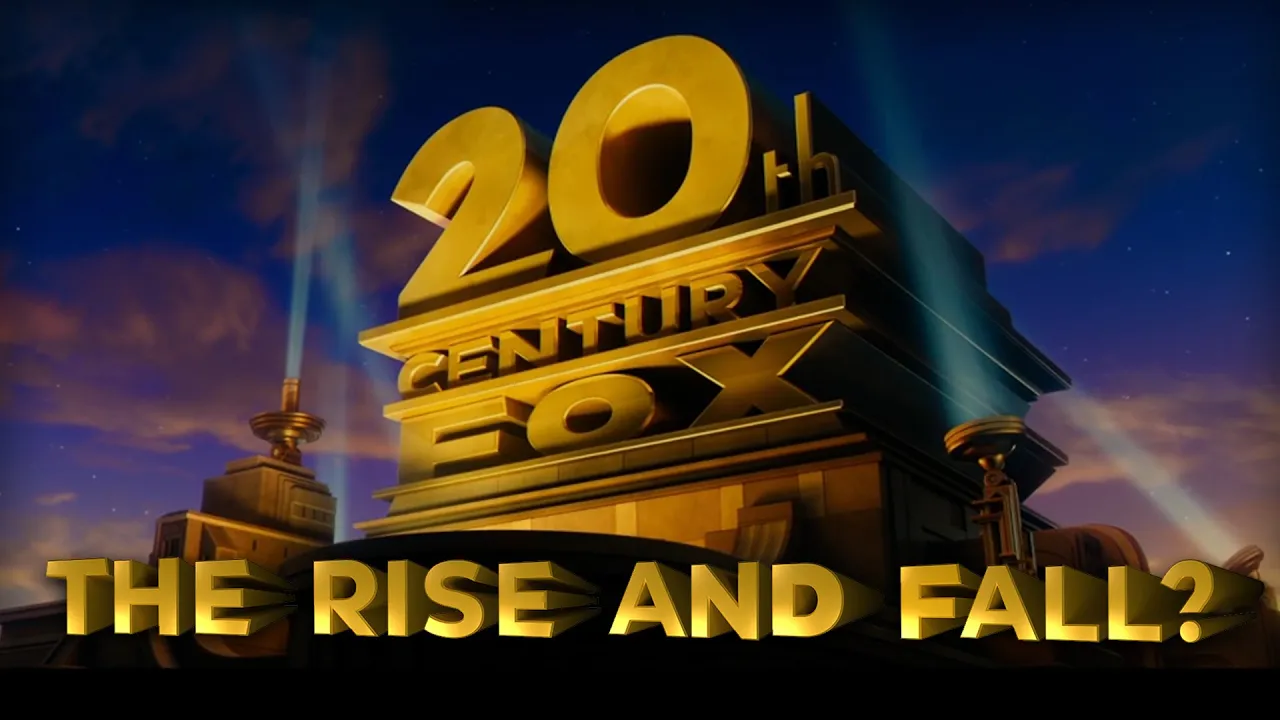
[Music] 20th Century Fox spent over 80 years as its own major film studio. Over that time, they were the company behind some of the most successful movie franchises, including Planet of the Apes, Die Hard, Ice Age, and of course, the one that I always associate with them the most, X-Men. We have all seen that classic intro with the upbeat music that really gets you energized for the movie to start.
Well, the specifics can get a little tricky, but this iconic film studio does not really exist anymore. Not in the way that we think of it, anyway. In 2019, it was officially bought by Disney as part of a $71 billion deal, making it not only Disney's biggest acquisition ever, but ranking it among the biggest in US history.
Shortly after, they changed the name of it to 20th Century Studios, which still does not look right to me. They likely did that to avoid confusion with other Fox branded properties that were not included in the deal. Obviously, there is so much that could be discussed here, but the part that I find especially interesting is the fact that 20th Century Fox has had some close calls over the years.
I'm talking about multiple times where the studio was struggling and could have easily fallen into bankruptcy or shut down. So, in this video, I want to highlight five major rises and falls of 20th Century Fox. Starting off with the person who started it all in the early 1900s, William Fox.
Remember, it was still the early days of the industry when 5-cent Nickelodeon theaters were just starting to pop up around the country. Well, he bought one of those cheap theaters in Brooklyn and built the business from there. Over the next decade, he turned it into a small chain and started producing and distributing movies to be shown in those theaters.
In 1915, he brought all of his operations together under the Fox Film Company, moved production across the country to Hollywood, and helped established some of the first big movie stars. By the late 1920s, William Fox was one of the most powerful people in the industry, estimated to be worth around $35 million. His chain of theaters had grown to well over 200 of them and he was in the process of acquiring Lowe's theaters that would have added another 175 of them along with competing film studio MGM.
That is going to lead me right into the first fall because 1929 was a terrible year for William Fox. Yeah, listen to all of this. Right after he had borrowed a bunch of money to fund that acquisition and upgrade his theaters for sound, the stock market crashed, leading into the Great Depression, obviously hurting theater sales and greatly diminishing his net worth.
That MGM deal never happened due to antitrust concerns. The theater chain was later sold as part of a bankruptcy. And on top of all of that, he was injured in a major car crash where he required a blood transfusion.
The following year, he was removed from the company as creditors took it over. So, the person that the company is named after has not been involved in it for quite a while now. I also want to mention to pile on top of that, in the 1940s, he was charged with conspiracy to obstruct justice and defraud the United States as part of his bankruptcy trial where he ended up serving less than half of a one-year prison sentence.
But going back by the early 1930s, the Fox Film Company was sort of dying out before it was brought back to life by 20th Century Pictures. That was a production company on the rise, recently co-founded by Daryl Xanic, who had previously been the head of production at Warner Brothers. So here he became head of production at the newly formed company that was given the combined name 20th Century Fox.
This right here is where the name originated and that iconic intro was first shown. Potentially their biggest actress at the time was a young girl named Shirley Temple who starred in multiple popular movies that made the studio a lot of money and helped define its new identity. Director John Ford also made some big movies for them and the Fox name was reestablished as a much different and once again stable film studio.
But you will not be surprised to learn that that success was short-lived. And by the 1950s, Fox was having trouble. Probably the biggest reason behind it is pretty straightforward.
the rising popularity of televisions. Most families were buying TVs for the first time, so they were staying at home to watch it instead of going out to the movies. Realistically, that was a bad time for most of the industry, but Fox arguably handled it better than most.
It was a modest recovery, but I'm still going to say that their next rise was centered around the actress Marilyn Monroe. In 1950, Fox released potentially their most successful movie to that point, All About Eve. It was nominated for 14 Oscars and one best picture.
To this day, over 70 years later, Titanic is the only other movie that has ever done that, which by the way was also co-produced by Fox. Aside from the success of the movie itself, All About Eve is considered to be the breakout role for Marilyn Monroe, who went on to star in a bunch of successful movies for Fox. Also, Cinemascope helped differentiate Fox.
It was a lens technology that created a wider aspect ratio. Basically, a response to televisions. It was trying to give people a different experience when they go out to the theater.
It was first used in the movie The Robe in 1953 and is credited as being a big reason that the widescreen format became the standard for movies for the next fall. I may be exaggerating a little bit to say that one movie was responsible for it, but Cleopatra did not help the situation. Remember that televisions were still hurting the film industry, becoming more and more popular, and despite Fox having some good defenses against them.
By the 1960s, they were losing money. Cleopatra became infamous for being the most expensive film ever made. It started out with like a $5 million budget, and by the end of it, they had spent over $40 million.
That was more than twice the price of any film that had ever been made before it. And trust me, the entire video could be dedicated to the production of Cleopatra. But it got to a point where so much was invested in it that it became a sizable risk for the company.
It was at a vulnerable time. And given how much money it cost to make it, it was almost impossible to make that money back in a timely manner. Today, people look back on Cleopatra as the movie that nearly ended Fox, but they were able to survive and make yet another comeback.
And this time, it was mostly due to a bunch of successful movies. Only two years after Cleopatra, Fox released The Sound of Music, best picture winner once again and the highest grossing film ever to that point. In the following years, they released The Planet of the Apes, MASH, and in 1977, another one of the biggest movies of all time, Star Wars.
But then, already going back to the fall, that was followed by a line of unsuccessful movies. George Lucas, creator of Star Wars, had made a deal with Fox where he sacrificed part of his salary from the original movie in exchange for sequel and merchandising rights to the franchise. So, even though The Empire Strikes Back and Return of the Jedi were massive hits, Fox only made money from distributing them.
In 1981, Fox was sold to two wealthy businessmen named Marvin Davis and Mark Rich. Shortly after the sale, Mark Rich had a lot of legal issues where he was charged with multiple crimes, including tax evasion. He fled to Switzerland.
So Marvin Davis was able to take full control of Fox for a low price. Clearly, most of that was not ideal for the company. And like I said, they were not exactly releasing the most profitable films during all of it either.
I think it's wild how a company could be involved in such a cultural phenomenon like Star Wars and be doing so badly just a few years after. The final rise on my list is going to be Rupert Murdoch. In 1984 he bought half of the company from Marvin Davis and the following year he bought the rest of it.
If you are not familiar, Rupert Murdoch was already a massive figure in media. In the 1950s, his father left him a newspaper company in Australia when he was 21 years old. And over the following decades, he progressively scaled that company by acquiring other newspapers.
Notably, he bought the New York Post in 1976. Well, here he bought Fox as a way to expand that media company to include movies and television in a major way. And this is where things start to get a little confusing because up until Rupert Murdoch's involvement, the name Fox was only associated with 20th Century Fox, the film studio that I've been talking about this entire time.
Well, shortly after he took it over, he used other assets to launch the Fox Television Network, which really kicked off a trend where major movie studios would join together with TV networks. Over the next few decades, it all just kept growing. A few of the highlights would be launching FX in 1994, Fox News in 1996, and acquiring the parent company of the Wall Street Journal in 2007.
In 2013, he split the company into two parts, essentially separating the newspaper business from the movie and television business, where confusingly, 20th Century Fox was now owned by a company called 21st Century Fox. I don't know. I'm just trying to convey that Rupert Murdoch took a declining movie studio and put a lot of effort into rebuilding it and expanding the brand.
To finish off the list, the final fall of 20th Century Fox, well, I have to say, was due to the merger with Disney. But I do want to qualify this by saying it all depends on how you look at it. On one hand, the studio as we all knew it is effectively gone.
It has a different name and is under the control of a different studio. As of that deal, the big six were reduced to the big five. But on the other hand, Fox and Disney have joined together various puzzle pieces and made a lot of Fox properties bigger and more available than ever before.
When Disney acquired Marvel back in 2009, Marvel had already sold the X-Men movie rights to Fox. So, here they were all together again. Disney had acquired Lucas Film back in 2012.
So, this deal brought Fox back together with Star Wars after all those years. Fox was one of the originators of Hulu, the streaming service. Disney had bought a minority stake in it, and after the big merger, they took majority control.
And really, when you get down to it, streaming was the big motivation behind all of it. When the Fox deal was finalized, Disney Plus was only months away from launching, and acquiring control of Hulu along with numerous other properties that could be included on the platform would make Disney Plus much more attractive to users. The big concern at this point is that Disney may be growing too big, right?
The movie industry was already mostly dominated by six major studios, and they took over one of those studios. If you want to hear more about the size of Disney, I actually made a video about it back when the Fox deal was happening. So, that is all I'm going to say about it for right now.
Let me know in the comments what do you think about 20th Century Fox and all of these rises and falls that they have been through. To me, it is inspirational in a way to think that they have overcome so much to deliver all of this content to the public stemming back to the early 1900s. But then at the same time, a lot of the issues seem to have been avoidable to an extent anyway.
and Fox probably could have been a little more stable. Also, I'm curious, what do you think of the current state of the company and where do you see it all going in the future? I imagine that the Fox name may slowly be forgotten when it comes to movies anyway, as people associate it more with their news channel and everything else that still holds the name.
And any other thoughts you have about 20th Century Fox or anything else in this video, leave them in the comments. I'd like to hear what you have to say. Thank you for watching.