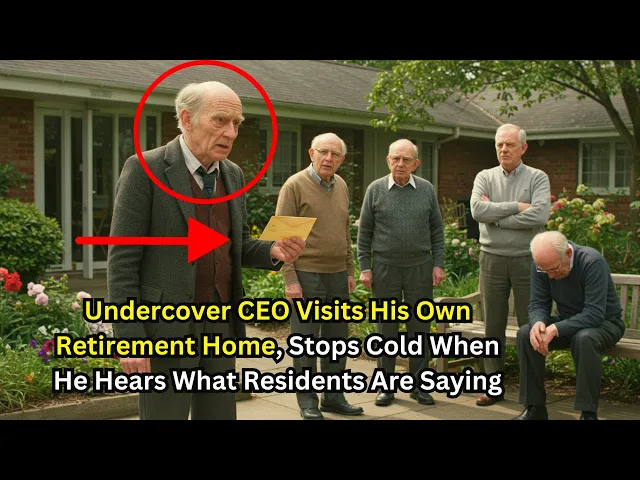
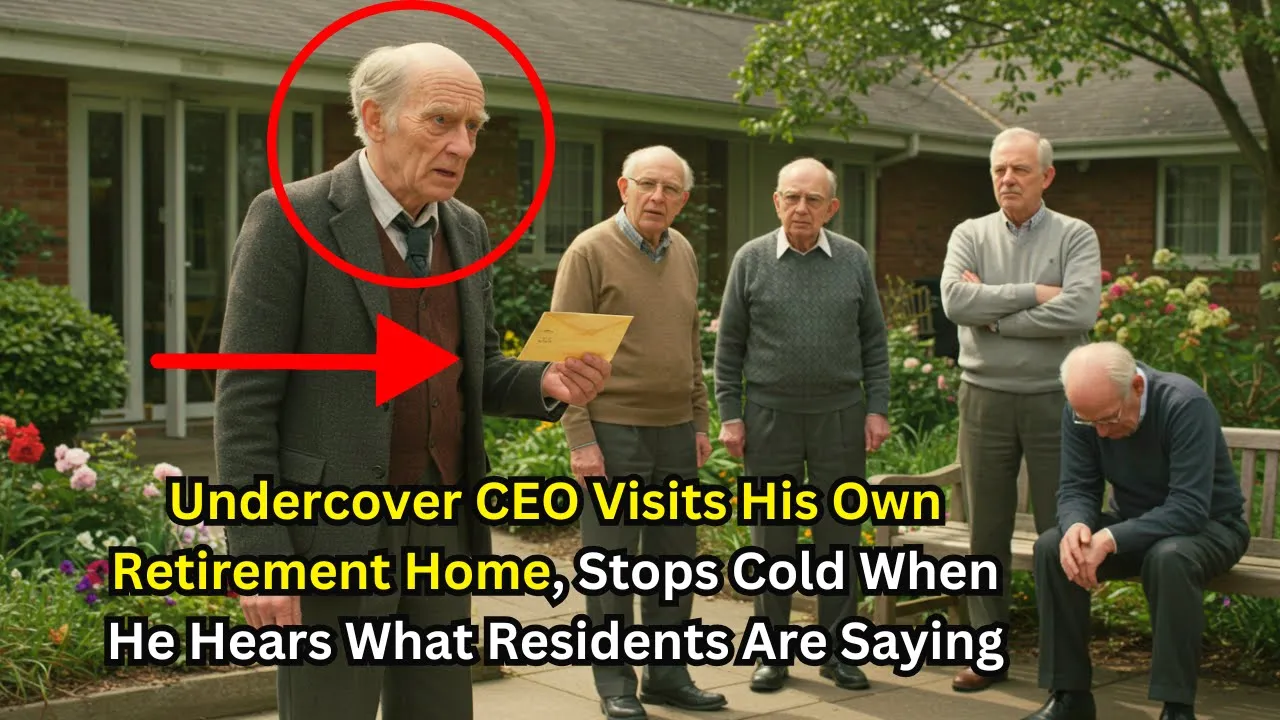
The story begins with a man named Roland Mercer. Roland was not just any man; he was the CEO of one of the largest chains of retirement homes in the country. His company, Golden Horizons, was known for its luxurious facilities and top-notch care.
But Roland had a secret: he had never truly stepped into the shoes of those who lived in his homes. He had never felt what it was like to be on the other side of the glossy brochures and polished advertisements. Roland was a man of ambition, driven by the desire to succeed.
He had built his empire from the ground up, starting with a single small facility and expanding it into a nationwide network. But somewhere along the way, he had lost touch with the very people he was supposed to serve. The residents of his retirement homes were just numbers on a spreadsheet, their lives reduced to profit margins and occupancy rates.
One evening, as Roland sat in his lavish office, he received an anonymous letter. It was handwritten, the words scrawled in shaky ink. The letter spoke of neglect, loneliness, and despair.
It described a retirement home where the residents felt forgotten, where the care they received was far from the promises made in the brochures. The letter ended with a single sentence that struck Roland to his core: “If you truly care, come and see for yourself. ” Roland was shaken.
He had always prided himself on his business acumen, on his ability to provide the best for his residents. But this letter made him question everything. Was he really doing enough, or had he become so consumed by success that he had lost sight of what truly mattered?
Determined to find the truth, Roland made a decision: he would go undercover. He would visit one of his own retirement homes, not as a CEO, but as an ordinary resident. He would live among them, eat with them, and listen to their stories.
He would see the world through their eyes. Roland chose a facility called Sunset Gardens, located in a quiet town far from the city. He disguised himself as an elderly man, using makeup and prosthetics to alter his appearance.
He even changed his name, calling himself Walter Green. With a small suitcase in hand, he arrived at Sunset Gardens, ready to begin his new life. The first few days were a shock to Roland.
The facility was clean and well-maintained, but there was an air of sadness that hung over the place. The residents moved slowly, their faces etched with lines of loss. They ate their meals in silence, their eyes downcast.
Roland tried to strike up conversations, but most of the residents seemed reluctant to talk. One evening, as Roland sat in the common room, he overheard a conversation between two residents. Their names were Henry and Frank.
Henry was a frail man with a kind face, while Frank was more outspoken, his voice tinged with bitterness. “I don’t know why we even bother,” Frank said, his voice slow. “No one cares about us.
We’re just here to be forgotten. ” Henry sighed, his shoulders slumping. “I know what you mean, Frank, but what can we do?
This is our home now. ” Roland’s heart ached as he listened. He wanted to speak up, to tell them that he cared, that he was here to make things right.
But he knew he couldn't reveal his true identity—not yet. Over the next few weeks, Roland became more involved in the lives of the residents. He joined them for meals, played cards with them, and even helped organize a small gardening club.
Slowly, he began to earn their trust. One day, Roland noticed a man sitting alone in the corner of the room. His name was Samuel, and he rarely spoke to anyone.
Roland approached him, sitting down beside him. “Mind if I join you? ” Roland asked gently.
Samuel looked up, his eyes filled with sadness. “Suit yourself,” he muttered. Roland hesitated, then decided to take a chance.
“You seem like you’ve got a lot on your mind. Want to talk about it? ” Samuel was silent for a long moment, then he sighed.
“What’s the point? No one listens anyway. ” Roland leaned in closer, his voice soft.
“I’m listening. ” And so Samuel began to talk. He spoke of his life, of the family he had lost, of the dreams he had once had.
He spoke of the loneliness that consumed him, of the feeling that he had been cast aside by the world. Roland listened, his heart breaking with every word. As the days turned into weeks, Roland began to see the truth.
The residents of Sunset Gardens were not just numbers on a spreadsheet; they were people with stories, dreams, and fears. They lived full lives, filled with love and loss, joy and sorrow, and now, in their final years, they deserved to be treated with dignity and respect. But Roland also saw the flaws in his own system.
The staff at Sunset Gardens were overworked and underpaid; the food was bland and unappetizing; the activities were few and far between. The residents were not living; they were merely existing. One evening, Roland gathered the residents in the common room.
He stood before them, his heart pounding in his chest. “I know things haven’t been easy,” he began, his voice trembling. “I know you feel forgotten, like no one cares.
But I want you to know that I care, and I'm going to do everything in my power to make things right. ” The residents looked at him, their eyes filled with hope and skepticism. Roland took a deep breath, then revealed his true identity.
“My name is Roland Mercer,” he said. “I’m the CEO of Golden Horizons, and I’m here to make a change. ” The room erupted in murmurs of disbelief, but Roland held up his hand, silencing them.
“I came here to see the truth, to understand. . .
” What life is really like for you, and what I've seen has changed me. I can't undo the past, but I can promise you this: things will be different from now on. And so, Roland began to make changes.
He increased the staff, improved the food, and added new activities. He listened to the residents, taking their suggestions to heart. Slowly but surely, Sunset Garden began to transform.
But the most important change was enrolling himself. He had come to Sunset Gardens as a man driven by ambition, but he left as a man driven by compassion. He had seen the world through the eyes of those he served, and it had changed him forever.
As Roland prepared to leave Sunset Gardens, he stood before the residents one last time. "Thank you," he said, his voice filled with emotion. "Thank you for showing me the truth.
Thank you for reminding me of what really matters. " The residents smiled, their eyes filled with gratitude, and as Roland walked out the door, he knew that he would never forget the lessons he had learned. The moral of the story is simple: success is not measured by wealth or power, but by the lives we touch and the difference we make.
Roland Mercer had built an empire, but it was only when he stepped into the shoes of those he served that he truly understood the meaning of success. And so, the story of the undercover CEO serves as a reminder to us all. No matter how high we climb, we must never forget the people who make it all possible.
For in the end, it is not the buildings we build, but the lives we change that truly matter.