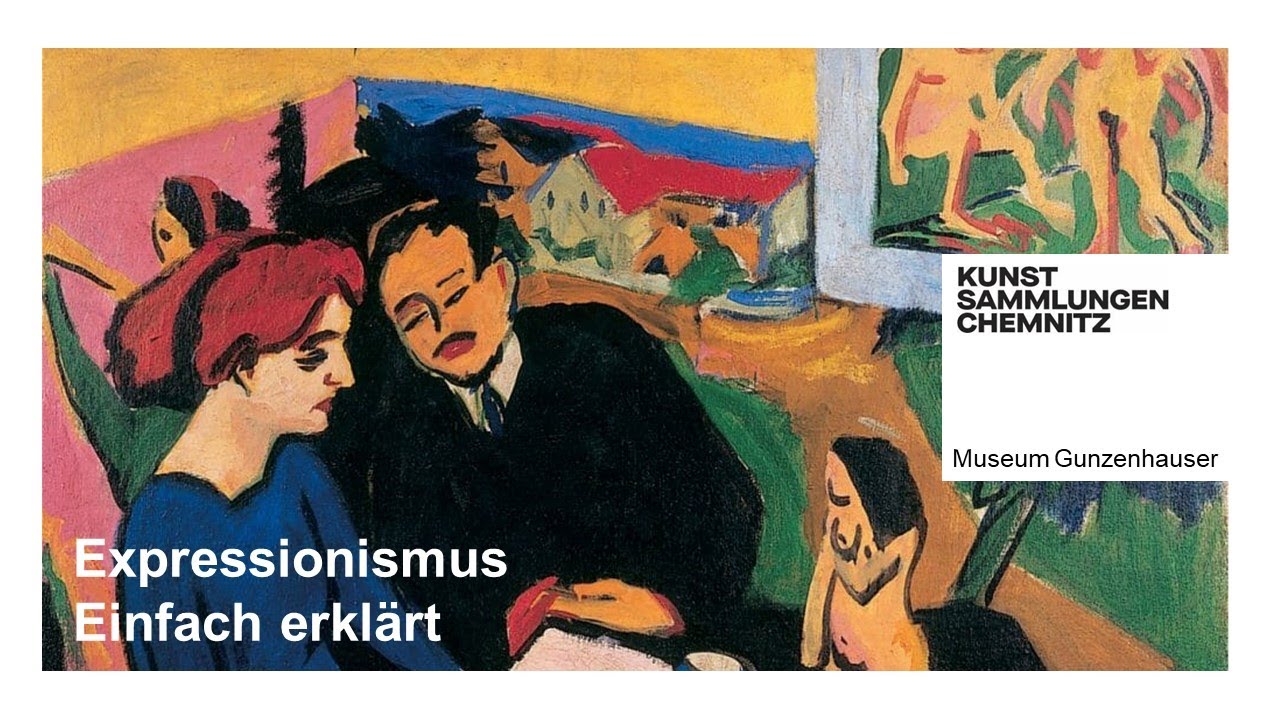
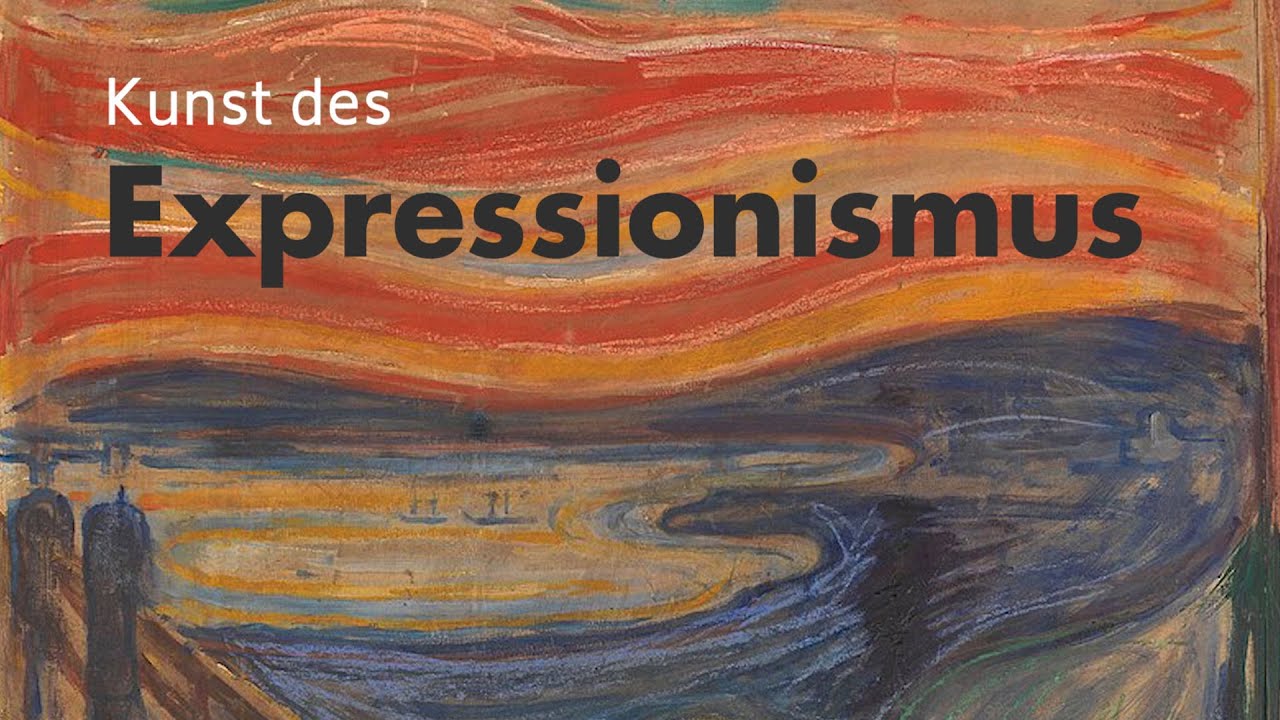
In the name of this style of the early 20th century, one can actually see its essential intention: "expressio" is the Latin term for "expression". The aim of Expressionist art is therefore to express internal processes through the external form. Originally, the term "expressionism" summarized all progressive, i.
e. unacademic, painting styles from the period before World War I, Fauvism, Cubism and Futurism as well as the first emerging abstract efforts. Today , however, expressionism is generally understood to be a form of the visual arts that flourished to its fullest , especially in Germany in the first quarter of the 20th century.
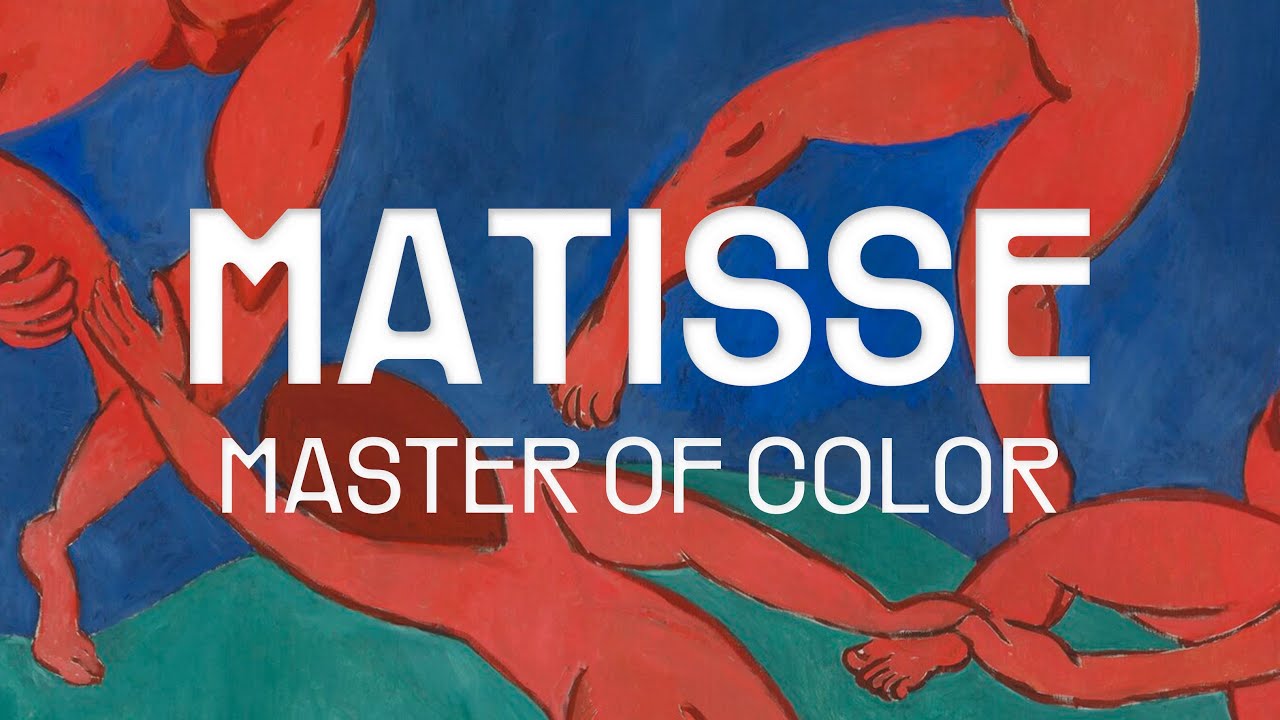
Expressionism found in the works of van Gogh, Gaugin and the Fauvists, or Edvard Munch, a preparatory period of painterly creativity that turned away from the impressionistic focus on sensory perception towards the problems of the human individual, towards the subjective worldview. In contrast to the impressionists who captured the effects of light , color was used as a means of expressing emotion. It was increased in its psychological effect, often applied dynamically and spontaneously.
In this respect, the emerging Expressionism can definitely be seen as a reaction to Impressionism - but an often postulated contradiction or even opposition of the styles cannot be inferred from this, since there are also similarities. The aim of the Expressionists was to no longer look outwards, but inwards, from nature to the mind, and thus to depict their inner, mental state of mind. In order to achieve this, an illusionistic method of representation that correctly depicts the valeuristic form, materiality or proportion is dispensed with.
For this purpose, the Expressionists created a simple, direct imagery with large areas of color, dramatic brushwork and a deformation of human figures that often increased expression , which could therefore look like caricaturing distortion. The interests of the artists often lay in the psychological and psychological condition, both their own and that of the society around them. Her works were shaped by the melancholy of those who doubted and failed about social conventions , they struggled to portray and free them from the rigors of this world.
Themes and motifs were the big city with its social hardship, but also the dream of a simple and free life in nature. In Germany, the ideas and design methods of Expressionism were particularly prominently supported by two groups of artists. The connection "Die Brücke" was founded in Drsden in 1905 , with Ernst Ludwig Kirchner, Erich Heckel and Karl Schmidt-Rottluff playing a key role.
They wanted to “obtain freedom of arms and life in relation to the older forces. Everyone belongs to us who reflects directly and unadulterated what urges them to create , ”said Kirchner. One wanted to free oneself from the inhibiting ballast of tradition, was anti-bourgeois, rejected the theorizing of art and learned the artistic techniques self-didactically, discovering.
Despite different individual views, the group saw a need to change social conditions. In turning away from the old, they also sought inspiration in the carvings of the art of Africa and the South Seas, which had become accessible through the colonies , whose formal language they incorporated into their own ideas as "pure and original models". A typical, very unique "Brücke" style developed in painting and graphics - archaic, aggressive and anti-bourgeois.
It is also a special merit of the artists around Kirchner to have renewed printmaking, in particular the medieval woodcut, in which they saw an opportunity for two-dimensional and expressive design, and to have made it artistically independent. From 1912 onwards, “Der Blaue Reiter” brought together important protagonists of the Russian avant-garde such as Alexej Jawlensky or Wassily Kandinsky with Paul Klee, August Macke, Franz Marc and Gabriele Münter. The group was a loose association of like-minded artists who were very different in purpose and artistic expression.
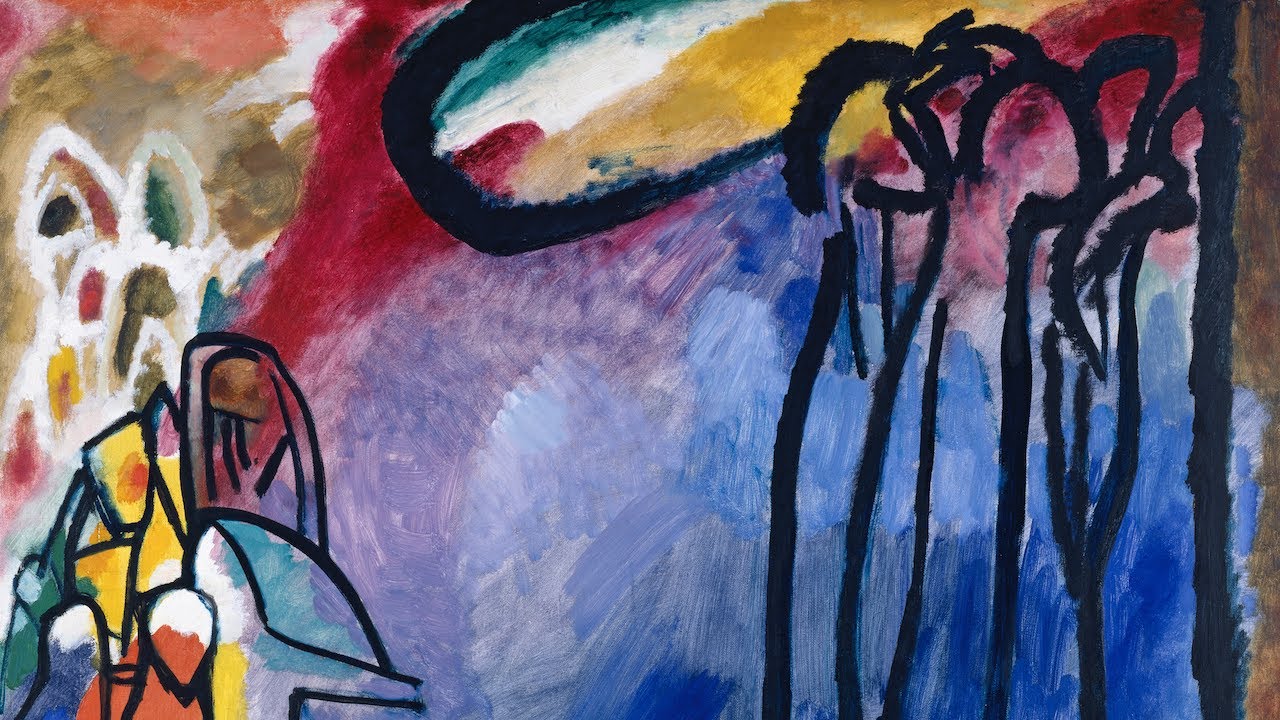
In contrast to the bridge, however, the “Blue Rider” dealt intensively with formal questions of artistic design; its strong intellectual focus was characteristic. Franz Marc dealt in his romantic-pantheistic piety with the creature living in harmony with nature, wanted to "get used to the trembling and running of the blood in nature, in the trees, in the animals, in the air. " He worked rich in contrast and over a large area, the forms abstracted.
This increasing detachment from the depiction of nature in favor of progressive abstraction is increasingly found in the art theory developed by Kandinsky , which he continued in the post-war period in full abstraction. With the outbreak of World War I, however, this development suddenly stopped, the Russians Kandinsky and Jawlensky had to leave Germany, August Macke was killed in 1914, and Franz Marc two years later in the senseless battles of the trenches on the Western Front. However, after 1918, the ideas of the “Blue Rider” were further developed by Kandinsky and Klee at the Bauhaus .
The archaic aesthetics of the Expressionism of the “Brücke” can be found in the silent films of the 1920s such as Fritz Lang's “Metropolis” or in the early horror film “The Cabinet of Dr Caligari ”by Robert Wiene is a pictorial continuation.