Hey it's professor Dave, let's define internal energy. We now understand temperature as a measure of the molecular kinetic energy present in the particles of a substance. As we said, this kinetic energy is distributed amongst translational motion, rotational motion and vibrational motion.
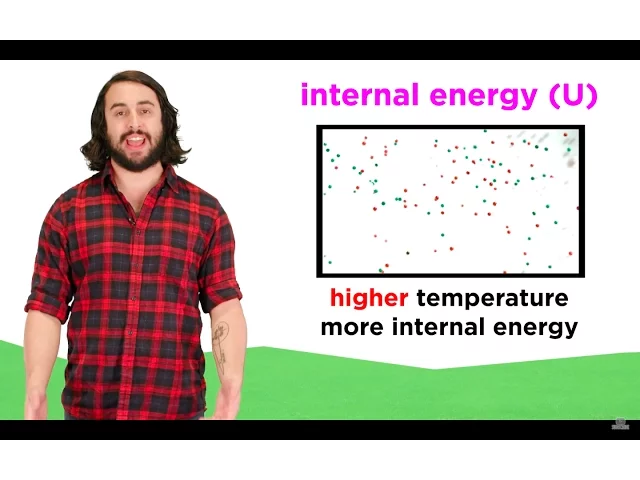
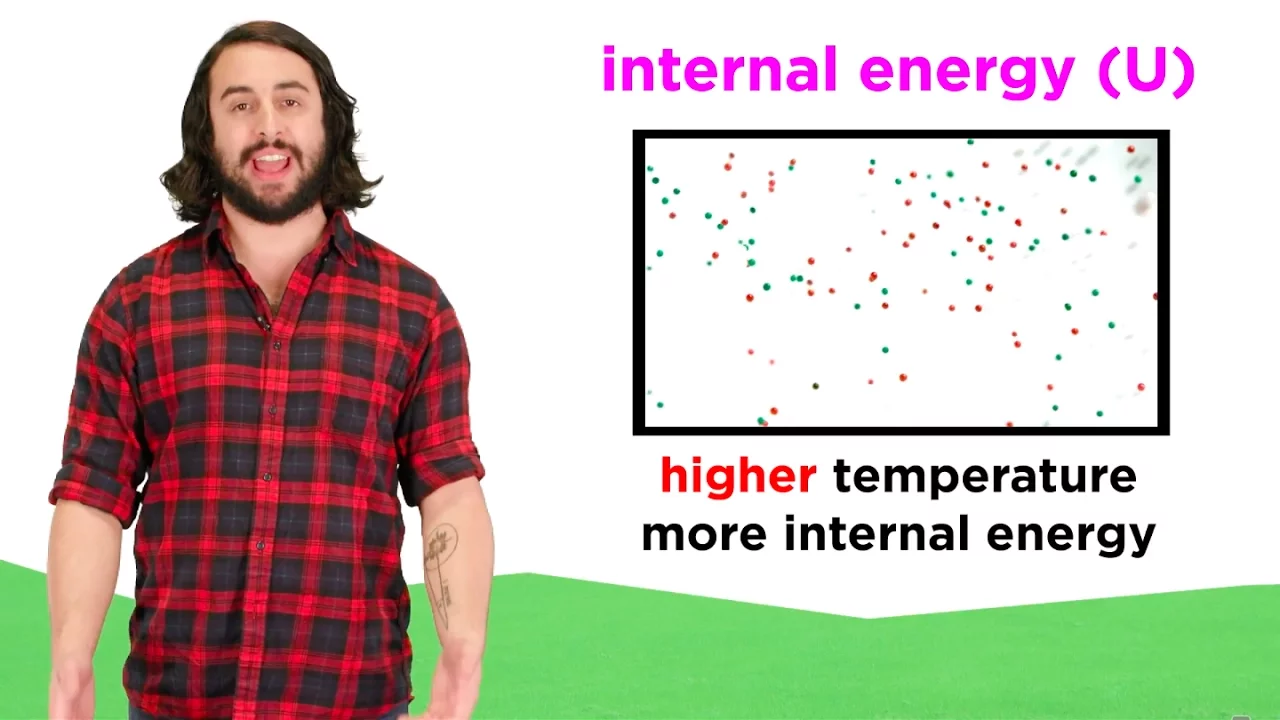
There is also molecular potential energy by virtue of the electromagnetic force acting amongst the atoms of an individual molecule and between each separate molecule. The sum of all of these types of energy that are exhibited by the particles of a substance is called the internal energy of that substance, represented by an upper case U. This is the energy associated with atomic motion and it is a quantity that is directly proportional to the temperature of a sample.
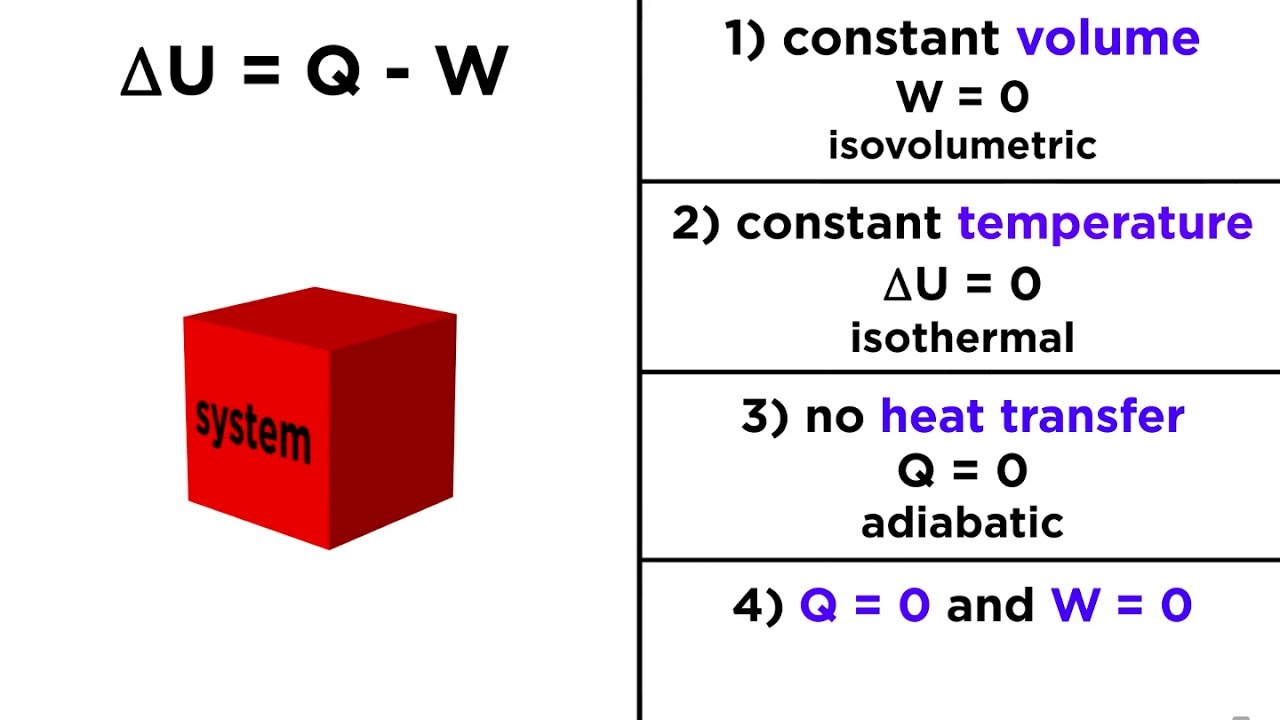
Higher temperatures mean more internal energy, lower temperatures mean less internal energy. In this way, we must understand that a substance does not contain heat, it contains internal energy, like the kinetic energy of all the particles, and it is the transfer of this energy from areas of high temperature to areas of low temperature that we can label as heat. Internal energy is an important concept in the study of thermodynamics which is the study of heat and temperature and their relation to energy and work.
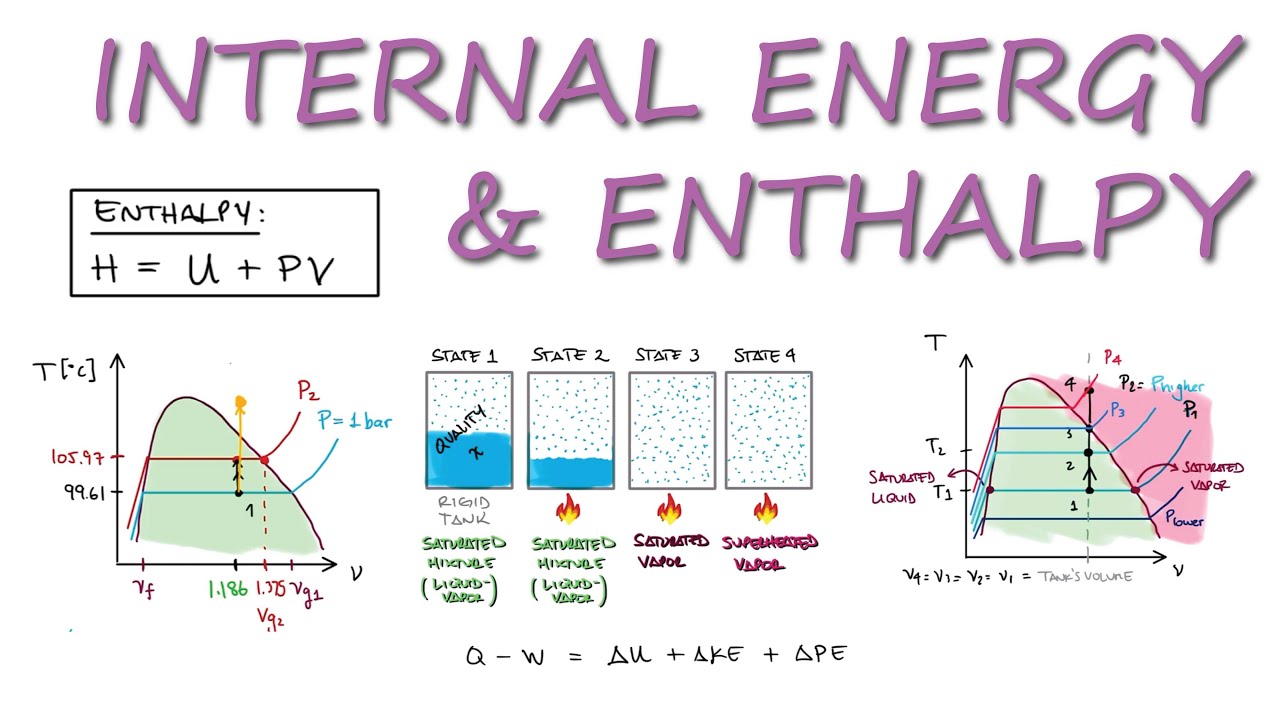
The internal energy of a system can be increased due to heat transfer but also due to things like friction or structural deformation when bending a piece of metal or stretching a rubber band. But as we learned earlier, for a particular system there will always be conservation of energy. We already know about the kinetic energy and potential energy of an object moving through a gravitational field so let's add the internal energy of the particles in the object to this list, and restate conservation of energy with the following equation: change in potential energy plus change in kinetic energy plus change in internal energy will always be zero.
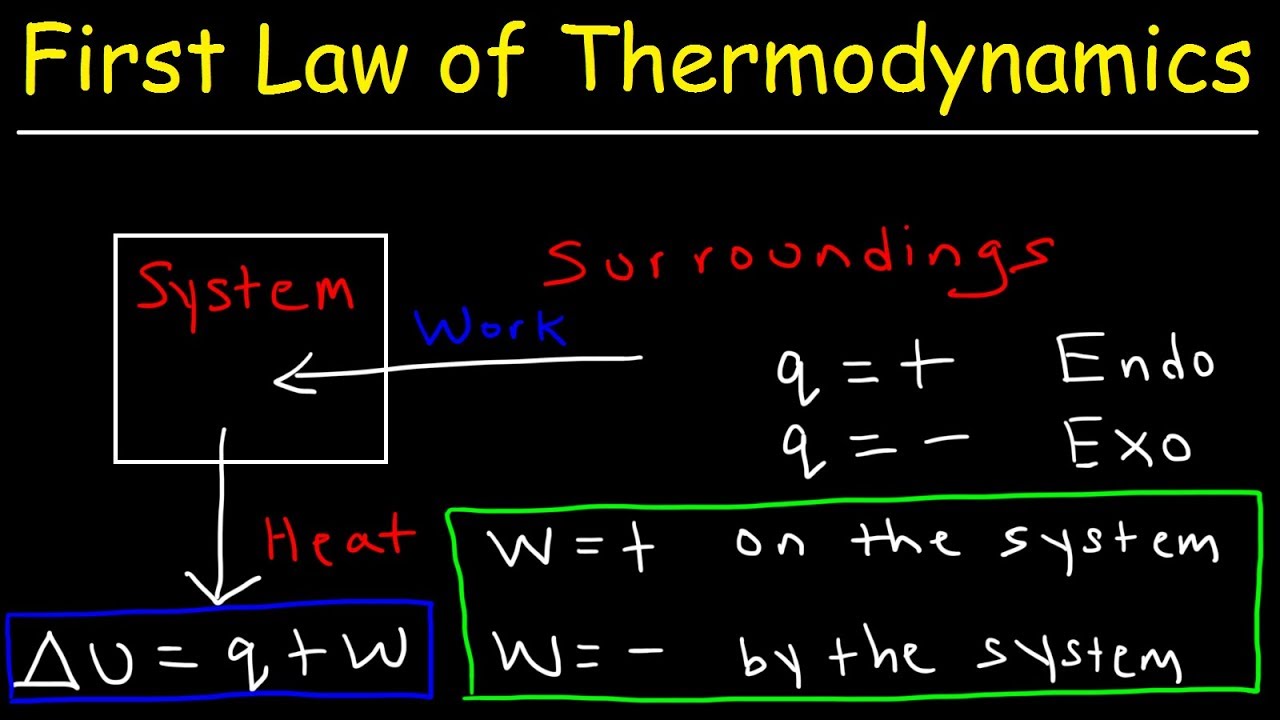
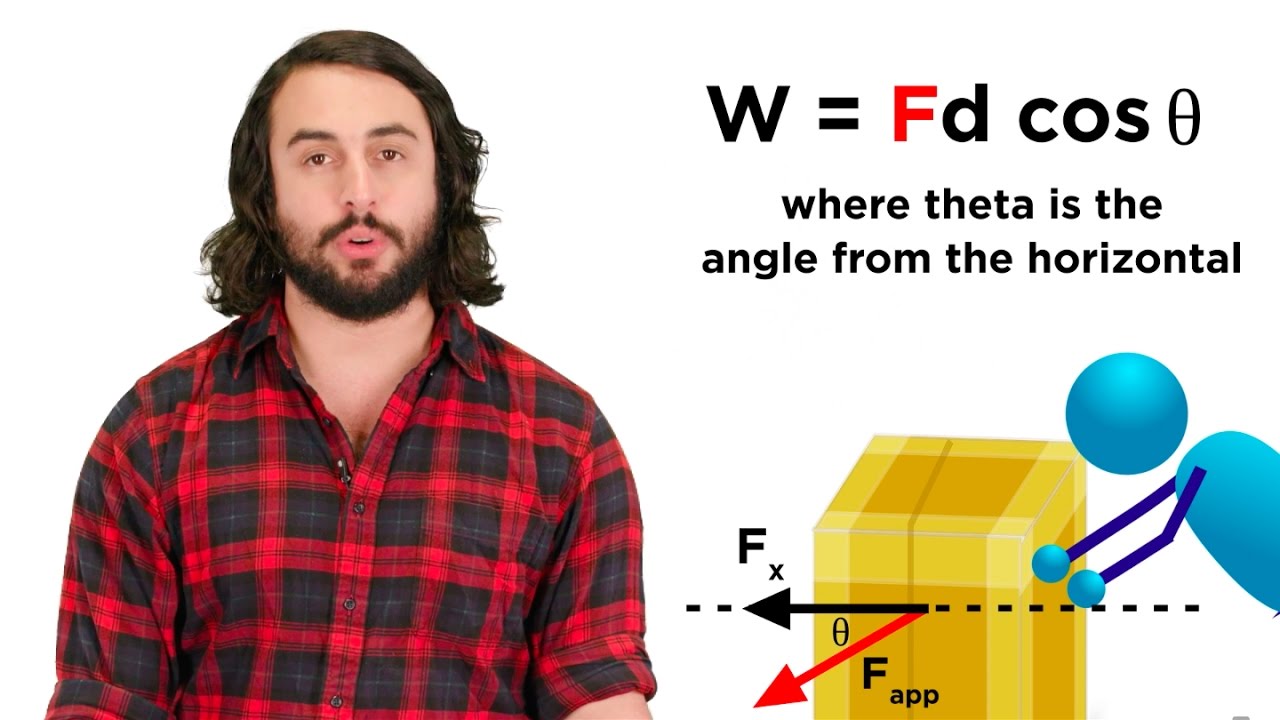
That means that whenever there is a change in any one of these quantities the difference in energy must transform into or be provided by one of the other forms. So when two objects participate in an inelastic collision, some of the kinetic energy is transferred into internal energy, which will be absorbed by the object. Internal energy can in turn be used to do work through heat transfer, pressure-volume work by an expanding gas or some other process.
We should also note that internal energy is a state function, which means that the internal energy of a system depends only on the state of the system and not how it got to that state. We will learn more about state functions later. These kinds of concepts are precisely what we will be examining when we discuss the laws of thermodynamics, so let's move on to this incredibly important subject.
Thanks for watching, guys.