welcome back to cbs mornings today we're looking what happens to our clothes when we no longer want them according to some reports americans buy about five times more clothing than they did back in 1980 and one study suggests we wear each item an average of just listen to this seven times that increase can be tied to fast fashion that's what they call it trendy designs that are mass-produced at a very long low cost so here's a question where do all those clothes end up the u.s leads the world in exporting used textiles more than one
and a half billion pounds are shipped out of the country every year deborah paddle followed some of those donations to west africa have you ever wondered where the clothes you throw away end up some of them travel thousands of miles to ghana this is actually no beach paradise look a little closer and your discarded fast fashion could be rotting right here it's the dark skeleton lurking inside fast fashion's trendy closet our generous donations are not always as charitable as they seem in ghana's kantamanto market trucks offload these bales stuffed with our used clothing it's estimated
15 million items arrive here every week is only a country of 30 million people that's fashion designer and activist sami oting who knows every inch of this seven acre maze with its more than five thousand stalls before they used to have like good quality clothes but now there's a lot of trash and a lot of like very low quality clothes he upcycles garments from kantamanto but says increasingly these synthetic fabrics cannot be salvaged the whole fast fashion module is built around like you know building cheap clothing and the us is the biggest culprit exporting more
second-hand clothing than any other country on earth i can't even lift this bag it's so heavy stuffed with clothes from america the bales cost traders anywhere between twenty five to five hundred dollars untangling them is a tense tussle as they have no idea what's inside it's the luck of the draw trader zaliato asari is barely breaking even that's a nice one sometimes making as little as ten dollars after gambling on garments that have no second life they're known as which means dead white man's clothes dead man quite close why you'd have to have died to
have given away so many clothes we found everything from big name brands to personalized t-shirts like this one from pennsylvania this t-shirt was clearly made very recently it references covert and has already made it thousands of miles to ghana ghanaians do a remarkable job with our castle tailoring and even tie dyeing them back to life but it's not enough to reduce the glut of clothing created by our addiction to fast fashion so if actually kantamanto is highlighting america's waste price exactly exactly exactly waste has been built into the model of uh fast fashion you know
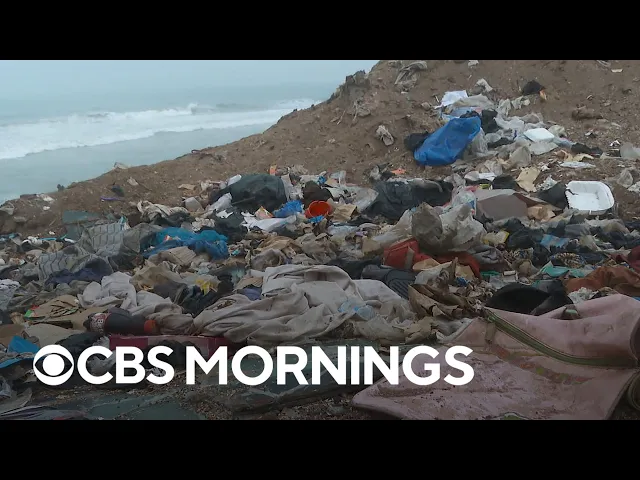
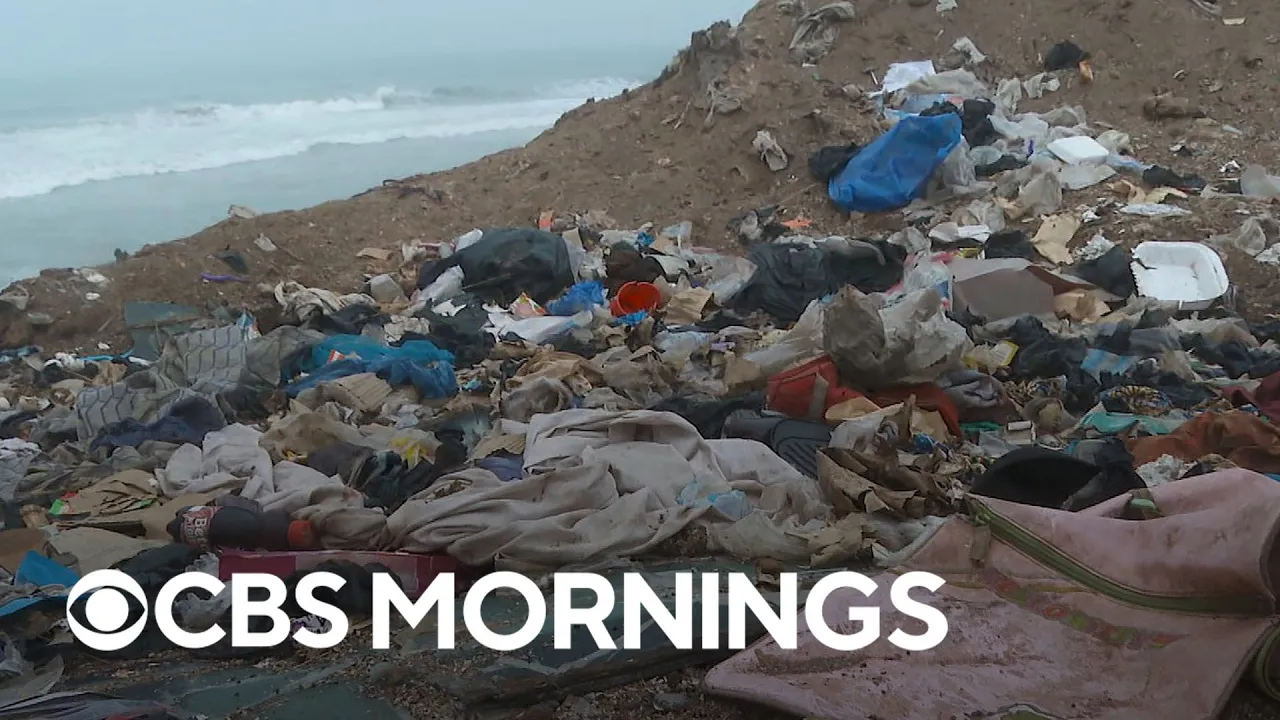
like overproduced over produce overproduced and then in the end like people were closed for just like two weeks and then just discard them the waste does not end up in america ultimately it entertaining in contamination but it doesn't stay in kantamanto when the rains come some of this textile waste washes up on the local beaches they're called tentacles and they're everywhere on this beach discarded rotting tangled mess of clothing they're buried so deep it's almost impossible to pull them out and this is nothing compared to ghana's overwhelmed landfills where the rest of the unsold clothing
ends up head of the city's waste management solomon noy has a message for americans deal with it do not hide under the guise of donations of secondhand clothing and then you ship them over to us just to cause problems to us problems like the toxic fumes from old fatima's dump site where a massive precipice looms formed not of rock but indestructible discarded clothing i mean you can see the brand when you come here you see a whole lot of brands you adidas h m zara it's estimated that 40 percent of all the clothing bales end
up as landfill so basically this is where dead white men's clothes go in the end yes our good intentions have created an environmental nightmare halfway around the world for cbs morning's debra patter akra ghana that's oh it's not good i mean it makes it makes me picture my own closet and think that is not good makes you second guess going and buying more clothing yeah it really does it makes me worried for the whole planet to be honest with you i mean that's a big issue and it's such a big systemic issue it's hard to
fix no doubt that's something we can all do we can all help with that we can all do our part yes we can that's for sure thank you very much deborah pata