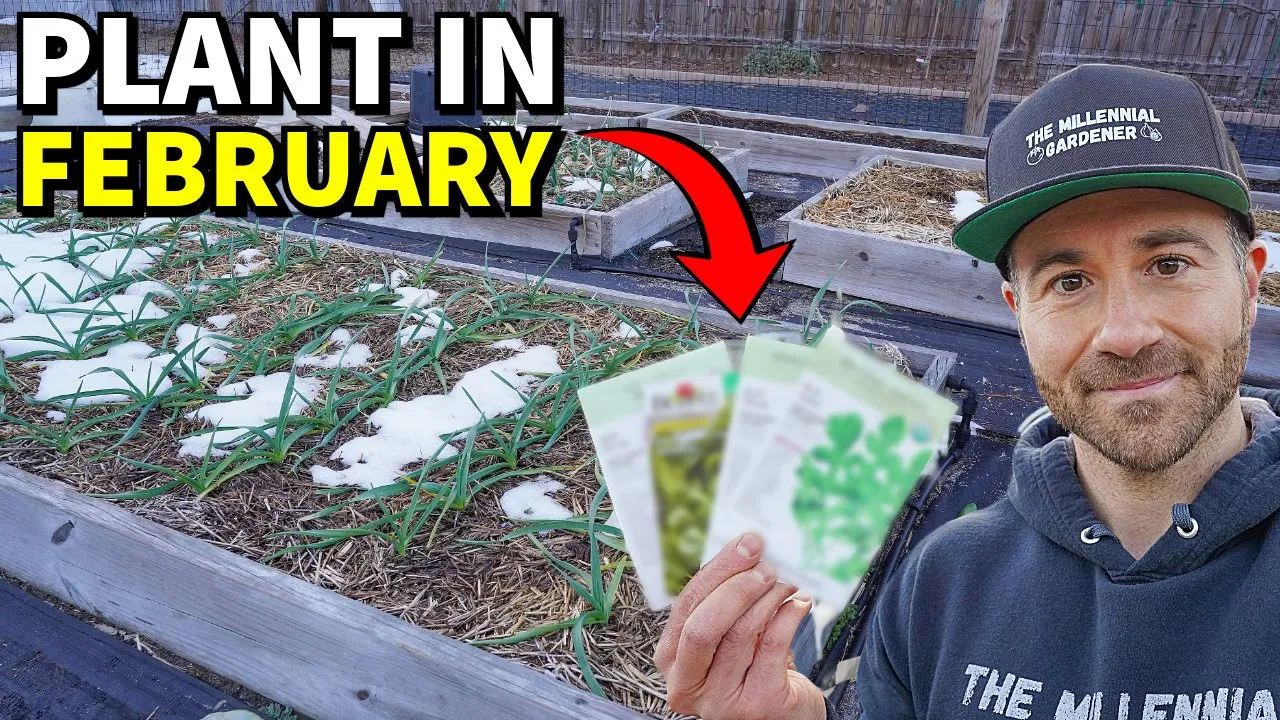
what's growing on gardeners February is finally here the month that so many of us gardeners wait for that's because for most of us you can start more things from seed in February than any other month of the year that's why on today's video I'm going to share with you an absolutely insane 44 crops that you can start from seed right now let's make 2025 the best gardening year of Our Lives if you're new to the Channel Please Subscribe hit the bell for notifications and check out my Amazon store and spread shop links in the video
description for everything I use in my garden and awesome custom apparel and gear now as a point of reference I live on the Southeastern coast of North Carolina Zone 8B but my growing zone isn't really relevant to this video because I've presented the information in such a way that it's going to be relevant to everyone in almost every single growing zone that being said over the course of this video I will make references to things like shade cloth and agricultural fabric if you don't know where to get those things I will place direct link links
to them down in the video description and if you'd like to learn how to build something like one of these PVC hoop houses that will allow you to drpe shade cloth or fabric over your plants for months at a time so you don't have to keep taking them on and off I'll link to a video above and down in the video description that will show you how to do that I will organize the crops in this video into three different waves the first wave of crops will be things that you should start from seed indoors
and then transplant them out into your garden the second wave of crops will be crops that are best directly sewn into your garden soil the third wave of crops will be things where you have the flexibility to do either or crops 1 through 12 are your Brasa transplants and your chory transplants your brasas include bok choy broccoli brussel sprouts cabbage cauliflower collards kale kabi and mustard greens and your chores include Endive escarole and rikio these crops are cold tolerant but they are very sensitive to heat and must reach maturity before days are regularly in the
70s for Growers with long hot summers you need to start these transplants now you are already falling behind and you will probably have to finish all of these underneath shade cloth once the heat sets in in late spring my transplants that you see right here have already reached nearly mature transplanting age so please get a move on for Growers with shorter cooler Summers start these indoors right now it takes these crops about 6 weeks to go from seed to mature transplant and they are best transplanted 4 to 6 weeks before your last frost date since
they are Frost and freeze tolerant working backwards start these transplants about 10 to 12 weeks indoors before your last frost date growers in zone 7 and warmer can grow these all winter long just cover them with agricultural fabric when temps are going to drop into the 20s or colder crops 13 through 18 are your Nightshade transplants and basil your Nightshade transplants include eggplant peppers tomatoes tomatillos and ground cherries and I'm including basil in this list even though it isn't a Nightshade it's just a fantastic companion plant to plant alongside your nightshades and it has the
same amount of time in terms of Dazed maturity and the same amount of cold tolerance none is not Frost tolerant just like your night shades now is the time of year that so many gardeners long for it is time to sew our seeds indoors for our favorite summer vegetables February is the month that most gardeners in the United States sew these seeds indoors because these transplants take about 6 to 8 weeks to reach maturity after the day you sew that seed here is a rough schedule for starting them based on some common last frost dates
for a last frost date between March 15th and 30th sew your seeds between January 25th and February 10th for a last frost date of April 1st sew your seeds between February 1st and February 15th for a last frost date of April 15th to 20th sew them between February 15th and 28 these are rough approximations it is going to be up to you over time to fine-tune them based on your unique climate and where you live but these should give you a very good rough window as to when to start your seeds I myself start my
night shades the second week of February and my last frost date is about March 30th to April 1st gardeners with frost dates of April 30th and later should probably wait until March to start their transplants but with two exceptions the first exception is super hot peppers super hot peppers like ghost peppers Carolina Reapers scorp Peppers things like that take a very long time to germinate and grow and they need very warm soil temperatures in the 85 to 90° range seedling heat mats are a must for germinating and starting your super hot peppers because they take
so long to grow you want to start these at least an entire month before you start your tomato seeds and your other more typical common sweet peppers and hot peppers second exception is any plant you want to grow in containers to get a jump start on the season for example I always start a couple of determinant Tomatoes 4 to 6 weeks early and then I move them out into a seven or 10 gallon grow bag and I bring them outside in March to get a big jump start on the season and I simply carry them
inside if it's going to be a frosty night also I like to do things like overwinter peppers and grow them year round I have Peppers that are as old as 5 years and I keep them out on my sun room room and I move them Outdoors when the weather starts warming and back indoors if it's going to be a chilly or Frosty night so if you want to grow a few things and containers to get a jump start on the season factor that into your seed starting schedule crop number 19 are your warm season luses
which are typically your larger headed Roma types Roma lettuce are not very Frost tolerant and actually prefer warmer temperatures these are best started from transplant and transplanted out into your garden at or slightly before your last frost date and they should be covered if there's a slight chance of frost to protect them from damage romae lettuce and other larger heading lettuce like space to grow and should be given about one square foot to grow per plant they should be harvested before temperatures get hot because temperatures in the upper 70s and 80s can make them bitter
so it is important that we grow these things from transplant because you are threading a needle as to when to get them outside into your garden because you need to get them out when you don't have much Frost risk left but you also need to have them fully harvested before it gets hot crops 20 through 21 are leaks and bunching onions leaks and bunching onions also known as spring onions or green onions can be grown year round in almost any climate not only are mature plants Hardy to nearly 0° but they can also take the
heat since they are bials with a lifespan of about 18 to 24 months I grow these literally 365 days a year and I always have row crops of each at different levels and stages of maturity that way I always have some that are ready for successive harvest in my garden now the key to successful leaks and bunching onions is to start the seeds indoors in seed trays because they only require about an e/ to a/4 in of soil cover and the seeds are very small so if you get heavy rain can wash them away so
what I recommend you do is actually start a six-pack of them every 4 to 6 weeks and then transplanting them out into your garden to keep the party going all year long now let's move on to crops that are best directly sewn into your garden crops 22 through 29 are your cold hearty root vegetables beets carrots daon parsnips radishes turnips rotab begas and swiss chard root crops do not like having the roots to disturbs so they do very poorly when transplanted the best way to grow them is directly sewing them out into your garden and
the best time to do this is as soon as your soil is workable you can't really sew these in Frozen soil because the soil will probably be too cold for them to germinate but once the soil warms up enough that you can stick your hands in there comfortably it's probably warm enough for germination don't delay sewing these because all of these crops are sweeter when they are are kissed by Frost you actually want these crops heading into maturity when there is still a risk of frost at night that's because their sugar content is inversely proportional
to temperature The Roots will be starchy and they won't have much sugar content if they mature in warm or hot weather but they will be sweet and sugary when maturing in chilly temperatures growers in zone 7 maybe even six and warmer should be able to grow these all winter long especially if you put a frost fabric overhead just cover them when there is a risk of temperatures falling into the low 20s and colder we are having the worst winter that I have ever experienced here on the Southeastern coast of North Carolina but look at the
carrots I am still plucking out this looks like a Looney Tunes Bugs Bunny carrot right here crops 30 through 35 are your directo leafy greens and that includes arugula also known as Rocket your Leaf lettuces Mauna soral spinach and Rini also known as broccoli Rob these smaller leafy green plants have short days to maturity and are very prone to bolting in warm weather therefore growing them is also like threading a needle in most climates they will perform best when direct sewn and the best time to sew them directly is as soon as your soil unfreezes
and is workable so they are able to germinate efficiently I like sewing these crops in tight rows and harvesting them in a cut and come again fashion I like to come outside with a pair of scissors and harvest the largest leaves when I want then give the plants some nitrogen-based fertilizers so they grow back and they keep producing more leaves for me to harvest I will repeat this process until it gets warm once the days reach 70° and warmer frequently a lot of these plants will bolt on you which means to send up seed tops
and go to seed and flour when this happens the plants become bitter and you probably won't enjoy them anymore so do not delay when planting these if you wait until the weather outside is nice and comfortable for you it is probably already getting too warm for these plants crop number 36 is peas and when I say Peas I mean shelling peas snap peas and snow peas peas are both the easiest thing that you can grow out in your garden because they have almost no insect pests they have little risk for disease you never need to
spray them and they require minimal fertilizer but they can also be a challenge because they are another one of those crops that is very difficult to time and you have to thread that needle when planting them while PE Plants themselves are cold hearty the pods are not even a light frost can fracture them ruining your Harvest but peas also don't like heat once days reach 80° it will ruin your crop so the peas really need to flower and form those pods after all chance of frost has passed but you need to have the mat sure
and harvest them before it gets hot here is how I do it my last frost date is roughly April 1st so I direct sew my peas out into my garden about February 15th this has them germinating by March 1st when Frost and freezes become infrequent but still possible if we get a light frost in March I don't worry about the plants but if we were to get a hard freeze I would place a blanket over them to give them some cover then by the time the plants get large enough to actually flow it's mid April
and we're about 2 weeks beyond our last frost date the pods will then form in late April early May and I will be harvesting the pods in miday to late May before the real heat of June sets in so basically I direct sew my P seeds 45 days before my average last frost date in the spring and if we are going to get a late froster freeze I'll just cover the plants and this has worked perfectly for me now we will make our way into crops that have some flexibility when it comes to sewing them
you can either sew them directly or you can start them indoors as transplants and crops 37 through 41 are your annual herbs cilantro also known as coriander chives Dill fennel and parsley these annual herbs are all cold hearty but how you sew them is kind of up to you they can be both direct sewn or started as transplants some things like cilantro I find do great being direct sewn and they have larger seeds which which are really easy to manage some things like parsley can be very difficult to germinate and I actually like to start
my parsley indoors Dill I found it to be great either way in my experience you could do either or with that the key to success when it comes to these herbs is to start them as soon as the ground is workable because they like the chilly weather and tolerate Frost and freeze cilantro for example is extremely heat sensitive it can take the cold all the way down to 10° F but it can't stand warm temperatures warmer than 65° it'll bolt on you so you need to start that ASAP those other herbs that I mentioned are
a little bit more tolerant of warmth but they will all start to bolt when temperatures reach above 80° one trick to extend their life is you can cover them with shade cloth once it gets warm this can suppress bolting and if your Summers aren't extremely hot it may be enough to make it so they grow all the way through summer into the fall and even into the winter all of these crops do well in shade and partial sunlight which helps suppress the bolting process so if you actually have a shady spot in your yard that
is no good for crops with higher energy demands like a tomato or a pepper consider putting your herb garden there the shade may actually work to its benefit crop number 42 is celery celery has been by far one of the biggest challenges for me to grow in my garden but I believe I have finally started to crack the code celery is Frost tolerant but but it doesn't like hard freezes and it also doesn't like heat but the biggest challenge to growing celery is the extreme germination lengths they take 2 to 3 weeks just to germinate
the seed and another one to two months for them to become large enough to form transplants so I've been growing around with starting celery from both transplants and direct sewing them out into my garden and here is what I discovered plant your celery when it is still cold outside but underneath Frost protection like you see right here while temps in the mid-20s will kill celery these have survived half a dozen or more kns in the teens underneath this agricultural fabric we have had the coldest winter that I've ever experienced here we've had more nights in
the teens this year than I've had in the past 6 years combined and it looks like it finally did a little bit of damage to the celery but it is all alive and it will recover despite this extreme cold so now my celery plants have a huge jump start for the new season and I think they will actually mature for me in time in April or May when the weather is still temperate but before the real heat of the summer sets in if you have mild Summers celery will probably be easier for you to grow
but for us hot summer folk this is what seems to have worked for me and I think I finally have some success growing celery end crops 43 and 44 are potatoes and sweet potatoes now hear me out it is way too cold for all of us except for those in zone 10 and warmer to even think about planting these crops out in our Gardens just yet however now is the time where we need to start sprouting our potatoes and sweet potatoes so buy and store your seed potatoes now so they form eyes and begin to
sprout begin the rooting process for your sweet potatoes for sweet potato slip formation now most of us will be planting our sprouted potatoes in March or early April and most of us will need fully formed sweet potato slips in April or May so this is a friendly public service announcement to get them both started now now some of you may be wondering Hey where's the Cucumbers the squash the zucchini the melons it is way too early for all of us except for people in zone 10 and warmer to even think about growing any of those
cuer bits just yet that's because cucurbits will germinate in as soon as 3 to 4 days and they form mature transplants in only about 3 to 4 weeks Which is less than half the rate of most peppers and tomatoes on top of that your cuer bits are much more cold sensitive they hate any nights that dip below 50° fah so we actually don't want to transplant our cuer bits until about 2 weeks after our last frost date for temperatures at night to moderate even more so for me I don't start any of my cuer bits
from seed until about 2 weeks before before my last frost date because if I start them 2 weeks before they will be ready for transplant out into my garden 2 weeks after it is a huge mistake that new gardeners make to start their cucumbers and their zucchini and things like that alongside their tomatoes and peppers it doesn't work out you'll have giant plants that you can't manage and then you'll plant them out too early and they'll get killed by knights in the upper 30s and the low 40s and that right there is an incredible 44
plants that you can start from seed right now in in February so everybody I sure hope you found this video helpful if you did please make sure to hit that like button subscribe to the channel and please ring that notification Bell so you're notified when I release more videos like these there was a lot of information in this video so if you have any questions about any specific plants please ask them down in the comments below and I will do my best to answer them if you're curious about any of the products that I use
for starting seeds and growing them out in my vegetable garden I will place direct links to the most relevant ones down in the video descript description and for everything else I use in real life they are in my full Amazon storefront so expand the video description click on the Amazon link and you'll see everything I use in real life and while you're down there please check out my spread shop for custom merch if you want to support my channel thank you all so much for watching and I hope to see all of you again on
the next video today is Dale's fifth Gotcha Day happy Gotcha Day Dale so we made him a little cake yeah we're going to sing we are happy birthday to happy got day toy day dear J happy got Day to [Music] [Applause] [Music] you okay Dale okay D okay try it oh all right put it on the floor so you can enjoy it oh he's enjoying it just fine what what's in this real quick uh it's a pumpkin um oh God you're putting on the spot it's yeah pumpkin egg applesauce oatmeal no pumpkin egg O did
pumpkin egg applesauce and then the icing is Greek yogurt and crushed strawberry all right we're going to bring this down so Dale can enjoy it and then I have to mop up the floor from all the drool