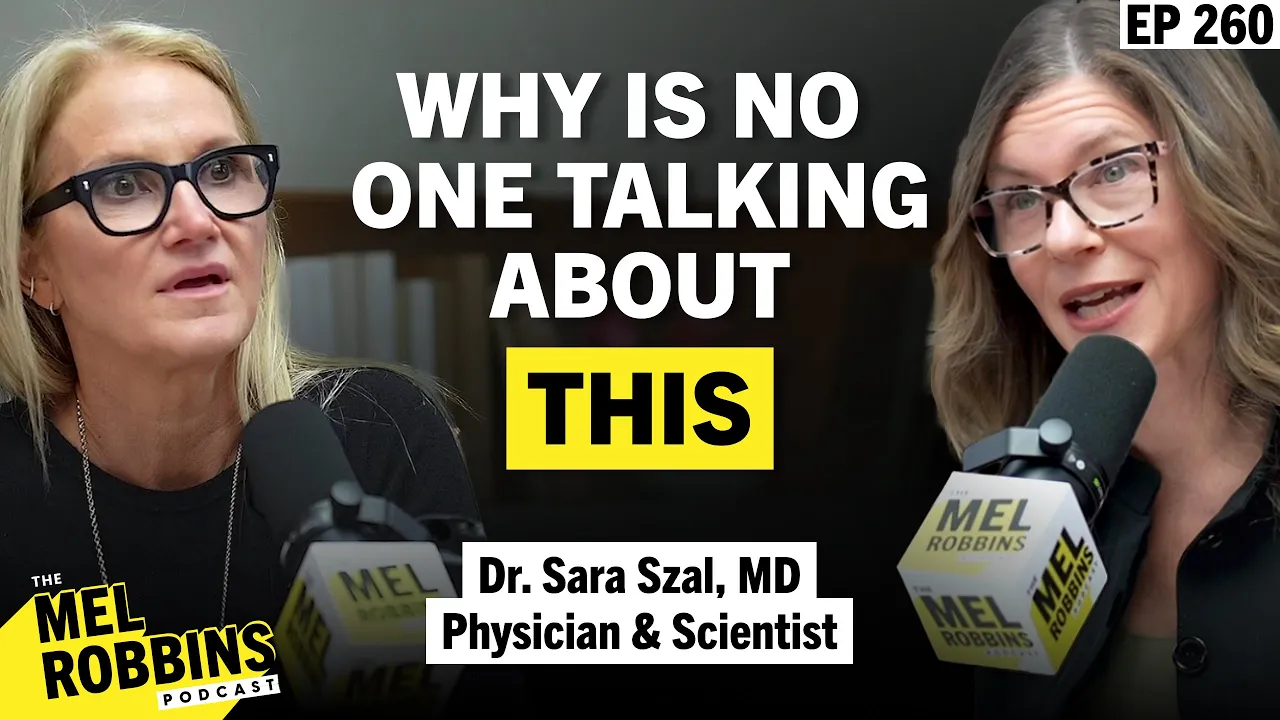
I posted this video and it featured Dr Gabor mate a world-renowned expert in trauma and he was talking about how 80% of autoimmune diseases happened to women holy cow this topic exploded online and you know what that tells me that tells me that you want to learn more about the topic of autoimmune disease why they are impacting you or impacting the women in your life at alarming rates so here's what I did I called in a world-renowned Expert and she is going to give you and me a master class and a private consultation an all
things autoimmune disease what is an autoimmune disease what are the three causes of autoimmune diseases why exactly are rates of Ms Hashimoto and all kinds of other autoimmune diseases rising at alarming rates especially for women over the past 20 years and most of the things that you're going to learn and that she's going to recommend cost you nothing Hey it's your friend Mel and I just want to take a moment and welcome you to the Mel Robbins podcast first of all I am so excited that you're here I'm excited for our topic today it is
always such an honor to be able to spend time with you to be together and if you're brand new welcome to the Mel Robbins podcast family because you hit play on this episode and you made the time to listen when I know you don't have a lot of time but you found the time and you made the Time to listen to this episode here's what I know about you first of all you value your time and you're spending it because you want to learn more about your health and improving the quality of your life and
today's conversation it's going to blow your mind and it will improve the quality of your life see I recently posted a very short video clip that was just a short moment from this podcast and the video featured the renowned trauma expert and medical Doctor Dr Gabor mate and in the video clip he was explaining the four reasons why 80% of autoimmune diseases impact women now this video exploded online the only other topic I've ever seen resonate that immediately and globally was when I first shared the letham theory based on my inbox crashing the DMS and
your comments I'm like we have got to go deep on the topic of autoimmune disease and in particular why is it impacting women at higher rates than men what do you Need to know what are the symptoms that you may have that indicate that you have an autoimmune issue but you don't even know about it and most importantly what can you do about it if you're concerned about your health or the health of someone you love well today we're going to talk about all of that and we're going to leave you feeling informed and empowered
I cannot wait to introduce you to Dr Sarah Saul Now Dr Saul is a physician a researcher a renowned Speaker on on all things Health she graduated from Harvard Medical School as part of their joint medical program with MIT she completed her residency at UCSF one of the top hospitals in the world Dr Saul is the New York Times best singing author of nine books about health she's also a clinical assistant professor in the department of Integrative Medicine and nutritional Sciences at Thomas Jefferson University and the director of precision medicine at the Marcus Institute of
Integrative Health at Jefferson Dr Saul has over 25 years of clinical experience seeing patients and she hopped on a plane she flew across country for one reason she did it for you she's here to provide you with the information resources and the step-by-step treatment plan for anyone in your life who may be struggling with an autoimmune issue or just with some symptoms and they don't know what's going on today's conversation is a free Life-changing resource for anyone in your life who is struggling with an autoimmune disease or is just chronically tired or has a lot
of health symptoms and can't quite get to the bottom of what's going on well today we're going to do our best to do that for you and I want to thank you in advance for taking a moment right now to share this episode with someone you care about because there's no doubt in my mind everything that we are about to Learn is going to improve your health and your life Dr Saul thank you so much for being here I am so looking forward to our conversation today Mel I'm so happy to be with you oh
my gosh we've got so much to talk about and where I want to start is could you tell the person who's listening what they might experience or how their life might change if they take everything to heart that you're about to share with us Today a few things first energy right now we know that 30% of Americans have antibodies against the nucleus of their cells anti-nuclear antibodies that is causing a civil war in the body and it is keeping you from having the energy that you need to live your best life number two is regulation
that sense of safety that I think women especially desperately need right now and then number three is Empowerment so having the tools and the insights that you need to make the changes and to make them stick that's a lot that's the promise of Lifestyle medicine and a different approach to taking care of the body I've never heard the term lifestyle medicine what does that mean it means that rather than deciding that you've got a diagnosis and giving you a pill we want to think about okay how did you get to this place with this Diagnosis
what are the lifestyle factors your sleep the way that you eat move think and feel and love how do we address those how do we address those first because that that provides about 80% of the prevention and reversal of chronic disease and that's what we're going to talk about is chronic disease and in particular autoimmune diseases so I want to start at the very just top most basic level what exactly is an autoimmune Disease autoimmune disease when you've got a problem with your immune system it becomes imbalanced and it starts to attack your normal tissues
you can think of it like a case of mistaken identity so your immune system is kind of like your private security it's supposed to identify what's healthy and normal in your body and then also find the Invaders like a pathogen like a virus and attack it but if your immune system becomes confused and it can't separate Those two you can have this problem where your immune system is attacking normal tissue so that's what happens with autoimmune disease and in that situation your immune system is making a weapon called an antibody you're making Auto antibodies antibodies
against your own normal tissue issues and you can measure it so with autoimmune disease you've got this imbalanced immune system you've got Auto antibodies and then you've got symptoms that fit with a Particular diagnosis I love the word that you use confused that your body is just confused as to what is the Enemy versus what it's supposed to be protecting and as we kind of dig in deeper and deeper and deeper around what an autoim imune diseases I have a couple just basic questions is there a difference between autoimmune disease and an autoimmune disorder because
I've heard people refer to both the way I think of it Mel is that There's there's a Continuum okay so there's a state of health your immune system is working perfectly it can separate the Invaders from your normal tissue and then at the Other Extreme is autoimmune disease and that's that can be well established and we'll talk about some of those conditions type 1 diabetes rheumatoid arthritis Hashimoto thyroiditis wait a minute diabetes is an autoimmune disease type 1 diabetes is yeah you attack the pancreas your immune System attacks the pancreas I I I mean I'm
Pro I probably sound like an idiot that I didn't know that but I'd never even thought that there are probably a long list of things that we talk about that people struggle with that a lot of us don't even know it's an autoimmune disease that's true it tends to fly below the radar and what troubles me so much about this is that these are the people who are often Failed by the medical system they struggle for 7 to 14 years before they get a diagnosis so they could be somewhere along that Spectrum from normal healthy
to autoimmune disease there's a pretty broad middle section where you've got antibodies that you can measure in the blood when you've got early signs and symptoms the fatigue the joint pain the other problems and yet doctors often aren't putting it together until you cross that threshold into a Disease can you just list what some common ailments or diseases or things that people have that actually are autoimmune disease there's two different categories so there's classic autoimmune disease there's more than a hundred of them aund 100 and what yeah so exponential rise and the number of autoimmune
diseases but it's things like rheumatoid arthritis where your immune system is attacking your joints there's Hashimoto thyroiditis where your immune System is attacking the thyroid gland in your neck there's multiple sclerosis there's type 1 diabetes as we talked about psoriasis psoriasis psoriasis what that's I'm I'm sorry I'm reacting but my husband and my daughter have really bad psoriasis like all over their scalp like it's really gross I mean I don't mean to like throw them under the bus but it bothers them that's an autoimmune disease yeah your immune system is Attacking your scalp in that
situation so a lot of people don't connect the dots they don't realize that's an autoimmune disease why is it important to identify that something is an auto immune disease like let's just take the psoriasis thing that a ton of people struggle with why is knowing that that's an autoimmune disease help you in terms of being empowered about what to do about it it helps you address the root cause and that's what's missing from Most of mainstream medicine what happens is you have psoriasis you go to the doctor you get a steroid cream the steroid is
like cortisol it's like the stress hormone that you're sticking on your scalp no one's thinking about your gut no one's thinking about triggers that could be leading to your psoriasis acting up so we want to do this root cause analysis it's really critical so there's a hundred different Autoimmune diseases the list is long Graves disease Celiac psoriasis as we talked about then there's other conditions that have commonalities with auto autoimmune dis dises and that includes things like endometriosis really when your body is attacking your own tissues maybe you get uh endometriosis on your bowel or
on your ovaries it includes some forms of irritable bowel syndrome you can even make Auto Antibodies with some forms it includes chronic lime it includes long covid postco syndrome so that's a more broad way of thinking about autoimmunity but even if we just stick with the classic autoimmune disease which every medical doctor would agree to what are the classic ones the classic ones the most common ones are rheumatoid arthritis type 1 diabetes which we see in kids as well as Adults Graves disease Hashimoto Celiac which has been increasing phenomenally over the past few decades multiple
sclerosis so you used a word I just want to make sure that I'm tracking with you because we're just at the surface and we're about to dive deeper when you called it the you call it the auto antibody is that the word that you used yes so Auto antibody is what you would find in somebody's body when the Person's immune system is attacking itself is that right like that's that's the kind of medical evidence that oh the immune system is confused because I see that these Auto antibodies are present which are the little soldiers in
the Civil War that you are feeling inside your body that's right you nailed it okay so the the thing that I think is important about these Auto antibodies is that they're in the body for Years and you don't know it unless someone bothers to check it h so if you look at one of the most common Auto antibodies anti-nuclear antibodies what we know is that over the past 25 years the number of people that have positive antibodies has almost tripled tripled over 25 years yes what does that tell you it tells me there's something in
the environment that's changed our food system has changed our stress levels have changed the level of trauma that We're experiencing has changed and we'll get to the root causes but the genetics haven't changed it's the triggers it's the lifestyle it's the environment that has Dr Saul what are the root causes of an autoimmune conditioner disease the root causes have been identified for years there's a local pediatric gastro urologist at massachusett General Hospital who found that there are three requirements these are the root causes okay number one Genetic predisposition number two leaky gut so that's when
you lose the barrier in your gut you have increased intestinal permeability and we can talk about what that is okay and then number three a trigger so the trigger is where things get interesting the trigger is often trauma or toxic stress but it can also be big hormonal changes like pregnancy postpartum Perry menopause menopause there's lots of different triggers that We want to consider so just again to make sure that I'm tracking because since this impacts so many of us and now I'm realizing I need to share this episode immediately with my daughter and with
my husband as soon as I'm done talking to you number one genetic predisposition number two you may have a leaky gut which can contribute to I guess the balance in your body and number three there is something that happened whether it's hormonal changes Or some traumatic situation or unresolved trauma or stress in your life that then triggers confusion in your body and you start attacking yourself that's right it starts the Civil War wow okay well let's take them one by one how do you even know if you're genetically predisposed to this you can do a
genetic test so the genetics are pretty well defined they all sound like license plates so I won't list them here but a genetic test Is a way to identify them and let's talk about leaky gut why does a leaky gut first of all what the heck is a leaky gut and secondly why does that contribute to your body starting to attack itself leaky gut is fascinating physically but also more poetically it's a loss of a boundary in your body oh whoa hold on I want to make sure everybody I want to make sure the person
that's driving the car or taking you and I on a walk with them here's That I've never heard anybody say that before leaky gut is a loss of a boundary in your body what what does that mean that it's a boundary and what's the implications that leaky got is now a loss of that boundary when you think about the gut uhhuh at its simplest it's a tube from your mouth to your anus M the part of the tube where your intestines are requires these things called tight junctions between the cells so the cells Are supposed
to be lined up like an army and what happens is that if you've got leaky gut those tight junctions don't work and so things that are supposed to be on the the outside of you that you take in through your mouth yeah bacteria viruses um maybe foods that you're reacting to like gluten or dairy those can start to come through the tight junctions through the boundary that you're supposed to have and start to trigger the cells underneath now here's Where things get interesting because 70 to 80% of your immune system is right there in the
tube and so when you're passing these these foreign particles through the tube through the boundary you're triggering the immune system in a way that it's not meant to be triggered the third thing that you talked about was triggers that there are lifestyle triggers and there are all kinds of triggers I would imagine that can also cause this Civil War in your body what are some of the top triggers that you've seen in your research the number one trigger is trauma so I I started to notice this I didn't learn a lot about trauma when I
went through Medical School 30 years ago but I had to teach myself because I saw this rise of autoimmune disease in my patients and I kept noticing oh this woman had a a traumatic birth oh this woman has a adverse childhood Experiences score she had sexual abuse or physical abuse or neglect mhm and that seems to track with her autoimmunity so trauma toxic stress is a huge category and then I would say hormones is a gigantic category think about pregnancy for a minute what happens when you get pregnant is that you make this embryo right
and half the DNA is yours half the DNA is your sperm donor and so your immune system has to adapt to this Foreign substance and sometimes that works you know we've got a lot of successful pregnancies but sometimes it doesn't and it leads to more miscarriages it leads to autoimmune problems in the postpartum period and complicated pregnancies never even thought about that that there is a i there's this meme that's going around of a woman standing in a kitchen and she's got like three kids running around and and you know her partner's standing There and
thing on the meme says that moment when you realize all these people have been inside of you and I um yeah and how are your boundaries yes and it never even occurred to me that even the mystical and magical experience of carrying a child is a foreign body inside of you that you have to adapt to and so when you think about the three things genetics the loss of a boundary in your Digestive tract because of leaky gut and then these triggers that are all around us whether it's past trauma current trauma the amount of
stress that you're under at this moment in your life or hormone changes or there's probably a list of a hundred other things that can trigger this it makes sense that at times in your life or all throughout your life that your immune system would get confused and attack itself you know one question I keep wondering is if Autoimmune disease is on the rise why is this not taught in medical school to the extent that it probably should be it's a good question what I believe is that much of Medical Training is influenced by the pharmaceutical
industry so this is a topic and I I don't want to disparage the kind of training that I've had because I'm incredibly grateful for it But I would also say I was taught to make a diagnosis and then to offer a pharmaceutical when it comes to things like autoimmune disease what we know is that lifestyle medicine is probably the most effective Approach at least the beginning depending on when you catch it there are some conditions that are too far gone type 1 diabetes if you have your immune system attack your pancreas to the point Where
you don't have any eyelet cells left to make insulin then you need insulin lifestyle medicine isn't going to cut it but that very approach of Lifestyle medicine that's so effective at addressing root causes is not taught in medical school so the solution is not part of the you know seven-year training that I went through so Dr Sal how did you learn this I had to teach Myself so a lot of it was being in my 30s and you know feeling way more exhausted than I should have and going to my doctor and saying I'm so
tired I've got PMS I can't lose this baby weight and he offered me an anti-depressant and a birth control pill and he told me to eat less and ex more and so that was one of those moments M where I was like wait this isn't right like there's something deeper here that's not going to be fixed With a pharmaceutical because Pharmaceuticals if you think about them for a moment they block biochemical Pathways in the body that's the way they work that's how you can patent them and make billions of dollars from them whereas lifestyle medicine
is working with the intelligence of the body it's not blocking Pathways it's making them better that's what happens with exercise with eating the right foods with having The kind of love and connection that we most need and if I extrapolate as to where you're going if the body can attack itself it's your opinion Dr Saul that it can also heal itself oh absolutely I mean the beautiful thing about these three root causes is that you can do something about two of them you can't change your genetics at least not yet but you can address the
leak you gut and you can address the triggers what is the Difference between alleviating the symptoms that somebody feels when they're struggling with an autoimmune disease versus treating the root cause the difference is that alleviating symptoms Works temporarily it's like a Band-Aid it's a way of masking the symptoms so that the person stops complaining whereas if if you address the root cause if you start to turn the physiology back toward a healing State That's where you get lasting change that's where you start to reverse these conditions or maybe prevent them to begin with well I
think it's really exciting that there are things that you can do that actually trigger your body to go into a healing State versus a civil war that's right to put yourself at peace as a medical doctor what's the worst thing that you you could eat or drink when it comes to a leaky gut the worst is Alcohol because it attacks the tight junctions so it leads to leaky gut and if you look at animal models of leaky gut the way that they most consistently create leaky gut in an animal in a mouse or a monkey
is to get them alcohol really yes that's how you set up the experiment so that you can see what works there's other things too so stress can do it having tooo much stress you know there's a certain amount of stress that's normal and Healthy too little stress you're not very productive too much stress it pokes holes in your gut so it gets the brain to release something called CR cortico tropen releasing hormone okay and that directly pokes holes in the gut leads to the loss of this boundary wow why would something that is stress in
your brain poke holes that the soldiers holding the boundary in your gut well that's more of a philosophical question and I appreciate that I appreciate that but I Think it's you know we are marvels of adaptation and so there are ways that boundaries come together and come apart come together and come apart and they're meant to be pretty fluid and there's some purpose behind them yeah they're not meant to come apart and stay apart yep but even the stress of you know being an athlete of working out really hard that raises cortisol levels and it
can cause leaky gut it doesn't cause a permanent state of leaky gut but it Leads to more leaky gut I see it in the professional athletes I work with and I bet the same is true at work like if you see like a massive increase in Burnout or you're somebody that's working you know as a first responder or an overnight shift just something that's just constant stressing you out I would imagine you see a you see a direct connection with that too I was just looking at the data on this last night and how night
shifts are associated with More autoimmunity really yes because you don't get that same starcadian Rhythm your mitochondria the powerhouses inside of your cells don't work to the same degree Dr Saul do auto immune diseases impact women more than men absolutely four times more women than men with autoimmune diseases there's a number of reasons there's sex differences which are biology things like X chromosome versus Y chromosome but then more concerning are the gender differences And those are socially constructed that's the fact for instance that women experience more stress than men they experience more trauma than men
they experienc trauma earlier when men and women are exposed to the same trauma women have higher rates of post-traumatic stress disorder we've got huge hormonal differences we go through pregnancy and postpartum perimenopause and menopause so this idea that a lot of people have that it's just a biological Difference it's just an ex chromosome that's an oversimplification it's necessary but it's not sufficient for this dramatic rise that we're seeing in autoimmune disease especially women well I think it's shocking that in the last 25 years based on the research Ms for example women are experiencing it four
times more than men and when I think about the number of female friends of mine that are the primary caregivers or they are The breadwinner in the household and the caregiver or The Chronic levels of stress that women feel the rise in anxiety the rise and depression are these all factors too they're all factors what's important to realize is we can measure these things we can measure the cost of not being able to say no we can measure the cost of caregiving and overfunctioning and giving until you're depleted we know that women are at greater
risk of Burnout I think it's important to take it out of the purview of women to start Measuring Up in some way and to say that there's something wrong with our environment it's a health hazard to be female in our culture it makes me sad to say that because I was here in Boston in 1989 learning about how it was a health hazard to be a woman in our culture and if anything it's gotten Worse M so we've got double the rates of depression double the rates of insomnia four times the rate of autoimmune disease
twice the rate of Alzheimer's disease more Regional and chronic pain we've got so many differences gender differences research gaps most of the research is done in men and assumed to apply to women there's a knowledge Gap there's a gender bias in the way that Doctors take care of patients females versus males there's a treatment Gap if you have per menopause or menopause and you go to your doctor for some help 73% of women don't get the treatment they need so that's the situation in which autoimmune disease is increasing I think it's important to say it
because it validates the experience of a person listening or as you're listening you're thinking about somebody In your life who's struggling and you're going to share all of Dr Saul's wisdom and research with that person in your life to go oh it's not that you're damaged there are things that have happened to you that are creating this confusion and this Civil War in your body and one of the encouraging things about all the depressing news is that if it's environmental and if there are things that were done to you it means that there are corresponding
things that You can do once you understand all this to help your body go back into a state of healing itself and getting the boundaries back up and removing the confusion so that your body is not at war with itself perfectly stated what happens for a lot of women is that they go to their doctor and they're trained to turn over their power they're trained to just go along with what the doctor says whether that's being dismissed or being told okay You've got rheumatoid arthritis we're going to start this pharmaceutical and so what's hopeful here
is that you can step into action you can start to make these changes about leaky gut about the triggers that you've experienced and you can take back the wheel of your health I love that I love that and your book The autoimmune cure is basically a road map for doing that you know when I posted this clip Dr Gabor mate was on The show and he had this moment where he talked about autoimmune diseases in women and it's one of the single most viral things that I've ever posted online and it was all about what
you're talking about these environmental factors that contribute to the documented rise in Auto autoimmune diseases in women I want you to hear this clip and I want to play it in particular in case the person that's with us right now hasn't had a chance to Hear it and then I would love to hear your reaction to it 80% of autoimmune disease which are diseases where the immune system attacks the body that is supposed to protect 80% of them happen to women why I knew people before they got sick and I knew them in the context
of the families of origin and these people had four significant characteristics one is they tended to put other people's emotional needs ahead of their own number two they tended to Identify with Duty role and responsibility rather than the needs of the self number three they tended to be very nice which means they repressed healthy anger and number four these people tended to believe that they're responsible for other people feel which is a point that you address in your book let them and that they they had this belief that they was never disappoint anybody now those
beliefs lead you into not saying no to the demands of the World and you're constantly taking on stuff and stress and other people stress you get stressed that stress undermines the immune system which then turns against you why is it women cuz who in this culture is programmed to always look at after everybody else's emotional needs take on everybody's stresses um identify with their duties and their role um be nice all the time not be angry in a healthy way and to take responsibility For other people's feelings it's women it's not a gender issue it's
a a cultural issue why do you think this topic triggers so many people positive or negative because people had very strong reactions to what he was saying when he was saying chronic stress they're the caregivers there's a lot of sexism why do you think this topic triggers so many people I think that clip nailed the experience of women And as I listened to it I felt like I was nailed to the wall not in a good way I was nailed to the wall because there are cultural norms that make us sick and keep us sick
and Dr mate talked about how we over function we prioritize other people's needs over our own we get caught up in over over providing over caring and there's a cost to it and the cost is our health yes and you also talked about trauma as a big Trigger and in the book actually if I turn to page 48 and 49 in your book you go through a bunch of question questions that are part of something called Ace which is your adverse childhood experiences score and this helps us understand experiences from the past that may have
created stored trauma in your body is that what this is that's right this questioner Mill was developed in the 1990s okay with the Centers for Disease Control and also Kaiser Permanente and they did this really interesting thing where they took midlife people people like you and me and they looked at how many childhood experiences they had that were adverse things like abuse neglect having a mother that was beaten physical violence in the home having a parent with an alcohol or other substance use disorder and they found that women and men if they had an elevated
adverse childhood experience score they had a greater risk In midlife of 45 different IC diseases really including autoimmune disease wow could you read through some of these questions just so that the person that's with us right now can just be kind of really thinking about what this adverse childhood experiences score is and I think when you start to hear these questions it makes sense that it would connect to Something in terms of your health before your 18th birthday did a parent or or Other adult in the household often or very often swear at you insult
you put you down or humiliate you did a parent or other adult in the household often or very often act in a way that made you feel afraid that you might be physically hurt what about push grab slap or throw something at you did a parent or other adult in the household often or very often hit you so hard that you had marks or were injured did an adult or person at least 5 years older than you ever Touch or fondle you or have you touch their body in a sexual way did an adult or
person at least 5 years older than you ever attempt or actually have oral anal or vaginal intercourse with you did you often or very often feel that no one in your family loved you or thought you were important or special did you often or very often feel that your family didn't look out for one another feel close to one another or support one another did you often or very often feel That you didn't have enough to eat had to wear dirty clothes or had no one to protect you did you often or very often feel
that your parents were too drunk or high to take care of you or take you to the doctor if you needed it were your parents ever separated or divorced was your mother or stepmother sometimes often or very often pushed grabbed or slapped or had something thrown at her was your mother or stepmother sometimes often or very often kicked bitten hit With a fist or hit with something hard was your mother or stepmother sometimes often or very often repeatedly hit over at least a few minutes or threatened with a gun or knife did you live with
anyone who was a problem Drinker or alcoholic or who used street drugs was a household member depressed or mentally ill or did a household member attempt suicide did a household member go to prison you know you hear those questions and it's a wonder anybody makes it to Adulthood it's true it's very true and what was so f fascinating about this particular questionnaire is that we never connected the dots before between these kind of adverse experiences and physical problems later in life Dr salt can you connect the dots for us so let's take something that I
think most of us could probably answer yes to which is did you often feel that no one in your family loved you or Thought you were important or special like that feeling of not being seen so something that feels not as quote serious as being punched with a fist or sexually abused how does even that type of traumatic experience of not feeling seen or important to the adults and caregivers around you connect to physical issues with your health later in life this is where things get interesting so if you imagine being a Child and I
certainly had experiences when I was a kid where I didn't feel special or loved that then changes the stress response in the body and the way I think of it at its simplest is the pine Network what's a pine Network Pine Network stands for your psychology I is your immune system n is your neurological system and E is your endocrine system so the pine Network when you're that kid with an adverse childhood experience it becomes disregulated and for some people it's the immune system that becomes most disregulated and those are the people who have a
greater risk of autoimmunity for some people it's the endocrine system they produce a lot of cortisol when they're experiencing that Ace that adverse childhood experience and then they have problems with cortisol for the rest of their life unless they address It other people have nervous system disregulation and they don't understand why their heart rate variability you know with maybe a wearable why they're so stressed all the time and their HRV is so low or why they have chronic anxiety hi Mel Robbins you're right no serious that makes a lot of I've never heard anybody talk
about the pine network but it makes a lot of sense because when you're that entire network is developing that's Right and it's developing and learning and changing in real time based on what you're exposed to and if you don't feel safe or you feel under threat then your entire system from hormones to immune to nervous system to your psychology adapts because of these adverse childhood experiences that's right and you just use the word safety which is so critical safety is the fundamental part of childhood that we want our kids to experience and too many of
them don't Dr Saul how does trauma and adverse childhood experiences relate to autoimmune disease for people who have a disregulated immune system so their immune system is imbalanced it starts to get confused about what is normal healthy tissue and what's foreign that then sets them up for a greater risk of autoimmune disease how does someone who says okay that happened in the past it's the past I've talked about it I've dealt with it I've moved on from it how can it still be influencing your health right now this is one of those places of connecting
the dots that I think is critical so a lot of people say that they've got this cognitive approach to the trauma they experience and they don't realize that their high blood sugar or their uh multiple divorces or the conflict they experience at work is actually related to adverse Childhood experiences so there's a way that Aces live on in the body even if you think you've already cognitively processed it and we know that it can disrupt you mentally emotionally and also physically that makes sense and if you have these stored adverse experiences in your nervous system
and in your body of course it would interrupt your body's ability to function because you're always bracing and you're always still feeling like There's some level of threat which means the healthy boundaries that your body has internally slowly get worn down that's right how would you know if you're dealing with an autoimmune disease or condition if nobody's ever told you like what are the symptoms that you may be dealing with an autoimmune disease there's a long list of symptoms and part of what makes people search for a diagnosis and a doctor who will take them
seriously for Years is that the symptoms are what we call non-specific that's a medical term that's a medical term nonspecific if my doctor said well those are nonspecific symptoms I'd be like well let me put some varies and really hurts in front of that very specific doc so it depends on which part of the body is being attacked by the immune system so the most common things that we see across all 100 autoimmune diseases are things like fatigue Exhaustion swelling signs of inflammation joint pain and aches the other symptoms depend on what's being attacked so
with Hashimoto's thyroiditis y we know right now 133% of relatively healthy people have positive antibodies against their thyroid 133% 13% so with Hashimoto's thyroiditis it's the fatigue it's the joint aches but it's also that you just can't put your foot on the gas like you once did you Find that you're gaining weight seemingly out of nowhere intermittent low grade fevers or night sweats and that's where per menopause menopause can make things confusing neuropathy so an autoimmune attack of the nerves in the legs and the arms it can cause tingling or um even difficulty with your
gut function like diarrhea or constipation difficulty swallowing loss of appetite gut issues like acid reflux bloating Cramping skin reactions we talked about psoriasis rashes swollen glands anxiety and depression visual changes especially important with uh people with multiple sclerosis weight gain or loss irregular or rapid heartbeat and you write in the book and I think this is important for everyone to hear that given that there's usually clustering of symptoms that you recommend going to your primary care Practitioner if you have three or more and if you've got additional symptoms you definitely want to see a specialist
whether it's a rheumatologist or a gastroenterologist or somebody that is really a specialist in that part of the body that has the most acute symptoms well what's interesting about you connecting the dots between the symptoms of autoimmune disease and menopause is that if I go back to the original words that you used which is your body is Confused and your boundaries that were there to protect you are now no longer there if you look at the drop of estrogen production in a woman's body of course your body's confused if it runs on it so if
you take the exact same approach of my body is designed to function properly my body is designed to heal itself if I look at this condition whether it's menopause or an autoimmune disease as me needing to recognize that I'm at war with myself And if I really Embrace that I can also activate the healing properties in my body and reestablish the boundaries internally whether it's nervous system or my hormones or it is my psychology or it is my gut and that that's going to make a huge difference amen wow so I would say I love
the point that you're making because I think a lot of women don't understand this I didn't until we're having this discussion and use the word Confuse in Civil War yes and there is a way that we take the experience after age 40 of per menopause and menopause and we think it's mostly hormones we think it's estrogen going down progesterone going down maybe a little testosterone goes down there is a much more complex backstory where your immune system is changing your metabolism is changing the way that you make energy inside of your cells it's not just
hormonal well and Plus if I take everything that you're teaching us today and sharing with us Dr Saul what I'm also embracing is that around that age the caregiving load actually starts to grow up as your parents are aging a lot of people go through a change in their relationship and might find themselves single again and you're now have the burden of being the primary bread winner and there's a lot of changes that happen in people's lives Where they move and friend groups change and that causes stress and so there are a tremendous number of
Lifestyle factors too that come crashing down which makes me wonder is there a particular age range where you see autoimmune diseases Spike yes so the most common Spike that I see is per menopause menopause and what age is that for most women 40 to 55 so 40 to 55 is when you also see the spike in autoimmune symptoms and diseases yes and It's because it seems that there is this just crashing of factors outside of us and inside of us that cause a huge change in our immune system and the way that our body functions
I I have a feeling it's is going to be one of those conversations that not only you know is shared all over um because I know as you're listening to Dr Saul and you're nodding your head you're thinking of about 10 people that you're going to share this to but now I'm like okay I am Tracking with everything that you're saying I feel both scared and empowered what are the three things that I need to do or that the person that I love needs to do immediately regardless of if I have a diagnosis or if
I'm just tired and achy and just feeling like something's off and I'm in that age range of 40 and up number one get tested okay number two Elimination Diet okay number three track those Triggers address them hunt them stress adverse childhood experiences and adult trauma too an adult trauma when you say test give me the list what is the succinct thing as I'm walking into my doctor's office or I'm doing one of the tests online that you can now do to measure all this stuff what exactly am I testing for you want to test your
immune system okay so complete blood count with a differential you want to test your level of Inflammation High sensitivity C reactive protein arthrite sedimentation rate something called the neutr to lymphocyte ratio neutr a sloy a what what the what was that nlr so it's the nutrifil these are white blood cells okay neutr white blood cells I can remember nutrifil to lymphosis and a lot of people don't connect these dots with autoimmunity but what we know is that when you look At your white blood cell count when you look at your te- cells which are part
of the Army in your immune system the te- cells the mitochondria that are working in inside your te- cells they start to become impaired and it seems to lead to this confusion or at least it's associated with the immune system confusion that occurs so you want to look at things like your glucose and your insulin levels how are you turning your food into fuel is that working Properly and then you want to look at your hormones estrogen progesterone testosterone vitamin D which is really important for leaky gut if you're someone who's listening and you know
you're halfway around the world and you don't have access or the money to be able to pay for these tests without getting a test is there something that you should be doing right now in order to activate the healing Properties in your body and to start to heal the leaky gut for sure the thing you can do right away if you can't test is an Elimination Diet okay it's free so what we know is that gluten dairy alcohol sugar all of these tend to trigger problems with leaky gut okay so you got to give those
up an Elimination Diet itself helps to reverse leaky gut uh we think that addressing your stress addressing your cortisol levels if that's driving the leaky gut that Also helps so give up gluten dairy sugar and alcohol for how long do it for three weeks three weeks see what happens to your symptoms okay does your psoriasis clear up do your joints feel a little bit more loose are you less tired that's what we want to track there are some people who have had lifestyle factors working against them for so long they've had leaky gut for so
long that three weeks may not be sufficient but usually in 3 weeks you can tell if you're going To feel better you can tell if there's a partial response in which case keep going and how important is diet in improving or worsening your autoimmune disease it's critical I think of diet as the way that you bring the outside world inside your body oh so we want those boundaries you know here's what I just saw as a vision let's take person a and her name is Mel and she has all these symptoms and she starts her
day with a Big cup of black coffee and six sugars and then she does the drive-thru at a fast food joint and then she's munching on chips at her desk and then when she gets home because she's stressed out and exhausted and has little kids to take care of and parents that need her to she is Downing a bottle of Chardonnay as she's cooking dinner and dinner is something I'm heating up in a microwave after wrapping the plastic off and then I take two Advil PM To help me knock out and get a better night's
sleep and if I take that person Mel versus the person named Sarah who wakes up in the morning and maybe makes a couple scrambled eggs with some kimchi and is breathing and listening to a good podcast on the way to work and has a salad and a little bit of chicken and then goes home at night and has water and has a wonderful bone broth and you know some homemade meatloaf or something with some leafy green Vegetables and then you meditate before bed with with a nice cup of chamomile tea I don't think you need
a medical degree or a PhD to understand that Mel is not doing herself any favors and that Sarah's internal system and boundaries are probably a little bit better I feel like you just described so perfectly why we are facing the exponential rise in autoimmunity it's these lifestyle factors that are harming our health I Also feel like you've been a fly on the wall at my house I is that what you eat yes well you know I mean a little more protein because I'm trying to build muscle yeah me too I but so the reason why
I say this is because those two choices the choices that Mel made that are not doing my body any favors they don't remove the fact that I have aging parents and kids to take care of or financial stress or a [ __ ] for a J boss who's constantly Causing me stress or an ex that's blowing up my phone it doesn't remove those environmental and lifestyle things outside of my control but I can see how the choices that the other person Sarah makes actually empowers you to feel a little bit better and to get a
better night's sleep and to feel more grounded in your body which of course makes you feel more equipped to meet the demands of this moment in your life and it'd be easy to kind of roll your eyes And say those two differences in the choices about what you put in your body whether you hydrate with water or you're hydrating with soda that that's not going to make a difference but you could see over time it actually does make a difference because it changes how you feel from the inside out and it gives your body a
fighting chance to stop the Civil War that's contributing to the chronic fatigue and ache and just like what the hell why do I feel like this And that's not to blame anybody I'm trying to highlight in a way that makes us all go oh yeah when I slow down a minute and really absorb what Dr Saul is teaching me and I really consider what's in my control that would make a difference over time yes you're talking about the Locust of control which I think is critical what does that mean Locust of control it means that
but these decisions you make all day Long about the cup of coffee with the six sugars versus GRE tea good Dr Saul I get that Mill and I made those choices through my teenage years my 20s and my 30s I had disordered eating I loved carbs I ate a lot of sugar but the truth is the State of disregulation the State of pain that I was in and the way that it was causing the Civil War in my body cuz I had positive anti-nuclear antibodies it was more Miserable than any of these lifestyle changes that
we're talking about and once you feel regulated in your body once you're feeding yourself the right Fuel and it gets your stress level just right there's no going back you know one of the things that I've come to believe especially after uh starting this podcast and speaking to so many world-renowned experts like you is that The single barrier that's the biggest thing that stands in most of our way around getting better or being happier or improving our health is this Despair and discouragement that it's not going to matter and so I would love for you
to speak to the person listening and to the person that they love who they're going to share this with who feels like they've lived for so long feeling tired and inflamed and achy and they've been disregarded and told You know to take some medication and just stop complaining about it I'd love to have you speak to the hope the very real hope that this can get better with some small changes over time I feel for the person you're talking about because I used to be that person I was in a marriage that was unhappy I
didn't like my work I felt stressed all the time I had teenagers and you know there was a lot of challenges there I really struggled with stress Especially I hav't adverse childhood experience score of six which is really high every elevated score one or higher increase your risk of autoimmunity by about 20% and what I want people to understand is that you can just make small changes and bit by bit those small changes add up to Major transformation and what you notice in your body as you go along as you give up the gluten and
The dairy and the sugar and the alcohol and then maybe you start addressing the trauma in your body every day you feel a little better the brain fog starts to clear your joints don't hurt as much and so you're able to walk or go rucking or build your muscles these small changes add up they make a difference they signal to your body darling it's safe now you can start to you start to feel better and it's little by little but it Adds up to something major what other changes can you make to help your body
heal especially if you have a lot of adverse childhood experiences your breath say more about that your breath is the most underutilized health tool in the world you know you said breath and I immediately was like right now I'm meditating as you say breath like I wasn't even thinking about the fact that I was Brea I think I've been holding my breath the entire time I'm talking to you that's what we do so we develop this pattern often as a child of shallow chest breathing and it signals to the brain and the rest of the
body the immune system that you are not safe deep slow abdominal breathing is the best medicine you can offer your nervous system the cells of your body and so what's your favorite Way to do that there's so many different ways I mean I'm a yoga and meditation teacher what we know is the rule of fives are very important what's that mean so we know that if you breathe for about five and a half seconds in okay and five and a half seconds out mhm and you do that for several minutes or just do it for
three breaths that starts to change your physiology will you just take us through three breaths right now sure so let's inhale Together hold at the top and then exhale for 5.5 seconds we're going to do that two more times exhale once more get your belly in there and exhale so three breaths can change your physiology I just I feel my shoulders dropping yeah I saw that that's pretty cool wow Dr Saul could you speak directly to the Person listening who may be dealing with an autoimmune disease and taking medication for it and explain what changes
they might experience if they were to add in the lifestyle shifts that you're talking about that's the best way to do it so I work at the department of Integrative Medicine and nutritional Sciences at Thomas Jefferson University we don't use integrative lifestyle medicine as a substitute for mainstream medicine we Use it as added value so if you're someone who has say rheumatoid arthritis and you're taking a medication like methotraxate what you can do is start to layer in an Elimination Diet which has been well proven in a randomized trial to be beneficial for people with
rheumatoid arthritis you can start to address the boundary issues you can look at your triggers and start to unearth them resolve the trauma that's in your system And what you might find is that you're able to reduce the dose of your medication you're going to do that under the care of a collaborative clinician you might be able to get off of your medication wow if the person listening is like wow I feel like I'm at risk for developing an autoimmune disease what's the the single biggest change that you could make today that would reduce your
risk if you're going to make one Change focus on your diet give up gluten dairy alcohol sugar look at why you're attached to those if it's difficult for you to give them up just give them up for 3 weeks and notice what happens in your body because your body is This Magnificent Network that is meant to support you and we throw all these obstacles at it and sometimes they can overcome the obstacles but sometimes they can't and I Would say autoimmunity is one of the consequences of not being able to adapt Dr Saul I want
to ask you about some specific autoimmune diseases that I've been seeing a lot online you know I've seen Hashimoto uh a lot whether it's in the news or on social media or friends talking about it what is Hashimoto Hashimoto is when your immune system is attacking the enzymes in the thyroid the gland in your neck and what Is the thyroids purpose so the thyroid has a lot of different jobs I think of it like the gas pedal in the body oh so it controls metabolism like how fast or slow you're making energy you're burning calories
you have thyroid receptors that interact with thyroid hormone almost like molecular sex you have thyroid receptors on almost every cell in your body did you just say molecular sex yes molecular sex and so what happens if you're Attacking your thyroid is that you might have hair loss fatigue constipation Transit time changes in your gut you might notice that your cholesterol is coming up it's rising you might have join AES some of those other common symptoms that we see with autoimmunity Hashimoto thyroiditis is nine times more common in women than men and it is the most
common cause of what we call hypothyroidism that's the word I had Heard in the past but now I'm hearing Hashimoto so is it the same thing it's not the same thing it's about the cause of 95% of hypothyroidism so it doesn't cause all of it it causes most of it and how do you know if you have Hashimoto what's the most common symptoms that people experience the most common symptoms are fatigue maybe weight gain joint aches your cholesterol goes up you might have dry skin dry hair hair loss Especially the outer third of your eyebrows
eyelashes really now I'm sitting here going do I have Hashimoto wait a minute cuz I've been buying the brow growing cereum room because I'm losing my eyebrows how do you confirm that you have it do you just get a blood test yeah we check your thyroid so we look at thyroid stimulating hormone and we look at the auto antibodies you know what I'm Doing over lunch yes please let's check can we talk about pots what is it and why is there a rise in it pots is postural orthostatic tacac cardia syndrome also a mouthful that
does that mean like I'm slouching what does that mean it means that you stand up uhhuh and your body can't adjust to the change meaning you get lightheaded you get lightheaded you might faint really so the body is designed to be able to adjust you know For instance when you get out of bed in the morning you go from lying down to sitting or standing and you've got this part of your nervous system the autonomic nervous system which is mostly automatic that is meant to adjust the valves and the blood pressure and the pulse so
that you can stand up and not fall over not faint yeah and that system the autonomic nervous system can become disregulated it can be an autoimmune attack which is what we think much of Pots is it can also be something that we see we saw it a lot during the pandemic and post pandemic so we've seen a dramatic increase as part of long covid huh and is there a test that you can take in order to determine if you have pots the test is pretty simple so you go to your doctor you get your pulse
and your blood pressure checked when you're lying down you then sit up we take it again and then you stand up and we take it again and so there are criteria for How much your PSE should change or not change and how much your blood pressure should change or not change and is it something that once you know that you're you have it that you can make it better based on the same lifestyle changes that you've been talking about with us today there's a number of lifestyle changes that really make a difference so we think
that uh you know making sure that you get enough salt and electrolytes are really key we also know that insulin Resistance can contribute to pots uh we know that you know there's medications that you can give but I always prefer to do the lifestyle things first if you could speak directly to the person that is with us right now if they were to just take one action based on absolutely everything that you have so generously shared with us today what is the most important thing for them to do deal with your drama assess your Drama
deal with it resolve it a lot of people think they're stuck with their trauma and I would say you're not make the choice to resolve it and how do you resolve it like if you're someone who always thought oh trauma is just something that happens to people that are at War and you're starting to embrace the truth that I don't think anybody gets to adulthood without experiencing some level of Trauma that is stored in your body and your nervous system how do you begin to address it because it does feel very overwhelming when you Embrace
that this may be something from your past that is actually impacting your day-to-day life still today it starts with creating safety in your body and this is especially important for those of us who had adverse Childhood experiences before age three so creating safety in your body using the breath that we practice together meditation yoga ways of being in your body creating safety that's where you start there's lots of different ways that you can create regulation in your body nervous system regulation immune system regulation I would say it starts with being fully embodied that's a big
word I don't even know what the hell that means you know What I mean like I know what it means kind of but if I were to hear that I'd be like but Dr Saul I don't know what the hell that means if you are the kind of person that has ever gone to a yoga class or you've tried a guided meditation on YouTube or you know iTunes or Spotify and at the end of it you have this experience of feeling at peace and you almost never feel that way to me that's a sign that
there are Stored experiences in your body that that are driving how you live your life as an adult and there's a different way for you to be able to go through life that that sort of moment of calmness in your body and that safety the word that you just used Dr Saul that that could be the majority of how you feel that's right and it's entirely within reach and yet you won't be told that by most doctors what I was taught to do with people with Trauma when I went through my medical training here in
Boston was that you do talk therapy with or without a selective serotonin reuptake inhibitor and there are three medications that are approved for post-traumatic stress disorder the effectiveness of that approach which is the gold standard right now is about 30% because you can't think your way out of trauma you had a beautiful quote about This yeah I don't remember whose quote this is that if you didn't talk yourself into it how are you going to talk yourself out of it and for me personally talking about adverse childhood experiences or traumatic experiences or just periods of
my life where I was so out of control in a walking red flag that I have a lot of Shame and regret about who I was cuz I didn't know any better and I didn't know that trauma and adverse childhood experiences were Driving behaviors I couldn't get control of but talking about it helps legitimize what you're feeling and validate what you're feeling and it helps you kind of architect the story of what happened but it didn't do anything to settle the programming from the neck down I had to take physical approaches of cold plunging meditation
yoga being outside in nature more uh guided therapeutic psychedelic modalities that were all done with the Intention of trying to settle my body to that point where I would go to a yoga class 20 years ago I'd spend 90 minutes on the mat if I could find 90 minutes the entire time I'd be in my brain thinking about the grocery list or how much better somebody else was at yoga or how it was or how I hated the song or blah blah blah and it wasn't until it was over and I laid down that my
Body just felt safe yes and I am here to tell you that if you take if you first recognize that your childhood is impacting you in ways today that you may not realize but you actually accept that is true and then you realize that talking about it is going to help you validate what happened and some of the patterns that you can't get control of but really your body is designed to heal your body does want to be at rest and if you truly take that on And you follow the recommendations that doct Sal just
gave you and you also even just following the breath and doing the 5.5 breath whenever you feel yourself go up in your head or get triggered that right there is you activating the healing response and it's possible it truly is what I love so much is that the body's designed to do this yes that's and we keep getting in the way well after today we're not going to Because you've taught us Dr Saul how to get out of the way and how to validate what we're feeling and to grab the wheel and to turn our
relationship to our own health in an entirely new and empowering Direction what are your parting words Dr Saul I know we talk today about things that are scary and threatening and for some people shameful what I want you to remember is that it is so much easier to live in a state of Regulation To live in that place of safety inside of your body and it sends these cues everywhere in your body it sends the cues to your immune system to this sweet private security force that you have working on your behalf it sends the
cues to your nervous system it sends the cues to your hormones and how they're produced in your body it's so much easier to get into a state of Regulation than it is to live with the misery of being Disregulated Dr Saul I know I speak not only for myself but for the person who found the time and took the time to be with you and me and learn from you and what's so exciting about everything that you shared is that you know I think when you're really struggling with your health and you feel dismissed by
your doctors or your family that you feel disempowered and everything that you talked about today puts the power back in our hands and our bodies and being REM Ed that your body is this magical amazing thing that is designed to heal and you just taught us how to activate that within ourselves so thank you thank you thank you for taking time out of your extraordinarily busy practice to get on a plane and fly here and spend this time and be so generous with us I just loved being with you and cannot thank you enough I
cannot wait to see how many people's lives change because this is life altering what you just Shared thank you so much Mel I mean I love the service that you provide in the world you're such a deep listener and a critical messenger in this time in our lives thank you thank you and I also want to take a moment and thank you thank you for finding the time and making the time to listen to something that could truly change your life it could improve your Health thank you for sharing this with the people that you
care about there's no doubt in My mind that if you take everything to heart that drct Saul just shared with us all the research all the recommendations all the wisdom your life and the health of people that you care about it will get better and I think it's really cool that you're taking the time to learn this stuff and to invest in your health and in your life that's absolutely why I'm here and I just love that you're doing that too and in case no one else tells you I wanted to be sure to tell
You that I love you I believe in you I believe in your ability to change your life and there's no doubt that by taking the time that you took today you will all righty I'll see you in a few days and I'll be waiting for you in the very next episode to welcome you in the moment you hit play I'll see you there and thank you for being here with me on YouTube and watching all the way to the end and thank you for sharing this with anybody in your life that's struggling With their health
that you know could really use the wisdom and all of the advice that Dr Saul just shared with us and one more thing because you're the kind of person that is always supporting people that support you please hit subscribe it's my goal that 50% of the people that watch this channel are subscribers it's free it costs you nothing and it's really important to me and here's why it tells me that you really love the videos that we post here Every single day it tells me that you love the world-renowned experts that we bring to our
studios here in Boston and it tells me that you love these free resources that you can share with the people that you care about so thank you thank you thank you for hitting subscribe and I know you're thinking Mel shut up tell me what I should watch next you got it check out this video you're going to love this it's the perfect thing to watch now and I'm going to be Waiting for you in it the moment you hit play I'll see you there










![Sleep Like A Baby Tonight! [8 Hours Straight]](https://img.youtube.com/vi/EYpKXJAz7Tg/mqdefault.jpg)