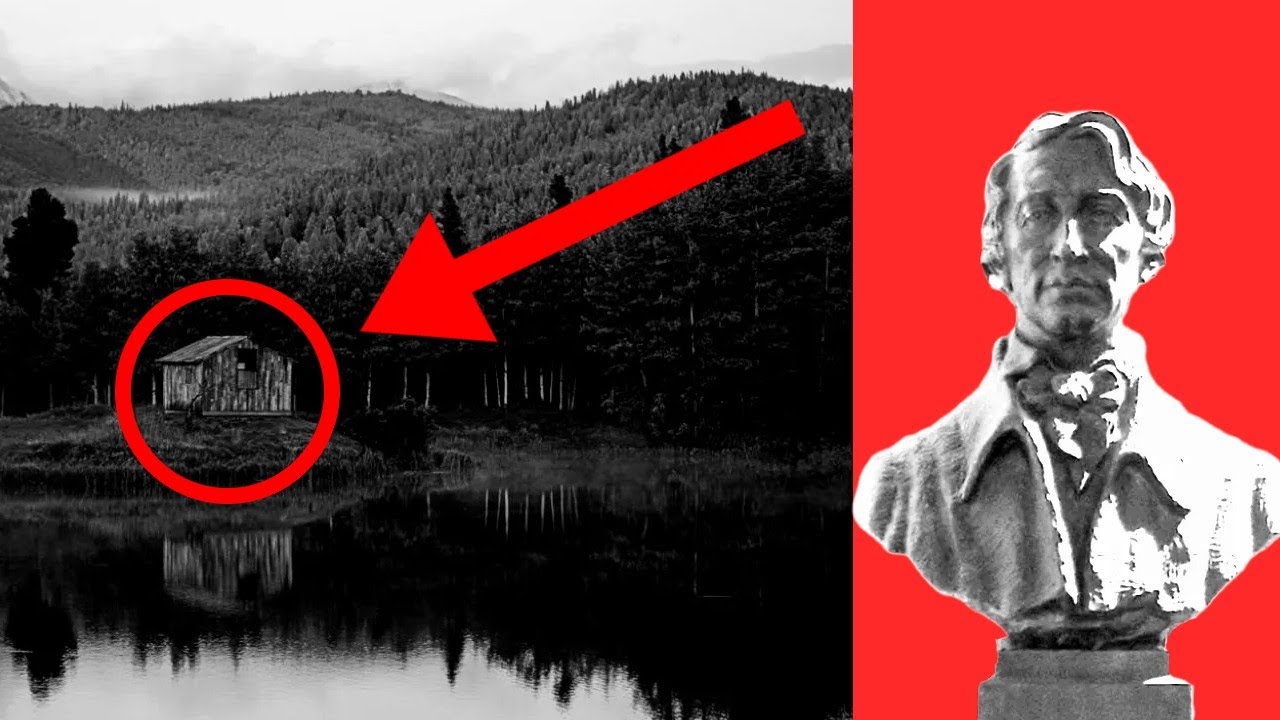
I bet you've had the following fantasy you've thought of leaving your whole life behind you would move to a cabin in the woods somewhere and be blissfully by yourself you would see very few people and talk to almost no one you would get back in touch with nature work with your hands do a lot of reading and make a final divorce from the Civilized world with its Myriad of pressures and pains and Henry David thorough did just that he packed his bags went to a remote area of Massachusetts near Warden Pond built a cabin there
and stayed for two whole years during that time he learned an awful lot about nature himself his fellow man and how to live merrily in solitude he penned all these insights into a magnificent book entitled Walden and that is precisely what we will look at today we will learn about the double-edged sword of society how luxury can be a bad thing and how all of us should learn to embrace a little bit more Solitude in our lives so without further Ado let's get started one the trappings of modernity the ancient Greek philosopher epicurus used to
draw a distinction between natural needs and groundless needs natural needs are everything we need for survival and to secure a baseline level of Happiness things like food and shelter all come under this heading it is basically impossible to be happy and starving unless you are a committed monastic however there are a great many things humans want and torture themselves to get that are not our natural needs we strive after wealth or power or the high of romantic infatuation for thorough living in the wilderness for so long made him acutely aware of just how little he
needed to be happy he reflects on how possessions end up owning us just as much as we own them thorow noticed that the people around him would buy up large Estates and then inherit the vast task of maintaining that estate for the rest of their lives they would constantly buy more and add to their workload for no extra Joy simply in the pursuit of more thow himself had been tied up in this Rat Race having previously attempted to make it in the city as a journalist but safely tucked away in his cabin thorough realized just
how pointless this struggle was for those two years whereas the people around him became slaves to their luxuries thorough decided to to do the exact opposite he deliberately fills his cabin with only the sparest of Furnishings he isues anything fine or fancy and instead subscribes to what he calls a Spartan lifestyle in this way he attempts to rid himself of a very human delusion when we are accustomed to luxury we can often fool ourselves into thinking that our happiness depends on this luxury I had this a few years ago when I went from having virtually
no pain in my life to being in pain most of the day on most days this illness was a big shift and for the first few months I was convinced that I would never be happy again but slowly bit by bit I began to acclimatize and now I find I can be happy despite the pain thorough like epicurus before him wants to remind us of just how little we need with shelter some food and some warm clothes thow manages to find more peace and contentment than he ever found amongst luxury the Roman stoic philosopher senica
used to recommend that we take the opportunity once in a while to live on next to nothing we should sleep on the bare floor eat only simple foods and stay away from those we hold dear this is so we we can return to our lives and our loved ones deeply grateful for everything that they add to our existence and also so we can remind ourselves that no matter how much we may love these things we do not need them to be happy and content at least that was senica's Theory and just as living simply accustom
thorough to a life without luxury it also allowed him to appreciate luxuries when they did come and that is just what we shall move on to next if you want more on philosophy and the art of learning subscribe to my email list the link is in the description two radical gratitude one of the Buddha's most extreme teachings was that of total gratitude and the means of achieving this gratitude was through the intimate knowledge that things could always be so much worse if people did not like you it could be worse they could be actively attacking
you if people are attacking you it still could be worse they could be killing you through this bit of philosophical magic the Buddha used to transform awful situations into Pleasant ones through a mere shift in perspective but an essential part of how these monks could achieve this radical level of gratitude was through their aesthetic lifestyle they were celibate ate only moderately and largely lived on the generosity and arms of other people their whole lifestyle was minimalistic and that made it very easy to be grateful for when they had a little bit more food than usual
or the weather was especially Pleasant and we see this emerging on a smaller scale in thorough time living in his humble and isolated manner over the course of the short book he expresses gratitude for a sunny day the hooting of the owls and the present afternoon in the company of a Woodsman he devotes an entire chapter to the beauty of Walen Pond he says how much he loves the night air spent in nature how much he appreciates the few guests that he does receive in his cabin he even says how grateful he is for the
idol gossip in the nearby Village but only ever in small doses of course the bar for his happiness has become dramatically lower and as a result far more things strike him as so wonderful that he just cannot help but be grateful for them and it's no wonder that it took such Extreme Measures for him to reintroduce gratitude into his life both n and shophow agree that gratitude is a very difficult emotion for humans to feel this is because we're just not naturally inclined to think that everything is okay that we can just be content with
how things are if that were the case human achievement would probably not have got nearly as far as it has done a man running out of fear will push himself that much harder than someone running for fun without our natural striving Instinct the species probably wouldn't have survived but with all the benefits of civilization this innate tendency to strive for more can Venture Beyond food shelter and companionship and into acquiring wealth status and public Acclaim but according to a great many philosophers including the stoics if we ignore gratitude in our lives we are setting ourselves
up for a miserable existence if we stop treating all of the lovely things we have in life as bonuses and instead we see them as requirements then we become attached and once we are attached we fool ourselves into thinking that we need these things we fight so hard to keep them even when they're just making us more miserable gratitude is the greatest Soldier we have in this battle against our own despair we are programmed to have a voice screaming in our heads at every hour of the day asking how this situation can be better how
it can be improved in what way are we not Measuring Up gratitude is the little voice that tells us just how much worse everything could be and reminds us to be grateful for everything we have now after all it could be snatched away at any moment and one of the greatest ways to cultivate this gratitude is to deprive ourselves of the things that we think we cannot live without this is just what thorough does he lives in isolation and learns to appreciate people more he lives without Fine Food and so loves it when somebody is
kind enough to make him a nice meal everything in life is treated as a bonus so it strikes him as even more pleasant than it was before we can all learn a lot from this radical attitude to life it will make flavors Fuller lights brighter and make every day seem that bit more like a gift rather than an inescapable curse but with all that Solitude and all that humility what does thorough do to find meaning in his life that is precisely our next subject three a connection with work throughout history a number of thinkers included
but not limited to socialist ones like KL marks have talked about the alien effect of modern labor this is an immensely complex subject and I can't go into detail about it now but in part it encompasses the psychological effect of being so far separated from the results of your work it may be the case that a factory assembly line is far more efficient at making a watch than an individual Artisan but that also means that no one person can sit back feel proud and say I made this watch this is just one of the things
that can make modern work so deeply unpleasant and thorough found out firsthand what it was like to be free from this alienation when he was the sole person working on his small patch of land he describes in Vivid detail just how fulfilling he found the process of planting seeds taking care of them and waiting for them to grow he used to spend hours in raptured by the plants and the best part was that he was the sole beneficiary of his work he got to quite literally reap the rewards of whatever he did he got to
eat everything he grew in his garden and sell anything he didn't want without having to consult anyone else about it he felt almost entirely self-sufficient and this granted him a self self satisfaction difficult to attain through other means and he did not even mind when it was hard to maintain his miniature bit of Farmland he talks of feeling almost like a parents to his vegetable patch he would go out and defend his children from the weeds and the pests of the world every morning carving them out a safe haven from the rest of reality and
knowing that he'd have to do it all again the next day he felt a care and connection with these simple plants and it was all because he was putting in meaningful difficult effort into maintaining and looking out for them Alber kamu famously said that we should imagine cfus Happy by this he at least partly meant that we should find Value in the process of living and struggling as opposed to placing our meaning in the hands of a higher power I think thorough rather unwittingly demonstrates this principle rather well by his own admission there is no
higher reason for him to be in the wilderness tending to these vegetables he could buy vegetables from professional Farmers instead and could return to his life in the city at any moment but the struggle itself makes the process of acquiring food meaningful the point for thorough is in the pushing and I think this lesson is particularly applicable to many of us today myself very much included many of us are fortunate enough to live in countries where food is plentiful law is maintained and we have the potential to drift into an unfulfilling form of comfort it
is perfectly possible for a lot of us to get by doing the bare minimum and numb ourselves with drink and Mindless stimulation until it is time to go to work again but thorough reminds us that a lack of struggle in our lives can make them just as meaningless as too much struggle if we feel like we cannot make a difference in our lives because we have no power to get out of a difficult situation that will make make us feel helpless but if we fail to use even a tiny fraction of the power that we
actually have we will also feel helpless even if we can actually change our situation sometimes the answer to meaninglessness Is Not to wait until things are easier but to plunge in when things seem hardest thorough made his life much much harder and yet he found his sense of meaning only improved as a result it is a very counterintuitive bit of wisdom but I think we can take a lot from it but what about the particular benefits of solitude of being isolated from other people that is is our next point four the value of solitude friederick
ner used to say that too much time in society would alienate us from ourselves and this makes a lot of sense in the company of others we are sat at a constant negotiating table we can either be totally ourselves and slightly alienate people through our unique brand of strangeness or we can give up fundamental parts of ourselves to dwell peacefully in the company of others it's certainly true that too much time spent socializing will eventually Tire us out and we'll get too much in the habit of hiding parts of ourselves for fear that others will
reject us this is only natural we are social animals and we want to fit in but thorough points out that we must balance this instinctive social drive with one for Solitude and individuality so that we don't lose ourselves in the process thorough surprisingly found that he did not get lonely during his time at Walden he enjoyed that he could walk into the local Village and see people but also that he could spend days or weeks at a time without seeing anyone this isolation was by design it allowed him time to think to introspect to read
and to write eventually he says that the authors he was reading became his company and that his modest room was transformed into a meeting of great International Minds from Hindu philosophy to ancient Roman wisdom the cleverest people in history came to mingle in his humble log cabin and the sheer volume of subjects he covers in his book shows just how much time he could spend thinking and considering aspects of life he writes on economic organization nature the effects of good company the consolations of solitude the fulfilling results of work and the importance of a wise
philosophy he has put tens of hours of his self-imposed Exile considering each one of these topics and the result is a deep understanding of how he approaches the world thorough describes the Contours of his mind like it is a great Kingdom for him to explore and rule over compared to this domain all of the empires in history feel like tinpot dictatorships to him he spends hours getting to know this internal estate in great detail and he recommends that we spend some time doing the same this is no easy task because introspection is frankly terrifying we
might find out that what we thought would make make us happy in fact does nothing we might discover that our partner of many years is not the right person for us we might find that we have to reorganize our entire life around these new internal findings nonetheless thorough says we must persist in our investigations after all if we are miserable but don't know it that won't stop it from affecting our lives but it will stop us from doing anything about it it will Doom us to a life of unconscious despair where we wander around the
world deeply unsatisfied with no idea why this is all of the great thinkers and Geniuses in history will be useless to us if we don't know the inner workings of our own mind we will be like an excited dog chasing philosophies hoping for a quick fix to our problems while at the same time being ignorant of the source of the issue and so we will be unable to identify which approach will actually Deliver Us from the pit of suffering but there is one final question what are the main lessons we can take from this and
it turns out there is a great consolation for us all five what next it is very common for philosophers to teach the values of solitude and advise us to choose humble living but few actually follow through the Roman stoic senica taught of a simple life free from luxury but he himself lived in a vast house had ample power and significant wealth as he was a close advisor to the Imperial Court so it is gratifying for us all to read someone like thorough who practiced what he preached and spent 2 years in the wilderness so he
can tell us what it's actually like to undertake such a challenge the first lesson I see is a brilliantly uplifting one humans actually need very little to be happy thow is comfortable and content by himself with a a few books some meaningful work and a simple Lo cabin to keep him safe from the cold so many of our other needs are brought on by comparisons with others or by trying to live up to some false expectation of what we need to be doing theow gives us a model of how we could be content if we
let go of these luxurious desires and lived as simply and as minimalistically as possible we might not always have the power to gain more but we often have the power to want less and thorough is an excellent example of this lesson in practice secondly he demonstrates how our instincts for Comfort can work against us the convenient and comfortable life is a lot easier than one full of struggle and strife and suffering and striving but that does not mean that it's more meaningful it is just that we will deal with the problem of meaninglessness rather than
the problem of suffering we can take some comfort in this though it shows how problems in life are not optional it is just a matter of picking our poison the Rose's life in the wilderness was difficult and peaceful whereas a life in the city might have been more comfortable but much more chaotic both situations have their Pros but more importantly they both have their cons sh how would truly be proud and lastly Thor's book gives us a much needed piece of consolation when we are feeling lonely or unloved when we are isolated it can quickly
feel like we are in a unique form of hell that it is pointless attempting to be content in this situation but thorough book is a wonderful exposition of all the benefits of being alone for him the difference between painful isolation and pleasant Solitude is just a matter of perspective if thorough can be happy with only the sparest interactions with people not seeking their approval and living life how he sees fit perhaps we can do this as well the rose book serves as a great Bal for one of our deepest and most painful fears the fear
of Abandonment as always I encourage you to pick up the rose book for yourself as there's lots in it that I've been unable to discuss here and if you want a detailed philosophical look at the dangers of society then check out this video on France Kafka the trial and stick around for more on thinking to improve your life