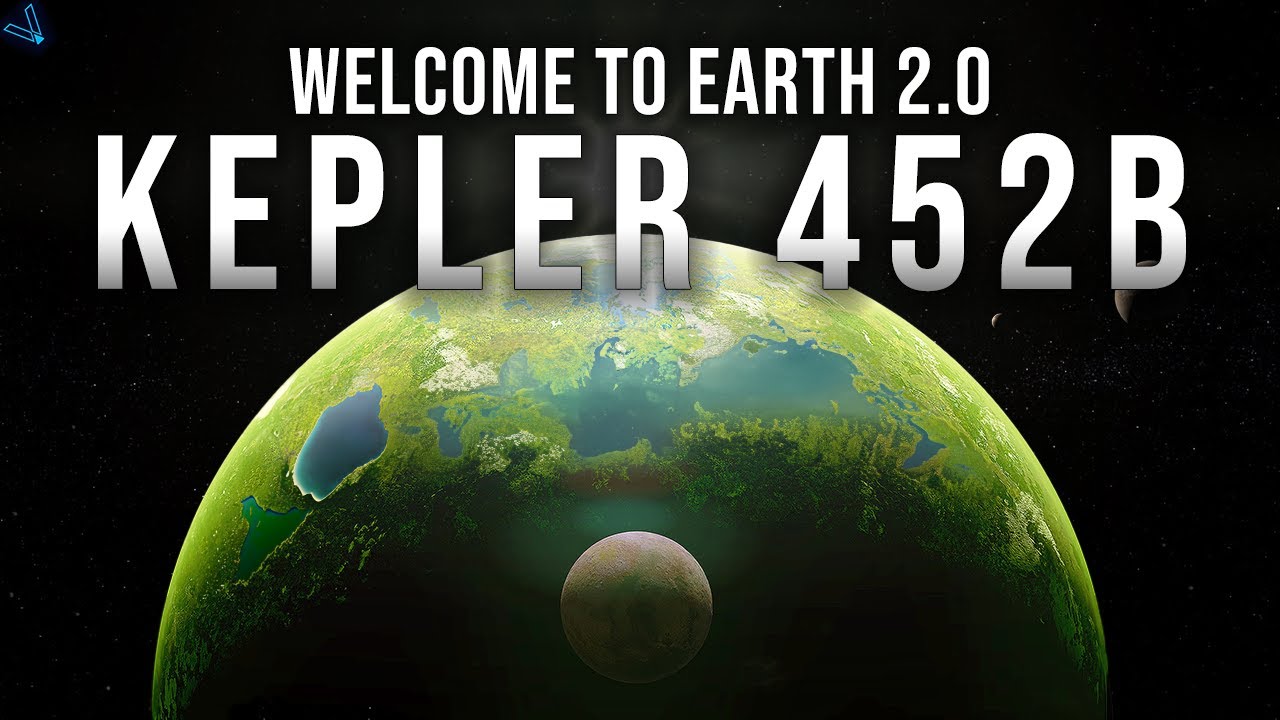
if we all woke up tomorrow and Earth suddenly wasn't able to support human life anymore where would Humanity go Mars the moon sure they're kind of close but they're inhospitable Earth on the other hand has been developing for some 4 and 1/2 billion years and over that time life has evolved to survive in it from its atmosphere to its temperature its gravitational forces water levels radiation levels uh finding another planet with the right amount of so many different things sounds impossible however it's estimated that onethird of planets in the Milky Way could support life and not just human life from perfect planets more than twice Earth's size to ones that already host alien life let's take a look at some planets that could be even better to live on than earth now okay let's define how an exoplanet that's a planet that orbits a star outside our solar system could possibly be more suitable for life than Earth first off we have the exoplanet's age which is reliant on its host star our sun has a relatively short lifespan of 10 billion years and as such Earth only has about 4 billion habitable years left before the sun in the last stages of star death expands and engulfs most of the planets close to it so to be classed as super habitable a star with a lifespan of 20 to 70 billion years is needed giving the planet a longer time to develop and sustain life second the type of host star is super important our son for example is a gype star which has a surface temperature of around 10,000 de F ideally cooler G stars or kype stars are superior K types have lower surface temperatures of 6,200 F to 8,900 De F these emit ultraviolet light and radiation at levels which would be less damaging to our DNA and so shouldn't obstruct the development of life as much as more extreme examples third the exoplanet's location within the habitable zone that is the distance from a star that allows liquid water to exist on its surface as its proximity from a star affects the exoplanet's temperature too close to the star and the planet is too hot like Mercury and too far away means it's too cold like Neptune the exoplanet itself should also have a warmer surface temperature which is our fourth point about 8° F more than Earth's average temperature of 59° f wait warmer Planet temperatures with colder stars that doesn't sound right well here's how colder temperature Stars typically emit more light of longer wavelengths than hotter Stars longer wavelength light is more easily absorbed by planetary ice than the shorter wavel length light emitted by hotter Stars which instead typically gets reflected back into space so the ice on planets with cooler Stars absorbs more light causing it to melt and making the planet warmer overall and finally in fifth we need to consider size bigger is better because exoplanets that are larger than Earth give the planet a greater chance of having solid land which is essential for us we can't survive floating about in a gas giant world like Jupiter okay so that's five key things we need let's see which exoplanets might just fit the bill 442b or not to be so our first prospective candidate is promisingly labeled as a super Earth this is Kepler 442b out in the Lyra constellation which orbits a kype hostar called Kepler 442 so take for Stellar type it's twice the size of Earth with a solid and Rocky surface and being located in this systems habitable zone is covered in liquid water tick tick and tick because its star is also 40% smaller than our sun the rate at which it's burning through its fuel source is much much slower at the rate it's currently burning the planet will be in the Stars habitable zone for up to 30 billion years tick after its Discovery in 2015 researchers have also discovered that it has a solar year equivalent to just 112 Earth days and a assuming its Rocky composition is similar to that of Earth the gravity of this planet would be roughly 30% stronger meaning we'd all feel about a third heavier than we currently do even so with its incredibly long habitable lifespan researchers agree it's probably more habitable than Earth all right what are we waiting for let's go ah well it's located 1,200 light years away that's some 7 quadrillion miles from Earth even if we were to travel on the f Fest spacecraft out there which is currently the Parker solar probe which can reach some 430,000 mph it would still take more than 1. 8 million years to get there dang guess I'll unpack my bags then Cosmic cousin did you know that the Earth has a family y turns out our home planet has a distant older cousin that never comes to family functions anymore why because they're just too far away to visit it 10 1 12 quadrillion miles away to be exact so at 430,000 mph that's still more than 2. 8 million years I'm talking about Earth's way cooler or technically way hotter cuz Kepler 452b nicknamed Earth 2.
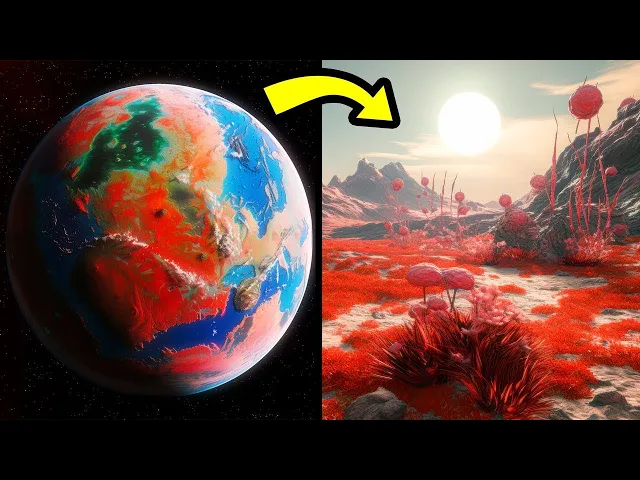
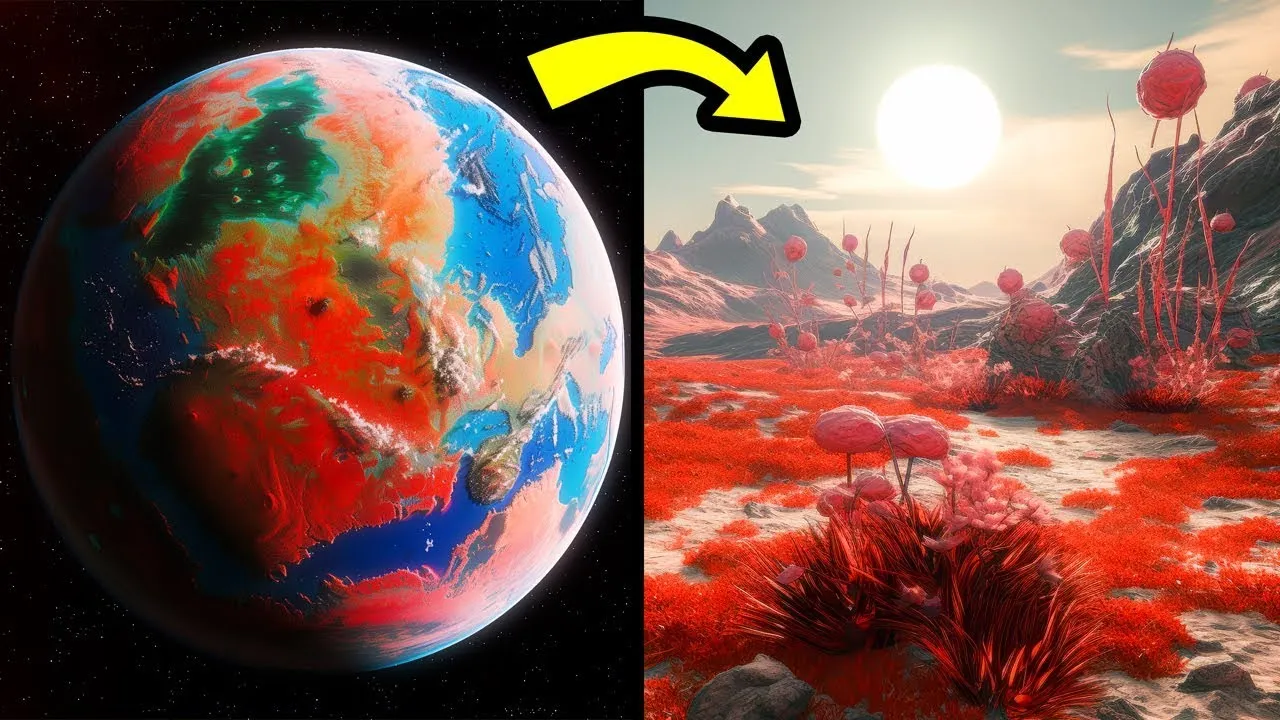
0 it's at a very similar distance to its hostar as Earth is to our sun 97 million miles to Earth 93 million however the gtype star it orbits is 11% larger and with more eyes on on 452b the planet's surface temperature is somewhere between 80° F and 143° F hotter than Earth but still within the range for liquid water to exist on its surface 452b is also 60% larger than our planet which is great news why because planets that are larger than Earth can retain their interior Heating and atmosphere for a longer time period holding on to any oceans it might have for longer too the only problem is that it might not be superh habitable for much longer its host star Kepler 452 is some 6 billion years old and of similar size to the sun however being further along in its Stellar life means the habitable zone of this system is being pushed further and further out with 452b just skirting the inside of this all important Zone the planet likely only has another 500 to 900 million years of habitability left before it becomes too hot to sustain life such a shame no wonder 452b doesn't show up to family events terrestrial twin speaking of families it turns out Earth also has a long lost twin yep there's an exoplanet out there that's practically identical to earth and its name is Koi 48781 Koi stands for Kepler object of Interest this means that it's yet to be confirmed as a planet since planetary signals can sometimes be confused with other activity like solar flares but if it is it'll give Earth a run for its money located 6 quadrillion miles away in the constellation of Drco no not that Drco this koi is 98% similar to Earth especially when it comes to size and temperature to work out the radius of other exoplanets Earth's radius is The Benchmark it measures 3,963 Mi which is 1 earth radius the koi is 5 % larger with 1. 05 Earth radius equal to over 4,161 Mi this is an ideal size for a super habitable planet bigger than Earth but not so big that it's likely made up of gas like Neptune although this koi actually has a hotter host star a gtype with temperatures that range from 10,000 to 13,000 de F its median surface temperature is just 60° F that sounds chilly but as I mentioned earlier Earth's average temperature is 59° f just 1° out it's getting hard to tell these twins apart move over Mars imagine waking up one day and looking out your window to see red plants red leaves red trees red grass red everywhere this is what life would look like on the surface of Kepler 186f why aren't the plants green here well this is due to 186 F's hostar are being cooler and redder than our hot yellow sun meaning plant life on the exoplanet would likely have adapted to utilize the Red Wave light though it may be different in color a study in 2018 suggested that 186f might have seasons and a climate similar to Earth plus it orbits within the goldilock zone of its planetary system so-called because conditions for life are not too hot or not too cold essentially making it The Sweet Spot of any habitable zone well aside from all all the red it sounds like a perfectly habitable planet but there could be signs that things are already living there yep 18 186f is a planet of deep interest with Scientists continuing to explore this world for extraterrestrial life one report shows inconclusive but optimistic signs in the radio noise received from the planet these radio emissions were captured by the Allen telescope array where scientists analyze the signals given off by the planet while radio waves emitted by planetary systems usually come from the interactions between the matter and electromagnetic fields of planets and stars certain patterns in the Radio Data from 1 186f were interpreted by some researchers as potentially indicating an intentional broadcast signal in other words signs of extra terrestrial technology however sadly the data is extremely open-ended and the conclusion is not widely accepted as any patterns were not repeatable and likely coincidental if anything is living there though let's just hope they aren't face huggers though we'll likely never know as even traveling at 430,000 mph it would also take over 900,000 years to reach it in the constellation of sness which is 580 light years away looks like we can put that next alien sequel on Hiatus Nature's calling now there are tens of thousands of Kepler object of interests out there but koi 555 4. 01 might just be the most interesting of all of them this is because it's a possible super habitable planet with perfect conditions for life it's in a prime age of roughly 6 1/2 billion years it also has a similar orbital period to Earth 362 days as well as an earth radius of .
96 so ever so slightly smaller while bigger is better for superh habitability this is an indication it has a solid surface having a rock surface improves chances of Hosting life since many chemicals nutrients and minerals needed for animal and plant life like phosphorus are most usable in a solid state alongside great temperatures of 79° f it's also equidistant to its H Star as the sun is to Earth with both 93 million miles away the planet is very close in Mass to Earth too our native planet has a mass of 6. 56 tilion tons AKA 1 Earth Mass this planets is 1. 02 Earth masses or 6.
7 sextilion tons however distance continues to be a drawback at 700 Lighty years away some 4. 1 quadrillion miles but let's put some things into perspective our early homant ancestor Homo erectus existed for over 1 and2 million years modern Homo sapiens however only appeared about 300,000 years ago considering how little time we took to develop we still have thousands if not millions of years left for our species to expand and explore the universe enough time to maybe even switch home planets one day trapped in space have you guys ever heard of an Ultra Cool dwarf no I'm not talking about Peter Dinklage Trappist one is an Ultra Cool dwarf star that hosts a system of seven planets pretty similar to our solar systems eight planets this system is over 40 light years away in the constellation of Aquarius some 244 trillion miles out and one of the exoplanets there Trappist 1e is a great candidate for habitability its mass radius density and gravity are all similar to Earth's one e is a rocky planet but also a potential water world that's located in the system's goldilock Zone although it's slightly smaller than Earth at9 Earth rate radius its atmosphere is not dense or thick enough to harm its habitability its hostar that previously mentioned Ultra Cool dwarf is much cooler smaller dimmer and older than our son at 7. 6 billion years compared to 4.
6 billion as a result of its smaller size and cooler temperatures it's believed it can remain stable for up to 12 trillion years over 2,000 times longer than our sun in fact it's likely that this star will be one of the last remaining in the universe with such a start to sustain itself 1e will theoretically be able to develop complex life and could even contain more water on its Planet than Earth by up to 5% of its entire Mass this is huge compared to the amount of water on our own Planet only making up . 2% of Earth's mass whoa move over Peter Dinklage first prize Planet if there was a prize for a most super habitable planet then koi 57 15. 01 would definitely take the CR Yep this planet is the original Miss Universe of course it's a long long long way from home at 3,000 Lighty years some 18 quadrillion miles from Earth but for all that distance this planet is the cremel creme of habitable environments first of all it's well within the age range at 5 and a half billion years old it also has a mean surface temperature of 53° f which is only slightly cooler than Earth's 59° F so not an ideal temperature however its host star is a kype orange dwarf which are usually quiet low activity stars that are much more stable than G type stars like ourson this means that it doesn't send out any dangerous x-rays or ultraviolet radiation leading to more chance of life and more advanced life forms also Miss Universe here is almost double the size of Earth 1.
9 times larger in fact this could lead to a planet that's even greener than Earth why because the wavelength of light from kype stars is different to others plants and vegetation would cover a lot more of the surface of the planet so much so that they would be super visible from space wow she's so pretty let's give this exoplanet the crown already come to the dark side next up on our Cosmic trip is Kepler 62f it may look a little blue but that's that's because it's the breathtaking watery world of our dreams although it's nearly a thousand light years away in the Lyra constellation some 5. 8 quadrillion miles it has all the Hallmarks of a nice new home planet it's bigger than Earth in both size and mass estimated to be 2. 6 Earth masses and a 1.
4 earth radius it also orbits around a k type star Remember the one's able to exist up to 30 billion years and is already 7 billion years old the exoplanet even has the potential to host its own moonlike Earth and is assumed to be covered in deep vast oceans much like Earth's researchers have backed up 62 F's habitability by conducting simulation experiments testing the planet's CO2 levels and atmosphere thickness and combined with the knowledge of its orbital path They concluded it's likely the exoplanet has a climate and even Seasons similar to those of Earth its axial tilt is even s ilar to Earth's 23° calculated at a range between 14 and 30 however it's tidally locked so that one side permanently faces its star leaving one side an eternal day and one side an eternal night even so the axial tilt would be able to transfer heat from the Sun side to the cooler darker side meaning parts of the planet would still be habitable well as a night owl this sounds perfect to me come to the darker side 62f isn't the only super habitable exoplanet with a permanent dark side though Glee 667cc is the next promising planet that outshines Earth well at least 50% of it does it's described as one of the best candidates for liquid water possessing suitable temperatures along a region called The Terminator line that's the line that divides the dark and light side of a planet at any given point so essentially the thin sliver of the planet that's in an eternal dusk State the despite a tily locked darker side its starf facing side receives around 90% of the light that Earth does but life on the planet might be a bit of an adjustment our 365-day year would be reduced to just 28 days on Glee this means that if you're 20 years old on earth you'd be 260 on this planet so what about getting there well it's located in the constellation of Scorpius only 22 light years away sounds pretty close right unfortunately it would still take over 40,000 years to reach even with the Parker solar probes 430,000 M hour speeds but never fear new technologies appear all the time ones that could make our current advances look like Stone Age tools so by the year 402000 we might be making a dreamlike trip to this planet a reality early Evolution humans have been searching for evidence of extraterrestrial life for years but what what's more fascinating is the discovery of life as it begins which exoplanet k218b might be experiencing right this second and some 125 light years away or 730 trillion miles it's still very far out from Earth and at first glance it doesn't look great the orbital path of k218b actually takes it out of its host star's habitable zone and its hostar is much smaller and cooler than our own however studies suggests that it may be cold enough to possess liquid oceans conducive to life in 2019 water vapor was discovered on k218b making up 7 to 1. 6% of the atmosphere scientists achieved this using a special kind of Imaging technique called spectrometry this separates the light reflected off the planet into bands on a spectrum each chemical element has its own unique fingerprint so if it is present in the atmosphere scientists will be able to recognize it on this spectrum alongside other traits about its composition with this data researchers also inferred that the planet may have clouds however if it does these will likely be formed of ice as the surface temperature of k218b rarely reaches above 41° F okay so far this exoplanet is sounding like a real doozy but in 2023 NASA announced that the James web telescope detected traces of methane CO2 and possibly dimethyl sulfide commonly known as DMS in the atmosphere now most DMS in the Earth's atmosphere is emitted from phytoplankton and ocean environments which are bacterial organisms responsible for removing CO2 from the air and a primary source of food for sea creatures this means that there could already be signs of small life inhabiting the planet even scientists admit that a planet could be extremely non- earthlike but also promise better conditions for the evolution of new neverbe seen life so in a few million years we might have extraterrestrial neighbors tea garden party with a name like tea garden star B you might expect me to show you the hostar of a far-off system but actually Tea Garden star B also known less confusingly as te Garden b is another exoplanet one whose Discovery is a big deal because of its 1. 05 Mass T Garden star B is likely to be Rocky and astronomers judge that it has a 60% chance of having liquid water even though its orbit is outside of the system's habitable zone estimates put the Tea Garden system at around 8 billion years old plenty of time to potentially develop life and a prime age for a super habitable planet the planet is 12 and 1/2 Lighty years away which sounds more reachable than others even if it is 70 trillion miles out and traveling at 430,000 mph that means it take a mere 18,700 27 years to get there while it's still not closed it does have a high Earth similarity index rating of .
95 sounds too good to be true right well sadly it is even with a 60% chance of the exoplanet having water there's only a 3% chance of it having an atmosphere without an atmosphere which is the mixes of gases around the earth there' just be a vacuum and as far as scientists know life cannot grow or exist where there's literally nothing so so if there's no atmosphere ever to be found on te Garden star B we'll have to postpone the move there indefinitely I'm afraid Blue Lagoon beyond the moon what would humans look like if we had only evolved in water instead of on land perhaps we'd have gills and fins of our own and webs on our feet and hands well if we' developed on Kepler 22b we might have evolved just like that located in the constellation of signis 635 light years from Earth roughly 3. 7 quadrillion miles this super habitable water world is most likely covered in super oceans it orbits its gtype hostar every 290 days with the Luminosity of its star just 25% less than that of Aron however the distance to its star is 15% less than Earth's distance to the Sun so despite being smaller and colder this shorter distance and lower Luminosity allows surface temperatures of 72° f on 22 be oh Bal me thankfully studies indicate that these temperatures won't be subject to extreme Greenhouse heating like Earth where heat is trapped near the Earth's surface by a buildup of gases that means the planet will stay at a habitable temperature for much longer with a size over two times that of our home planet there's more than enough space to go around with studies also suggesting that there's a great potential for life to inhabited Seas who knows living in a watery Paradise may be the best thing for humankind kind assuming there's enough water wings to go around Planet Ross can you imagine living on a planet called Ross would we all be called rossian Rosings Ross kind well one of the great things about Ross is that it's actually a real planet called Ross 128b to be precise located out in the Virgo constellation roughly 11 light years from Earth this exoplanet is close to the same size as Earth and has a surface temperature of 73° f suitable enough for water if it has an atmosphere scientists are actually looking to find evidence of life in this potential atmosphere which would contain chemicals such as oxygen ozone and methane a great cocktail of evolutionary ingredients and it seems like Ross wants to become our Interstellar neighbor as it's moving closer and closer towards us the hostar of the system Ross 128 is gradually moving towards our solar system meaning in the next 70 9,000 years Ross 128b will be the closest exoplanet to Earth Ross's gravity is also something to consider regarding habitability as it's only slightly higher than Earth's humans could survive up to four times the Earth's gravitational strength which is 1 G Ross however has a force of 1.