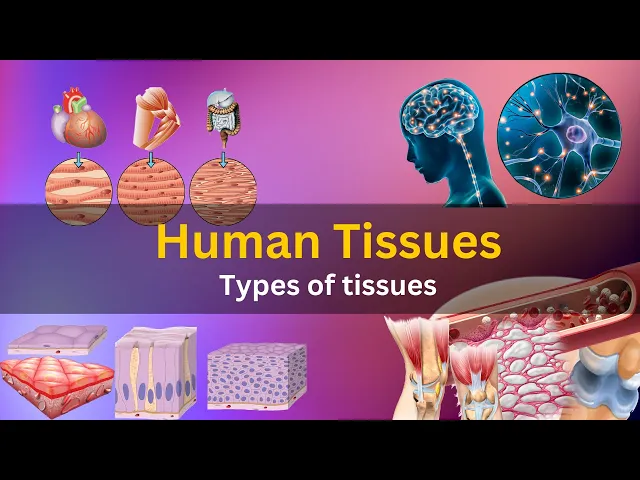
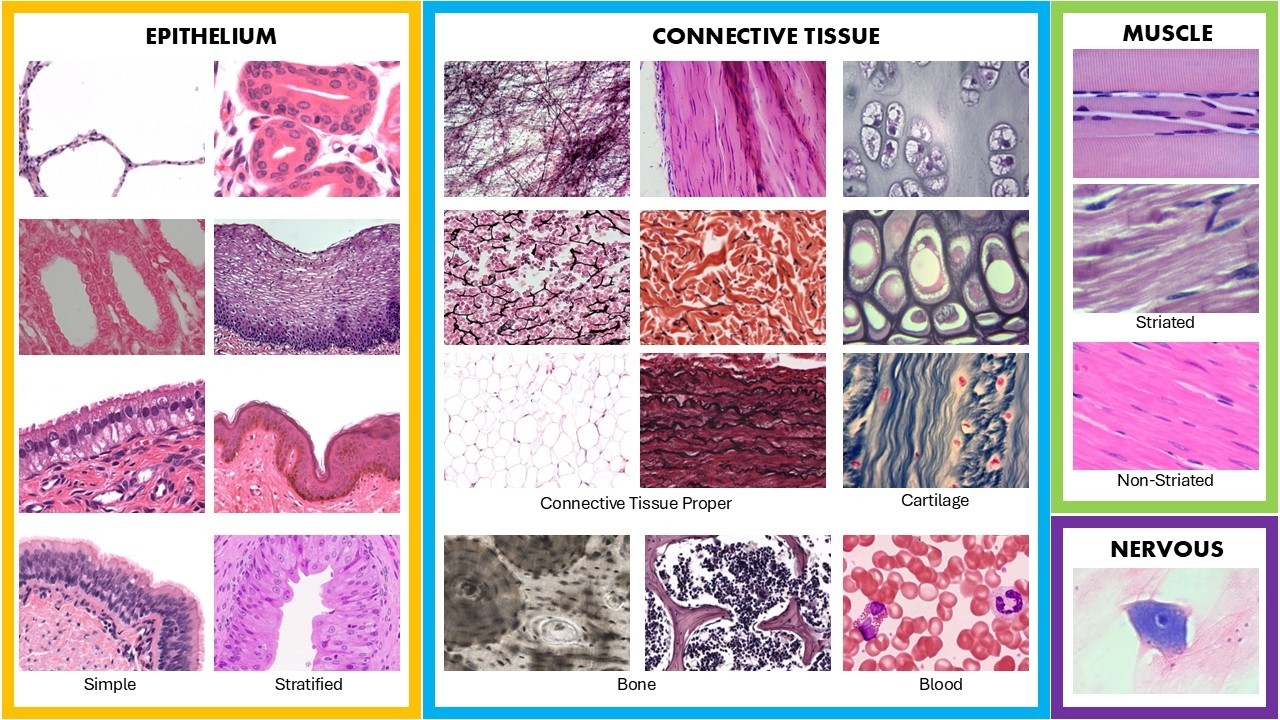
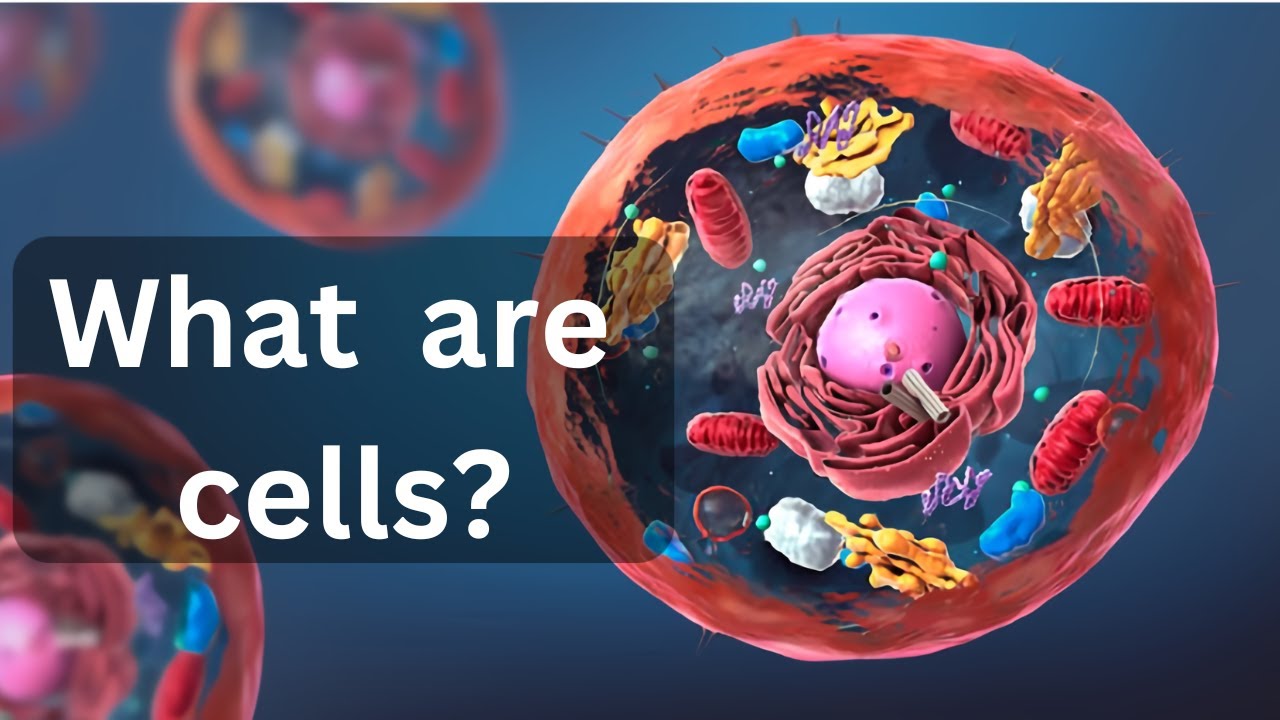
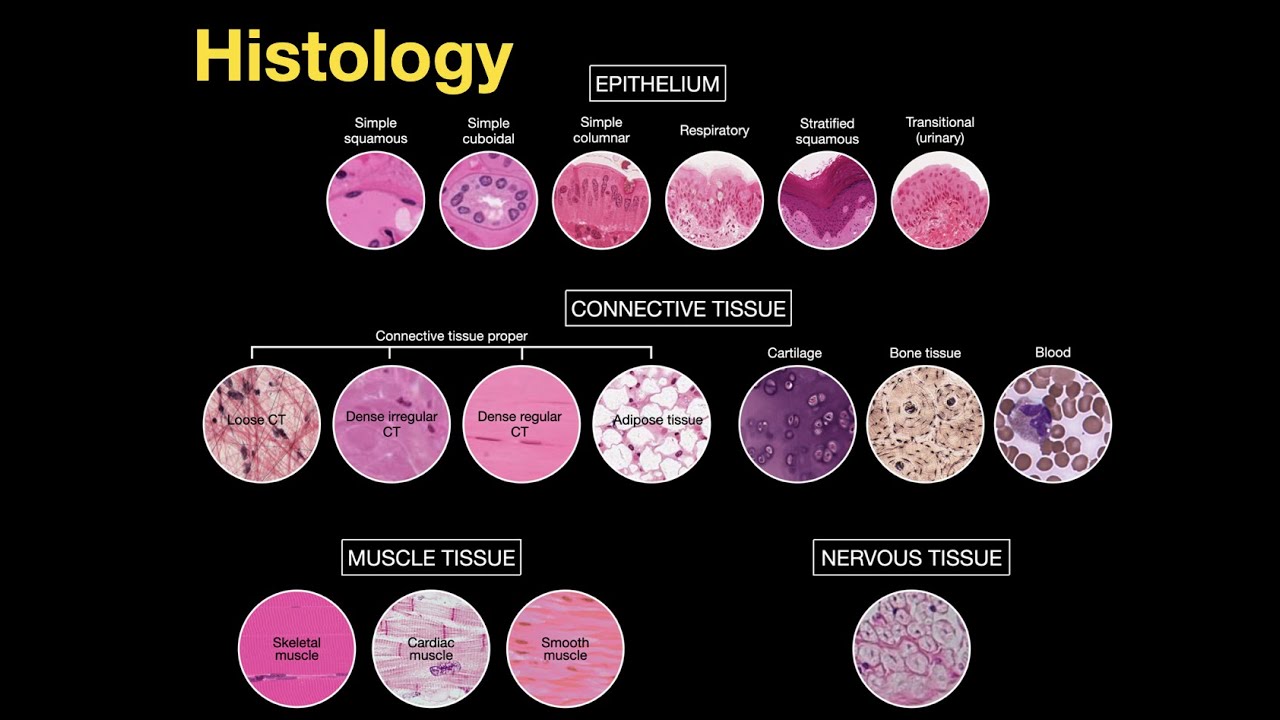
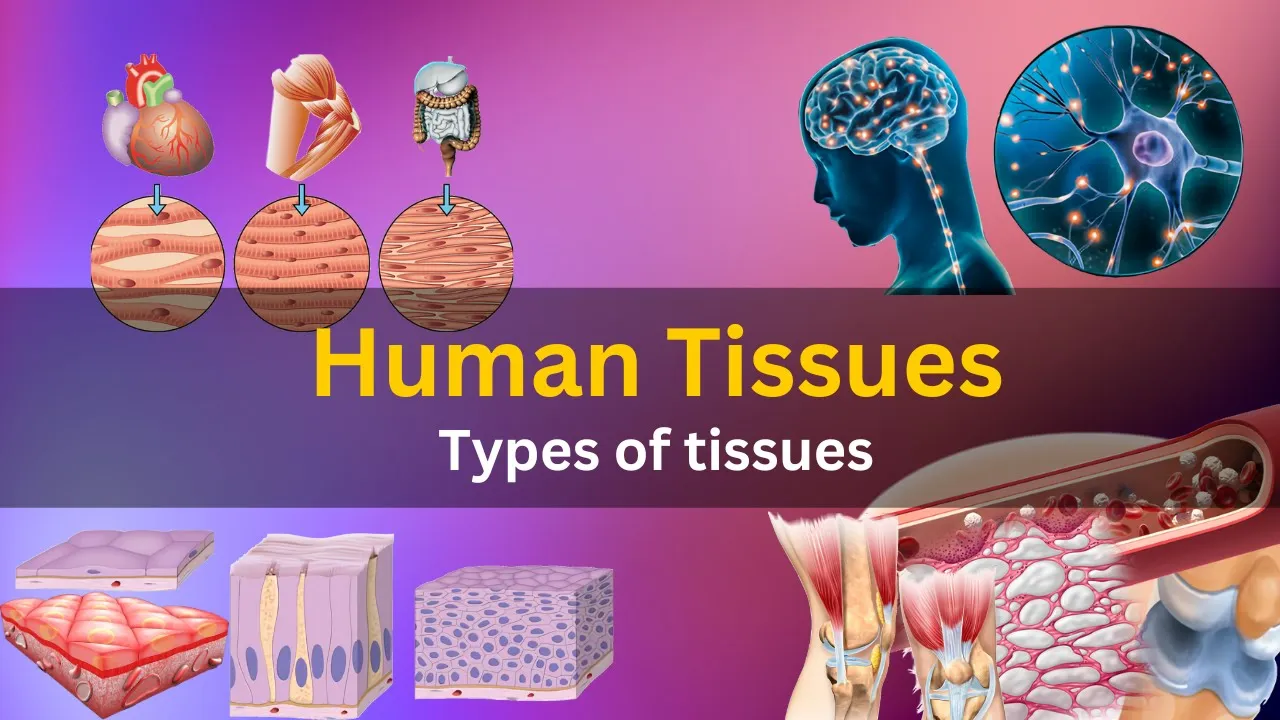
hello everyone and welcome back to biosolar today we're diving into the world of tissues you might be wondering what are tissues and why are they so important well stick around because we're about to break it down for you so let's start with the basics tissues are like the building blocks of our bodies the groups of specialized cells that team up to perform specific tasks these tasks are vital for the proper functioning of our body and tissues play a crucial role in making that happen there are four main types of tissues in the human body epithelial
tissues connective tissues muscle tissues and nervous tissues let's discuss them one by one epithelial tissue tissue is one of the four basic types of tissue in the body and it plays a vital role in many different functions the term epithelium comes from the Greek words EPI and theal this is the thin tissue forming the outer layer of a body's surface and lining the elementary canal and other Hollow structures epithelial tissue is found all over the body including skin lining of of the digestive tract respiratory tract and urinary tract glands such as the sweat glands and
salivary glands lining of the blood vessels and other organs there are two main types of epithelial tissue simple epithelium and stratified epithelium the simple epithelium is made up of a single layer of cells it is found in areas where there is a need for Rapid diffusion sit is the lining of the small intestine the stratified epithelium is made up of multiple layers of cells it is found in areas where there is a need for protection such as the skin there are also several subtypes of epithelial tissue each with its own unique characteristics and functions some
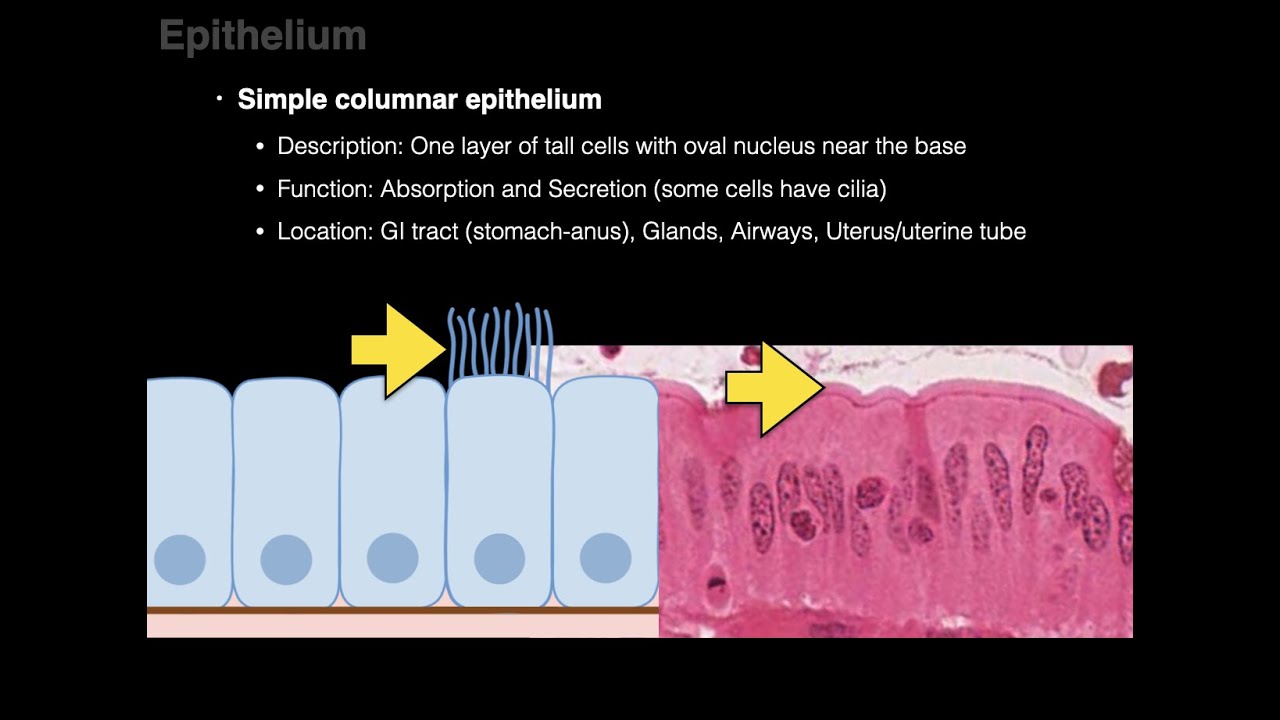
of the most common subtypes include squamous epithelium cuboidal epithelium columna epithelium pseudostratified epithelium and transitional epithelium the squamous epithelium is made up of flat scalelike cells it is found in areas where there is a need for protection or absorption such as the lining of the lungs and the blood vessels cuboidal epithelium is made up of cube-shaped cells it is found in areas where there is a need for secretion or absorption such as is the lining of the kidneys and the small intestine columna epithelium is made up of tall column-like cells it is found in areas
where there is a need for secretion such as the lining of the stomach and the intestines pseudo stratified epithelium looks like it is stratified but it is actually not the cells are all connected at the base but they vary in height it is found in areas where there is a need for both protection and secretion such as the lining of the respiratory tract the functions of epithelial tissue vary depending on its location some of the most common functions include protection secretion absorption excretion filtration sensory reception Etc epithelial tissue helps protect the body from harmful substances
and pathogens for example the skin protects the body from the environment and the lining of the digestive tract protects the body from harmful bacteria epithelial tissue secretes a variety of substances including mucus sweat and hormones for example the sweat glands secrete sweat which helps to cool the body it also absorbs nutrients and other substances from the environment for example the small intestine absorbs nutrients from food epithelial tissue excretes waste products from the body for example the kidneys excrete urine which contains waste products from the blood some epithelial tissues are specialized for sensory reception for example
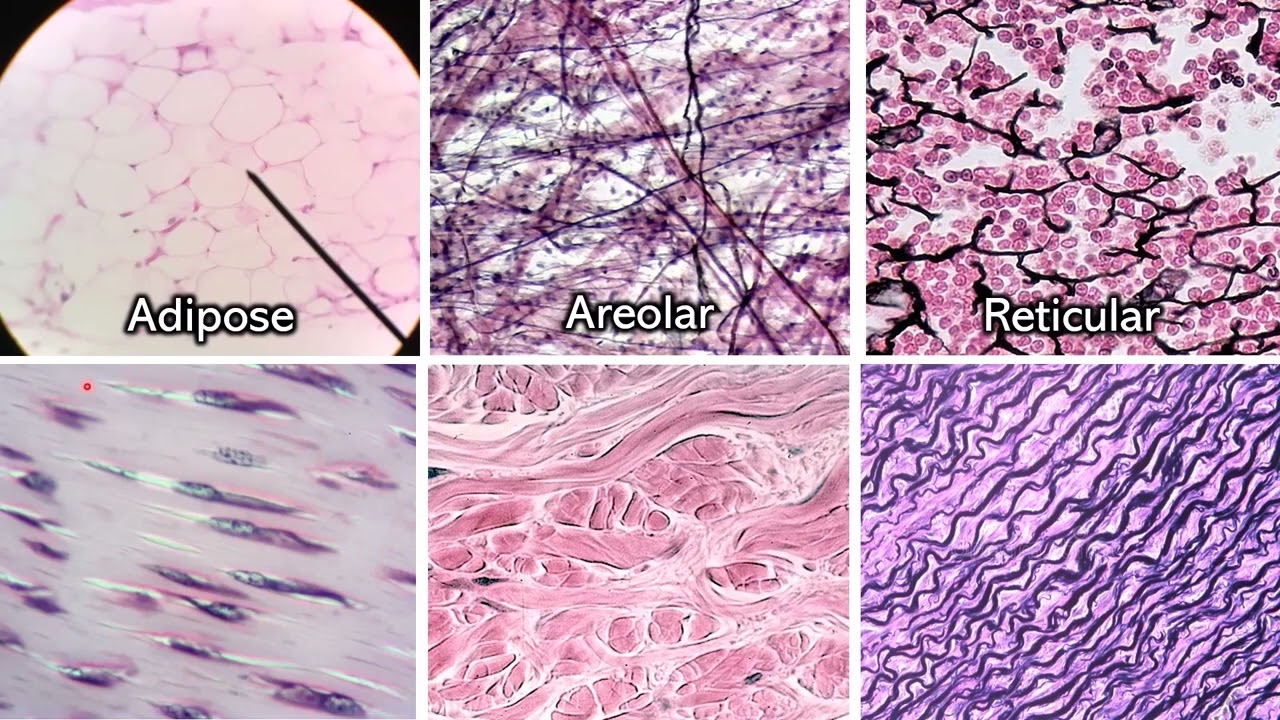
the taste buds are made up of epithelial tissue and are responsible for the sense of taste epithelial tissue is a vital part of the body it performs a variety of important functions including protection secretion absorption excretion filtration and sensory reception epithelial tissue is found all over the body and its type and location vary depending on its function so let's explore connective tissues together first let's let's break down the different types of connective tissues we have connective tissue proper which includes both loose connective tissue and dense connective tissue loose connective tissue contains collagen and elastin fibers
providing support and elasticity adapost tissue a type of loose connective tissue is primarily composed of fat cells and serves as an energy Reservoir and insulation dense connective tissue on the other hand is densely packed with collagen fibers and can be further categorized into regular and irregular dense connective tissue tendons which connect muscles to bones allowing movement and transmitting muscle generated force and ligaments which connect bones to other Bones on the other hand stabilize joints and prevent excessive movement by connecting bones to other bones fall under this category next we have specialized connective tissues which include
cartilage bone and blood cartilage is a firm flexible tissue found in various parts of the body providing support and reducing friction in joints bone tissue is hard and rigid offering structural support and protecting vital organs blood are fluid fluid connective tissue plays a crucial role in transporting oxygen nutrients hormones and waste products throughout our bodies now let's take a closer look at what makes up connective tissues connective tissues contain various cell types including fibroblasts which produce the extracellular Matrix adipocytes responsible for fat storage and condr sites and osteocytes found in cartilage and Bone respectively The
extracellular Matrix or ECM is a complex network of proteins and carbohydrates surrounding cells consisting of protein fibers like collagen elastic and reticular fibers as well as a gel like ground substance composed of proteoglycans and glycoproteins connect itive tissues serve several vital functions in our bodies they provide structural support to organs bones and muscles ensuring our bodies maintain their shape and integrity connective tissues also offer protection such as bones safeguarding vital organs like the brain and spinal cord they facilitate Connection by forming tendons and ligaments allowing for movement and Joint stability additionally connective tissues have a
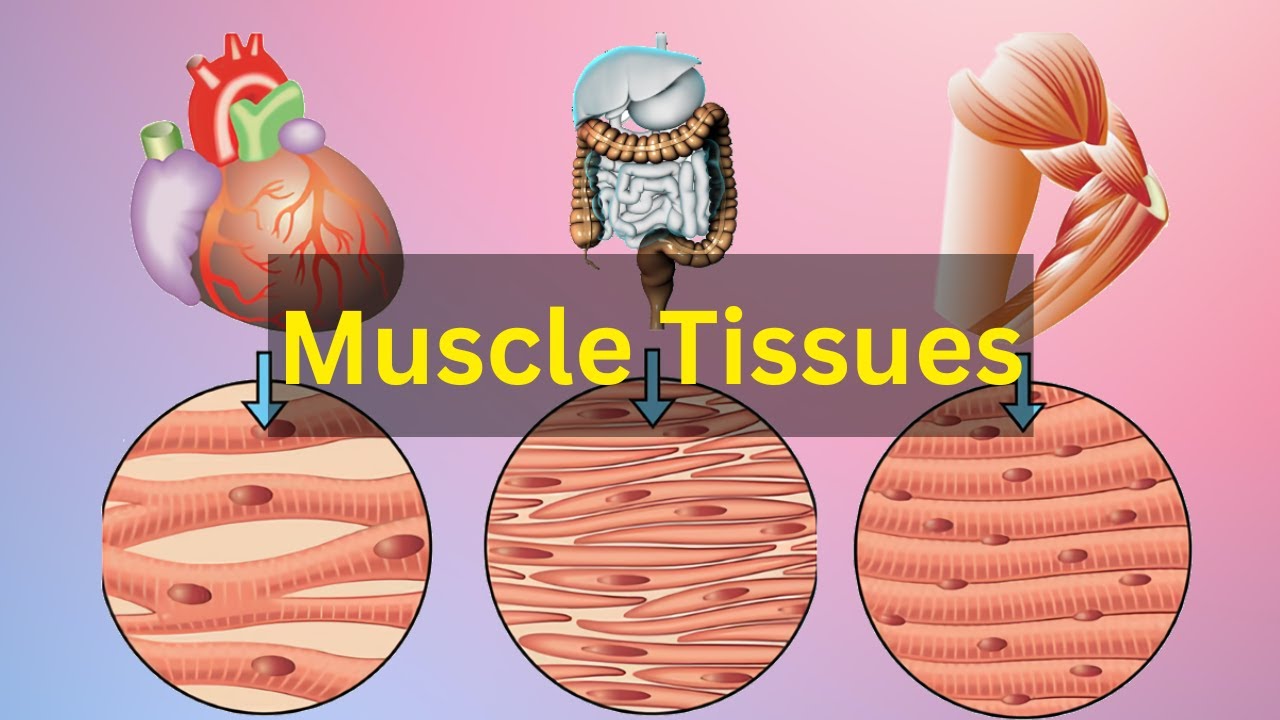
role in storage with adapost tissue storing energy and Bones storing minerals like calcium and phosphorus blood as a specialized connective tissue is responsible for transporting vital substances throughout the body lastly connective tissues house immune cells contributing to our body's immunity against infections and diseases our bodies are incredible machines and muscle tissues play a pivotal role in making them work first what exactly are muscle tissues well they're one of the four primary types of tissues in our bodies along with epithelial connective and nervous tissues muscle tissues are unique because they allow us to move maintain posture
and perform various functions there are three main types of muscle tissue skeletal smooth and cardiac let's start with skeletal muscle tissue it's attached to our bones by tendons throughout our body under a microscope it appears striated giving it a striped or banded look importantly skeletal muscles are under voluntary control that means we can consciously decide when and how to move them skeletal muscles are responsible for all those physical activities we love like walking running and lifting now let's move on to smooth muscle tissue It lines the walls of various internal organs like the digestive tract
and blood vessels unlike SC SK Al muscle smooth muscle lacks stations and looks smooth under the microscope smooth muscles are involuntary which means we can't consciously control them instead they're regulated by the autonomic nervous system smooth muscles are the unsung heroes of our bodies facilitating processes like digestion and regulating blood flow and finally cardiac muscle muscle tissue this specialized muscle is exclusively found in the heart it's striated similar to skeletal muscle but with a distinctive branching pattern and intercalated discs cardiac muscle is also involuntary but it has its electrical conduction system that regulates the heartbeat
the autonomic nervous system can influence it the cardiac muscles primary job is to keep our hearts beating ensuring blood is pumped throughout our bodies to supply oxygen before we wrap up let's touch on some key characteristics shared by all muscle tissues muscles respond to electrical or chemical signals they can contract and generate Force muscles return to their original shape after Contracting they can stretch without damage muscles cells are often referred to as muscle fibers skeletal muscles work in motor units controlled by motor neurons muscles require a lot of ATP to function these incredible tissues keep
us moving ensure our organs function and keep our hearts beating in the case of cardiac muscle nervous tissue it's a fundamental part of our bodies and plays a crucial role in how we function so let's Dive Right In and explore what nervous tissue is all about nervous tissue is one of the four primary types of tissues in the human body alongside epithelial connective and muscle tissues it's primarily composed of two main components neurons often referred to as nerve cells and neuroglia also known as G cells neurons are the units of nervous tissue they have three
main parts the cell body dendrites and an axin the cell body contains the nucleus and other organel while dendrites receive incoming signals and the axin transmits those signals away from the cell body often axons are insulated by a myelin sheath which speeds up signal transmission neuroglia or gal cells are the unsung heroes of the nervous system they provide support and protection to neurons types of gal cells include asites which maintain the blood brain barrier and regulate the chemical environment around neurons and oligodendrocytes and schan cells which produce the myelin sheath microa are the immune cells
of the central nerve nous system while endal cells help produce cerebrospinal fluid so what's the function of nervous tissue well it's all about transmitting electrical impulses or nerve signals these signals are vital for sensory perception motor control coordination and communication within our bodies nervous tissue also plays a significant role in higher cognitive functions like memory learning and decision making to better understand how nervous tissue works we need to talk about its organization the nervous system is divided into two main parts the central nervous system which includes the brain and spinal cord and the peripheral nervous
system encompassing all other nerves and ganglia nervous tissue is organized into intricate circuits and networks of neurons these networks work together to process and transmit information allowing us to react to our environment make decisions and even form memories and it my friends is the world of nervous tissue it's a remarkable part of our bodies that enables us to experience the world around us and navigate through life these four types of tissues come together to form our organs which in turn team up in organ systems to keep our bodies running smoothly pretty amazing right I hope
you enjoyed this video if you have any questions please leave a comment below and don't forget to like And subscribe to my channel and also press the Bell icon for more videos about science and biology