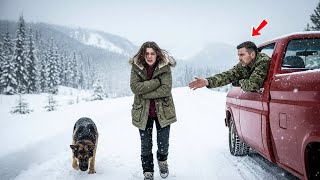
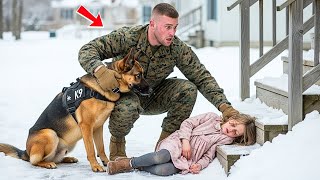
Veteran Luke Bennett comes home and finds his wife beside another man. No shouting, just one quiet line. So, this is it. Luke walks into the night with Kota, his battlecarred German Shepherd until Cota stops, growling low, as if the dark remembers them. At the edge of town, a forgotten rusted rail car leans on dead tracks. Cota scratches. Thunk. Thunk. And Luke finds a tin box, a few coins, and a yellowed note. Don't call Yourself scrap. Luke turns that rail car into shelter straw, burlap, a small, steady fire. Then the sky changes. A blizzard is coming.
And the first fist to pound on that door may belong to the one who broke him. Will Luke choose revenge or mercy? Comment where you're watching from and hit subscribe for stories where one spark outlasts any storm. Ash Creek, Wyoming, lay under a hard January sky. Wind carving the snow into knives along the quiet main street And the abandoned railyard as if winter itself were sharpening its teeth. Luke Bennett came back the way tired men returned from long wars without fanfare, without music, without believing the world had held its breath for him. 38 years had
etched themselves into his face with a soldier's economy, strong cheekbones that looked carved rather than grown, a jaw squared by clenched decisions, and eyes the color of cold riverstones, steady at first glance, Then haunted if someone lingered too long. A thin scar cut through his right eyebrow, like a comma, in a sentence he never finished, and his dark hair kept short out of habit more than style, was threaded with early gray that didn't match his age so much as his mileage. He carried one battered duffel that smelled faintly of canvas and dust, and he moved
with that particular calm that was not peace, but training, shoulders loose, steps measured, attention everywhere. Beside him walked Kota, 5 years old, a German Shepherd with a sable coat that shifted from honeyed brown to soot black depending on the light. His muzzle was broad, his ears sharp as spearheads, and his amber eyes had the vigilant intelligence of a creature built to read the world like a map. One ear had a small notch from some past incident Luke never explained to strangers. It made Cota look perpetually skeptical, as if he'd heard every excuse before and rated
Them all poorly. The dog's gate was controlled, close to Luke's knee, not needy, not clingy, simply loyal the way gravity is loyal to Stone. In the war, they had learned each other's language in silence. Cota's paws meant danger. Luke's hand hovering meant weight. Luke's breath changing meant something unseen had shifted. Now the town was quiet, but Luke still listened as if quiet were only a disguise. He had imagined this return a hundred different Ways during the months when time was measured in patrols, radio crackle, and the metallic taste of adrenaline. In some versions, the house
lights were warm, and Hannah's laughter was the first thing that met him, tumbling out like a scarf thrown around his shoulders. In other versions there was anger, tears, accusations, the raw honesty of two people admitting that love can be injured by absence. But he had not imagined the strange neutrality Of the real thing. Snow squeaking under boots, a porch step that creaked exactly the same as it used to, and a welcome home banner faded. Corners curled hanging in the front window like a promise that had outlived its truth. The home looked smaller than he remembered,
not because it had shrunk, but because he had learned how big fear can be, and how small walls feel after you've lived with the sky as your ceiling. Luke stopped at the porch rail, fingertips Grazing the wood, and his mind always hungry for patterns catalog details the way it did when he couldn't sleep. Fresh shovel marks, a new doormat with a cheerful slogan, the faint smell of wood smoke that belonged to someone else's routine. Cota sniffed once, then twice, and his tail made a restrained half sweep. Not excitement recognition. A place can be familiar and
still be wrong. Luke's stomach tightened, not with panic, but with a soldier's Premonition, the kind that arrives before the explanation. He told himself it was just nerves, just the awkwardness of a man stepping back into a life that kept moving while he was gone. He told himself, "The mind plays tricks when it's tired." Then he heard laughter inside, brief, casual, and it landed in him like a pebble thrown into a still pond. Ripples reaching places he didn't know were waiting. Hannah Bennett opened the door Before he could knock, as if she'd been standing there, listening
to his footsteps like they were a verdict. She was 36, tall and slim in a way that suggested endurance rather than fragility. Her posture straight even in the cold, as if she had trained herself not to fold. Her hair, chestnut brown, was pulled back in a loose knot that still let a few strands escape and brush her cheek, giving her a softness that her eyes refused to match. Those eyes Were a clear blue gray like lake ice right before it cracks. Her skin was pale from winter with faint freckles scattered across her nose as if
the sun had once tried to claim her and then given up. She looked at Luke the way someone looks at a photograph that has survived a fire. Relief that it still exists, grief for what it lost, and a quiet fear of what touching it might do. In her face, Luke saw the person he had married, the woman who used to laugh at His terrible jokes, who once tried to teach Kota to shake hands and got politely ignored because Kota did not believe in performing for free. But he also saw someone sharpened by months of carrying
life alone. Someone who had learned to sleep with one ear open for the furnace, the bills, the silence. Hannah's hand remained on the doornob like she needed the metal to steady her. Luke, she said, and his name sounded unfamiliar in her mouth, like a word she Had stopped practicing. Luke tried to answer, but the words stacked up behind his teeth, too heavy to lift. He managed to nod instead, the kind soldiers use when emotion would be inconvenient. Cota, sensing the strain, sat down neatly at Luke's side, eyes flicking from Hannah to Luke, with the solemn
patience of a mediator who knows humans are slow learners. Then Luke noticed the scent that didn't belong. Coffee, yes, But also cologne, a sharper note, clean and confident. A shadow moved behind Hannah and a man stepped into view as if the house had quietly produced him. Derek Walsh looked 40, broad shouldered and comfortable in the space, the kind of man whose body had been shaped by work that required strength but not discipline. His hair was sandy blonde, slightly unckempt, and his face carried a day's worth of stubble that tried to be rugged but landed closer
to careless. He had the kind of grin that arrived too easily, as if he used it to lubricate difficult moments. His eyes were hazel, quick and assessing, and he held a mug of coffee with both hands like it was a prop that made him look harmless. If Luke had met him in a bar before the war, he might have pegged him as loud, friendly, and vaguely irritating, the sort who talks too close and laughs too hard at his own stories. But now Luke's mind didn't allow vaguely anything. It Mapped Derek instantly. Weight distribution, distance to
the door, the angle of Derrick's shoulders, the subtle way his body positioned itself just behind Hannah as if staking a claim. Luke didn't hate him yet. Hate took energy, and Luke had learned to ration his fuel. What he felt first was a bleak, exhausted, clarity like stepping on land after weeks at sea and realizing the shore isn't home anymore. Dererick's voice came out cautious, halfway polite, Halfway territorial. "Hey, man," he said, as if this were a casual surprise, as if Luke had shown up early for a party. "Didn't think you'd" He stopped, perhaps because Hannah's
silence made the room colder than outside. Luke's chest tightened and for a heartbeat he was back in a different doorway, a different country, a different kind of winter dust instead of snow, heat instead of ice. But the same feeling, the moment before something breaks. He Felt his hands want to become weapons. He felt the old reflex to fix the situation by force, to seize control, because control meant survival. But he also felt Cota's presence steady at his knee like a hand on his wrist. Cota didn't growl. He simply watched Derek with the calm authority of
an animal who has seen men pretend to be brave and fail. Luke swallowed. The swallow hurt. He realized he had been holding his breath since the moment the laughter Reached him through the door. Hannah's gaze stayed on Luke, pleading without words. There were bruises you couldn't see on her skin tiredness around her eyes. a faint tremor in the fingers on the door knob. And there were bruises you couldn't see on Luke either. The habit of scanning rooftops, the way his heartbeat stayed too close to the surface, the way love sometimes felt like a liability because
loss had become so skilled at finding him. He wanted to Ask a thousand questions. How long? Why? Did you stop loving me? Did you need me and I wasn't there? But the questions tangled into something humiliating, a need for reassurance from the person who was already gone. Hannah finally spoke, voice thin as ice. Luke, please. The word carried so many meanings it almost collapsed under them. Please don't explode. Please don't make this uglier. Please understand. Please forgive. Please don't look at me like that. Luke looked past her into the house, the familiar hallway, the framed
photos, the couch where he and Hannah had once eaten cheap takeout and laughed until their stomachs hurt. The corner where Cota used to sprawl like a furry rug of contentment. Everything looked arranged, tidy, lived in. It looked like a life that had not paused for his return. And suddenly Luke understood something that made him want to laugh and cry at once. War had not Been the only thing that changed him. Waiting had changed Hannah, too. Waiting had taken a woman who loved him and asked her day after day if love could pay bills, if love
could keep a house warm, if love could silence the nights. Waiting had made her lonely enough to accept warmth wherever it offered itself. Luke could see it now, how a man like Derek, with his easy grin and his coffee and his ordinary presence, might feel like a lifeline. Not because he was Better than Luke, but because he was there. Luke's mouth twitched. A sound escaped him. Half laugh, half exhale of disbelief. It was not cruel. It was hollow, the way an empty bottle sounds when it rolls. So he said, and the word held a whole
funeral. He looked at Hannah, then Derek, then the banner in the window that still said, "Welcome home." Like a joke told by a bored god. This is it," Luke finished quietly because he Couldn't find anything else that didn't taste like blood. Derek shifted as if expecting a punch. Hannah flinched as if expecting a shout. Cota remained seated, steady as a statue, eyes bright and unreadable. The only creature in the scene who seemed to understand that the worst wounds often arrive without noise. Luke nodded once, not to them, but to himself, an acceptance he did not
deserve to have to practice. Then he stepped backward off the porch and into The snow, as if the cold might be simpler than the warmth he no longer owned. Cota rose with him instantly, shoulder brushing Luke's leg, and together they turned away from the house where the lights were still on, shining for someone else. Ash Creek, Wyoming, was locked in Winter's Fist. The air so cold it felt metallic. Wind dragging snow across the sidewalks and making every street light look like it was trembling. Luke Bennett stayed in the Truck for a long minute after leaving
the porch. Hands on the steering wheel like he was waiting for orders. 38 years old, broad-shouldered from a lifetime of hauling burdens, he looked older than he was in the way men do when they've learned to sleep with one ear open. His face held sharp plain's cheekbones like cut stone. a square jaw shadowed by rough stubble and a thin scar slicing his right eyebrow as if someone had once tried to underline his stubbornness. His Eyes were gray blue, the color of storm water, and they kept doing that soldier thing, focusing on the wrong details, because
the right detail was too painful to touch. Cota sat in the passenger seat, 5 years old, German Shepherd, sable coat with a dark saddle and lighter flanks, thick winter fur already grown in. His muzzle was strong, his ears upright, one slightly notched, as if life had taken a small bite out of him, and decided he was still worth Keeping. Cota's amber eyes watched Luke without judgment, just attention steady, loyal, quietly demanding the one thing Luke could still give. Keep moving. Luke exhaled and it came out like a laugh that never learned how to be happy.
He started the engine, the sound filling the cab, and for a moment he hated the warmth inside because it reminded him of how warm the house had looked behind Hannah's shoulder. He drove without a plan at first, letting the town slide Past. The closed diner with its neon sign asleep, the church with its steeple like a finger raised in warning. the old railard beyond the last row of houses where the tracks ran into darkness like lines written by a god who didn't finish the sentence. His mind kept replaying Hannah's face how she'd held the doororknob
like it was the only solid thing in a world tilting. He told himself he should be angry, that anger would be useful, a clean fuel. But what He felt was stranger, a numb politeness, as if grief had learned manners and was trying not to disturb anyone. That was the first cruel lesson of coming home. War had trained him to respond to explosions, but not to quiet betrayals. When he finally turned back toward the house, it wasn't hope that pulled him. It was logistics. He needed papers, a few clothes, the things that proved he existed outside
the uniform. The driveway crunching under tires sounded Louder than it should have, and he wondered if the neighbors were watching from behind curtains, already building their stories like snow drifts. Cota's head lifted, ears forward, sensing the tension before Luke admitted it. Hannah met him at the door again, as if she had been standing there the entire time, not moving, holding her breath like a prayer. Up close, Luke could see how the last year had rearranged her. 36, tall and slim, skin pale from the season, Freckles faint across her nose like old memories of sun. Her
chestnut hair was pulled into a loose knot, strands escaping as if even her hair refused to stay controlled. Her eyes, blue gray, were glossy but not crying. Hannah had the kind of restraint that comes from being the one who has to keep the lights on when the world goes dark. She wore a sweater that hung a little loose on her shoulders, and her hands shook slightly, not from cold, but from decision. Hannah Had always been practical. The woman who labeled boxes, who remembered birthdays, who laughed at Luke's dumb jokes when he needed her laughter more
than he deserved it. But practicality can become a blade when it's used too long. Luke could see it now in the set of her mouth, in the way she kept her voice steady, as if steadiness could stop the collapse. Derek Walsh didn't come to the doorway this time, but Luke felt him inside like a new piece of furniture, an Object that had been placed and would not be moved without effort. Derek was 40, broad in the chest, the kind of man who carried himself with casual ownership. Luke had noticed the stubble, the sandy hair, the
easy grin on the porch. Now he noticed something else. The faint impatience in Dererick's posture. The way some people look at pain like it's an inconvenience happening too close to them. Dererick was not evil. Luke decided Derek was Ordinary and ordinary can do a lot of damage by simply continuing. Hannah stepped outside and pulled the door mostly closed behind her. A small gesture that felt like a confession. The wind snapped at the hem of her sweater, and for a second Luke remembered the first time he'd seen her years ago at a county fair. Hannah, with
a lemonade in one hand, laughing so freely it had made him believe the world was kinder than it was. Now her laughter was gone, replaced By a careful honesty. "Luke," she said, and his name sounded like a bridge she wasn't sure would hold. "We need to talk." Luke's throat tightened. He wanted to say something heroic, something forgiving, something that made him the bigger man. Instead, he said, "I'm listening." Because that was the best he could do without breaking. Hannah's breath came out in a white cloud. "I waited," she began, "and the words looked like they
Hurt her to touch. I waited as long as I could." She glanced down, then back up, eyes shining with the kind of sorrow that isn't dramatic, just final. And then I couldn't wait anymore. Luke heard the sentence the way he had heard snowfall in the field, soft, constant, unstoppable. In his mind, he saw months unfolding. Hannah alone at the kitchen table with bills spread out like a losing hand. Hannah fixing the furnace, dragging Groceries, driving herself to the doctor when she was sick because there was no one else. Hannah answering questions from friends and neighbors
who thought they were helping by asking, "When is he coming back?" as if she had the answer. Luke realized he had imagined her waiting like a statue of devotion, when in truth she had been living like a person, hungry for warmth. He felt something sharp rise anger at Derek, at Hannah, at time, at the war that had Borrowed him, and returned him late and dented. But then a colder thought followed. He had also changed. He had returned with reflexes that misfired in quiet rooms, with nights that could not be slept, with a mind that sometimes
replayed fear like a hymn. Love isn't always enough to compete with survival, and Hannah had been surviving. "How long?" Luke asked, and the question came out too calm, which scared him more than shouting would have. Hannah flinched Anyway. Long enough that it matters," she said. And Luke appreciated her honesty, even as it gutted him. Not long enough that it started as something planned. She looked away toward the street lights as if the glow might give her courage. It started as help, then it became comfort, and then it became real. Luke swallowed. He didn't ask why
comfort had to become a man with a heartbeat. He already knew the answer. Comfort becomes whatever is available When you're drowning. Cota inside the truck let out a low huff more sigh than growl as if he too was tired of humans making messes and then calling them fate. Derek finally appeared behind the glass of the door. A blur in the warm interior and Luke could almost feel Cota's eyes tracking him through the windshield. The dog's loyalty coiling tight like a spring. Luke stepped past Hannah toward the truck, forcing his legs to move. "I need my
things," he Said. "The basics." Hannah nodded quickly, grateful for a task. "Of course." She opened the door and let him inside with the careful distance of someone guiding a man through a minefield. The house smelled the same clean soap, wood smoke, a hint of cinnamon from some candle that had been lit to make winter feel friendly. Luke hated the cinnamon. It felt like a lie. Derek stood in the living room, hands shoved into the pockets of sweatpants, Trying to look casual and failing. Up close, Dererick's face had softer edges than Luke's, his nose slightly crooked,
his jaw less defined, his eyes flicking away when Luke met them. "I'm not trying to," Derek started. Luke held up a hand. "Not aggressive, just firm." "Don't," Luke said. His voice was quiet, and the quiet made it dangerous in a different way. You don't have to explain. You're here. That's the explanation. Dererick's mouth tightened, a flash of Defensiveness crossing his face, then vanishing. He nodded once, as if accepting a verdict he didn't like. Luke walked down the hall to the bedroom, and every step felt like walking through a museum of his own life. The closet
held his side, but thinner now, rearranged. His boots were gone from the corner. The photo of him and Hannah at the lake Hannah laughing, Luke pretending not to smile, was no longer on the dresser. In its place sat a Framed picture of Hannah with her sister, both of them posed and polite. It was like the house had quietly edited him out. Luke packed without drama. a few shirts, a jacket, his paperwork folder, an old watch that had belonged to his father, and a small wooden dog tag charm Hannah had once hung on Kota's collar for
luck. That charm hit Luke hardest because it was evidence of a Hannah who had once believed in them. He stared at it in his palm until his eyes Burned. Hannah stood in the doorway, arms wrapped around herself. "I didn't do this to punish you," she said, voice cracking for the first time. Luke laughed once, short and bitter. I know, he said. That's the problem. Nobody did anything. It just happened. He turned to leave, duffel on his shoulder. In the living room, Derek shifted again, and Cota, now at Luke's heel, looked up at Derek with that
one notched ear skepticism, head slightly Tilted as if delivering a silent message. Good luck, human. Try not to break what you touch. Then Cota turned away, pressing his shoulder against Luke's leg as if choosing his person in front of everyone. Hannah followed Luke to the porch. Snow swirled in the yard like ash. "What happens now?" she asked, and her voice carried fear, not of Luke, but of the emptiness that follows, decisions you can't undo. Luke looked at the street, at the wind, at the dark Line of the railyard beyond town. His chest felt hollow, but
inside that hollow, something else was forming. Not rage, not hope, just a determination to keep breathing. Now, he said, I learn how to live without begging the past to come back. Hannah's eyes filled and she nodded as if that was the only mercy left. Luke stepped off the porch, Cota beside him, and he did not look back. The door closed softly behind Hannah. Not slammed Polite like grief with manners, like loss that doesn't scream because it doesn't have to. Luke drove until the last street light of Ash Creek became a faint coin of glow behind
him, and the town's neat little roads surrendered to gravel, scrub, and the hard geometry of railroad tracks. The heater in the truck worked, but warmth couldn't reach the places that were freezing inside him. His hands kept their steady grip on the wheel, yet his mind drifted in a Disciplined, exhausted loop. Hannah's voice. I waited, and then I couldn't, and the quiet way the door had shut, as if even the house had learned to speak politely when it was done with him. He didn't want to sleep. Sleep was where the old images lived, the ones he
never volunteered in conversation, because once you say them out loud, they become real in a new, sharper way. Instead, he followed the tracks. They ran like stitched scars through the land, and Luke understood scars. They were proof that something had tried to end you and failed. Cota lay in the passenger seat at first, head resting on his paws, eyes half-litted, but never truly offduty. The German Shepherd's sable coat caught the dashboard light in layers dark saddle. Lighter flanks, a faint band of tawny along the neck, where his winter fur thickened. The notch in one ear
made him look like he'd been born unimpressed, but Luke knew that Expression hit a careful heart. Cota's temperament had always been a strange balance. Gentle with children, wary with strangers, and utterly relentless when his handler was in danger. Somewhere in his canine brain, loyalty was not a feeling, but a law. Luke didn't have many laws left that didn't hurt, so he held on to that one. The railyard rose out of the darkness like a ruined kingdom. Tracks multiplied and braided, disappearing under drifted snow, Reappearing where the wind had scoured them clean. Rusted signal posts stood
like thin priests preaching to no congregation. Old freight cars sat on sightings, their metal sides stre with corrosion, names and numbers half erased by time. The place smelled of iron, old grease, and winter sharp and clean and indifferent. Luke parked near a burm of snow and killed the engine. In the sudden silence, the world felt too wide. The wind hissed through weeds poking From the snow like brittle bones. He stepped out, and the cold bit instantly, a clean, punishing pain that had no emotion attached. He almost welcomed it. It was simpler than heartbreak. Cota hopped
down after him, landing softly, tail low but not tucked. He took a few steps, nose working, and Luke watched him with the same attention he would have watched a compass. If Cota said left, Luke went left. That partnership had saved them both more times than Luke Could count. He walked toward the deeper part of the yard, boots crunching, the duffel slung over one shoulder. He told himself he was just looking for somewhere to park and breathe for a while, somewhere far enough from town that he wouldn't have to imagine Dererick's coffee mug on the counter
where Luke's hand used to rest. But the truth was more desperate and more honest. He didn't know where else to exist. The idea of a motel with thin Walls and people and questions made his skin crawl. The idea of sleeping in the truck felt like surrender. The idea of going back to Hannah's porch felt like stepping into a fire that had already burned him once, so he walked into the railard as if it were an altar where you could lay down a past and see if anything survived the offering. Cota suddenly stopped. It wasn't the
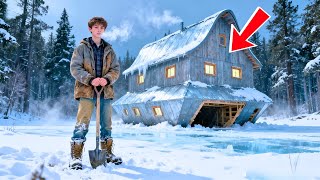
stiff freeze of fear. It was the focused stillness of recognition. His ears Angled forward and his head lowered slightly as he sensed something on the wind. He moved off the main track and toward a siding where one lone box car sat at a slight tilt, one end lifted by a settled railed as if the earth had shrugged under it. The car had once been painted a proud freight red, but now it was mostly rust brown, the color of old dried blood. Snow had drifted up along its wheels and weeds dead, stiff, winter strangled rows around
its undercarriage. No footprints marked the snow around it. No tire tracks, no human sign. It looked forgotten in the way certain people look forgotten when they stand too long in the same place. Luke's first instinct was to distrust too perfect. In the war, untouched places were the places that had been prepared. But this was Wyoming winter, not a hostile alley. Still, his body didn't know the difference. His shoulders tightened, his eyes scanned. Door seams, roof line, any hint of Movement. Cota approached and sniffed the lower edge of the sliding door, then the woodstep beneath it.
He pawed once lightly as if tapping a friend on the shoulder. Then he scratched again, soft, not frantic. Here. Luke understood the message without words. The dog wasn't scared. He was selecting. Luke put a hand on the metal door. It was cold enough to sting through his glove. He pulled. The door didn't budge at first. Rust and ice held it like a grudge. He Braced his boots, leaned his weight, and hauled again. The metal shrieked an awful sound, iron complaining against iron, and the door gave a few inches. He pulled harder, the noise echoing across
the empty yard like a warning shot. Cota flinched only slightly, then sneezed once, a sharp snort that felt absurdly domestic in the middle of this frozen industrial graveyard. Luke almost smiled. Almost. He opened the door enough to slip inside, then turned and Gestured for Kota. The German Shepherd jumped up without hesitation and disappeared into the darkness, nails clicking once on the wooden floor. Inside the box car smelled of dry wood, dust, and old freight something faintly like grain and metal. It was dark, but not damp. Luke swept his phone light across the interior. The floorboards
were surprisingly intact, thick planks built to carry weight. The walls were lined with wooden slats over an iron Frame, and in a few places the boards had shrunk, leaving thin seams where starlight threaded in like pale needles. The roof looked solid. No visible leaks, no snow drifting inside. The wind outside still howled, but in here it softened. Turned into a distant complaint. Luke felt the smallest loosening in his chest. Not relief exactly, more like the first moment you realize a storm can't reach you in full. Cota moved ahead, nose low, circling Slowly. His body language
was calm but thorough, checking corners, checking shadows, verifying what Luke already wanted to believe. Empty. Safe enough. When Cota returned to Luke's side, he bumped Luke's thigh with his shoulder, the canine version of a nod. Luke exhaled. He hadn't realized he'd been holding his breath again. He set the duffel down and sat on it for a moment, listening. The box car creaked softly as the wind pushed against it. Somewhere Outside, a piece of loose metal clanged faintly, a lonely percussion. Luke let his mind drift back to the house. Because grief is a stubborn animal, it
keeps returning to the place it was wounded, as if repeating the path will somehow change the ending. He saw Hannah's eyes, saw Dererick's silhouette in the doorway, saw the photo that had been replaced on the dresser, and he felt the old humiliating thought. Maybe if I had come home sooner. But war Doesn't work like that. You don't choose the calendar. You choose survival. And sometimes survival chooses its own costs. He had returned expecting to carry his injuries in silence and be grateful for peace. Instead, he had walked into a different battlefield one with polite words
and final doors. Luke's hands clenched and unclenched on his knees, his jaw tightened. He had been trained to endure pain, but he hadn't been trained to endure being Unnecessary. Cota sat facing the open door, ears tracking the soundsscape outside. The dog's calm presence made Luke feel less alone in a way that was both comforting and embarrassing. A man who could navigate gunfire was now being held together by a dog in an abandoned box car. The irony tasted bitter. Then again, the world had always had a sense of humor, dark mythic humor, like gods laughing behind
clouds. Luke stood and walked the length of the car, counting steps the way he did when measuring spaces unconsciously, roughly 30 ft long, maybe eight wide. Enough room to lie down without curling like a question mark. Enough room to breathe without hearing strangers. He tested a few boards with his boot, solid. He shown the light up at the ceiling joints. No obvious holes. He checked the sliding door track. It would close partially, but not all the way. That Meant wind could slip in. And in this cold, a small gap could become a killer over a
long night. Luke's mind began to shift from grief to problem solving. The survival part of him taking the wheel. Seal the gap. Create a windbreak. Find insulation. He didn't have those things yet, but he had something else. Stubbornness. Stubbornness had kept him alive. Stubbornness had kept him from collapsing on Hannah's porch and begging To be chosen again. He moved back toward the entrance and glanced down near the door. In the phone light, something small caught a glint metal against wood. Luke crouched, fingers probing between two floor planks where the boards didn't sit perfectly flush. He
found the edge of a tin cold, gritty with rust. He pried with his pocketk knife until it came loose enough to pull out. A small tin box, dented and stained, the kind someone might have used for nails or Matches. Luke's heart thudded once, not from hope, but from instinct. Hidden things meant stories, and stories meant consequences. He opened it carefully. Inside were a few old coins, pennies, and nickels, worn smooth, an ancient spool of thread, and a folded scrap of paper, yellowed and stiff. Luke unfolded the paper with fingers that suddenly felt clumsy. The handwriting
was faded, but legible, slanted, slightly right, as if written By someone trying to keep moving even while writing. It wasn't a long message. It didn't need to be. It was a voice from another winter, another person who had been pushed to the edge of the world and refused to fall off. The note said simply, "If you found this place, you're starting over. Don't call yourself scrap. You're stronger than you think." Luke stared at the words until they blurred. The line hit him in a place he didn't know was still alive. Scrap. That's what he felt
like. Used up. thrown aside, replaced by something easier. A man who came home and discovered his life had continued without him. He read the sentence again, then once more, like a prayer he wasn't sure he believed. Cota padded closer and sat beside him, head tilted, nostrils flaring as he sniffed the paper. Then Luke's hand. The dog's warm breath fogged the air. Luke swallowed hard. He folded the note and slid it back into The tin. then closed the lid. The sound was small click, but it felt like sealing a pact. A message from a stranger preserved
in metal surviving rust and cold had reached him on the worst night of his return. Luke didn't believe in signs. Not usually, but he believed in timing, and this timing was too sharp to ignore. He tucked the tin into his duffel like it was worth more than coins. Then he looked around the empty box car again, seeing it Differently now. Not as a coffin, not as a punishment, as a starting line. His lips twitched, and this time the smile almost arrived, thin but real. "Well," he said softly, voice echoing in the hollow space, "Home sweet
home, huh?" It was half joke, half challenge spoken not to the air, but to the part of him that wanted to lie down in the snow and let everything end. He glanced at Cota. No neighbors, no drama. Cota sneezed again, a sharp, offended snort, and then Sat taller as if in agreement or as if to say, "Drama is for humans. I'm here for survival." Luke let out a quiet breath that might have become laughter if his ribs weren't still full of grief. Outside, the wind scraped along the car's metal skin, but inside the sound was
distant. Luke laid out an old blanket from his duffel, not enough, but something, and he sat with his back against the wall. Cota curled beside him, warm and solid. Luke stared At the thin seams of starlight in the wooden slats, and told himself one thing. The way you tell yourself a truth when you have nothing else. Tomorrow he would make this place hold. Tonight it only had to not kill them. That was the first lesson of building a life. Sometimes the first victory is simply staying alive long enough to plan the next one. Morning arrived
without kindness. The sky was the color of unwashed steel, and the cold pressed Into the box car as if it had found every seam in the wood slats, and decided to test Luke's will. Luke woke before the light fully settled, not because he was rested, but because his body had never learned to trust silence. He lay still for a moment, listening, the way he had listened on missions, cataloging the creek of the car, the hiss of wind outside, the distant clank of something loose in the yard. Beside him, Cota stirred, lifting his Head and blinking
those amber eyes that always seemed to wake already aware. The German Shepherd's breath fogged the air in small clouds, and his ears angled toward the open gap in the door, as if the wind were speaking in a language only he understood. Luke's joints achd from sleeping on hard planks, but pain was familiar. It didn't frighten him the way uncertainty did. He sat up and rubbed his face, fingers catching on stubble. And for the first time since The porch, since Hannah's confession, he felt his mind click into a different mode. Problem solving. Grief had been loud
in his chest all night, but daylight made it practical. A man can cry later. First, he has to not freeze. He stood and looked around the empty box car again, but it didn't look empty the way it had the night before. It looked like a structure with possibilities, like a ruined temple you could still pray in if you knew where to place your Hands. The door didn't close fully. That was the first problem. The seams between boards let in thin lines of wind. That was the second. The floor was solid but cold. That was the
third. Luke found himself thinking in lists the same way he used to think in the field. Mission objective. Create shelter that holds heat. threat assessment, fire risk, smoke, discovery by anyone with authority, resources, whatever the yard and town had thrown away. Time frame Today because winter didn't negotiate. He glanced at Cota and tried a small joke because humor was a tool, too. All right, Sergeant, Luke murmured, voice rough from cold and sleeplessness. We're building. Cota's tail made one slow sweep, not excited, but approving like a foreman acknowledging the plan. Luke stepped outside, and the wind
hit him hard enough to steal a breath. The railard stretched pale and silent, tracks half buried in drifts, abandoned Cars wearing snow like old coats. His truck sat where he'd left it, a dark block against the white. He went to it first, rummaged for anything useful. A roll of duct tape that had lived in the glove box for years, a small hatchet, a pair of work gloves, and a battered thermos with a swallow of coffee gone cold. He drank it anyway. Cold coffee was still caffeine, and caffeine was still a kind of mercy. Cota trotted
around the truck, nose down, checking The perimeter with methodical seriousness. He paused by the tires, sniffed, then looked up at Luke as if to say, "No one came while you slept." Luke felt a small, surprising loosening in his chest. That he realized was what safety felt like now, a dog confirming the night didn't swallow you. He walked deeper into the yard, eyes scanning the way they always did, finding useful the way others found trash. There was a pallet leaning against a pile of old Ties, weathered but intact. Luke tested it with his hands. The wood
held. A pallet could become a raised platform off the floor, away from the cold that crawled up from below like a hungry thing. Near it lay a torn tarp, stiff with frost, one edge frayed, but the canvas was heavy enough to block wind. Luke rolled it up and hauled it back toward the box car, the motion warming his muscles. He found burlap sacks, old grain bags, stuffed in a corner near a Rusted loading dock, damp at the edges, but mostly dry. He shook them out, the fabric crackling. Burlap would trap air if packed right, and
trapped air meant insulation. He remembered a long ago winter training exercise where an older guy had said, half laughing, "Air is the real blanket. You just need something to hold it still." Luke didn't remember the man's name, but he remembered the lesson. He collected straw, too. Dirty but dry, likely fallen from some Livestock car years ago. Straw wasn't pretty, but it was honest. It didn't care about pride. By late morning, Luke had made several trips, each one a small victory against the numbness that wanted to settle into his bones. He moved with purpose now, dragging,
carrying, stacking. His breath came out in harsh white bursts, and his hands went red inside his gloves. Cota stayed close, occasionally darting ahead to investigate a noise, then returning, Eyes bright, shoulders squared, acting like a guard who took his role personally. Once, when Luke struggled to shove a pallet through the box car door, Cota pressed his shoulder against the wood and pushed more enthusiastic than effective, but so earnest, Luke let out a short laugh that startled him. The laugh didn't fix anything, but it reminded him that he was still capable of producing a sound that
wasn't despair. Inside the box car, Luke Started organizing the space with the same instincts that had made him good at survival. Everything had a place, and nothing should be left to chance. He dragged the pallet to the far end, away from the door gap, and propped it on blocks of scrap wood he found outside. He checked that it didn't wobble, then layered straw beneath it, creating a cushion of trapped air. On top, he spread the tarp, then an old blanket from his duffel. It wasn't comfortable, But comfort wasn't the goal. Warmth was. He took burlap
sacks and began stuffing them into the biggest gaps between wall slats. Not tight like stuffing a suitcase, but loose enough to hold air. Over the burlap, he taped flattened cardboard and scraps of paper he found in the yard, creating a crude barrier. The work made his fingers ache, but the ache felt clean. It was the ache of building, not the ache of being left behind. Cota settled near the door, half in shadow, ears alert. Luke noticed that the dog chose that spot instinctively, close enough to monitor the entrance, far enough to avoid direct drafts. His
body was angled toward the outside, but his eyes flicked back to Luke occasionally, as if checking that Luke was still there. Luke had always known dogs were loyal, but war had made loyalty into a sacred thing. Cota wasn't just a pet. He was witness, anchor, a Living reminder that Luke had once been someone worth following. As Luke worked, his mind kept trying to drag him back to the house to Hannah's face and Dererick's presence like a new lock on an old door. The thoughts came in sneaky waves. Maybe I should have stayed calmer. Maybe I
should have fought. Maybe I should have begged. But each time he forced himself to return to the immediate problem in front of him because the immediate problem was Solvable. Hannah's choices were not. He could fix a wall seam. He could not fix time. He could patch a draft. He could not patch the months where Hannah slept alone. Survival, he realized, is sometimes choosing the problem you can actually touch. Around midday, Luke paused, hands on his knees, breathing hard. His stomach growled, an angry reminder that he hadn't eaten since the night before. He had a couple
of protein bars in the truck. He retrieved them and Split one with Kota. The dog took it gently, chewing with polite efficiency, then licked Luke's fingers, eyes soft. Luke swallowed his own half and felt the small energy return. It wasn't much, but it was enough to keep moving. He didn't let himself think about how he had once come home expecting a hot meal and a warm bed. He didn't let himself imagine Hannah cooking dinner with Derek in the kitchen. If he let that image grow, it would swallow the day. After eating, Luke pulled the tin
box from his duffel. The metal felt colder than everything else, as if it had stored winter inside it. He opened it again, partly to confirm it was real, partly because the note inside had become a strange kind of compass. The coins looked old and worn, and the spool of thread was frayed at the end, but usable. Then he unfolded the paper once more. The handwriting seemed steadier in daylight, and the words landed with different weight now That Luke was actively starting over instead of merely hiding. If you found this place, you're starting over. Don't call
yourself scrap. You're stronger than you think. He stared at the line, "Don't call yourself scrap." until something in his throat tightened. Scrap. The word was cruel because it was accurate to how he felt. something discarded, something replaced, something meant to be melted down into something else. He thought of His service, of the way the world clapped for soldiers on holidays and then forgot them on Tuesdays. He thought of Hannah's quiet tiredness, of how she had waited until her waiting became a wound. He thought of Derek, ordinary and present, and how presence can sometimes beat devotion.
Luke folded the note carefully like it was fragile and slid it into the inside pocket of his jacket instead of back into the tin. The paper warmed slightly against his chest, and That warmth felt symbolic in a way he normally would have mocked, but he wasn't in the mood to mock anything that kept him upright. Cota watched him do it, then sneezed once, as if the universe needed to puncture the drama with a pin. Luke smirked. Yeah, he muttered. I know. I'm getting sentimental. Cota's tail thumped once against the wooden floor more like a gavvel
than a wag declaring the sentiment aloud. As the afternoon faded Toward early winter dusk, Luke finished sealing the largest gaps and tested the space by standing still and listening. The wind still existed, but it no longer had full access. The box car felt less like a tomb and more like a shell. He lay down on the pallet platform and stared at the ceiling, seeing thin slivers of light where boards didn't meet perfectly. He could fix those tomorrow. Today, he had done enough. He sat up and looked at Cota. "We're not Dead," Luke said softly, as
if reporting to someone who cared. "That's something." Cota walked over and pressed his head briefly into Luke's side. the canine version of a hug that doesn't embarrass either party. Luke's eyes stung and he blinked hard. Night came quickly. The box car cooled again, but now Luke had a barrier between himself and the floor and the drafts were reduced to whispers. He curled under the blanket, boots still on because old Habits die hard, and because a man who's been betrayed doesn't easily relax. Cota curled at the edge of the pallet, close enough to share heat, facing
the door as if guarding Luke's sleep like a sacred duty. Luke's mind tried once more to replay the porch, the door closing, Hannah's voice. He forced himself to focus on the note against his chest, the work he'd done with his hands, the small fortress he had built out of other people's leftovers. For the first time Since the divorce became real, his breathing slowed. Not because he was healed, but because he was occupied by a purpose that didn't ask for permission. His eyelids grew heavy. He drifted into sleep in shallow waves. 2 hours, maybe three. Yet
even that small surrender felt like a miracle. Before he fully slipped under, he whispered into the dark, half prayer, half joke, "No neighbors, no drama." Cota exhaled, warm and steady, and the box car held them Through the night. The next morning, the cold felt less murderous, not because winter had softened, but because Luke had stolen a little ground from it. He woke to a pale strip of light seeping through the slats, and the steady warmth of Cota's body pressed against the edge of the pallet platform. For a few seconds, he didn't remember why his chest
hurt. Then, memory returned like a blade sliding back into its sheath. Quiet, practiced, inevitable. Hannah, the porch, the polite door. Luke stared at the ceiling, then reached into his jacket pocket and touched the folded note he had kept close. The paper was crinkled now, warmed by his body heat, as if the message was slowly becoming part of him. "Don't call yourself scrap," he exhaled once, long and controlled, then sat up. "All right," he murmured, more to his own spine than to the room. We keep going. Cota rose immediately, shook once fur rippling Like a rug
snapped clean, then sneezed, a sharp comedic punctuation to Luke's seriousness. Luke snorted. Yeah. Yeah. Morning briefing. Survive and don't get dramatic. He stepped outside to fetch more straw from where he'd stacked it. And that was when he saw footprints cutting across the snow. Not old, not windb blurred, fresh. His body reacted before his mind did. Shoulders tightening, breath shortening, eyes Scanning for movement. Cota's ears snapped forward. The German Shepherd's posture shifted from companion to sentinel. Weight balanced, tail low, gaze fixed toward the tracks. A man emerged from behind a rusted maintenance shed, walking like someone
who wanted to be heard. Boots heavy, steps deliberate. He was in his early 40s, tall with a narrow build that made his coat hang straight on him like a uniform. His face was angular, sharp-nosed, with a thin Mustache that looked carefully trimmed to project authority. The cold had reened his cheeks, but it hadn't softened his eyes. Those eyes were a washed out blue, bureaucratic and tired, the kind of eyes that had spent years reading rules and learning how to enjoy enforcing them. He carried a clipboard tucked under one arm like a shield. When he spoke,
his voice had a metallic edge as if it had been filed down to remove empathy. "You." He pointed with a gloved Finger at the box car. "Who's living in there?" Luke didn't flinch. He stepped forward just enough to place himself between the man and the door, not aggressive, simply positioned. "I am," Luke said. His voice was calm, but it carried the weight of someone who had learned calm can be louder than shouting. Cota stood slightly behind Luke's right leg, head level, eyes locked on the stranger. The man's gaze flicked to the dog, then back to
Luke With a faint tightening at the corners, annoyance at having to consider anything unpredictable. "Miles Carter," the man said, as if his name itself should open doors. "Rail assets inspector. This is railroad property. You're trespassing. He lifted the clipboard and tapped it with his pen like a judge announcing a sentence. You have 48 hours to vacate. Luke's stomach tightened, but he kept his face neutral. 48 hours was a joke in winter. 48 hours was how long it took a Man to freeze to death if he pretended pride was insulation. "This car is abandoned," Luke said
evenly. "No one's used it in years." Miles Carter's mouth twitched in a thin smile. the kind that never reached his eyes. "Abandoned or not, it belongs to the company," he replied. "And if you think the word abandoned is a magic spell, you're going to be disappointed." He paused, letting the wind fill the silence like an audience waiting for the punchline. Then He added, "Of course, there is another option." Luke recognized the tone immediately. In war, it came from men who sold favors. in peace. It came from men who sold permissions. Miles angled his clipboard downward
as if lowering the weapon to offer a bargain. Temporary rental can be arranged, he said. $300 a month, paid weekly in advance. The number landed between them like a brick. Luke's mind did quick math, automatic as breathing. He had some savings, but not Enough for that. Not after travel, not after the months of being paid in danger. And even if he had it, the principal tasted rotten, paying someone for air, for shelter that would otherwise rust in silence. Luke's jaw tightened, and for a second, anger sparked hot in his chest. He pictured Hannah's house glowing
warm for another man. And now this man in a clipboard trying to price tag Luke's survival. Loss, Luke realized, had multiple hands, And each one wore a polite glove. "I don't have that," Luke said. He didn't apologize for it. He simply stated it like weather. Miles shrugged, an elegant gesture of indifference. "Then you have 48 hours," he said, already turning slightly as if the conversation was complete. Then he stopped, glancing back with a look that suggested he enjoyed the leverage. "If you change your mind, you know where to find me. City office by the depot.
Don't wait too long. Snow Tends to bury people who hesitate." Cota let out a low huff, almost a growl. It wasn't loud, but it had meaning. Miles looked at the dog again, and something in his posture stiffened. He didn't like being evaluated by an animal. "Control your dog," he snapped. Cota, as if insulted by the implication that Luke needed to control him, sat down neatly and stared at Miles with perfect, solemn stillness. The expression was almost comical, an earnest, disciplined dog Watching a man lie through his teeth. Miles hesitated, unsettled by the silence, then scoffed
and walked away, boots crunching, clipboard tucked tight like he was carrying his own fragile importance. Luke stood in the wind after Miles disappeared, feeling the day tilt. 48 hours, the same number as an ultimatum from another life. He felt the pressure in his ribs, the old reflex to fight, to break rules, because rules were now trying to break him. But he Forced himself to breathe. Cota stood and pressed his shoulder against Luke's thigh, grounding him. Luke looked down at the dog and said, half bitter, half amused, "Congratulations! We have a landlord now!" Cota sneezed as
if refusing to accept that title for miles. Luke almost smiled again, but the smile didn't last. He had a problem, and problems required solutions. He drove into town that afternoon not to beg Hannah not to argue with Miles, but to Work. Work was something he could control. Ash Creek's main street looked the same. Small, functional, pretending winter was normal. But now Luke noticed the way faces turned. People didn't stare openly. They looked and then looked away like guilt had taught them manners. Rumors were already moving, slick as ice. He could feel them without hearing them.
Veteran comes home and finds his wife with someone else. Veteran sleeps in a rail car like a Vagrant. Veteran must have done something to deserve it. People loved stories that made other people's pain feel earned. It made their own lives feel safer. The first place Luke walked into was McNal's Hardware, a narrow store that smelled of oil, wood, and the faint bitterness of cheap coffee. Behind the counter stood Owen McNal, late 50s, thick around the middle, with a gray beard cut short, and hands like hammers. His eyes were sharp, but not unkind eyes that had
seen too many winters to waste time on cruelty. Owen had known Luke as a teenager, the quiet kid who fixed fences and didn't talk much about his father. Something in Luke's face must have answered questions Owen didn't ask because Owen simply nodded. "You back?" Owen said. "Not a question." Luke nodded. "Need work?" Luke replied. Owen studied him a moment, then jerked his chin toward the back. "Shelves, Inventory, some lifting," he said. "Pay's not fancy." Luke didn't care about fancy. He cared about coins in his pocket and a reason to keep his hands busy. I'll take
it. Over the next days, Luke did whatever the town offered that didn't require him to explain himself. Unloading feed bags at a ranch supply store, clearing snow from the backst steps of the diner, fixing a sagging shed door for an elderly couple who didn't ask questions, but watched Cota With soft eyes like he reminded them of a dog they'd once loved. Luke kept his head down. He didn't argue with the whispers. He didn't correct the narrative. "Let them talk," he thought. "Talking doesn't feed you. Work feeds you." Cota followed him everywhere, moving through town like
a silent bodyguard. People would glance at the dog, then at Luke, then decide not to say what they were thinking. And sometimes Cota would do that strange Accidental comedy he did. He would sit with perfect seriousness, head slightly tilted as someone spun a rumor nearby, and the person would fumble and fall quiet under the dog's calm stare, suddenly aware they were being ridiculous. It was as if Cota's dignity was contagious, and Luke absorbed it by proximity. On the third afternoon, as Luke returned to the railard carrying a bundle of discarded newspapers Owen had quietly handed
him for starting fires, Owen had said, though Luke hadn't mentioned fire, he noticed an old man standing near the box car. The man leaned on a cane, posture slightly bent, but his presence was steady, rooted. He looked 72, maybe older, with a weathered face that seemed carved by sun and wind. His skin was leathery and tan, his white hair thin and tucked under a faded railroad cap. A beard, also white, covered his jaw in a rough halo, and his eyes were dark and sharp, the eyes of Someone who had watched machines move and people lie,
and still learned how to tell truth from noise. He wore a heavy wool coat patched at the elbows and his hands gnarled. Veained suggested decades of hard work. The man studied the insulation Luke had stuffed into the wall gaps and he made a small sound of disapproval, not judgment. Assessment. "You're packing that wrong," the old man said. His voice was grally but calm, the voice of someone who didn't waste words. Luke stiffened automatically. "Who are you?" he asked. The old man glanced at Cota, then back at Luke. Harold Price, he said, 40 years on the
railroad, retired. And before you worry, I'm not here to throw you out. He pointed at the burlap. If you jam it too tight, you lose the air pockets. Air is what keeps you warm. Pack it loose, then cover it. Luke blinked, surprised by the practicality. Why are you helping? Luke asked. Harold shrugged. A small movement That carried history. Because I slept in box cars when I was young, he said. Because I've seen men freeze for pride and because. His eyes softened just a fraction. Because you've got that look. Luke knew what look he meant. The
look of someone trying not to break. Harold tapped his cane toward the corner where Luke had been considering building a small stove area someday. And if you're thinking about fire, Harold added, "You'll burn through that wood Eventually. You need a metal sheet under your hearthstones. Luke opened his mouth to say he didn't have one. Harold raised a hand, stopping him. Follow me. He led Luke to a pile of discarded equipment parts half buried in snow behind an old maintenance platform. Harold moved with slow certainty, using his cane like a pointer. He hooked the cane under
a rusted coupling and shifted it aside with surprising strength. Beneath it lay a square piece of sheet Metal about 2 ft wide. Harold nodded once as if presenting treasure. That'll do, he said. Put it under the stones. Keeps the floor from charring. Luke lifted it. It was heavy, cold, and oddly reassuring. A foundation for fire. A promise that warmth wouldn't become disaster. Luke looked at Harold, suspicion still lingering because life had recently taught him not to trust gifts. What do you want?" he asked bluntly. Harold's mouth twitched, almost amused. "I want you to stop doing
dumb things," he said. "And I want that dog to keep making liars uncomfortable. That part's entertaining." Cota, as if he understood his role in local justice, sat down and stared solemnly at Harold. Harold chuckled once. A soft sound like a match struck. "Good boy," he muttered. Then he sobered. "Miles Carter," Harold said, spitting the name like something bitter. "He'll squeeze you if you let him, but You don't need to let him own your spine. Work, save, and don't freeze." He pointed his cane at Luke's chest. You're building more than a shelter in there. Don't forget
that. Luke held the sheet metal like it was more valuable than money. For the first time in days, he felt something like, "Not hope, not yet, but the beginning of it. Proof that not everyone in town wanted him to fail." He nodded once. "Thank you," he said, and the words felt unfamiliar because Gratitude had been rare lately. Harold waved it off. "Pack your burlap loose," he repeated, already turning away. "And seal those seams before the next wind decides to get creative." That night, Luke adjusted the insulation the way Harold had shown him, loosening the burlap,
layering paper over it, and he slid the sheet metal into the corner where a future hearth would sit. Cota watched from his post, ears tracking the night. Luke tucked the folded note back Against his chest, feeling the paper and the metal in the box car as two different kinds of armor, one for the body, one for the spirit. When he lay down, exhaustion hit him cleanly, earned. The ultimatum still hung over him. 48 hours had become a countdown in his mind. But for the first time, he had a strategy, not just a shelter. He closed
his eyes, and his breathing slowed. Sleep didn't come as a gentle wave. It came as a short, hard Surrender. But it came. And in a winter that charged rent for air, that was a victory. The storm announced itself the way angry gods do, quiet at first, then absolute. Snow began as polite flakes, drifting lazily across the railyard like ash from a distant fire, and by late afternoon it turned dense and relentless. A white curtain dragged over the world. The wind rose next, not as a breeze, but as a voice, long and feral, scraping across metal
and wood until the Box car seemed to hum with tension. Luke stood outside for a moment, watching the sky bruise darker, feeling that familiar pressure in his ears that meant the air was changing. Harold Price had warned him about creative wind, and now the wind arrived like an artist with a grudge. Luke didn't wait for the town to tell him it was serious. He moved. He pulled the sliding door as close as it would go and wedged a board in the gap. He reinforced seams with burlap and Paper, the way Harold had taught him, loose
enough to trap air, tight enough to block the worst of the drafts. Cota watched every motion with the calm focus of a partner who trusted the plan, but still checked the exits. The German Shepherd's fur fluffed with the cold, his sable coat thick like armor, amber eyes bright, ears angled constantly as if he could hear tomorrow's trouble arriving early. By dusk, the power in town died. Luke didn't see the lights go Out from inside the box car, but he felt the change, an absence in the horizon glow. A darkness deeper than night. The storm swallowed
sound. Tracks vanished under fresh drifts. Even the usual distant hum of traffic disappeared, replaced by the endless howl of wind and the occasional metallic clank as some loose piece of yard equipment surrendered to the gusts. Luke checked the small corner where he'd planned a safe hearth. He wasn't reckless enough To build a roaring fire inside a wooden car, not without proper ventilation and protection. But he had the metal sheet Harold had given him, and he had stones he'd collected near a frozen drainage ditch behind the yard, flat enough to stack, heavy enough to hold heat.
He laid the sheet down first, then arranged the stones in a low ring, building a shallow pit like a careful promise. His hands shook slightly, not from fear, but from the precision required. In this Cold, a mistake would be expensive. He had found a few matches in his truck's console the day before 4, tucked in a paper sleeve from a forgotten diner meal. He'd guarded them like bullets. Now, he decided, was not the time to be stingy with survival. He built the smallest possible nest of dry paper and splintered wood, then a few chunks of
coal he'd scavenged from the yard. black stones that looked like they held night inside them. He struck one match. The Flare was bright, almost shocking in the dim. He touched it to the paper. The flame caught, shy at first, then steady. Smoke rose immediately, and Luke watched it like a man watching a fuse. He adjusted the door gap and cracked a slat higher on the opposite side, using a stick to prop a loose board just enough to create a crossdraft. The smoke obeyed physics and left like a reluctant guest pulled toward the exit. Luke exhaled.
He fed the fire slowly, not for spectacle, But for endurance. Heat began to creep into the box car. Not much, but enough to turn the air from deadly to merely harsh. Cota settled beside Luke's legs, close enough that Luke could feel the dog's warmth like a living blanket. The shepherd's breathing was steady, his body a compact furnace of muscle and loyalty. Luke thought, with a strange bitterness softened by humor, that Cota was the only creature in Ash Creek who had never asked him to prove his worth. The dog simply chose him every day. Outside, the
wind screamed and pounded. But inside, the fire's glow painted the walls with trembling gold, turning gaps and patched seams into a map of stubbornness. Luke's hands, rough and cracked, hovered over the heat, and for a moment he felt almost grateful, not for the storm, for the fact that he had something to fight with. Then came the knock. At first Luke thought it was the wind throwing debris against the door, But it happened again. Three sharp wraps. Human rhythm. Urgent. Cota's head snapped up, ears forward, a low growl vibrating in his chest. Luke rose quickly, moving
to the door. He didn't open it wide. He slid it just enough to peer out into the white chaos. Snow whipped sideways, stinging his face like thrown sand. A figure stood there, hunched under the storm, shoulders rounded, breath visible in frantic bursts. It was a woman, mid-40s, average Height, bundled in a heavy coat, hair dark and pulled back, but strands had escaped and were plastered to her forehead with ice. Her skin was olive toned, cheeks red with cold, eyes dark and fierce even through exhaustion. She carried a large insulated food container, the kind used for
catering, hugged tight against her chest as if it were a child. "Luke Bennett!" she shouted over the wind, voice rough but strong. Open up before we both turn into Statues. Luke recognized her from the diner, the late night place with the flickering sign and the smell of coffee that could wake the dead. Evelyn Park. She owned it, ran it, scolded teenagers kindly, and had once kicked a drunk man out with nothing but a glare and a mop handle. In town, people said she was too much, which usually meant she had boundaries and wasn't ashamed of
them. Evelyn's face held that kind of toughness that Comes from surviving more than one life. A firm jaw, eyebrows that lifted like questions, and eyes that didn't avert themselves when confronted with pain. Luke slid the door further and pulled her inside. The wind tried to follow, but Luke shoved it back with the door and a wedgeboard. Evelyn staggered into the box car, stamping snow from her boots. "Before you say anything," she said, breathing hard. "This isn't charity." She lifted the insulated Container like a badge. "This is payment," Luke frowned. "Payment for what?" Evelyn's mouth tightened,
then softened. "For something you did out there," she said, nodding vaguely toward the world beyond town. "I don't know the details. I don't need them, but I've seen the way veterans look when they order coffee at 2:00 a.m. like it's the only thing keeping them anchored. You covered a tab for a kid once, Owen told me. Said you didn't even let the kid Thank you. So don't insult me by calling this pity. Luke's throat tightened in an unexpected place. He remembered that night at McN's Hardware when Owen mentioned a teen who couldn't pay for gloves.
Luke had slipped cash on the counter and walked out. He had done it because the kid reminded him of himself. Cold hands, pride, no safety net. He hadn't thought it would ever circle back. "You didn't have to," Luke said quietly. Evelyn snorted. "I didn't have To, but I wanted to. There's a difference. Also, my place lost power. If I can't keep soup warm, I'm basically committing a crime against humanity." She set the container down near the fire pit, eyes flicking to Luke's setup. Her expression shifted to impressed caution. "Small fire, good draft control. Who taught
you?" "Herald Price," Luke said. Evelyn nodded once, as if that explained the world. "Old Harold, the man's more useful than the town council." Another Knock hit the door harder this time, more frantic. Cota moved to the entrance immediately, body low, stance wide like a gatekeeper. Luke slid the door a crack. A man and a woman stood there with a child between them, all three wrapped in blankets, faces pale with cold. Their car had died on the road, they shouted. Their roof had sagged under snow. They'd been walking, following the tracks because the tracks were the
only thing that didn't Disappear. Luke didn't ask for names first. He pulled them in. Then another knock and another. The box car began to fill with human breath and fear. A neighbor, Luke, vaguely recognized from the grocery store, round-faced, mustache frosted white, came in carrying two small kids, one crying quietly with lips nearly blue. A young couple arrived, soaked and trembling, saying their furnace had failed, and the landlord's phone went to voicemail like it always Did when money was involved. Someone else stumbled in with a bandaged hand, muttering about a fall through a drift where
the steps used to be. Each time the door cracked, the storm tried to invade like a jealous monster, and each time Luke shoved it back with wood and muscle, making the box car's interior a shrinking island of heat. Evelyn opened her container and ladled soup into whatever cups existed. Tin, mugs, a dented thermostop, moving with the brisk Authority of someone who had fed people for a living and wasn't about to stop now because the sky was angry. Luke rationed the fire carefully. He fed it coal in small measured pieces, keeping it hot enough to warm
stones, not hot enough to become reckless. He adjusted ventilation again and again, watching smoke patterns like a mathematician watching equations. Cota lay near the door, head up, ears alert, body positioned like a living barricade. Every time the door opened, Cota shifted slightly, blocking drafts, eyes scanning the white outside as if daring the blizzard to try him. People began to quiet under the dog's calm, as if his steadiness infected them. Hours passed. How many? Luke couldn't tell. Time and storms becomes a myth. It stretches and folds. Then came a knock that didn't sound frantic. It sounded
hesitant. Luke turned toward the door and his heart did something cruel inside his Ribs. He knew that rhythm. He slid the door open just enough to see. Hannah stood there with Derek beside her. Both of them coated in snow like ghosts of choices. Hannah's face was drained pale, her hair shoved under a knit cap, frost clinging to her eyelashes. Derek's shoulders were hunched, his jaw clenched against cold and shame. Their hands were empty. No clever words, no authority, just need. Hannah's eyes met Luke's, wide and terrified, and for a second the Wind seemed to hush
as if even the storm wanted to hear what Luke would do. Inside the box car, people fell silent. Evelyn paused mid ladle. Someone's child whimpered. Cota stood up slowly, not barking, not lunging, just rising like a sentinel in a temple, watching the threshold. Luke felt the old heat of betrayal surge, sharp and primal. And then he felt something else rise behind it. The memory of Tobias in the old story he'd half read in his own head. The message in the tin. The lesson he was learning the hard way. Home is what you build. And sometimes
the truest test of home is whether it can hold people you don't want to see. Luke stared at Hannah. He saw her cold, her fear, her humanity. He saw Dererick's trembling hands, the way his eyes wouldn't quite meet Luke's. A long silence stretched between them, long as railroad tracks, long as pride. Luke could have shut the door. He could have made the storm do His vengeance for him. It would have been easy. It would have felt righteous for one bitter second. Then he would have to live with it forever. Luke stepped back from the door.
"Come in," he said, voice but steady. "Argue with me in spring." Hannah's face crumpled with relief and shock. Derek swallowed hard, shame flushing his cheeks even through the cold. They stepped inside, bodies trembling, and Luke shoved the door closed again, Pushing the wedge board into place. The box car felt smaller now, packed with warmth and breath and tangled histories. Evelyn handed Hannah a cup of soup without comment, her eyes daring anyone to be petty while the world outside tried to kill them. Luke returned to the fire, fed it one careful piece of coal, adjusted the
draft, and made the smallest nod to himself. Survive first. Cota lay down at the door again, body aligned like a barrier, eyes Half-litted, but watchful. In that moment, the dog looked less like an animal and more like a mythg guardian of a threshold, keeper of a fragile piece, the kind of creature the old stories would have called a gate god, wearing fur instead of armor. The blizzard battered the box car's skin, but inside the iron dragon's belly held, and for one brutal night, a man who had lost his home became the reason other people didn't
lose theirs. The storm didn't end Like a story ends. It didn't bow, apologize, or give a neat closing sentence. It simply thinned, exhausted itself, and drifted away, leaving behind a silence so wide it felt like the world had been emptied and refilled with a different kind of air. On the morning, the wind finally loosened its grip. Luke slid the box car door open and faced a landscape that didn't look real. Snow rose in 5-ft drifts, hard packed like sculpted dunes. The railyard was a white Desert. Tracks were buried. Old freight cars wore thick caps of
snow like ancient crowns. In the distance, Ash Creek looked bruised roofs sagging, tree limbs snapped, roads erased. The storm had not just visited, it had judged. Inside the box car, people stirred slowly, blinking like survivors of a shipwreck. Children rubbed sleep from their eyes. Mothers checked cheeks for warmth. Evelyn Park moved through the cramped space with the brisk tenderness Of someone who had fed panic until it became quiet. Her dark hair was still pulled back, but loose strands clung to her temples, and her eyes were ringing with fatigue. Yet she kept her shoulders squared as
if she refused to let exhaustion make her smaller. Luke watched her for a moment and realized how rare it was to meet someone whose strength didn't announce itself with noise. Her strength was practical. It carried soup. It told fear to sit down. Cota rose and stretched, nails clicking on wood, then walked to the doorway and stood like a border guard. He sniffed the air once, then looked back at Luke as if issuing a report. Storm's gone. Trouble remains. Luke stepped out first, boots sinking into drifted snow. The cold still cut, but it was a clean
cut now, not the ragged sawing of wind. Behind him, one by one, the others emerged, faces squinting at the harsh brightness of sun on white. A few people Wept quietly. Not dramatic sobs, just the involuntary leaking that happens when your body realizes it is not going to die today. The town's damage became clearer as they walked back in small groups, following the path they had carved in the storm's last hours. A roof had caved at the Pendleton house. A garage door had been torn loose and folded like paper. The diner sign had snapped and hung
crooked, swinging slowly in the breeze like it was trying To wave. Vehicles sat half buried, useless, their engines silent. The church had lost part of its steeple, which lay on the ground like a fallen finger pointing at the sky in accusation. The storm had taken pride and turned it into wreckage. Word traveled fast once people could move again. It traveled faster than plows, faster than repairs, faster than shame. The box car saved them. The veteran in the railard saved them. Some people said It with gratitude. Some said it with disbelief, as if it offended their
earlier judgment. But the truth didn't care about the feelings of those it corrected. It simply stood there in the snow, undeniable as breath. 2 days later, when roads were barely passable and the town was still digging itself out, Luke saw a familiar figure coming toward the railard. Miles Carter. He walked differently now, his boots still crunched with deliberate weight, and his Coat still hung straight like a uniform, but the metallic edge in his posture was gone. He looked thinner somehow, not in body, but in presence, like arrogance had been carved away by cold. His pale
blue eyes were rimmed with exhaustion, and the thin mustache that had once seemed carefully trimmed now looked like a weak line drawn to pretend control. He carried papers instead of a clipboard this time, held close to his chest, as if the documents might keep him warm. Cota stepped forward at the edge of the box car's doorway, ears angled, gaze steady. He didn't growl. He didn't threaten. He simply watched, the way a judge watches a man who has already been convicted by his own actions. Miles stopped a few feet away, glanced at the dog, then at
Luke, his throat worked as he swallowed. "Bennett," he said, voice quieter than before. Luke didn't invite him in. He stayed where he was, half in the shadow of the box car, Half in the winter sun, a man balanced between two worlds. "Carter," Luke replied. Miles held up the papers. "I came to talk about the property," he said. He tried to sound official, but the words landed with the awkwardness of a man reading lines he didn't fully believe. "This sighting, the land, the rail car." Luke folded his arms. He waited. In war, rushing conversation can get
you killed. In town politics, it can get you cheated. Miles cleared his Throat. There are records, he said, tapping the top page with a gloved finger. Old ones. The company released portions of this yard from active inventory years ago. It's complicated, but the short version is he hesitated as if pain had lodged in the sentence. This section wasn't supposed to be built as active asset. Luke's eyes narrowed. So you lied, he said. Not loud, just clean. Miles flinched. I enforced what I was told, he Muttered, which was the coward's cousin of truth. Then he looked
up, and for a moment the mask slipped enough to show something like guilt. After the storm, after I watched people come out of that box car alive, I requested an archive review. His mouth tightened. I didn't do it for you. I did it because if this ever becomes a story, and it will. I don't want my name to be the villain on the plaque. Luke almost laughed, but the humor was too sharp. Honest, Luke said. At least you're honest about being dishonest. Miles exhaled a thin breath. "There's an option," he said, voice steadier now. "A
legal occupancy agreement, possibly an adverse possession claim, depending on how long continuous habitation can be proven. It would need a sponsor, someone local respected enough to sign as witness, and a statement of community support." He held out the papers, not quite offering them, more like showing a Weapon without aiming it. If you want to formalize it, there's a path. Luke stared at the documents. The idea of legality felt strange. He'd been thrown out of one home by emotions and would now be granted another by paperwork. The world was absurd. The gods, whoever they were, had
a cruel sense of symmetry. Before Luke could respond, a cane tapped against frozen ground behind miles. Harold Price approached, moving slowly, but with the Unstoppable certainty of a man who had spent decades watching trains that did not stop for anyone. Harold's white beard was frosted at the tips, his railroad cap pulled low, his eyes dark and sharp as ever. He didn't look at Miles first. He looked at Luke. "He bothering you?" Harold asked, as if this were a simple matter of a dog chasing a rabbit. Miles stiffened. "Mr. price," he said, forced politeness. Harold's gaze
slid to him like a blade. "Carter," Harold said, and somehow made the name sound like an insult without raising his voice. "You finally brought something useful." Miles held up the papers a little higher. "I brought a legal pathway," he said. "With sponsorship?" Harold snorted. "Sponsorship," he repeated, tasting the word like it was spoiled milk. Then he looked at Luke again. You want to claim what you built, son? Luke's chest tightened at the word son. He wasn't used to it anymore. He Nodded once. "I want to stop being threatened for sleeping," Luke said. "I want to
stop paying rent to fear." Harold's mouth twitched, almost approving. "Then I'll sign," Harold said simply. He turned to Miles. "You want a respected local witness? Here I am, 40 years on the rails. Everyone in this county knows my name. He lifted his cane slightly like a stamp. I'll sign that boy's right to stay because he didn't just stay, he saved. Evelyn Park Appeared behind Harold, stepping through snow with the determined stride of someone who did not wait to be invited into the important moments. Her cheeks were still red from cold, her eyes bright with that
fierce practicality. I'll testify, she said, arms crossed. If anyone wants to pretend he didn't earn it, they can come explain themselves to me. She glanced at Miles. And I don't mean politely. Miles blinked as if unused to being Challenged by a woman who didn't flinch. More people drifted closer, drawn by the gravity of the moment. The mustached neighbor, Luke, had helped carry in. The young couple whose furnace had failed. a woman with a scarf wrapped high around her face, eyes soft with gratitude. They stood in a loose semicircle, not as a mob, but as a
jury deciding to correct its own earlier verdict. Luke felt something inside him shift, an ache easing, not because the past had Changed, but because the present was finally speaking truth out loud. Then Hannah and Dererick appeared at the edge of the yard, walking carefully over packed drifts. Hannah looked different in daylight, stripped of the storm's desperation and the porch's power. She was in her early 30s, slim, her blonde hair tucked under a hat, but loose curls escaped and caught sunlight like pale threads. Her face was drawn, eyes tired, lips pressed together as if holding back
Words that had been waiting for weeks. Derek, mid30s, broader in the shoulders, dark hair, clean shaven, stood slightly behind her like a man unsure where he belonged. His posture had the stiffness of someone who had slept with guilt curled under his ribs. Hannah stopped a few feet from Luke. She didn't look at the papers. She looked at him. And in her eyes, Luke saw something he hadn't seen on the porch. not defensiveness, not impatience, but remorse that had Finally thought enough to speak. "I'm not here to ask you to come back," she said, voice thin
but steady. "I'm not here to rewrite anything," she swallowed, and her breath puffed white. "I'm here because the town made you a villain to make themselves comfortable, and I let it happen." Her eyes glistened. "You didn't deserve that." Luke felt his throat tighten. He had imagined a hundred versions of this conversation. Angry, vindictive, Dramatic. This was quieter. This was harder. Hannah continued, "When you walked in and saw us, I was already gone in my mind. Not because you were bad, because I got tired of waiting for a man who came home but wasn't really home."
She shook her head quickly, as if stopping herself from turning it into an excuse. "But none of that makes it okay to let people call you worthless. You're not. She glanced at Cota briefly, then back at Luke. You saved us in that Storm. You saved me even when you didn't owe me anything. I needed to say the truth out loud where people could hear it. The yard was silent except for wind whispering over snow. Dererick stepped forward awkwardly. His face reened, not only from cold. "I I lived in your house," he said to Luke, voice
low. I drank coffee at your counter like it belonged to me. His hands flexed at his sides, nervous, "And you still opened that door," he swallowed. "I don't know What to do with that, but I know I owe you." Luke stared at him. The old anger rose again, but it didn't control him the way it once might have. He remembered the note, "Don't call yourself scrap. Scrap is what you become when you let other people define you." Luke didn't want to be defined by betrayal anymore. He wanted to be defined by what he chose now.
He looked at Hannah, then at Derek, then at the people gathered behind them. Harold with His cane like a staff. Evelyn with her arms crossed like a shield. Neighbors who had once turned away now standing close. Luke took a slow breath. The air burned his lungs. It felt honest. No one owns anyone's past forever, Luke said, voice calm, carrying. But everyone's responsible for their present, he nodded once toward Hannah. Thank you for telling the truth, he nodded toward Derek. And you don't repay me with guilt. Repay me by being decent From now on. A sound
like relief moved through the small crowd. Soft exhalations, quiet murmurss. Even Miles Carter seemed to loosen, though he didn't deserve relief yet. Harold grunted. Evelyn's mouth softened slightly, almost a smile. Cota sat down with solemn dignity, tail sweeping once over the snow, as if stamping approval on the moment. Luke took the papers from miles at last. They felt cold in his hands, but the weight wasn't just legal. It was symbolic. Proof that what he had built was real enough to be recognized. proof that a man could be thrown out of one home and still become
the foundation of another. He tucked the documents under his arm, then touched the folded note in his pocket like a quiet ritual. The storm had stripped the town bare. Now slowly truth was rebuilding it, and Luke, who had lost the battle of marriage, stood there in the snow, realizing that winning was never the Same thing as being strong. Luke didn't turn the box car into a castle. He turned it into a hinge, something small that could still hold a heavy door, something humble that could still change the direction of a life. After the storm, the
railyard looked like the rib cage of a giant buried beneath snow, but Luke moved through it with the steady rhythm of a man who had stopped waiting for rescue. The paperwork Miles Carter had brought was folded and stored in a Tin biscuit tin. Luke's new version of a safe along with the old note he'd found under the floorboards. He didn't treat either as a trophy. He treated them like tools. One protected his right to exist. The other protected his reason to keep existing. Cota followed him as always, a German Shepherd with a thick sable coat
and amber eyes that seemed to hold both mischief and vigilance. He had the posture of a working dog, even when he was simply standing still, as if the World might require his service at any second. The first change Luke made wasn't big. It was practical. He cut a proper vent near the roof line carefully, measured twice, hand steady, so smoke had a predictable way out. A safe fire wasn't just warmth. It was oxygen and discipline. He reinforced the hearth corner with the sheet metal Harold Price had given him. then laid another layer of flat stones,
creating a wider buffer between flame and wood. He Didn't trust luck. He trusted systems. After that, he scavenged a small window frame from a damaged shed on the edge of the yard, cleaned it, and built a simple opening on the box car's sun-facing side. When sunlight poured in for the first time, it didn't feel like luxury. It felt like the world admitting the box car was real. He made a second window later, smaller, just enough to break the claustrophobia of steel and slats. He hung a piece of cloth as a curtain. It Wasn't pretty, but
it let him decide when to be seen. That mattered more than beauty. He built a narrow porch at the door using salvaged boards and braces, a small landing that kept snow from piling directly into the entrance. The porch was barely wide enough for two boots and a dog's paws, but it changed everything. It made the box car feel less like a hiding place and more like an address. Cota claimed that porch immediately lying there in the weak winter sun when The wind was calm, head on pause, ears flicking at distant sounds. People started calling it
Cota's Post, and Luke found the nickname didn't bother him. It sounded like a place that belonged to someone, which was the entire point. Evelyn Park checked on them the way she checked the temperature of soup often, without drama. She would arrive with a thermos and a look that dared Luke to refuse. "Don't insult my kitchen," she'd say, handing him something hot. Her face Was still lined with fatigue from the storm's aftermath, but her eyes were sharp and warm, the eyes of a woman who had decided the world didn't get to break her softness just because
it had tried. Harold Price came less frequently, but when he did, he brought knowledge disguised as grumbling. He would inspect Luke's insulation like a foreman inspecting a crew, poke a seam with his cane, and mutter, "Better!" as if that single word was an entire metal. Miles Carter stayed away after the papers were signed and filed. His shame seemed to prefer distance. Luke worked. He did repairs for Owen McNal. He cleared snow for the elderly couple who had thanked Cota more than they'd thanked Luke as if the dog was the negotiator of kindness. He patched coats,
fixed hinges, replaced a broken latch on the diner's back door. Each job earned him a little money. But more than money, it earned him something rarer in A small town. A new story. Not the one about the veteran who got left. The one about the man whose door stayed open when the storm tried to make everyone smaller. Luke didn't ask for admiration. He didn't even look comfortable receiving it. When people thanked him, he'd shrug, then change the subject, and Cota would sit beside him like a solemn witness, tail thumping once as if to say, "Yes,
this is true, but let's not make it weird." In the box car, Luke pinned the old note on the wall near the window, using a nail and a strip of wire. The paper was aged and stained, but the handwriting was clear enough. Don't call yourself scrap. On some days, Luke would catch himself staring at it, not like a man reading, but like a man remembering. The note became the box car's small altar. Not to faith exactly, but to stubbornness. The first person who came to Luke's door After the storm wasn't someone from Ash Creek's gossip
circles. It was someone the town barely knew at all. A veteran named Travis Cole. Travis arrived in late January when winter had settled into its long grinding middle. He was 39, tall, broad in the shoulders with a shaved head and a short dark beard that couldn't hide the tightness in his jaw. His skin was pale from weeks indoors, and his eyes gray, alert, had that restless scanning motion Luke recognized Immediately. Travis carried a duffel bag and a look that said he was one bad night away from making a foolish choice. I heard about the box
car, Travis said, voice rough like it hadn't been used much for honesty. I'm not asking for forever, just a place where I can breathe without being watched. Luke didn't ask for Travis's details in the doorway. He recognized the sacredness of not forcing a story out of someone who was trying to survive it. He Nodded toward the porch. "Sit," Luke said. "Warm up first." Cota stepped forward, sniffed Travis's hand, then leaned his head briefly into the man's palm, accepting him with the silent permission only dogs know how to give. Travis's shoulders loosened a fraction, as if
that simple contact unhooked something trapped inside him. Luke watched and felt an old memory tug how Cota had done the same for him when Luke returned from war and didn't know what To do with the quiet. Travis stayed two nights. Luke showed him how to pack burlap loose, how to layer newspaper for insulation, how to create a draft for smoke without inviting wind to move in like a rude tenant. Travis listened carefully, hands working as he learned, eyes softening with the relief of a task that had a clear outcome. Before Travis left, Luke handed him
a small bundle of supplies rope, some nails, a folded tarp. Travis tried to refuse. Luke cut Him off with a dry, almost humorless smile. "Don't argue with me," Luke said. "Ague with Spring." Travis laughed once, surprised by his own laughter. Then he left, and Luke watched him go with a strange sense of satisfaction. Not heroic, just human. A week later, another knock came, softer, hesitant. This time, it was a woman named Marisol Reyes. She was 28, slender, with thick black hair cut to her shoulders, and skin the color of warm honey. She wore An oversized
coat that wasn't quite hers, sleeves too long, and her hands trembled slightly, even after she stepped into the warmer air near the hearth. There was a purple shadow on her wrist, half hidden by her cuff. Her eyes were dark and careful, the eyes of someone who had learned that safety is never guaranteed. She didn't make much eye contact at first. She spoke in short sentences as if long ones might be punished. "I don't need much," she said. "Just somewhere until I figure out the next step." Luke's chest tightened. He knew that tone. He'd heard it
in war zones and hospital corridors and in the silence of people who had been told their pain was inconvenient. Luke didn't ask her to explain the bruise. He didn't force a confession. He simply nodded, then pointed toward the corner where he'd stacked spare blankets. "That corner's warmer," he said. "Cota doesn't like shouting, so we Don't do it here." "It was a simple rule, but Marisol's face changed at it, some small flicker of relief, as if she had been given a language for peace." Cota walked over and sat near her, not too close, just present. Marisol's
shoulders eased a fraction. Word traveled. Not the loud rumor kind. The quiet kind. The kind carried in murmured conversations. In the way Evelyn slipped extra bread into a bag without announcing it, in the way Harold left a Small stack of scrap lumber near the yard and pretended it was an accident. People started arriving with stories that didn't fit the town's usual categories. A widowerower named Glenn Avery showed up with a face like weathered oak and hands that shook from age and grief, explaining his rented trailer had been condemned after the storm. He was 68, stooped
with watery blue eyes and a gentle voice that apologizes even when it shouldn't. I Don't want to be a burden, Glenn said. Luke replied, "Then don't be one. Help me tighten this brace." Glenn worked with quiet pride, and by the end of the day, he stood a little straighter. Luke didn't save these people. He didn't adopt them like trophies. He did something less glamorous and more powerful. He taught them how to hold heat, how to seal a gap, how to keep a small fire alive without letting it become a monster, how to share food Without
letting shame sit at the table. He organized the box car like a field station storage, sleeping, safety rules, because order is a kind of mercy when your mind wants to fall apart. He showed Travis how to build a raised platform with pallets. He showed Marisol how to line seams with fabric. He showed Glenn how to anchor boards so wind couldn't pry them loose. He didn't preach. He demonstrated. Evelyn began dropping by more often, not Just with soup, but with quiet medical advice. How to keep coughs from turning dangerous, how to boil water safely, how to
spot frostbite early. One evening, she sat on the porch beside Luke and watched Cota doze with his nose on his paws. "You know," Evelyn said, voice softer than usual. "This is becoming a thing," Luke's mouth twitched. a thing," he repeated. "Like an infection." Evelyn laughed. "Like a haven," she corrected. "Like people are learning they can stand Back up." Luke stared out at the railyard. He thought of the word haven. It sounded like something too gentle for rusted steel. And yet, here it was, growing. Kota aged in small ways that only love notices first. a little
more gray around the muzzle, a slight stiffness when he rose after long naps. But when someone knocked, Cota's ears still lifted instantly, alert as ever. Luke would watch that reaction and feel a quiet ache times reminder that nothing Stays forever, not even guardians. Still, Cota kept doing what he had always done, meeting fear at the door and turning it into something survivable. On a clear evening near the end of winter, Luke stood on the porch he had built and looked at the box cars walls, patched, reinforced, made honest by hands. He could hear faint laughter
from inside. Glenn telling a dry joke. Evelyn scolding him for making it worse. Marisol's small laugh like a candle catching. Luke felt something he hadn't felt in a long time without suspicion. Peace. Not the kind that means nothing bad will happen. the kind that means he will handle what happens. He glanced at the note on the wall through the window. Don't call yourself scrap. Luke exhaled and thought almost like a prayer. I didn't become a hero. I became a hinge and maybe that's enough. In the end, Luke never found a miracle the way People imagine
miracles. No sudden lottery ticket. No thunderbolt that turned pain into applause. The miracle came the way God often arrives. quiet, persistent, and disguised as ordinary hands doing ordinary work. A rusted rail car became a warm room. A small fire became a promise. A door that could have stayed shut became a doorway for grace. And in the middle of winter's harsh sermon, the town learned something heaven has been trying to teach people Forever. Love is not a feeling you wait for. It is a choice you make again and again, especially when it costs you something. If
someone watching this is living through their own storm, maybe not snow and wind, but loneliness, betrayal, fear, sickness, bills, grief. Remember this, God doesn't always pull us out of the storm. Sometimes he gives us the strength to build a shelter inside it. Sometimes he sends help in the form of a soup pot, a stubborn old Mentor, a loyal dog, or a single sentence that lands in the heart like a match in the dark. You are stronger than you know. And sometimes the miracle isn't that life stops hurting. The miracle is that you keep going anyway
until the hurting becomes a road behind you. Now, share this story with someone who needs hope today, someone who's freezing on the inside and doesn't know how to ask for help. And tell us in the comments, where are you watching from? What town, what state, what country? So, this little haven on rails can feel like it reaches you, too. If this story touched your heart, please like the video, subscribe to the channel, and stay with us for more stories of courage, redemption, and the kind of love that God plants in ordinary lives. May the Lord
bless you and keep you. May he warm every cold place in your life, steady your steps through every storm, and open a door for you when the world Feels shut. And if you ever become the one who can open a door for someone else, may God give you the strength to do it.