[Music] how do we refer to our two for two systems of [Music] [Applause] [Music] hi and welcome back to mr. Raymond's civics aoc Academy you just a reminder while these videos were designed for students taking the civics and of course exam in the state of Florida these videos will help for anyone taking civics or US government so chances are if you found them you're in the right place so today we're going to be looking at two philosophers who influenced the founding fathers and they are John Locke and Charles Louie de Montesquieu who has a much
longer name than that but we'll just call him Montesquieu so for the next couple of lessons we're going to go back to the founding of the United States before we actually were the US and really we were still a colony of the English settlers in America for the most part had been ruling themselves from the time of Jamestown in 1607 with very little supervision from the British however that changed in the mid 1700s and we're gonna be going over that in much more detail and some later or some upcoming videos but what you need for
to know for now is that it was around this time the mid 1700s that Americans started thinking about creating their own nation they were looking around for ideas about what type of government what type of nation they should create and so they were looking for inspiration and this brings us to our benchmark which is recognized how Enlightenment ideas including Montesquieu's view of separation of power and John Locke's theories related to natural law and the social contract influenced the founding fathers now we see in bold they're the things we need to know we need to know
what the Enlightenment is we need to know what Montesquieu's view of separation of powers is John Locke's theories on natural law and the social contract okay so it kind of tells us all we need to know right there but before we look at that just a little refresher hopefully you know some of the founding fathers there's George Washington Thomas Jefferson and Benjamin Franklin probably our three best known founding fathers but they left out some of my favorites like John Adams and James Madison and of course Alexander Hamilton who you probably all have a picture of
whenever you have a $20 bill but you're gonna learn more about those as well in the upcoming videos so these were the guys were the leading figures during the 1760s and 1770s and they were calling for two things first of all they were saying hey England we want to be our own country and secondly we think we have a better idea for a government so that we won't be ruled by kings and aristocracies so they're really looking for inspiration and what we see are bullets therefore creating governments and writing constitutions establishing what types of rights
they want and pretty much just creating a new country when they got rid of the British now this was a time period known as the Enlightenment for some refer to it as the age of reason now the Enlightenment or age of reason those are pretty good clues as to what this period was all about because if someone is enlightened it means that they are well informed and educated and basically smart now to reason reasoning is the power of the mind to think and understand and form judgments so both of these words really tell us that
people during this time period wanted to be more knowledgeable and educated and to think about how to make things better now here we see some of the Enlightenment big-eyed is how reason can be used to solve problems and improve people's lives ignoring superstition and that's probably talking about religion kind of how we could have we saw that natural world we know that's one of John Locke's ideas so kind of how human behavior could be governed by these laws that don't necessarily have to come from the government so let's look at that a little further so
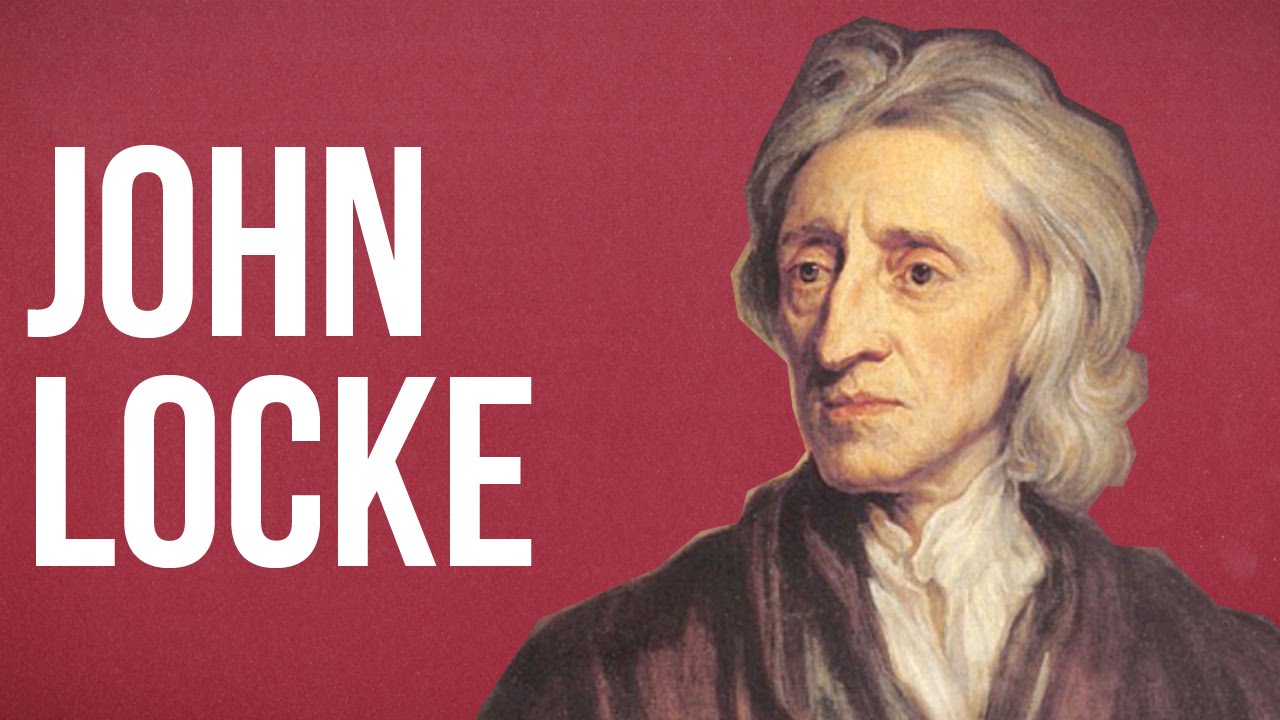
our first philosopher and a philosopher is a person that's kind of like a professional thinker okay they they thought about life and reality and kind of why things are the way they are and and ultimately how things could be better okay so our first philosopher John Locke he was pretty famous during the Enlightenment and he wrote about government in particular with this famous book we see their two treatises of government now one of Locke's big ideas was to consider what what life would be like and what he called a state of nature now I always
ask my students what would life be like if there was no government there weren't any laws and usually the answers I get are that things would be pretty crazy okay and John Locke would agree with this well he thought people were good basically he also thought man was naturally greedy and that this would lead him to harm others kind of like we see down at that picture there a state of nature and one guy chasing the other one I think about it if there was no government and let's say that I have I'm living in
a state of nature and I have a lot of possessions maybe I have a lot of food and my neighbor who by the way is much bigger than me has none what do you think would happen in that situation he would probably come over beat me up and take it right so we need some protections or as Locke said Nolan ought to harm another in his life health liberty or possessions so John Locke's main thought on natural law was that laws must be enacted to protect natural rights and these rights he broke down into these
three things life liberty and property and you have to remember that that's a big EEOC questioning okay once again John Locke thought we need government to protect our life our liberty and our property now to lock this was pretty much the only purpose for government to protect these three things and Locke knew from firsthand experience what it what happens when a king has too much power Locke lived in a time where Great Britain was struggling over how much power the king should have in fact his father fought in what was known as the English Civil
War which was between Parliament and the king and his father fought against the king so well he was speaking about the need for a government to protect our rights he also knew we needed protection from government itself so here we have his quote the natural liberty of man is to be free from any superior power on earth and not to be under the authority of man but only to have the law of nature for his rule so for Locke it was about finding that balance between needing protection and also having our rights in addition to
his ideas on natural law John Locke is famous for his thoughts on what is known as the social contract sometimes referred to as the social compact and this is a great diagram I found that explains the social contract and here we have his quote civil government is propped is the proper remedy for the inconveniences of the state of nature and what are some of these inconveniences well people stealing people killing so we see that people give away some of their power to the government or or transfer it and what do they get back will they
get back security and protection again for life liberty and property now some things that are missing from this chart I would add a legislature and also we transfer more than just power in this equation we give away the rights to do things that will hurt other people for instance in a social contract I give up the right to drive a hundred miles per hour down the street but I get back protection that you won't drive a hundred paws per hour down the street and you won't run me over in your car okay so this is
the definition I would use for social contract and it says that people enter into a quote unquote agreement with the government and must give up the right to do certain things but they get back protection from the government the reason I put this agreement in quotes is that no one signs this contract okay this is a social contract we live by the contract through our actions and our interactions with other people and what happens when we bake break the contract well we get into trouble if we break it really badly they will put us into
a cage which they call jail we see this cartoon down here you don't kill me and I won't kill you hey seems great okay so let's get back to our second part of that benchmark and it says how does this influence the founding fathers so I put a chart up here John Locke's writings were huge amongst the founding fathers I like to tell my students about when I went to Thomas Jefferson's home Monticello in Charlottesville Virginia he had a painting of John Locke on the wall kind of late you had that Justin Bieber poster up
on your wall Thomas Jefferson has been accused of plagiarizing John Locke when he wrote the Declaration of Independence now we're gonna come back to this when we learn about the Declaration but let's look at the stuff that Tommy J borrowed ok Locke spoke of natural rights while Tommy Jay wrote of unalienable rights this strange word unalienable and that meant rights that couldn't be taken away Locke spoke of the social contract of governments getting their power from the people and Jefferson said governments get their power from the consent of the people consent of the government and
we're gonna come back to that Locke said that government should protect life liberty and property and Jefferson changed it up a little bit to life liberty and the pursuit of happiness which in America pursuing happiness usually just means we buy more stuff anyway so was Jefferson influenced by Lackey you betcha okay now let's move on to our next philosopher and that is Montesquieu and we'll get through this one much quicker because this is really straightforward Montesquieu was another an Enlightenment philosopher who spoke about government and Montesquieu is known for what is called separation of powers
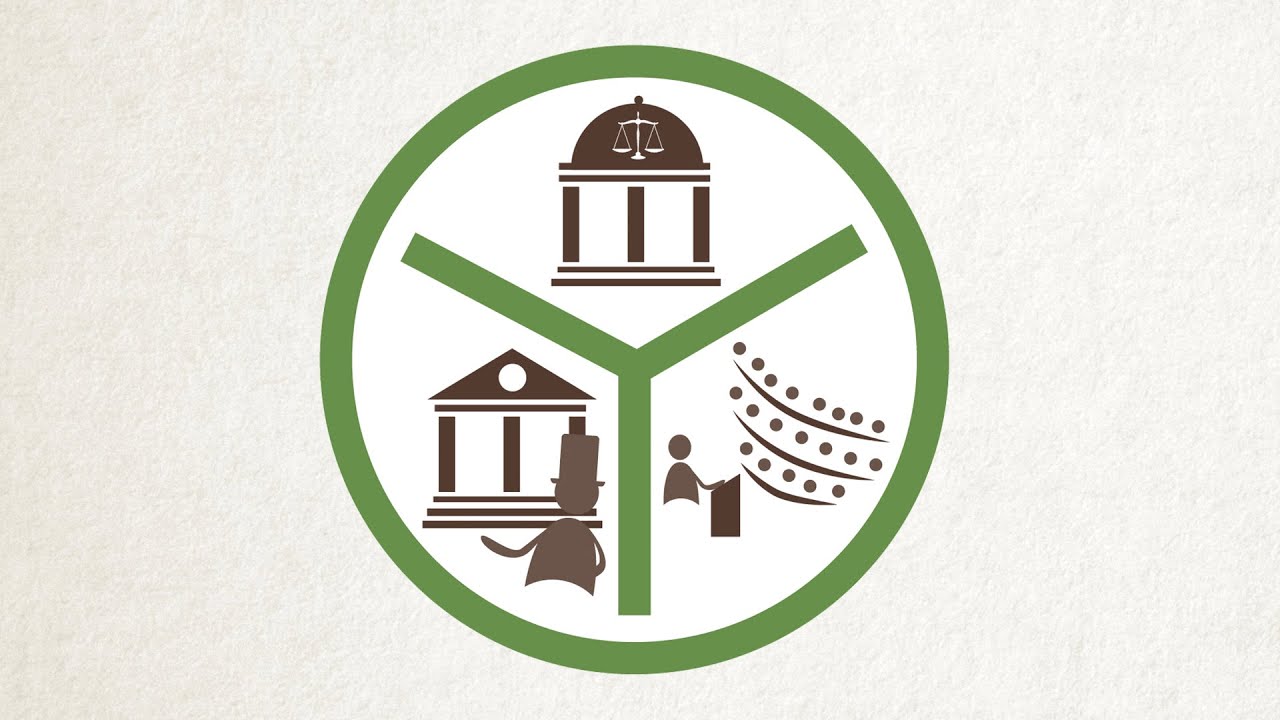
here he has we have his quote when the legislative and executive powers are united in the same person or in the same body of magistrates there can be no Liberty so what are you saying is that the king should not be able to make laws and enforce them for example a king should not be able to decide how much taxes you pay and then go around and collect those taxes so what Montesquieu suggested was that we take all the power we give to the government and divide it three ways so that no part of the
government would have too much power this would lead in America to what we call checks and balances which we'll go over later but this is a system where each branch of the government limits or checks the other branches of the government so that all of the power is balanced out so did this influence of our founding fathers when they created a new government I think you know the answer to that of course it did or we wouldn't be learning it we have a legislative branch which we call Congress and Congress makes the laws we have
an executive branch headed up by the president and the president enforces the laws and we have a judicial branch headed by the Supreme Court and their job is to interpret or to judge the laws so we see Montesquieu's influence on American government our division of the government into three branches so let's review first of all the Enlightenment was a time of learning and knowledge and philosophy for John Locke you have to remember these three things that John Locke was known for natural law the social contract and his influence on the Declaration of Independence and then
finally we have Montesquieu and separation of powers and checks and balances okay so if you'll memorize these you're definitely gonna ace your exam all right and finally we have to remember both of these guys and the Enlightenment itself it influenced the founding fathers okay it helped them come up with inspiration for creating the US government and the way that we created it well I hope you learn something keep up the good work and be sure to subscribe for more videos and thanks for watching