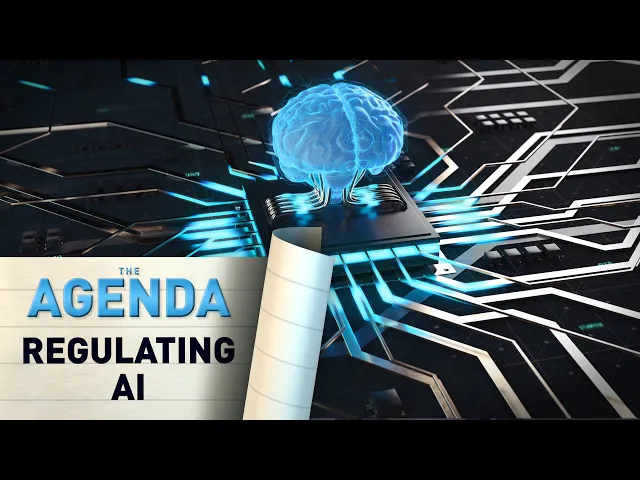
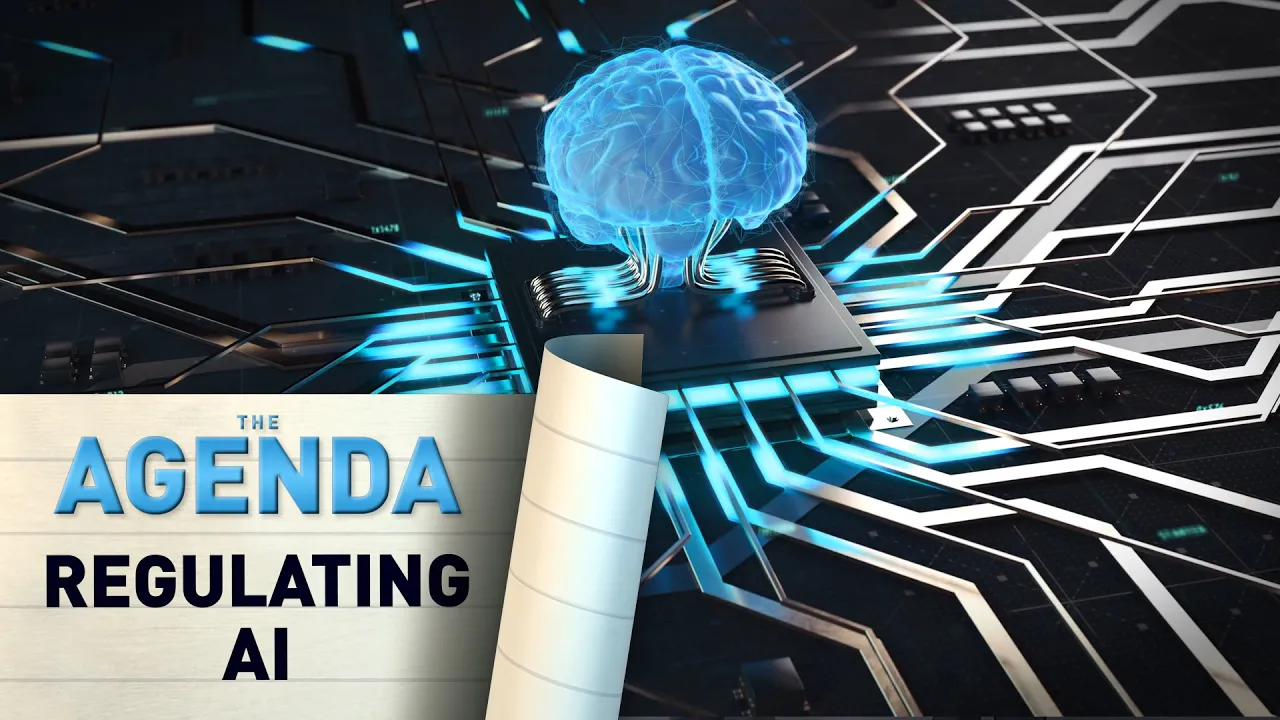
This week on the agenda, regulating artificial intelligence. Who's really in control [music] of the global race for AI governance. As artificial intelligence spreads into almost every aspect of our lives, concerns over its regulation are becoming increasingly acute.
This week, the EU signaled a potential delay to key enforcement deadlines of its landmark AI act, which some see as a victory for tech giants in the battle for stricter regulation. So, where is the world of AI and its regulation heading? Joining me now uh Virginia Dignam a professor in responsible artificial intelligence a member of the UN high level advisory body on AI Fabian investor CEO at rise of AI and Chiao Chang Max waver fellow at the European University Institute.
Thanks all of you for for coming on the agenda. Um Virginia let me start with you. Um because the EU's AI act had been seen as perhaps the the world leader in AI regulation.
Is that changing? I would say that the EU remains the only region which has a comprehensive binding AI from work on books. So in that sense is still a reference point.
But of course with the proposed changes in the digital omnibus we need to uh uh to think about the rethinking the the nature of leadership. If by leadership we think we think that it's about meaning protecting people and democracy then watering down the safeguards as proposed the risks undermining that claim and then uh leadership is probably far from the what we would call but if we talk about leadership being about uh following and providing some liatory lightness in name of competitiveness maybe then we can so it will depend a But what in which way we are talking about the leadership of Europe on the area that indeed things are different now with the watering down of the proposed water watering down than what was until now. I mean Fabian would you agree with that assessment or do you see the EU maybe as as caving in to to the demands of big tech and of other nations?
Something in between. So first the United States regulated first under Obama. Second, um, China has one of the heaviest regulation for AI companies out there and Europe tried just to come up with their own framework.
The problem is that the framework the AI act is not a good law and we in Europe complained about this for years now. So maybe the Americans put pressure on this, but the complaints are the same and the EU act has to be changed to be fostering more European ecosystem, European companies, but it should not be changed to make it Americans easier to do business here. Mashu, the EU has termed this latest approach as a digital omnibus designed to simplify Europe's tech laws.
Is that really what it is? Um I'm stay on the surface. Yes.
So the idea is to streamline Europe tech laws and also to get rid of potential regulation overlaps or contradictories. So it shows that the EU is working to make its regulatory system easier to navigate and management. But I would also say that it's part of the story.
So we need to look closely to the concept of what simplification means. So it could be end up is a point a kind of a polite way of saying we need fewer protection and it could be a step towards a rolling back some regulations or rules. Um some of the proposed changes um actually are touching on very sensitive and important issue areas such as how our personal data is managed, how cooking tracking cookies are um used and how strict the EU AI law UI act remains.
So where it's framed as a concept tied up what really matter and what really need to be seen is what's actually get changed. Virginia, let's dig in a little bit more to to pressure that may or may not have come from from other places, from the US government, from from big tech companies, um, like Meta, like Alphabet. Um, do you think there has been pressure there in in in terms of making the space more competitive with less of a focus on the the personal data and personal protections?
Yeah, there is clearly intense lobbying from and geop also geop ge geopolitical pressure behind this shift both from large companies but also from governments which keep talking about the European overregulation but I and that has been well documented and like Fabian says it's not just external pressure in Europe we also have been for a long time talking about the need for a a a regulation that it's better designed, better aligned with the needs of companies, but also the needs of the public and the needs of um of society in general. And what I think it's still uh concerning is this idea that innovation only can be happening without regulation. this this dichotomy and this it is a false dichotomy and uh innovation of course too much renovation regulation is good for no one but in other end no one wants to operate in a fully deregulated world innovation needs to have some clear basis in regulation some clear uh agreements on what is the direction to go otherwise we are undermining our own companies and our own innovation and research within Europe and opening the the doors for anything goes without having any control anymore.
So it's not there is a lot of lobbying internal and external but I I would like to to to see it much less this dotomy between we can only have regulation innovation without regulation because that I think is definitely not the direction in which we need to go. I can see everybody nodding along to to all of that. I mean Fabian there is this balance isn't there between regulation and innovation you know how worried should we be if innovation is allowed allowed to flourish unchecked the thing is there's regulation and Europe tends to do overregulate to make it too perfect too strict too strong before something grows so now we get the pressure from the hyperscalers and from big tech and Europe should answer first oh we losing this because we're highly dependent on American technology And second, we should build our own technology and infrastructure.
So this there should be more a wake up like hey we have to give into this pressure because we need them but we should incentivize our economy and our governments to use more European solutions. So so we don't have this pressure in future anymore that we at least gain a little bit of power back slowly but if we never start this this pressure will just increase. So interesting you're talking about you European rules for for European uh or European solutions for European countries.
Shiau what what do you think? Do do you see the role of big tech being treated differently in in Europe in the US in China? Let's compare it.
Yes, that's makes totally um sense to me about like the different tech companies are treated differently in different national contexts and in Europe we can see that tech companies are operating under strict rules especially surrounding data protection risk assessment and also about the transparency and accountability requirements. So actually from my understanding is that EU is following a right-based approach which means the um people's rights or people's well-beings and the fairness of the market should be prioritized from the starting point and when we look at the US approaches it's more hands off and is more driven by innovation. So the idea is that technology and the market growth should come first and the government only step in when the problems become too u of wears to ignore and in the China case I have to say tech tech companies and the government are operating in the strategic partnership.
So the state provides supportive supportive um policy um to drive innovation and to boost the growth of companies and at the same time it's also imposed very strict and form regulation to guide the company's behaviors. So uh when we also when we look at how the AI policy are formulated in China so the role of the government is to set up the overall guidance or the overall direction about how AI should regulate. But um at the same time we can see that tech companies are u placing a uh kind of increasingly active role in kind of shaping the discussion um surrounding the governance of AI in China.
Fabian, what do you think the pros and cons then um when it comes to AI regulation in different territories? So when it's about choosing where I want to live, I want to live in Europe. I like it.
I like that with human and people first approach. And in the US it's not about innovation. is about power and capital.
So we then and and China by the way it's also about power less capital. So both both countries use AI as a strategic tool and Europe is not and so we are in this in a position of weakness and I I'm just frustrated about this. So I always say we can learn from both.
We can learn from China how government can cooperate with industry to make guidelines and we can learn from the Americans how a little bit less regulation in the early stage time for startups etc gives time to grow. So I think we should just know they are ahead of us and we have to learn from them and we should not have the moral priority to emphasis our values about everyone with Europe thought they can do it and they're lost. So they lost the bet that they are the highest moral grand standard because if you have nothing to protect, you don't shouldn't protect it.
So I say we learn from both ecosystems and countries. Chiau, I I want to dig in a little bit more to to what China is doing. They've got this interim AI measures for for generative AI services.
H how what's unique about that approach? Yeah, I totally agree with Fabian said about like we need to learn between like different uh national regulation and also in China's case I would say China say the innovation and regulation as in interconnected rather than updates. So China treats the development of AI technology as part of also essential part of the governance itself.
So for China, AI regulation isn't just about like imposing restrictions or setting limitation. It is also about how to promote development of AI technology in a responsible and sustainable way. And moreover, I would also uh note that China in recent days has placed increasingly emphasize on the security and ethical risk associated with development of AI technology and its recent rules highlight some ethical issues such as privacy, data protection and also the centrality of humans in terms of use and and also developing um this uh AI enabled system.
uh while there are differences between China, EU and the US, we can see there's also convergence between kind of this this country in terms of um their uh emphasize on the responsible for human beings and also it's necessary to address security risks um arising from AI development. Virginia, with the use of generative AI increasing almost daily, I'm I'm wondering if there's a a need here for a global approach to regulation. I mean, look, you you sit on the UN's advisory body on AI.
I mean, is this a role that that body is is is looking to undertake? Uh, so there is definitely a need for global coordination. I don't think that we need a global super regulator which goes regulate over everybody else.
The United Nations advisory body it finished already. So we did our advice one year ago and now the United Nations is taking over. So my role there is it's not existing at the moment.
But what I see and that I I'm very happy to see that United Nations in the last general assembly has approved some of the proposals that we made last year. a proposal for a um a panel, an international scientific panel that is going to keep track of what's happening in different regions, what is what's work, what doesn't work, and really support the work of the the second part of the the what has been approved, which is a global dialogue on AI in which uh different uh uh parties, different stakeholders are going to sit together and really work on global coordination. No, no, at no way there is the idea to go and regulate over everybody else, but really support the coordination and like Ku just said learning from each other and Fabian said the same as well really providing a platform in which we all not only United N United States, China and Europe but everybody and especially taking into account the specificities of the global south of the global majority really sitting together and learning from each other coordinating ing our approaches but not super regulating and creating another layer of regulation.
You're right, Fabian did mention that people should learn from each other, but I wonder Fabian, it isn't maybe the only way to build genuine trust in AI methods of the future going to be through a a global network, a global scheme. So long answer uh yes we need one government one regulation only then we can have a world of peace however we have competing nations it's the American system it's a Chinese system number two and number one clearly and then Europe and the rest of the world in relevance and if China and US are still competing there will never be a global regulation because they compete for interest for resources for influence if they [clears throat] unite one day then we have world peace and then we have one regulation, one taxation system, but as long you can choose between them and there's rivaly, you know, competition will not allow it. It always will look for the market which is a little bit softer, you know, for the industry to grow.
Shiau, you know, cooperation is much discussed at a global level, but harder to to to put into practice. What would you say that the key stumbling blocks might be to a global approach to AI beyond what Fabian's already been talking about? Yeah, I totally um agree with Fabian said about like different countries are from different uh uh places and also take different approaches because the kind of competition issues and for me it's actually the kind of the main challenges faced by the international community to formulate a global approach to air governance because different countries have different political system different cultures different stages of economic development as well their level of technology capacity.
So this naturally leads to different priorities and the different uh objectives like when they formulate their own AI regulations. For instance, we can see there's a divide between the global now and global south countries where the global now countries are more advanced in AI development and more influential in terms of shaping um the uh global AI governance framework. Um for the global south countries they tend to occupy the relative low end of the global supply chain and while they are impacted significantly by AI development they actually face limitation to become influential actors in setting up their gender in global AI governance.
So with such varations or difference in mind it's quite hard for us to uh establish a a kind of universal global framework in AI governance. So, it's going to be hard to to find a one-sizefits-all. But but Virginia, I wonder if maybe there should be different rules when it comes to different kinds of AI use because AI in security and in financial systems pose very different problems for say entertainment.
Uh yes, you are right on the different problems and uh a one-sizefits-all in that I I think I disagree a little bit with what Fabian says. I don't think that a one size fits all or a one unique regulation and is what we really need. There are many different not only in terms of the the the stage of development of AI but also on different cultures, different approach, different values.
So I would say that what we do need to do is to take a much more people centered fundamental rights grounded approach. What really matters is what we need to regulate and it's not a matter of risk lowrisk usage might in some cases and for some people be of very high risk. So I'm not really sure whether risk is the way to to dist distinguish but really fundamentally look at what really matters for for people for society for the environment and take that as the the basis in which we all agree that we need to uh regulate and to uh take care of and how we are going to do it.
It can be different. We still don't really agree on the the sockets the electricity sockets that we use around the world but we do agree that electricity needs to be uh taken into within some types of safety limits. So let's look at what is the matters from a perspective of human rights of the the people and the societies and the environment in which we all are living together.
It it sounds like Fabian a starting point might be more partnerships, might be collaborations to to ensure the conversations keep going across territories and to ensure that overregulation doesn't stifle that all important innovation. I agree with Virginia. I would love to have in the perfect world a humanentric value-based approach but the truth is power is currently winning and currently it is that um American chp etc will dominate our culture our language and therefore emphasis we need localized generative AI.
I need European and German and French trained models who speak French, who think French and who are preserving the culture and the language because language is the key to transmit what we really believe. Of course, one of the exciting technologies that that there's a buzz about is instant translation which means you wouldn't need to learn all of the languages that you're saying are so important. Kashu, what do you think?
Where do you think that the innovation needs to come from so that AI can maintain its integrity at the same time as helping economies grow? Yeah, I think for for me the real innovation doesn't come from a single actor or like single factor. is actually come from the cooperation across the whole ecosystem at both domestic and international level including the government, industry, researcher as well as the public.
So we we need effective and smart regulation. We also need academic capital and also human resources and talents in that issue areas as well as I would I also would like to suggest that at international level we also need cooperations and also knowledge sharing between different countries in AI development. So that is also the key point of like narrowing the gap between um countries at different development stage and also we also need to keep the culture difference in mind that's also very important but I I feel like the exchanges between people to people and also this kind of knowledge sharing happening between them are quite important if we would like to um establish a more inclusive and equitable um AI governance system.
Vena, the the the AI act took so long to to negotiate. Now we've got bits of it that are being put on pause. I I wonder what what's your outlook.
What where do you see the future of AI regulation going? Are they going to keep kicking the can down the road? Indeed, you are completely right.
I think the the main problem with AI act is the overcooking of it. It was we took too long and it was uh it is too much it passed its own uh date of or usefulness maybe. But anyway talking about the future I see that we need to look in three different directions or three different aspects which we need to talk together.
The first one is that we need to move from focusing on regulating individual applications, individual technologies, but really looking at governing the systems and the infrastructures understanding that AI is not just a technology is a social technical system. It's about much more than just the specific technique or the LLM or the the the chat GPT or whatever else. It's it's much better.
It's it's much broader. So it's a system of systems and we need to regulate that and to this regulation needs by definition to be a hybrid of many different things. It's not just about hard law.
It's also about technical standards. It's about the audit ecosystems is about a meaningful participation for civil society. And it's not just about the self assessment and the in one end the self assessment by companies or in the other one in the other side the hard law.
We need to be a a combination of all these things. And finally maybe the crucial one is that we need to embed AI regulation in in broader agendas democracy, labor rights, sustainability, global justice. If we really lose sight of these issues and if we lose lose sight of the human rights, the social justice, the planetary limit, there is no amount of technology and regulation that can make AI truly beneficial for humankind.
Fabian, Virginia gave us a very very long shopping list there of things that need to happen. We also been talking about all of the different people with agency with skin in the game here. I mean, where do you start if we're going to get traction, if we're going to create something that is going to have universal impact?
So, I agree to both of you. Um, and I would recommend talk to the people. Talk to the people who build AI, who use AI, who apply it.
Don't talk to only to the researchers because they want to have the ideal version. Talk to those operating being in real business out there working with the law at the end. um Europe listened a lot to people but mostly were researchers like 80% of the high advisory board and they want a different version than someone who's actually running and coding and programming it.
So talk to the people talk to the ecosystem and then second start educating society like Finland is doing this heavily. China has one of the biggest programs for professorships and education and universities. Bring this tool which is a great tool to the masses.
allow 500 millions in Europeans to use it aware and self-nowledge about it when they use CHGP or deepseek or manos they should know what it works where the data stored what this how the system works so we should start with education and then if we have regulation I want to have regulation which is protecting Europeans protecting European companies until they big enough to compete international and then regulation should only be there to build a protect protection fence for us against American and Chinese technology until we are ready at least to compete with them. So to avoid European companies being being swallowed up be before they're ready. Kashan, I'll give I'll give the last word to you.
What about you? Where do you see AI and innovation and regulation heading? Yeah, I think we already talked about so many things about differences and diversities between different countries and also different cultures.
But um finally I would like to suggest that there's also some potential to find a common ground uh between different countries in the international community because AI is for me it's a new challenge faced by all the humanity and as human beings we we share similar concerns about preventing harms caused by AI technology and also preserving human dignities and the human agencies uh in face of this powerful AI enabled system. So also there's the old Chinese saying I would like to share is about seeking common ground while respecting differences. So I think that really capture the direction we are hinging in.
So country may regulate their own AI system in their own ways but they can still work together and cooperate when their interest and normative understanding overlap and we are already seeing some permissing sign in this regard. We see there are regional initiatives on governance from Southeast Asia and also from Africa and also there are multistakeholder platform involving not only the government but also industry um representative academics and also civil society to kind of working to build bridges and to find kind of the consensus despite we have different like uh assumptions or different positions. So they won't produce a single super um super national AI law but they are working or creating some shared norms and the practical corporations and that is likely to be the future direction of AI governance.
Kraang Virginia Dignam and Fabian Westaida thank you all very much. Thank you. You can watch every episode of The [music] Agenda in full on CGTN Europe's YouTube channel.
And for exclusive extra content from me, my [music] guests, and the rest of the team, don't forget to check out At the Agenda show on [music] Tik Tok. Coming up on a future agenda, the growth gamble. Can the UK budget fill a growing black hole in the country's finances?
But for now from me Juliet man from all the agenda [music] team here in London. Goodbye.