Hey everyone! , Welcome back to our five-part series of videos covering some of the real estate English basics that you need to know for your job. In each video we talk about real estate English vocabulary that you need to know and to be able to use when showing properties to your clients, negotiating deals and pitching your services.
In video two of our five-part series, we're going to talk about real estate English vocabulary that is related to property. If you missed the first video where we talk about general real estate English vocabulary, you can watch it here. I've also linked to the playlist in the description, so you can watch or re-watch all of the videos in this series.
Let's start with the term "commercial property. " Commercial property is defined as buildings or land that is used in order to generate a profit, like office buildings, retail stores or similar. That means that the tenants or occupiers of that building are involved in some type of business.
Remember, it's about the tenants or occupiers using the space to earn money, not about the party that is leasing the space to them. A residential property where people live is not considered commercial even if the owner is making money off the rent being paid by the tenants. That's because the tenants or occupiers are not using that space for business purposes.
A condominium is a building comprised of apartment units that are individually owned. However, the hallways, the gardens and other common areas are shared. The word "condominium" can also be used to refer to an individual unit in a condominium building.
In that case you'll often hear people use the abbreviated term "condo. " A detached house is a freestanding residential building that is normally inhabited by a single family. You'll often hear people simply use the word "house" to refer to a detached house.
Detached houses are usually built on lots that are larger than the square footage of the house so that there is room for a yard in either the front or the back of the property and in some cases a private garage for parking. The term penthouse apartment is used to describe living area on the top floor of a building. It is often expensive and has great views.
Penthouse apartments usually come with at least one rooftop terrace and typically feature large windows. The word rental refers to any property that is offered for rent or for lease to an individual, a company or an organization. However, you'll typically hear the word "rental" used in the residential space.
You might also hear people use it to refer to a car that they are renting on a short-term basis, like for a business trip or during their vacation. The term residential property refers to buildings or land that are intended to be used as living accommodation. Unlike commercial property, which we talked about at the beginning of this video, residential property is meant for people to live in and not as office logistics or retail space.
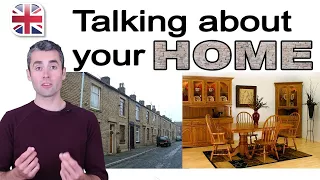
Hotels are considered commercial and not residential because they're primarily used as a business. A semi-detached house refers to one half of a dwelling that is made up of two identical or similar houses that share one common wall. If you live in a semi-detached house, you usually have your own yard and maybe your own garage as well.
There are windows on three sides of the house and the fourth side is the wall that is shared with the other house. A studio apartment, which is the term used in the US, or bedsit, which is the term used in the UK, is a small one-room apartment that combines living, sleeping and cooking areas in one room. Although some studio apartments come with a full kitchen, many feature a kitchenette instead.
These types of apartments are usually quite affordable and are very popular with students and professionals who spend a lot of time traveling. The term "new-build" refers to a property that was recently built and that complies with the latest standards in fit-out and technology. You can use the word new-build to describe a single building like a house or an office building, or to talk about an entire development.
Thanks for watching the second video in our five-part series. I'll see you soon in part three. And remember to click on the link to the playlist in the description below if you want to review any of these videos or even watch them for the first time.
Please subscribe to our channel if you haven't already and give this video a like. See you soon.