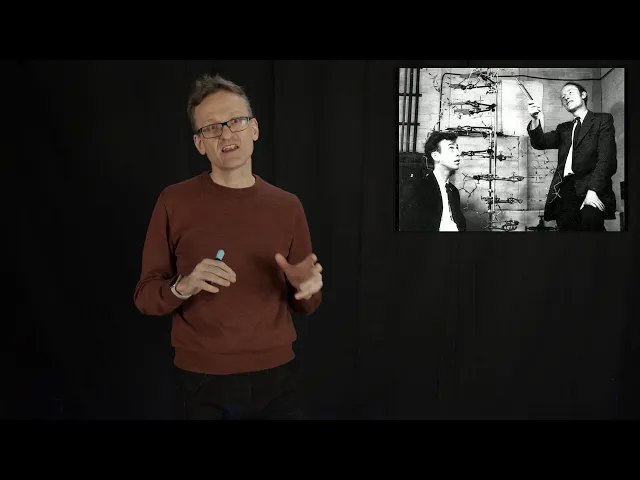
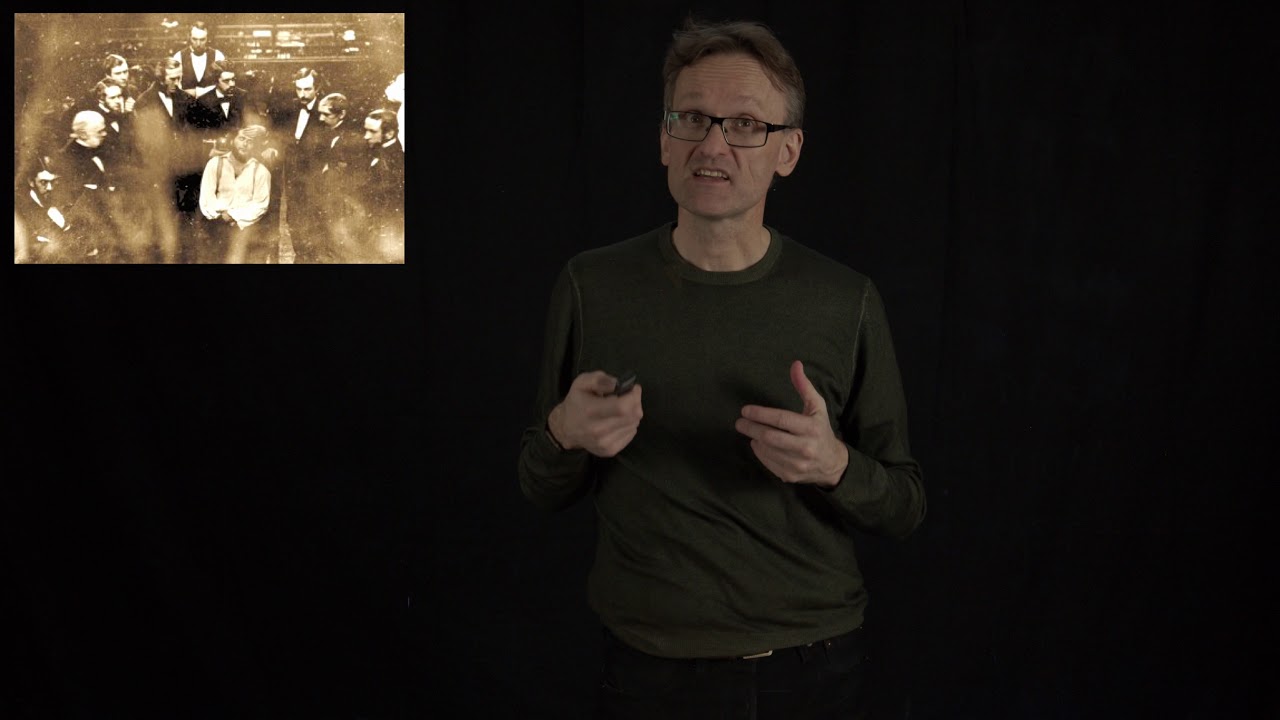
so how do we go from having some knowledge of the in-going components in dna and having these x-ray-based scattering plots and using that to determine a good model a structure of dna well watson and crick kind of borrowed well they they didn't borrow they had access to maurice wilkins and rosalind franklin's scattering curves but their great contribution here was that they were not the ones doing the experiments but they thought deep and hard about the experiment and they used one more observation that had been published a few earlier years earlier by erin chargaff so erin
shagaf had published a paper we had noticed that these bases appear to be pairwise somehow similar that the number or the concentration of adenine tends to pretty much always equal the number of timings and similarly the number of guanine bases always equals the number of cytosine bases in a particular cell if you go to a different organism or something it might be slightly different but pair wise they always appear to match up which again when elven shark published it was an interesting observation but the reason for this wasn't note and then on the other hand
we had this strange model by pauling and corey that had the triple helix in this model there is no particular reason why they should pair up right and then we had this molecules that we somehow want to understand why do these nucleotides if we have the full one pair up so what what's an encrypt did is that they realize that that pairing is going to work great if you had a model where bases bind pairwise to each other and if bases are going to bind pairwise to each other they need to face each other right
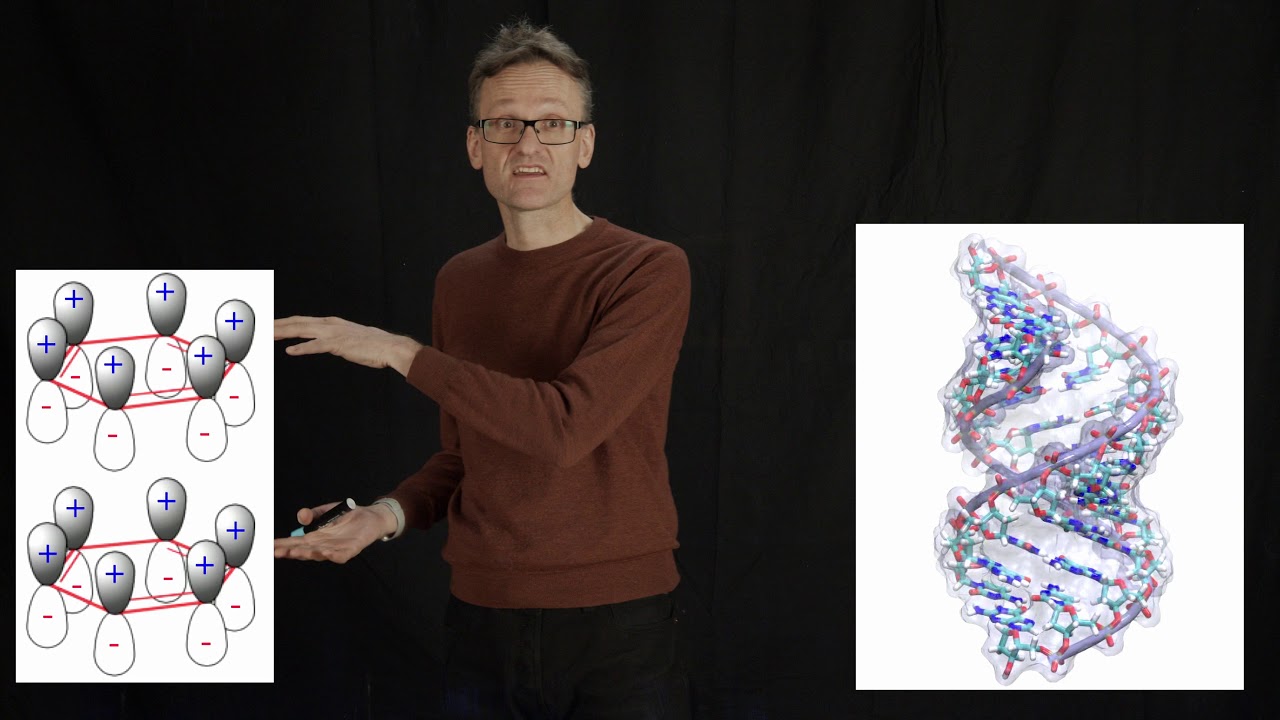
and that would require you to turn the phosphates outwards which is pretty much how they came up with the idea of this double helix it's one of those things that in hindsight it turns out to be obvious but it wasn't so obvious even linus pauling is one of the most famous chemists of the 20th century didn't have the idea that also leads that you have this very specific pairing of the basis in dna which is called for another reason that i'm going to come back to this stabilizes the entire structure too rather than having floppy
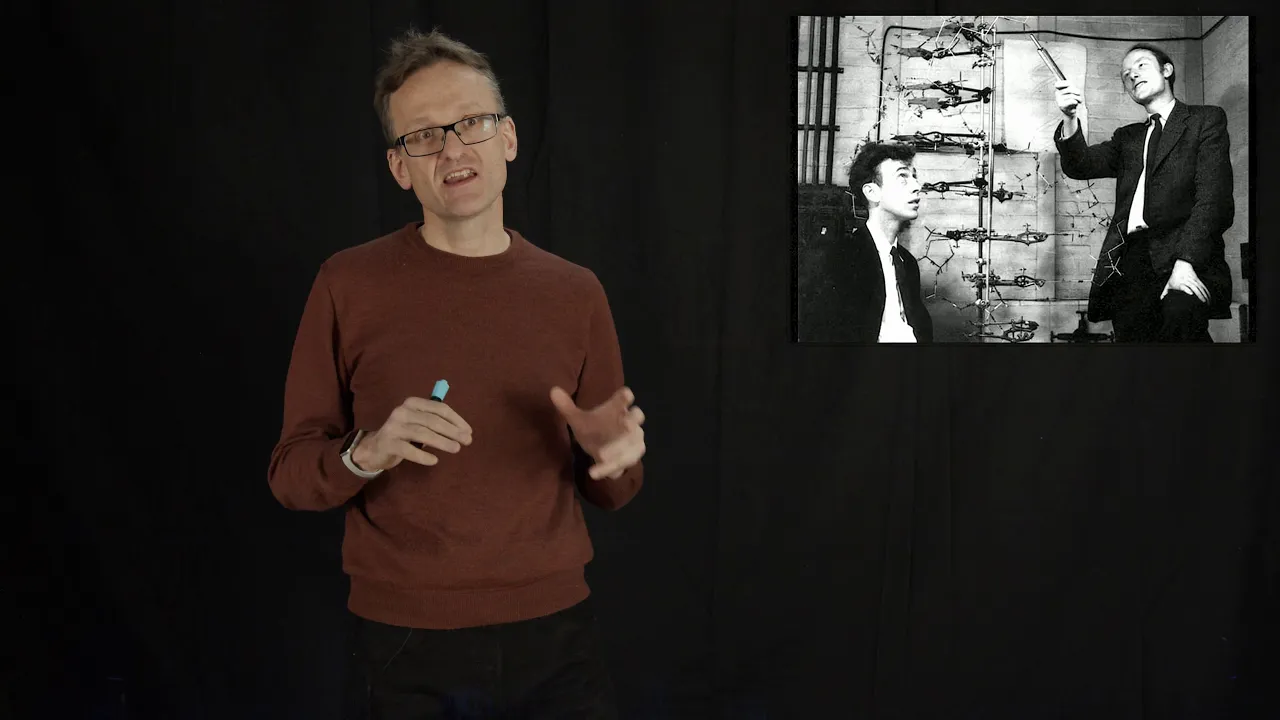
bases pointing out if the bases are bound to each other using hydrogen bonds and those phosphates are solubilized and stabilized by ions because they're charged it's going to create a very nice long-term stable structure which is good in general if you want the molecule to stay in shape which we do want at the time there were no strong computers so what the way watson it's easy to have the idea right but to prove that your idea is right you then have to build models and then they had to use a ruler and measure the distances
between all the heavy atoms and manually calculate these diffraction spectra and prove that if this model were to be put inside a synchrotron or x-ray beam at the time you would indeed generate a diffraction pattern that corresponded to the one measured experimentally by rosalind franklin and maurice wilkins