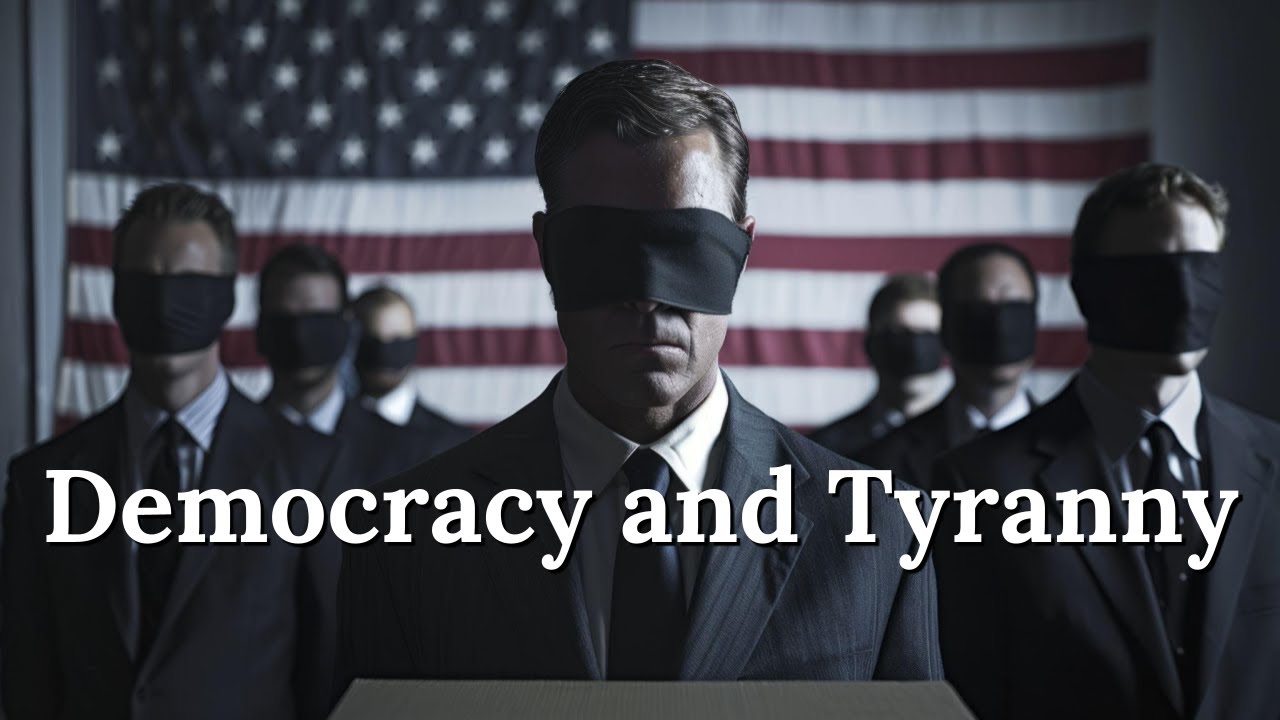
democracy is a disaster waiting to happen this system of government that's celebrated worldwide as the Pinnacle of human political achievement is fundamentally flawed and I'm not talking about minor issues I'm talking about a fatal defect that tear societies apart now before you rush to the comment section note that this isn't the opinion of some guy on the internet this comes from one of the greatest Minds in human history Aristotle over 2,300 years ago one of the greatest philosophers in history ID identified a fundamental weakness in democracy a flaw he thought was so significant that it
will eventually undermine the very foundations of any democracy anywhere of course Aristotle being Aristotle he didn't just criticize democracy he also offered a solution A system that while not his ideal form of government would address the problems with democracy and ensure stability and a better life for its citizens so in the next few minutes we're going to dive deep into Aristotle's World we'll first touch on the central flaw he found in democracy which we have already addressed in another video but our main focus will be on his proposed solution we'll also take this proposed solution
and catapult it into the 21st century consider a Modern Nation built on these principles what would it look like how would it function and would you want to live in a society like that but first let's take a moment to appreciate the depth of his knowledge Aristotle's political Journey began with Plato a mentor he respected but often dis disagreed with perhaps you too have had that one teacher who pushed you to question everything through passionate disagreement for me it was my high school economics teacher for Aristotle it was Plato but Aristotle's quest for understanding took
him far beyond the classroom after Plato's death he became tutor to Future Leaders including Alexander the Great Tommy I and cassander after Alexander became king Aristotle returned to Athens to found his own school here he also embarked on an ambitious project of studying 158 different Greek city states all his experience and studying culminated in multiple great works including politics which is a summary of his political thoughts that would shape Western thinking for literally thousands of years in politics Aristotle identified three main types of government that he further divided into a so-called true form and a
perverted version a classification that is still just as relevant today as it was back then first there's rule by one individual in its true form we have monarchy where a single leader governs for the common good think of a Visionary King working tirelessly for his people but Power can corrupt and the perverted form of monarchy is tyranny where the ruler and his inner circle act for their own personal benefit like a dictator who treats the nation's resources like his personal piggy bank then there's rule by a select few it's true form is aristocracy which is
ruled by the most virtuous and capable citizens for the benefit of society like a board of directors chosen for their expertise and integrity but when wealth becomes the only qualifier we get its perverted form oligarchy where the rich few control the state for their own interests not entirely unlike how some would argue big corporations shape politics today and then there's rule by the many which sounds great on paper but Aristotle considered democracy to be the perverted form of this type of government where a majority rules in its own interest at the expense of the long-term
well-being of society but what exactly did Aristotle see as the significant problem with democracy to understand this we need to consider how democracy works at least in its purest form in a true democracy everyone gets a vote and the majority wins you might be thinking but isn't that the beauty of democracy what's the problem you see Aristotle realized that in a system where the majority always wins there's a real danger of the majority abusing its power he was particularly concerned about the poor using their numerical advantage to essentially redistribute wealth through excessive taxation or property
redistribution but the problem goes deeper than that it's not just about rich versus poor the real issue is that anyone who can gather sufficient support can hold power regardless of whether they're virtuous competent or acting in the best long-term interests of the ation this leads to a whole host of problems for one thing there's a potential disregard for the rule of law if the majority can simply vote to change any laws whenever they want it could lead to a system where legal protections become unstable and subject to the whims of popular opinion a related issue
is the risk of demagoguery triumphing over competence skilled orators who can sway the masses might gain power even if they're not the best qualified to lead in Aristotle's words where laws aren't in control demagogues pop up the people become like a monarch a single composite entity made up of many individuals when the people are like this they become despotic this could result in charismatic but incompetent leaders taking the Reigns of government prioritizing popularity over effective governance short-term thinking is also a significant concern in democracy in a system where leaders are constantly seeking reelection policies might
be enacted based on what's popular right now rather than what's best for the long-term health of society this myopic approach to governance could lead to decisions that feel good in the moment but cause problems down the line potentially jeopardizing the future stability and prosperity of the nation and finally there's the risk of severe conflict and instability in a democracy where the majority consistently imposes its will minority groups will feel perpetually mistreated this will lead to resentment and a desire to to seize power by any means necessary as these groups fight for control Society could be
torn apart by constant Strife the result is a volatile political environment where different factions are in a constant struggle for dominance in other words the central problem with democracy is what we would call tyranny of the majority it's the idea that in a pure democracy the political majority can oppress the minority just as surely as any Tyrant would now I understand what you might be thinking but don't we have safeguards against this in modern democracies and you're correct we do but those safeguards are not part of democracy they're additions or modifications to the system and
in a way they prove Aristotle's point that pure democracy on its own is flawed of course he didn't just identify a problem and leave it for others to fix this is Aristotle we're discussing after all he would relentlessly follow a line of thought to the end so he proposed a solution that he believed could solve this flaw but before we get to the proposed solution allow me to quickly preface with an important context Aristotle's ideal form of government was monarchy yes one of the foundational thinkers of Western Civilization believed that in the best case scenario
ruled by a single exceptionally virtuous and wise individual was Superior to rule by the many but the key word here is best case scenario Aristotle wasn't advocating for the kind of absolute monarchy we think of today he imag imagined a monarch who would act more as a guide promoting a system where laws and institutions worked for the benefit of all and where the king should be subservient to the law and and this is important to note while he did prefer monarchy under an exceptionally virtuous ruler he recognized its Rarity in practice so what did Aristotle
propose as a more realistic fix to a democracy in Decline remember how he talked about a perverted and a true version of each system of government where democracy was among the perverted regime forms his solution was its true counterpart a system he called polity polity which is often translated as constitutional government is Aristotle's attempt to create a more balanced mix by taking the best parts of democracy and oligarchy and combining them into something better now you might be thinking wait a moment didn't you just make a video on how oligarchy was problematic and you're right
to be skeptical at first glance this might seem like a recipe for disaster how could two opposing systems possibly work together not to mention that both are placed in the perverted category but here's where Aristotle's creativity shines through he realized that each system had strengths that could balance out the others weaknesses based on this Insight he conceived of polity as a solution to create a better form of government let's start with the Democratic ingredients democracy gives us personal freedom and the right to have a say in how we're governed which is desirable but he also
noticed the critical flaw of majority tyranny which leads to chaos with endless infighting and decisions based on popularity rather than wisdom oligarchy on the other hand is efficient at making decisions and tends to put skilled people in charge it's also good at thinking long-term and protecting private property but and it's a big butt oligarchy is essentially unfair and ignores the needs of ordinary people so Aristotle selected The Beneficial aspects of oligarchy to complement the Democratic elements in polity in polity leaders are chosen based on Merit not just popularity this sounds a lot like oligarchy but
the crucial difference is that these leaders are still accountable to the people just like in a democracy the point is to have experts making the decisions but with the people holding the power to fire them if they mess up additionally polity encourages Civic involvement much like a democracy everyone has a stake in the government but it also Embraces the oligarchic idea of stability with less frequent changes in leadership think about it an Engaged populist working with a stable government that can plan for the long term it's like combining the energy of a town hall meeting
with the strategic planning of a successful Corporation but there is also one crucial element in Aristotle's Vision that exists in neither pure democracy nor oligarchy a strong fundamental law that stands above day-to-day politics this is what we would call a constitution today as Aristotle wrote the law should rule Supreme with officials deciding about particulars without this stable Legal Foundation even the best system will eventually drift towards despotism of one type or the other having a solid wellth thought through Law act as a safeguard against the whims of rulers or the passions of the majority ensures
at least in theory that the central values of society will remain intact Okay so we've summarized most of what sounds like a a way to balance different interests in society but there is one final point to be made for Aristotle there was one crucial element that tied it all together the middle class in Aristotle's polity it's not the rich or the poor who hold the Reigns of power it's those in the middle modern westerners would argue that everyone should have equal say in politics but Aristotle believed that a strong large middle class was key to
political stability and good governance he argued that the middle class has sufficient wealth to prefer a stable Society but not so much that they're out of touch with common people or the poor they're not desperate enough to support radical redistribution of wealth but they're also not inclined to use state power to prop up business monopolies and they are generally too busy with their own lives and small businesses to creating unnecessary projects and regulations just to serve the bureaucratic class okay so now you might be thinking that this sounds like interesting Theory A system that combines
the positive parts of democracy and oligarchy led by a strong middle class following established laws and procedures but no country today really embodies Aristotle's ideal polity so let's do a thought experiment what if Aristotle was suddenly brought back to life and tasked with fixing the political system of a modern society in a way that still maintained many Democratic elements what would this Society look like first and foremost our Aristotelian Nation would have a rock solid Constitution this document would for form the backbone of the entire political system it would clearly Define the rights of citizens
and probably draw on several parts of the US Bill of Rights including the Second Amendment it would also Define the rules for how laws are made and enforced and the structure of government that government structure would probably be a two-part legislative system somewhat akin to a less Democratic version of the United States Congress you'd have one chamber representing the common people elected by popular vote but you'd also have a second chamber representing the wealthier and the educated with members chosen based on property qualifications or professional expertise and who would be able to veto laws this
might sound elitist but the goal here is balance the idea is to have a system where the interests of all parts of society are represented and must work together to pass laws in this Aristotelian poity voting rights wouldn't be Universal instead they'd be restricted to citizens who meet specific CR criteria those could be related to age property ownership military service having children or perhaps a suffrage tests the point isn't explicitly to exclude people but to ensure that voters have a stake in society as well as the knowledge and experience to make informed decisions a historical
example though far from a perfect one was the rodisian voting system rodesia had what was called an A rooll and A b-roll system to qualify for the more politically influential a rooll citizens of any race needed to meet certain income and property requirements however even those with relatively low incomes could qualify if they had a primary education unlike an oligarchy the a role wasn't limited to the super wealthy but included the middle class and educated individuals of course this system operated within an ethnically heterogeneous society which had very different consequences than Aristotle's assumptions of a
homogeneous population but it does offer a glimpse of how a tiered voting system based on economic and educational qualifications might function in practice I can anticipate the objections but remember this is about preventing the tyranny of the majority that Aristotle feared the goal is to have voters who have skin in the game who are invested in the long-term health of their society rather than personal short-term interests and here's an important point this Aristotelian State wouldn't just leave people to fend for themselves there would be policies in place to prevent extreme wealth disparities for for example
progressive taxation or limits on inheritance the purpose would be to support the poor and maintain a large and stable middle class preventing any single person or Dynasty from becoming too powerful in terms of National Defense this would be handled primarily by well-armed citizen militias property owning citizens would be expected to serve creating a link between military service and political influence the professional military would be kept small to prevent it from dominating politics and the the emphasis would be on ensuring that those defending the state have a genuine stake in its survival this would create a
strong sense of civic duty and shared responsibility as military service is both an obligation and a privilege of citizenship but perhaps the most crucial aspect of this Aristotelian state would be its emphasis on education and we're not just talking about basic literacy and numeracy here we're talking about comprehensive Civic and moral education the state would invest heavily in teaching citizens about their rights responsibilities about ethics and virtue the goal would be to create a populace that's not just literate but truly engaged in Civic life citizens who understand the complexities of governance and can make informed
decisions citizens who respect property rights but don't put profit Above All Else and speaking of informed decisions our Aristotelian state would probably have strict rules against demagoguery political campaigns would be regulated to prevent leaders from Gaining power through empty populist rhetoric instead politicians would be required by the state and the voters to justify their policies based on reason and evidence to prevent the development of a permanent political class there would be term limits and mandatory rotation of officials the idea being to encourage broader participation across all of society and prevent any one group from entrenching
itself in the halls of power now I understand that this sounds quite different from any country that exists today while some Nations might have elements that are similar to what we've described no country truly represents all these principles but here's the point even if we don't want to adopt Aristotle's polity wholesale there are valuable lessons we can learn from it the importance of balancing different interests in society the need for an Engaged and educated citizenry the value of thinking long-term in our policy decisions the polarization the short-term thinking the disconnect between the governed and the
governing these are all problems that Aristotle grappled with over two Millennia ago but we've really only scratched the surface here there's so much more to learn about Aristotle's political philosophy and how it relates to our world today so if you want to dive deeper into Aristotle's ideas I encourage you to watch our other videos on Aristotle's regime types thank you for watching