All right in this video I'm going to share with you a recording of a live coaching call that I hosted inside of my mind your movement program Community we went over the exact road map to not just find some short-term relief from your pain and injuries but to get to the true root of it all and fix it for good we covered some of the biggest mindset blocks that I consistently see holding people back in this regard and we also Went over some very specific guidelines that anyone can Implement in their training to see immediate
results today I wanted to make this video to first off give you a ton of value because this call was super valuable to all my clients and just wanted to share that with you but secondly I wanted to take back the curtains and show you what it's like to actually be on the other side inside of my mind your movement program so you can get a good understanding of What the community is like and how it would feel to be there so make sure you take notes on all this because it's a lot of information
and actually take action on it because this was really powerful and it's essentially the framework I use with all my clients to transform them in a way that you might have seen on my Ig stories or uh if nothing is up on my stories that day in terms of testimonials and go check out the results tab in my Ig story Highlights and this framework is basically how those hundreds of clients have been able to achieve those results that you see so with that said we'll jump right into it screen real quick okay um yeah so
the bulletproofing journey just what exactly leads people into this place of feeling like their bodies run down why they're not performing like they used to they're getting these aches and pains and Overall body just not really as capable anymore right so we're going to go into a little bit of why that happens and obviously like the solutions like how do we reverse that what are the things that we can actually Implement uh not only in our training but in our overall lifestyle and the structure of how we kind of like create our life design so
that we can solve that get back to a place where we're feeling good we're feeling confident capable in our bodies All right so does anybody have any questions that don't relate at all to that no worries if not I we can deep dive into that uh I'd rather just make sure I answer any of your questions before I hop into the presentation nobody okay well I think right now was I gonna say oh am I mute yeah um for the like the the myof fasal release stuff is it um because I feel like I could
go are those like the main the main um ones I think It was like the hamstring the the quad the it and like the couch stretch is there is that like just the one area of the hamstring that you wanted to Target or like is it beneficial to do all like the hamstring because I noticed like it's like the one the videos says just the one um spot like kind of where the glute ends and the hamstring starts yeah that's question yeah yeah I my whole thing is like mad tight yeah that that's typically the
Case so those uh things that I put in the uh in the program itself are just guidelines like they're just like the main areas that I know on average most people are going to have a lot of issues with so you can start there but then start exploring your body a little bit more I mean it's kind of like extra homework like extra credit right like give you like those basic ones but then from there you can see oh like the outside lateral part of my hamstring Is super tight actually I'll just uh show you
guys something really quick I don't know I may have shown this to some of you guys but basically all you have to do like in terms of like trigger points just go on Google search like okay hamstring trigger points right and then go to images and there's going to be all these like physio sites like PT sites that basically have different d diagrams of this stuff so like for instance you click on this one and you See the X's right here are what you call the trigger points and then where it's kind of shaded red
wherever it's darkest red is where the referred pain is going to be the strongest so like let's say you're feeling pain right here at the back of the knee well maybe you need to not necessarily Target this back of the knee area but you need to uh release the trigger points uh where the X's are that make sense and and vice so you can literally do that for Like any part of the body you can go like let's say uh like C trigger points and then you go in you see all these different areas like
people who have like planner FAS fasciitis let's say like they a lot of times need to release up here you know and uh like people with uh like this again like back of the knee pain like this one is centered uh right on the X so that's a little bit different than like some of these other patterns but you can just go have fun on Google and or just explore with your own body and don't even really need Google to kind of tell you what to do gotcha yes sir so yeah I would say just
go to the glutes go to that's actually another place that I'm probably going to shoot um a video for soon uh is the side of the glutes here so these right here for me personally Are wildly tight so you get in there you kind of just like lay on your side with a lacrosse ble and like just go to town on those and then another way you could do it too I'll show you guys real quick is you could get here in the ground and then you cross your leg over like you're doing a glute
stretch you put the ball right here and then kind of like Elevate onto your arms a little bit and then you just roll like that and that way it kind of like opens up this Glute medius area so that you can actually kind of like dig into it a little bit yeah that's like killer for me that's like uh I've been doing that for a while my glutes are like ridiculously painful I get scared of it but um what I do what I do is actually I do what I what you do I cross my
foot over the my ankle over the knee but also what I do is um I put my feet up on the couch sometimes both feet and I lay my entire Body on on the ball that way I don't have to really do anything with my arms you know I just kind of lay there and sleep you know that works too yeah yeah yeah no I like that honestly like however you can do it without putting uh basically you want to position yourself so that you can relax the most that's kind of the key with the
MFR because you don't want to be tensing up your body or else it's kind of like going to ruin the point of the whole Exercise and then what you guys could also do I have this peanut that I made so basically you just kind of like wrap tape around two balls uh in like all different directions and then you could uh lay on it on the ground and then this way you can get on both sides of the spine without actually digging into your spine which obviously is painful so just another little Tri there but
there's so many different ways you Can MFR your body is crazy like there's so many release points and so many different kind of tools you could use to get in there so really it's just about exploring again like I put those really basic ones in the program because I just want you guys to start somewhere and don't want to overwhelm you guys but yeah start exploring on your own and just kind of play around with what feels good and what makes you feel better like something what I what I'll do is like I'll roll out
a spot and then I'll go walk like for like 30 seconds to like 60 seconds just take a few strides see what it kind of did with my body see if like my feet are contacting the ground a little bit different see if my hips are sitting a little bit different uh and that way it'll give me a little bit of feedback as to if that was a good point for me or not that trigger point um and you can just kind of rinse and repeat that way like literally I'll have Sessions where I go
like 60 to 90 minutes uh just doing trigger point therapy so you guys could really play around with that that make s m sense Matt that answer your question yeah definitely so you so you it's you can't really go overboard necessarily with the with the um trigger point release like with the MFR stuff like you kid I'm doing two hours straight like every day I'm like yeah yeah you you Don't so you don't want to get to a point where like you're using MF far as a crutch instead of working on the movement patterns because
really if I had to pick one between movement patterns an MFR like I would pick the movement patterns because that's gonna that's going to be a little bit more uh long lasting if that makes sense cool uh anybody else yeah because we're trying to like I mean you're trying to improve your relationship with Gravity and just releasing muscles on its own is not going to do the job right exactly yeah yeah the way that I view MFR is like it's like a a good tool to open up your body short term and then when you
get into the movement you're feeling a little bit more limber you're feeling a little bit more connected and then you kind of exercise your body in a more active way kind of like RJ said Against Gravity because that's really all this posture work is is literally Priming yourself to hold itself up against gravity better because that's the only reason we lose good posture is because we we let gravity kind of sink into our body yeah so anybody else got any MFR related questions anything else random you have like a structure that you like recommend um
like putting around like MFR and then like your workouts and like how like how do you structure your recovery because I feel Like I don't know whether or not to do it before like I also like to take warm baths um and I feel like that increases my blood flow a lot um just because I feel really locked up like ever since the the accident and stuff like I still feel a lot of tension and a lot of like locked up muscles really close to my spine so like is there a time of day um
that you recommend most like when you wake up or when you're about to go to bed or Whatever that's a really good question so honestly I don't have any like hard fast recommendations my my biggest thing is just doing what works best for you I can tell you what I do so I actually am in a period where I'm not rolling out that much because I just started like a really hard training Set uh cycle so I'm just really focused on getting the work done and it's like two to three hours a day of like
sprinting plyrics like weightlifting stuff like that so I'm not As focused on like the recovery right but when I was rolling out a lot more uh what I would do is I would do it right before my training sessions kind of like I just said um and that way it would kind of prime my body open me up get me a little bit more limber and then I would kind of like activate those patterns uh more consciously through the movement now I would also do sessions like maybe like two to three times a week where
I would do it right before Bed and that way it kind of has this way of relaxing my nervous system kind of easing the tension in my body and then I would have amazing nights of sleep right after that so in terms Ms of like recovery protocols I think the the things that make the most sense are doing things that will optimize your sleeping because when we're talking about recovery like sleep is like up here and everything else like cryotherapy massage like all that other [ __ ] you hear people do is all the way
down here sleep is like literally King so whatever can optimize sleep so like I said the MFR right before sleep that could be a real real good way to get things going cool um anybody else all right so I guess we'll get into uh the presentation if nobody has anything else so this by the way this isn't some crazy elaborate presentation I just wrote some things on Google Docs So don't don't be expecting anything crazy but anyways um I'm gonna pull this up okay so bulletproofing Journey so basically guys um I'll also pull up this
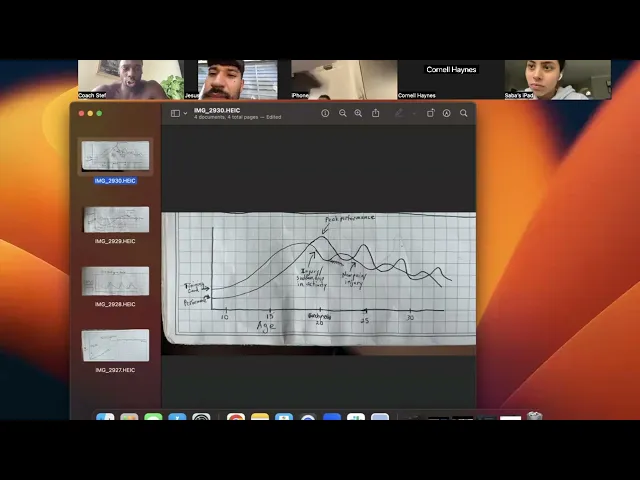
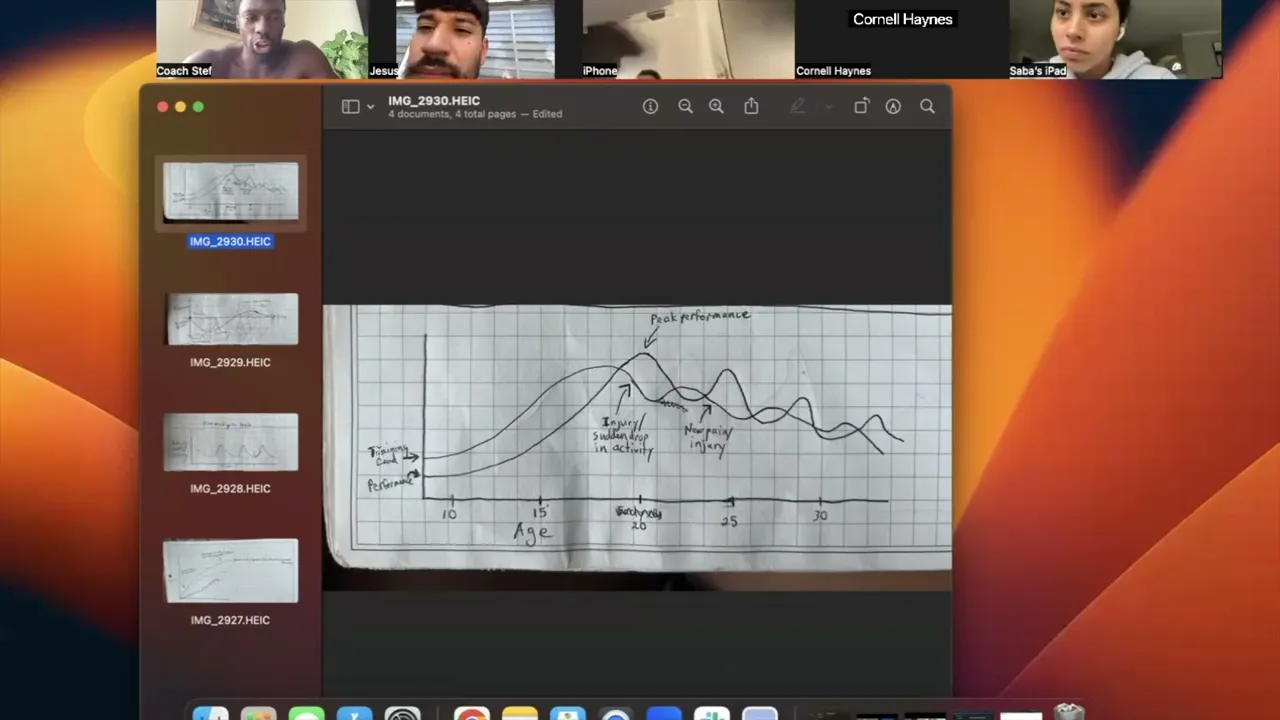
uh graph that also isn't very pretty that I handw wrote and took um but basically on this bottom axis right here we have age so you see the trend is as we get older we start to increase that training load so that's this line right here at the Top right so things like just having more competition having better coaching you have more pressure because like maybe there's like scholarships on the line maybe you have thoughts of playing pro or maybe there's just more opportunity for you to be active in your communities right so as a
result the amount that you train like the amount that your body is active is slowly and steadily increasing right and as a result the level of performance like how You're how capable your body is your body's abilities also follow that so there's this rule that performance is always going to follow the trend of how much and how hard you're training so this is obviously oversimplified right because there's going to be more es and flows like it's not going to go consistently up like this but let's just say this is kind of like the average so
your training load goes up and up and up and for most of us Here actually let me ask you guys instead of just making this assumption so like Manny if you're with us like when would you say was like your of training like the most that you were training like the most active you were in your whole life um I'd say probably sometime last year um but yeah I don't know how similar my situation against to a lot of people but and you're how old you're 26 20 I just turned 27 so okay so you
were 20 25 26 when you were training the most yeah okay got you makes sense and uh Anthony what about you what's up sorry cut up yeah when you when were you training the most in your life like when were you at this Peak right here where my mouse is where training load was the high like you were just the most active probably 19 1920 1920 okay makes sense okay so That's kind of like typically what I see as the average between like 20 to 25 is when like a lot of people are in college
maybe some of you didn't go to college but either way like you're probably like really active because you got recck League games you got like just your buddies who want to go to the gym like you're just really kind of exercising your body like in a very volumous way and as a result your Peak kind of follows that very closely like I I kind Of separated these like maybe a little bit too far um but yeah your your Peak is always going to come after the highest training load once you kind of uh obviously recover
from that right so what happens here the reason why this training load doesn't keep going up for most people like the trend that I see and anybody like step in here maybe if they have like a different scenario here but this starts to go down very sharply because one of two things happens either You sustain an injury or a series of injuries and maybe the injury isn't so bad and you kind of like play on it you kind of like put Band-Aids on it injections pain kill braces Etc and you kind of just play through
it but you slowly decline so that's number one or life happens and I know some of you are going to really relate to this because life happens I put that in quotes and you have like some instance where you graduate from college or you kind of Just are like into the real world now right and you have to like figure out your finances or maybe if you played a sport back in college or back in high school and you had like professional dreams maybe now at this point you kind of realize like hey like I'm
not actually going to make it pro or even if I do I'm gonna be paid like chips you know because like unless you're in the NBA or a really really high-profile athlete you're probably not going to Make that much money doing it so whatever the case is your activity levels right here suddenly drop okay and from there like your Peak might still go up a little bit but eventually your Peak is going to fall as well with that injury or with that sudden drop of activity and then after that the reason why this is just
so up and down is because it becomes a cycle so you after this injury you recover a little bit you rest maybe you saw a PT Or maybe you kind of did like some corrective exercises on your own right and then you feel better again so you go back to training you go back to being active and as a result you see this little peak in performance as well but then the same thing happens you get derailed because you get a new pain or injury or let's say you have a kid or you have you
get married or your job requires more work hours or whatever it may be you plummet again in terms of Your activity so basically this cycle happens over and over and over again until you reach a minimum level of training of activity and that's kind of like your new standard right that's like your standard of okay like I cannot work out less than three times a week or I cannot uh play basketball less than one time a week and that just kind of becomes your new standard and I didn't draw this on the graph here but
the thing is is if your training load stays Consistent like let's say the training load was just one straight line your performance is actually going to keep going down so this is actually one of the first things that I think is the solution here is this big mindset shift right here you got to get out of this maintenance fallacy like a lot of people I talk to like a lot of people I see like on Instagram and all that like I'll ask them what their goals are and like They'll tell me oh yeah like I
just want to maintain but literally there's no such thing as maintaining like if you if you leave a city uh just on its own like uninhabited it's going to go to [ __ ] like it's going to get overrun by trees and plants and animals are going to take over and the weather is going to just erode everything like it needs to be it needs to be upkept in order to maintain itself so what we have to do is to raise our minimum standard of Training right so instead of being like oh yeah like I
just am going to work out x amount of times per week because I know that's what I need to maintain we have to actually think okay what is what are the things that I want to do in my life okay I want to be able to play basketball one time a week I want to be able to do Jujitsu two times a week I want to be able to powerlift uh a couple times a week right and then what we have to do is create a training structure That actually surpasses those things that we want
to do in terms of volume and intensity because otherwise you're just again like those things like those activities are going to get harder and harder and harder whereas if you train harder than the activities you're actually going to see that the activities become easier and the activities become effortless compared to what you're doing in your Training right so I'm going to stop right there um does anybody have any questions or I don't know any any comments um that pertain to this um I feel like well I don't know who else is my age I'm 39
years old but um at 39 I'm as strong and as fast as I was in my 20s and in my 20s in my late 20s I was training crazy hard I was doing crazy amount of training powerlifting doing Brazil Jiu-Jitsu Muay Tha couple times like more you know more Than 10 times a week and um like the reason reason for me me to come to you is because I have just injuries you know and I have lifestyle issues like I have issued breathing I have sleep issues I have pain issues that's what's holding me back
I feel like and I feel like in my 39 years of age I can be better than I was in my mid 20s if I'm able to just recover from my injuries and actually become like uh functional again um I can be better than my 20s I truly believe That but um yeah like I said my issues like pain you know and like just energy levels are kind of down because I just I I sleep so bad because my back issues doesn't let me sleep good that's my main issue you know that makes sense no
no that that makes perfect sense and so that's where these other points come in so posture and I I'll get to these in a second because I see Manny's raising his hand but basically posture body function restoration that's literally the Foundation for everything because obviously you could train like hell and like train super hard but if you're not actually building on the right foundation then yes like your body is is going to go to [ __ ] over time and that's actually why I have this graph that I'll quickly show you guys so this one
basically shows you uh I think I cut off the bottom x-axis but basically this x a axis is how much you train like units of Training time right and then this Y axis is your gains so basically when you build a better base of posture joint function and and like overall movement quality you're going to experience more games per unit of training that you do so so the same amount of training is going to get you more gains more performance more Aesthetics more strength whatever it is that you're training for you're going to see a
steeper slope of that and your Performance ceiling is also going to be raised so the the base is always posture like you can literally increase uh how much how efficient you are are in your training uh because of that but yeah Manny what's uh what's your question man yeah it was actually not a question but I did want to Echo what you said about the mindset thing I think that's super important um especially for hopefully people here are also interested in like doing this for a long Time and being just healthy in general for a
long time and step we actually talked about this in one of our chats um about like longevity and some of like the foremost research on that and this is like a a new understanding that we have is that like if you want to be at X level in 30 40 years you actually need to be at like two 3x that level now because you're fighting against time you're fighting against your aging you're fighting against Natural genetic Processes and and biological processes so um that's something that's like completely shifted my mentality of like being in like
a maintenance phase because if you're maintaining you're you're actually just losing slowly even if you can't tell it probably puts you worse off than just taking a step back um which I guess like folks should know by now with the the NM protocol sometimes you got to take a step back to go forward exactly Yeah that that's right on point man and I guess to kind of tie that back to what arjang was saying so this is the Goldilocks principle I didn't create this one I kind of found it online but basically this is your
performance on this axis this is time and this these lines are the training stimulus right so this is your this is your Baseline of Fitness right here so when you start training you're going to go below your Baseline of fitness and that's what People I think don't really understand is that if you want to be better than where you're at right now your goal shouldn't always be to perform at your Peak like you shouldn't always go into the gym and be like oh yeah I'm gonna I'm gonna max out my bench today like I'm gonna
I'm gonna lift more than I've ever lifted before or if you're a runner you shouldn't go and try and like beat your mild time every single day right like that just doesn't make sense Because you actually need to increase the fatigue in your body like increase the stress placed on your body over a prolonged period of time in order for you to compensate right because all training is is cycles of stress and Recovery where we we stress our bodies and then we recover c a little bit higher than our Baseline so RJ I think potentially
what might have been the issue with you and there's a lot of variables here right so this may not be The only thing but you may have been this red line you may have created too much fatigue and basically as you go through this recovery period you dug yourself into too deep of a hole and you only get back to your Fitness baseline so over time you're adding that stress compiling that that accumulation of fatigue and you're actually just declining because you're not really adapting positively so absolutely I agree like uh I know for a
Fact I was not doing any recovery I was not doing my fure release I was not trying to fix my posture I was just trying to all I cared about was maintaining the same amount of like you know lifting the same amount of weight and doing the classes Jiu-Jitsu Mor Tha sparring like just want to make sure I kept training like I was obsessed with doing like 13 14 workouts a week and um did no recovery zero and uh I'm really lucky that my body's not completely Destroyed right now I feel very lucky and um
you know I found out about posture and functional training yeah I was going crazy man I wanted to be a professional fighter kind of delusional but you know um anyway we all feel like we have delusional stuffman in our 20s but I don't know um the point is yeah like now that I'm like definitely getting into my posture fixing my posture and working on a lot of recovery stuff and uh my fashion release and the Program that um I'm doing I'm hoping that I'm really hope and I feel optimistic that I'm 39 years old by
the time I'm 40 41 42 I can still hang with the young guys in their 20s in the boxing ring and you know whatever I'm doing I really feel like I can do that and uh yeah anyway I'm not on rant anymore but that's my point you know hell yeah man no I support it 1,00% bro and like that's what you're here for like you said I think really kind of Backwards a little bit working on the foundational things that maybe you missed out on in the early parts of your life early parts of your
athletic career like you can really surpass where you were before like I really truly think that's possible so looking at this graph again it's like what other people do will uh well I guess what I see most people do is either the yellow line or the red line either train too hard or they train too little so what we want to Do is obviously Goldilocks right just right the green line in that one you're creating a good amount of fatigue where on a week toe basis like you're feeling worked like you're feeling like your body
is tired but then you'll have like and we'll talk about this in a little bit if we have time but then you'll have like a weak period after maybe like three to four weeks of going hard consistently you'll have a week period where you deload you'll take off the Training stimulus and you'll really allow your body to recover so that it can come above your Fitness baseline and that's what people call Super compensation right and so there's always going to be fluctuations in your performance because your body doesn't basically to say it in a funny
way your body wants to be a weak piece of [ __ ] your body doesn't like being at a high level of performance because it takes a lot of resources so you have to make Sure that you cycle your training accordingly like you have periods where you push and then you have periods where you're chilling like you can still train but you're chilling out you're letting your body do its thing letting your body adapt so that's uh the Goldilocks principle we got to find this just right here and we can't we can't let life get
in the way we can't let other [ __ ] kind of like deprioritize training like if you really want to be good and do This for a long time do this training thing for a long time be active for a long time you got to train your body like Manny said because it's only downhill from here so um anybody got any questions on that before I move on any comments it's okay if not okay cool so um wait sorry real quick I was gonna ask like how do you know if you're training too much because
I feel like I'm always like a pendulum swing going going back and forth between Training too much and then not training enough like in terms of intensity like there are times where I push really hard and then it takes me more than the two days to recover before the next workout uh or like I'm not training very hard and then I can it it almost feels like I can work out that same workout like every day but I'm not really pushing myself so like what is the how should I feel when I'm actually pushing Myself
like the right amount got you yeah that that's a really really really good question because I was literally about to cover that so essentially you have to understand that training stress accumulates right so I think I have a graph on that actually forget about this because I kind of already talked about that but basically training stress accumulates and it's okay if you go into a workout and you're not sweating like crazy you're not like feeling like super Fatigued or sore the next day like that's actually good like in the same way I don't know if
you guys maybe some of you have heard like when you're doing hypertrophy training like you're training to build more muscle you don't want to go to failure on every single set you actually want to leave two maybe three reps in the tank so let's say you pick a weight and like you can actually go to to failure and do that 10 times you actually instead every set you want To do that seven or eight times and that will actually funny enough allow you to accumulate more reps over the course of that whole workout and over
the course of like maybe that whole training cycle right so I think it's the same thing like in the macro of training like you want to be at a place where maybe you're hitting like a six out of 10 RP or like maybe even a seven out of 10 depending on what exactly is you're doing and what part of the training cycle you're in but Basically you need to sometimes air on the side of not training yourself so hard every single workout I would rather train consistently and do that like maybe I can go high
intensity right like I'll go and do like a 30 meter sprint but like in one workout but instead of doing 10 of them maybe I'll air on the side of three of them and maybe yeah I could have done four at that same high level of intensity but I'm just going to do Three just because I know that I'm still going to be training more that same week like maybe I have a 200 meter sprint on Friday and maybe I have like I don't know like Hill sprints on Wednesday right so you can't get overeager
because what most people do is this right here they will Spike up in activity level they'll reach this peak right here and then they burn out or they'll get injured or their body will feel like [ __ ] and and then so their Activity will slowly drop until it reaches this bottom point and then they're like oh my God like I'm not doing anything I'm barely training I need to train really hard to compensate and then they Peak again really quick super big spike and activity levels and then same thing they burn out right so
I think that's like the overall like highle concept sabba to answer your question but really like in practicality what you need to do is structure your Training accordingly so you need to actually plan out weeks at a time months at a time for maybe months isn't like totally crucial if you're not going to be an Olympic level athlete right but like at least one month ahead you should have on paper what exactly you're going to do how you're going to progress your training in that month and just know exactly like from there like okay I
did this this month and it worked out I feel like my body is kind of like uh feeling A little bit better feeling stronger it's performing a little bit better now let me turn on the intensity again uh maybe like add more difficult variations add like more intensity and just kind of overall progress in the next month so I'll I'll stop there and see if you have any followup questions yeah um to add on to your point man is uh I want to say that um when I observe the best athletes in the world I
think Russians have the best program they have the best Wrestlers the best boxers and everything else because uh they focus on consistency they don't do like they don't create they don't work out insanely hard but just do a lot of play fighting throughout the week that's why because of that they're less sore and they can get more practices in per month than the American athletes that's why you might have a freak athlete like you know um I forgot his name a couple guys here and there who like win gold in the Olympics in America but
generally Russians have the best athletes because they they they get less burnout and they get less injuries because they do a lot of play fighting you know yeah yeah they don't always go at 100% yeah that Mak absolutely yeah yeah yeah that's that's exactly that's on point Saba anything else um no I I I think that covers it uh I think like um I notic like also being the like one of very few women like in The group I noticed that like I do have to structure my workout or like my intensity of workout around
my menstrual cycle like there are times where the same workout if I do it like right now I'm currently like in my in my PMS like portion of of my menstrual cycle and I noticed that if I work harder like it it really throws off like a lot of my hormones and like I I end up breaking out more and I have like a lot of other issues that end up coming up so I have To be like I don't know like really aware of uh that I'm not pushing myself too much like as my
period approaches and then once like once my period has started I noticed it's really important for me to like sleep more than normal like more than the eight hours like probably closer to 10 hours a day um in order to like recover from just the same everyday activities so I don't know it's something that I'm I'm I'm trying to figure out myself also because I notice My appetite changes throughout my menstrual cycle as well um and like my motivation level so I think that's something like that I just have to figure out like how my
body works specifically but yeah I think I think what you were saying like about how you know like I I guess what both of you guys were saying about not going too hard all the time and really being consistent and just like doing what feels good um and not doing like I I Don't know I I never really like enjoyed the gym like I don't love going there um and like working out but I think doing just enough and like just showing up I think is the most important so yeah I appre appreciate that yeah
that that makes a lot of sense sa I think um the whole menstrual cycle thing is actually something that's really interesting uh my girlfriend actually funny enough is here and maybe she could give you like a little bit of insight right now on that But basically from what I understand there's certain points in your cycle where you're more suited to do different types of training so for instance like she might be able to tell you better than me you could come Onre but basically like let's say like when you're ovulating you might be better suited
to do strength work or when you're like actually going let me not even do this You hi hi guys super nice to meet all of you um yeah just a little bit of insight like yes I think it's super important to kind of like structure yourself uh around your around your cycle and funny enough like I found that even staff is like training super hard and he has these Delo weeks when he's intentionally like taking away from the intensity what is a bit different for us is that we tend to be better in certain Activities
to certain faces so in the first two weeks you can really ramp up the intensity do runs do high intensity interval training things like that and then after your ovulation window you will notice is that your energy starts to go down that's when it is ideal to do more like slow strength work and uh it it depends person by person I don't feel like it affects me much it affects uh some women more um but generally like having more like Intensity and running and high intensity interal training the first two weeks still working on strength
but maybe like being more dynamic overall then after your ovulation be like more like slow and strength focused and then once those days comes that might be a little harder for you then you can take a couple days and uh go I really like to go swimming it's I think it's amazing or walks or do the same lifts but like do half the amount Of sets that you would usually do um I feel like those things work pretty well for me yeah awesome thank you so much yeah I definitely agree I feel like I I
definitely have more power and strength during my ulation phase and then I cannot do cardio to save my life when it's time like if I'm getting cramps like I'm not moving my lower body like that at all so I feel that yeah sure appreciate all the men for taking along for this journey Uh maybe you have a in your life who can use this information uh thank you so much for listening and yeah so like nowadays we don't we don't know what is a woman what is a man right I'm just kidding I'm just kidding
sorry for that's going on yeah um thanks Andy uh yeah and I think honestly like the guys in here can also kind of take some some knowledge from that as well because although we don't have like the same kind of Cycles I do think that we should cycle our training within bigger periods of like let's say like of a month right because what I see a lot of people doing is they'll work out chest tries legs right and they'll have some variability in terms of like how uh they're moving like what movement patterns they do
but there's no variability in terms of like the energy systems that they're training so they're always doing these same lifts for hypertrophy but they're not tapping Into their aerobic capacities they're not getting out and doing like a Sprint or anything explosive right so I think and this is actually something that I put on here so training variability your body responds to training obviously but I think the more useful way to think about it is that the body adapts to randomness of training and that's because it's a survival mechanism because your body is going to want
to be prepared for literally anything that Comes about any potential danger uh or whatever it may be so overcompensates and when you just do the same workouts all the time your body kind of feels like it can let go it can relax and it lets go of those physiological adaptations it made because again like I said the body wants to be weak naturally so it just let go of those adaptations because they cost resources to maintain so yeah I think that's as a General of some like we should all have some kind of cyclical nature
to our training instead of just doing the same exact things month after month week after week that make sense anybody got any questions I know uh I'm talking a lot here so I want to uh really make sure uh I open the floor for you guys if you guys have any specific things you want to add or any questions anything like That heard somebody clear their throat doesn't mean you want to talk okay all right so what else do we have here ah and this is another Point too so Saba asked how does she know
how hard she should train and is she training hard enough that's where you need to test because you literally don't know unless you're testing like you can kind of have an idea like yeah you can kind of just like undershoot just a Little bit like what maybe your maximum threshold for like a day or a week might be and just accumulate that stress over time and then have like a week of recovery right you can do that of course but I think a better way to go about it instead of going by feel is to
actually test your performance so the example that I wrote out here is that I I don't know anything about car racing but I know that those dudes don't go out and do a day Tona 500 every single week Right they focus on fine-tuning their car and then they do these little mini tests to actually see where they're at like for instance like I know they kind of like test like the maximum Revolutions of the tire as like one uh example of a test right instead of actually going on the road and again like driving a
whole race because that's going to be very energy demanding so with your testing a lot of times what's cool too is that you can actually Incorporated into your training so like for instance like I'm actually in a train in a testing week myself for track and what we're doing uh are like I'll give you an example are like 30 meter Sprints we were timing them today and basically just seeing like uh what the Baseline is for our fitness because this is the first time that we're testing this season and it also serves as a whole
workout in itself because this is a down Week I only needed like I think it was three we did 330 MERS whereas before like the three weeks before this when I was actually pushing maybe I would do like five or six you know so I'm still training it's a D Lo week but I'm still training it's lighter and I'm able to test at the same time to get my Baseline so that's one example of a test another thing that might be relevant for you if I don't know let's say you want to dunk really really
well you want to be able To do trick dunks maybe on your rest week on your D Lo week you go ahead and test your vertical jump like how high can you touch off of a standing vertical and then another one that's probably even more relevant to like actual dunking is your running jump so you run up to like your plant like maybe like a few steps like five six steps and then you get into the jump and see how high you can touch so when it comes to testing it's all about what measures can
We use that are most similar to the actual event without necessarily always having to do the event itself because the last thing I'll say here is for me I'm not necessarily trying to jump like 7 eight right now like my very maximum Peak right now I'm just trying to kind of slowly build up to that point where I'm able to do that because again like we said the body does not want to be at that high level of performance for a long time so instead of testing my Maximum high jump and seeing if that improves
month-to month I'm going to test some of these other variables to see how those are impacted by the way that I train and recover so does that does that makes sense and I guess like one more thing like this little example I have here so if you want to perform better on a basketball court you shouldn't use a bench press as a measure because bench press doesn't really say much about how You you perform on basketball court so that's why I said use measures like vertical jump or like a sideline to sideline Sprint test instead
any questions anything to add Okay cool so time is it oh we got 10 more minutes all right so last thing to cover here I guess perfect timing is to just rest adequately we already kind of covered this a little bit but basically the point is is that it's okay to have periods where you rest less than others Like again like right now I'm in a cycle where I guess I just finished it up but we were working six days a week just one day of rest and the rest we were just pushing hard but
then we have this strategic week where we're cutting the volume about in half maybe a little bit less than that still keeping intensity pretty high like I'm not going to go and do a 30 meter sprint at like 80% of my Max intensity I'm still going to do it at 100 but I'm going to do less of them So like Anthony for you if you want to do like powerlifting lifts I would probably instead of doing five by five on your D Lo week I would maybe do two by five or even like two by
three up the intensity a little bit and cut down the volume at the same same time so that's an example of that uh because basically you can't let your performance debt grow too much without paying it off or else it's kind of like just AC crewing interest it gets harder and harder to Pay it off and it Cal pounds and over time that's why you get to a place where you feel burnt out and your body feels all these aches and pains they just kind of uh accumulate over time right so as a general rule
I've kind of already been saying this but don't make hard training pushes for more than three to four weeks at a time without having a bit of a D Lo week again that could be as simple as just doing the same exact thing that you were doing in that training cycle but Cutting the rep cutting the uh the amount of volume in half so typically I would cut the sets in half not the Reps so like if you were doing 3 by 10 of everything I would do either one two sets by 10 of everything
as just a very oversimplified example and yeah last thing is obviously just to uh think about like work workout recovery from uh from day to day as well uh because we've been talking on a very kind of like macro level so bare minimum Once a week you should have times in your schedule where you sit and literally do nothing and by nothing I mean no phone no headphones in your ear like don't even try and meditate like don't try and do any activity literally no mental engagement just sit and do nothing and and for me
that's been a GameChanger and funny enough like I feel like we're kind of always feeling like we need to push always feeling like we need to work always feeling like we need To grind but the better that we can recover the more leverage that we get from each little unit of work so like for me in my business right now obviously like I'm trying to juggle training like a madman and also doing business things when I actually take the time to like on a Sunday go out to the beach or go out in a mountain
or something literally just like hike or literally just like be by myself I come back to that week way more recharged Feel like I'm way more productive and everything I do just holds more weight so if you're not doing that already highly highly highly recommend that and even like having a period like that every day where even if it's 10 to 15 minutes like I know everybody has 10 to 15 minutes just sit there no phone no stimulation no nothing literally just let your nervous system chill the hell out because all these things Netflix social
media even sometimes talking to Some somebody like that can all stimulate your nervous system and prevent actually maximizing your recovery so try and fit that in I recommend 15 minutes a day and then once a week have a period of one to three hours at at least where you're just straight up doing nothing so that's about it for recovery and yeah I think that's about it guys um so yeah uh how was that did you uh guys like this do you guys want me to do more Stuff like this in the future was this helpful
any feedback would be good yeah it was very helpful you touched on a lot of good things that I probably haven't heard before maybe haven't heard in a long time I'm sorry I haven't really talked much I'm kind of under the weather but I've been really absorbing what everybody's been saying what you've been saying and it's just it's nice to know um that maybe we all kind of have the same or similar Struggles um so you know maybe if you're going through something you think it's like d this is kind of weird or maybe I'm
not really understanding what I'm doing or what I should be doing you know you're not really alone and you have people around you that are may be going through the same thing and then you have someone like Steph who can guide you in the in the right direction so this was really good it's my first meeting um because usually I'm working but I went Home early today so maybe it's a win at the end of the day so uh thank you for that awesome man yeah my pleasure and like you said I think the reason
why I've built this community the way that I did is because I know a lot of people are going through similar things a lot of people are in kind of similar points in their life like obviously we have a bit of a age range right but I think we're all here for the same reason we all want to be absolute beasts be able To do whatever the hell we want to do with our body without kind of feeling it break down without feeling like it's not really kind of like working the way that it should
right so I think you hit it on the head Franco and uh I'm glad you're here first time is the best time time and hope stay uh consistent from here and just uh get you guys all here together so we could share uh in what we're struggling with and uh obviously provide solutions for each other so yeah Thanks again for coming out man uh Manny what's up yeah I was going to say probably the most important thing for me as kind of like my next thing to focus on is what you said about like basically
creating train blocks um I feel like that's probably the biggest Gap that um probably a lot of us in here are having is we're all kind of past that like beginner stage where anything you do you can pretty much recover from you can't Even push that hard to be honest and you see a lot of like reward and and and gain from that um but once you kind of hit that next phase of training into like the Intermediate side um you definitely need more structure and then yeah like specifically balancing that with like lifestyle stuff
because um that makes the structure even more helpful and and kind of keeps you more on track um so yeah I think that's super valuable to think about yeah yeah and in Terms of the whole lifestyle thing too like all of us have something else that we're doing outside of just training like it would be nice if we could just train and not have to do anything else right but I think the reality is we all have like different things in our life that we're taken care of right so the more that we can kind
of reduce our cognitive load in terms of like how we're training and basically kind of just automate that whole process right And I mean I guess that's partly what I'm here for is to help you guys out with that but basically if we could just have our program know exactly what we're going to do on the day on the whole week on the whole month and we don't have to go into the gym and kind of think about that like that just saves ourselves so much bandwidth not only time but like just mental with in
our in our head to be able to allot to other things that maybe are more important or maybe just That you need to kind of focus on in life you know so that's the thing that's been really helpful for me because I even as a coach myself like I wasn't always kind of being as strategic with my training you know so yeah Matt he's here to automate his training his whole life yes sir um but yeah guys um I think uh that's about it from my end it was dope to have you guys all here
and hopefully we could come together more often I mean We do these every week so why not and uh maybe I could Deep dive into one of these topics um if anybody has any ideas right now shoot but otherwise I'll talk in the group um I'll text in the group and uh ask you guys maybe what might make sense to Deep dive even further into uh next week hey I got a question man how old are you can you guess uh well me know black people age very well so I can't really guess but Let's
say you're 36 35 wow I'm gonna be that's gonna is that a compliment is is that a compliment or is not that's a I don't even know how to take it like part of me thinks that's a compliment because like I'm beyond my years I guess but then part of me is like damn I look that old you're mature and you're knowledgeable know the the age thing is because you carry yourself in a very in a very like humble and like experienced way that's Why I say 34 you know I know okay makes sense I'm
27 damn bro yes sir I'm congratulations Saba raising her eyebrows too damn man that's impressive that's impressive you know a lot of stuff I really only I I only thought you were like closer to your 30 because like I feel like that's when people are like oh crap I'm not in my 20s I got to like pull myself together you know and I feel Like I don't know like the people I'm around I'm I'm 24 so like I'm I'm still around people who get sosed every weekend and like don't care about anything else and are
like literally only going to the workout and go to the gym so that they can drink more on the weekend so like like you know like to to see that transition and to be around more mature people like I naturally feel like that means older but also age is completely irrelevant your body and your Mind age is what matters the most fact yeah appreciate and like like I didn't mean insult by that but I'm just saying like well and like I'm a fitness coach myself so I'm learning from you to apply your principles to my
clients better and um like I said like she said I didn't party in my younger years that's why I think I'm a little bit healthier than people my friends who are my age right now their bodies are kind of breaking Down whereas I feel like I'm going to be a complete beast but by the time I'm in my mid-40s I really feel like I can and I I really look forward to proving that to everybody doing this program and healing from my injuries so thank you so much bro yeah thank thank you guys all for
trusting in me to help you out even though I'm only 27 and uh yeah we'll we'll keep on moving with the progress guys and uh keep on keep on getting after it so anything I could do Let me know I'm here to support here to serve and uh yeah if you guys have any other questions shoot but uh I actually do have another call right now so uh if you have any other questions just shoot them in the Discord and we'll talk soon and I'll see you guys next week thank you st peace out thank
you no doubt thank you guys all right man peace out have a good day peace guys that was sick bro see you in there Yeah I'll see you in uh the meeting right yeah we got it right now I'll see you there all right peace bro peace all right that's a wrap for the video I hope you enjoyed that live recording of the coaching call and if you did get any value from this and you want to see more like it in the future just drop a like drop a comment let me know how it
was let me know if you have any questions I'll get back to every single one of you and if you want to be part of the Conversation and actually join in on these discussions asking your own questions engaging with the community you just saw book in a call down below link is in the description and you can chat with us to get you enrolled but if you're not sold yet go watch my other videos go watch the one that's highlighted on my YouTube channel take a look at all the results on the highlights tab on
my Ig at air dovy so go sell yourself and once you're ready To make that leap and actually level up and start making some real big boy gains you know what to do either DM me on IG or just book in a call down below and we'll get you all signed up see you on the other side