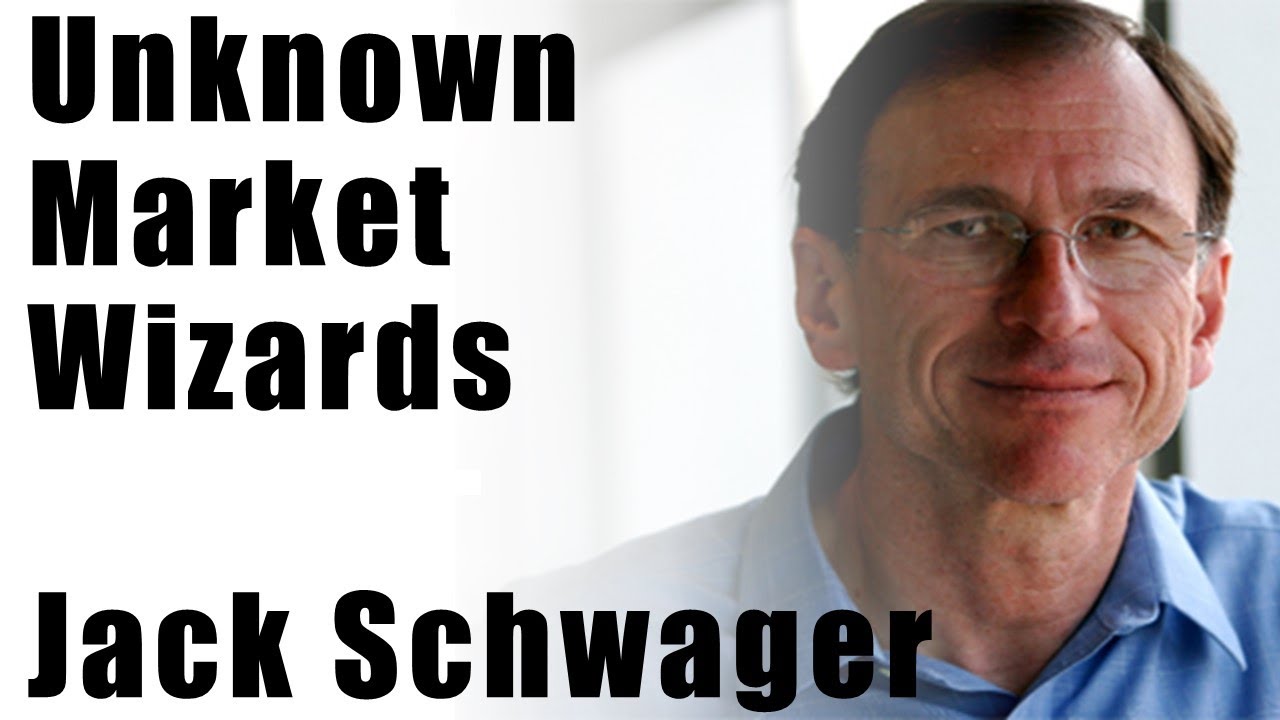
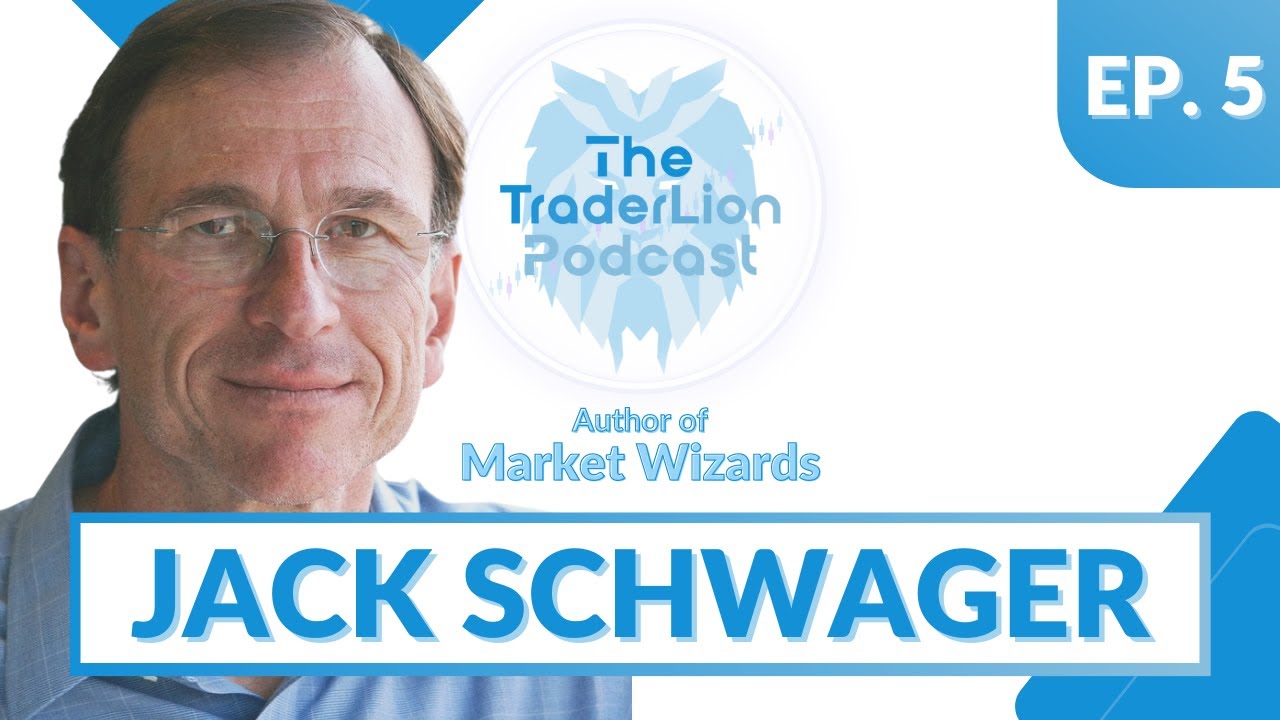
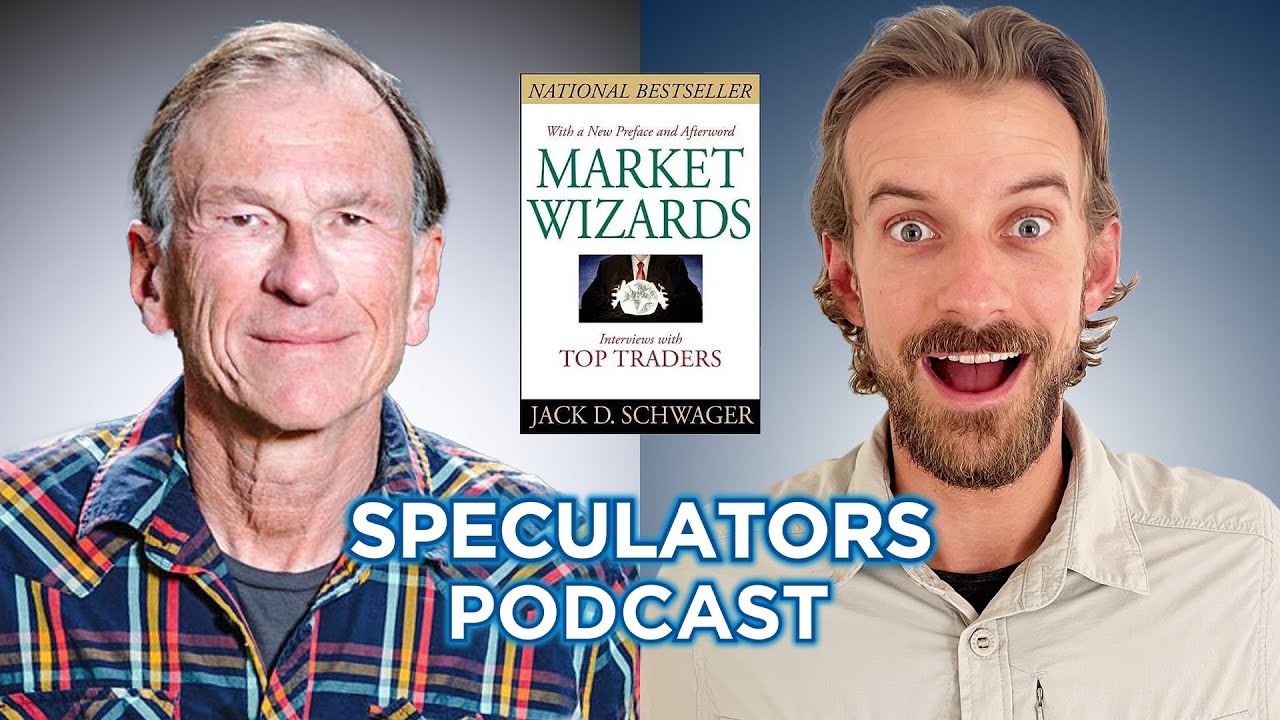
I'm delighted to welcome our next guest Jack schwager renowned author of Market Wizards the new market Wizards stock market Wizards unknown Market Wizards uh the best Traders you've never heard of no doubt everyone in finance uh who's ever been interested in trading has read at least one of his books if not part of some of his books uh Jack I'm a huge fan of your work a real honor to finally meet you welcome to the show thank you D glad to be here like I mentioned offline um one of your books of the New Market
Wizards which you wrote in the early 90s was required reading from my finance one of my finance classes when I was at Mill um it was actually on the reading list we had to read it so um Little Star Struck to I finally met you uh virtually Jack I have so many questions for you regarding uh your past your trading experiences and of course the people you've talked to uh my first question is you probably got get asked this question actually quite a lot but who is the one Trader of the many many people you've
interviewed who have actually changed the way you trade yourself oh um well I guess uh it's not just I would say Bruce covor in a way because of one of the lines in his interview which has stayed with me and which uh dominates my trading philosophy and that and that that one line certainly has more an impact to my personal training anything else and it's also I would say uh the one sentence if I had to pick out of all the all the marer wizard books and I could only give one sentence of advice it
would be that line and it's basically know where know where you will get out before you get in and uh that one short sentence 10 words is so critical on multiple levels first of all it implies risk manage you know strict risk management because you know you're deciding where you g to get out presuming you stick with your own plan uh so you make that decision so that limits the risk on any trade you might take and the second part of it is it implies implicit in that advice is the realization that you have much
more clarity before you put on a trade than after because once you put on a trade you lose objectivity everything that comes out everything that that particular Market does you've view through a lens of Hope in some I mean not that hope is good but as human beings you want to interpret in a way it's favorable to your position but if you make a decision where you're going to get out of the position before you put it on it's at a time where you're neutral and you can make a rational or the best rational choice
so that so if I had to pick one person that influenced my trading most I would say it's it's Bruce through that just one sense of advice let's just talk about that for a minute when you say uh knowing when to get out are you talking about setting a price Target are you talking about stop losses in Practical terms what does that mean Jack I am actually talking in my case I'm talking about stop losses okay um it's difficult to you can you can set where you think the trade can go and have an objective
and all of that but much more critical is knowing where you get out if the trade doesn't work for you um and if it does work for you things the trade evolves in certain ways that that may change your mind or whatever so I think it's not bad to have it Target initially to have some some idea but ultimately uh I think the real critical aspect is is the getting out when when it doesn't work because that keeps every trade from doing much damage okay interesting um I've heard about um well I've talked to people
about the uh idea of setting a price Target uh which is which is the notion that once the stock hits a certain level that's when you get out and um this particular gentleman that I've spoken to um this about he said that he doesn't really believe in this principle because suppose you have a Target of $10 for a stock and it's currently trading at five and you've arrived at that you've arrived at that conclusion based on a number of valuation metrics that you set yourself well the stock is trading at 10 you get out of
10 and it goes to $20 you just missed out on $10 upbs side on the flip side let's say if the stock goes to $9 and you're still waiting for an extra dollar and then it keeps going down well you've just you know you've just lost out on an opportunity to sell when you should have um how would you respond to this gentleman's uh I would say that's exactly right I mean that's why I say you can have a preliminary objective but it shouldn't be anything rigid because you know as as that that Trader uh
uh indicated you you can both give up the potential to have much larger gains as well as give up your gains you have just thinking for your Target so personally I kind of in favor of the idea for most trades you know raising the stop raising the stop uh initially to break even when it's when you can as soon as you can do so and then giving it room and raising it periodically one way to do it uh you know from a chart standpoint one way to do it is Market along the way let's say
you're long in this particular case a stock it consolidates and then starts going up again you can put a then you can lift your stop in below the consolidation that becomes a meaningful point so now if if you got stop you know that so you then the market May reverse stop you out and you never hit your target that's a good example this way you've releast protected part of the gains and you've done so using a meaningful reversal in the in the stock in this particular case um and if the stock does keep keep on
going your 10 to $20 C case uh if you do this approach it's quite possible you'll be able to ride it all along maybe not not to the top but you'll be able to ride more of it because you're just periodically raising the stop always at a point where the market shouldn't get to and are there any indicators that you look for personally uh when it comes to raising or lowering your stops yeah let's like I said you know uh you want to fix points which have some meaning and are not too close so as
I indicated one way to do it is use a consolidation and then you get a cons a breakout in your direction going back after that breakout going back below the consolidation is at least a sign of failure now I can go below and and reverse again sure but at least you're requiring the market to do some real damage before you get knocked out so that's that's one that's one way of doing it uh uh you know that's basically it you know so that's that's uh that's as good as any how do you feel about this
year's rally and tech stocks The Magnificent Seven which pushed up the entire S&P 500 if you actually strip out those stocks um and take a look at an index that doesn't have those stocks for example the Russell 2000 it's been flat if not down on the year actually it is down on the year so just taking the tech stocks for example do you think they um uh they're fairly valued now or perhaps some would say they're over stretched in terms of valuations did you look into that yeah I don't have a you know I I
don't have much or any fundamental opinions I have are never down to the St I'm not I was never uh one to that was never my approach to look at stock fund fundamentals uh if I trade stocks it's strictly through you know strictly on on a chart basis it's it's not through any company fundamentals now I may have again mostly technically oriented I may have an opinion on what the broad indexes look like from a technical standpoint and that would influence that would influence my my decision on individual stocks but it's not the fundamentals on
stocks so for example if I happen to be uh negative on uh negative on on the market uh uh so then I'll be looking for situations to short as opposed to you know buy I'll be biased to looking for shorts in that example so but but but I'm not doing company fundamentals all right uh well let's just take a an example of a of a stock um and then uh like to ask you about its technicals and just the idea behind this question is just to get your philosophy and approach here if you take a
look at anv video for example which started the year at around 130 uh $150 um a share it's now currently trading at 435 uh it just kept rallying throughout the first two quarters at a certain point one would say all you you got 200% gains it's enough but it kept going up when you look at technicals like that and it just moves up in a straight line before finally consolidating at what point do you think to yourself uh enough's enough uh it's time to take profits assuming you got in before the uh beginning of the
year yeah if you're in that fortune situation basically if it starts when it starts going exponential when it's when the curve goes from basically linear up to to you know exponentially up uh those those are usually types of blowout phases um also for stocks you can uh you can look for high value so on the short side by the way I think it works much better on the short side than the long side um so you will see that there are lots of cases where stocks particularly stocks that have had big up moves uh can
hit these very high volume days and that can often you know be in the vicinity of of of what a top top is so those are two things you know excessively high volume days and exponential rise are things to to be wary of also uh lots of lots of bullish press coverage and particularly uh you know watching financial news programs uh you know interview type programs a lot of people pumping it pumping that stock that's also a negative uh your first book Market Wizards which came out I believe 1989 um it's called Market Wizards interviews
with top Traders uh many prominent uh investors and Traders featured your book including Richard Dennis Paul tutor Jones was interviewed um first of all how did you come up with the inspiration of going about interviewing America's top Traders how did that how were you at the time yeah yeah yeah well well I was a research I was a research director at uh you know for uh at when the gate came in out at that time I was I believe I was with Payne Weber but um the idea came to I should mention that well the
Catalyst was really that I had written another book before most people don't realize that Mark Wizards wasn't Mark Wizards was my my first big selling book but it wasn't my first book my first book was something called the complete guide to the Futures markets which was more of an analytical tone and um the book did well for what it was and uh and I got got approached by another another publisher you know took me to lunch and wanted me to do a whole series of fundamental books and I said but I did that I had
done that book on a sabatical and it was it's a like near 800 page book did a prep PC day so it was an immense amount to work um but I said I don't want to do that and then you do that type of a book you don't sell that many copies so I said I want to do more of a a road audience book and I had known some really good Traders and I had had this idea of of what turned out to be Market Wizzards I just had a full-time more than full-time job
and I I just didn't see how I could do it so but I mentioned I had this idea you know I said if I was doing anything else I would want to do a more mass audience book and he said what is you know gave that told me I did said well why don't you do that then so that was the Catalyst and sort of I needed that push to get me to do it and it was pretty much something that I did on nights and weekends type of thing uh I I had the advantage
of knowing a couple of the you know a couple of great Traders which is one of the reasons maybe why I had the idea to begin with and uh so so those Traders led to like uh I knew Mark I knew Michael Marcus who was chapter one uh personally uh through him I knew Bruce covor I'd actually been a commodi SC for year uh working with Michael uh so um I and then through interviewing Traders other they would recommend other Traders and I did some research and found other Traders and basically that's how the book
came came came together and how did you how did you make the initial uh selection of the people that you would interview yeah I was looking for the spectacular stories so in the case like for example Mar just the ones I mentioned Marcus Marcus had taken a $30,000 account in commodity scorp and turned it into 80 million I knew that for a fact I mean I been at the firm um uh Bruce CER who he hired incidentally uh um you know had had had it when I by the time he was internally at that time
was still internally within uh he had formed tax in yet he was still inside of commodity scorp um so he had turned he had a return of like 88% over about a nine-year period or something so uh they those were like spectacular spectacular records and then there were people that were known I mean like Richard Dennis uh you know the story was well known I mean the guy had turned couple hundred dollars into a couple hundred million you know uh so there were some spectacular stories out there that people knew um yeah so that's I
was looking for I was looking not I wasn't looking just for good performance I was looking for the spectacular you know performers I I'm just curious as a as a fellow interviewer how did you convince them to sit down with you and divulge some of their secrets uh in a public interview that would be published in a book yeah so that's well some cases was P you know people personally knowing me so um in fact in fact Bruce CER uh he actually said to me and Bruce C by the way is an example of one
of the quite a few people that I've interviewed who never gave another interview um and he said as far as I know and he said uh he said you may be wondering why I agreed to do this and he said because like I've gotten bigger now and PE stories are starting to peer appearer about me a press and um and I just want one record out there that I will trust is is is accurate so he trusted me to be you know honest in my interview so uh but one one of the tricks I've used
do not tricks but one of the things approaches I've used that from the very beginning which I think has been instrumental in my getting people to be honest and open up is um I I tell them you know you'll be able to see the in finished interview before it gets printed and uh if you think I got anything wrong or there's something that you need to be changed then we'll come you know then will I won't print it without your permission so it doesn't mean that I would you know they'll tell me how to do
it but basically will come to some sort of compromise okay either sometimes you have to take something out or sometimes you have to change the wording or whatever um so in that way I kind of give them a bit of peace of mind so they know they don't have to otherwise the Traders would be self-censoring constantly because if you know it's going to be appearing in a book uh people will always be kind of just carefully thinking and holding back and being careful in what they say so this why I TR and the other thing
that's one thing another thing that that's helped me greatly is sometimes the length of the interviews so I could think of an example like Bill lipshitz who at the time I guess he had just come off being a Trader at Solomon and he had he had traded currencies options U at Solomon and in size but I you know like billions of dollars size so um anyway in his interview it seemed like a good story and um so I interviewed him in his apartment and you know for a couple hours you know nothing and um then
we stopped we ordered in Chinese food or something we were eating computer was the recorder wasn't on and and then he's coming up with interesting stuff you know so I look you gota you know you gotta let's cover that so and then we went back and so all the none of the first few hours of the interview appears in the in in the book you know all the material that I used came after the first few hours and that's not you know number of cases that's what happened it was uh just by the length of
the interview things come out that don't come out initially you you've interviewed um a wide spectrum of people um Traders technical fundamental uh technicals to uh uh fundamentals uh to people who look at everything in between and bit of both um and they've all had the common characteristic of having performed very well um have you ever just thought about why it is that completely different approaches can can can lead to similarly good results you've got people like Jim Rogers who would never in your own own words never do well as a technician and you've got
other people who are technical analysts who um like yourself don't look at company fundamentals um two completely different Sciences or schools of thought that all lead to money making uh why is that yeah so actually that's your your point there is one when I give talks it's often I use that particular example and I use interesting enough I use Jim Rogers Jim is when I asked them you know do you ever look at a chart and it's almost like he was admitting a guil a sin saying well if you mean if I want to see
where where the price has been or some history but do I believe any of this and he lists off some technical terms and he say that yes that's all a bunch of you know garbage and on the other hand you have somebody like Marty Schwarz who says you know I spent 10 years on fundamentals lost money every year and I got rich as a technician so you got you got really totally of viewpoints and so what I draw from that is that there's there's value in fundamentals there's value in technical both approaches have value and
there's value in mixing the two but both approaches are not right for everybody you know people are very very different and uh you know not everybody the the same approach won't be right for everybody so if you take somebody like Ed Thorp who's a who's a um PhD math brilliant PhD mathematician his approach is going to be quite different than somebody who's kind of just finished high school right you know so just because of just because of the difference in say quantab ility in that case but also people have in bi biases they they either
believe they believe in technical orientation technical methods or they believe in fundamentals and that belief system really dictates a lot of what may work for them and also what's comfortable for them to use so so one example one reason I I don't use fundamentalism I started out as somebody and not on stocks but I I came for the Futures world but I started out as somebody who never use charts um and only tried to use fundamentals and I you know I tried to build you know price forecasting models and stuff like that um and I
ultimately ended up just being purely technical but the reason my problem with fundamentals was that it didn't give you away for risk management at least not for me so to me the fundamentals almost seem to to fight risk management right so if I get if I do a model and it says well the market should top out of 35 cents and you know there's nothing you know the market can go to 70 cents there's not the more it goes the higher it goes the more it will seem overpriced and that was a that ended up
end up being the big problem for me uh the technical analyst that you've interviewed and perhaps you can you know even answer this on on behalf of yourself if you uh you know follow this methodology I'm assuming technical analysts uh don't believe in the random walk Theory which is that prices are completely random yesterday's prices historical patterns don't really mean much when it comes to predicting what's next right right I mean I would say not only that I would say basically you know all successful Traders don't believe it because they you know they they think
their own experience just refutes the uh the the idea that the markets are a true random walk now they they have aspects of the random walk they have aspects significant aspects of efficiency they actually behave in a way that's in many cases very close to efficiency but they also have radical departures from that and I think whether people are fundamental or technical uh they were successful in trading the markets will come to that conclusion so you know from from as a fundamental example uh so Traders let's say uh yeah give you an example uh so
um Martin Taylor uh who was in hedge fund Market Wizards um he started out as an Emerging Market analyst But ultimately he was trading you know both both emerging markets and and developed Market but I interviewed him at a time and um at the time he had uh you know two two of his main positions he was he was long apple and he was short rim and uh but let's look at the Apple one so this was a point where the his biggest loss at the time and his big draw Downs were like between 15
and 20% those were his big and he was one of those kid when I was interview him he wasn't a draw down that was like close to 15% and it was all one stock it was Apple so he was totally totally convinced that the market was wrong that he was right and his basic argument was that the market is and you looked at the earnings forecast going forward and he says these earnings forecast they're assuming they're just allowing for the current markets that apple is in they're not allowing for the expansion into China and you
know elsewhere and it's going to be just dramatically larger growth in apple than than the earnings forecaster so he was and the fact that the market had come down made it all the more attractive so in his mind is there there was no doubt and so I'm thinking particularly somebody who's a pure fundamentalist here in his mind there was no doubt that the market was totally mispricing it because yes he he believed he UND stood it much better than the market did so that's an example of where if the it's not a random markets the
markets aren't the market isn't efficient the market is being inefficient that he's seeing it so so it's true for both fundamentalist and Technical of not believing the the efficient market hypothesis okay uh let's talk about efficient market hypothesis so I interviewed uh someone argu the father of uh the efficient market hypothesis Eugene F who won the Nobel priz for his work on this issue um he is um staunch advocate of this of this Theory and he believes that in his in his mind that markets are efficient and he believes that um uh people who beat
the markets are statistical anomalies who can't really do it consistently on the in in a in a in in a long period of time uh if they do they just got lucky um and so his work opened up I I I guess it opened up the uh entire passive management industry um you know if you had a conversation with him today and uh what what would you ask him okay if what do I ask him or what do I think of the the opinion well what do you think of this Theory first do you believe
markets are so I I've got a book called Market sense and nonsense I got an entire chapter on why the efficient market of offices is is wrong you know with with plenty of examples and and reasoning and all that but I will tell you the M the the big reason why it's wrong is because uh it doesn't account for psychology in the markets you know Bubbles and crashes both uh take the markets way too high and way too low and you can't explain it a perfect example NASDAQ NASDAQ late 1990s uh end of the 19
1999 so in an 18month period of from uh late 1988 to the peak in March 2000 the NASDAQ in the internet the not the NASDAQ but the let me Focus specifically on on on the internet stocks uh that index went up like 600% in 18 months and you know was all the Tye then then that same index goes down like 80% equivalent to in the next 19 months almost the same amount of time it goes down all the way where it came from so you had to going up 600% and coming all the way down
in a threeyear in a you know approximately more than three years time period And if you look for news it's not like a a whole bunch of new bullish news was coming out during a big up move and a whole bunch of new bearish news coming out these were tech companies a lot of those companies never had a hope of making money but during the hype they were going crazy and then when when the musical chairs stopped and you know and it started going the other way there was no bottom so the market was not
right in pricing those markets you know if the stock went from $10 to 200 down to zero the market was never right in pricing it at 200 or 150 or even or even 50 or even 20 it was just all psychology uh emotions influencing the market so the behavior markets there's lots of my favorite example is uh Richard faylor uh who's one of the you know famous Mayo behavioral economists I I you know and I you know I've read some of his books obviously I also saw him in person once you know giving a talk
when I lived in Seattle and he had my favorite I have a number a lot of examples of my own book but this was one that had come up and it was just I loved it so this was a um a stock uh that was uh it was a it was a uh what do you call it a um a Clos Clos mutual fund stock and uh it it uh it basically had the initials I think of cuva like something like that um and and then so this this this mutual fund sort of went up
uh not mutual fund this Clos end fund went up in one day it went up like 70% usually they sell it a discounts Clos end funds it went from a discount to a 70% premium to its portfolio and then of course came all the way down the thing was Obama came out and it said you know was normalizing beginning to normalize relationships with q and the irony was that the portfolio had no Cuban stocks there are no Cuban stocks you couldn't invest in cubba stocks anyway it was just the name and the market went up
like like you know from 20% discount to a 70% premium in one day so you come up with a million examples of why it's wrong um but I will say one provid on Farmers case most people are better off acting as if it were correct as if the official Market hypothesis was correct because it is difficult to beat the markets and uh most people would be better off investing in a in a just Index Fund uh that is that operates on the Assumption of the efficient market hypothesis uh because for them they will be better
off because they don't have any Edge in the markets uh one of the premises of the theory is that uh uh you it's not to say that you can't make money as a passive investor if the markets go up on obviously you do it's just that you can't consistently beat the markets unless you have asymmetrical information which is to say almost like Insider information which you act on it do you agree or disagree with that well I'll answer I'll answer for one example Ed Thorp ran a fund 19 years uh in 19 years he had
three losing months all less than 1% okay um the I calculated using a binomial distribution which is a conservative way because his his wins were bigger than his losses and I was just taking the assumption that they were equal uh the probability of getting his track record if markets were random was equivalent to picking an atom and I did this I calculated this actually picking an atom from the mass of the Earth and then randomly picking the same atom again that though in fact the odds of doing that are about 10 trillion times greater than
Ed thorps based on conservative uh distribution assumption so it's like impossible his record would be totally impossible I mean you know totally impossible if the markets are random oh he did it because uh he kept on coming in with innovations that uh exploited inefficiencies in the market so he he developed the equivalent the mathematical equivalent of the black shows model years before the paper was published so there was a period of time that for years this guy was the only person in the world that I know that knew how to price options and he was
like printing money um and then he he was also then he he figured out uh statistical Arbitrage uh before he was you know he was he developed that and then he you know as these things became popular he went on to something else then he figured out convertible Arbitrage where the bonds were Miss the optionality in bonds was mispriced and so he would find these mathematical inefficent inefficiencies in the market and would exploit them and that's how he did it yeah so he became the casino now the people who did beat markets on a semic
consistent basis uh was there a similarity in their approach if you were to analyze one practitioner versus another the hedge funds that did the best for example were there similarities uh no I think they're they were all pretty much different um and whether they made money more consistent ly or not and a lot of these Traders NE didn't necessarily make money Cons with consistency and that's an important point a a large a large number of the Traders I interviewed actually didn't have consistency they they were making that money because they were finding asymmetric opportunities so
they were so their gains would come in in spikes and uh the idea was not to lose too much when they you know not lose when things weren't there but their gains were were not smooth it wasn't like every month they were making 2% or something like that it was more like a uh spurts where they would hit a big trade and then consolidate well what's more important for a Trader uh being a good forecaster or being good at risk management uh the Traders I interviewed would if if you ask them all that question and
I had to predict I I would give you 10 to one odds if they would say riskmanagement is that because they uh they they're not the track record for forecasting was not good and they they don't try to do that no it's because they all came every successful Trader came to realize that without risk management you can't you will ultimately fail and so uh it's just a matter of time so they they all almost everyone really emphasized the importance of RIS management and a number of them went through period of failure and didn't succeed until
they got the point of risk management uh you you wrote a series of books starting from the late 80s all the way to the 2000s did you notice differences or an evolution in trading Styles throughout the 20 years that you've been doing this uh no I noticed a tremendous difference in the markets you know I you from when I started writing these books we we've gone from from Trading you know trading in the trading pits to purely electronic trading uh we've seen an you know we've gone from prep PC where the first maret wizard people
their track track records were mainly established prep PC days to points where you have you know enormous computer power uh you have big data you have ai you know more recent years uh you have the Advent of giant uh Quant firms I mean firms with hundreds of pH Quant phds these multiple quite a number of these firms which have hundreds of phds working on you know uh uh using using quat methods on the markets so all of that has changed but uh as far as seeing a pattern among the Traders change no I I don't
they're just different and uh the one example I I could think of of of of a cha of a Trader methodology change is a person who wouldn't whose approach would not have been possible when I first started writing and that's somebody in the most recent book called Chris Camilo who doesn't use fundamentals and doesn't use technical but he uses uh he uses social media sentiment uh you know so that's so there is an approach which couldn't have ex existed pre computer age uh and it's an approach that's outside the realm of what most people including
myself had considered the 100% Universe of approachable methods since it's neither fundamental nor technical there there's variations of that method the elgo Bots trading on on news headlines uh Federal res Federal Reserve meeting releases at 2 p.m Eastern uh within 5 Nan seconds a trade is placed are do those are they successful long term they must be it's a huge industry yeah uh well again there's some traders in the most recent book unknown Market Wizards who who who trade on who trade on events only you know like like fed announcements and stuff like that and
and you know if I think of one of them in particular I mean as a good example uh he's just made a like an intense study of these things and uh uh sort of knows a whole of the I mean he's like a walking Encyclopedia of of all the all these type of events and keeps meticulous notes and will review similar situations he comes into any any type of event situation totally prepared for what words might be uttered and how it react I I remember in my finance classes more than one of my professors told
us to not if we ever become professional Traders not do this um unless you work for a large fund using these algorithms because you have Bots that are uh that are able to trade on the news within micros seconds that you'll never beat in terms of timing in fact people have moved their offices closer to the NASDAQ with with the NIS just to get their cable shorter so they can trade five Nan seconds faster you'll never beat them they said how would you respond he's he's right he's right I mean so I I would agree
you know definitely there's that edge and so the trader I mentioned for example I mean he had to adapt he had to adapt that you know there's the the program is going to be faster than he is but he knows how but he but but but the markets move with not just the first move they'll be the first move reactions and so forth so so he's adjusted for that and uh uh and still will use the event to trade but recognizing that that you know he can he'll be beat by by the automated programs I
I do hope uh you you um you revisit uh the series again and interview Traders using Tech modern technology I I'm referring to you we're entering the dawn of AI and uh the big question on a lot of people's minds is whether or not computers can replace human Traders alt together and um one day you know beat the markets without any human input is that a future that you see Could Happen well a quick way to be wrong or guaranteed way to be wrong is to bet against Technology's you know capabilities but uh I still
think it's nowhere near and uh I mean people will use example of uh of CH of Chess you know we we there was a time where there was so many so many compan in chess people vot to be impossibility for a computer to be a master of course I don't know8 10 years ago we passed that point and no master that can come close to to beating you know a computer anymore um but the thing about markets is the're vastly more complex than chess or go for that matter because the same thing we saw the
same story happened with go where they thought that was you know go was uh unbeatable you know uh um you know and then a few years ago it did beat the best go player um but the thing that's different about markets is not only that there are so many variabilities I mean so many different economies so many different companies so many so many different things but the really big thing is how the markets behave to given inputs changes so it's not like physics or it's not like it's not like a game a chass or go
where there rules you know it in markets the rules change all the time and that's what makes it so exceedingly comp so you can have times where uh an unemployment report comes out and it's surprisingly you know positive for the economy and it'll be bullish for the market and other times it'll be bearish for the market you know the same type of news can work both ways uh talking about keeping it with bonds and uh and stocks you can have times where bonds and stocks are moving up up together you have times where they're moving
opposite you can have times where they're have no effect on each other and that's just a few examples but all these various variabilities are always changing in how they how the market reacts and what's important and uh things that are very important end up ultimately sometimes being completely unimportant and the effects reverse so that that change those changing rules so to speak make it exceedingly comp complicated and difficult and AI is is great because of recognizing patterns but those patterns change change well in your books you you've outlined um well not so much in your
books but in other interviews that you've done you've outlined uh similarities between very successful Traders and you've said that some of the trades that they all share is a common um uh understanding of separating emotions from your trades uh so uh discipline perseverance um it sounds like a computer could excel at this game if you were to completely remove emotions from the equation um you know ultimately what I'm trying to ask you jack is what what does a successful human traitor have that a computer does not currently what separates a bot from a Paul tutor
Jones or Stanley Dr Miller yes I I think this in some cases it might be a bit of an intuition um and by intuition there's nothing mystical about it intuition is kind of a learned experience a subconscious experience I should say um I um I I think well example of an example I'll use Marcus as an example because I still remember this um at the time we used to I Knew and we used to have lunch together and uh you know I was an economist you know economics background and did models and and the market
and I kind of was looking for a peak in like mid-30s and he was like dismissive and and this was the Mark was like in the 25 Area 25 C area and he said no it's going to go much much higher and the things I I went back and I did a study of every cotton Market post World War II and all that Marcus did none of that but he kind of understood that this was the first year that the PRC uh had become a buyer of American coton and it was a big deal and
he understood that that was going to to be the driver so he could pick out the one out of a hundred factors that was going to be the drive you know he just had that kind of maret sense to know what was the dominant Factor and so you know a computer can pick out what things have been important in the past but you get something new like this was new first time PRT is a buyer no way AI can pick that up really I don't think because it's not a pattern that that's there uh before
and and even if it picked it up it wouldn't have a way of knowing that that was going to be that was going to be enough to take the market from 25% 25 cents to 99 like quadrupling the prices uh so that's an example I think uh these Traders have a certain sense of the market which but that but of course computers do exell in in certain Quant methods and humans probably can't beat them in that approach and yeah and not having emotions yeah the point you had of not have of computers being free of
emotions is correct that is a definite Edge as well why is it that having emotional discipline and control gives you an edge as a Trader we hear that all the time but why how does that translate to actual results because and here I'm going to quote Bill eart he said you he says humans we as humans will do worse than random uh why because we've evolved to seek comfort and the markets don't pay off for for for being comfortable and um he's basically saying that just we've evolved our our own evolutionary processes make us makes
our Basic Instincts just wrong to win at the markets and so his when he says the humans will do worse than random that's then he he's saying that they'll do worse than than proverbial chimpanzee throwing darts at the Wall Street page because that's a random process where humans going on instincts will make worse than random decisions you could see it in if you look at statistics let's say of uh people who take money in and out of a mutual fund almost inar they'll do worse than a mutual fund whatever doesn't make a difference which fund
it is they'll always end up doing worse their decisions make things worse it's just human nature one perfect example um Joel green blad go I won't go into his whole story and everything but one of the things he did is he had a website at one time where he would put out and he's a value Trader and he would put out their best picks and he had this thing where um you could you could take their their best picks and just invest on your own or you can have them manage the portfolio um and uh
then he tells me like after a number of years they did an analysis they found out that the even though it was the same list of stocks the people that managed the money on their own they they threw away all the edge that was dating all the positive urance just evaporated so I asked him why was that and he said well there's a couple reasons but probably one of the big reasons was that some of the best performers were the most hated stocks you know so those ended up being the best performers and so he
said but human nature is the stock is getting beaten down so much as all this bad news and they here it is on his recommendation and they're not going to take that I'll I'll skip that one but that end that ends up because it' be very uncomfortable to take that one I mean it looks so horrible there so much bad news but that ends up being the one that you should take so that's just human emotions will lead you wrong Well Jack thank you thank you very much what are you working on these days are
you writing another book um how can we follow your work yeah I'm not actually about on a Consulting basis with firm called fundseeder which is a website uh that people can link their accounts to and you know see their get their performance analytics but the objective of the firm is to basically find traders that uh our unknown in fact somebody unknown Mark was just getting from that website um to traders that are that are unknown who are who are actually you know very good and uh could be investable so uh that's that's I'm involved in
that your your Market Wizard's books aren't really written in sort of a serious format where you have to read one before the other to make sense um so I'm just wondering if someone is not familiar with your work now which of these books should they start with does that matter that's a I can only go by well either probably the you know the first Mark was this because that seems to be a perennial favor to some extent uh or maybe the most Market unknown Market which is most recent of course it's the most recent and
for some people interesting enough you know enough people say that's their favorite um and but again you have I don't know if it really makes a difference because I've if you look at if you look at reviews like tra Reader reviews people have have picked different Market wizard books that they favored some people like hedge fund Market Wizards because you know some of those interviews are in little more you know if they're particularly if they're Finance oriented some of those were a little bit more involved and uh um but everybody has their own their favorites
I don't think it makes that much a difference uh but I would maybe say first all either the first one market Wizard or second or the last one unknown Mark wizards but the order doesn't make any difference well I encourage the uh the audience to check out all of Jack's work um and his current uh and his current involvement um uh with the website we'll put the link down below uh so please check it out read his books uh you'll learn a lot uh Jack absolute honor again to finally have met you and spoken with
you um I'm sure a lot of my peers from college would watch this interview and be very envious of me so thank you very much and I I appreciate your time yeah pleasure David thank you thank you and don't forget to like And subscribe