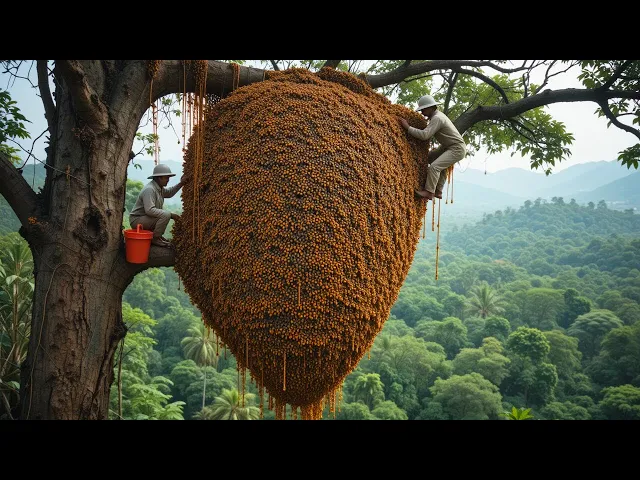
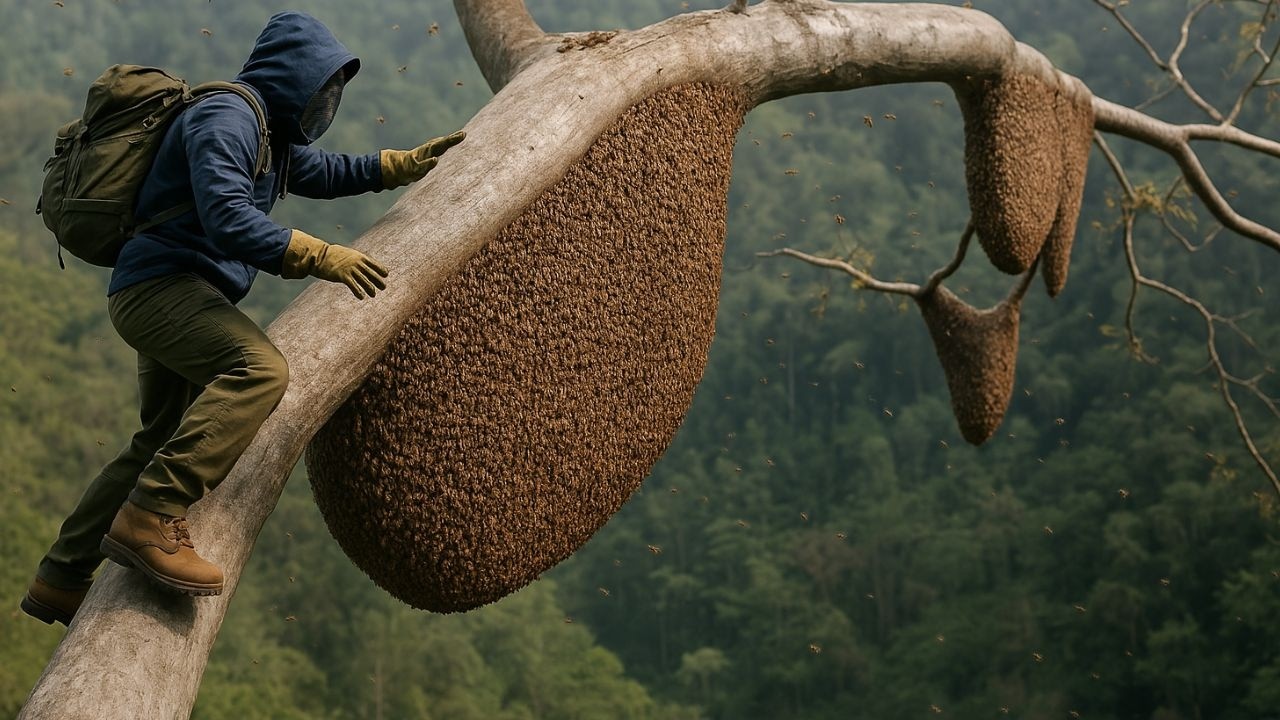
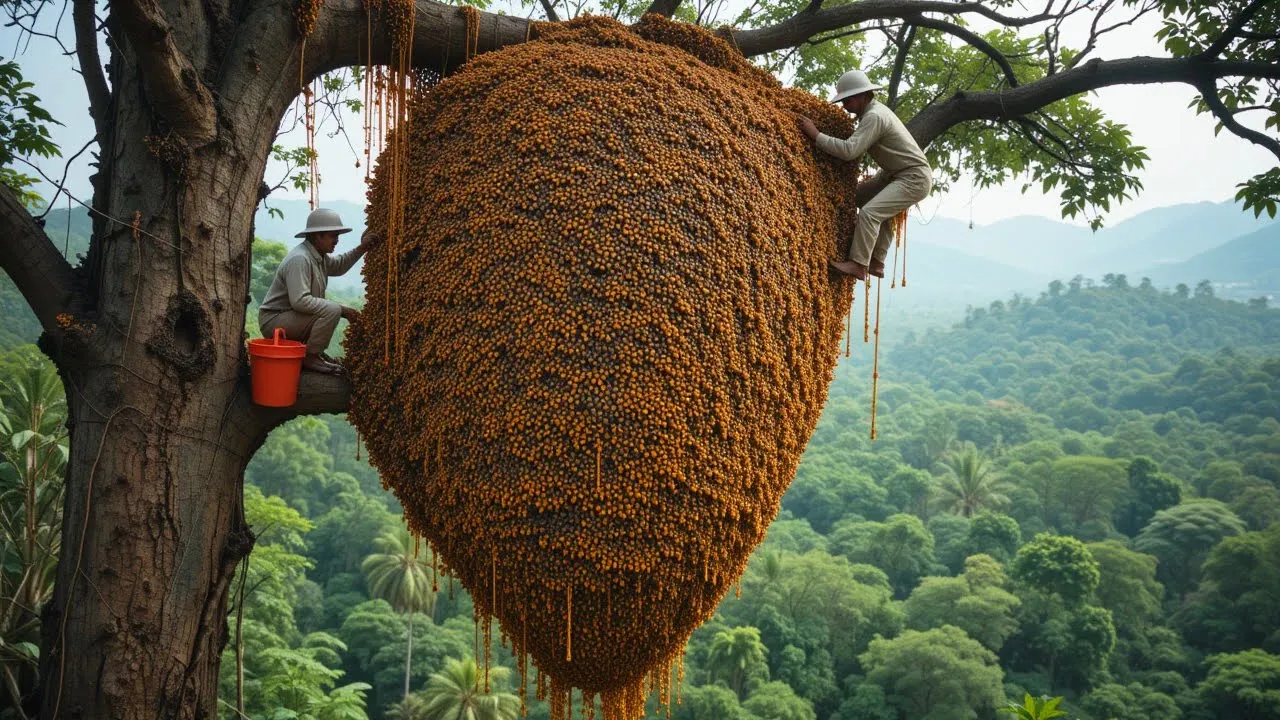
On the treacherous cliffs of the Himalayas, a group of brave individuals undertakes a perilous mission, harvesting rare red honey, a one-of-a-kind natural treasure. This honey, renowned for its potent hallucinogenic properties, is highly sought after worldwide for its extraordinary value. To achieve their goal, they must face the world's largest honeybees, endure painful stings, and dangle precariously from nearly vertical cliffs using nothing more than rudimentary bamboo ladders.
This rare harvest, occurring only twice a year, is not just a battle for honey, but a matter of survival for the entire community. Will they succeed in bringing back the prize honeycombs, or will the endeavor end in danger and defeat? [Music] Welcome to Nepal, the home of mad honey, a rare and precious nectar harvested under breathtakingly dangerous conditions.
What drives people to risk their lives hanging precariously from steep cliffs just to collect this extraordinary honey? Not only does mad honey hold deep cultural significance, but it also commands an astonishing price of up to 500 pairs per kilogram on the international [Music] market. This unique honey contains special compounds with hallucinogenic properties.
Just two small teaspoons are enough to induce extraordinary experiences ranging from vivid imagery to intense euphoria. Additionally, in traditional medicine, it is regarded as a rare natural remedy believed to offer potential benefits such as relieving joint pain, improving heart health, and boosting vitality. For millennia, the art of harvesting mad honey has been passed down through generations, becoming an integral part of the cultural heritage of these communities.
Before each harvest season, the heart of the village buzzes with its activity as locals diligently prepare for the task ahead. [Music] The men meticulously weave bamboo ladders, a critical tool strong enough to support the weight of both the honey hunters and the heavy honey-filled baskets, all while they dangle from steep [Music] cliffs. While everyone contributes during the preparation phase, the actual hunt is reserved for the bravest hearts.
Only the most seasoned honey hunters, whose skills have been honed over years of experience, are chosen to take on this daunting task. They face the greatest risk of all. A single misstep could mean plunging hundreds of meters down.
A fall with no chance of survival. Mad honey derives its unique power from granotoxins compounds extracted from the nectar of roodendrin flowers growing in the rugged highlands. These compounds bestow the honey with its rare properties ranging from hallucinogenic effects to remarkable medicinal value.
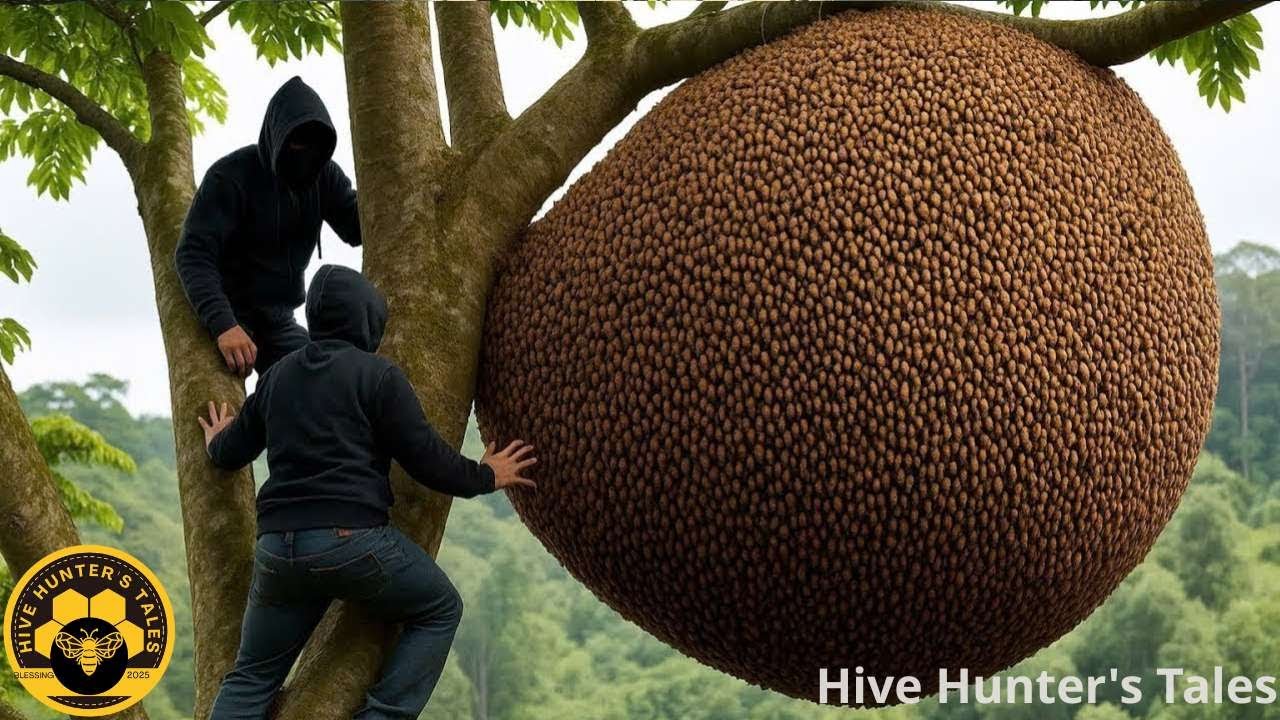
However, only the Himalayan giant bee, the largest bee species in the world, is capable of soaring to dizzying heights to produce this prize honey. The mad honey harvest takes place only twice a year. A successful season can yield at least 15 L of this liquid gold.
But for the communities that rely on honey hunting, it is more than just a harvest. It is a matter of survival. They understand that every drop of honey carries with it hope, sacrifice, and the responsibility to preserve their ancient traditions.
[Music] The first challenge awaiting them before reaching the cliffs where the hives hang precariously is crossing a slippery, unstable river. Each person carries bulky essential equipment for the hunt on their back. However, they are wellprepared both in skill and spirit for the daunting task ahead.
[Music] With machetes in hand, they cut down trees in the forest to craft makeshift bridges sturdy enough to safely guide the entire group across the rushing waters. Each member of the group plays an indispensable role. Every action, every step must be coordinated with precision.
A single mistake could end the expedition before it even begins. Yet their unity and years of experience are the driving forces that keep them moving forward, overcoming the first challenge on this arduous journey. After hours of traversing rugged and treacherous terrain, the honey hunters finally arrive at the summit of the towering cliffs where the giant hives hang suspended in midair.
Here they begin meticulous preparations for the most critical phase, akin to a carefully orchestrated assault. [Music] The hunting team is divided into three groups, each assigned a specific task. The first group remains at the top of the cliff, responsible for securing the bamboo ladders and expertly maneuvering the ropes to raise or lower the honey baskets.
[Music] The second group takes on a strategic role at the base of the cliff, lighting fires to produce thick smoke, the only tool capable of calming the aggression of the giant bees. Finally, the third group, the bravest of all, takes on the most perilous task. They dangle from the bamboo ladders, step by step, approaching the hives, armed with long sticks.
With absolute skill and focus, they carefully detach sections of the honeycombs brimming with nectar and skillfully guide them into waiting bamboo baskets below. Every movement must be flawless, as even a minor mistake could cause the precious honeycombs to fall and shatter on the rocks, wasting the team's hard-earned effort. [Music] [Music] Precision is the key to every action.
A single mistake, such as breaking a honeycomb, could result in the loss of the precious nectar as chunks of the hive tumble down the cliff and shatter. [Music] To deal with the threat of thousands of giant bees fiercely guarding their hives, the hunters have prepared bundles of dried leaves to create smoke, their only means of defense. Thick smoke billows upward, triggering a defensive response from the bees and forcing many to abandon their hives.
The remaining bees enveloped in the smoke fall into a temporary state of paralysis. The smoke not only disrupts their movement, but also breaks down their ability to communicate. This critical technique allows the hunters to approach the hives without facing a ferocious attack from the swarm.
Without this disorienting measure, the consequences could be dire, potentially threatening the lives of the entire team. At the top of the cliff, the hunters firmly grip the ropes connected to the bamboo baskets, carefully lowering them to align with the giant hives. This task demands absolute concentration as even a single misstep, such as a rope snapping or slipping from their grasp, could send the precious honey-filled baskets plummeting down the cliff, shattering into [Music] pieces.
With every drop of honey regarded as liquid gold, each basket carries the collective hope of the entire team. They understand that caution at this moment not only ensures the success of the harvest but also prevents irreparable losses. Every turn of the rope must be executed with absolute precision.
For in this line of work, there is no room for error. [Music] Barefoot and high above the Himalayan expanse, suspended between sky and earth on a perilous cliff, armed only with bamboo ladders and sticks, they endure hundreds of stings from the swarming bees. Yet, these hunters are unwavering, hardened by years of experience.
Nothing can deter them from collecting the honey, the lifeblood of their entire community. [Music] [Music] Step by arduous step, they finally complete their task. Yet, every hunt serves as a poignant reminder of the fragile balance between humanity and nature.
[Music] Each arduous step down and every strike of the stick to separate the hive demanded absolute focus. Finally, after relentless effort, they completed their mission. Yet every hunt serves as a reminder that the bond between humanity and nature is always fragile, requiring respect and preservation through the generations.
[Music] After the perilous journey on the steep cliffs of the Himalayas to harvest the rare and precious mad honey, we can truly appreciate the wonder and value of every drop. But did you know that beyond these traditional and challenging honey hunting methods, there exists an entirely different world? One where billions of bees are nurtured in modern farms to produce the honey we enjoy every day.
Let's continue our journey to explore the fascinating and mysterious world of beekeeping. From wild hives to large-scale honey farms across the globe. [Music] [Music] You might wonder, what does it take to run a successful beekeeping farm?
The answer lies in scientific knowledge and dedication. Beekeeping is not just about managing hives. To ensure a healthy and thriving bee colony, beekeepers need a deep understanding of bee biology and behavior, a task that requires both skill and [Music] experience.
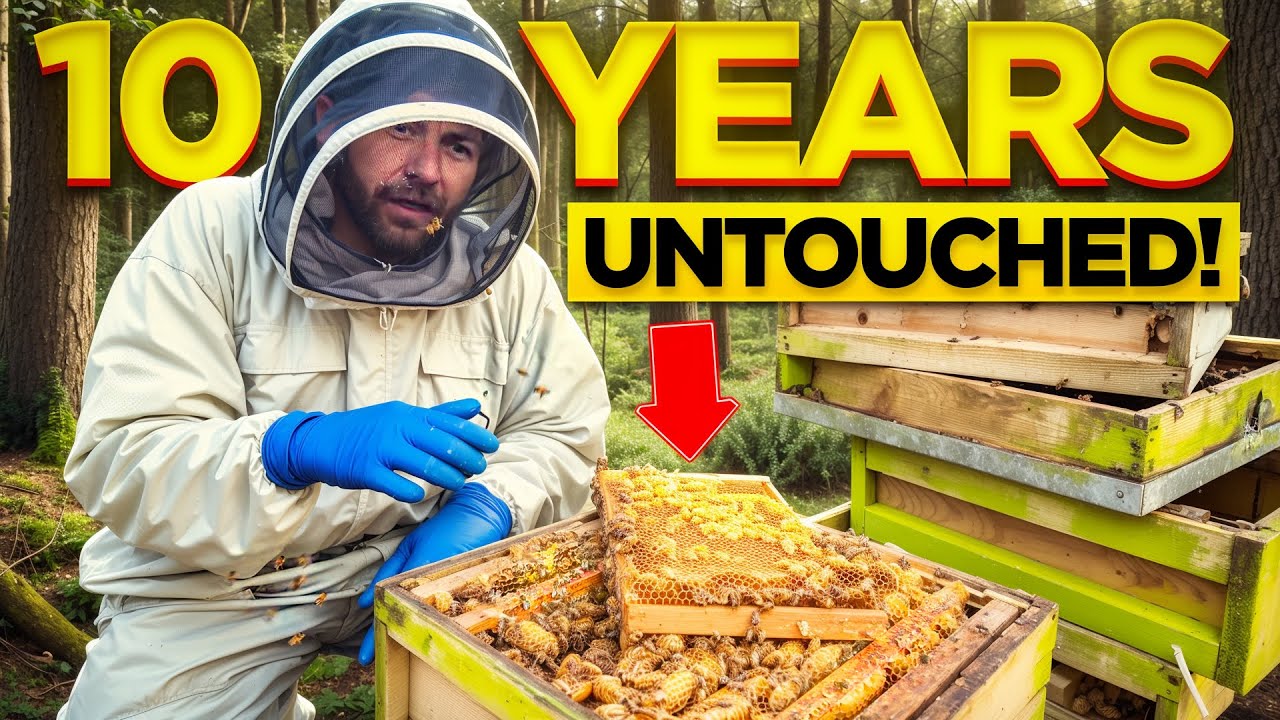
The key to success is creating a healthy environment for the bee colony. This includes protecting them from diseases, pests, and environmental challenges. Beekeepers must regularly inspect the hives, assess the queen bee's health, and ensure there is enough nectar and pollen to support the colony's [Music] well-being.
Protecting bee colonies not only helps maintain honey production, but also plays a crucial role in preserving the balance of the global ecosystem. [Music] [Music] The timing of honey harvesting is a critical decision for beekeepers. It depends on various factors such as the season, the types of flowers in bloom, and the activity level of the bee colony.
[Music] Only when the bees have filled the honeycomb cells and the nectar has been transformed into thick golden liquid does the perfect time arrive. This marks the beginning of a process that requires skill and a deep understanding of bee behavior. [Music] [Music] Harvesting honey is not just about opening the hive and taking the honey.
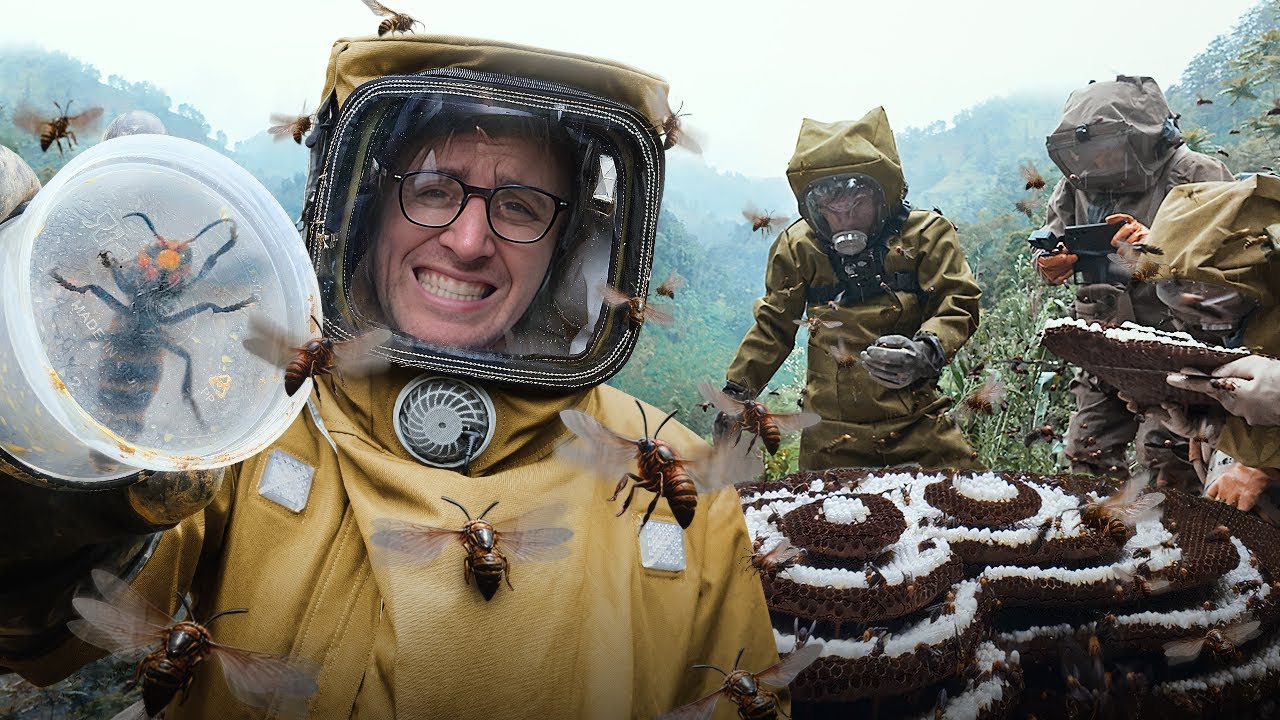
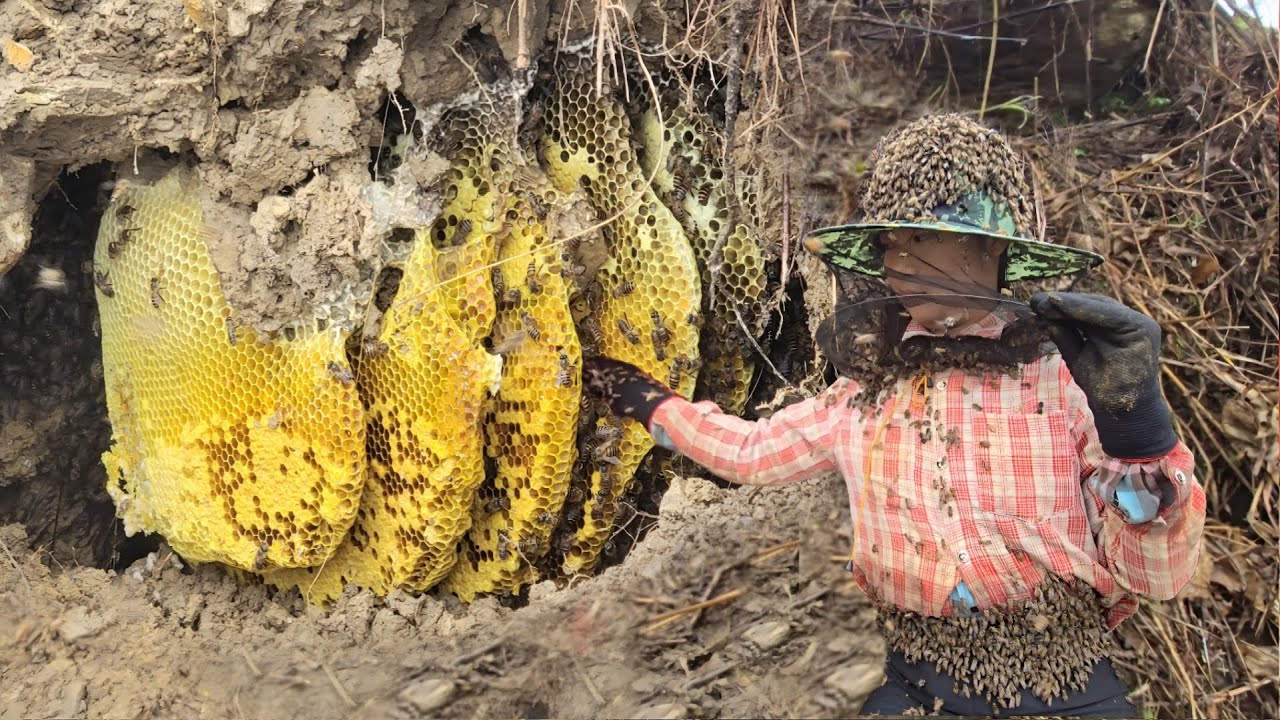
The hive must be carefully open to remove the honey-filled frames without disturbing the colony. Since bees are highly protective of their hive, beekeepers need skillful hands, calmness, and knowledge to ensure the process goes smoothly. Every drop of honey is not only the result of the bee's tireless work, but also the fruit of the farmer's dedication.
The timing of honey harvesting is of utmost importance. If harvested too early, the honey may not be fully matured. And if harvested too late, the bees may begin consuming the honey for [Music] survival.
At large beekeeping farms, the harvesting process is carried out in stages to minimize disruption to the bee colony. At the same time, farmers ensure that enough honey is left behind for the bees to survive through the winter. [Music] When the honey-filled frames are removed, they are taken to a processing facility where the honey is carefully extracted.
[Music] Most commercial farms use centrifuges, devices that spin the honeycomb frames at high speed to separate the honey from the beeswax. [Music] [Music] Next, the honey is thoroughly filtered to remove any remaining wax, debris, or bee particles, ensuring a clean and smooth product. It then underos final processing stages, including sterilization and packaging, making it ready for consumers.
Every drop of honey is the result of an extraordinary journey from the hard work of the bees to the dedication of the beekeeper. [Music] While some farms produce raw honey, others implement processing techniques to extend its shelf life. Pasteurization is one such method, a process of heating honey to eliminate any unwanted bacteria or yeast.
[Music] [Music] After processing, the honey is carefully packaged into jars and shipped worldwide, bringing sweetness to the tables of millions of families. [Music] Not only that, products like royal jelly, bee pollen, impropolis are also harvested for use in health and wellness products. From nutritional support to beauty care and environmental protection, these products highlight the diversity and value of beekeeping.
Cherish every product from the hive. They are precious gifts from nature crafted through the hard work of bees and the dedication of [Music] beekeepers. As the beekeeping industry continues to grow, sustainability has become a major concern.
Beekeeping is no longer just about producing honey. It's also about protecting the health and survival of the bees themselves. The global decline in bee populations is a wakeup call.
Beekeeping farms are playing a crucial role in reversing this trend, helping to maintain healthy bee colonies. Many farms have adopted more sustainable beekeeping practices such as reducing pesticide use near hives, planting bee friendly plants to provide a stable nectar source, and implementing organic farming techniques. These measures not only help protect bees, but also contribute to preserving the environment, ensuring a more sustainable future for both bees and humans.
Protecting bees means protecting our own source of life. Let's work together to safeguard bees and the ecosystems we share. [Music] To tackle increasing challenges, beekeepers are experimenting with methods to breed healthier bees capable of resisting diseases and withstanding greater environmental pressures.
By improving the genetic diversity of bee colonies, they not only enhance hive health, but also ensure that the bees are better equipped to adapt to harsh conditions. These innovative techniques, combining genetic science with modern technology, are bringing new hope to the beekeeping industry. They not only help farms overcome difficulties, but also thrive, safeguarding the vital role of bees in the global ecosystem.
Let's explore these inspiring efforts. A testament to the dedication and ingenuity of beekeepers in their mission to protect bees and the future of our planet. [Music] [Music] The world of beekeeping farms is more complex than we ever imagined.
From caring for bee colonies to harvesting and producing honey, there's a tremendous amount of effort behind every drop of honey we enjoy, sustainability, innovation, and protecting the health of bees are the core values of this industry, ensuring that our world remains full of life and color. [Music] [Music] If you found this video interesting, don't forget to like, leave a comment, and subscribe to our channel to discover more inspiring stories about agriculture and nature. Which part of the beekeeping journey surprised you the most?
Share your thoughts with us. And remember, every drop of honey is a testament to the wonders of nature and the hard work of both bees and humans. [Music] [Music] [Music] Heat up [Music] [Music] Heat.
Heat.