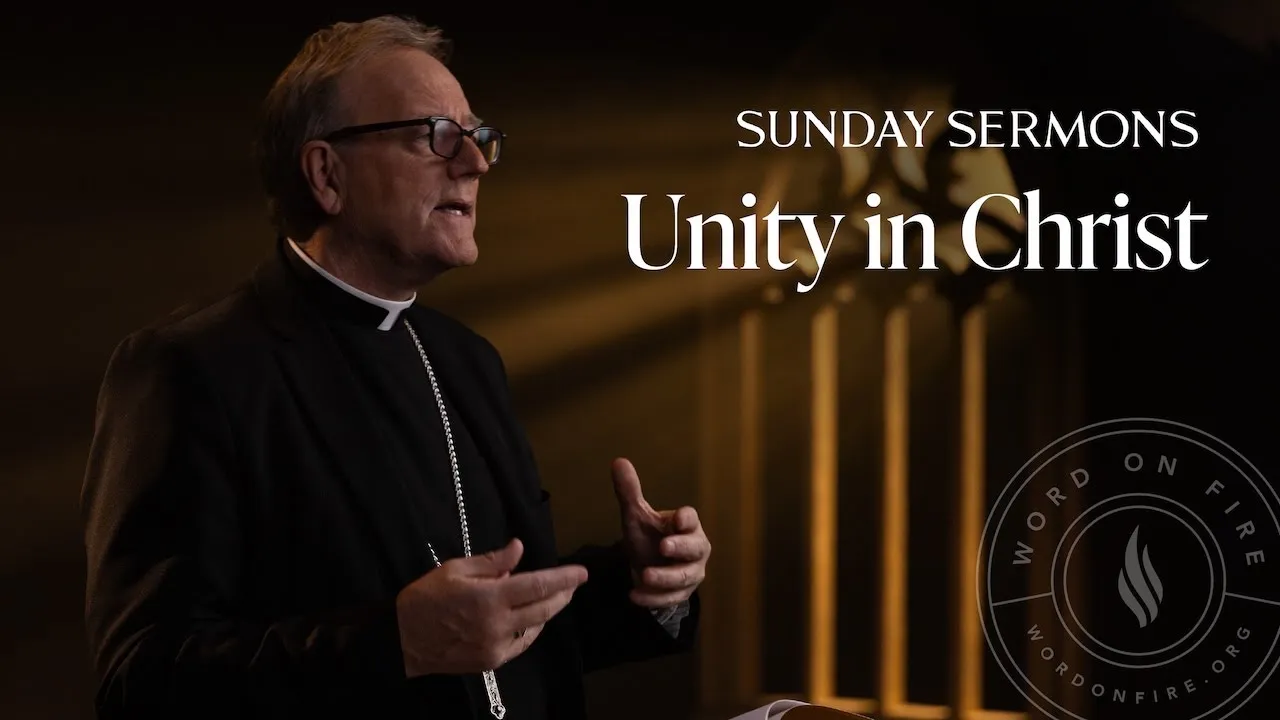
Peace be with you. Friends, for this third Sunday ordinary time, we have a couple readings that are a little weird. What I mean is there's a section of them that's weird, that's odd, and I bet most preachers, myself included, skip over these sections to get to the better known, more understandable parts.
But I want to dwell, on purpose, on the strange part. The first reading out from the Prophet Isaiah and then the Gospel reading from Matthew. Listen now what Isaiah says.
"First, the Lord degraded the Land of Zebulun and the Land of Naphtali. But in the end, he's glorified the seaward robe, the land west of the Jordan, the district of the Gentiles. " You say, "Okay, I guess I don't know really what any of that means.
" And we skip over that to get to the better-known parts about a people who walked in darkness have seen a great light. We hear that at Christmastime. We hear that in oratorios.
That's a well-known part of Isaiah. But it's set up by these first strange lines, "That the Lord degraded the Land of Zebulun and the Land of Naphtali. But in the end, he's glorified the seaward road," so it was up in that direction.
So what are we talking about? We're talking about districts of the Holy Land named for the sons of Jacob who become the fathers of the 12 Tribes of Israel. So the Patriarch Jacob, the grandson of Abraham, has 12 sons.
And these 12 sons give rise to families or tribes. And then when the Israelites come into the promised land, they arrange themselves in different parts of the country. And so they're named for these 12 Tribes.
So you got Benjamin, you got Judah, and you've got Dan, and Asher, and these various sons. Well, two of the lesser-known sons of Jacob are Zebulun and Naphtali. And their region of the Holy Land is one that we're familiar with because of the New Testament.
Up northwest, around the Sea of Galilee, and then a little bit beyond that, that's the Land of Zebulun and Naphtali. Now, in biblical times, that area became a little suspect. Now, why?
Well, keep in mind, Israel endured two great exiles. First, the northern tribes, including Zebulun and Naphtali, they are invaded by the Assyrians. And the Assyrians carry many off into exile and then they intermarry with them.
It's a mixed breed part of the country. Now, a few centuries later, the southern tribes are carried off by the Babylonians. These two exiles shape the consciousness of biblical people in a big way because, because a united Israel was meant now to bring the worship of the true God to the world.
In fact, the Prophet Isaiah sees that very clearly. When Israel is united, the tribes have come together and together they give worship to God. This will be a sign unto the nations and will draw the nations back.
So what bugs the biblical authors is, watch, first of all, the tribes fighting among themselves. So think the time of Saul and David, this great Civil War breaks out between north and south. And then think in the time of Solomon, the united kingdom of David falls apart, north and south.
The tribes are at odds with each other, but then, then come the two great exiles. So now foreign countries come in and they carry off the tribes. The united Israel is now a deeply divided Israel, and therefore it cannot fulfill its mission.
Now, I'll take one more step. Zebulun and Naphtali, way up north, northwest, not only are they a compromise because of the Assyrian invasion, but they're up near Gentile country toward the border where things get a little bit dicey and unclear. That's why Zebulun and Naphtali are associated with darkness, with struggle, with compromise, with difficulty.
It's a land of darkness. But now listen, Isaiah, Isaiah, who's living around the time of that Assyrian invasion, he's prophesying. "In the end, he's glorified the seaward road, the land west of the Jordan, the district of the Gentiles.
" He's talking about Zebulun and Naphtali. And from that land of darkness, he prophesies will come a great light. Okay.
So people heard Isaiah, and they kept reading this text, and they're saying, "Okay, I guess. I guess we'll have to see how that works out. " Well, with all that in mind, so that's the part we usually skip over, but keep it in mind because our Gospel, according to Matthew.
Now, Matthew, they speculate the Gospel was originally composed in Hebrew and then later rendered in Greek. Matthew is the most Jewish of the Evangelists, the one most attuned to things Israelite. So listen now, how this Gospel begins.
Jesus heard that John had been arrested, John the Baptist. And so he withdrew to Galilee, right, up north. Listen, "He left Nazareth and went to live in Capernaum by the sea in the region of Zebulun and Naphtali.
" Ah. So you're an attentive Jewish reader, right? And you read this and you think, "Ah, that's exactly what Isaiah talked about.
" And listen to Matthew, "That what had been said through Isaiah the Prophet might be fulfilled, Land of Zebulun, Land of Naphtali, the people who sit in darkness have seen a great light. " All right, now we get it. What Isaiah prophesied is coming true.
This compromised land, this land of exile, and division, and intermingling with the Gentiles, and all of that, that's where the light appears. Who's the light? Well, the one who said, "I am the light of the world.
" Jesus comes precisely out of this divided compromised Israel. To do what? Now, listen to him.
See, I think we race right to Jesus' speech, but we forget all that came before, which is very important. "From that time on, Jesus began to preach and say, "Repent for the Kingdom of Heaven is at hand. " Ah, ah.
The Kingdom of Heaven. Now, we hear that and we might just hyper-spiritualize it right away. No, no, but they heard it.
What did they hear? They heard a divided Israel is coming together under, as the prophets predicted, under the Lordship of the Messiah, God Himself gathering in the tribes. The long-awaited renewal of the Davidic Kingdom, in other words, is coming.
The interior divisions of the tribes, the exterior exiling of the tribes, all of that's going to be overcome. The Kingdom of God is at hand. Now, just to confirm this, listen to what he does.
So that's the theme of the preaching, the kingdom. But now watch what he does. "As he was walking along the Sea of Galilee, he saw two brothers, Simon, who's called Peter, and his brother Andrew.
He said to them, 'Come after me and I will make you fishers of men. '" Jesus, the king, is now beginning to gather in the tribes. Now, why do I say tribes?
Because he's going to gather 12 of them, right? The 12 are symbolic of the gathered tribes of Israel. And then what job is he giving them?
"I will make you fishers of men. " Ah, that's the old dream, isn't it? That a gathered Israel would now become the means by which all the tribes of the world are gathered in.
Land of Zebulun, Land of Naphtali, land of darkness, exile, division, out of you is going to come this great light. And his work is an ingathering work. Oh, you know everybody who got this in his bones was a fellow who had studied under Gamaliel, the great rabbi.
His name was Shaul, Saul from Tarsus. When he becomes the Apostle Paul, once he meets the Risen Jesus, what does he know? My job is to be a fisher of men outside the boundaries of Israel.
In fact, I'm going to go into the land of the Gentiles. Remember Zebulun, Naphtali, the Gentile border country? Yeah, because now I'm going to bring the light into the Gentile world so as to gather all the tribes in.
Huh? That's the church. That's the church, the new Israel.
This beautiful theme everybody, and we're going to miss it if we just moralize about what Kingdom of God means. No, no, Kingdom of God means exactly this. And it was Isaiah, Zebulun, and Naphtali that signaled it to them.
Okay. With all of that, I'm going to make brief reference to reading number two because it's really relevant to this and I think to our time. So the Apostle Paul who got all this and he's a fisherman, he's bringing the light to the Gentiles, right?
He's now writing to the church that he founded in Corinth. We're in the first generation of the church here. We're the earliest days.
What does he say? "I urge you, brothers and sisters, my fellow Christians, in the name of our Lord Jesus Christ," right, the Lord, The Mashiach, The Mashiach Yeshua, The Messiah who will gather the nations, "that all of you agree in what you say, that there'd be no divisions among you, but that you might be united in the same mind and same purpose. " Now maybe it gives us comfort because division in the church has been there from the beginning.
Listen, the same division that bedeviled Israel, the tribes warring among themselves, exile, all of that, the same division is now bedeviling the church. And Paul sees it. And it breaks his heart.
And then listen how specific he gets. "It's been reported to me about you that there are rivalries among you. " Man, the whole point of the church is by its unity to bring in the tribes.
What's going to undermine that is fighting. "I mean, each of you is saying, 'I belong to Paul. I belong to Apollos, I belong to Cephas.
I belong to Christ. '" You can almost hear Paul in his exasperation, "Is Christ divided? Was Paul crucified for you?
Were you baptized in the name of Paul? " In other words, "Get over yourselves. Get over these silly divisions and find the unity that we need to do the work we're meant to do.
" Now, let me just bring this home by suggesting something. Is this still around? Go online anytime of the day or night.
And look, I'm online, and I'm using it right now, and I believe in it. I think it's great. I think the use of social media for propagating the Gospel is a great thing.
But social media, and may I say, I'll say it to our shame, especially in the Catholic social media, can be a swamp of just this kind of division. "I'm a liberal Catholic. I'm a conservative Catholic.
I'm a Latin mass Catholic. I don't like the Latin mass. I'm for this guy.
I'm for that guy. " And what do we do? But we demonize each other, badmouth each other, put each other down.
So that, and this is what always bugs me, so that somebody in good faith going on Catholic social media to learn something about the Catholic Church, and looking at our websites, and our comment boxes, and all that, what are they going to see? It's exactly this. "I belong to Paul.
I belong to Cephus. I belong to Apollos And can we please hear everybody? The Apostle Paul, in his exasperation saying to us, "Is Christ divided?
" Will you baptize the name of the Latin Mass Society, or the Anti-Latin Mass Society, or the Pro-Liberal Society or Pro-Conservative Society? Get over yourselves. Get over yourselves.
We belong to Christ. See, the division brings us back to the darkness of the Land of Zebulun and Naphtali. It is out of that darkness that a great light came.
The light of Christ who unites the tribes of Israel, who gives rise to the church, whose whole purpose is to unite the world. You know these ancient readings that can seem alien at first? I don't know.
I think they've got a lot to say about the life of the church today. And God bless you.