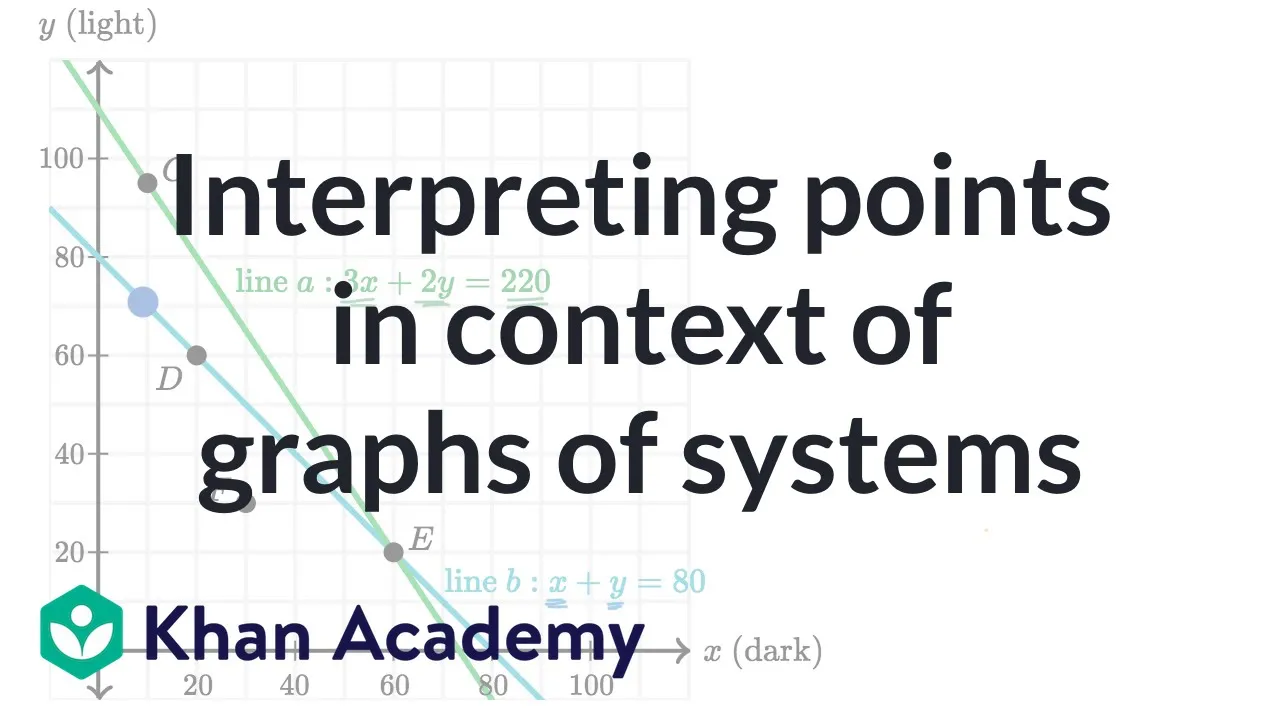
we're told that lauren uses a blend of dark roast beans and light roast beans to make coffee at her cafe she needs 80 kilograms of beans in total for her next order dark roast beans cost three dollars per kilogram light roast beans cost two dollars per kilogram and she wants to spend 220 dollars in total then they tell us here's a graph that shows a system of equations for this scenario where x is the number of kilograms of dark roast beans she buys and y is the number of kilograms of light roast beans she buys
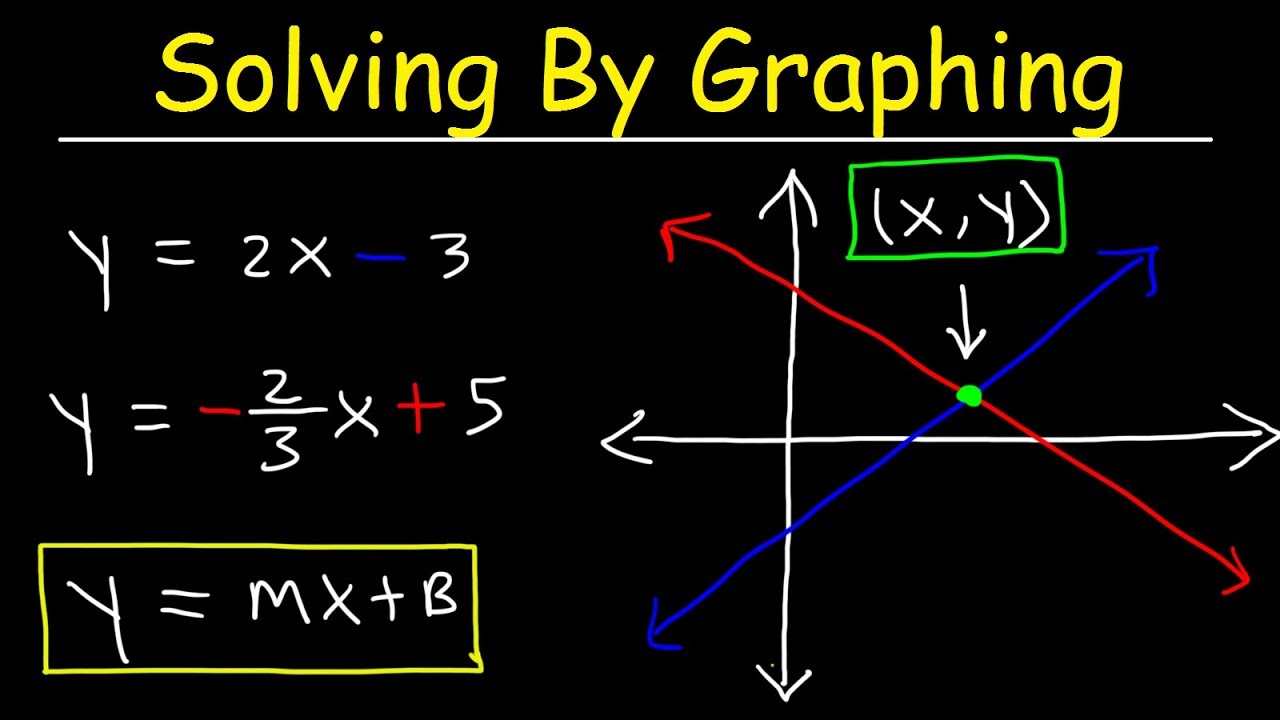
all right let me scroll down so we can take a look at this and so sure enough so this blue line and i'll write it out in blue this x is the number of kilograms of dark roast beans y is the number of kilograms of light roast beans and she wants to buy a total of 80 kilograms that's what they told that's what they told us up here we can go back to look at that she needs under lenses in blue she needs 80 kilograms of beans so that constraint that the sum of the kilograms
of dark and light is equal to 80. that's represented by this equation and if we were to graph it that is this blue line right over here and then this other constraint 3x well the dark roast beans cost three dollars per kilogram so 3x is how much she spends on dark roast 2y is how much she spends on light roast because it's two dollars per kilogram and 220 is the amount that she spends in total and they tell us that up here dark roast beans cost three dollars per kilogram light roast beans cost two dollars
per kilogram and she wants to spend 220 dollars so this equation is another way of expressing what i just underlined up here in green and the green line shows all of the x y combinations that would match these constraints and so now let's do something interesting they've labeled some points here point c d f and e and we're going to think about what do each of these points represent so for example this point c that is on the green line but it sits above the blue line what does this tell us what does this point
c represent pause this video and think about it well if we're on the green line that means that the amount that she spends on dark roast plus the amount that she spends on light roast is adding up to exactly 220 dollars so she's definitely spending 220 dollars at c but how much how many total kilograms is she using well the fact that for this given x we're sitting above the line that means that she's not using exactly 80 kilograms and we can see that over here she's using looks like 10 kilograms of dark and it
looks like something like 95 kilograms of light if you were to add those two points together it looks like she's using something closer to 105 kilograms so point c is a situation where she is spending exactly 220 dollars but she's using more than 80 kilograms because it's not meeting this second constraint it's sitting above that line now let's think about point d what does that represent pause the video and try to figure that out well because we sit on the blue line that means that we are meeting this constraint that the kilograms of dark and
light combined is equal to 80 kilograms so she's using exactly 80 kilograms here but what about her spending well because this point lies below the green line that tells us that we are spending less than 220 dollars and we could even try it out three times 20 plus 2 times 60 is what 60 plus 120 is 180 and so this is a point where we're meeting this constraint but we're not meeting this constraint we're underspending right over here now what about point f well point f sits below both of these lines so pause your video
and think about what that means well if we're sitting below both of these lines that means that neither are we spending 220 nor are we using 80 kilograms and you could see that if you actually look at the numbers you don't have to do this but this is just to make you feel good about it it looks like she is using 30 kilograms of dark and 30 kilograms of light so in total she is using so this is a situation where she's using 60 kilograms in total not 80. and so that's why we're not sitting
on this blue line and if you look at how much she's spending she has 30 kilograms of each so 3 times 30 plus 2 times 30 that's going to be 90 plus 60 that's also less than 220 and so that's why we see this point is below these lines and then last but not least what does point e represent well point e sits on both of these lines so that means that it meets both of these constraints this is a situation where she is spending exactly 220 and the total number of kilograms she's using of
dark and light is exactly 80. and so if we wanted to say hey what combination of dark and light would she need in order to meet both constraints e represents that the intersection of these two lines


![The most beautiful equation in math, explained visually [Euler’s Formula]](https://img.youtube.com/vi/f8CXG7dS-D0/maxresdefault.jpg)