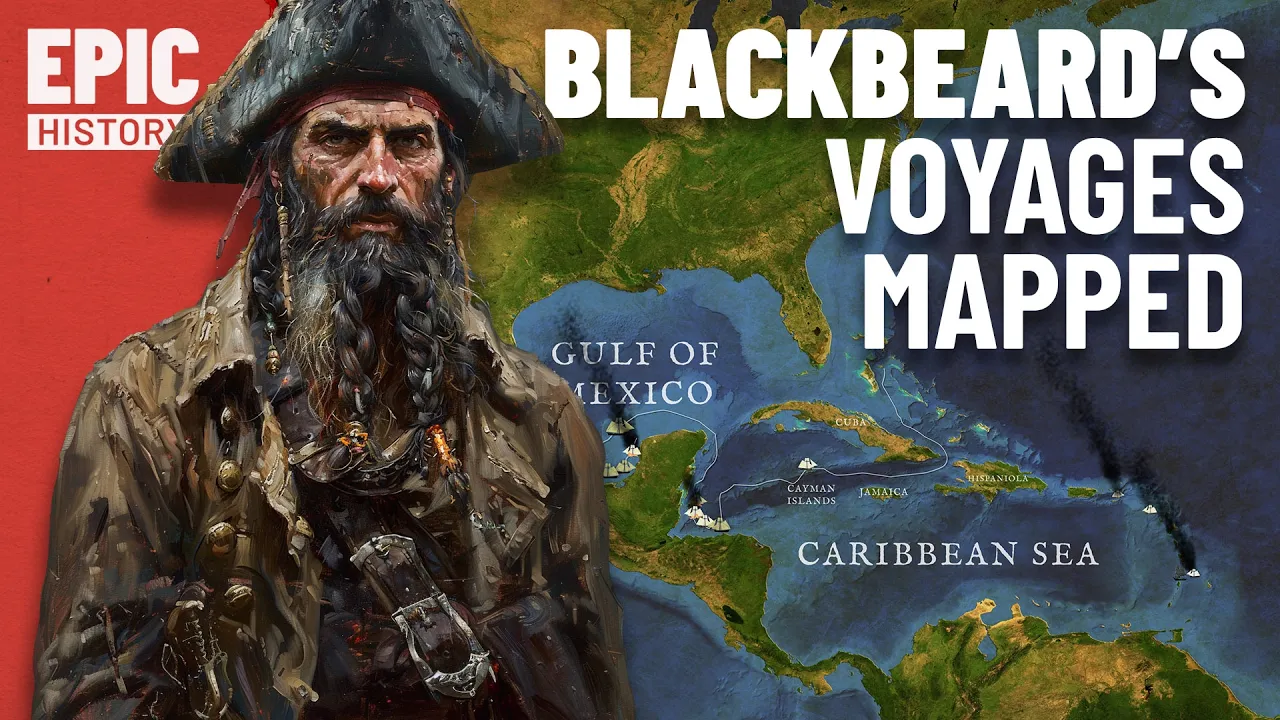
Blackbeard's early life is shrouded in mystery. His real name was probably Edward Thatch, and he may have been a sailor from the English port of Bristol. Some believe he fought in the War of Spanish Succession, at the end of which he found himself unemployed in the Caribbean in the last great age of piracy.
So he travelled to the outlaw haven of Nassau, and turned pirate. In the spring of 1717, he sailed as second-in-command to the pirate captain Ben Hornigold. They cruised America's East Coast, seizing and plundering 8 merchant ships.
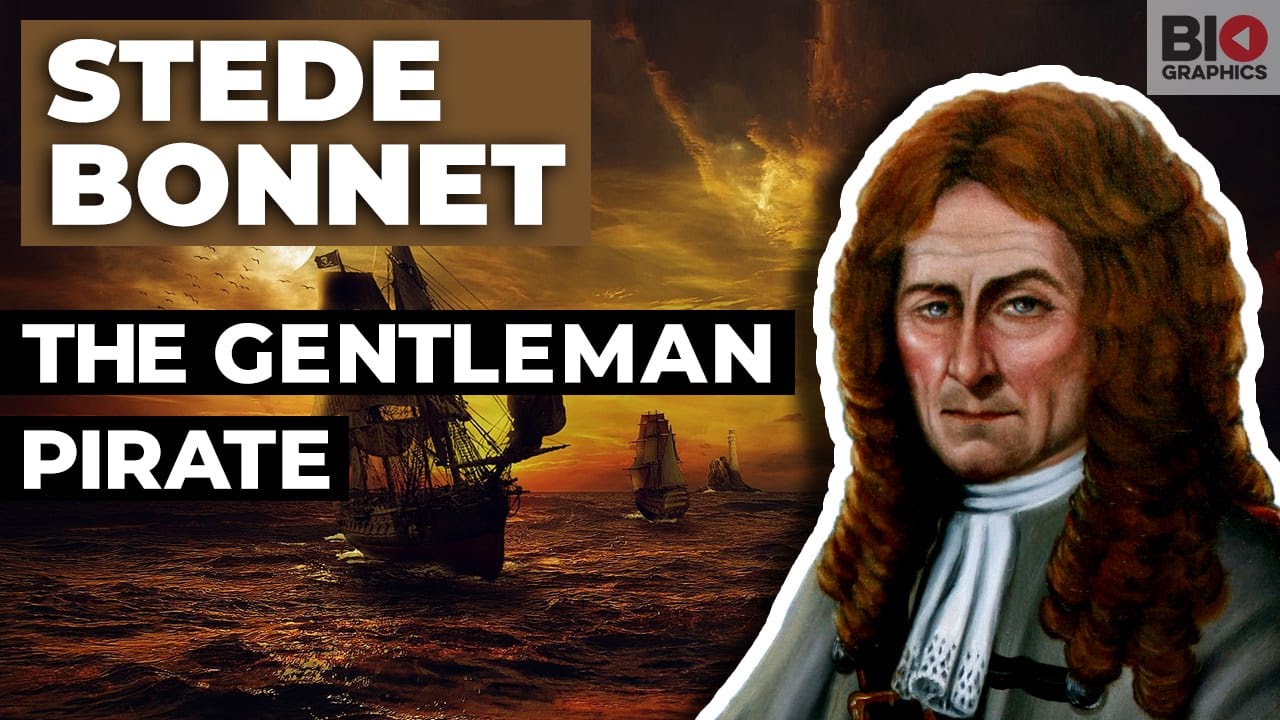
That summer, Blackbeard met Stede Bonnet, known as the 'Gentleman Pirate', and took over command of his ship, 'The Revenge'. Then he returned to terrorise the American colonies once more, capturing 15 ships in just 3 weeks. Blackbeard used fear as a weapon, terrifying opponents into a quick surrender.
But there's no record of him ever torturing or murdering any of his victims. That autumn Blackbeard sailed to the Windward Islands. Off St.
Vincent, he captured La Concorde, a French ship carrying 500 slaves bound for the sugar plantations. Some slaves joined his crew, the rest he put ashore. Blackbeard refitted the ship with 40 guns, and renamed her 'Queen Anne's Revenge'.
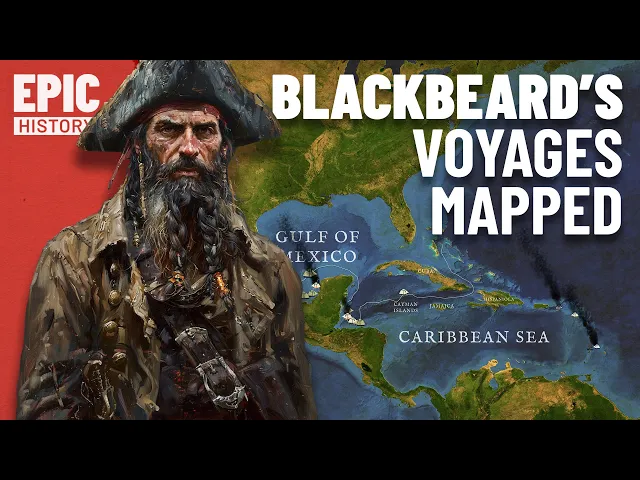
He now commanded one of the most powerful warships in the Caribbean. With 4 ships and 250 crew, Blackbeard rampaged through the West Indies, capturing and burning ships, as well as the French colony of Guadeloupe. Then he sailed west.
In the Gulf of Mexico, he wrought havoc amongst Spanish shipping, and earned himself a new nickname, 'El Gran Diablo' – the Great Devil. But despite many prizes, morale was low amongst Blackbeard's crew. They hadn't had a big haul in months.
The men wanted gold. So Blackbeard sailed to the Florida coast, where the Spanish Treasure Fleet had been wrecked three years before. His men searched the wrecks for gold and silver, but scavengers had already taken the easy spoils, and they found little of value.
Blackbeard continued north to Charleston, South Carolina. In the boldest move of his career, he blockaded the port for 6 days, seizing goods, and hostages, from any ships entering or leaving the harbour. Continuing up the coast, Blackbeard entered Topsail Inlet, looking for a hideaway.
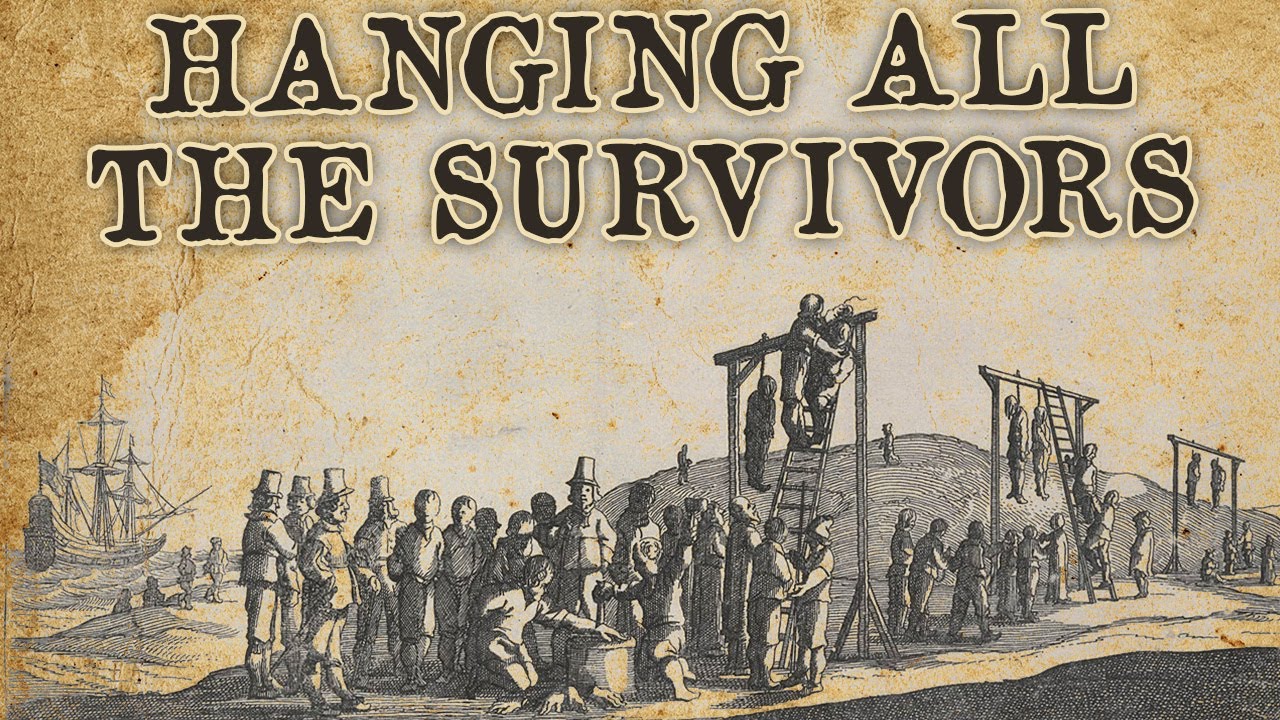
But his flagship, the Queen Anne's Revenge, ran aground and sank. Gentleman Stede Bonnet now chose to part ways with Blackbeard. Four months later he was dead - hanged in Charleston as a pirate.
Blackbeard marooned part of his crew, and sailed with his closest companions to Bath, North Carolina, where he secured a royal pardon from the governor as part of a pirate amnesty. He and his men set up base on Ocracoke Island, but were soon back to their old ways, plundering two French ships out at sea. Blackbeard claimed his loot, 180 barrels of sugar, came from an abandoned ship - but few were fooled.
Alexander Spotswood, Lieutenant Governor of the neighbouring colony of Virginia, now decided to deal with Blackbeard once and for all. Flouting colonial law, he sent a naval task force to North Carolina with orders to take Blackbeard dead or alive. Lieutenant Maynard of the Royal Navy and 60 men caught the pirates off-guard at Ocracoke Island.
Blackbeard was outnumbered 3 to 1, but he fought skilfully and bravely to the end. Finally, he was cut down by one of Maynard's men. His body was found to be covered with 20 sword cuts and 5 bullet wounds.
Blackbeard's head was cut off, and fixed to the bowsprit of the navy sloop, to prove he was dead. Blackbeard's reign of terror lasted less than 2 years, during which he plundered an estimated 40 ships. But his careful and deliberate use of terror forged a legend that would last for centuries.
Epic History TV relies on the generosity of fellow history lovers – please visit our Patreon page to find out more.