Software is the set of intangible components that makes computers, mobile phones, tablets and other similar devices work; These components are made up of programs and applications (and user information, as well as processed data), designed to fulfill certain functions. In other words, the software is everything that these devices do, be it play music or video, launch any application, allow you to send a voice message, read an ebook, access the internet, download and try a game, send you a notification , take and view photos, trigger the alarm clock, and a thousand other things. Everything, absolutely everything that can be done on an electronic device is related to software.
The most important software is the operating system, which functions as a communication system between the device and the user by allowing the latter to give instructions to the computer through the keyboard, the mouse, or the voice and fingers if it is a mobile. Without the operating system, the device would be just a lifeless plastic shell. From a more technical point of view, software can be defined as a set of instructions (protocols, algorithms, routines) that tell the computer how to carry out the operations necessary to function.
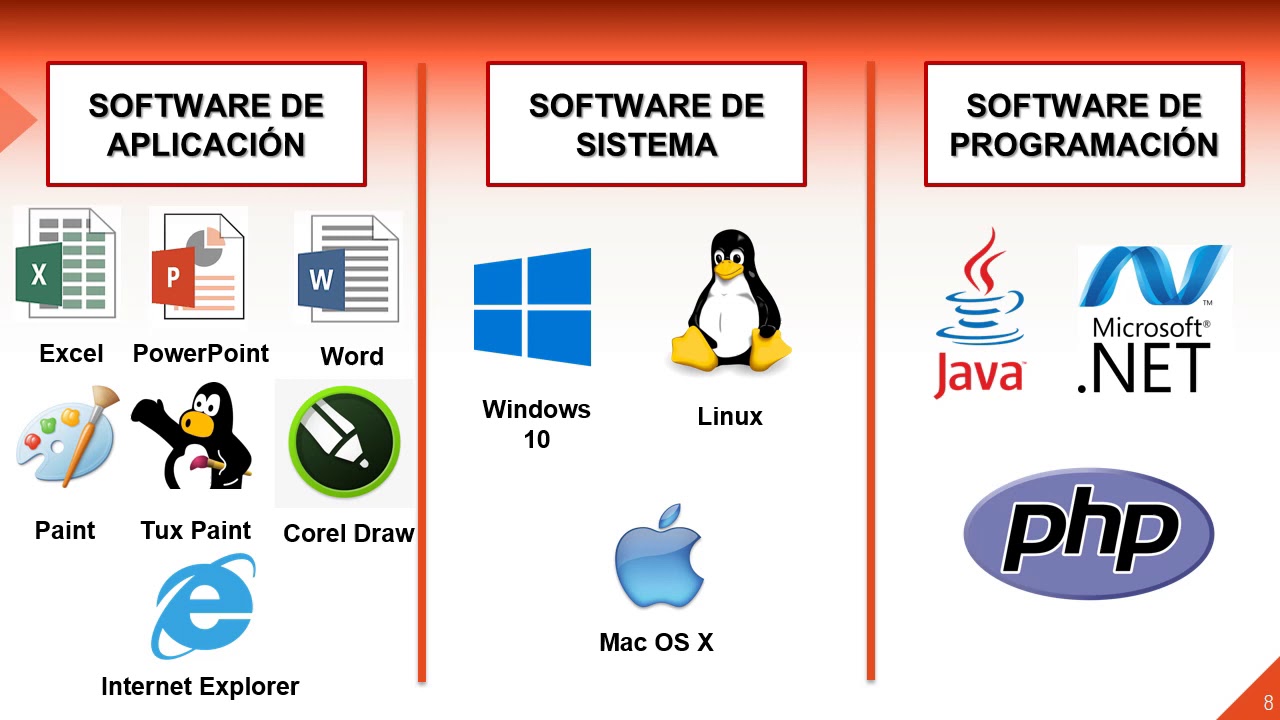
Types of software There are four types of software: those used to create other software; those that give life to the computer and allow us to interact with it; those who carry out concrete actions, such as listening to music or writing a thesis; and those that are maliciously designed to harm other software. Programming software It is the kind of software used by programmers and other computer specialists to create other software, such as games, word processors or downloadable mobile applications. This type of software does not come by default on any common computer, and it is highly unlikely that you will ever come into contact with it, unless you decide to learn programming.
An example of this type of software is Sublime text, a simple text editor designed especially for programming. System Software This category includes operating systems, such as Windows, macOS, and GNU/Linux. This type of software makes the computer as we know it possible, with its desktop populated with small icons in which we can navigate using the keyboard and the mouse.
If the computer were a painting, the operating system would be like the canvas and the frame within whose limits we can see dozens of programs in action, such as the Internet browser, the MP3 player, the word processor, among others. System software also performs the function of an interface, that is, putting the user in communication with the computer, so that the former can give instructions using the mouse, keyboard and touch screen. Application software Here are all those applications that we normally download on the mobile, such as WhatsApp, Twitter and other social networks.
But the video games that we play on the computer, the Internet browser, the antivirus, etc. are also software of this type. There are much more complex application software , such as the Photoshop image editor, or those designed to help companies keep accounts.
There is also software that makes the design process easier for architects, or capable of performing very complex simulations, such as the state of the Universe billions of years ago. Malicious software (malware) There are various types: viruses, spyware, adware, Trojans, worms, among others. Most are designed to infiltrate computers and steal information, such as bank account numbers and passwords.
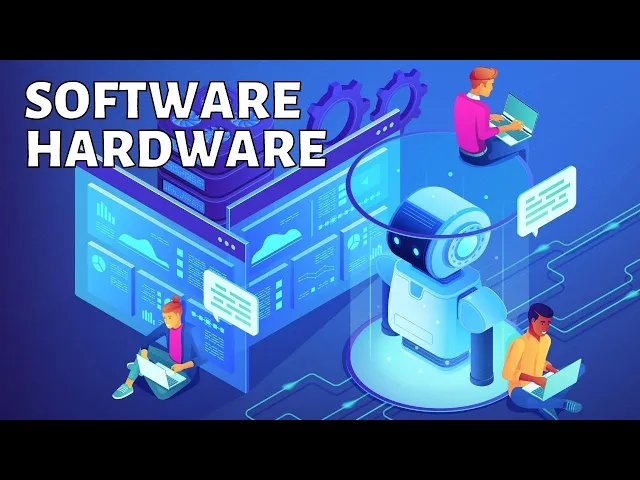
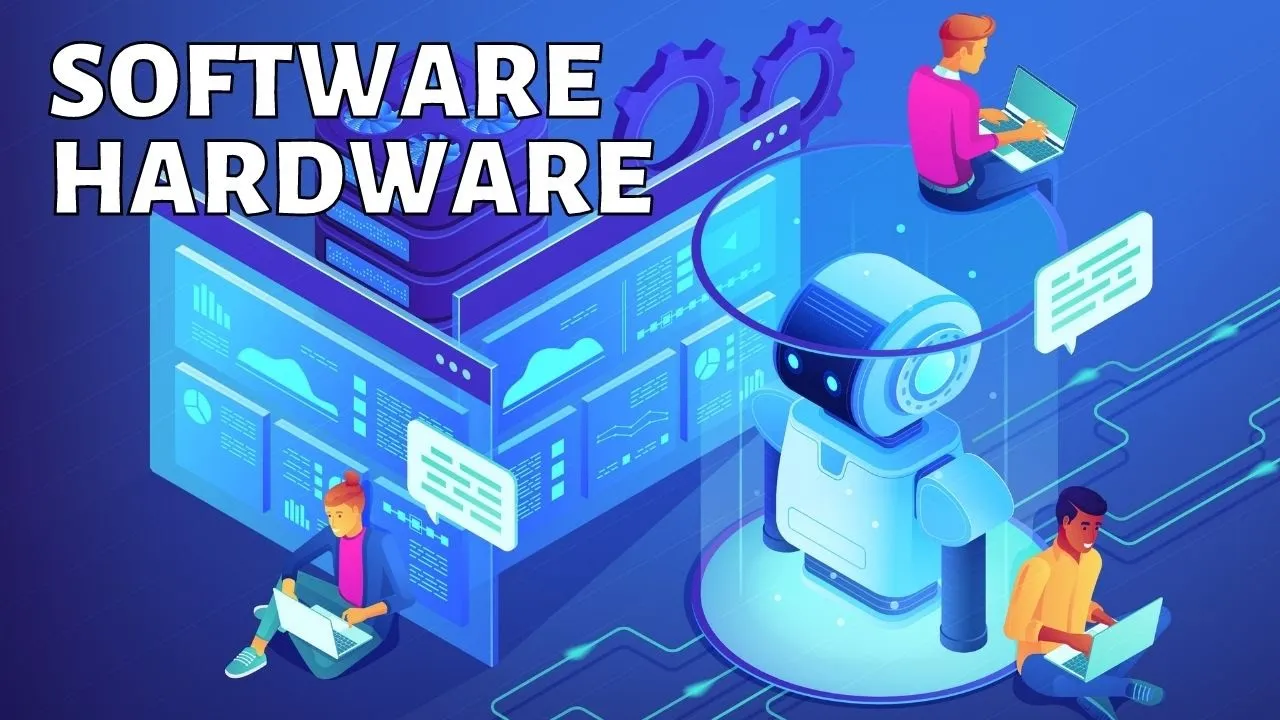
Some have great destructive power, to the point of damaging not only the operating system, but also parts of the hardware, that is, physical elements of the computer. Software and hardware When we talk about hardware, we refer to the physical components of the computer, both external and internal. Among the first are the mouse, the monitor, the keyboard, the printer or the external hard drive.
Among the internal components are the processor, the fan, the hard drive, the motherboard, the video card, among others. On the other hand, software, as we have already explained, refers to the exclusively digital operation of the computer, and includes the operating system and all installed programs or applications. That is why it is said to be an intangible component, and not a physical one.
Commercial, free and free software Another way to classify software is from the point of view of its distribution, that is, how it reaches the public. From this point of view, software is divided into three types: commercial, free or gratuitous. Commercial software They are those that are for sale, either through the internet or in a physical store dedicated to the computer industry.
When you buy one of these software, you get a copy with a numerical key that guarantees that this particular copy can only be used by you or someone who has your permission. It is important to understand that when you purchase commercial software, you are not purchasing the software itself, but only a copy. It's like buying a book: you buy a copy, not the rights to the text.
This explains why the original owner of the software has the right to make updates without your express consent. Examples of commercial software are, among many others, Microsoft Windows, Microsoft Office, AutoCAD, TeamViewer, iOS, Avast Antivirus, Corel Drw, etc. Free software Free does not mean free; It means that it is open source.
In other words, that the owner of the software gives the user the possibility of modifying the software according to the wishes or particular needs of the latter. Many free or open source software are free, while others can be purchased for a fee. Examples of free software are Mozilla Firefox, Ares, Apache Open Office, Notepad++, Clip Art Library, Avogadro 1.
1. 1. , or WordPress, among many others.
Free software It can be purchased freely, at no cost, through the web. Social networking applications, for example, belong to this type of software. Many of these free applications display advertising.
Free software often coincides with free software; eg Notepad++, Mozilla Firefox. Free are also the LINUX operating system, Open Office, eMule, among others.