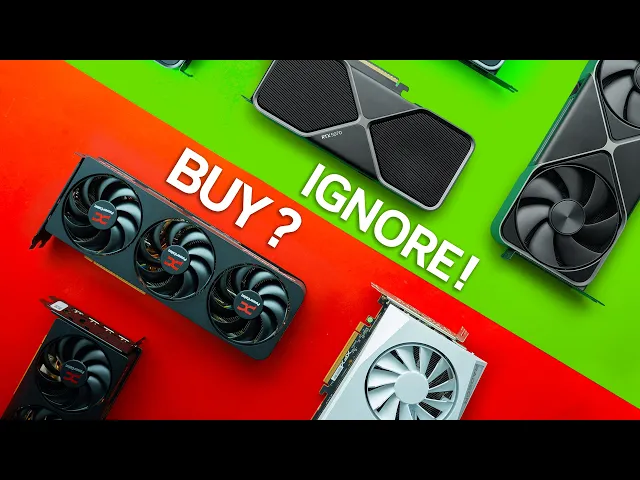
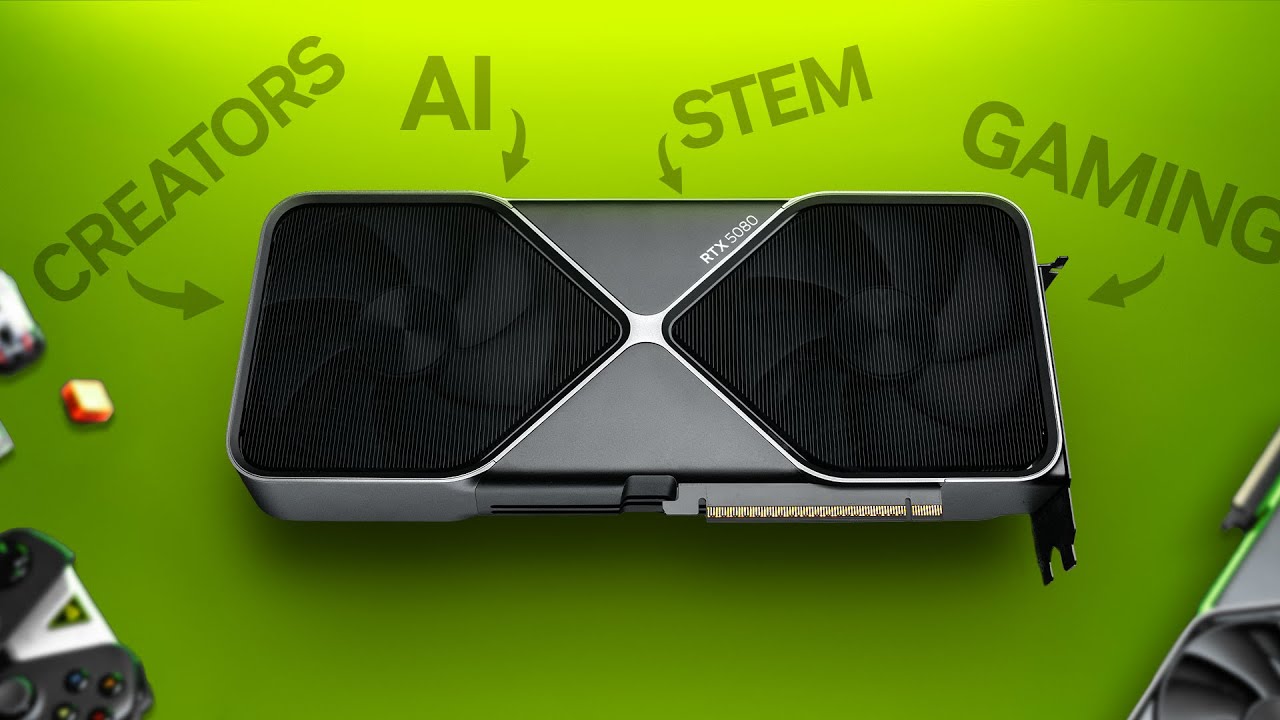
okay everybody so the day that a lot of people are waiting for is here AMD is launching their mid-range gpus into a market that's absolutely ready for some competition right now or at least some some stock so what I want to do here is I want to get right into this video because we have a lot to cover not only are we doing gaming in this one we're also doing stem applications we're going to be doing some AI testing and some Creator workloads too so let's see how everything shakes out anyways the RTX 57 70
TI launched a few weeks ago for $750 well the real price if you actually found one was closer to $850 or more but let's just say for argument sake it was 750 bucks and yesterday the $550 RTX 570 sort of came out that's because based on all of our conversations right now with retailers it is going to be harder to get than the 5090 well that created a $200 price Gap that's about to be filled by the RX 970 XT which is supposed to start at 600 bucks while the RX 970 is meant to go
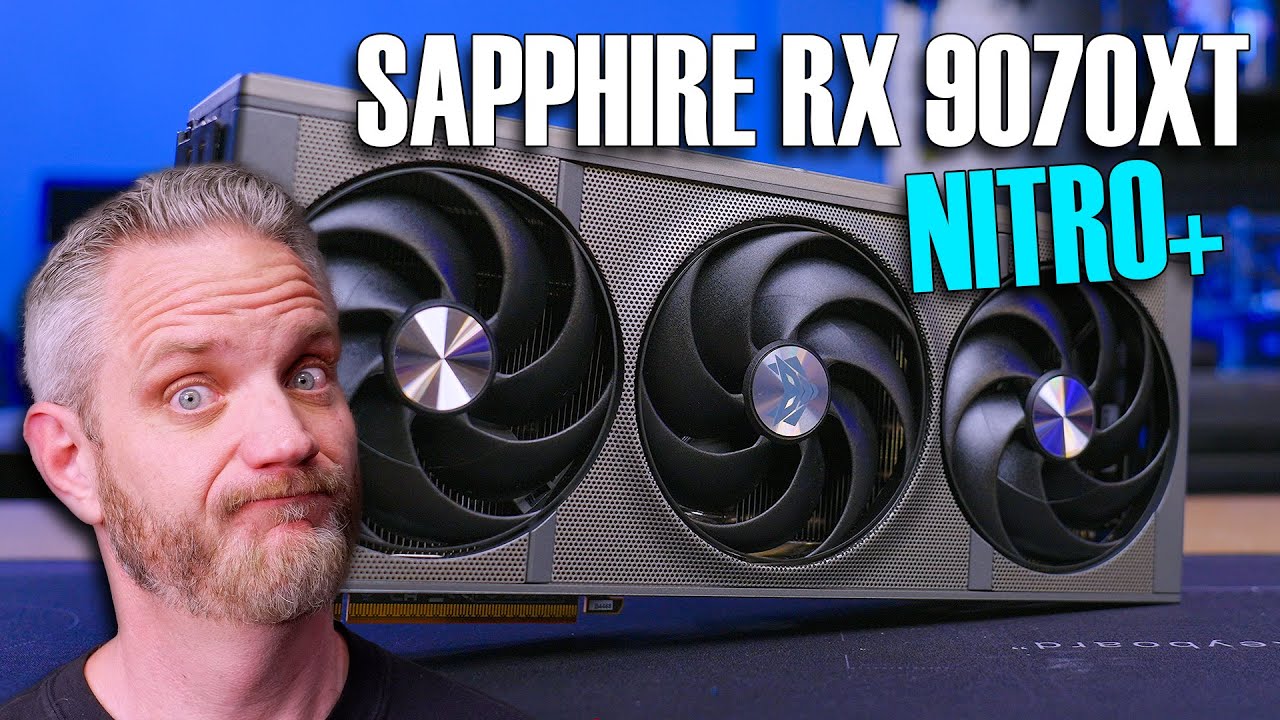
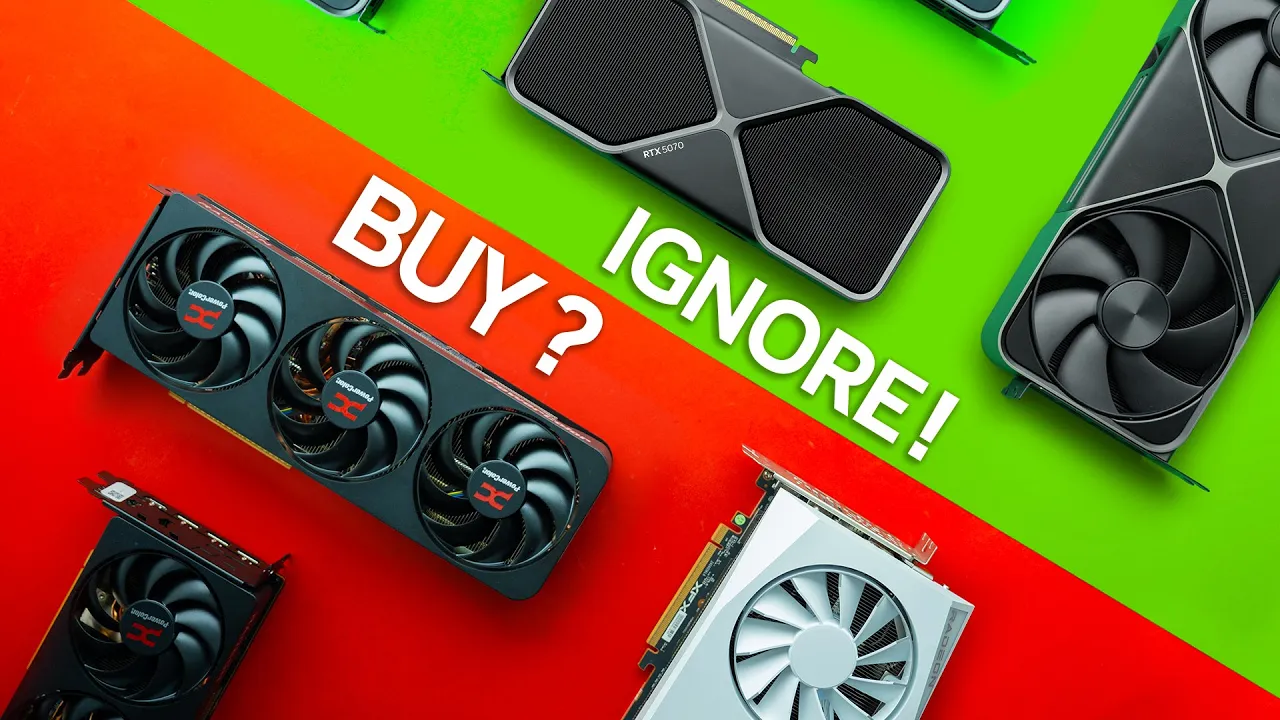
toe-to-toe against the RTX 570 at 550 bucks I should also mention AMD isn't planning on using any reference designs this time instead they're putting this launch entirely on the shoulders of their board partners and if all the conversations I've had with retailers turn out to be true there's actually going to be a good number of cards available this is not a paper launch and to that point for this video at least we have two of powerc color's Reaper edition cards one 970 XT and the other one 970 now according to power color and AMD these
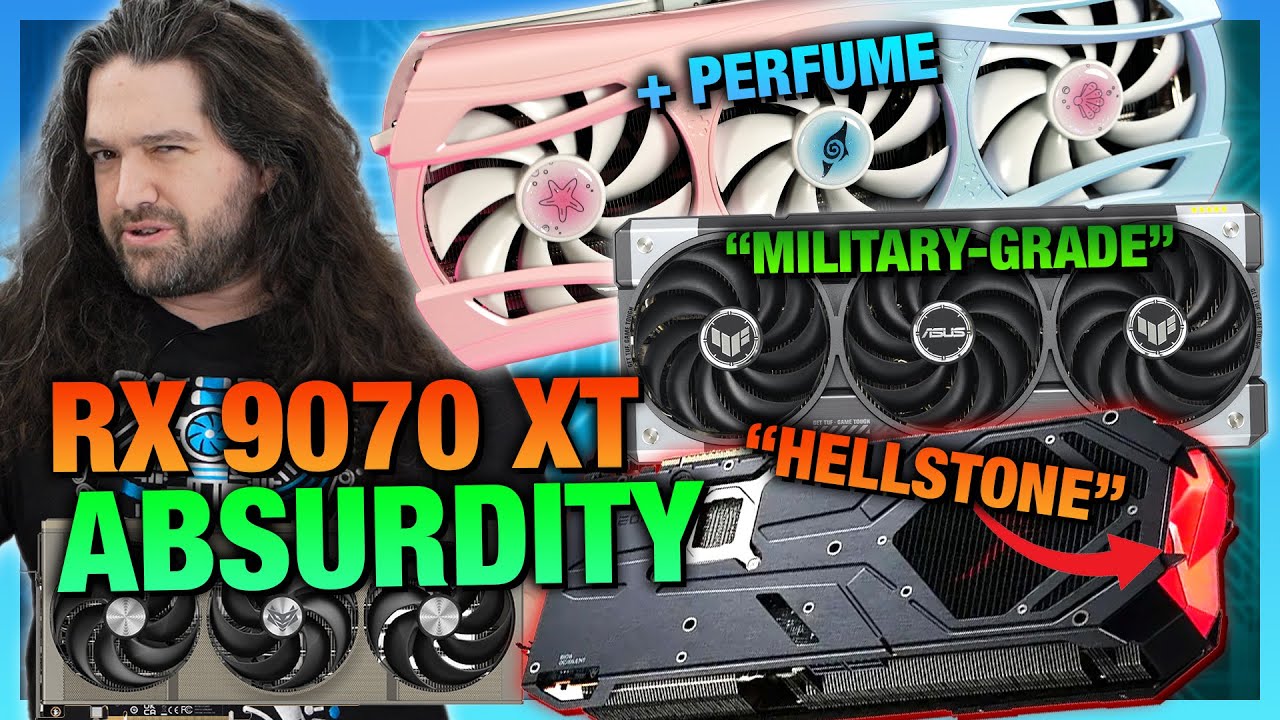
are both supposed to be at amds starting at msrps and they're supposed to be widely available at all of the retailers but we're we're just going to have to see if that comes true another thing I should mention is there's going to be two tiers of cards in this launch one with default power settings like the Reapers we have here and one between 30 and 45 WTS higher for OC models we've actually got a few of those here too from XFX Asus and a few other partners that I'm going to be covering in an upcoming
Roundup and you'll see some shots of them in this video since since we are testing those power colors until the very last minute over this last weekend anyways speaking of power one of amd's primary focuses for rdna 4 has always been to narrow the performance per wat Gap with Nvidia now according to the onp paper specifications for these cards well they're getting pretty close to the RTX 570 and 570 TI but in reality how does that shake out so the first thing I need to mention right away is the fact that neither AMD nor Nvidia
list the highest possible power limits for their gpus instead they give power consumption under typical conditions and cards are able to flex slightly above or even below that point you see that here with both the 970 series at 1440p the xt's 340 W rating is pretty true to reality in our testing while the 220 W 9070 typically hovers around the 233 W Mark so it lower heat output probably allows amd's boost algorithm to request a bit more juice the same thing goes for 4K basically the power consumption numbers remain identical across the board sure there
are some dips here and there specifically in CS2 and Hogwarts but overall we're seeing the same power consumption numbers at 4K as we did at 1440p this however is not the way Nvidia cards behave if we overlay their average power consumption results over the 970 series at both resolutions it's evident that their power requirements are a lot more variable sure some of the these situations can be chocked up to driver or game limitations but if the 5070 series algorithm detects it doesn't need full power to reach Optimal Performance it doesn't call it up meanwhile for
the most part the 970 series just goes full on most of the time but compare this to the 7900 series and it's evident that rdna 4 may be a pretty big step forward in terms of performance per wat so exactly what AMD wanted and more importantly the RX 970 and 970 XT likely won't require anyone upgrading from a 5700 or 6700 series to run out and buy a brand new power supply just for compatibility all right so with that setting the stage let's get right into gameplay testing and I just want to remind everybody once
again if you've seen our previous GPU reviews from the last I don't know couple of weeks couple of months the system specifications they have not changed one iota the only real thing that has changed is of course the GPU driver revisions so let's get right into those numbers and our first game alen wake shows some absolutely Gang Busters results results for the new AMD cards at both 1440p and 4K the xt's average numbers beat the much much more expensive 570 TI while the 970 stays well ahead of the 570 the only hiccup here is those
1% lows while they're good Invidia still wins in that respect another thing you'll notice is the improvements versus the 7900 GRE are actually a bit ahead of amd's own predictions black myth is a very different story though with the 970 XT losing to the 570 TI while the 970 is a literal carbon copy of the 507s performance both offer very good frame rate increases over the RX 7000 series especially at 4K but I'd never use any of these cards to play this game at 4K anyways at least not without upscaling enabled since none of these
provide a great overall gaming experience meanwhile balers gate has always been one of amd's best optimized games and that shows here but while the RX 970 series performs well against the Nvidia cards especially at 4K again their 1% lows do lag behind the RX 7900 series to me that simply points towards AMD still needing to make some tweaks here and there to their driver stack for Optimal Performance something else we noticed is amd's borderline horrendous performance in some key Esports games like CS2 I mean it's not like the RX 7000 series were good here but
both 970 cards even failed to live up the amd's claimed increases or the 7900 GRE so again again something obviously needs to be addressed on the software side but it's questionable how much can be clawed back since all rdna generations seem to struggle here and yet in most situations the RX 970 XT tends to emulate the RTX 570 TI's performance for much less money and it also manages to beat the RX 7900 XT more often than not on the other hand the RX 970 has a lot tougher fight on its hands since it can't really
distinguish itself from the identically priced RT X 570 but that positioning is very very situationally dependent in some games the 97 and 570 are neck and neck while in others like Doom the AMD card can easily take over the lead the same thing goes for the 970 XT it can keep up with the 570 TI while staying at least 10% faster than the 7900 XT and remember that card launched at 900 bucks the only real problem is that every time there's a few titles where amd's new gpus are super competitive we also stumble across a
game which just seems to lack optimizations and that causes all Radeon gpus and specifically the 970 series to dreadfully underperform at 1440p but also come up short versus the Nvidia cards at 4K honestly it will be interesting to see whether amd's driver team can salvage this Hogwarts also shows a ton of potential for the RX 970 and RX 970 XD the only problem is that both fall into the same hole as the RX 7000 series simply put while the average frame rates are competitive every AMD GPU devolves into a stuttering mess in this game they
just don't deliver fluid gameplay like the Nvidia cards here and that's a concern since Hogwarts Legacy is based off of ue4 one of the most popular game engines around right now like I said before if those few hiccups are ironed out and every game saw these new cards performing like they do in Horizon forbidden West then AMD would absolutely have some priced performance Champs on their hands because when these cards are able to Flex their muscles they can easily put the screws to the RTX 570 series though more so with the 970 XT since no
matter which way you look at things paying $750 or more for an RTX 5070 TI looks like a really bad decision right now because while there are surely games that have Nvidia specific optimizations AMD has a few in their back pocket too like Black Ops 6 and this points towards why when AMD showed the 970 XT at CS it looked so freaking good there's some serious GL between the Infinity Ward engine and Radeon gpus unfortunately Rainbow 6 falls into the same category as CS2 though not in such a drastic way while the RX 970 XT
and 970 do offer performance increases over the 7900 gr and even the XT they fall behind the competing Nvidia cards and I think Spider-Man remastered is a great microcosm of the overall situation here the RX 970 mirrors the 570 pretty well at 1440p and does pull ahead at 4K while the XT model tends to lose to the 5070 TI at the lower resolution and becomes very competitive at 4K it also seems like both cards are trending quite a bit below amd's 1440p performance claims versus the GR8 but align pretty well at 4K if anything this
shows how a larger memory footprint really allows the 970 series to distinguish itself at higher resolutions then again there are games like Starfield where the AMD cards absolutely shine it almost feels like the flip of a coin sometimes the 9070 series gets some Blockbuster wins while other times it really struggles to justify its pricing but I can say the exact same thing about Nvidia because when looking at the overall landscape of these results its obvious performance is increasingly becoming divided into one camp or another either green or red but not both I just wish more
titles fell into the same category as Warhammer 3 Total War where the game engine doesn't seem to have any preference and every GPU seems to have their optimization all properly lined up it's it's like perfect but even here you can see the relative benefits of having that 16 GB frame buffer especially again at 4K moving on to rate tracing in Allen awake and it's really a yin and yang situation based on resolution at 1440p the RX 970 series boasts huge uplifts or the RX 7000 generation and also compete pretty well with the RTX 5000 series
but then at 4K it all falls apart to the point where both cards c s deliver completely unplayable frame rates avatar shows pretty much the same thing at 1440p but also cements one thing into the equation you don't want to use any of these gpus to play rate traced games without some form of upscaling or frame generation working behind the scenes another thing we're starting to see is games that heavily optimize the rate tracing pipeline exclusively for NVIDIA gpus I mean heck it's called Nvidia rate tracing directly within blacksmith wukong's overall options and you can
see the result of that and you know what this really pisses me off if anything developers should be encouraged to make RT more accessible kind of like democratize it but no instead we get crap like this that pushes Gamers even further away luckily there are some titles that just don't play favorites to that extent and cyberpunk is one of those it highlights something really important too with the RTX 5000 series Nvidia has been sort of treading water with rt performance it's no better than the 4,000 series and that's allowed AMD to almost catch up and
that's got to be worrying for NVIDIA since in games they used to Champion as being standouts in their rate tracing initiative like Doom well the RX 970 XT can almost match the $100 more expensive RTX 570 TI meanwhile the RX 970 easily outmatches the 5070 the same thing goes for Hogwarts the 1% lows yes they're still trash but overall it's a day and night difference versus the RX 7000 series honestly nvidia's been put on notice here because if amd's next Generation udna architecture can make a similar or a larger jump forward things could get really
interesting and finally there's Spider-Man remastered another game that used to favor Nvidia gpus in a pretty big way but now with the 970 series the playing field is pretty much level even at 4K but then again I'd argue that enabling rate tracing in this game actually makes it look a bit worse so I just think to raster and enjoy the higher frame rates so those are gaming results but let's be honest here graphics cards in modern systems aren't always ask to only game there are a ton of other tasks that people typically ask them to
accomplish that could be anything from like video transcoding to exporting videos or edited videos through nl's like Premier and resolve so let's see how the RX 970 series does in those situations can it improve on the already pretty impressive showings that the RX 9700 Series has shown in the past in blender Cycles Nvidia clearly has an edge with their Optics renderer over amd's hip implementation and even within the Radeon ecosystem it seems like there's a lot of optimizations left to do since the RX 970 and 970 XT both underperform when compared to the 7900 GRE
things look a lot better when moving to Eevee with both cards beating the RTX 570 TI though once again there's the question about whether or not this is the best possible output for the RX 970 series since neither GPU can convincingly beat the GRE again meanwhile the wheels really fall off in handbrake we tried the latest public release beta builds and even Alpha builds but in the end it was pretty obvious that the new series isn't fully supported by this program yet we'll make sure to keep tabs on it and post updates if anything changes
but right now this isn't a good look meanwhile the resolve numbers are about what we'd expect for generational improvements over the RX 7900 series with the 970 XT actually being faster than the 7900 XT you might also be wondering about why the RTX 5070 gets such terrible results versus the 570 TI well that's because it gets a single encoder layout while the TI and the 580 have dual nank layouts Premier does something a little bit different since even in its current beta forms it doesn't properly support nvidia's multiple en code decode design instead Adobe has
built in very clear optimizations for Cuda premere also benefits from larger memory Footprints and more bandwidth that's why the 7800 XT can beat the GRE so while the 970 series gets respectable results here beating the RTX 5000 series is almost impossible and moving on to viewport performance and solid works where higher frame rates are critical and for whatever reason the new AMD cards just fall in their faces they can't even beat the RX 7900 gr or RTX 570 somehow I think this might be a situation where open GL support for rdna 4 will slowly be
rolled out and it isn't quite ready for launch and finally 3ds Max shows us a bit better situation by using a direct 3D 111 path but the numbers put out by the 9070 series aren't that great with the 970 tying the GRE and the XT moving barely 10% beyond that another thing I wanted to tackle is of course AI workloads it's AI is in the Zeitgeist these days and AMD has made some pretty significant claims about the performance increases of this series over previous generations and I also have to mention something here very quickly the
AI space is revolutionizing not even evolving at a very very rapid pace so the results that you see today in this review might be completely flipped on their heads tomorrow we're just going to have to see where everything lies in a couple of months so let's start with a more synthetic workload the proon integer Benchmark and unfortunately there's no support for the RTX 5000 series yet but we see two very different stories for AMD while the 970 series boast some insane performance increase in integer workloads their fp16 performance is actually a downgrade versus the RX
7900 series moving on to image generation a test where we're using the amount of time it takes to generate an image and one that actually supports Nvidia cards while nvidia's dominance is pretty clear but there's also a great story for the newest Radeon cards since they deliver a huge improvement over the previous generation just like AMD promised the next stop is performance in a few open-source AI models and the results are a bit less extreme for the art RX 970 series over amd's previous cards while there are some impressive performance increases nothing can touch Nvidia
cards when they're used in their native Cuda environment even with the 14b model which is typically memory limited the 12 gig RTX 570 is still able to remain comfortably ahead of the two AMD gpus but the tables rapidly get turned when the RX 970 and 970 XT are able to run through their own rock environment not only that but this test highlights why memory capacity and bandwidth are so important for most AI workloads regardless of whether it's the 8B or 14b model every AMD card puts down some really good numbers with the 970 series actually
leading the RTX 580 of all cards The Only Exception is the 7900 GRE since it's slightly memory bandwidth constrained when compared to the other models we're showing here moving on to a distilled model of deep seek on a Level Playing Field using Vulcan the results are pretty much the same as they were in the last test where cards pairing faster higher capacity memory layouts get better performance the standing of the two RX 970 gpus does get knocked down by a bit but their results are still impressive with the vanilla 970 almost matching the RTX 570
TI meanwhile the RX 970 XT surpasses the 80 in 8B model testing and is a bit behind in the 14b model all right let's sum this all up and I'm going to put all my sort of cards on the table here I'll admit to a little bit of an intr intrinsic bias towards the RX 970 series it's because it's very evident that after all of the Nvidia launches the GPU Market simply needed a kind of reset a little bit of a shakeup now when everything settled did the RX 970 series actually accomplish that well at
1440p the RX 970 XT is 24% faster than the 7900 GRE and the standard 970 gets a 12 1 12% uplift which leads it to essentially tying the RTX 570 yes even at 4K but I can't emphasize this enough the real value here lies with the XT since it's $50 premium goes a long way towards competing with the 5070 TI it's only about 10% behind while on paper at least being a whole $150 US cheaper and I know a lot of you were hoping for the XT to deliver RTX 570 TI style frame rates and
for the RX 970 to convincingly be the 5070 and they actually do in many games particularly in situations where their 16 GB memory layouts can start flexing which is in more areas than you might have expected but I feel like a broken record here with every single AMD launch they need to work on driver optimizations because Rainbow 6 Space Marine 2 and CS2 along with the 1% lows in Hogwarts balers gate and a few other games drag these average results downwards so how well these cards perform in the reviews that you're seeing today will heavily
depend on the selection of games that are being tested there are a few other red flags here too outside of gaming so look the the 970 Series has some almost remarkable uplifts in AI workloads when compared to the 7,000 series but when you look at GPU compute that's where things go all over the place so for example blender some of those workloads we actually saw amazing performance for the 970 series on the other hand in handbrake and in solid works things just fell apart now to me that points out that there is still a wide
range of missing optimizations for this architecture but the most interesting thing for me and likely the most worrying thing for NVIDIA is how strong AMD has suddenly become in raate tracing at least if we don't count heavily Nvidia sponsored titles like blackm myth Wukong into the equation the RX 970 series is a Leap Forward versus the previous generation and if they can deliver what's been promised for FSR 4 as being a good competitor for D lss4 well things could get very interesting in the future so to sum things up I think that overall I would
call this mission accomplished for AMD provided they can do two things one of those is keep the stock replenished in the retail Channel people have to be able to buy these things and the other real wild card here is they have to keep pricing as close as possible to MSRP and those little bit of Premium that board partners are going to be charging for their OC models look despite Brewing trade Wars and everything else AMD has a real chance here to make a mark on the GPU market now I would recommend the 970 XT every
single time somebody would ask me over the RX 970 simply because it's just a more compelling solution for only $50 more but anyways with all of that aside personally I am the most excited about what these cards will mean for more affordable price points things that people can actually afford in the GPU Market not those $750 gpus but what can be done below those price points and I think and I'm hoping that this is just the beginning so anyways I'm Mike with Haro Canuck and I will see you in next one have a great day
guys