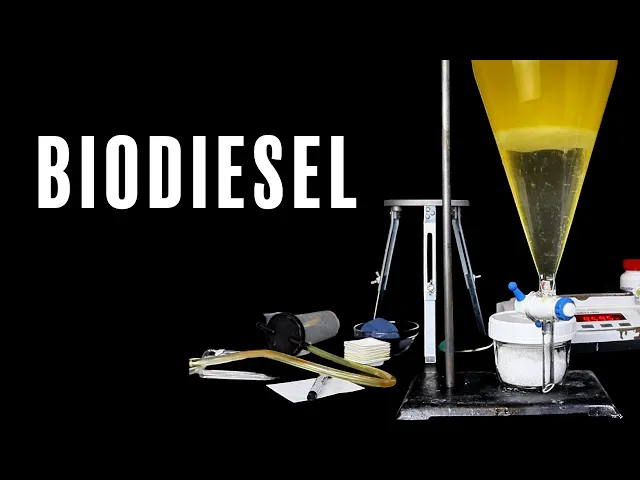
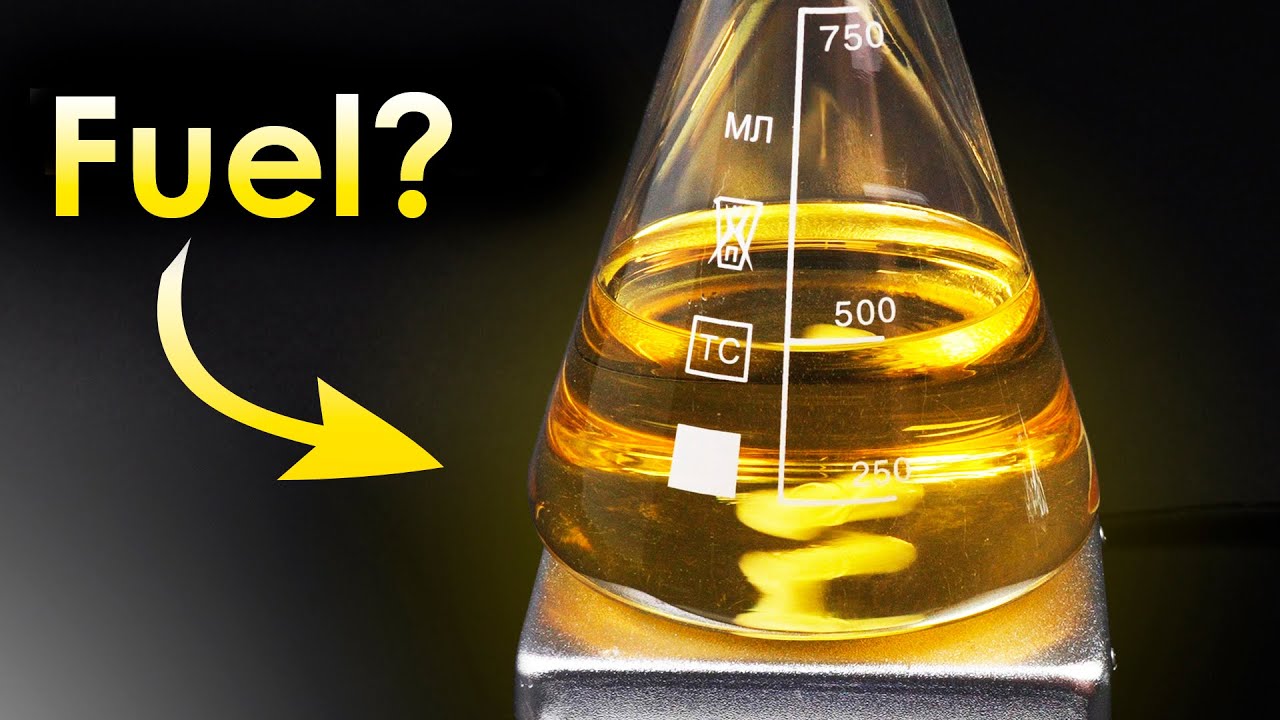
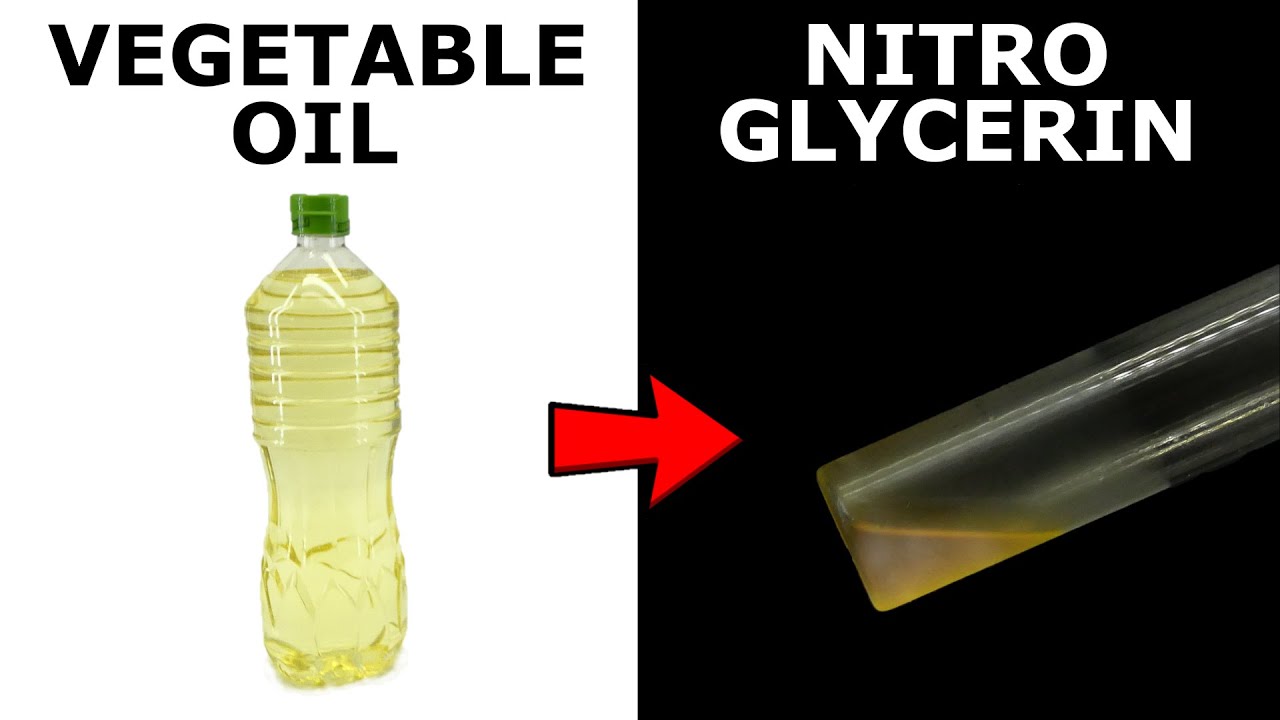
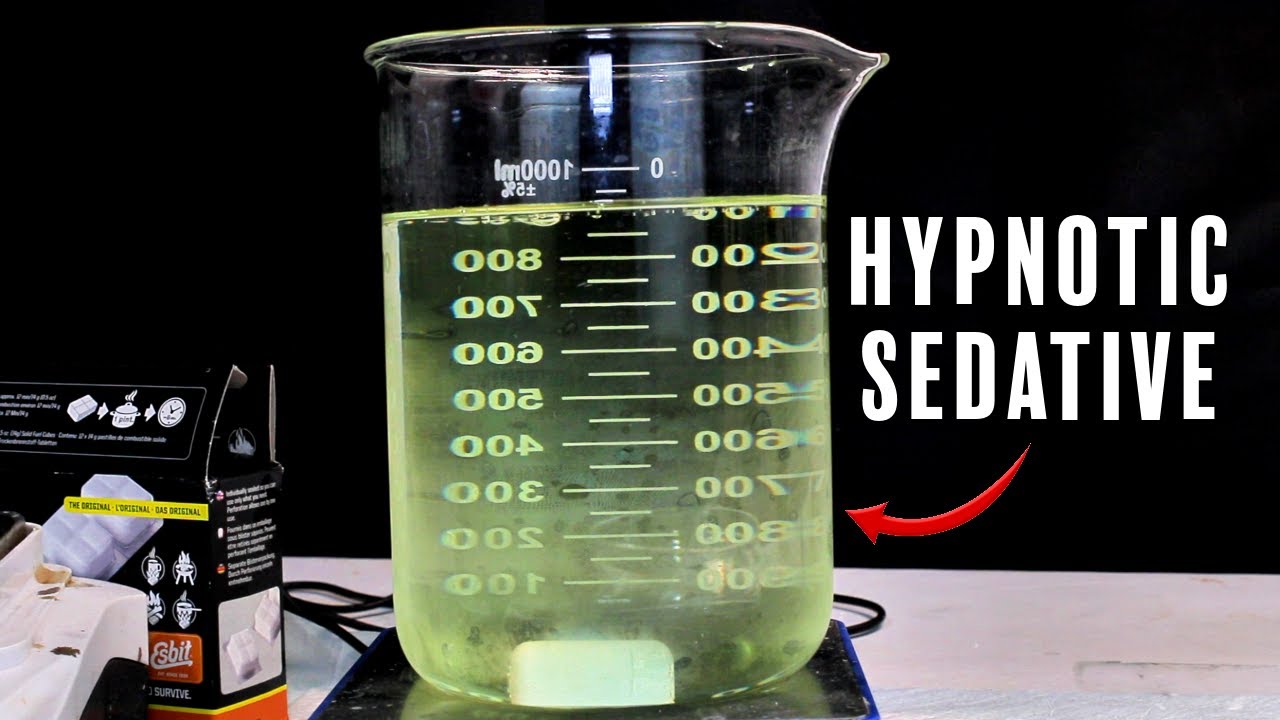
today I'm going to show you how to make biodiesel using cooking oil some fuel system cleaner and a bit of lie this diesel can be used in place of petroleum based diesel fuel but is completely sustainable and naturally sulfur free now to get started I simply pour about 500 mL of olive oil into a 1 L Beaker any oil will work here but I accidentally bought gallons of olive oil during my soap making phase that I'd really like to get rid of at this point I turn on aggressive stirring and pour in about 100 ml
of the fuel additive this specific fuel additive is nearly 100% methanol and although methanol is preferred here technically this process can be done using any alcohol with a minimal water content anyway given that they're both fairly nonpolar the methanol will dissolve to some extent in the oil they aren't entirely missable though so for the most part this simply results in an Emulsion of methanol and oil which in my case turned a light yellow I next added 5 G of sodium hydroxide Li which represents a significant excess this excess was used partially to drive the reaction
to completion but also to try and sequester any water that might be present the beaker was then transferred to my hot plate and heated to around 80° celius at which point the reaction became exothermic and heating was cut at around 110° C the temperature stopped climbing and so at that point heat was applied for the remainder of the reaction to maintain that temperature now What's Happening Here here is a two-step reaction that begins with a simple reaction between methanol and sodium hydroxide forming sodium methoxide and water the sodium methoxide then immediately begins to react with
the oil in a type of reaction called a transesterification which is very similar to the process used to make soap oils and fats are composed primarily of molecules called triglycerides which are further composed of Three fatty acids bound to glycerol in this transesterification reaction the sodium methoxide attacks the carbonal here forming an unstable tertiary intermediate this intermediate then rearranges and subsequently collapses displacing a methylester of the first fatty acid in the final step the glycerol backbone is proteinated by the water molecule produced during the formation of the sodium methoxide and the process repeats this continues
until all three fatty acids have been converted to their methyl Esters and the glycerol backbone is liberated as free glycerin since hydroxide is regenerated in the final step of the reaction the sodium hydroxide essentially acts as an esterification Catalyst and this is why the 5 G were a fairly large excess and by using less you might not need to go through the extra step of removing it later as a side note I came up with this procedure entirely on my own and if I was going to do it again there's one thing I might try
differently that is instead of directly adding granulated sodium hydroxide I'm I might try dissolving the sodium hydroxide in the methanol first using a bit of heat and then add that to the oil I feel like doing it this way would help the reaction go to completion a lot faster but it might result in an ultrafine precipitate of sodium hydroxide which could be more difficult to remove than the granules anyway as the reaction proceeds the mixture becomes increasingly dark and eventually clears up a lot of little bubbles are produced early on which I suspect is due
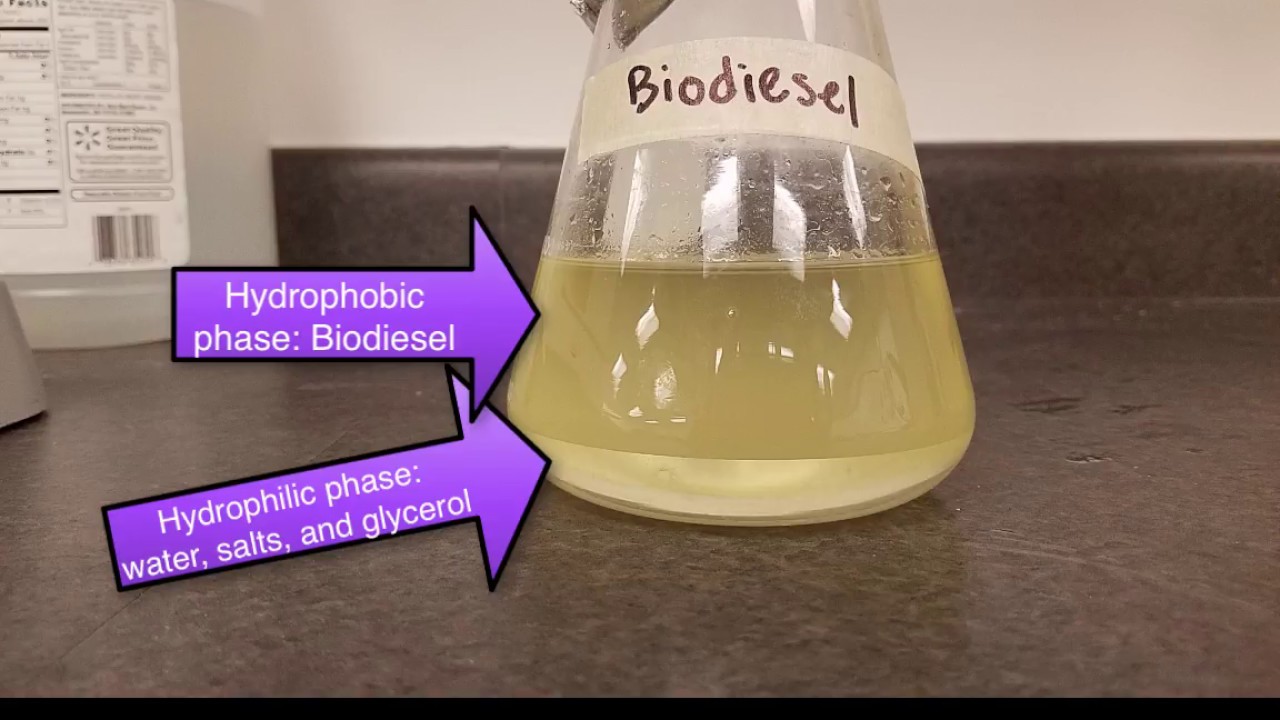
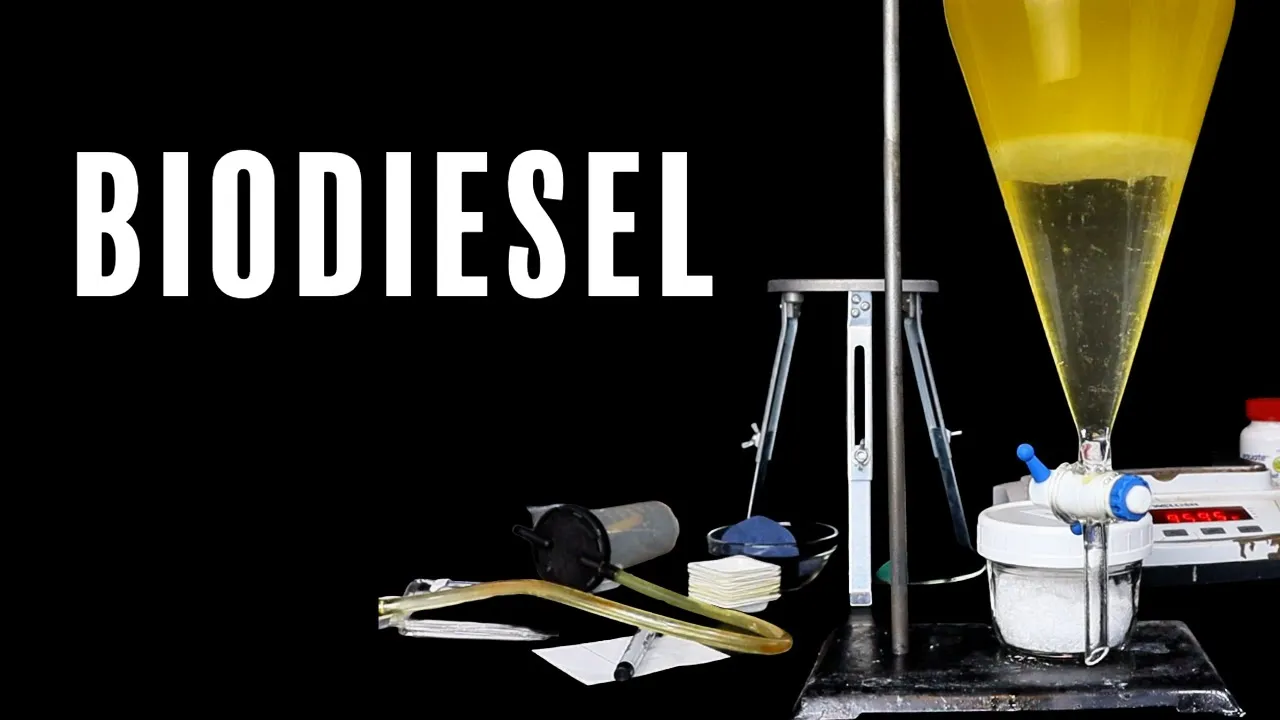
to unreacted methanol trying to evaporate after about 30 minutes of reacting I felt nothing more was happening and so I took the beaker off the heat and passed the crude biodiesel through my buer funnel to remove all of the excess hydroxide this was then transferred to a separatory funnel at which point I left it overnight to allow the more polar and very dense glycerol to settle to the bottom when I came back the next day my plan was to drain away the glycerol layer so that I could begin the process of cleaning up the crude
biodiesel unfortunately I quickly found that the glycerol had solidified and that wasn't going to happen I suspect this is mostly due to the fact that the glycerol layer likely contains all of the water and soluble impurities that were in the oil it's also probably due to the glycerol forming soap with any water that was hanging around and some unreacted triglycerides regardless I went ahead and just caned off my crude bodol layer and rinse the glycerol soap mess out of my separatory funnel once it was nice and clean I returned turned the biodiesel to the separatory
funnel along with 400 mL of water I gave this a vigorous shake and allowed the aquous layer to settle to the bottom this step will help wash away any soaps or unreacted hydroxide from the biodiesel there shouldn't really be any unreacted oil present as any fatty acids that didn't convert to biodiesel simply became part of the soap anyway the rinsing step is repeated two more times until the aquous layer is completely clear and the layers separate very quickly due to removal of any surfactant molecules the biodiesel is next drained into a flask and at this
point the only significant impurity is water the water can obviously be removed by boiling but because I felt that was unnecessarily dangerous i instead dumped in a few grams of in hydris sodium sulfate and gave the flask a hard shake this was again left overnight during which time the sodium sulfate completely absorbed any water that was present in the biodiesel this was then passed through my bu funnel one final time leaving me with a pure and dry biodiesel I forgot to weigh my final yield but as you can see here I produced just enough to
perfectly fill up this 16 o mason jar now here I have three test tubes the first contains unprocessed olive oil the second contains a sample of my undried and unfiltered biodiesel and the third contains my pure final product as you can see the biodiesel looks very similar to the oil but it's distinctly lighter and contains none of the slight green Hue that olive oil has the biodiesel also has roughly the same density as oil but it's significantly less viscous as you can see when I shake the test tube as a final demo I decided to
test how the biodiesel performed as a fuel compared to straight olive oil to do this I simply saturated two cotton balls one with olive oil and the other with the biodiesel I then ignited the biodiesel soaked cotton ball and after some difficulty I did the same with the olive oil soaked ball as you can see the biodiesel is dramatically more flammable than the oil and produces much more energy output over a much longer interval of time both put off a good deal of black soot as they burn but the oil Left Behind dramatically more residue
than the biodiesel by the time it finished burning as I said earlier this biodiesel can be used in place of petroleum Diesel and is certainly a good potential use for old cooking oil if there's enough interest I might consider following this video up by contacting a local restaurant to see if they'll give me their waist fry oil so I can try and optimize this process on a multi- gallon scale let me know in the comments if that's something you'd like to see and in any case I hope you found this video interesting and as always
I want to thank all my incredible patrons for their generous support your help with this channel is vital and very very appreciated and to everyone else if you'd like to see more content like this consider sub subscribing on Tik Tok YouTube Instagram or even by becoming a patron yourself thank you all so much for watching and I'll see you next time [Music]