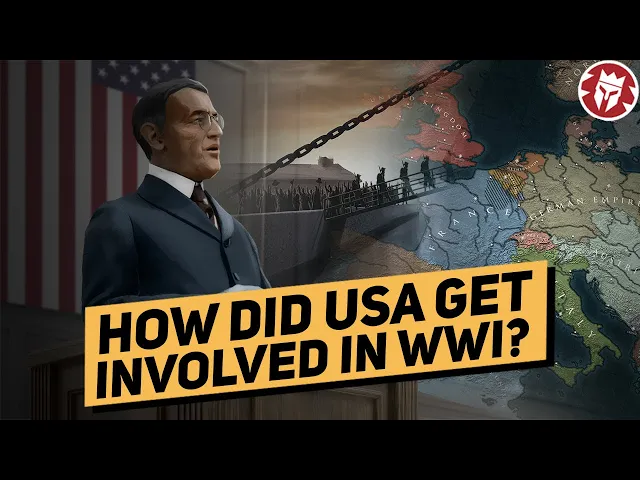
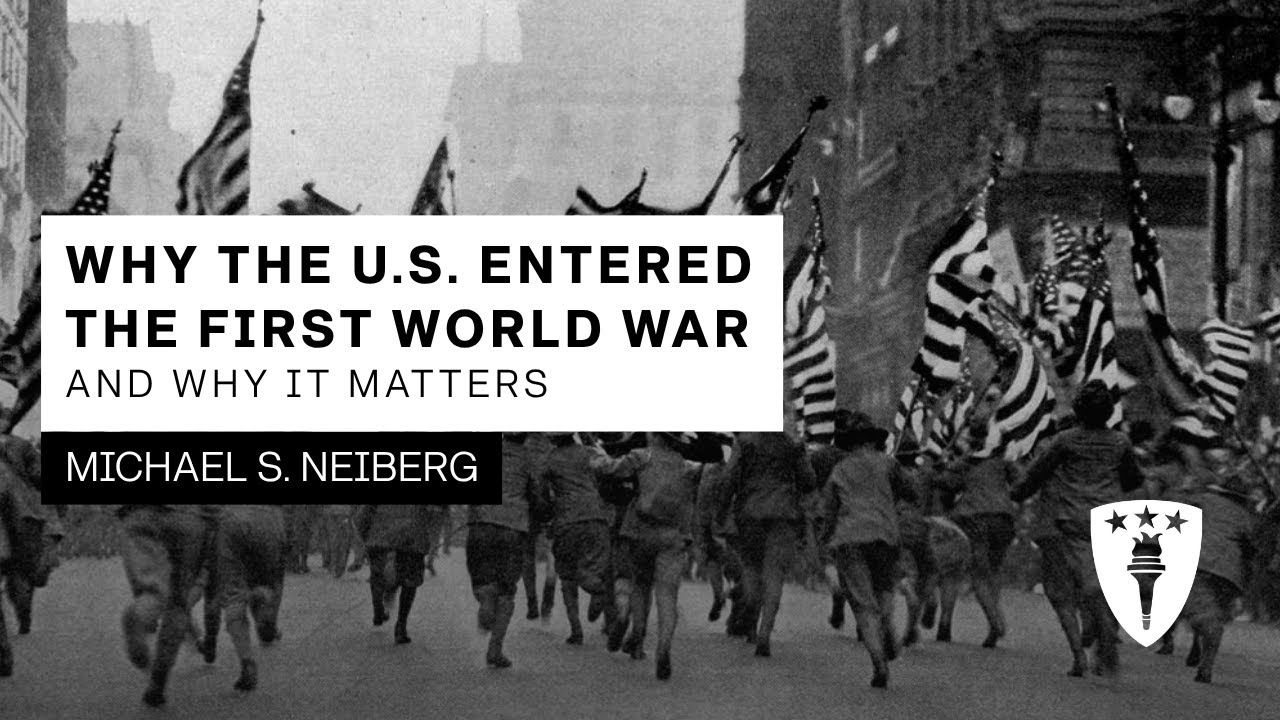
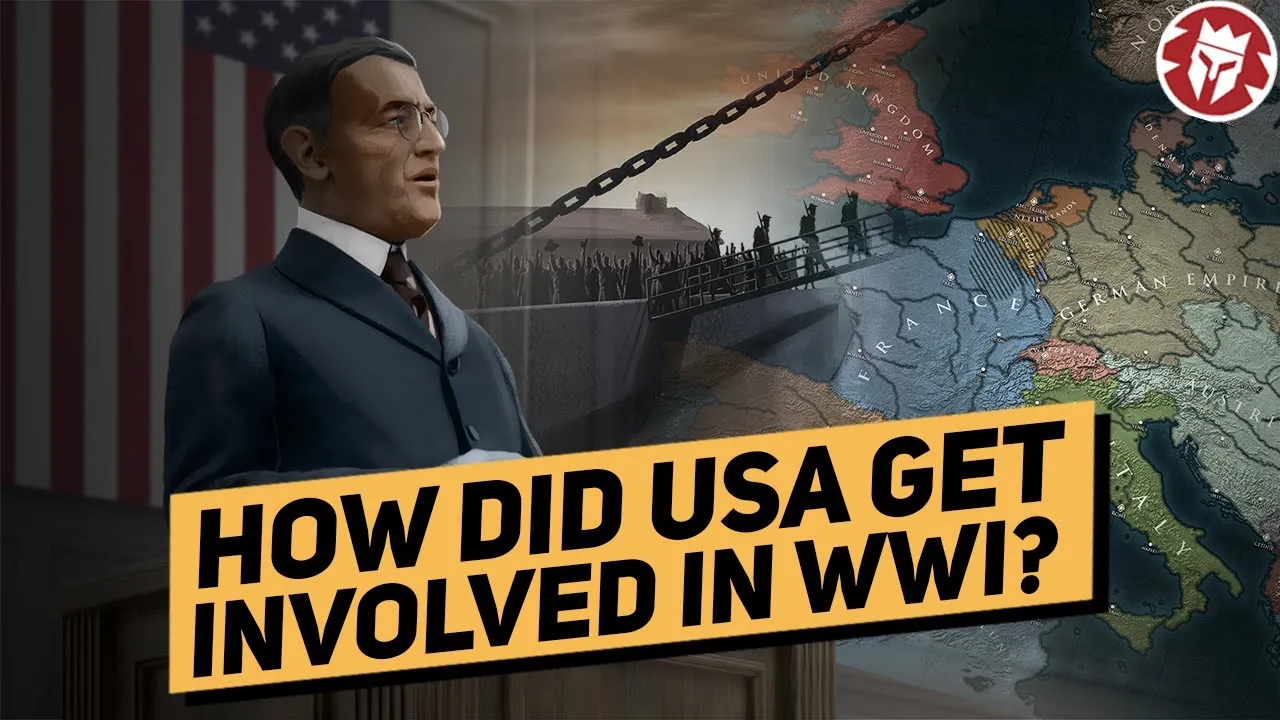
There were countless reasons as to why the US entered into WWI on the side of the Entente powers. Yet the American public saw the European war as a “dreadful thing” and opposed it completely at its offset in 1914. That same public just 3 years later however strongly supported going to war in 1917, what had changed?
Please join us as we explore the underlying reasons as to why America joined the war to end all wars. And you can even join the great war yourself, thanks to the sponsor of this video, Supremacy 1914. It’s a massive pvp online strategy game where you pick a real country to lead through world war one, facing up to five hundred other players in persistent real-time games that can last weeks.
You’ll pick your units and technologies, choose allies and enemies via real diplomacy with other players, and compose an epic strategy to take over the world. It’s got a great selection of genuine world war 1 units to use, like cavalry, planes, and secret weapons like tanks, plus you can play on both mobile and PC to update your plans at any time. Handy.
Play for free by downloading the game via our link in the description, and you’ll also get an exclusive gift: fifteen thousand gold and one month of premium subscription for free. But that’s only available for thirty days, so don’t waste time! At the outbreak of WWI, there was no reason for the United States to enter what its public saw as a “European war”.
The American population was made up of immigrants who held divided attitudes towards the belligerent nations involved and President Woodrow Wilson, who had been elected in 1912, and believed that it was the mission of the US to promote democracy worldwide, thought the US should not enter the war. Thus he declared American neutrality at the outbreak of the conflict . However at the same time Wilson proclaimed neutrality, Britain began a naval blockade of the Central Powers.
American companies had been shipping food, raw materials, and munitions to both the Entente and Central Powers, but were now being turned away by the Entente blockade. Wilson tried to get the belligerents to accept the 1909 declaration of London, which recognized the rights of the neutral trade convoys, but the British refused. Their government did not want to antagonize America further and set up a program to purchase American cotton and when US ships were stopped by the blockade the contraband items were purchased by Britain and the cargoless ships were released.
The situation angered the Americans, but also resulted in increasing financial ties between the US and the Entente powers. This also rendered the German surface navy useless, leaving it with only one viable naval weapon, the submarine. In 1913 America was undergoing a devastating recession and before the war's outbreak, the US economy was in a real downturn.
When the conflict started, the munition plants in the US began to fill with orders for war materials for the belligerent nations , principally the UK, and economic recovery started. American production went up 32% by 1917 and the Gross national production increased by 20% . One of the hardest-hit industries by the 1913 recession was the American steel industry, but because of the war, demand skyrocketed .
The naval blockade however meant all of these goods were going to the Entente Powers. In spite of the neutrality, the US began to loan far more money to the Entente rather than the Central Powers. J.
P Morgan Bank, became the largest lender financing Britain and France and J. P Morgan’s New York Office was designated the primary financial agent to Britain and primary issuer of loans to France . The loans led to trade and the trade led to the production of war materials and thus a precursor to the military industrial complex as we know it today was being born.
When Germany invaded Belgium in 1914 it engaged in numerous atrocities against the civilian population. Much of this was the result of fears of Belgian guerillas which led the German army to burn property, execute civilians and loot industrial raw materials for the war effort . The Entente powers propagated all of this to great effect, colloquially known as “the rape of Belgium” .
Iconic and graphic imagery depicted Belgium as a brutalized woman ran rampant throughout the American press . Much of Britain's war propaganda was aimed at attracting American support and by far and large it worked despite the fact many of the stories were fabrications. As a result of the Entente naval blockade, Germany resorted to using submarine warfare to do the same to Britain which it was doing to Germany, heavily pushed by Admiral Alfred von Tirpitz .
The decision to use submarines was made on September the 5th of 1914 and that month alone U-9 sank 3 British cruisers persuading the German high command to increase its submarine operations. Soon Germany declared the coast off Britain and the English Channel a warzone asserting that all merchant ships traveling through it risked attacks. At the same time, Germany also promised to try and avoid neutral shipping.
However, the British use of neutral flags made it impossible for Germany to do so effectively. The German submarines began torpedoing ships without any warning, arguing that surfacing first near merchant ships was too risky as they could be fired upon. Britain was indeed arming its merchant ships legitimizing such claims.
In February of 1915, the US gave Germany a warning about its misuse of submarines and in April Germany responded by warning US citizens not to board British vessels which might be attacked. Then on May 7th disaster struck, the British passenger liner, RMS Lusitania was sunk by a U-20 killing 1198 civilians, amongst them 128 Americans . The American public was outraged, but Woodrow Wilson still refused to declare war , and instead began negotiations with Germany, who eventually agreed to restrict its submarine campaign .
This became known as the Sussex Pledge: from then on they would only attack ships that were definitely British and head of the German Admiralty, Henning von Holtzendorff issued a secret order for all U-boat to stop operations in the English Channel and off the west coast of the UK and instead to operate only in the North Sea. In November of 1914, Woodrow Wilson began to fear that his foreign policy would not succeed in Europe. While he privately considered military preparedness, publicly he rejected the need.
In 1914 the president was presented a plan for military preparedness, but rejected it stating it would be a shock to the American people and that even if Germany won the war, the nation would be too exhausted and in no position to threaten the US. However this all changed after the events of 1915 which sprung forth a strong military preparedness movement. The movement argued for the build up of naval and land forces for defensive purposes under the presumption that the US would end up fighting in the war sooner or later.
The movement was pushed by ex-president Theodore Roosevelt, General Leonard Wood, as well as former secretaries of war Elihu Root and Henry Stimson. American industrialists and bankers backed the movement as it aligned with their commercial interests. The arguments for preparedness were quite valid .
They pointed out that the militaries of most great powers were all larger and better trained than the US military. Proposals were brought forward to increase the US military to 600,000 men and to begin mandatory 6 month military training for all men who turn 18 every year. These proposals were rejected for a plethora of reasons , but Wilson managed to reach a compromise in 1916, enacting the National Defense Act , and the Naval Act which sought to expand the US Navy to compete on the same level as the Royal Navy or Kaiserliche Marine.
The preparedness programs were met with wide-scale protest by anti-militarists, placing Wilson in a lot of trouble as he was up for election in November of 1916. Despite this Wilson and his “he kept us out of war” campaign won by a very narrow margin . By January of 1917 the situation in Germany changed.
The Germany Navy convinced the military leadership and Kaiser Wilhelm II that Germany could win the war if they resumed unrestricted warfare. They argued that the Sussex Pledge was pointless because the US was not neutral as they were supplying munition and financial aid to the Entente powers and by resuming unrestricted submarine warfare they could defeat Great Britain within 5 months’ time, before the US could land forces in Europe. Thus the German government decided to resume unrestricted submarine warfare in January of 1917.
Wilson was stunned by the news and went before Congress on February 3rd, announcing the US would sever diplomatic ties to Germany, but not declare war as he believed the American public would still not support the motion. From February 3rd until April the 4th German U-boats sunk 10 American vessels , resulting in the deaths of numerous American seamen and civilians. By February 26th, Wilson used an executive order to arm US merchant ships citing an old anti-piracy law.
When Germany decided to resume its unrestricted submarine warfare, it did so with the assumption the US would declare war eventually. To further thwart American transportation of supplies, war materials or future troops against Germany a plan was formed to establish a military alliance with Mexico. Since 1914, Germany had secretly armed Mexico and even made attempts to incite war between Mexico and the US in 1915 , tying down the US military and hindering US shipments to the Entente powers.
Then a telegram was sent by Arthur Zimmermann to German ambassador to Mexico, Heinrich von Eckardt . Since the start of the war the British had cut the German international cables and thus German telegrams were relayed through the Atlantic Communication Company under the control of the US Navy. The cable ran from Sweden, to Denmark and onwards to the United States.
However, the cables also passed through a relay station at Porthcurno in England which was secretly being tapped by British codebreakers in Room 40 of the admiralty. The Germans persuaded the US ambassador James W Gerard to accept the telegram in coded form to be transmitted to Mexico on January 16th of 1917. British codebreakers had broken the German codes and realized they held information that could sway the American public against Germany, but there was a major problem.
To make it public meant the Germans would know Britain had broken its codes and the Americans would know Britain was secretly tapping US cables. The British came up with a cover story, stating that British agents had stolen the telegram in Mexico and would provide the Americans with the German codes to verify the message if the Americans did not make the German codes public. The telegram was sent to Edward Bell, American secretary to Britain on February 19th and upon reviewing its legitimacy it was eventually given to Wilson by February 24th.
The White house released the information to the public on March 1st 1917 while more US ships were being sunk by U-boats. The American public opinion had changed dramatically over 3 year leading by 1917. Prior to the Zimmermann telegram, the American public was divided into 3 groups: those who advocated for war against Germany, those who opposed war but were determined to defend America’s national honor and those who wanted to keep the US out of the war completely.
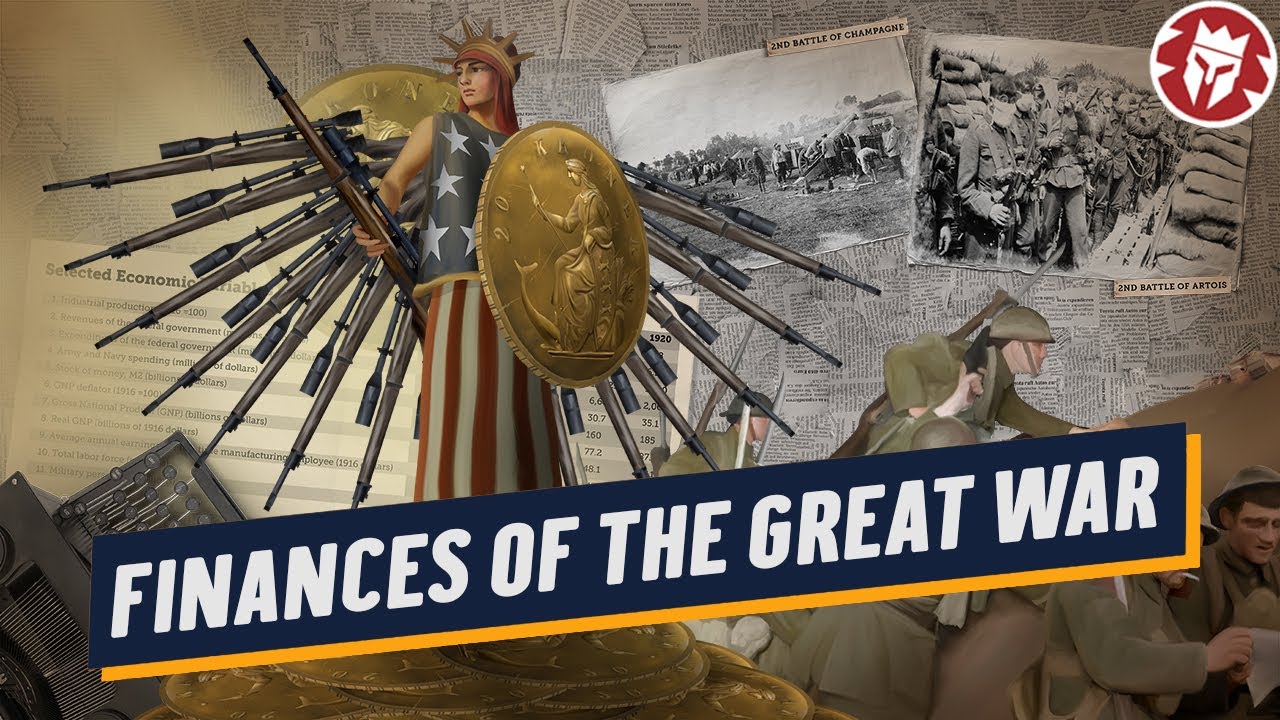
British propaganda, unrestricted submarine warfare and the Zimmermann telegram brought a large part of the American public to believe it was their moral right to fight to make the world a safe place for democracy. Now the US government did not directly finance the Entente powers prior to its entry into the war, nearly all the loans between 1914-1917 were syndicated by J. P Morgan & Co.
J. P Morgan was the lead bank organizing a cartel of other banks selling bonds to private investors on behalf of Entente powers . Cecil Spring Rice , a personal friend to J.
P Morgan made him the sole purchasing agent for the requisition of war materials and weapons for Britain and France, because without having a singular agent, the Entente powers would be bidding against another and this would have driven up prices. This all gave J. P Morgan incredible power within the US market to pick and choose which companies would get their share of the billions of dollars from the Entente powers.
Everyone involved in the war supply industry scrambled to befriend J. P Morgan. Soon all of these business orders and those who purchased bonds had an enormous stake in an Entente victory.
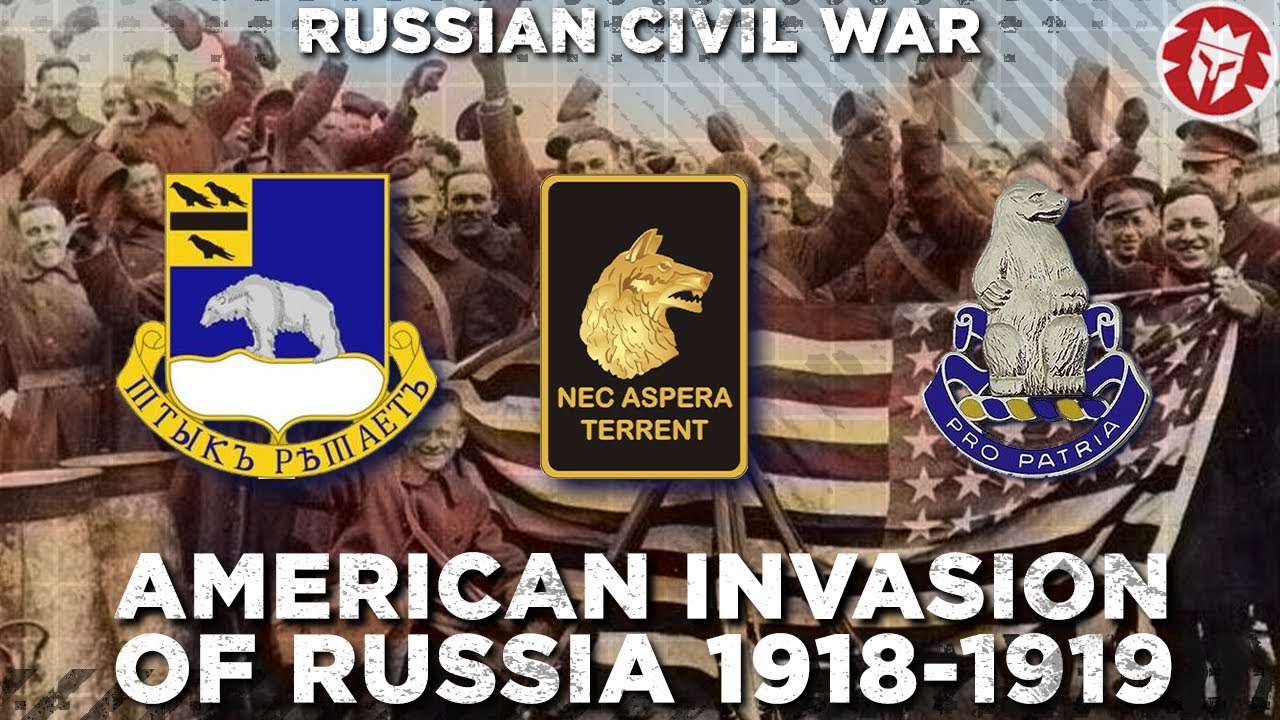
If the Entente powers failed to win the war, they might default on all those debts to the US. The issue of finance becomes even more apparent when looking at the Siberian Intervention. By the end of WWI America was the largest wartime creditor and over the course of the war, Russia’s indebtedness rose dramatically indirectly caused by America.
Following the outbreak of WWI J. P Morgan was one of the first to loan 12 million dollars to Russia. On February 8th of 1918 the new Soviet Government repudiated all bonds issued by the Tsarist government and canceled all previously issued Russian government debt .
This caused a massive backlash from the western government who were the creditors. The Siberian Intervention was obviously not only due to the repudiation of debt, but the financial interests of the creditor nations was a rather powerful motivation. On March 21st, Woodrow Wilson gave his administration a week to prepare legislation for Congress that would authorize him to declare war.
By March 28th, Wilson broke diplomatic relations with Austria-Hungary and On April 2nd Wilson addressed Congress . Wilson argued that because Germany had taken actions that violated American rights and international law, the US needed to enter the war to stop the German government. He stated that the US was fighting the German government not the German people, as America was a friend of the German people.
Wilson also stated that the US was entering the war to defend the ideals of democracy, liberty, and freedom. The war would "make the world safe for democracy" and be a "war to end all wars". On April 6th, Congress approved the declaration of war and Wilson declared war with Germany on April 7.
By the end of WWI, the US had become the world's most important trading nation as well as its largest banker. The Bureau of Internal Revenue quadrupled in size, the income tax produced 31 times as much revenue as it had in 1916. Nearly 21 million Americans, around 22% of the US population, had voluntarily subscribed 7 billion to the Fourth Liberty Loan.
After the war the US began investing large amounts internationally, particularly in Latin America taking on the role traditionally played by powerful European nations such as Britain. New York emerged as London's equal if not her superior as the world's financial center. Thanks to our sponsor, the free online pvp world war one strategy game, Supremacy 1914.
Lead a campaign of epic battles, diplomacy, trade, and technology to take over the world as your chosen state. Click the link in the description to get the game with an exclusive gift: fifteen thousand gold and one month of free premium subscription, but only for the next thirty days so act fast! We are planning more videos on the history of this period, so make sure you are subscribed and have pressed the bell button to see it.
Please, consider liking, commenting, and sharing - it helps immensely. Our videos would be impossible without our kind patrons and youtube channel members, whose ranks you can join via the links in the description to know our schedule, get early access to our videos, access our discord, and much more. This is the Kings and Generals channel, and we will catch you on the next one.