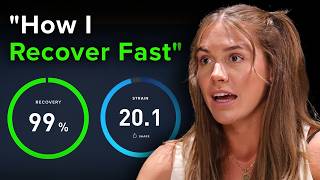
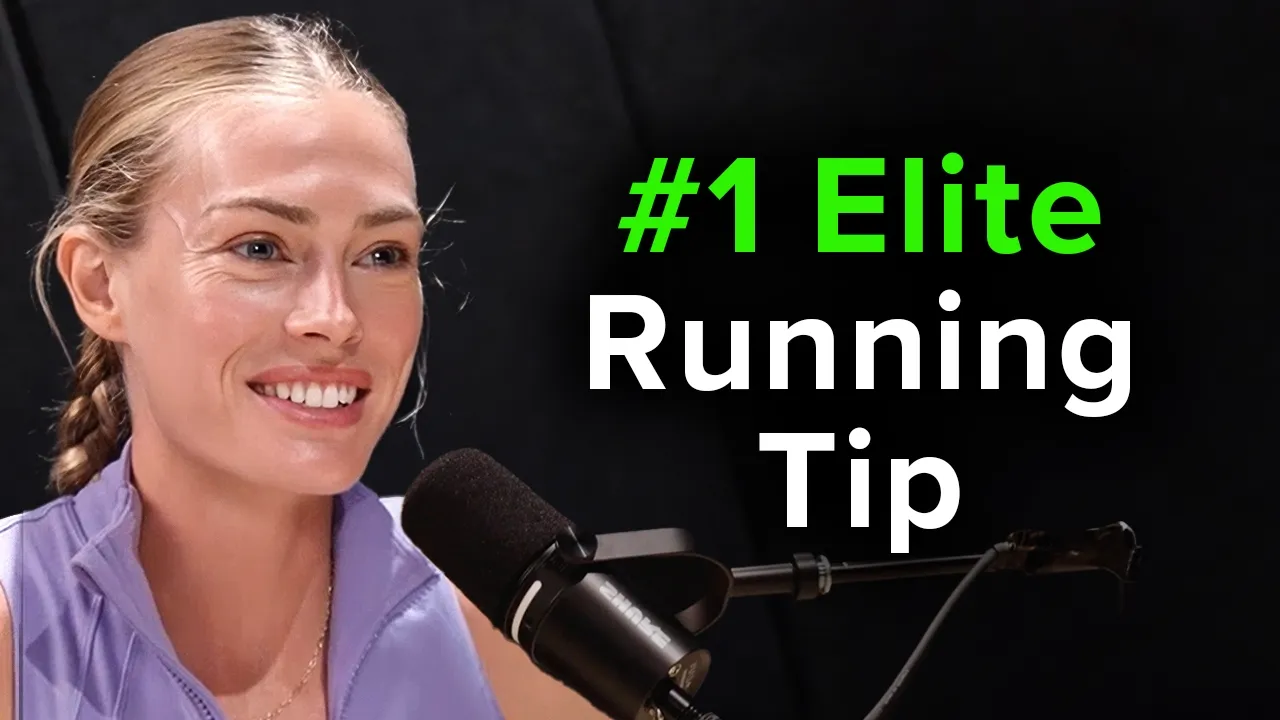
This is my 10th year as a professional track and field athlete. I just got burnt out. Had to take a pause on training and just allow my body to tell me when it was ready to go again. What motivated me a year ago is not the same thing that's really necessarily motivating me now. I'm 32 and the things that felt so important to me at age 18 felt like life or death. Now I'm actually having maybe more of an impact Than I was then and having really a lot of fun with this stage of my
career. I can make better decisions on my training and my recovery. >> Recovery is a way of being in a world for you. But what are the kind of things that you do to just get yourself reentered so you can build on this momentum you have? >> For me and what I've learned more than anything, it's the nervous system recovery. If you can balance your Nervous system, your body will recover on its own. >> Yay. Cool. Ah, Colleen Quigley, we're here. [laughter] I'm so excited to chat with you today. This is like round two for
us. >> I know. Oh, I'm really excited to be in person with you. This is great. Oh, we're like so far away. >> I know we are really far away. [laughter] Oh, sweet girl. Um, this is going to be such a fun conversation. I Think for our listeners, we're going to just dive into your data. You I mean, gosh, your data is very aspirational. Uh I you know just a little bit on your background, American Olympian, world record holder in the 4x500 meter relay prowess, NC2A champion, ninetime all-American, Rio 2016 Olympian, and just an elite
track competitor generally. In 2023, you transition into into triathlon earning your pro license. You are, I think, probably best known For your steeplechase prowess. for listeners, just explain steeplechase. >> Oh, yeah. Yeah. >> Because that's kind of like your your roots, right? Would you say? >> Yeah. So, in high school, I did the 1600, 3200. I never did any hurdling in high school. I never in high school, I could have done the 300 meter hurdles in Missouri, but I never hurdled anything. My college coach saw me running cross country and she said, um, I want
you to Come to Florida State. I'll give you a full ride and I want you to run the steeple chase. And I was like, okay. you know, [laughter] uh, but she saw she again Karen Harvey saw that in me. Um, so the steeple Jace is 3,000 meters long, so it's just under two miles, seven and a half laps around a track. >> Uh, the caveat is just a small thing is that you have on every lap you have four large wooden barriers that are for women It's 30 in tall, 36 in for men. So you
have to hurdle these wooden barriers. They're not like metal sprint hurdles that like fall down if you hit them. They're like horse barriers. They're like big wooden barriers. So, you have four of those on every lap and then you have one of those on the the edge of the curve of the track that is actually placed in front of a pit of water um that's 12 feet long. So, you have to run up to the barrier, you launch, you step Onto it, launch yourself off of it, and you try and clear the water pit as
best, you know, as far as you can. And so, you do one of those every lap. So, over the course of 3,000 meters, you have 28 hurdles and seven of these water jumps that you have to navigate. So, it's like an obstacle course on the track. It's got to be one of the more demanding. >> It has to be. >> It's crazy. It is a crazy event. When I Yeah. Sometimes when I explain it to People, they're like, "This sounds made up." >> Yeah. No, I know it doesn't sound real. Yeah. >> Um, but it's
so fun. And one thing [snorts] that I love about the steeple is that it really forces you to stay in the moment in the race. You cannot get distracted in this event because there's always an obstacle coming your way. So, it really forces you to like stay very present and focus on like each, you Know, one at a time. you don't have your own lane. So, you're always navigating these things along with a bunch of other people and you're, you know, running under five minute pace, uh, going over all these things with all these other
people. It's like always chaos, but every steeple chase is different and it's just like a really fun event. >> What I just genuinely adore so much about you is just your advocacy for mental health and just all the just Millions of women and girls you inspire daily. Oh, that's >> you are just putting so so many beautiful things out into the world and um I for me personally I've just been continuously inspired by you as is my daughter and so thank you for that. >> That's the most important part to me as well. >> Yeah.
When you think about who you are and I think who you aspire to be in the world, what comes up for you? >> Yeah, you know, this is my 10th year as a professional track and field athlete. Um I graduated from Florida State in 2015, which is feels so crazy to say. Yeah, I'll I will brag for a second after I'm here in Boston now and then on Thursday I fly to Florida um because I'm being inducted into the FSU Hall of Fame this weekend which is crazy. Like 10 10 years ago I graduated from
there and so I'm really excited to like go back and celebrate the >> FSU I mean they're me too. >> I can't really pick favorites but I'm going to um I mean they I mean I've worked with a women's softball women's soccer. >> Yeah, the women's soccer team is so badass. their women's sand volleyball team is so big. >> We work with volleyball. Uh yeah, sand and and kind of uh regular volleyball. >> Indoor. Yeah. >> Indoor. Yeah. >> It's a big sports school, right? Like being a student athlete at Florida State was really really
fun. I just felt like very supported. Um very celebrated. And so it'll just be fun to go back. I haven't been back in so long. So it'll just be fun to go back. We get to go to a football game on Saturday, do the whole thing. But yeah, when I kind of like look back on that time, it's interesting to me. Now I'm 32 and I can be like, "Wow." Like the things that Felt so important to me at age 18 or age 22 like felt like life or death. You know, things like going to
the Olympics and or winning the NCAA title or winning the Missouri high school state title, you know, like these things just like felt so like life or death. Um, and now like you know, I'm at the ripe old age of 32. It feels like my my kind of area of emphasis or like things that I like lose sleep over have just like changed so much. you know, now I can like see Things from a different perspective. Um, and I feel like I I launched this team this summer, and we can get into all that, but
I launched a professional team called Meridia, and I'm kind of like the team mom, you know, I'm the oldest person on the team, and I have the most experience um, of all these women, and so trying to like do my best to like I've had all these experiences, and how do I kind of figure out how to make an impact on the sport um, at this time in My career when, you know, I'm not like I didn't go to the Olympics last year. you know, I'm I'm not really doing the things that I was doing
six or so years ago, but now I'm I'm actually, you know, having maybe more of an impact than I was then. Um, and having really a lot of fun with like the stage of my career and like watching that all these things shift along the way. >> So, tell me more about the training group. Is it is it a training group? Sorry, I kind of assume that. Yeah. >> Yeah, of course. Yeah. Um yeah, so basically I I've was part of I graduated from Florida State University and I was part of a um professional group
in Oregon for six years that was sponsored by Nike called the Barman Track Club and I went to the Olympics with them um when I was training with them and made five USA teams when I was training there and had a lot of like success on the track. Um and then I also had a lot of injuries And a lot of issues with overtraining and just some like kind of unhealthy behaviors that um eventually really took their toll on me. Is that um is that in part of because of the culture like how you know
because I think overtraining obviously is is preventable right like when you have the right kind of data and you have the right >> definitely like a culture thing where it was yeah like it's the raw raw just do it when it all costs you know I was at a Stage of my career where that felt right to me you know I was like you know 23 I was like yeah when at all costs like that felt like you get that >> yeah that like definitely you know I think spoke to me for that period of
time and yeah going to the Olympics gave me a a lot of opportunities. I can't lie, that was something that opened a lot of doors for me and and gave me a platform and gave me a lot of opportunities that I'm always grateful For. But then, you know, at a certain point around 2019 um 2020 era, the injuries just really were piling up and like the time between the injuries was getting shorter and shorter and the joy of it and like the stress of it were just the ratios were off. You know, I was too
stressed. Yeah. and injured way too much and unhappy and like the joyous times of being healthy and training were just too few and far in between to really justify what I was doing. So it Came to a point where yeah everything kind of came to a head in 2020 end of 2020 and I ended up yeah not resigning with Nike and I was off into the abyss for a little bit of the unsponsored world of like where do I go now like how do I navigate from being like this like Nike girl to like what
do I do now >> a part of your identity >> it did yeah for sure and we created a brand within that team called the Bowererman Babes. It was um at one point We had 12 women training together like doing workouts together. That's my best memories of that time was like being on the track doing like these epic workouts with all these women who are also Olympians and national champions and you know American record holders and all this stuff and just like going to work with them every day and like feeding off that energy of
um that powerful you know tribe of women. Like those are my best memories from that time for sure. Um but Then yeah when I left I was like okay you know that ended up not being the right thing and so I um ended up having the opportunity to sign a contract with Lululemon and they became my partner for the next now it's been like 5 years um and that's been incredible a total culture shift like completely different like their whole thing is about celebrating the individual and just saying you know whatever you're doing like we
just think you're awesome and we Want to get behind that like you you're driving the ship here we're just like supporting you and at that point I had kind of figured out more about what I care about and like kind of where I want to place my energy around >> women's health and mental health and all this stuff and so they were like we love that like whatever we can do to support which felt really different than the relationship I had before of like um like I felt like I was supporting a Brand before and
now and now I feel like I'm being supported by a brand which is really great and just >> supporting a show authenticity you know how you show up in the world and totally you know just feeling that alignment which is amazing. And then the caveat just being the only downside of that being they don't have Llemon doesn't have their own track and field team the way that you know a lot of these like more traditional track and field brands Like Nike and New Balance and Puma and all them they've been in the sport for a
long time. So they have these established teams that they hire a coach and yeah they sponsor all the athletes on the team. Um and Lule Lemon doesn't do that. They've they're kind of coming at it from a different approach of like picking a few individuals and then they allow each one of those athletes like you create your team around you. You pick your coach, you pick the people That you surround yourself with you think that is going to set you up for success, which I love, >> especially someone like you at the stage you are
at in your career, you know what you need around you, you know, and and like to be able to choose that is just >> ideal, right? >> Very powerful. And so, yeah, now I work with this badass female coach named Julie Benson. Um, I hadn't worked with a female coach since college. Actually, my College coach was Karen Harvey. She was also a badass female coach. >> And yeah, she's not in Florida State anymore, though. >> She's not. Yeah, she actually is not in even in coaching. Okay. >> She got a little jaded by like the
male dominated just industry that is NCAA coaching. Um, and she decided to pivot and do something else. But her time with Florida State and she was at a few different uh universities was amazing. And the impact that she made on me was changed my whole life. Like she was the one who said, >> "You're going to run the steeple chase. You're going to be a national champion one day." Like, you know, she saw the vision for me before. >> Just those people that believe in you like that. >> Totally. So yeah, now working with a
female coach again has been almost a year now that I've been working with Julie. Um, and it's been amazing, too. Just the same, it's the same very similar at least energy that she brings to the situation. Um, so I've really appreciated that. But the one thing I was missing and the reason I I formed this group was I missed that feeling of having 10 women around me who were working towards the same goals and inspiring one another and working hard together and sharing reps in a workout like you know I would do a workout with
Maybe eight times a mile and I only had to lead one of those miles. The rest of the time I'm just running behind and getting pulled along for a ride. So I thought can I have it all? Can I choose my coach and choose my brand partners and choose my training partners and you know be able to like have my cake and eat it too? Like can I do that? Because right now there's no place in the US where I could go and train and be able to choose all those things. Usually it's The brand
chooses those things for you. So if you partner with a brand, they make those choices for you. And I just thought like I really I don't want to make that sacrifice. And so yeah, Meridia is our team and we allow the athletes to choose their coach and choose their brand partner separately. Like they make those choices on their own and then they come to the group for the community aspect for the training partners, for the camaraderie to be like This is my team. And I want the athletes to be able to support themselves, right? like
we have these professional athletes, they don't want to have to go to the effort of like it's a lot to like have to hire people to come film stuff for you and maybe you know maybe you're editing or maybe you have someone edit things or you know just like the whole all the work that goes into like telling your story as an athlete. Um which is honestly one of the main reasons um that I was inspired to create a brand around this. Not just like hey like let's train together. We don't have to like create
a team like a formal team. we can just like train together or whatever. But I think the biggest thing that I saw that a lot of athletes need support on is like the storytelling. And it's harder and harder and more competitive than ever to be able to get contracts with brands that pay your bills because as runners, we don't really pay our bills Like by racing. We don't track athletes don't really earn much money at races. Sponsorships. Um, the biggest I ran a continental tour gold label meet in Beijing and it was fifth I was
fifth place and I think I won $800. You know, like you're not going to make money on the prize money. You make money through sponsorships and it's harder and harder to get sponsorships now because it's so competitive. Yeah. What I'm noticing with these pro athletes is they're just Like, I just want to do my job which is like train and Yeah. run and train and and compete well and all the brand building stuff is it's not something that I like really enjoy spending my time on. And I'm a outlier. I kind of like I love
that part of it and I see it as like my creative outlet. Um and I have, you know, more energy than I know what to do with. So I'm like I need to like have something to do when I'm not training because you can only run like So much out of the day. Um but I what I've realized is that that's um not normal, you know, like most people don't want to do that. So then with the team, I thought, okay, maybe this is a gap that I can help fill where we can take some
of that responsibility off the athletes. Like what if we hire people for the team? Like we have an intern, we have content creators that we work with who can come to practice and like film the athletes doing what they do and then Put we edit, we put everything together so that they don't have to like stress out about stuffing. And I think like we're only a couple months in, but I think the the theory is that we help these athletes build stories and brands around them so they don't have to and then they become more
valuable. The team has value as a brand of itself, but each athletes individual brand also becomes more valuable. um so that when they go back to negotiate the end of the year With their you know sponsors like they can say like you know before I was never posting on Instagram and people didn't know what I was doing all season and now they can follow along with team Meridia and kind of become fans of of theirs and so it kind of helps everybody get more exposure. >> Um we're just at the beginning of that and I'm
my own worst critic. We could be doing so much more. Um I yeah I need to hire more people to be able to help um Take some of that responsibility to like really amplify these athletes stories cuz they all have incredible stories. They all like come from amazing everyone has a different way of getting to where we are. >> Having the opportunity to tell the story, you know, and have it be in a fun way that feels like they get to own that story and it's not relying on someone from coming in from the outside
to tell their story. Like I want them to be able To tell it on their own. So that's like a big mission of ours and hopefully we'll help them with all this like you know all the contract stuff and and um yeah branding stuff. >> Gosh, I love it. You have a location that you train out of, right? >> Based in Boulder. Um I actually So I live in LA in Venice and we have an Olympics coming up in LA. LA 28 if you guys aren't aware. >> Are you are you [laughter and gasps] >>
who knows? I don't even know what to think about LA 28 yet. But I had to in order to even give myself a chance of thinking about that. I knew I had to figure this component out first and then we kind of see that. >> Yeah. We see if I wasn't having fun anymore and I'm like if I'm not having fun by myself doing this in this way, what's the point of trying to go to another Olympics just to be say I'm a two-time Olympian like I don't care. Like I has to be something that's
fun and feels like I'm doing something. I'm adding something to the universe, you know, not just like adding a notch another notch on my belt. It's such a reflection of your matter about that [laughter] anymore. It's very >> My first thought was LA 280 is coming. I love living and training in LA. I'm going to start a training group in LA. >> But it turns out I'm the only distance runner who wants to live in LA. [laughter] So that didn't work. >> So everyone everyone and uh you know kind of distance running training at high
altitude is really important and um for a lot of people you know just living in LA is very expensive and you have to go do training camps somewhere else and whatever. So, I didn't want to give up my home base near the beach. That's where my like heart is. Um, but the team is based in Boulder, so I go back and forth between the two. I spent the last Six months from January through July in Boulder with the team. And then the offseason I spent time in LA. >> So, you have an indoor track you
work out of. And >> we Well, the summer we um >> outdoor of course. Yeah. I'm just thinking January. >> Yeah. January and February and March are kind of tough and that's where I'm like, are you guys sure you don't want to be in LA? [laughter] >> I know. Seriously. >> But we just, you know, it makes you tougher. You figure it out. I grew up in the Midwest, so I'm used to like Yeah. running in snow and all that stuff or running on treadmills when you need to. So, you figure it out. But, um,
Boulder is actually an I love training there. It's an incredible place when it's nice out. You run on a different soft surface place every day of the week for two weeks straight. Like, the options are Just incredible. >> What kind of training are you doing right now? Well, right now, so you mentioned triathlon and I did have a fora into triathlon. Um, and then had, you know, had a little bit of initial success and I earned my pro card, but truly when I like reflected on it, it just it wasn't in my heart to go
that route. Um, and I had to just have a moment last summer of like, do I truly want to dedicate myself? It's not a Small endeavor, you know? It's not a light, it's not a thing I take lightly to say, I'm going to try and go to the Olympics in the triathlon and train for these three sports every single day for the next four years. Like, and it just wasn't in my heart to do it. So, I came back to my track world and that's when I decided, okay, if I'm going to come back to
track, I got to do things differently. And so, that's when I decided to create the team. >> Okay. Amazing. So, will you are you focused on relay? Are you doing what? >> Yeah. So, well, I kind of funny you mentioned relay. There's not that many opportunities to do relays in track and field. >> Relay is so fun. >> It's so fun. And there actually is a crazy opportunity coming up to do a relay. So, I'm going to tell you about it. >> Oh my god. >> So, I just finished my track season. Um I did
a month of um 1500s miles and a couple 3Ks. I was in Raleigh, North Carolina, and then I went to um Louven, Belgium. Then I raced in London. Then I went to Scotland. And then I went to Beijing. Um, so I did five races in five different countries and it was so fun and it was yeah all flat races, no steeple chases. >> So do you take a roster? Is it like six and you pick four on the day? How does It how does that work? >> So it's still an individual sport. So everyone's creates
their own racing schedule and they can do whatever they want. So we had four athletes that four of our our women from Meridia were all doing different races in Luven, but then some of them um went to like Katie went to Finland for one of her races. Um, Maddie and Katie went to um, So, you're not traveling all together for all these years. >> We sometimes travel together. Like we're four of us were in Louven together and spent a week in Luven together in um, Belgium, which was so fun. Like just running around with your
friends, eating croissants, like it was just the best. [laughter] >> Um, but then it is at the end of the day, it's an individual sport. So sometimes we break off and do our own races. And most of them had been racing earlier in the year. Um, and I kind of Had a couple hiccups with my health earlier this year, right when we launched the team. I got a little a little stressed out and I was just burning the candle on both ends. And so I had to take a little pause in my training um for
a few weeks and I didn't race for the month of like June. Um, so I ended up kind of like racing later in the season than everyone else. So it comes back to like it is an individual sport. You get to make those choices About what's best for you as an individual. Um, but I ended my season um about a week ago and I take a little break here and then a few of us are gearing up for um cross country nationals. So, kind of weird, but you can do >> indoor track, outdoor track, and
cross country as a distance runner. Um, there are very few opportunities to run cross as a professional runner. It's usually more in the NCAA. So, I did cross Country all throughout college. >> Okay. >> And have done one cross country race as a professional like in 2016. and haven't done any cross since then. Wow. But >> that's a fun community. >> But there's a world cross country championships that are happening this year in January in January of 2026 and they're being hosted in Tallahassee where I went to school. [gasps] >> So I was like, "Wow,
>> I got to try and I got to try and make the team. Like I got try and go." And >> how many people do they take? >> Well, usually it's a 10k for men and women over grass, which is my ideal distance is like 3k. So 10k is a bit >> that's a lot >> bit bit long for me but this is the second time that they're hosting a 4x 2k relay mixed gender relay >> in cross country which is crazy. So they're going to have a 2k loop four Athletes two men and two
women from each country form a team together and they do it as a relay. So I don't even I think >> okay you need to do that. >> I KNOW >> THAT sounds epic. >> That's what I'm going to try and do. And so the trials for that are they pick the team at US cross champs which is in December. >> Okay. So the US governing body is going to put together teams. >> So yes the way they do it so the last they've only done the 4x2k relay one other time at world champs and
it since it was such a new event they actually so USA track and field as a national governing body. They just chose the team. They like selected the team and they gave an invitation to four athletes to like do it. Okay. >> Um I can't even remember who did it. It was 2 years ago, but now it's becoming more popular and more people want to do It. And so they're making it a more formal like tryyout situation. So in December they'll host US cross country nationals and they'll have a 10K race for anyone who wants
to make the 10K team and they'll send I think they send seven athletes is usually a full team for cross country. They'll have everyone who wants to do that lines up. They do a 10K. They pick the top seven people. They'll go and they they're the 10K team. And then they'll have a separate Race that is a 2K and anyone who wins to make the 4x2K team, they all race and they'll pick the top two women and the top two men and then they'll form the 4x2k relay team that gets to go to worlds. >>
Gosh, good luck. >> So, it's going to be very competitive. There's a lot of people that want to do this because it's so fun and there's not that many opportunities to do relays on the track. If you're a sprinter, you got The 4x1, you got the 4x4, you got mixed gender 4x4. Like, there's way more opportunities to do that. training for that too is going to be is so fun. >> It'll be fun. Yeah, I think we'll do some like workouts over grass and stuff. It'll be really fun. So, I'm excited for that. So, in
November, um I'll go to just spectate at the New York City Marathon. New York City Marathon weekend in New York is just always such a vibe. And so, I'll go there, cheer on a bunch Of people, spirit to be around those super inspired. and they'll go straight to training camp in Boulder, spend the next month preparing for cross nationals and then December 6th 6th in Portland. >> So you'll basically so huge advantage going from altitude >> Yes. >> down to sea level which is Tallahassee. Yes. >> So that should be good. >> Yeah, exactly. Yeah.
A lot of a lot of People do um high altitude because it's basically like legal blood doping, right? Like you come down and your blood is just way better at carrying oxygen to your muscles when you're using it. So you don't get tired as fast and you can yeah like perform for like longer periods of time. Um so yeah >> in January shouldn't be too humid down there. And >> I think January and Telassi will be perfect. >> It's going to be perfect running conditions. >> Yeah. The the hard part will actually be the US
national champs in December in Portland and it's going to be very muddy and probably chilly, cold, rainy, gross. >> I mean you lived in Portland. That is I did. That's tough stuff up there. >> Not quite looking forward to that part. at least evil to get to the world champs. You have to get through Portland. So anyway, that's kind of like What I'm gearing up for right now. >> Is motivation does it come easy to you? Like you know, do you just get up and go like I'm going to run? >> Yeah. Sometimes >> 400s
today. >> I find like momentum is really important. Like sometimes when I have really good momentum, I Yeah. It's just everything is flowing. But if something happens to like knock you off your momentum and you feel like sometimes you Get through these stages where like every day kind of feels like a bit of a grind and you're like having to kind of force yourself or like trick yourself into doing like what you know you need to do. But I've always found that like that's a period of time and like it's not going to last forever
and then there'll be other times where yeah everything you just catch this wind and all of a sudden you're snowballing like in a good way like snowballing and You're just growing momentum week by week and everything's going great. Allowing the motivation to be different depending on what's going on in your life. what motivated me a year from a year ago is not the same thing that's really necessarily motivating me now. And so allowing that and that that's normal and natural as you know as you're changing what motivated me in 2015 you know doesn't really motivate
me anymore and that's like I think that's totally Normal. I think it happens to we should evolve and shift. >> Yeah. How do you use data and you know I was just thinking about you know the time frame of like post Olympics where you started you know really injuries started piling up and it's my perception that an environment like that who has access to so many resources >> athletes should not be in a situation where they're >> totally >> overtraining you know like I I just feel like I I wonder like how has technology evolved
for you you know kind of where was it then >> what were they measuring and kind of how has that evolved over time you know >> well I'm laughing cuz What were they measuring? Literally nothing. We were >> That just measuring my mind. I mean, you've got >> is crazy. >> Or Nike. I mean, I don't even know how Much that guy just donated. A billion dollars and presumably have access >> measuring nothing. I I was working with and I'm not here to like you know on anyone but just really old school approach of just
like >> it felt like >> even just like my workout paces you know like doing like workouts that are supposed to be like tempo or threshold but the paces are just kind of made up yeah there's no rhyme or reason >> everyone from Shellane Fanigan who's the New York City Marathon winner to um Kate Grace who's an Olympian in 800 meters to myself who's running a 3K steeplechase. Um someone else who's doing a 5K, like we're all doing quoteunquote threshold pace at the same pace, 520 pace. And that's just not it's not possible that we
could all be at threshold like all these different types of bodies, all these different types of energy systems, all these different strengths and Weaknesses, athletes. Um, Avita, again, I'm not here to on anyone, but I left that situation, but that has not changed. I changed. I did change. I don't do it that way anymore. Um, but that situation has not changed. Um, which yeah, in 2025 with all the access to all the information, all the data that we have is kind of mind-blowing. Um, >> I will say, you know, I'm inside a lot of these
high performance environments, You know, professional and collegiate, and I marvel at how unsophisticated they actually are at monitoring some of these very basic things that could that could actually yield not marginal gains, right? Like we're talking massive impact. >> Yeah. And actually, my little foray into triathlon was really interesting because one thing I noticed about triathlon as a sport more generally is that they're much more databased. Like they really do Use a lot more data. uh they use different like numbers to kind of calculate how much stress on the body for because they have these
three different sports and so overtraining for triathlon is like it's easy to do especially because two of your sports are non-impact like you can do them all day without any like bone stress injuries like you know with running it's you're limited kind of in that way with these other sports you're just like if You eat enough like you can just be like working out all day which for a while was like kind of fun I was like oh this is like [laughter] I love working out I just work out all day Yeah, >> but it's
easy to overtrain with triathlon. So, they're much more data driven um as a sport in general, I found. And my coach that I was working with in triathlon was um used a lot more data than I was using. >> Triathon very impressive. I interviewed Laura Phillips. >> Okay, cool. >> Yeah, she she was really fun to talk to, but there I mean the amount of data that she was I just wa Okay, >> I think track could like learn a lesson from that and I think we're kind of learning like we're learning more. I would
say in the past few years there's been a shift um to use fueling more efficiently because even back in the day I'd be doing you know an hour and 45 Minute long run off nothing, no water, no calories and now I would never like I would by design it just no one did it. It was a culture thing. No one on the team. >> So just training fasted was really kind of >> and yeah I mean we wouldn't we wouldn't even talk about it. Like we wouldn't even use the term training fasted. We would never
use that term. like you'd have breakfast and then you go do your Long run. And it was almost like it kind of seems weird to say, but it felt to me, this is my perception of it, is that it felt like if you needed that, it was like a weakness that you needed to have a gel during your 90minute run. And like maybe no one thought less of me, but I I feel like it was like a you >> unsaid. >> Yeah. Unsaid that like, oh, like you need a gel. Like it was some kind
of weakness, which now I see completely Different. And I'm like, "No, you're smart. You're not only do you need it to get through that run and feel really good and have the best like long run possible and get the most out of yourself during that run, but now I see it as, oh, I'm doing the the fueling during my workout or during my run, during my um session in order to recover better, in order to show up the next day feeling better. End that workout on empty. It's so hard to fill your tank back up,
right? If you're thinking about yourself like a car versus like if you still work, you know, working really hard and you might end the workout on a quarter of a tank, that's even better. That's better than finishing on empty and you'll recover faster and be able to like top back up to 100% easier. And so now I just think about it totally different. Um, but I and we're getting there. I think we're like we're Shifting, you know, more to like >> this type of thing, but I think there's still a lot of room for improvement
and it's just like low hanging fruit. Like this is like easy stuff, you know? >> It's like just the basic basic basics, you know. Did you and some of your teammates like like did you have regular cycles? >> Yeah, I luckily have only had one time in my career where I lost my cycle one summer for about two or three months, But I did uh talk to a dietitian right after because that had never happened to me before and I was like, you know, >> this is kind of concerning. Um, and so we I went
back and kind of did like a food log and we just kind of noticed, okay, you were running like 80 85 miles a week and training at high altitude again and just doing all these really intense workouts and my both my calories as well as my um fat intake were kind of, you know, not sufficient. And so I Was getting into that red S unintentional red S over training under a few >> relative energy deficiency syndrome. >> Exactly. So, I and I didn't realize I was doing it at the time. And I think that's one
thing that we don't talk about enough is that you don't have to have an eating disorder, a full-on eating disorder in order to experience red eyes. >> There's these subclinical levels that Are actually really problematic that lead to all sorts of illness, injury, you know. Yeah. And it can be unintentional or you can be kind of at that level like I've gone through times where I was injured where I was being way too kind of careful and cautious and really not wanting to like gain weight and get out of shape because I wasn't running. I
was just crossraining. But I'd be crossing for two, three hours a day and then my body is also burning Calories trying to heal and trying to get better from this injury and then not giving it the fuel it needs to do all that cross trainining plus recover. Um, and I didn't lose my period at that time, but that's also it's only one indicator, right? I I also wasn't healing very fast from my injuries. So, you know, I clearly wasn't giving my body what it needed to recover. Um, >> that's what I'm I'm so excited for
this advanced labs feature that's that's Coming online, you know, because we'll be in, I think, a a position for the first time in kind of history to be able to look at these kind of subclinical moments where, >> you know, before you lose your period, before, you know, like creating models that help us understand when someone might be at risk. You know, you can imagine >> catch it early. We yeah you can imagine we have all this blood data we have all The physiological longitudinal data and we have the period data and we can see
someone okay they have lost their period >> what are the things that happen what what can we see from the blood data what can we see the physiological data that predict that >> just to help people stay ahead you know >> well also I'm thinking about people who so I have copper IUD that allows me to naturally cycle but I'm thinking about the people >> you have a heavier bleed with that >> I do and it was really bad for the first like few months and then it kind of normal normalized and now it's kind
of like I've had it for like a few years now so I'm almost like it's hard to remember is it now any any heavier than it was. It feels like it's kind of normal now so I don't really notice but the first few months were tough but I'm thinking about people who because I know so many athletes who don't cycle Naturally like they're using birth control um for whatever reason there's like a lot of reasons but yeah so I wonder if since they can't really rely on that as a signal they're relying more on these
like other markers to help be a warning sign. Yeah, I think so. You know, I think when you start looking at, you know, testosterone and estradile and, you know, and estrogen and and again, I think the time points are going to we're going to have to really educate Members on when is the best time to take these labs, you know, so we can have the right kind of data to be able to coach folks properly. But >> if you do it at the first in the first week of your cycle versus the third, you're going
to have different >> very different outlook, right? That I think could lead us in the wrong direction, you know, lead the member in the wrong direction. So yeah, I think all of that is going to be really Important data to make sure that we we have >> I recently got blood work done actually this summer and I the recommendation was like I think it was like day five and like day 15. So I got I got it done twice. >> Okay, good. Yeah, >> I wonder if that was to help with that. >> Yep. You
should be at a certain level on day five and you should be at certain levels on day 15. So it's just being Able to see are those levels normal based on where you should be, you know, in your cycle. I think especially for women, >> you know, I think there's a lot of things we can learn for women who are on birth control, hormonal birth control, who are on these other forms of birth control, what is better. >> Yeah. >> You know what? And and again, you know, every woman is individual and and you Know,
has personal reasons for making various choices. But at least we can tell a woman what you might need leaving on the table and where you might need to, you know, adjust levels, you know, to kind of get yourself to a place where you're not compromising your bone, you know, bone density, for example, or, you know, like there there's >> certain things that I I think uh uh come at a cost, you know, of of of anything exogenous, you know, you're kind of Putting any hormones you're putting in your body. >> Totally. Yeah. And for elite
athletes, it's a extra level of like I might have a race at this, you know, time in my cycle or I want to perform really well or maybe optimizing the training around that time, you know, around your cycle so that you're not um putting yourself in a high-risk situation to like tear an ACL or whatever. Some things you do have control over in terms of like workouts And then sometimes you don't have control over like the Olympics are when the Olympics are. the dates are not going to change, but how do you support yourself leading
up to that and give yourself like the best shot of you know being really prepared for that based on it's just a little more complicated than you know a male athlete is just >> I know damn >> steady Eddie over here but yeah we have like a little extra work to do in terms Of like optimizing but um that's definitely an area that in the past few years I've leaned into and been learning more about and feel that the more I learn the where I'm like, "Oh my god, there's like so much more that I
could be doing." Um, especially as I get older. And >> what have been your big learnings? >> Yeah. Well, just noticing that the biggest thing was like there's still this misnomer that you're going to that You don't perform well or that you don't want to have your race during your period. And the biggest thing that I learned was like actually it's the week before your period that you need to be like kind of the most cautious of or like would be the least optimal time would be like the week leading up to your period. And
>> you know if you can like manage any cramping or like symptoms the week of your period's actually a great time to Race. It was like that when I learned that that definitely like blew my mind. >> Were you able to look back on races and kind of actually see like >> Yes. And now I'm like, yeah, the week before is always when like little issues pop up. When I have little issues with my body that I'm not like, it's not a full-on injury, but it's like >> just something that's kind of bugging me. And
when I look at like the pattern of that, it's like, oh, that always Happens the week before I start my period. And so now I'm way more cautious of that week. And if I'm going to have a down week in my training anyway, why wouldn't I just line that up with the week before my cycle starts, so I'm not hitting the most important workout of that month. Yeah. >> During that week, like that's just I'm not setting myself up for success there. Um and that's something my coach has noticed, too. Um that we're like, "Okay,
This seems, you know, it's a pattern." And you can once you have the data and you can look at like my I'm pretty good about journaling and I always log my period in the period tracker. Um then you can look, you know, look at back on things and be like, "Oh yeah, there's like a pattern here." Yeah. Like we can just tweak some things and Yeah. and make some like again like lowhanging fruit changes to just timing. >> Colleen, your data is like is just >> apparently very impressive. Everyone keeps like telling me my data
is really good. I'm like, "Okay, yay." >> It's impressive. I mean, you are an Olympic level track athlete, so there's that. >> Well, some of it is jeans out. My mom's big into cycling. She just came off of a 7-day cycling trip with all her all her friends do every year they do a 7-day cycling trip where they ride like 50 miles a day on their bikes and like Yeah. So, okay. Part of it is good jeans, but then also training. >> We We might need to >> I got to dig into mom's numbers, too.
>> Yeah, we need to interview Mama Quigley. [laughter] >> What's her handle? >> Yeah. [gasps] Ann Quigley. Okay. Oh my god. Wow. That's That is so impressive. Um, so just to be clear, your whoop age is 14 years younger than your chronological Age. [laughter] >> Um, when you think about just that number generally, what's your perspective on just this concept of health span? >> Yeah. Well, it was really inspiring and like motivating for me to see that number when it came out because I'm at this stage in my career. I'm 32 and I'm competing against
women who are much younger than me and I'm feel this year specifically I like felt that I was like I kind of feel old at this point in my sport which you know I'm like 32 is not that old but um I'm competing against women who are 19 or 20 or 25 um and I so I feel like older than them but when I saw that number it was really empowering I was like oh hell yeah I still got this like number [laughter] yeah it really like gave me a lot of confidence weirdly like to
see that number I was like Oh, like I can compete against women who are younger Than me. Like my body is telling me it's still got it. So that was really cool to see. I think it's one of those things where if you do certain things, you know, which basically that laundry list of stuff we track in health span or that we use to give you kind of a health and light blocking glasses, V2 max, sleep consistency, um you know, sleep duration, time in zone four and five, time in zone two and three, steps, like
all of those things. Yeah, you can Just figure out all right, what lever do I want to like focus on? Right. and knowing if I focus on those things, I can like move this number. >> One thing I noticed on there is that I usually don't bother tracking my um weightlifting and I probably should, but I like usually don't even Yeah, my strength training. And that was one thing that it said in health span was that was hurting me was that because you didn't know I started entering mine. I'm [laughter] like, "Oh, shoot. I got
to put it in there. I got to get credit for my strength training." But that was interesting that it's it's a big factor right in your aging pace of aging number like strength training really makes a big difference. >> Yeah. And you probably when you look at the proportion of your training you're probably obviously running way more than you are lifting. >> Yeah. I lift like twice a week but yeah I should be putting it in there so I get [laughter] for it. >> Absolutely. Absolutely. Because usually I just like I go on a run
and then just my then I go and lift. Y I usually run. It just depends on what I'm what type of running I'm doing but generally speaking like I usually prioritize my my running. Um, and yeah, and then I [laughter] left afterwards, but yeah, like it would just be like one long like, oh, you worked out for an hour and 45 minutes, but 45 Minutes of that was strength training and like an hour was running. But >> it was interesting to see though that that is such a big factor. I mean, it is. It surprised
me, but the data must show that the quality of your muscle tissue is so correlated with longevity, right? And insulin sensitivity and, you know, all of these really big like when you think of like the 12 chronic diseases, right? the more muscled you are, the less vulnerable you are to any To any of those diseases. So, it's it is quite >> it is a very very powerful lever. Yeah, I think getting I think women especially to to lift I think is just so important. Yeah, even my my little sister um was a professional dancer for
quite a few years and this year she um transitioned out of that and is not doing it anymore and she I was facetiming her earlier this summer and I was like Aaron you are looking cut like [laughter] what is go I Mean she usually looks you know very long and lean and like dancer body but her like arms were like I was like girl like what have you been doing and she's like oh really thanks I've been I've been lifting weights and she's like [laughter] I've been like loving it. I go to the Y like
a few time like I don't know she's like four or five times a week she's like really getting into strength training and she's like I noticed that like my back and neck pain Like disappear when I'm consistent about strength training and she's like I also just like feel really good like my body feels really good and I was like well you look amazing. I don't know how you feel but it's it's really cool to see her get into it because I think it is hard sometimes for it seems like for women to be able to
feel comfortable getting into the gym and like owning that space. Um, and it's never been a space that she's felt super comfortable In and but she's noticing the difference in her body and like how she feels in her body and stuff. So, I just every time I hear a story like that, I get so excited. >> I love it. How old is she? >> She's three years younger than me, so she's 29. >> 29. Yeah. I've been thinking Well, I just finished writing a book and >> Amazing. >> Yeah. Yeah. A big feature of the
book is Is just this idea that you know strength training really is for everyone you know and and you know I think especially women you know as we transition to parmenopause and menopause and you can just mitigate so many of those symptoms so much of that pain >> just by having quality muscle tissue. >> Isn't that empowering? Like you have the power to change >> how you feel. >> Yes. >> It's not you don't have to feel like this is happening to you. Like you have you can >> cause an effect. >> Yes. And you
know, declines in estrogen are real, right? And and I'm not dismissing the realities of that, right? But >> but strength training can offset so many of the dilitterary effects associated, you know, with a decline in estrogen, you know, and so anyway, I just feel Like there's so much hope, you know, that's really empowering. >> Yeah, it it does require some work though, you know, like you know, women just got to get behind it and we got to support each other and create >> forward in your busy busy lives and stuff. >> Yeah. hearing you talk
and just the things I observe. Recovery is a way of being in the world for you. Yes. You know, and and it's it's funny because I Think the the the women I talk to, the folks I talk to um in this in these conversations, like it just seems like they've arrived at that place where recovery is essential. >> It's it's a non-negotiable. >> So, what are the kind of things that you do to just get yourself reentered so you can build on this momentum that you have? >> Well, yeah. So this summer we launched Meridia
on June 4th and right around That time I got over I was just overcooked. I was trying to do so much for the team and like building the team and putting it together was taking so much out of me more than I like kind of expected >> emotionally too. >> Emotionally more than anything. And then I was also burning the candle over here trying to train and get myself back at an elite level so that my health and my performance is good for the team as Well. Right. So, I'm like trying to do both. Yeah,
I just got kind of like burnt out and so I had to take a pause on I had to like kind of take a couple weeks off of training and just allow my body to tell me when it was like ready to go again. Um, and one thing I did during that time was I took a Saturday and I went on a like long hike Boulder Canyon. Um, is a beautiful hike in if you're ever in Boulder, you like hike along this river the whole time up Boulder Canyon. I bought some snacks and water and
a journal with me and I sat down at one point. The water's like running. I like kind of climbed up like off the side of a trail onto a rock and I just like hung out for a little while and just like got things out of my head onto paper. I listened to music. Um I was talking to myself for a while and and I turned my phone off for the whole time. I just turned my phone off before I left the house and I had this like Whole day to myself to kind of just
like >> sort some things out. Yeah. >> Um, and I came back from that and I was like, I think I need to have, so I called it no phone Saturday and I was like, I think I need to do a weekly no phone Saturday where I don't do any work. I just got to the point where I was like working on team stuff every moment that I wasn't working. >> I just end up seven days a week >> and I was working Yeah. I was like Working seven days a week and I I was
like I am headed quickly towards a burn a burnout. [laughter] Like I'm there already and then we just launched. I'm like already burnt myself out. I'm like shoot. So, I kind of fell off of it when I was traveling in Europe and racing and stuff. I didn't really do it. Um, and so this past Saturday, I got home on Sunday and I wor I had to catch up on things during the week. And then on Saturday, I turned my phone off and I Had no phone Saturday and I went to the market with uh Kevin
and the dogs, my partner, and we spent the morning gardening in the garden. Um, and then we sat on the beach and watched the sunset and just like had a day without the phone. And that's really like become a really important thing for me that I need to make sure I like continue to have no phone Saturday to like reset every week. Um, also like a break from screens is I know >> really really good for us. So um that's something I'm like preaching to people now is like no phone Saturday like do it with
me. >> Yeah, I love that. I can definitely get behind that. Now that I finished the book, I've been like trying to be >> all right have at least one day. >> One day a week. >> Yeah. But I'm not like on my laptop analyzing data or you know whatever. >> Yeah. Actually, my my partner Kevin Taught me that because he started a company a few years ago and I think early on he realized that in himself. He saw that himself too that he was working all weekend. It's sometimes at Saturday, sometimes at Sunday, but
he takes one day on the weekend. He works one day of the weekend and he doesn't do any work on one day of the weekend. And so, yeah, I kind of took that, you know, out of his playbook and I was like, I think he's got I think he's on to something to Something here. Yeah. Yeah. Because I think for a lot of us like I don't mind working like I'm the same like I absolutely love what I do and I and I don't but I think it does you know looking at screens I think
comes at a cost >> and I think we see it show up you know >> and I think I wasn't being as productive either like >> you lose your you lose your edge. >> Yeah. I I was like working a lot but Then not producing as much as I feel like I should have. you're just not as clear minded, you know, when you take that time away and you get into nature, especially, you know, >> like reground myself. Anytime I'm like in the sand near the ocean, reground myself or um barefoot in grass or barefoot
in dirt, um hands in dirt, gardening, like >> just being close to the earth in any way that you can. I I do think that is >> the most powerful recovery modality is just nature. I do like every single day I try to get in nature, whether it's just taking my dog on a walk on the trail. >> The dogs are so good for that. They're so damn >> forced to get out at least once a day for a walk and I never on my phone when I walk the dog. So that's also a good
time to like be present. Yeah, that's like the biggest I feel like the biggest Like recovery thing. I mean all the other things are great, don't get me wrong. The Normatech recovery boots, hot cold therapy, like all the like physical getting massages, all those things. But for me and what I've learned more than anything, it's the nervous system recovery. That if you can balance your nervous system, your body will recover on its own. It will do what it needs to do on its own. Amen. >> But if you're like just stuck in fight Or flight
all the time, you can't heal. You can't recover when you're in fight or flight. So if it's like sitting on the beach for 30 minutes is going to put you into rest and digest like parasympathetic, your body will then heal itself. like it will and you can kind of get away with not doing a lot of the other things that are very timeconuming and like sometimes very expensive as well. >> I think that's such a great way to think About like stress is a little bit of an injury to the nervous system. You know, you
just have to it's not or or maybe injury is like not the right word. It's it's just a stress on the nervous system, right? And you just and you just have to make sure that you're balancing, you know, with appropriate amounts of rest, you know, and it's kind of like this constant ying and yang over the course of the day. >> We just are really we have such a hard Time. I was just talking to a friend who's taking like a two-month sbatical >> and she's only like a couple weeks in and she's like >>
I don't even know how to do this. She's like really struggling. >> I know. Like this is a lot of downtime. >> I'm like go sit on the beach like [laughter] a day do something. So I think we're Yeah. We have the priorities in our culture of like producing and being Really productive >> and we get addicted to that >> doing doing and yeah it feels good to like do and we get rewarded for that. we don't really get rewarded very well, you know, for like the recovery part, but it's like we can't do without
>> I know we'll be better at doing if we honor like >> Yeah, that's definitely something that I've like um tried to lean more into now that I'm like in my later years of my Career and like something I've learned. So, >> well, transferring that wisdom to your team and to your your you know the folks on your platform who follow you, I mean is just invaluable. So, so I just think like athletics in general, like any any competitive sport like that has any sort of technical component like forces you to be present, you know,
and I think like that's like one of the reasons why it's so healthpromoting. Of course, like There's cardiovascular and neuromuscular things going on, but like just from a mental health perspective, like just being kind of forced to be in the moment, like there's just very it's I think especially in today's day and age, >> it's just really hard to not get distracted, you know? just so many things pulling us in so many different directions, you know, and that comes at like a a pretty high cost. >> I know. That's actually why like I love How
Whoop doesn't have a screen on it because we don't need another thing buzzing and beeping when we're out there working out. It's like you should just >> turn your phone if you have to bring your phone with you like turn it on do not disturb. Everyone thinks that my fiance Kevin must be an athlete cuz I'm an athlete. And I'm like I mean he is an athlete cuz he has a body and he works out but he doesn't make money off being an athlete. he has, you know, a Different career, but he still, you know,
goes out and and does runs and workouts and stuff. And he really uses it as like a time to like clear his head and be like, I'm going to go for a 30-minut run. My back is sore from sitting down all day and I just need to like go for a 30-minute run or whatever. And I think he was he was doing that a lot as just like an easy pace. And he would think about stuff. And I was really encouraging him to like a couple, Not every time, but like a couple days a week
do like a workout. Like do something where it was really hard so that you can't be in your head. Like I think that's really healthy. Like when you're working out really hard, you can't think about anything else. You just have to be like so, >> you know, dialed into what you're doing. And I think there's just something that's like really beneficial about that. He fought me on it for a bit, but I think it ended up being like you don't need to do it every day. Um but yeah, just to like not think about life
and work and all the things for even 30 minutes, you know, is like and then you can come back. It'll be there when you get back to it. So >> I get the Yeah. lovely gift of being able to do that like as my job every day and I think the mental health benefits are Yeah. just incredible. >> Well, Colleen, this has been such a joy To speak with you. Just so grateful for all the wisdom that you you generate and you put out into the world. And like I said at the beginning, like just
the >> the role model that that you are, you know, to to so many of us. Appreciate it. >> Yeah. Thank you all for all the work that you do to make what I do uh more informed and I can make better decisions on my training and my recovery because I have this tool. So yeah, I appreciate All the research that you do is incredible and all the advocacy that you do as well. So happy to be on the team. >> Well, you have to keep us posted on >> January. Yeah, the relay. [laughter] There'll
be plenty of updates. December is is US Cross December 6th. >> You'll post I'll be posting all about it. Yeah. Steable squigs and team Meridia is follow. Yes, this is a new one. Okay. Yeah. Great. >> Yeah. Thanks for having me. >> No, thanks for being here. Cool.
![[EXCLUSIVE] 2-Time US Open Champion Aryna Sabalenka: Habits & Mindset That Helped Her Win](https://img.youtube.com/vi/oXpsJF2E77Y/mqdefault.jpg)