throughout history tales of the dreaded Vikings evoke images of Slaughter and Terror want and pillage and Savage bloodletting but beneath the infamy of sorted violence lies a fascinating true story the Vikings were fierce Warriors but they were also seasoned Navigators Intrepid explorers Crafts People Merchants politicians and Poets between the years 700 and 1100 these Norse Warriors conquered Britain and Ireland laid Siege to Paris built complex trade networks as far east as Constantinople in Baghdad and were the first Europeans to set foot on the wild Plains of America before Fading Into Obscurity although Viking raids may
have begun as early as the year 750 historians like to Mark the 793 attack on the holy island of lindes far as the official start of the Viking [Music] age the word Viking is is sometimes explained as being more of a profession than than a nationality they are the kind of the outward face of the local people who live in Scandinavia the word Viking means a sea Warrior or pirate that's what contemporary sources meant when they used the term the Vikings are the elements of the Scandinavian population who are particularly engaged in coming out raiding
trading to certain extent the Vikings are really quite a diverse group of people they first really come into historical records at the end of the 8th Century the real question is why did so many of them come from Scandinavia and that question is really where the history of the Viking age starts but to understand these unpredictable wild men to truly probe their motives we must first look at prev viiking age Scandinavia and the events leading up to the 8th [Music] Century a harsh unforgiving ltis of mountain ranges epic fs and rugged coastlines carved by brutal
Arctic Waters Winters are long cruel and bitterly cold Daylight flits by in a few brief hours there's a lot of forest there's a lot of mountain there's not that much good agricultural land for thousands of years native Scandinavians survived on a me diet reliant on a steady mix of pastoral farming hunting wild game and seasonal fishing in the 6th Century there was a big climate crisis a veil of dust darkened their rural Kingdom ferocious volcanic eruptions swept Ash across Europe dampening the lifegiving light of the Sun crops failed famine followed it started to improve in
the 8th Century in the 700s there was a long period of relatively stable climate no ples and during that period places like Scandinavia would have bounced back if you're a viking leader and you want to build up a following you need to find ways of encouraging people to follow you you do that by building up agricultural resources and sharing food in a landscape like Scandinavia where you don't have so many resources one of the options which is open to you start to look beyond your own land a lot of the cultures of Northern Europe are
going through a lot of Social and economic changes in this period but it's that very marginal very difficult nature of a Scandinavian landscape that makes things different for the Vikings which means they look outwards in a way that other groups haven't particularly in the past Superstition haunted the dreams of these early Scandinavians their world belonged to a Pantheon of rugged gods and mythical beasts led by Odin and Thor fearsome Warriors inspiring their humble followers to die honorably in battle this most noble of deaths was their gateway to a glorious afterlife the promise of the gold
Laden Halls of Valhalla for eternity within the idea of valut or Valhalla it seems to have been seen as being a reward for dying in battle it's one good way to get people to be prepared to Die For You in battle to be rewarded for dying in battle you go to a better place [Music] long before the Viking age there had been famous Warriors going all around Europe in the migration period following the fall of the Roman Empire a time of great turmoil enveloped Europe This was the migration period non-romans stormed the continent filling the
vacuum left by the downfall of the Latin Emperors through this chaotic era the Scandinavians quietly established themselves as competent traitors as well as fearsome Warriors and mercenaries if you had visited Scandinavia around this time you would still hear the tales of those Heroes of the past this is what young men would have grown up with the tales of those great Heroes of the migration period when things improved and it was not a constant struggle to keep up the Farms The Villages they wanted to go out and win glory for [Music] themselves being a warrior is
more than just a thing you do for a lot of these societies we know that the idea of being a warrior is something which starts with with boys relatively young because we find burials of children being buried with weapons that doesn't mean they're necessarily active Warriors but it shows that they were they were part of that that Warrior culture the idea of a warrior is something you don't just Express on the battlefield you express it in art you express it in poetry and stories it could runs through Viking life but to fight a man must
possess courage from birth violence stripped from the bloody Dagger of Norse culture a future of Relentless combat drilled into boys from the moment they were big enough to pick up a sword alar is something that is uh taken deadly serious by the Vikings and they will go to extreme length to collect honor and to preserve honor the safest way is of course to participate in military campaigns if you look at Viking Society at the beginning of the Viking age you would expect that a society like this was pretty disorganized and in the past that's what
people believed that was a society of local Chieftain who did whatever they pleased that's just not what the sources are telling us in its own way this was a very organized Society Scandinavia looked like early Anglo Saxon England with the small kingdoms Petty kingdoms internal strives endemic Warfare there is a political structure people recognize a king when they need to so we have a situation we can piece together where there is lots of local Petty Kings and Chieftain but they also have a hierarchy and that hierarchy gets activated in situations of threat and situations of
warfare competition was swn into the fabric of this Society violence was one way to get what you wanted another was to seek wealth and honor in the form of riches and great Tales From neighboring lands before returning home to stake your claim competing siblings will try to gain an name for themselves by winning glory in Warfare uh outside the kingdom to come home and win the farm or win the chieftain's seat or win the kingship if you look within Scandinavia that's a lot of what happens in the Viking age sources were sparse power and honor
measured not in land but in wealth and Glory many different ideas that have been put forward as to why there was this Outburst of activity from Scandinavia at the end of the 8th Century the economy of Scandinavia at this time was based largely around farming and fishing um but of course given the the large coastal areas that you get in Denmark and Norway there were a culture that was already closely affiliated with the sea and that meant it became a possibility for people in Scandinavia to travel further a field people in Scandinavia have been sailing
for melenia along the [Music] coasts in the Stone Age they were sailing in dugouts in the Bronze Age they they were sailing in skin boats the r& they were sailing in big rowing vessels today we think how on Earth could I actually sail these ships out in high oceans wind and difficult weather but these people they were used to the Sea they weren't afraid of it they they knew how to handle the ship and knew how to stay out at sea for longer periods we should see the Viking eight as something which start in a
much less visible way uh with people trading people traveling along the coast people learning the routs learning how to navigate new [Music] Waters Scandinavia have been trading before the Viking age with the continent and Anglo sax and England we can see that for example where we find this famous bual at Satan who in East Anglia which is very very similar with burials famous graves in central Sweden especially so there must have been links intermarriage probably between these Kings and the upper aristocracy discovered during the sweltering summer of 1939 in Sutton who England this exceptional Anglo-Saxon
Longboat allows us an insight into the type of rowing vessels that battled the wild Seas between Britain and Scandinavia in the preing age both cultures displayed remarkable Feats of early Engineering in their ship building and what we see with this sudden ho ship is that it's apparently not a sailing ship it's a rowing ship so what we're facing when we're looking at the sou who ship is basically really as a seagoing vessel even though it's only a a rowing boat the sou H binds together the ship building tradition from the Anglo-Saxon areas which have been
settled by Scandinavians and people from northern Germany just a few centuries earlier we have a tradition in build building boats and ships in wood in Norway and that goes more than thousand years back and we still have boat builders in the same tradition these are soall lap Strike Construction the planks are laying on top of each other and they are clink and build that means that it is metal Nails in between that ties the planks together and in between there you have Loosely spin W dipped in T and that makes it really really tight and
when you build it you will always start up with the kale and you will take Steam and Stern and you will start to plank up your ship from the bottom and then one by one build it up to the water line and then the two or three top Stakes as well and then afterwards when you have finished the planking you will put the framing system inside afterwards and that's the traditional and typical way of building Scandinavian boats we call it plank first and frame afterward these compact lightweight rowing vessels were a precarious way to travel
with little room for cargo but in the 8th Century the Vikings added a sale to their lightweight Wooden Boats and this striking Innovation soon changed [Music] everything it's not that the sail was new as such it had been no B of course in the Indian Ocean and in the Mediterranean for Millenia really but it had not been used until that point in Scandinavia fitting a boat with a sail a large boat is actually something that is a great threshold it costs an enormous lot to produce such a sale and all the ropes all the rigging
that you need [Music] making sailes was no easy task at a vast 120 M squared a team of 20 hardworking women would construct the sprawling canvas over a 2-year period using nothing but their bare hands and the wool of over 200 sheep the real value of the assembled long ship was in the SEO when you combine the the rowing capability with the Slender hulls with kills you get a very agile ship that can move very fast the ships were very good because you could draw them in both directions so you could roll them up to
the beach run ashore do what you wanted and then quickly jump back into those ships and Roar them back out once you harness the wind as you do with a sale then suddenly you have unlimited resources of of power [Music] [Music] that's trigger which turns this ageold Warrior Society tuned to uh heroic deeds and taking booty from your neighbors that's what turns this into something new which is the Viking Society the pirate Society no longer reliant on Manpower alone the Vikings pushed harder traveled further Gathering intelligence of the Mysteries which waited across the high seas
these bigger better ships now held space for cargo but there was one problem trade wouldn't bring honor to these violent Warriors and it wasn't the swiftest route to amassing New Wealth so why bother with trade at all especially when you can take you can become rich in two ways you can trade or you can raid along the coast in Anglo Saxon England for example these monasteries and churches with richness with precious things silver Etc in the churches tot defenseless it was an easy prey for the Scandinavia to go there take the valuable and [Music] leave
initial raids targeted these remote Coastal monasteries and Britain was given a crushing introduction to what would become known as the Viking [Music] age in the late 8th Century Britain was divided up into a number of small kingdoms there's quite a diverse m sake of populations they were Christian [Music] peoples to these Heathen Warriors Christianity meant nothing despite the church's towering significance across Britain this powerful system of belief with its sacred Untouchable sights was seen as a series of unguarded treasure troves free for the taking and the church is incredibly wealthy I think that's really important
to emphasize the church own a huge amount of land and particularly in Northern Britain this is a world without towns it's a world where kings are moving around all the time so one of the few places where you have specific locations that accumulate lots of wealth and accumulate a lot of people have a lot of people there tend to be the monasteries [Music] by their nature they tended to be established in remote locations very often Coastal sites or small Islands were selected so that they could undertake their Devotion to God in in out of the
way places in the mid 8th Century the Anglo-Saxons were barely conscious of these Savage Viking Raiders their first attack went almost undetected when we look at the Anglo-Saxon Chronicle does actually mention an event at Portland in Dorset where three ships arrived and they killed the local King's Reeve the interpretation that could be offered for that event is that King's Reeve would have rode out to meet Traders coming into a port in order to collect taxes from them and so they might have been interpreted as the arrival of a trade in group but obviously whatever happened
things went wrong the king's reev was murdered and that was an activity that was then seen as a viking raid contemporary accounts signal that people started to become aware of of the danger of these attacks these smallscale sporadic raids grew frequent with wealth and honor for the taking the daring Fighters Reed Untold havoc on their peaceloving targets before calmly disappearing Over the Horizon the Vikings were slowly building a fearsome reputation there are a number of other raids that took place which don't come down to us in the historical records and it's likely that there were
an awful lot more in the summer of the years 793 a small Viking Fleet set off across the vast and rolling North Sea their destination a wealthy Monastery on the remote holy island of lindes Van resting just off the Northeast Coast of England lindes van was exceptionally sacred an important center of early Christianity its monks Guardians of the shrine to St Cuthbert protected this source of wealth and spiritual Prestige with their lives lindan is a big bustling Center because it's on an island we tend to think of it's being remote and somehow can a burial
steer that's really far from the case you probably got hundreds of monks living there plus their tenant the people who work the Land There is the church and actually we know there are multiple churches monks and particularly the the abber of lindan he is a very important political figure as well and also lindan would have been the center for a whole spread of other smaller monasteries and monastic sites full of people full of movement full of wealth a noisy bustling Center by now the Vikings could storm across the North Sea with ease awaiting the opportune
moment to strike I think they precisely targeted Linder spon because they knew it was a prestigious site um it's a fairly isolated Coastal site it was somewhere that they could attack and make a quick guess away uh with the least risk possible so I think it was carefully calculated I think there's evidence of these links and knowledge passing across the seaways before they came over you don't don't want to do something dangerous you want to come back with most of the people you travel with initially the the arrival of a group of boats probably didn't
particularly cause much alarm the main aim of a such a rating party was to take control one group with secure and any possible exits from the site and the other group would try to subdue the human cargo at high tide lindis Fon was cut off from the mainland a thin strip of Earth the causeway disappearing beneath crashing waves this was when the Vikings hit fully aware that attempts to rescue or defend the busy Island would be obstructed Ed by the Sea gives you a sense of how the Vikings were able to actually essentially attack the
island unopposed it was just practically very difficult for anyone to come to the rescue so such an attack had to be carried out with enough Force to subdue any thought of uh fighting back and that's what a viking raid is all about [Music] the monks are used to seeing Warriors they live in a warrior world what they're not used to seeing is Viking warriors and we know this is a world where everything about people's appearance told you about them so the Vikings hair would have been different their weapons would have looked different their Shields would
have been differently painted to Anglo-Saxon Warriors Shields I think it would have been quite clear quite quickly that this is not just a group of angry local Warriors though English had no preparation for being attacked in this way it was also shocked that they attacked a monastery usually Christian Warriors had some kind of hesitation to attack Christian institutions while the Vikings did not they would have been after things which could be converted into treasure or bullion so they would have been things like coinage and precious metals from an Irish Christian point of view the relics
are the important thing the bones of the Saints but for the Vikings it was the nice shiny cover they came in so they cast out these kind of moldy old bones and carry off the The Relic query and what we're seeing in in Viking graves in Norway is sometimes these objects go home um in in their whole form we we've got examples of reliquaries little house-shaped shrines um appearing in Scandinavia but quite often the items that are plundered are also broken up into little bits so you might get say uh the clasp of a book
it's been torn off I mean Vikings aren't literate they're not Christian really in this period um so that would have the book would have no value in their society but book clasp the nice Ornamental Metal bits that holds the book together that's something that could be taken home and then recycled into a piece of jewelry um such as a brooch for a small island Linda's far was rich in valuable resources and human beings were no exception the other thing they're also after is slaves so in that respect they could just work through the the outer
Courtyards the outer areas of the monastery just grabbing as many people as they could fine young women uh young men would be taken away as slaves people shopkeepers maybe clergymen um maybe if there was any nobility there they would be ransomed the Vikings lindes fan of all they could carry sailing home to reap the glory of their plunder they left death and destruction in their wake soon Christians Across the Nation were discussing lindis far in hushed tones shocked by the Vikings barbarity writings and artifacts from the era survived to this day including an important piece
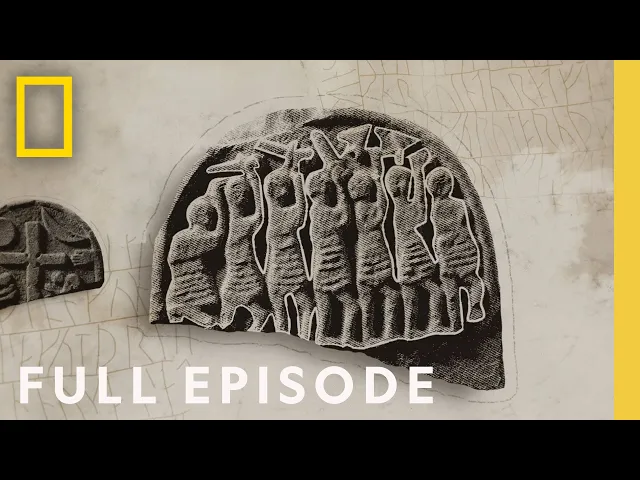
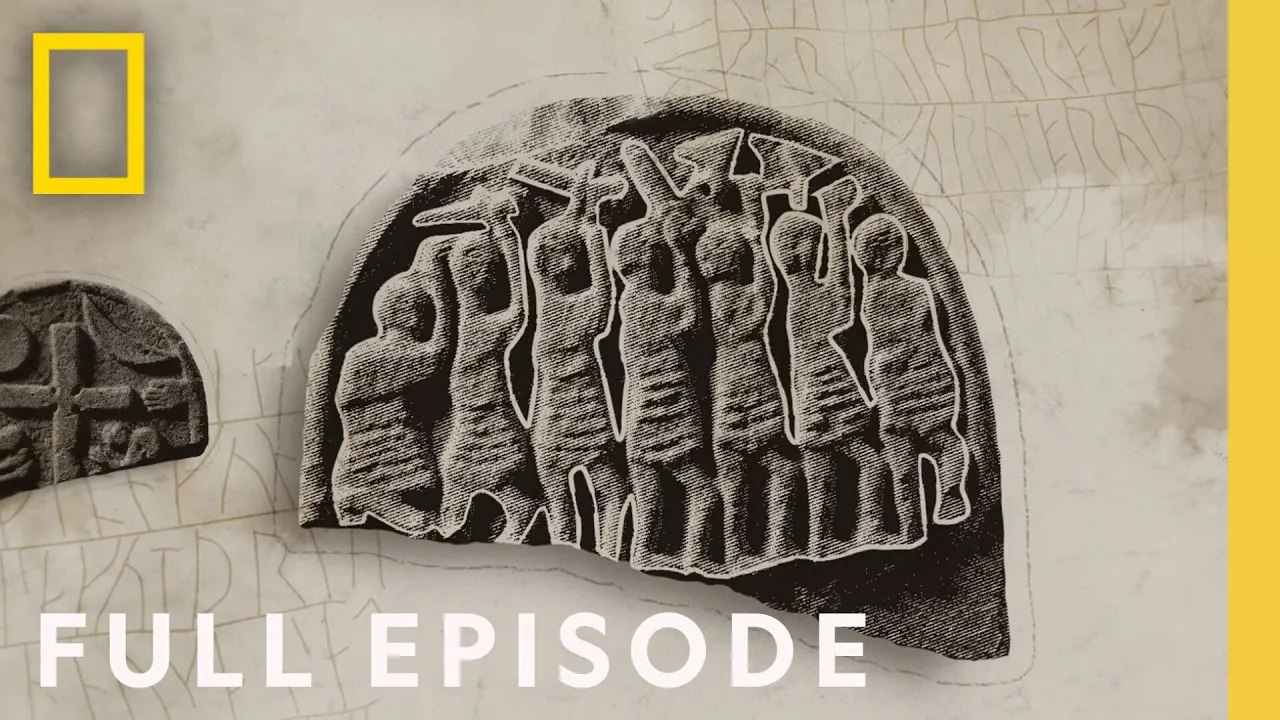
of masonry discovered at lindes far the Doomsday Stone on one side there's a cross and there's picture of what looks like a sun and the moon but the more famous side is is the flip side and that shows a group of Warriors all huddled together with their weapons axes raised up it's generally assumed these are meant to represent the Viking raids it's a reminder more generally of the vulnerability of Linda to external raids the writings at the time really reflect the shock uh of this attack on contemporaries it seems there were monks that were killed
but there were also monks who were carried off into captivity as well one of the letters written after the attack on lindesa suggests the potential that there may have been an attempt to neg negotiate for the release of some of the monks had been captured because lindan was part of the wider world of Christianity it was incredibly well connected so we know that the Anglo-Saxon church was full of Scholars and writers in constant communication [Music] when lindan is attacked it's not surprising that the news of that attack reaches out and is shared very quickly so
one of the best pieces of evidence we have for that 793 attack is in a letter by alquin and alquin was a monk from North Umbria but who by this point is resident in the court of Charlamagne and he hears about this this attack and writing from the the Palace of the most powerful King in Europe Europe he writes like a letter of condolence saying you know I've heard about this I've heard about this horrendous attack uh and he offers to try and do things like um uh free some of the slaves in particular it
is one of the issues that Viking Scholars sort of wrestle with um about how much we sort of believe um all these monastic accounts of them kind of being terrified by Vikings um or whether they sort of slightly kind of exaggerate things aluin um when he's writing about this um is expressing kind of um horror um at the sort of the massacre and the plunder of this kind of you know really sacred site but he is also still kind of using that um to try and persuade um the king of North umri and the churchmen
and the different people that he's writing to um to kind of improve their behavior to sort of live a less sinful life so he sees that this attack he sees this raid as punishment from God you have a lot of sources that say that the Youth of nria just prior to the Viking age was taking on the the fashion and the LIF styles of the Vikings so they were like straying away from the righteous path according to the Catholic clergy so they used these raids as an example of God has sent these heathens to punish
you for straying of the the righteous path so the church has a great self self interest in presenting these race as more bloody more cruel actually we have some sources French sources that says that the Vikings went a long way not to kill monks that they paid fines after killing monks and that when they raided the monasteries they maybe killed some of the servants and after they went away the monks rebuild the monastery this is show us that uh that the monks are not the prim Target it is the wealth that is in these monasteries
if we follow the narrative in the Anglo-Saxon Chronicle uh Linda fa is marked out as being a key event in fact when the narrative was written up afterwards of the attack on lindes the Anglo-Saxon Chronicle claims that was preceded by horrible portance that there was bad weather that there was plagues that there was dragons seen flying through the air and that again reflects the idea of this being a momentous occasion uh its psychological impact um on the English people by the early 9th century the Vikings were hacking through monasteries up and down the coasts of
Britain and Ireland cold fear gripped the occupants of any dwelling at risk of attack port momk a tiny fishing Village home to an opulent Monastery crouched on the eastern coast of Scotland this was to be the sight of a uniquely vicious assault Fort Maham lies about 40 m Northeast of inv vaness blood spattered success had emboldened the Vikings sparkling glory and Cosmic fortunes lay at their fingertips Port mamk was stripped bare its workshops pillaged important sculptures vandalized anything of value taken without second thought hot metal tore through the soft flesh of unarmed villagers limbs savagely
ripped from Desperate monks praying for deliverance the monastery at its zenis is destroyed by fire the fire raised across the northern workshops and the raid seems to also involved the deliberate destruction of beautiful works of pictish sculpture Tales of exagerated Viking violence may have served the church's cause and yet archaological proof taken from Port mamuk reminds us how brutal these pillagers could be some of the skeletons displayed evidence for very severe traumatic death some of the um hitish monks skeletons had basically showed evidence of being killed with a large blade one monk in particular had
been set about and his head had been chopped up crumbling beneath Viking Flames barely a single trace of Port mamak survived the Vikings were known as notorious arsonists know they torched everything they plundered they plundered the monasteries they torched it they plundered the vages that torched The Villages this is also an example of why the Vikings get a really bad reputation there was a reason for Vikings to do this because you know the Vikings Was a Very Superstitious people they believed that there were revenants there were ghosts in the nature that will come back and
and haunt them if they didn't burn down the places because the fire was considered the best uh source of protecting against uh ghost and revenants so if they torch down a place Burn It To The Ground they could sure that uh they wouldn't be followed back home that's why they did it the survivors of this merciless Rampage slowly emerged carefully treading the thorny path to recovery the monastery was lovingly rebuilt Village Life finally returning to Peaceful normality only to We Struck once again by Viking Marauders monastic SES across Britain faced a similar painful pattern and
it probably isn't an accident that those decades frame the initial strike raids by Vikings on monasteries like lindis faran like jarro and Monk wouth and then slightly later ion and slightly later some of the Irish monasteries for example a monastery at banga all of those monasteries were raided within that same time frame the Vikings weren't an unknown quantity it's just that what we see in 793 is their behavior if you're like stepping up a notch they're becoming increasingly uh aggressive they're becoming increasingly bold in their actions and that's a pattern which follows in subsequent years
that we see Vikings becoming more and more ambitious in the targets that they're raiding so there's a sort of level of of kind of growth of bravery and knowledge that kind of leads the Vikings on to attack bigger and bigger and more ambitious targets the Vikings were evolving powerful ships allowed for increasingly frequent and violent raids but by the 9th century the pool of Scandinavia had begun to [Music] wne things are changing for the V ings themselves as they get a better understanding of the physical landscape of Britain and equally important the political [Music] landscape
but it's still some time before Vikings seem to arrive to settle permanently within the English landscape so what we're seeing in those intervening years is like a buildup of military activity the Vikings are acquiring more knowledge they aing more locations and you can sort of almost see themselves kind of working their way around the coast of Britain and Ireland um you know they they're actually going on what for them would have been journeys of exploration gathering information and intelligence which put them in a much stronger position when they later came with much larger armies um
in an attempt to conquer and settle across Britain they're increasing in knowledge and they're increasing in confidence about what they can do when they get to Britain about how they might move from just taking short-term gains to actually seeing that actually in Britain there is a society where it might be exploited it might be conquered for more long-term gain and I think for everyone concerned it's this process of going from short sharp temporary attacks to something a bit more permanent something that's going to be there the Vikings are are here to stay [Music] Britain proved
a fertile country Rolling Hills and arable Farmland a stark contrast to Bleak Scandinavia the Vikings began to settle they assembled large camps to survive the winters they planned graded Advanced their armies would get bigger their targets more ambitious the booming medieval Metropolis of York would soon face their wrath as the 9th century progressed the Vikings would continue to chip away at the entire English political landscape eventually leaving a lasting mark on the English language society and whole way of life [Music]