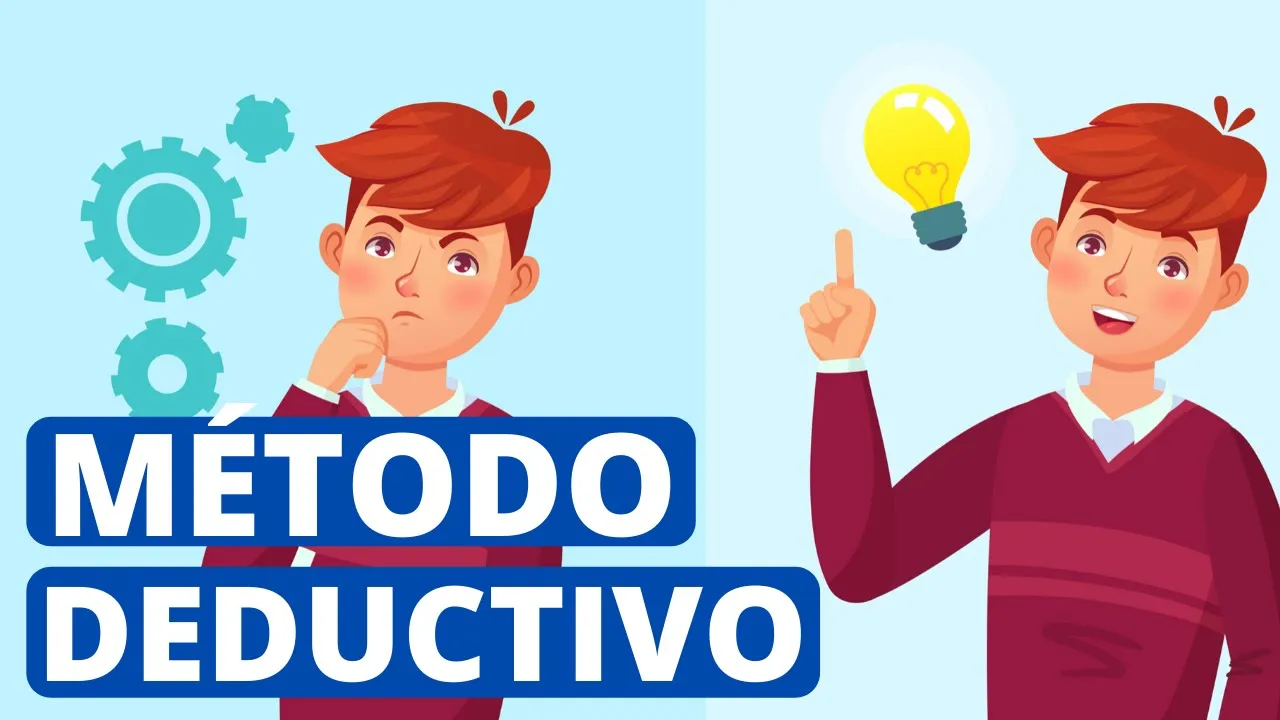
The deductive method is a form of reasoning that derives from the scientific method and whose purpose is to obtain logical conclusions from a group of premises; that is, it is deduced. If the facts or premises are true, the conclusion will also be true. In this video we will explain the most important of this type of reasoning but you can expand information in the description link.
An example of the use of the deductive method is: 1-All men are living beings (first premise). 2-Albert Einstein is a man (second premise). 3-Therefore, Albert Einstein is a living being (conclusion).
As can be seen in the example, we first start from a notion or general rule (men are living beings) to reach a specific or particular conclusion (Einstein is a living being). Keep in mind that the conclusions of the deductive method are not necessarily true; sometimes they can be wrong. This type of reasoning is guided by logic and forces the researcher or student to use both observation and rational thought.
Types of deductive method According to the strategy used, the deductive method can be: - Direct It is direct when the researcher starts from a single premise to reach the conclusion. That is, it does not require another premise to serve as a bridge or comparison. - Indirect The indirect method is much more used than the direct one.
It is considered indirect because the researcher uses two premises to reach a conclusion. Usually, the first premise is based on a universal law, while the second premise focuses on a particular fact. The conclusion is obtained after both premises are reasoned and compared.
For example: Premise 1: All mice have large ears and a tail. Premise 2: Mickey has big ears and a tail. Conclusion: Mickey is a mouse.
Steps to apply the deductive method Steps to apply the deductive method To use this method, the following steps must be followed: 1-Define the first premise To establish the first premise, you must start with observation. That is, first a situation or universal fact is observed that allows building the premise that will guide the rest of the deductive reasoning. For example: Pedro observed that plants have roots; therefore, your first premise will be “all plants have roots.
” 2-Define the second premise When observing a fact and designating the first premise, another premise must be constructed that will serve as a comparison with the first and that will allow a logical conclusion to be found. According to the previous example, the process would be as follows: After observing that all plants have leaves and roots, Pedro realized that his cactus has roots. Therefore , Pedro established the following premises: Premise 1: All plants have roots.
Premise 2: My cactus has roots. From the comparison of both premises, Pedro will be able to reach a logical conclusion. 3-Establish the conclusion After elaborating the two premises, we proceed to establish a pertinent conclusion.
The conclusion is always logical, but it is not necessarily correct in all cases. Finally, Pedro's deductive method would be as follows: Premise 1: All plants have roots. Premise 2: My cactus has roots.
Conclusion: my cactus is a plant. As can be seen, Pedro started from a general law (all plants) to analyze a particular fact (his cactus). Although this method is widely used by researchers and scientists, it is also used by all people in their daily lives, even unconsciously.
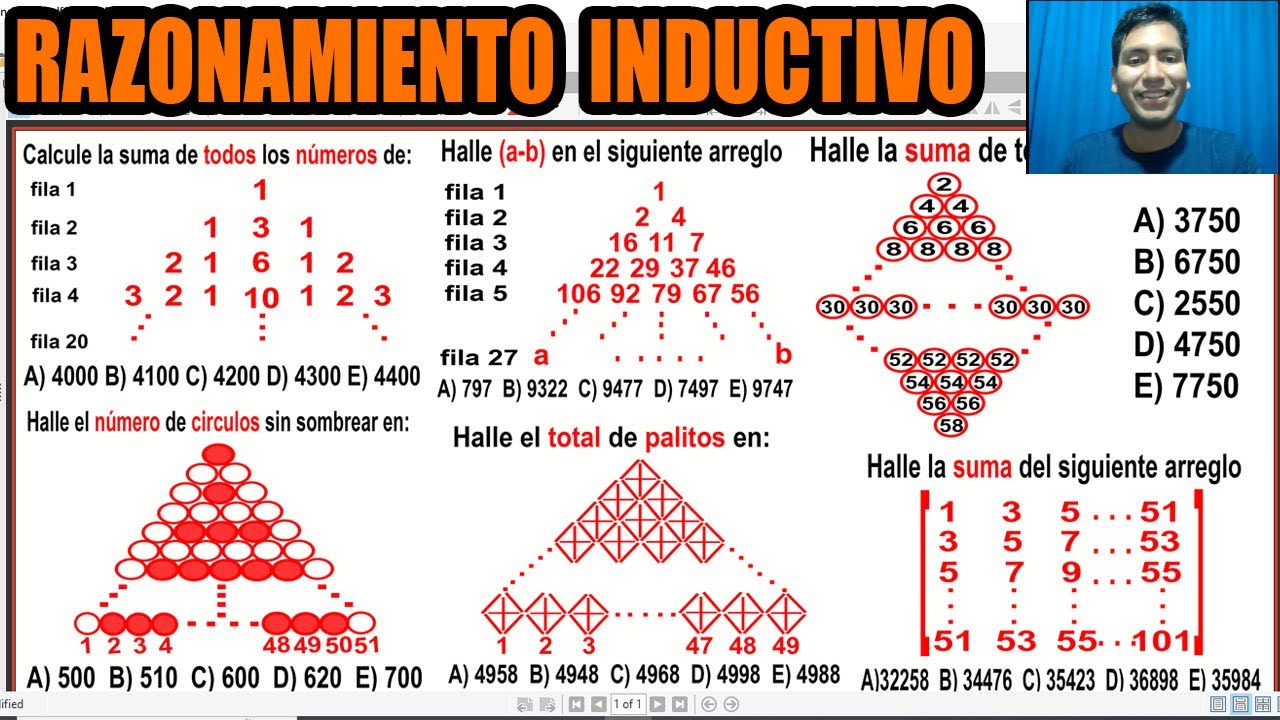
Characteristics of the deductive method - Part of the general to reach a particular fact The deductive method begins its reasoning from a notion or universal law, that is, it applies to all things or to most of them. It should not be confused with the inductive method, which works in the opposite way, starting from the particular to reach the general. This is observed in the following deductive reasoning: - All living beings eventually die.
- The human being is a living being. - The human being eventually dies. - It is used in different aspects of life The deductive method is used by researchers and scientists from all areas, especially in those disciplines that require observation.
However, deductive reasoning is not exclusive to the academic world, since it is also used by people in daily life, many times automatically. - It works from logic Logic is a science that analyzes the structure of human thought and seeks to establish principles or laws that allow truths to be obtained. For this reason, it is said that the deductive method uses logic to carry out its reasoning, since its purpose is to obtain valid conclusions that can become truths.
- It is not based on experimentation This method is theoretical. For this reason, it does not base its studies on experiments or other actions that take place in the laboratory. It is a methodology with a much more argumentative and predictive approach, with special application in the so-called formal sciences, those disciplines whose basic knowledge is rational and abstract.
- It is systematic The deductive method is carried out through a series of defined and well- structured processes. This order in the application is essential to obtain useful results. Examples of the use of the deductive method Here are some examples of the deductive method: Dolphins do not fly - Premise 1: No dolphin can fly.
Premise 2: Animals that can fly have wings. Conclusion: Dolphins don't fly because they don't have wings. The cat breastfeeds - Premise 1: All mammals breastfeed.
Premise 2: My cat is a mammal. Conclusion: my cat breastfeeds. Venus is spherical - Premise 1: All planets are spherical.
Premise 2: Venus is a planet. Conclusion: Venus is spherical. Beetles are invertebrates - Premise 1: Insects are invertebrate animals.
Premise 2: Beetles are insects. Conclusion: beetles are invertebrates. Tuna breathe underwater - Premise 1: Fish can breathe underwater.
Premise 2: Tuna is a fish. Conclusion: tuna can breathe underwater. Andrea is elderly - Premise 1: People who use a cane belong to the elderly.
Premise 2: Mr. Andrea uses a cane. Conclusion: Mr.
Andrea is elderly. The cactus needs water and light - Premise 1: All plants need water and light to survive. Premise 2: my cactus is a plant.
Conclusion: my cactus needs water and light to survive. The lion can roar - Premise 1: All lions can roar. Premise 2: In the animal shelter there is a lion.
Conclusion: the lion in the animal shelter can roar.