[Music] thank you hello everyone I'm Sarah Lynn Bowman from the transformative play initiative at uppsala University and today we're going to talk about transformative role-playing games implementation basics So today we're going to talk about the population the type of game the facilitation Logistics preparation creation Interaction framing support communication and documentation now obviously this is a lot of content and we're not going to be able to go into much depth but hopefully this will provide an overview and a framework for you to think about when you're considering implementing uh games and of any sort role-playing games
but particularly games for transformative purposes so the first basic that we're going to Talk about is population what population or populations do you plan to serve with your game so it could be a general population this requires you to onboard people who are unfamiliar with role-playing games they could be adult players children elderly or a mixed group so people of different ages for example if you're renting a LARP in a museum you're not sure who's going to come in you're running it for a general population so you're going To have to have a strong onboarding
process to get them into that game you can't assume they've role played before now if you have an experienced population that can have sometimes the opposite effect people have a lot of expectations or calibration that is necessary so if they're used to a certain playstyle you may need to calibrate with them with the rest of the group so that everyone knows the style in which you're playing Now there are also youth populations that are often uh that people will often Run games for and they have some special considerations and these are with regard to things
like supervision you know are you responsible for supervising them do they have other people watching them as well have you received consent uh from them and or from their parents uh have you received a sent from them these sorts of things um and other considerations around Populations are people with special physical needs special psychological needs people requiring additional support of some sort another thing to just think about is are the players strangers or are they already familiar with one another because that also will require different kinds of strategies often for implementation so in tabletop role-playing
games assessing the population is especially important and that's because tabletop is Tends to work with small group dynamics and those will vary wildly if you change a person in and out of that group and it really they really depend upon people being aligned in terms of their level of familiarity with the game especially with complex rule sets their maturity level their expectations for Creative agendas meaning um the types of games that they enjoy playing uh their playstyle preferences those sorts of things Um and so that means that they need to there needs to be some
calibration between these players and sometimes it just doesn't really work out so um in therapeutic settings it's particularly crucial to choose groups carefully and integrate appropriate content meaning that there are certain groups that aren't going to mix well together sometimes because they have certain challenges that are not compatible in a Group setting and there's also problems with content sometimes for example if you're working with somebody who has PTSD who has trauma and they do not want to work with that kind of content and then you have someone else in the group who does it can
be a misalignment in the group and can actually lead to dysregulation so it's really important to create that group container in a way that is harmonious um so as I said some mental health Challenges are not compatible with one another nor are certain therapeutic goals so like I said if someone's trying to process trauma and then another person is just there to learn social skills it might not be the right tone for the group also in therapeutic settings um they may require specifically trained professionals either to facilitate or assist in some capacity for it to
be a therapeutic game and it's very helpful If that facilitator or the therapist that they're working with has Specialties working with that specific population so somebody may be a therapist but if they're not an expert on PTSD then they may not be the best person that's suited to work with that group so it can be quite sensitive in this area and an educational role-playing it's crucial to consider the setting in which the facilitation is taking place is this A classroom is it an after-school activity is it a camp is it a Leisure setting um is
it a business class or um you know professional training of some sort of simulation um different settings have different facilitation needs and this also goes back to the age in terms of the populations that you're working with um so for example there might be different expectations for care I Mentioned supervision earlier if you're expected to run a a game in a classroom then people might be expecting you to engage in a lot more care and watching over the children than if you were for example working running a game for a business there also are different
expectations with regard to educational rigor so some educational games will expect you to be running content that's very connected to their curriculum others don't need that At all maybe they have different kinds of goals so thinking about the setting that you're in can make a big difference in terms of how you choose to implement and they often should include a trained educator in some capacity whether that's you or perhaps their teacher if they're in the classroom that's working alongside you and that person might help you facilitate or maybe they just assist from the side or
maybe they even play a role in the game that allows them to Interface and to work with the students as well but that at the very least there needs to be buy-in from a trained educator for it to to really have its maximum potential and then that person can also reinforce the lessons before and after the game which can be very helpful all right so let's let's look at the types of games out there um this has been discussed in other videos but the type of game will Actually make a huge difference in terms of
the implementation strategy so if it's a tabletop thinking about whether it's a traditional tabletop maybe one that requires a lot of rules and a lot of prep beforehand or an indie tabletop that you can pick up at a convention and nobody has to do any preparation um what gate what is the game system or what is the design of the game and how might you need to implement accordingly uh then there's LARP is it a traditional Style of Lark perhaps a buffer LARP in the woods maybe there's mechanics or maybe it's a theater style LARP
where people are playing vampires um or maybe it's an experimental LARP so it's like held in a black box or something like that um thinking about the facilitation practices that are necessary for each of those kinds of situations uh what again what is the game system here is there a system is it a complex System what is the design uh trying to gear towards and how can your implementation support that design next is freeform so which type of freeform is it there's a lot of different kinds um so Nordic and American free form are similar
but slightly different and then free form in the UK means something totally different so do your players have a shared understanding of what freeform means in your context so you may need to for Example Define all of these things on your website or in your materials however you choose to recruit players so that everybody has this shared understanding um and then also is your game intended to be a Leisure transformational meaning that it's run and Leisure settings and people may or may not have a strong expectation of having a transformative impact is it meant to
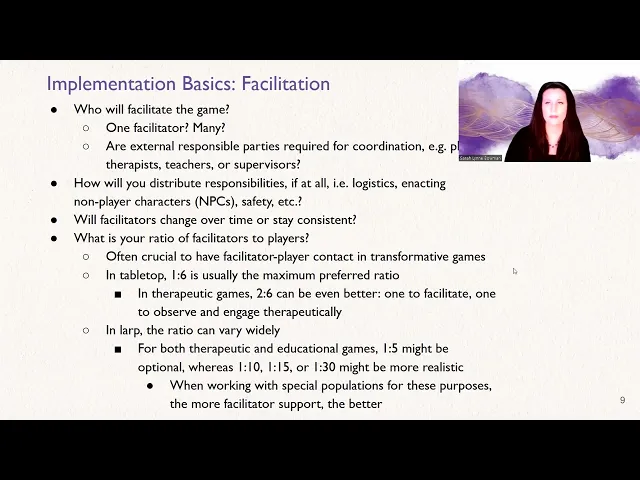
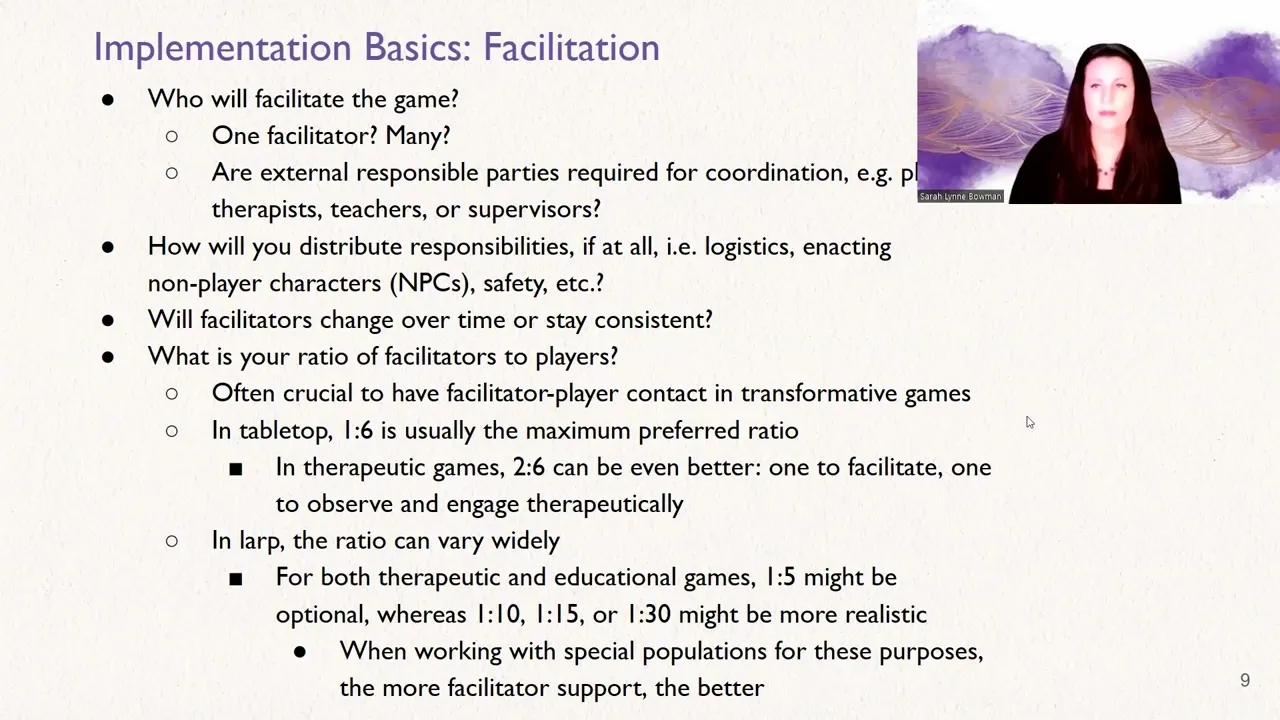
be therapeutic or is it meant to be educational because That will also change your implementation strategies for example what sorts of workshops and debriefs you include right so the next basic that we're going to talk about is facilitation who will facilitate the game uh will there be one facilitator or will they there be many so as we talked about if it's table talk that's that can be a one-on-one session it can be up to six but it the ratios do matter as we'll see In a second so thinking about how many facilitators you'll need for
the amount of people that you have is a really important thing um are there external responsible parties that are required for coordination like I said you know therapists teachers supervisors these kinds of people how will you distribute the responsibilities if at all for the logistics so for example Who's going to play a certain non-player character in a LARP that might not be the main organizer that might be another facilitator that gets given that role who's going to be in charge of safety oftentimes it's not ideal to have the main organizer be in charge of safety
because they're usually handling all sorts of other logistical things in managing the schedule so perhaps you have external safety people or you have other facilitators that have been Appointed that role and we'll talk more about that in the support section will facilitators change over time or will they stay consistent this is important too you know maybe you have a long-running Dungeons and Dragons campaign but you actually decide after a year to let someone else become the dungeon master that's fine but this is the kind of thing that will affect the implementation that person will need
to be onboarded for example Um and maybe they have a tonal shift that they need to discuss with the other players what is your ratio of facilitators to players so this is something that people don't often think a lot about in my experience especially since I come from you know culture of mainly volunteer labor so anybody who's willing to help is totally welcome and it's not usually uh always up to us especially when we're Not running games for profit and how many facilitators we can have and even if people are running games for profit or
for a non-profit purpose they may have limits on how many facilitators they can so to a certain degree part of this is practical and you know there's the good to have and then there's you know what what might be possible in that particular situation so um pick this with somewhat of a grain of salt but in general and it's often crucial to have Facilitator and player contact and transformative games now it may be the case that that contact happens during the workshops and the debrief or you know maybe in the safety room if somebody feels
overwhelmed it doesn't necessarily have to be you know intensely facilitated scenes in the moment but it is important for the the people that are involved in this experience to feel held by the process to feel safe and often having contact is Really important so in table up a lot of tabletop is focused on this facilitation across and a group of six so one facilitator for six people as a ratio is usually the maximum preferred six people in a group can actually get to be a little bit unwieldy especially if you have like complex mechanics or
you have to take turns um so even a smaller game size can be actually preferable there but getting Over six players can really become cumbersome uh in therapeutic games uh two players for every six or yeah two facilitators for every six players can be even better so I've often heard practice that is optimal is to have one person be the GM especially if it's a very complex game who runs the facilitation and the role-playing and the the rules and all of that and then there's one person who observes and engages therapeutically on The side so
maybe they're taking notes or maybe they're guiding the debriefs so they're part of a session but they're not necessarily part of the game now in LARP the ratio can vary widely so for both therapeutic and educational gains one to five might be optional or optimal I should say whereas one to ten one to Fifteen one to Thirty that might be more realistic if you think about most classrooms let's say you have you know 30 35 students per class usually Have one teacher now that works well if you have a lecture setting where everybody is being
very quiet and looking at the instructor but if you have a bunch of really really energetic kids that are all of a sudden given all this agency and this role playing it can be a bit chaotic and difficult which is one of the reasons this can be a challenge to implement in classroom settings for people who are not experienced in implementation so often They may have an outside person who is an expert at this come and run it while they watch or while they you know sort of support in some way so that's a that's
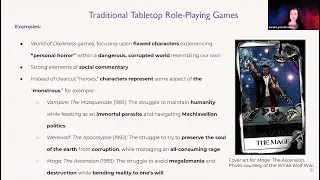
a great situation so if you're involved in you know educational role-playing for example if you can have more supervisors or teachers involved even in a very small role it can be really helpful and when working with special populations for these purposes the more Facilitators support the better as we mentioned sometimes you might need to have an expert uh facilitator there with a specialty in that particular population's needs so um in terms of facilitation if we think about traditional role-playing games they usually have one facilitator and they're called various roles sometimes you'll hear dungeon master which
I said earlier that's the old nomenclature from Dungeons and Dragons Which you'll still find around some people will use Storyteller for example from the world of Darkness games apocalypse World calls that person the Master of Ceremonies so it the facilitator may have various names but we'll just use facilitator here as a generic term that in this case refers to somebody who's doing a lot of runtime facilitation with the players rather than taking a step back so each role has the connotation based On the themes and the activities that the design is inviting so the dungeon
master you know has this connotation that they are preparing dungeon crawls for characters to navigate as the primary activity the Storyteller has this emphasis on narrating a shared story of personal horror and Master of Ceremonies has this connotation of being a guide who provides provocative prompts for players inviting them in with their creative Input so for example you see a crying little boy alone in the desert what do you do so putting the creative ball in that person's Court and so keep in mind that whatever words we use that will shape how other people may
be view the role of the facilitator and it may shape the way that you view your own role and a lot of people use the term a game master it's pretty consistent um although I would say facilitators and A less loaded term than anything with master in the title um typically uh games have one facilitator and more than one players as we talked about before um but there are some games that have multiple faciliters at the same time or rotating facilitators or even no official facilitator which is quite interesting um in traditional tabletop the players
are responsible for their characters and Made the one side character for example a familiar retainer or a sidekick um and then the facilitator is responsible for everything else in the world so also and enforcing and adjudicating the rules so everything within the world and also the rules that govern it that's a lot of responsibility and a lot that the facilitator needs to know in order to be able to run uh Dungeons and Dragons and other traditional tabletop games In Indie tabletop games um such as mini story games creative control is more distributed among the players
the facilitator is an active guide as I just mentioned towards these interesting narrative moments um so some story games are actually GM less that doesn't mean they're not facilitated as we'll talk about but games like Fiasco and dream Askew that means that all the players have an equal responsibility to create the narrative And there's actually some games by Alder and Rosenbaum that fall under this category called no dice no Masters and and this is belonging outside of belongings the the type of name that they create so it's kind of a radical shift in the way
that we think about role-playing games for those of us who have been playing them for quite some time um so regardless of whether or not you're playing a gmless game or not it Is crucial that at least one person knows the basic game design for smooth onboarding and character creation process so jamless does not mean that there need there's no facilitator it just means that that that responsibility is distributed and it may mean that the rules are quite light and there doesn't need to be a lot of facilitation and the individual who knows the rules
might end up becoming the de facto facilitator just because uh they are the One leading the exercise in that way foreign implementation teams can become complex especially as the player count increases so in larger larps you might have several facilitators each with different roles so you might have runtime facilitators that keep the schedule that organize NPCs that run plots or mods as sometimes they're called these little plots that people can go go and choose to play in Um onboarding staff for example people who run the registration desk or run the workshops physical logistics for example
location management food and lodging physical safety such as first aid and on-site nursing emotional safety such as these are usually volunteers who do emotional safety but if you're lucky maybe you have a mental health first aid certified person and if you're really lucky maybe you have a trained mental health professional or more one or more There that can help safety is really everyone's responsibility but it's really nice to have facilitators on hand that that's their job so if there is a crisis they can handle it uh Tech and special offense effects there might be a
different person that is responsible for that scenography and audio and then props costume and makeup you might have multiple people that are doing these kinds of Falls depending on The size of the Lar then again you might have a you know three-person LARP in your living room where there's hardly anybody uh needed maybe there isn't a jam needed at all so your mileage may vary but um one of the reasons we want to talk about facilitation is because it becomes vastly more complex the more people you add so that's something to think about what are
the logistical details that are necessary for the game to be Successfully implemented here are some Logistics to consider the first is size how big will your player base be will it be one player will it be a hundred players will it be a thousand players um in what space will the group play so where is your location is it a living room is it a school classroom campsite a black box each of these have different implementation needs if you already have a living room then you probably have food and shelter and all of those things
Fairly nearby but if you're on a campsite that you're going to have to reconstruct all of those things is the space where you're playing private semi-public or public can other people watch or interrupt this is really important because people feel self-conscious when they're playing and oftentimes when we're playing we're acting in ways that are very emotive and intense and that can startle people who don't know what's going on so having Privacy can make a really big difference for everybody involved it's not always the case that it's necessary but for the most part it's often desirable
a big one is cost how much does it cost to use this location will you need insurance or special permissions in order to use the location uh is anyone else entitled to use this space so you know um do you have it rented or booked yourself or can someone else come in at any time and use it Does the location have any hazards that you need to to be aware of like uneven grounds for example or rocky terrain um and then you know that's related to are there any issues with accessibility at the location are
there some things that are going to be really difficult for people who may have disabilities to be able to access foreign thing is the location itself and that can provide some atmosphere if you're Running a LARP in a you know castle for example then you know a lot of that atmosphere is taken care of but there's also ways that you can enhance that setting if you're running a large new living room maybe you have to do a little bit more work to create setting or maybe you need to to use a lot of imaginative language
to try to get people there but either way what atmosphere will you create in this case through location through sound design Scenography and other factors I mentioned living room simply because a lot of people do Run games out of their homes and so you know there's lots of things that you can do to create Ambiance uh in a home setting you can get some LED lights you can play music softly and there's all sorts of strategies that aren't super uh costly another thing about atmosphere is is there a certain mood or emotion that you wish
to evoke if so the use of color the Use of sound these things might really make a difference um and then again in terms of atmosphere sometimes you may have this really awesome Tech setup let's say with these flashing lights and it's like super cool and for most of the players that's going to be awesome but it actually causes accessibility concerns for people for who have seizures for example or who get easily triggered and you know this is also a case if you're playing with Extreme heat or extreme cold if you're playing in the desert
if you're playing you know in a a blizzard atmosphere or something very cold and you know different people have different needs and different capabilities to be in that kind of terrain are you playing with sleep deprivation is that part of the implementation process to try to keep people awake and alert and maybe that causes a really intense emotional breakthrough for them but it also might Actually cause problems with any underlying medical conditions they have so these are the kinds of things you have to kind of weigh I want to have the cool atmosphere but I
also want to make sure that people are are okay or I need to tell them ahead of time that this game probably won't be for them which is a very difficult conversation to have and should be handled very very gently um because keep in mind that people with disabilities often feel excluded so Um you know figuring out if there's a way to accommodate is often a really a great first start and then thinking about what tools you'll need um so this is super basic but some you'd be amazed how many of these things we might
forget because we're busy thinking about other aspects of the game that we want to put together so what tools will be needed for the game to be implemented does it mean dice does it need costumes Props do you need to have buffer weapons do you need some sort of Technology like a cell phone that has you know links to an app or something like that and do you need to actually have your printed character sheet or a set of instructions that you need to read during a workshop um it can be very difficult to run
a workshop if you don't have the materials you need um do you need to have Rule books on hand in some way whether digitally or Physically even just remembering to have pens can be a really important thing and then this may seem like really trivial but it actually can make a huge difference if people can't write down their character sheet then you're not going to get very far so um what will you provide or not provide in terms of food in terms of restroom facilities in terms of sleeping Arrangements these are the kinds of things
to think about particularly with Regard to preparation so what preparations are needed to ensure smooth implementation so there's prep preparations on the part of the facilitators but also preparation on the part of the players so they need to know what they need to prepare and and you need to think through all of these different elements not just the the fun game design parts or the cool costume parts um what will you provide or not provide In terms of like food and all of those kinds of things what preparations do you and any other facilitators need
to make in order for play to begin so there may be certain things that have to be set up before the game can even start um and that needs to happen ahead of time and then after that what kind of cleanup um I will clean up occur cleanup will always be necessary on some level but whose responsibility is that is it the Whole group's responsibility is it the facilitator's responsibility is there a cleanup crew that comes in after how is that all going to work and then in terms of player preparation do they need to
sign up at a specific time that's a really important thing for them to know do they need to join a social Media Group in order to engage with this game or do they need to join a mailing list to get updates do they need to read lore or some sort of curricular Materials if it's in an educational setting do they need to read the constant context surrounding the setting that they're in like if they're doing a historical art do they need to actually read quite a bit about that time period um and also you might
want to provide ahead of time safety rules so people can prepare ahead of time for the kinds of um safety rules that they might encounter in the game also just giving people Safety rules ahead of time can often help them feel more safe engaging um and other people may feel the opposite but um I do recommend actually foregrounding which safety tools are going to be used in the game make connections with co-players do they need to calibrate and negotiate consent before they get to the site or will they have time to do that during the
Workshops um you know if you're playing a very intense game with a lot of like intimacy for example that might be something that you want to give players an opportunity to connect ahead of time and negotiate those things however if you make that mandatory then people will start to pre-play and they'll start sometimes they'll pre-play a lot and the people who have done a lot of pre-play will often be Much more prepared for the game than those who haven't so you should also probably give some recommendations to your players about the rules around pre-play there
are some games that don't allow pre-play at all and then there are other games that encourage it and as a matter of fact between game sessions like in a lot of vampire larps something can happen that can impact everybody's character so um having a clear sense of of what the Expectations are in terms of player relations um and also what is allowed during pre-plane and not um do we have to create characters before we come is there going to be a session where we all prepare together and we create characters or are the characters pre-written
and I need to learn them I need to memorize them that can be another facet of this that can be complex or do I just show up and I can Make a character in two minutes there are games like that too so um those require different needs in terms of facilitation again things like costuming and props are these things that will be provided or things I need to bring tents pillows towels sheets I know this sounds very nitty-gritty but you know going to a five-day LARP and then for getting a towel and not knowing that
you needed one can actually make a big Difference for some players um also do they need to plan any activities that are going to happen in the game in advance so for example there's certain Larks where somebody will be playing a very active um player facilitation role where they're actually running chunks of the LARP even though they're not technically a facilitator so do they have to like prepare classes ahead of time or rituals do they have to perform in front of People that often means that they might feel like they want to practice for several
weeks just to to Really you know hone their performance skills so these are things to foreground ahead of time foreign but on the opposite end of that you can also foreground um that you that this isn't necessary so you can say some people may choose to perform whereas others can choose to to engage in some other way so that way if people don't feel pressured also for These things so being very clear about what is expected of what person playing what character can be really helpful okay so in terms of creation who is responsible for
the creation of the fiction um how will World building and character creation occur so game design is part of the framework but sometimes it's actually a lot of creation is happening on the fly through emergent play And um it's really really important to let people know how creation Works in this implementation situation if you're playing a business simulation that's meant to be extremely realistic and they want to come and bring in a dragon all of a sudden that's going to be really complicated for the people there to try to navigate so having clear expectations about
who gets to World build um who gets to create the characters who Gets to bring in what elements what tone are you setting Etc is really important so um does the World building happen during the game as part of a workshop or does it happen as part of emergent play like maybe I just am talking to someone and I decide there's dragons in this world and all of a sudden now we're gonna all act as if there's dragons in this world that's an example of emergent play impacting and the the World building Um oftentimes there'll
be a world that's already built and then players will kind of add their own creativity to that especially in some of these larger games that have a lot of lore um will it happen before play generated by the players like am I expected to come up with a lot of content will it happen in relationship with the facilitators so sometimes um I've run games where we will co-create the character sheet they will answer an Extensive questionnaire based on what they would like to explore particularly games with transformative impacts that becomes really important like what do
you want to work with and then I'll create a character sheet based on what I think that they might want to play with and then they can choose to veto that or make changes and that's that's sort of more of a more of a co-creative process in that regard it also helps establish what not to play With in some ways because it's like these are the things we're working on these are not on the sheet so they're not going to be main features um but there are a lot of games where everything is pre-designed by
the designers and people have to then Faithfully Faithfully recreate that world so they're not really at Liberty to to make any changes because that might actually interrupt all sorts of narratives that have been set up Beforehand by the designers foreign it's just that people should know ahead of time and have their expectations set accordingly to what degree can player choices impact the game what is their degree of agency in the game so all games provide some agency some feeling that you can actually do something in this world even if it's sit in the corner and
cry you're still doing something and and the world is in some way maybe responding to you You're part of it not just watching it but different games have more agency than others we talked earlier about Dungeons and Dragons you know where the the game master is the person who is in charge of everything about the world and the player is just in charge of the player and even the player doesn't have full agency they have a lot of things they can do they've got all sorts of magic spells and it can be really exciting but
there are limits to that so Thinking about how much agency a player has is really important to communicate players will be incredibly frustrated if they think that they're playing a very collaborative co-creative game but they're actually on someone else's railroad so is there fate play involved meaning are there set things that will happen no matter what is their railroading involved which is not necessarily A Bad Thing some real voted games can be beautiful and awesome but Everyone needs to sort of agree that they're okay with playing a game that has a preset narrative and are
there little change little room for changes in the story maybe you can add a little Flair here and there but for the most part you're really sort of simulating someone else's narrative will the facilitators take a Hands-On role in the story during play meaning are they going to be actively Co-creating the world with you or are they totally hands off are they watching from afar um sometimes maybe watching remotely not even in the room or in the building are players expected to make their own fun I put this in quotes because sometimes people will say
that about uh how to have fun at a lark for example where there's a lot of people you have to learn to make your own fun um there's nothing wrong with that but People should know that because if they're expecting to be entertained they might be really disappointed and maybe even disruptive do players have important jobs in the game we talked about this a second ago is there time and labor necessary for a game to stay organized and run according to the schedule this is extremely important to foreground if the game will not run correctly
if certain players are not doing certain activities at certain Times for example in a wizard wizard School LARP that has classes and everybody needs to be at that class at that time the very least the you know the the person who agreed to teach that class needs to be there that needs to be foregrounded now if that player is allowed to to not be in that class and then that becomes an emergent plot you know where's the professor that can be quite interesting too but if the entire structure of the LARP will fall apart if
that person isn't playing that role then they need to know that ahead of time um and this goes for people who are playing certain leadership characters in game like you know being in charge of the whole Colony for example that's a pretty important role um the people who are Cooks this is a really important thing because this is an actual physical labor that needs to be done in order for people to eat it May also be story labor meaning that the cook is a character and and the food maybe has some magical Properties or something
like that but this is a critical infrastructural thing that needs to happen uh people who play teachers people who play antagonists is it really important that that person stay in the antagonistic role throughout the LARP otherwise the LARP won't run the way that it's designed that's really Important too like do I have a chance to have a narrative Arc that's my own choosing or if I'm cast in this antagonistic role do I need to continue to play the antagonist throughout um again that can feel a little stifling and railroading but if players know ahead of
time that that's their function sometimes they really lean into it somebody playing an administrator or they're actually doing a lot of in-game social bureaucracy essentially and then Again you know being a performer if it is there a whole performance schedule that will fall apart if there isn't a person running the the performances for example so these are all really important things to think about and related to that our Logistics around those kinds of activities so if you have a performance schedule you also need to have probably a microphone you need to have lights at the
very least you need to have a way to Amplify uh people's performance so that everybody can hear it if it's a large enough space so there's things connected to this that also might require labor on the part of the participants like bringing their own instruments for example so we're going to transition now to talk a little bit about game activities so um what kind of activities have you planned for the game Are there specific um things that the players are going to Do are there modules or little plots that they're going to engage with um
what will you prepare for them in addition to the design document or the the game structure is there something else that's getting added so a lot of people think of game design as sort of like this neat little type thing that has already been established but actually a lot of role-playing games is completely random or emergent play so once there's a They're common saying of course is um no game survives contact with the players or no plot survives contact with the players meaning that the person might you know imagine everything's gonna go a certain way
and then the players aren't acting exactly the way they imagined um and so that's actually both beautiful and difficult about this particular art form so Um oftentimes people have things that are pre-prepared in terms of the game activities Google facilitate these activities um is it the implementation team is it NPCs that come from the player base that they're expected to act out this this plan or is it the players that have to facilitate or I should say who get to facilitate if it's something that they really enjoy doing Um when designing for a transformative impacts
or therapeutic goals or learning objectives uh what what are the what are these goals and objectives and exactly what are you trying to to uh incentivize or make more possible in your players and and if you have these things do they distract from the transformational goals so for example you might have this really really cool plot that's really complex and requires All this puzzle solving and stuff but then when people get involved in the puzzles they're not interacting at all and the whole goal of this game was to help people with their social anxiety we've
actually created a plot that runs counter to your original goal which is to get people to feel more comfortable in social situations you've given them an alibi to disengage socially so these are the kinds of things you really need to think about when you start adding Tacking on these different activities into a game is you know if you if you're trying to achieve a certain goal exactly what goal that is and do all of these parts that you're putting in did they actually serve that goal are these activities mandatory or optional um for example in
education it's often mandatory what people have to do but in a Leisure Lark or a tabletop game maybe some players go on this at one adventure And then others don't um but some games won't function unless everybody goes on that Adventure so that again should be something that that people should know ahead of time and then for certain kinds of activities are there special safety concerns for them so are there accessibility issues is there any kind of physical or emotional risk involved and if so is the activity sign posted so that players know this ahead
of time Um so I've seen people for example running a module in the woods and at night and have sort of glowing wristbands that they wear that indicate to people I this is for this specific mod that has these specific um content warnings attached to them so you need to have this bracelet if you're going to opt into this particular mod and that's a really easy way to signal to other people okay this person is supposed to be here and has opted into Being here this person maybe is in the wrong place and we should
let them know that this is what's going on they may still opt in but these are ways to Signal even during the game through facilitation any kind of safety concerns or or maybe things that people just might not enjoy doing and does the sign posting happen uh before the game like for example having um content advisory or ingredients list on your website that has all the Different things that will happen in this game or could happen in this game and does did the sign posting happen during the game like I mentioned with like the wrist
fans for example um or does it happen after the game sometimes you you find out later that this thing happened and that would have been really helpful to know um it might have been a really cool plot to keep it secret but you know if I have a massive phobia of snakes and you have A giant snake monster um not so great to find that out afterwards okay so another facet that we don't often think about that is really really important is interaction how will the player's interface with others how will they interact with each
other during the game are they collaborators are they antagonists and are they meant to build Each other up or are they meant to win and try to best the other person all of these things will make a huge impact on the way that they engage with the game and with each other are they part of a group or a faction most basic role-playing games are are have a component of factions in them almost all traditional role-playing games have this a lot of traditional Larks have this and a lot of independent and and experimental games have
factions So it's a you know humans group together so it makes sense that we would create games that are about group dynamics and in group and out of group dynamics so it's a very easy way to create conflict to create tension but this is something that players should know ahead of time um because sometimes they can not know that they've opted into some sort of antagonism with factions that they just because they played a character in a game Is the game meant to be more of an individual experience like you're kind of going through your
own little journey or is it meant to be extensive social interaction like is it really necessary that you are you're on the whole time and you are communicating with other people for the game to function these are things to know ahead of time how will players establish their character relations we talked a little bit about co-creation Um are the characters co-written or pre-written by the designers or the players or both is there a place on social media or another location for people to pre-plan and is there time during play for calibration of character relations this
is something that um I think is really important which is you know you made before game have decided oh yeah I'm really comfortable with this and this and this and then halfway through the Game I decided actually I'm not comfortable with that at all and is there space for people or time set aside by the facilitators for people to calibrate um sometimes there needs to be I've been in larps where there needs to be emergency calibration like it's kind of falling apart and everybody's playing their own game so we need to kind of stop the
game and all just discuss as a group where we want things to go after That um so having time and space for calibration can be quite important thank you um how will they interact with the facilitators during game are the facilitators playing characters in the game will they act as the game system so will they respond to players actions based on rules they might be doing both at the same time Um can they request plots from the facilitators for example can you say to a facilitator I am really interested in this werewolf plot can you
create it for me that's something that um some especially consent based games will will have as an option which is really really cool but it's not always available sometimes the plots are pre-planned and and it actually might detract from the whole game experience for everybody else if you're werewolf what suddenly comes In so how much uh re uh can the players actually ask for from the facilitators can they have other forms of interaction I mean the facilitators might not really even be visible for most of the game and sometimes that's an aesthetic choice because having
the facilitator visible breaks people out of the illusion that they're experiencing for some for some games uh and for some play cultures um and so I personally think it's really important For facilitators to be visible in some way or hurt the very least for people to know where they can find a facilitator at any time in case there's an emergency or in case there's a crisis or just in case they they're really feeling lost and they need some direction um but uh you know your mileage may vary depending on your group how will they interact
with the game world and the environment and this is really important to think about like you May have this really cool set with all these like beautiful props and costumes but if like the player doesn't know how they're supposed to be interacting in this space um or with this space then it can actually be a little bit disconcerting for them or difficult for them to figure out how to engage so for example are there puzzles or are there other physical challenges that the player needs to engage with Um so these are things that are good
to know ahead of time actually if there's a lot of puzzles in the game so a puzzle room has it right on the title right like you're gonna come here and you're gonna solve puzzles and sometimes there might be more of a role playing or story element and other times it might just be here's a whole bunch of puzzles with the light light story element over it and but a lot of larps you don't know ahead of time or a lot of tabletop games you Might be in you know thinking that you're just gonna roll
dice and and do tactical play and then all of a sudden you have to solve a room that has this puzzle that might be really exciting for some people but it might not have been what other people have signed up for so kind of letting them know what what is present there um how much walking or fighting or cooking or other physical activities do they need to play this is really Important and sitting is also a physical activity some people can't sit for large amounts of time so letting them know ahead of time we're playing
for the next 12 hours and you're going to be seated is really important for people who have that need are the players expected to deliver interaction like are they expected to deliver key cut plot points and secrets and powers larps and also in Finnish LARP actually there's a lot of Pre-written character information that must be absorbed and there's pieces of the plot within each of the players that have been seated and so the game happens in the interaction between these parts that have been pre-planned in a lot of ways not necessarily what's going to happen
but um it's been seated so if I forget to pass on a crucial bit of information did I just ruin the game for everybody um this is important for people to know Up front are the players interacting with the game's content through other players this is important am I learning a really important uh Story Part like a really important secret through another player designing to tell me um with transformative role-playing games we often talk about framing as being really important so many games have like workshops and deep griefs as well as other pre and post
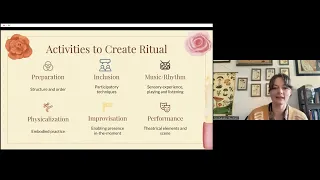
game Activities including social activities but some don't and one thing to consider is will you include framing in your game and if so what kinds of activities they can be all different kinds of activities but usually having because role playing is a ritual having some sort of preparation and then you have the the ritual in between and then you move into the return or reincorporation phase um having that framing be established can be very helpful And then transformative game design we think it's pretty crucial actually and essential and particularly pre-game preparation for the types of
goals and intention of the game and as well as any any sort of safety concerns and ways to actually engage with this game like practicing certain modes of play and then also after the game um having some form of post-game processing it doesn't have to be a debrief but it can be it can also be Journal writing it can be Creating art we'll talk about that in a second and so how will you frame this game according to your desired transformative impacts and or learning objectives so you might have very specific things that you want
to happen in this game in order to um for it to have the impact that you desire so for example maybe at some certain point in this game everybody is going to practice meditation and that's a collected Collective goal that Everybody had ahead of time well remember to foreground that before the game so that people know okay there's at a certain point you're all going to practice mindfulness or meditation um I I use this as an example that I've heard from therapists that um who engage with this sort of practice with clients and so you
know framing it it becomes very important because then if you have this like really high intensity combat sequence that lasts all night and There's really no so I mean I guess people could just leave and meditate but it it might not actually be narratively make any sense to do that and or it might not even be desirable to do that the fact that that might really distract from the impacts that you want so framing can help everybody steer in the direction of the impact so what briefings or workshops will you include and how will they
contribute to The desired transformative impacts and how will debriefing take place is it optional is it something that will happen in one side room and then everyone else is out partying I've seen that happen and maybe people need a debrief and they didn't realize that that room even existed so making it very clear um where certain processing activities will take place and then there's integration activities Now you as a facilitator don't have to you know make space for all of these things um but it's important to think about uh ways for people to process and
integrate their experience after the game especially if you're trying to play for a specific impact you don't want that impact to be temporary you want it to actually be uh there's some sort of takeaway to come out of that and for that to be integrated into daily life So thinking about what other post-game integration activities you have planned or that you will encourage your players to engage in some examples are creative expression so journalism Studio Art performance art people could write their own games they can engage in fiction writing or storytelling or co-creation so there's
lots of different ways that people might feel inspired after a game and feel the need to create something or that can Actually be built in I've run a lot where we had a reflection hour where people were encouraged to express themselves in some way privately or at least to themselves and I gave them a lot of art objects that they could use that they can then create something with so that might actually be built into the debriefing process in some cases which is very interesting I think and intellectual analysis so are they going to engage
in contextualization or Researching a topic that they just learned or reframing their experiences based on the things that they have have now learned uh are they going to engage in documentation or theorizing around this particular topic are they going to apply existing theoretical lenses to what they just learned are they going to engage in some sort of reflection activity these are all forms of intellectual analysis that can take place and again the these are not things That the facilitator necessarily has to make space for but if you really want a transformative impact to happen it
might be great to have some debriefing questions that guide people in this and maybe even some activities afterwards that are recommended so perhaps some links to some websites to go research or the theory that you use to build this game maybe they want to read about that there's all sorts of ways that people can engage intellectually after a game And we've been talking about emotional processing so debriefing processing bleed they also might choose to go to individual or group therapy um maybe the game is part of that process like they're involved in a therapeutic role-playing
session where they are with a counselor um or a therapist one-on-one and then they go and play in the group setting and then they go back to the counselor and talk about what happened and use That as as a uh as therapeutic material that can be worked with there's interpersonal processing so connecting with other co-players after the LARP or the tabletop game re-establishing previous social connections that were there um and so coming out of this liminal experience where all these new social connections happening reconnecting back with previous ones so that you feel more integrated Um
also you may need to negotiate relationship Dynamics after a game maybe something really profound happened and transformative and things things changed after that and sharing role-playing experiences with others some people may be open to hearing them and others may not but it can be very powerful to process interpersonally by by listening to someone's story or by letting them or by sharing your own story and then one thing that can be really Powerful are reunion activities so sometimes at a convention people will see each other that played in the same game or um you know we're
involved in the same shared activity and then there will be a reunion where they get to talk about that game for like an hour or they get to reconnect with the people they played closely with that maybe they haven't seen in a long time so that can be really powerful as well because then that can bring up some of the things That they remembered that they had learned from that experience and maybe it can open up even more room for processing afterwards um you can engage in some rituals that help you return to daily life
so de-rolling taking off the role and that can be very ritualized uh again narrativizing role-playing experiences so some people will write journal entries where they'll tell the whole story of of what happened and that can Be really powerful because it helps it not only does it help you distance from the character but it also um kind of makes something that's very ephemeral more concrete and something that's really chaotic more linear so that can be actually a really helpful way to return to life is to kind of put everything in place um and mentally and you
know maybe even like physically in a journal or something like that And then also distilling any core lessons or takeaways from that experience so you don't want people to distance so much that they don't really have much of an impact at all you want them to be able to return to their life with those distilled uh lessons um engaging in some kind of self-care activity and grounding practices this can be really important after transformative experiences because people are transitioning between Different phases of reality or frames of reality and that can be a little confusing for
people applying certain experiences or skills that they've learned in other settings outside of the game that can be really powerful so having stepped up into a leadership role in a game and then maybe stepping into a leadership role at work and trying it out um that can be really powerful especially for someone who didn't think That they were capable of that before incorporating personality traits or behaviors from that character that you want to take with you that can be pretty powerful as well and then lastly there's community building so networking planning events uh that will
happen afterwards uh collaborating on projects together so there's a lot of games that are born from other games and so maybe people had a certain kind of experience and then They connected with one another and then they started creating a new a new Guinness result also creating new social systems I mean there's larps that have been so transformational for some people that the community itself becomes its own uh really really supportive nurturing environment and that's that's the goal that's the hope as that people will continue to have powerful connections with others I should say there
are some People that would prefer to have a transformative experience and then go do their own thing and that's totally fine but a lot of people are seeking Community when they come to these games so ideally if that can continue that's great uh sharing resources and knowledges with each other and establishing safer spaces for people to feel more comfortable being themselves ironically some people might feel more comfortable expressing Themselves in a lark than they do in daily life not for various reasons and creating implicit and explicit social contracts with the community and engaging in related
subcultural activities that are related to that maybe you have a board game night which is related it's not exactly role-playing but but it becomes part of the subculture and then evolving or innovating existing social structures I mean this is this is Pretty intense and not everybody's going to do this but there are some people that will play a game that they found particularly transformative and then go try to change the structure that they're within if it has some level of toxicity or some sort of you know problematic aspect to it and that is a pretty
remarkable actually that a game can inspire people to feel like they can do that of course they probably could have always done that but Um the agency of the role-playing game um and the things that they explored within it maybe the states of being that they that they inhabited made them feel that that's possible so again you know as an implementer you're not necessarily saying okay I'm going to provide the framework for you to go change the world well we can't do that we don't have that power but what we can do is we can
support people who um have want to take the initiative and And create positive social change for others and for themselves and that can be part of the the community that's built by that implementation strategy so next we have support what can players expect in terms of support throughout the process and how will players be instructed to support one another before during and after play so again support is not just for the players um it's you know from the facilitators it it should be something that players Also feel a little bit of responsibility for but thinking
of how they're being instructed to do that so how do they check in with someone else how do they um calibrate with someone else when is it appropriate to do so um and if someone needs help what do you do these kinds of things can be foregrounded in the workshop or on the website or both what safety mechanics or techniques will you use how will the facilitators Support players before during and after play are the facilitators like you're on your own or um are they going to be there and how has it signaled that they're
going to be there is there special rooms that people should go to um will there be additional responsible parties that will support emotional well-being and learning before during or after so we talked already about teachers and counselors and how they can sometimes bookend these Activities well they can also provide learning and support through that process which might be complicated and messy um how can the players contact facilitators if they need assistance we talked about this a little bit a little bit will they be there physically or somewhere else is there a phone number they can
call are there walkie-talkies you know how does it work and importantly will there be a safety Team um and if so what are their responsibilities where how can they be located um so if something goes wrong whether it's physical or emotional safety or if somebody just feels overwhelmed where do they go um it can be very confusing to have that happen while in a game and then have to try to navigate especially if someone is feeling really overwhelmed or confused Or triggered um it can and you're on this massive site where there's lots of different
buildings where do you go like making that very clear to people can be very helpful and then relates to that will there be an auth game room or Sanctuary space for players to decompress or to process their emotions and it's often nice to have a space like this um where it feels really comfortable There's lots of you know maybe comfy chairs maybe even little blankets or coloring books you know earphones but it has soft music playing um maybe some chocolate some water it may not be that this person needs a ton of emotional support but
they may just need a little place to unwind um and is that space there for people to um talk to the safety team or is it something separate so they you might have a space that serves both functions But um if somebody has an emergency do they go to that room or do they go to another room and then we have communication so how will the facilitators communicate with players and vice versa throughout the process and so how will you promote and recruit uh players you know where where do you players come from well you
have a website a social media page a discussion group where anyone can post or is it just asking some friends at work if They'd like to play a game with you um how will players contact you before during and after the game sessions so this is the before you know how we recruit but then also how can they contact you will you be how often will you be available for contact there are some facilitators that are like I am not available to talk about plot in between games um you can ask me about logistical questions
but I I'm not going to talk About the game content with you and then there are others that really enjoy talking about the plots with the players and processing it so just being really clear about the expectations there and the availability there is important and and then off also how often will you contact the players if someone signs up for a LARP and then doesn't hear anything for six months they're likely to feel a little confused about what's expected of them so you know maybe Having um if even if the largest many months ahead of
time may be sending out an email every month or so saying hey we're still really excited to have you here are some things that you might want to know in preparation or it could just be a check-in but um how often will you contact players is something to think about when and how will you deliver key information so how much goes on your website this is actually super important How much of the information goes on the website or in your game design document don't assume that everybody reads all of the more all of the rules
and all of the the things that are on your website or save game design document um that's a common facilitation mistake while of course you may say you need to read these rules or read the site in order to play this game um you know people may have read it and not really understood it or may not have Had time so you know front loading information can be helpful but don't expect that people have memorized that information some people have you know learning disorders that make it difficult for them to read large texts so these
are things to think about how much is sent in emails or in logistics documents before game like I said maybe a month before game you get an email with a bunch of logistics that will help you plan your trip if you're going Somewhere and how much is shared in a briefing before the game or in a workshop um and how much of this information is shared during game so things that you didn't know were going to happen all of a sudden are happening and and then how much is disclosed after a game so sometimes there'll
be key pieces of information as we've talked about that are given after the game um and that you know sometimes that can Be quite fun to find out a secret that you didn't know for example but sometimes it might be very frustrating to find out after a game that the game had certain content that you didn't feel comfortable with for example how will you record what occurs uh before during and after the game this is about documentation so and not everybody engages in documentation practices and that's totally fine but increasingly more and more people do
especially in um Like the larger International Arts or the more um International in scope so are there photos that are being taken are there videographers there are there journalists that are pretending to take notes and are actually creating some documentation as a result of that there might be people that are documenting in-game versus off game so there might be a photographer in the game that's actually a character that you can Interact with and there may be only documentation happens in that corner and so everyone knows that nothing that happens over here is going to be
filmed that can be really important for them to feel safe opening up um how will you inform players and how will you obtain consent for their documentation so and can players opt out and if so how you could say on your website or at the briefing by playing the solar people are agreeing to be Documented and that's it but letting people know ahead of time so that they can either opt out of the game or opt out of the the procedure if possible and is really really helpful some people don't feel comfortable at all with
other people seeing them in states of play some for very good reasons maybe they were ashamed as a child for for having these interests or maybe they they're worried that if their work finds out they were engaged in this Kind of play that they could they might misunderstand what it means and might get fired as a result so these are things to think about and again will the documentation interrupt the game well taking a bunch of pictures be really disruptive if you're playing a game from the Middle Ages um will it inhibit players actions and
then finally in what contexts or publication venues will this Documentation be used so some people might be fine with documentation as long as it stays on a private photo album that only other players can access and then maybe they can share their photo but not other people's photo or they can share photos with other people's consent that everybody in the the picture agrees that it's fine and with the photographer's consent as well is really important because photographers are artists and sometimes they really want To be credited so you know do you have permission to actually
reprint these images in what contexts and which publication venues so thinking about that you may not know all of this ahead of time of course but um maybe you check in with your players after the game and you say hey I have an opportunity to publish in this one place just letting you know that's happening if anybody would like to send me pic photos from the game that they would feel Comfortable being in this publication please let me know or here's an album um these are the putting together an album of photos that have been
approved for publication purposes that sort of thing and in general every time you republish a photo it's probably a good idea to check in with the person you don't always have that option maybe you don't know who they are you don't have their email address or whatnot but it's good Practice if they if their image is being used in a particular way and then uh is this document documentation meant for private or for public consumption so is this documentation meant for a small group like I said or is it meant for the whole world that's
going to see this and this is going to be what LARP looks like from now on or tabletop looks like from now on all right so some takeaways game design Is only a small part of the whole role-playing experience um there's all sorts of implementation aspects that need to be taken into consideration aside from just the game design and those things are factors that are game design actually implementation is an important part of game design players need to feel safe in order to surrender into a transformative experience so considering the many facets of Implementation will
make for a smoother experience for everyone involved and planning ahead of time will help avoid complications arising during the implementation process so again my name is Sarah Lynn Bowman from upsell University I'm part of the transformative play initiative at the Department of Game design so I would love to hear from you thank you