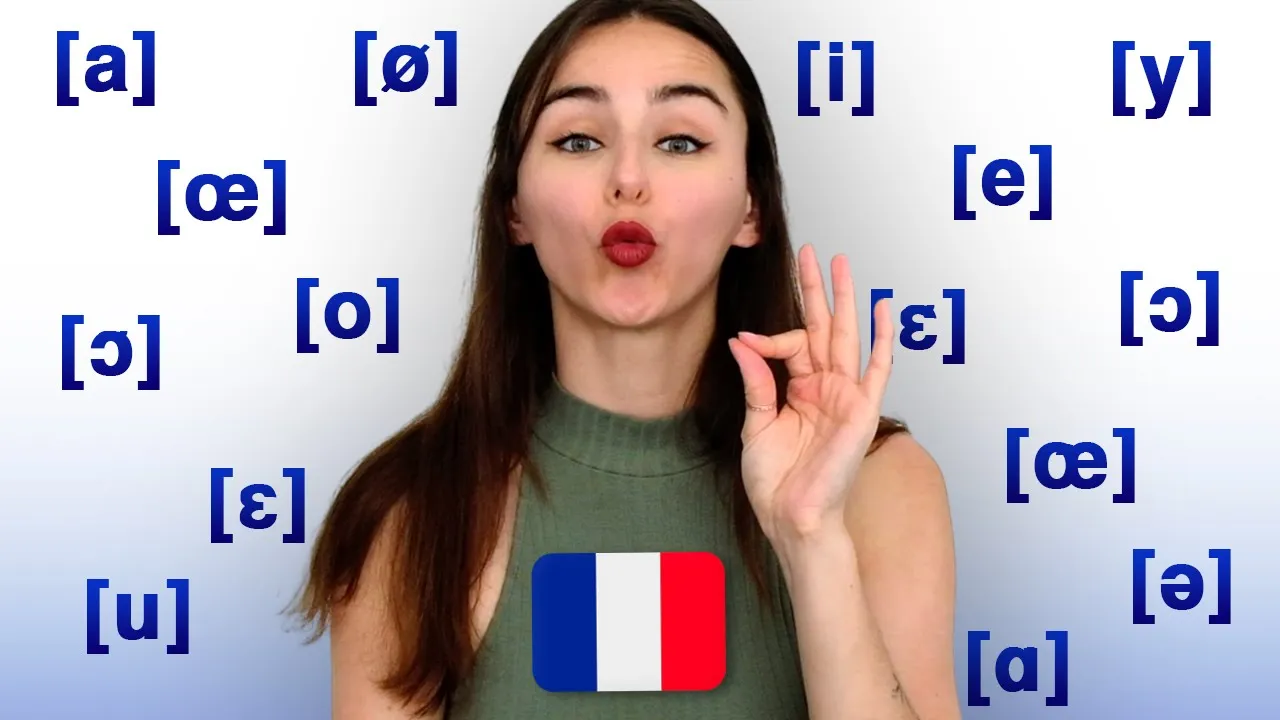
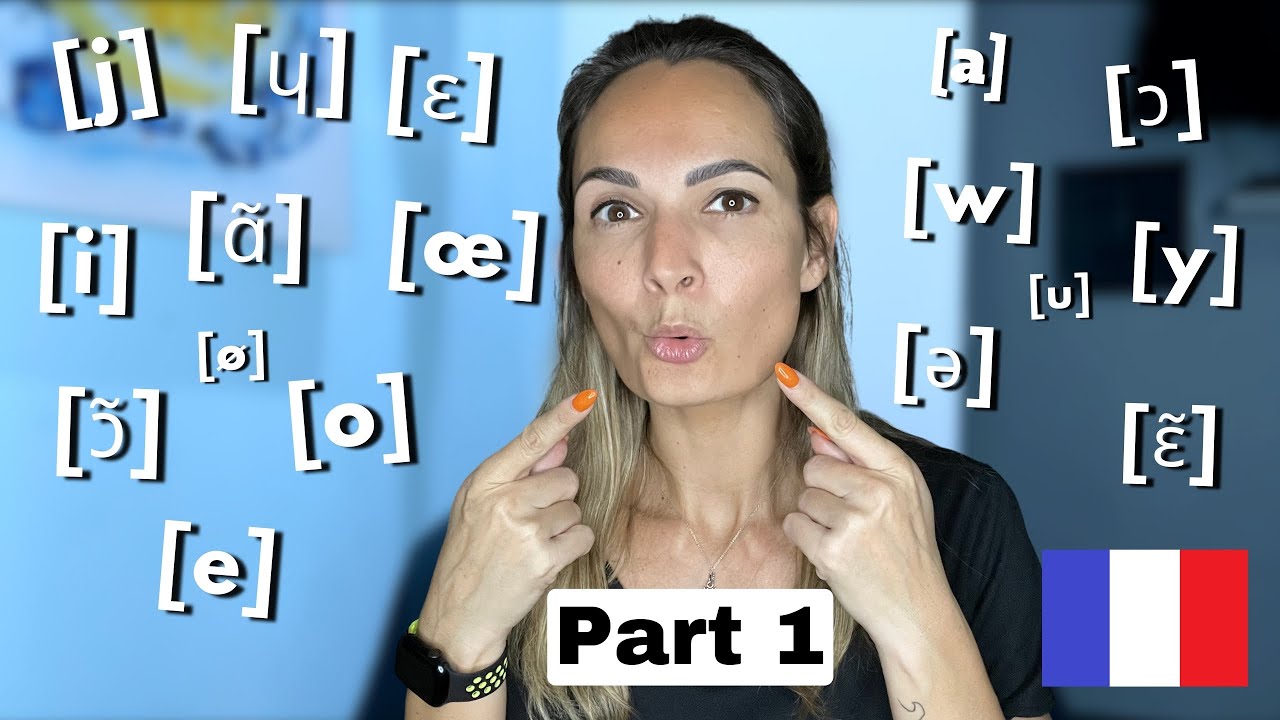
There are sixteen phonetic vowels in French. Sixteen! That's completely crazy!
If we take a look at other Romance languages, there are thirteen in Portuguese, nine in Romanian, seven in Italian and only five in Spanish. So you are probably thinking : These French are crazy! And it's not wrong.
But learning French pronunciation is not completely impossible. And I'll give you a little help. Hi, hi!
Hi! Welcome to a new episode of French Mornings. If you are new around here, I am Elisa and on this channel, I help you to improve your French and to speak in a more natural way.
Remember to subscribe to the channel French Mornings to be aware of future videos. Today I'm going to explain everything about French vowels, so make sure you get comfortable, have a little coffee, remember to turn on the subtitles if you need them. And let's go!
For this video, we're going to use my accent. My accent is rather standard, i. e.
not too marked. I lived in the north of France until I was ten years old before I moved in the South, and I also lived five years in Paris. So my accent is not really marked by a particular region.
And many of you have told me that you like the way I speak, the way I pronounce words. I'm very happy about that, so we're going to take it from here for this video. Let's start with the letter A.
If we look at the phonetic alphabet, there are two types of A the /a/ and the /ɑ/ in France. Honestly, the /ɑ/ sound is hardly used anymore. This is a sound that you may find if you watch old French movies.
But personally, I never say it and I don't know anyone who uses it either. To pronounce the sound /a/ we will pronounce /ɑ/ wide open as in PARIS. Paris and not Paris, as I sometimes hear.
Accents can sometimes be found on the letter A, but it doesn't change its pronunciation at all. For example, an arm, a cake, here it is. All these A's are pronounced the same way.
In French, we also find the sound /e/ closed to write this sound, we add an acute accent on the letter, E for example. Elisa, bike, video, video and not vidio as I also hear sometimes. In French we also have the sound /ɛ/ open and it's the same principle.
We will add this time a grave accent on the letter E to write this sound. For example in the words mother or faithful. On this letter E, we can also add an accent circumflex, a little bit hat-shaped.
If you look closely at this circumflex accent, it's a bit of a combination of a grave and an acute accent. Why? Because the circumflex accent can make both sounds, for example the /e/ closed as in clothed, or /ɛ/ open as in dream.
How can you tell the difference in this case? We will pronounce the sound /ɛ/ open in case the last sound of the syllable is the sound of a consonant. For example, we say Dram.
The /v/ sound is the last sound of the syllable. But we say dreamed. Here we have two syllables.
And I'll spare you all the spelling possibilities of the sound /e/ and the sound /ɛ/ so the video is not too long. But you should know that I have spent the last few months creating a cool French pronunciation course. It's based on the same idea as my video series French in three minutes.
I explain you in a clear way and specifies the possible combinations of letters in French, the liaisons, silent letters, etc. Attention. Three.
Two. One. Teaser.
Everyone can improve their pronunciation and succeed in reading in French. E M as in fill. When a word ends in a consonant and when the next word starts with a vowel.
But you can also switch the E and the U. Reception. This will help to pronounce a nasal sound.
Silent letters will be in gray. Tea. Arm.
And you will repeat several times after me and faster and faster. The seller is very patient with the client's dog. That's also why we say an egg, eggs.
With this method, you will be able to identify any group of letters in the french words and be able to read any word in French. Pretty cool, right? Should we get started?
If you want to improve your pronunciation and succeed in reading in French, then you can click on the link in the description to buy the course and receive a 50% discount on the introductory offer. Registration will only be open to until April 30th, that is to say for four days from today. So hurry up.
Now let's talk about the letter E. It is found in many words French and it is important to understand how it works. The letter E makes the sound /ø/ closed.
As in the words I, ME or small for example. You can also write the sound /ø/ them with the letters E U. as in the word fire.
Or O E U as in the word wish. But in French, there is also the sound /œ/ open, as in the word masseur. Or heart.
Here, it is the same principle than what I explained to you for the closed /e/ and the open /ɛ/. If the last sound of the syllable is a consonant sound, then we have an open /œ/. For example, in the word lunch.
The last sound of the syllable is the /n/ sound. But in the word lunch, the last sound of the syllable is the /ø/ sound. In French, we also have the letter O which makes the sound /o/ for example a motorcycle.
But we can also write this sound /o/ with the letters A U as in the word also or with the letters E A U as in the word skin. And as you may have guessed, the letter O also makes the sound /ɔ/ open for example in the word apple. And it works again on the same principle.
If the last sound of the syllable is a consonant sound, then it is an open /ɔ/. For example, we would say the telephone, but telephone in French. You also have to be careful not to confuse the sound /y/ with and the /u/ sound.
The letter U alone makes the sound /y. As in the word rocket, but the letters O U together make the sound /u/ as in an ant. And finally, the letter I and the letter Y make the sound /i/.
It's a pretty long i, the same i found in "cheese" for example. We have it in words like Paris or high school. You can even have both in the same word.
For example, with the word physical. They are pronounced the same way. There are many more subtleties and other details I haven't mentioned, because I prefer short videos and you can find all this in my pronunciation course.
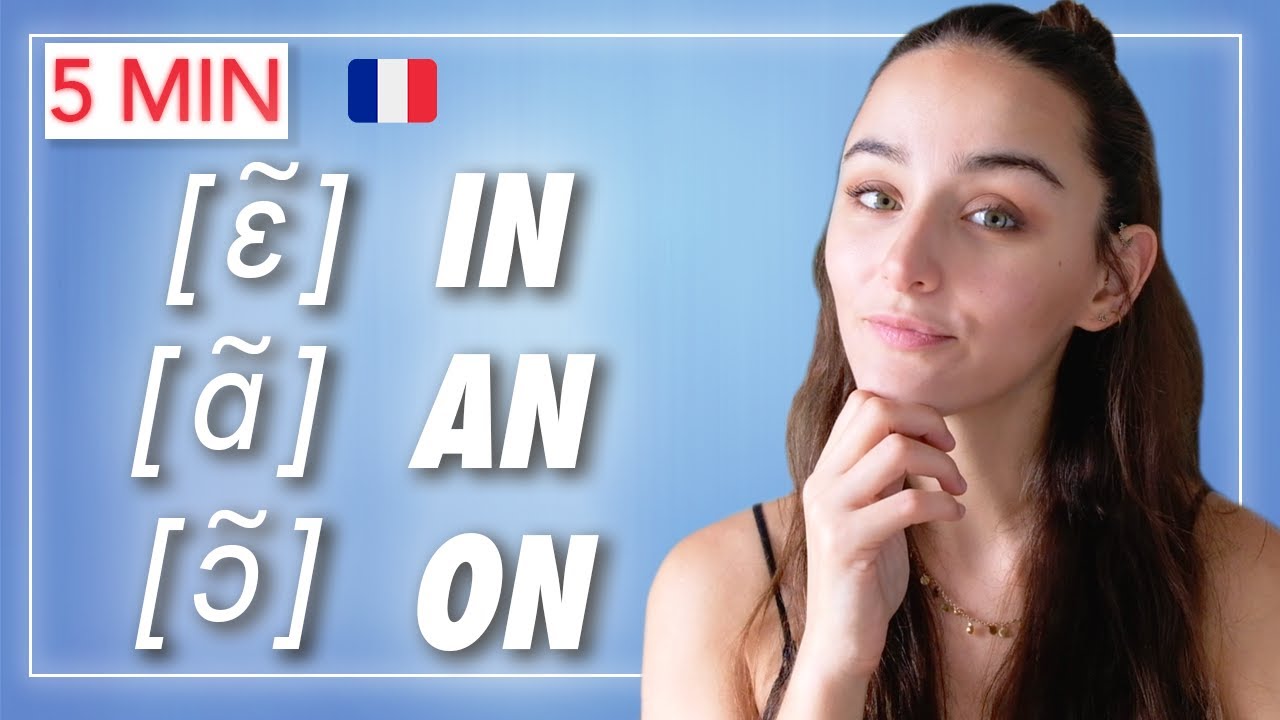
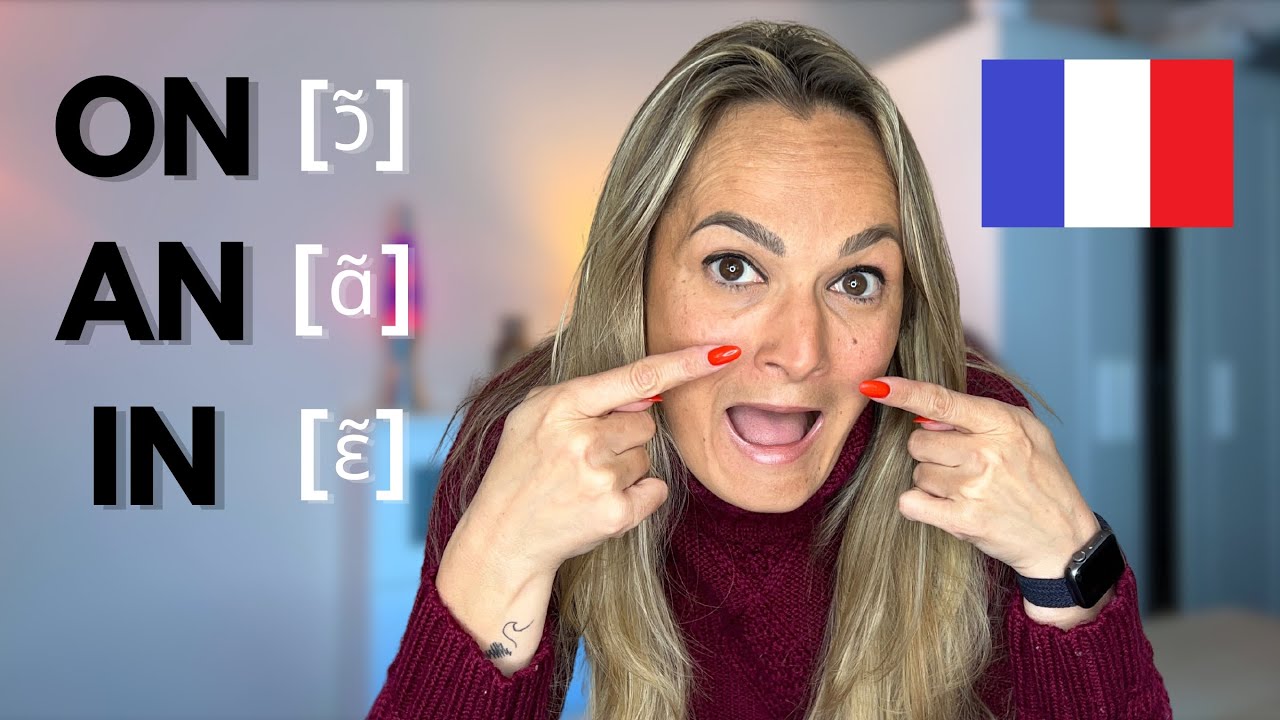
I remind you that the registrations are open only until April 30th, so hurry up. In this video, I did not mention the nasal sounds either but I already made a video about it that you can find here. The theme of this video has been chosen by my PATREON subscribers whom I thank very much for their support.
If you also want to have access to exclusive content including a monthly podcast that is available only on PATREON you can click on the link in description and I'll see you very soon.


![Learn to pronounce R in French | This works with ALL my students [Guide to French pronunciation]](https://img.youtube.com/vi/94SW5ZR4qMs/maxresdefault.jpg)