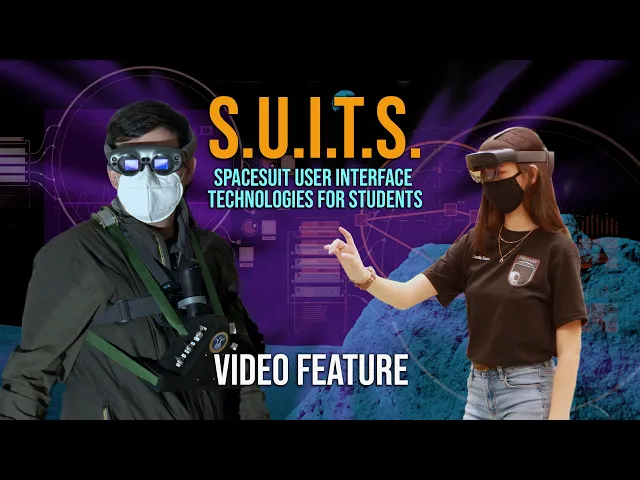
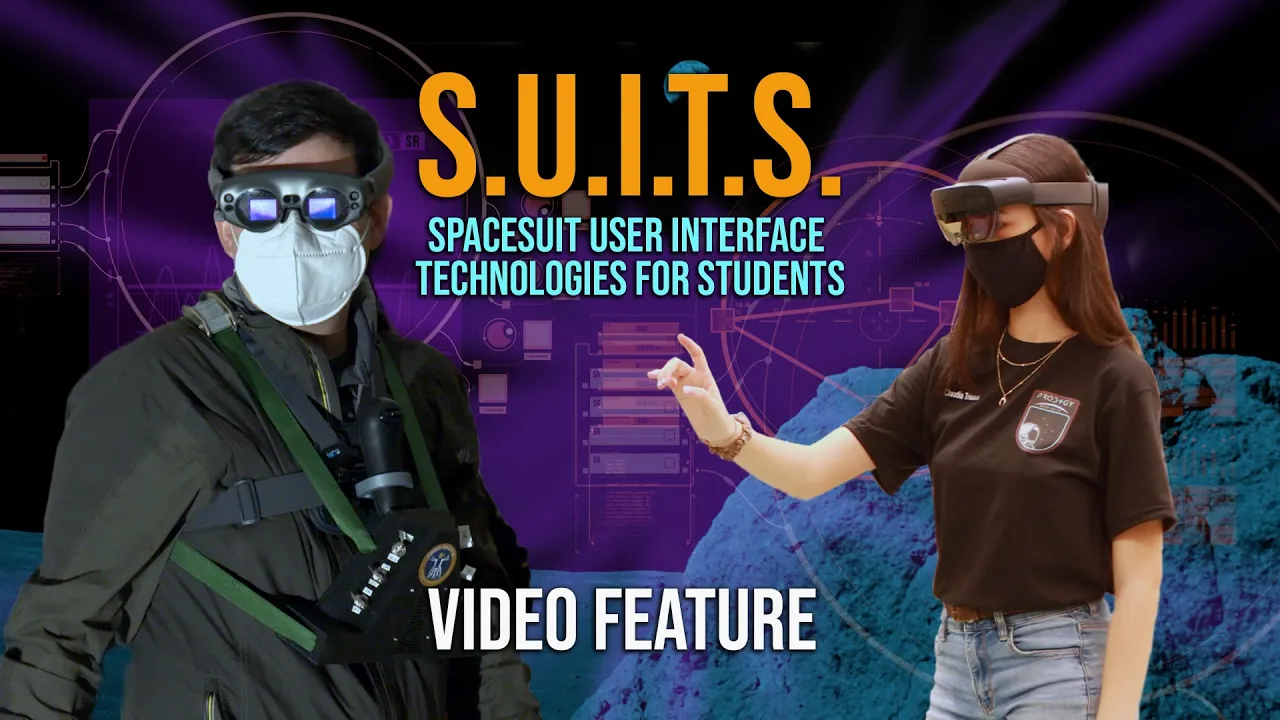
[Music] nasa is building exciting new technologies to help astronauts explore the moon and it is tapping into the unique perspective of today's college students to contribute research to those new tools [Music] today is test day nasa engineers are helping evaluate software designed by students the task is to see how this technology can help during a space mission it's the culmination of the student's hard work on the program known as suits so suits is spacesuit user interface technologies for students what that means is we're having students design a graphic user interface for the suit helmet bubble
you know a heads-up display would be something that's fairly far out from your face so maybe a couple of feet or further what the students are using is a head mounted display and we really kind of refer to that as a heads on like it's on the head and so it's only maybe a half inch or so away from the eyes and they wear it like goggles it allows them to not only see the real environment in front of them or around them but also it overlays text or imagery in front of their eye so
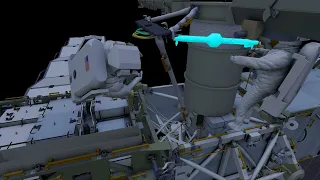
that they see that on top of the real environment seeing both the graphic overlays and the real environment is called augmented reality the challenge for the students is to use this technology to be of help during one of the most difficult tasks encountered by humans in space [Music] so an eva or an extravehicular activity a fancy word for a spacewalk at nasa is typically a crew member leaving their vehicle their their spacecraft in a pressurized suit evas are oftentimes if you ask an astronaut they'll say that they're much like doing brain surgery and running a
marathon at the same time what we do with suits is simulate this intense eva environment but we then introduce an augmented reality display in harmony with the audio feed that that comes over the loop from mission control astronauts today don't have augmented reality visible inside the space helmet during an eva they rely on their training mission control and in some cases a small booklet known as a cuff checklist should they need more information suits project challenges the students to look forward and wonder what if astronauts could access data using this technology what would it look
like yeah i think suits is an awesome program and asks teams to create some kind of user interface it can be virtual reality or it can be augmented reality but the goal is to basically build a tool that astronauts can use when they're doing space operations students come up with ideas that run the gamut of eva activity such as operating complex equipment cataloging a lunar sample or navigating to a remote location our main goal was to build a minimalistic and uh unobtrusive interface that's easy to use so we made sure to develop exclusively natural inputs
like hand gestures and voice command to control the eva system nasa mentors and academia sponsors help the students achieve their goals it was extremely constructive altogether i would like to say that we riled each other up positively in the sense that we were able to achieve greater things because at every meeting we would say hey what if we do this hey what if we do that hey wouldn't it be awesome math so overall we were positively reinforcing each other's interests nasa engineers evaluate the students work by trying out their ideas in a simulated space walk
so that they and the students see what works and what needs tweaking it's a unique educational experience even though we had some technical issues while testing it was very surreal to see our tool being tested at johnson space center my favorite part about working with the team is that everyone was very excited to learn and also share what they know we all come from different majors and different backgrounds so by the end of the cycle everyone knew a little bit about rocks about programming or got out of their comfort zone five percent of the art
project it also helps with interpersonal skills learning how to work within a team improving my technical communication you know i can talk about systems and software or you know helping me be more confident in liabilities it's great to see them grow it's great to see them collaborating with each other collaborating with subject matter experts to make their designs more effective or more efficient the research gathered in suits benefits nasa too as it develops its own designs for possible graphic displays it's future forward work that is needed now when i entered the field of augmented reality
for eva displays there was about one paper that i could reference what suits provides to the engineers at nasa is really the ability to explore many different designs to explore many different concepts and really have a think tank if you will for what the future of these displays really look like all the hard work testing and learning points to a brighter future using this technology it's an amalgamation of doing something that i love and also seeing the value that would come off of it in the long run and i think that's the same for most
of my peers as well who worked in this present you could see some real genuine passion and working on this and everything shows that we really want this to work we really want tech and space exploration to be the next big thing and and that was super satisfying and fulfilling to me and to the team as well building this software for these displays is like giving the crew members superpowers and that's something that i love about it but also getting to engage with academia and the talent that we have in academia and in universities that's
what we need to see and the creativity that comes from it to make these tools the best that they can be [Music] with nasa suits we want to see your vision your vision with massachusetts we want to see your vision your vision this is nasa suits and we want to see your vision [Music] visit stem.nasa.gov artemis and see how you can join one of nasa's mission related student challenges [Music] subscribe for more space