[Music] hello and welcome to the how to exit podcast where we introduce you to a world of small to medium business Acquisitions and mergers we interview business owners industry leaders authors mentors and other influencers with the sole intent to share with you what it looks like to buy or sell a business let's get rolling and now a moment for our sponsors I want To highly recommend you get acquisition of ficient Auto magazine every month acquisition officiate Auto magazine brings you tactics for business buying and selling you won't find anywhere else learn firsthand from industry leaders
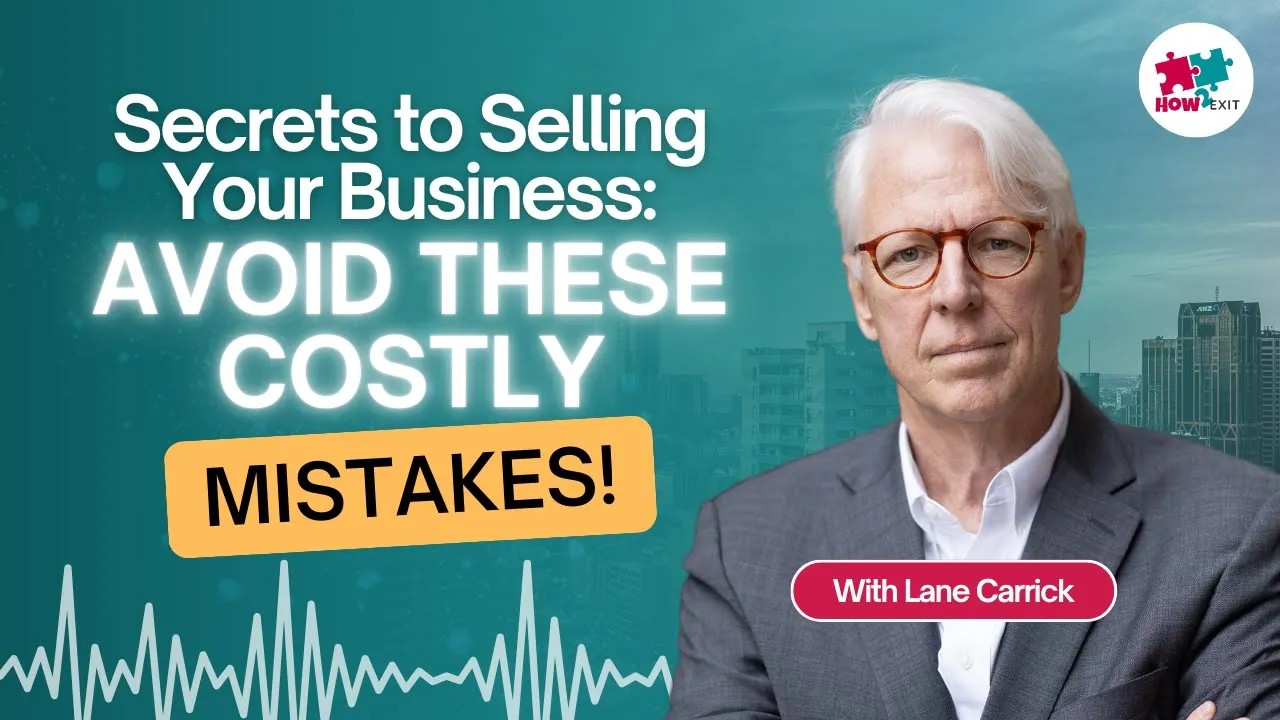
who share their success stories featuring in-depth interviews and stories from leading figures in the business acquisition industry this multi-platform mobile magazine speaks to acquisition entrepreneurs wherever they Are in the journey and I want you to visit acquisition offici a.com today hello and welcome to the how exit podcast I'm here today with Lan Carrick and he is a seasoned uh senior m&a guy who's been around and done all kinds of stuff multiple sectors of the industry uh multiple Industries different levels so this is going to be a fun conversation to have somebody who's been in this
space for a while and just just truly Knows everything from Big Business down to the the small mom and pop you know emerges and Acquisitions to teach it in college all the stuff you had uh it's going to be a pleasure learning from you today thank you for being here thank you Ron I'm honored to be here and appreciate being able to come back for my second uh second interview yeah I should have looked it up beforehand you were in one of our first ones I think probably in the first I'd say definitely In the
first 50 but maybe in the first 10 uh shows I did so uh it's been a couple years since we've chatted we both uh I think you stayed put you're in Dallas I've been uh to at least two locations if not three since then I'm one of those guys you call a digital Nomad I have skills will travel prior military so it never bothered me to move when they moved me around and it kind of kind of stuck with me so uh we move around a little bit Wherever the opportunity presents itself or most of
the time wherever family needs us so let's start off with your origin story kind of how did you get into the space What are the cool things you've done I know you're everything from a college professor to an adviser to a you know Investment Bank tell us tell us a story how this came about yeah um I I'm originally from mempis Tennessee born and raised there my father uh went to high school with a guy Named kimens Wilson who founded holiday ends um My dad became an early franchisee of holiday en and and built the
chain of motels across the southeast as a as a fellow entrepreneur and and for your audience so they can appreciate the fact that he pledged my mother's wedding ring and his $10,000 life insurance policy is collateral to the the bank to borrow much more value than than that to start building these holiday ends and uh he told me to uh to Go to college and study what pleased me because it didn't matter uh uh once I graduated uh I would learn everything I needed to learn by being in the family business and so I studied
philosophy and psychology and my senior year I think after Thanksgiving Before Christmas he called me in my dorm and told me he had good news he'd sold the business and retired so my uh my joury was was was hijacked um I came out of college and did what all philosophy Majors do I Waited tables for a year I fell backwards into Financial Services uh went to work for a Wall Street uh firm as a broker uh learned the investment World left the uh the wirehouse to become a the only financial advisor back in the 90s
uh early on in the game when there weren't a lot of the only financial advisers uh that firm Sovereign Wealth Management Group into a national firm uh we became a multif family family office and talk about a Learning experience I was working for ultrah high Networth families across the country being their trusted Problem Solver so it wasn't do I like this stock or that Bond it it really was trying to understand the issues related to the management of their overall Assets in many cases it involved operating businesses so I was an adviser to them when
they bought businesses when they sold businesses and and I in turn grew my business started doing Acquisitions For Sovereign um and then sold to a rollup group who sold the Goldman Sachs so I sort of got every piece of that the bigger fish by you know eating the smaller fish and getting eaten by the larger fish upstream and along that Journey um I founded uh a number of businesses or was a founder of a number of businesses including Banks including the BB Kings Blues club with rileigh B King uh the legendary BB King and had
some great successes and some Extraordinary failures uh as an investor in private equity and startup businesses um but you know you you take something from every one of those experiences and incorporate it um my wife and I moved to Dallas I sold my businesses the bank that I was chairman of and the the wealth management firm uh about 10 12 years ago and uh moved to Dallas in 2019 I teach as you know at Southern Methodist University as an instructor uh through the business Leadership Center of the Cox School of Business I conduct seminars on
mergers and Acquisitions and alternative Investments for MBA students there SMU is a a top 20 MBA program and I call them kids but I have to correct myself because a lot of them are you know they they graduated from a highquality school they've gone out and worked for Goldman or McKenzie or somebody and they're coming back to get an MBA It's Not Unusual for me to have surgers independent sponsors in my Class that are going working during the day and going to attending my class at night and and then looking to buy deals on the
side so that world has really evolved uh and I think I you know it's a bit corny but I think I learn as much from the students as maybe they they learned from me and I really enjoy that I like being in the academic environment even though I'm uh at the very low end of the food chain there I I like being in the environment I like being on a College campus and I like engaging with very smart motivated people uh I got a Consulting gig with a small business brokerage group here in town the
partners had split up and and so I came in to sort of clean up that mess and I worked some deals and I thought that was really interesting while I was there that firm was acquired by a large National m&a shop and uh I sat in that seat with them for about a year as well so maybe three years of experience with A business broker and then with a large National m&a although I will tell you you know the difference between a business broker and and an m&a advisor is still a mystery to me uh
you know they're all doing the same things it's just just semantics February 1 of this year I decided that at 65 years of age I was uh stupid enough to try to do this on my own so I launched Optimum murgers and Acquisitions I'm positioned in the lower Middle Market uh so my experience With the business brokerage firm and the and the large m&a advisor was that a small percentage of deals get done particularly in small businesses where you have a a buyer that may be sophisticated in the operation of their particular B business it's
manufacturing widgets they're great at manufacturing widgets but they don't know what they don't know about the process of selling their business they may or may not be represented by a Quality Sales advisor Because this is an open industry right there are no real credentials or licensing and and so pretty much anybody can be a business broker uh that was similar to when I became a financial adviser anybody could be a financial advisor uh you just adopted the title and held yourself out uh and the buyer oftentimes is not a sophisticated buyer they're coming out of
the corporate world and they're looking to control their Destiny through The ownership of the business and then you got the SBA typically in the middle of those deals and so it you know it's a very challenging environment to operate in depending on uh whose data you follow 15 to 30% of deals actually get done but above that uh you get up to maybe $10 million of EA 50 to 100 million of Revenue a lot of those businesses which we'll call lower Middle Market are still too small for hulahan Loki and Stevens and the regional investment
Banks to Take on his client so I felt like there was a gap there's certainly uh plenty of plenty of competition there but I felt like that was a nice space for me um where I fit where I understood where i' done transactions there um where there was a greater like Hood uh deals being successful because you had a just by sheer size you typically had a more sophisticated owner operator with better books and Records um and you had a my buyers uh have been you know private Equity firms and family offices and and uh
and generally speaking well you never have the SBA involved at the size I'm I'm working on and mostly they're you know they're they're funded um you know private Equity family office firm so less risk of the deal falling apart on on financial issues so here I am I'm running optim emergers and Acquisitions in Dallas and focused on Lower Middle Market transactions and having fun yeah you a lot of people don't they Automatically see that the SBA loan will go up to 5 million they don't know that there's a few programs out there where they can
get it to seven maybe as high as eight or nine with these uh it's a per of pursuit I I forgot what the name of there's a there's a mezzanine loan or a bridge loan that'll go above that a sec Tak second though so it's kind of a tough loan to get high higher interest rate because it's kind of a second position to the primary um but that Still only goes that 7 to n range and you got this Gap because where that you know acquisition valuation range where the private Equity doesn't want to dip
down to those $9 million businesses 10 12 they're usually you know maybe 10 million in evida but not 10 million in uh you know or 4 million in ibaa but not 4 million in acquisition price so there's a there's an serve Market you know in that space I honestly think that the SBA loan ought to do something where If you're new in this space a lot of people think SBA is loaning you money they're not the bank's loaning you money guaranteed by the SBA but they cover 75% of the like guarantee of certain percentage of
that I think that they should go say that's $5 million and say if they go to eight they go 70% if they go to 10 they go to 65% I think more Banks would take the take the opportunity to to lend on these as long as the majority of their expense you Know their Capital deployed was covered I I really hope to see that they open that up some it's great idea I hadn't thought about that but I agree with you um Banks would would probably be more careful in underwriting uh th those larger deals
uh having been chairman of a bank I you know it's all about managing that risk but I do think that their deals that would be presented that they would be willing to take more um of more risk Advance more money against that's a great idea so why do you I know my own things and I'll share them in a second but why do you think such a small percentage of these smaller deals let's say sub $10 million deals actually end up closing you know I I will confess that I'm still trying to get my head
around that I've spent three years sitting in this seat and I'm not sure I have a definitive answer I will tell you that I actually think that the smaller Deals the sub $10 million deals sub SBA you know lending limit deals should be more likely to get completed because uh because the the way the SBA Loans and you know they really Define the price um you know there there's there's not this blue sky because you have to you know the business has to cash flow enough and project a cash flow enough to have a certain
de you know coverage ratio um and so you really get down to uh a a tight range of multiples of sellers Discretionary earnings or or or net profits um and so you would think that that would help because one of my operating premises is that businesses don't sell because sellers have unrealistic expectations about the value of their business they get to a business broker m&a advisor who doesn't uh tell them your house is not a million dollar house it's a half million dollar house uh take you to Market we'll see where the offers come in
if it's a beauty Pageant maybe somebody maybe they'll bid it up but you know you're wasting your time in mind to go out to the market at a price that that is you know that's not going to work um so I think there's a I don't think the industry does a good job people in my seat of informing sellers this is where the Market's going to Value you this is where you're going to transact your buyer is going to go to the SBA or a bank that's going to do SBA financing to to buy by
your business and This is how they're going to Value you and know by the way there's going to be an independent valuation uh by the bank to determine uh you know so even if you agree to a higher price if the valuation doesn't support it uh the deal's not going to get done there um but I I think unrealistic expectations are part of it um I I think that a lot of businesses aren't prepared to go to market and and they don't know what they don't know they don't understand the consequence of Not having good
books and Records they don't understand the consequence of um having uh you know incomes that don't hit the income statement um and thinking there's value in that you know that they they see the buyers as very adversarial um and and you get into this adversarial relationship and and then they get into a process where you know there there's going to be a due diligence and and and uh and they're not they're not really prepared for that emotionally um and and So I think it's a lot of variables but I think if I had to pull
one out and say this may be the most important it is misplaced expectations uninformed expectations of the value of the business that are not uh addressed directly by the cide advisor uh the other saying I like to always put out there is everything you have now everything you ever want to have in the future and everything you've ever had in the past all comes down to communication Conversations you've had should have had or or should be having it all boils down that it's all done in conversation right where these are businesses of human beings working
with other human beings and what's happening what what I took from your story and I 100% agree is what's happening is the business broker advisors they're failing to have tough conversations because they're of fear of having the tough conversation so yeah scenario is Business owner decides he wants to retire and he calls up his CPA and says hey I think I want to retire he goes yeah you probably ought to talk to a financial adviser about the tax implications and your retirement so he calls his wealth adviser up and goes hey I want to retire
and the wealth adviser goes well you're not ready yet you don't have enough money in your retirement plans for what we talked about you need another $2.5 million get $2 and5 million For your business so he starts calling Brokers and go hey I need $25 million for my business because my adviser says I need that and the broker never looks at you in the eyes and says that's apples and oranges that has nothing to do with your business right they go let's see how can get you there oh I bet I can get you there
or they come they maybe they're a little Brave and they go you know I can only get you two right but they call the next Broker up and Then he said the last broker said I can get two out of my business what can you do and they get to the number they want to get to when the business is probably worth one right or one in a half and you know they spend six months listing go through all this stuff and they finally get it in front of a SBA lender or any type of
investor that's going to Doe D due diligence and the value is not there like I don't I I think Bruce Marx is the famous for the quote is congratulations You've negotiated a deal you we can't close he's SBA lender Pro right like congratulations yeah you've negotiated something we can't put together right the SBA is not going to lend on this and that should again I I just keep going back to that really should keep everybody honest uh it should be something where you can look the client in the eyes and say look I'm the messenger
and you may not like the message but here's the thing this is This is what this person going to buy your business this is how they're going to present and this is going to finance the deal and these are the boundaries that they're going to impose upon that buyer so here's where your deal is going to happen well they could I had a client said well they can put more money in I said I guess they could if they were independently wealthy I guess they could put more capital in but the likelihood of you're finding
that person who's Willing to buy the business at a higher price than what his lenders and advisers are telling him the business is worth is you know it's just not I explained to one of the guys you know what that makes that person and said what a very bad investor and anybody that has that kind of money probably did not get there by being a very bad investor so unless you you know you want to sell your business for way more than it worth start calling the people at one Lotto they might want It right
uh but other than that you're not going to get it and uh I think it's a disservice for um the the business owner and the buyer to enter into these conversations without the full knowledge of what the steps are what the process looks like what a fair valuation for something in that industry basically what the banks will lend on it uh it's not fair to anybody that these advisers Andor uh individuals are not doing their due Diligence one of the reason we run the show is if you know I've done 250 episodes if if somebody
wanted to learn this process right there are plenty of episodes where it says this is the stepbystep process you need to go through to properly value your business to properly get it at its maximum value and to get what you need for retirement that sounds like a lot of work and it is yeah you know when I was in wealth management um I was an early adopter of Having a written investment policy statement around your wealth which at a time when that you know back in the 90s when that was very very uncommon it was
an Institutional thing to have a investment policy statement but what I would tell my clients is um and a lot of them were business owners operators who created wealth in their businesses was you know do you have a business plan do you do you have systems and processes wrapped around running your business day To-day yeah well why wouldn't you have that for um for the management of your wealth and I would say the same thing to business owners that are going to sell their businesses you built a business around systems and processes to you know
to to get the outcomes that you're seeking and yet you're coming into a process in a very uninformed way and trying to impose upon your advisor you you know expectations that are not informed um I'm sure all of your guests That are in my seat can you know share stories with you but I I had a group I visited with recently and they had a business that was probably worth maybe two million and I said what what do you think your business is worth what's your expectation I said five million I said how did you
come up with the five million what how did you get there and they said well they're five Partners we each want a million dollars your your want does not Translate you know into uh value um and uh I had another one this is going back a few years a residential services business and I said what do you think your business is worth it's worth three million I said well how did you come up with that number and he said well one of my competitors sold recently for a million and a half and I have twice
as many trucks as he does that's okay um you know so I think that and it's human nature I think we anchor in things that You know are sort of confirmation bi us right we we we we need 3 milli dollar or5 million to make the math work um and so we look for things that are you know can can help us justify and confirm that and again I think fundamentally the industry of m&a advisors business brokers doesn't do a good job of telling folks that's that's not where your business is what I'll do in
in engagements like that which is not uncommon when they have an expectation That can't be met in the marketplace is to say look there's a whole industry exit planners out there that would you know if you think if you need $5 million uh to to achieve your goals uh and your business is worth two and a half then you need to sit down with someone and you need to develop a plan to get your business from Two and a half to five uh but but wanting five or needing five is not going to translate into
a successful transaction so a lot of people don't get That a lot of these things they see on the open market were raised conditions in a in a extremely competitive space and they automatically do your your cognitive bias they uh they look at it and go well they got this and uh I'm in the same space I'm just smaller I should get 30X or 5x or 7x and I like no it's your size businesses self for through 2x if they're running if they're running perfect 3x 4X right you wake up a a big boy maybe
5x 6X or you wake up if you Get big enough you wake up a a PE firm maybe all right but the SBA is not going to fund that right no you know I because in the private markets you know that's private data and and so you're you're not going to pick up the newspaper and see that the local dry cleaner sold at at this multiple what you are going to see is public market multiples you're going to see that this public company bought that other company and they paid X and so I think the
orientation Everybody's anchored in these Public Market multiples which have absolutely no bearing on small business transactions yeah there's two tiers you have to go through before you ever get to that level right yeah you gota you got to be there's like there's multiple tiers a lot of the guys in our space listening to show they're playing this game they're playing a game of Arbitrage they're buying companies just under the PE radar wanting to buy two or three of Them that to put them together run them for three four five years some sometimes shorter and try
to sell them to the PE firms because they've crossed that threshold that wak what I always call wake up the Giants right you know they wake up the family offices and they wake up PE firms when they start producing four five six10 million in iida right uh you know and that two and a half million EIT a company never would have got a a a spot on the radar but right you bought Three of them you're at seven five seven and a half million doll in eida and you're growing 20% year-over-year and you've got an
m&a team that can buy more now you're interesting to a PE firm especially if you if you can leave that m& team in place right you've got an acquisition team on the hunt you know it's a self-growing company and if it's their model now you can wake up the big boys and these little these guys see those multiples they see like the public Market and they they you know they think it's them they do but that's a great point in that there are a lot of ways to play the game as you describe it um
and I have been involved in transactions where private Equity firms or family offices are buying a number of small businesses that you know at a three and a half multiple uh knowing that once they Aggregate and get to a certain e range there's going to be you know the multiple is going to double you know There's going to be a multiple expansion because you just swap buyers you're no longer dealing with the SBA you're now dealing with private Equity World um so even if they don't improve the businesses which most of them have a plan
for doing that right um you know they they're they're going to get a multiple expansion through the aggregation process so there's an Alchemy uh trade in there uh but it takes a lot of work to do it so what do You think the actual solution is how do we get small business owners to one choose better advisors right like you said there's no Most states don't have any criteria whatsoever to becoming a business broker and the federal level they used to have I want say four or five years ago maybe longer there used to be
a federal requirement to call yourself a business advisor every that's gone now there's no federal the SEC removed it um so there's no currently There's no federal guidelines that say if you call yourself a business advisor you have to have some certifications or anything right so how do we get the word out to these small medium businesses that you know that's that's the retirement that's their generational wealth it's the money that's going to pay for their kids and grandkids to go to college and they're squandering around because they have a lack of knowledge what are
some of the ways we Can I mean yeah that's a great question that's a that's a big question uh um you know if if the close rate in the industry is the 15 to 30% um you know range that I keep reading about again these are private transactions so you're kind of on the honor System and so I'm sure there's some noise in that data but let's just say it's 30% that means that seven out of 10 businesses that dress up and go to market to get a transaction presumably the value in that business is
The most significant asset that business owner has if seven out of 10 don't get a deal imagine if you took that and applied it to the residential real estate market seven out of 10 people that tried to sell their house couldn't get a deal or didn't get a deal it'd be a national uh crisis um and uh so I think it is a crisis uh that the the data says that uh a significant percentage of businesses almost 50% are owned by people 50 years of age or older They call that the silver tsunami you've got
enough in your beard and I've got enough on top of my head to say we're part of that right yeah um and uh um so there is this big wave coming ashore of of business transitions um and if you can't if the market isn't functioning um in a way where you can convert that to liquid resources to fund your retirement then then that's a huge issue um I don't know that regulating the industry is going to fix that um you know I I got in The Securities industry early and anybody could be a broker or
an advisor and there was no educational requirement we started seeing certifications I became an early certified financial planner uh but then all the wirehouses started manufacturing titles so there was a certified this and a chartered that and and I think they lost their meaning um there are credentials as you know in the business broker m&a world I don't know that any of them have any any Credibility uh with with the seller of the business they don't know the difference between an amaa and a a you know a certified business intermediary there are some good books
out that kind of walk through the process but I don't think most people Avail themselves of of of that they're going to go buy a book and read about how to sell their business so I don't have an answer R I would just say that from the seat I sit in I've dealt with a lot of business People 30 different businesses I've dealt with over the last three years and the overwhelming majority of those are not going to transact for a variety of reasons and these are people that want to sell their businesses that want
to retire some of them have health issues and it's a to me it's a serious issue um I wish I had a solution for it you know it's interesting is I don't think that most small business owners know who they should call right uh and they they Mirror this too much on the real estate industry they know when it's time to sell their house they call a bro a real estate broker so when it's time to sell their business I must need to call a a business broker and if you haven't done a year or
two's worth of exit planning you're probably calling the wrong guy first right the first guy you should be calling is an excent planner a succession planner somebody who understands the Prep Pro process to get It ready not all Brokers advisors are willing to take on that you know three four year commitment to get you ready most of these guys I don't know and and we'll figure out what your role is in a second but most people say look you've done the work now I can take you and I can do everything and we can get
this fun we get it sold but they're not letting us say I'm not going to you know if if you're a one two three fourman shop you how many clients can you take On if you're taking on that advisory role where look I'm going to work with you for 24 36 months and and and hope that you listen to me and get this thing ready to sell there's such a risk in that because we all know that you know you've been running a business for 30 to 40 years it's a good chance you're setting your
ways all right and to have adviser to tell you no no no you got to do this all different if you want to sell that's a high level of trust yeah And some of the things you do to prepare the business for sale are sort of contrary to what you would do to run it uh you know for for the next 20 or 30 years but hey i' I've run businesses and and there were times where I didn't take advice very well right I think that may be the nature of being self-employed running a business
is sometimes you you think you're smarter than than everybody else else and and and running your particular business I I do like the fact That there seems to be an emerging and growing industry of exit planners uh whatever their titles are and whatever their credentials are that are really focused on preparing businesses for sale and the two iterations I had before Optima business brokerage for our large m&a shop um that wasn't part of well one of the firms the national firm actually added a a a exit planning component to it um but it was sort
of ancillary and new um but for the most part we just Took people that came in the door and it was very transactional um you know it was we're not in the business of preparing you and and getting you ready you know if you're ready to go to market we'll take you and Market you and get a transaction and I'm kind of a misfit here because I I came out of wealth management which is a very relational business so I developed deep relationships with my clients um and um in this world is much more Transactional
I think that's part of the issue as well if you know uh we'll take a lot of those folks in are transaction will take a business figure well what have I got to lose I'll take them out to Market I'll see what happens if we get a transaction great if we don't then I'll go on to the next one um instead of saying look here the problems and challenges you've got you'd be better served to go talk to Ron or somebody over here that can help you figure out Those things and prep your business to
go to market and then you're going to get a lot more value for your business all things being equal um when you do go the interesting thing in this space Also is I there's a level of decision making process that changes as the business gets larger so in my limited view of things that I've had in the last few years if the business has less than three sayfe founders their cap table is small right it's usually an emotional Decision the person has to know like can trust the next guy taking over his business he wants
deep report he wants somebody he knows he's going to carry on his legacy take care of his employees you start getting a cap table where there's outside investors and there's money that was raised there's debt it starts becoming more of a transactional s situation where it's a money-driven you know situation so these as the company matures and they've got more Investors and more senior Executives who have Equity positions and more voting you know more more votes need to be you know to occur to have an exit um I think it becomes more logical and more
numerical than it does at these smaller medium businesses um a lot of these small businesses stories I hear they failed to close because the owner really wasn't clear what he was going to do next and that uncertainty that that emotional Aspect of it is uh is probably the most challenging aspect of being an adviser I had the same issue in wealth management um you know at the end of the day you can talk about the math and and and uh and that's kind of the easy part although again if you have an unsophisticated seller unsophisticated
in the ways of of selling your business um you know there are challenges with that but at least you can have an objective conversation but you know I Had a conversation today with the seller we have a letter of intent in front of us um and he is starting to react emotionally of what this means to him um and uh and so the questions today were not about um you know the financial aspects of the deal or if they were they were basically a subterfuge not necessarily ill intended but for uh the emotional aspect of
what am I going to do when I when I sell this thing um and what about my Employees I you know I need to um one of the interesting phenomenons I see in in in sales like this um the space I'm in is the a good owner operator is really worried about his employees and what's going to happen to them right they're empathetic caring people and they care about the people that work for them I'm running into some that don't um but for the most part they do um and they're worried that the buyer is
going to come in and Chase everybody out the door the Buyer is more scared than the seller um that they're going to buy the business and the key people are going to leave so both parties are are worried about the same thing maybe for different reasons uh but we're both worried about the same thing and I rarely found that to be a misalignment um I'm not to say there aren't firms that'll buy and cut but in in the space we're in in Main Street and in lower Middle Market businesses not so much the buyers need
to keep those key People it's detrimental when it happens I've talked to at least five out of the 250 uh a few probably wouldn't come on air because they were worried about saying stuff about uh you know non-disclosure type of statement so they would do the pre- interiew and go you know what I really can't talk about the they figured out they can't have the conversation without saying stuff they think will get them in trouble so a lot of those a lot of these guys who have Exited we do a pre-con conversation to see how
it will go and then a lot of them realize that they just they can't separate what they should and shouldn't say well enough that they don't want to be on so I don't get them but the ones I have covered uh I've interviewed at least head I don't know if theyve ever I'm trying to think of if they actually made the episode but I've had at least five that I can think of conversations where within the first 60 Days 90 days some key people left and it usually was the same thing I told you we
talked about earlier Miss misset expectations conversations that should have been had but were never had right uh in two of the cases the owner should have asked the senior Executives is anybody interested in buying this when I retire right they didn't they sold it through a brokerage firm sold it to a third party and within one of them was a a staffing company had multiple Locations there in Texas with you I'll go that far it's in the Houston and Austin area they had locations in Houston and Austin she buys a company that barely qualifies for
SBA so it's at the top top end she actually had to bring her a couple million dollars of her own money as a down payment because it was she she needed the full five million it wasn't Mak enough I think she was into it for like seven plus you know working capital and stuff so I think she Was into it like seven seven and a half or so first 60 90 days top three Executives got really mad cuz they wanted to buy it and didn't know the owner was retiring they leave because she didn't think
to negotiate any type of stickiness to keep them around any and there was no existing non-competes or anything that would have held up in Texas so they started pulling their top clients with them those three lead Executives um had relationships With 65% of her clients so she you know and I'd say 40 to 50% of her business was gone in 90 days now she's got a debt she can't cover for for the SBA Loans and the SBA just basically said sell it to them you've got you've got you know you don't have much choices we're
going to have to call this do the the lenders basically said find somebody to buy it and preferably you know you might want to talk to them because they got your Clients and you know we're going to do a workout here but you know there she's in these tough conversations now that she wouldn't have had had those conversations been done at the proper time with the right people and brought them into the loop yeah I I actually know that situation you're referring to um uh so I I'm I'm familiar with that and and that was
a horrible outcome um for for everyone uh for the SBA for the buyer and maybe not so much For the seller I will say that there is a challenge I um completed a transaction for a Services professional Services business they were bought by private Equity Firm out of Virginia in end of January of this year and the buyer the PE firm said before we close we need to meet with these three key people you've identified on your management team the seller went absolutely not until the wire is has gone out I'm not putting you in
front of my employees because if you Don't transact then you know I'm I'm in this very vulnerable spot and it was almost a deal killer we we managed to get the deal done and they came in immediately and offered these people a raise and a stay bonus um and a better title and ultimately it was going to be good for these folks because they were going to take more leadership in the business and be compensated for that but I've run into that a few times where the buyer wants to meet the key people Before the
transaction and the seller is adamant that they don't want want to pull the curtain back and let them know and there is a risk there um let's talk about let's hone in a lot more on what you're doing now who is your Target customer and what kind of businesses do you love serving what's your favorite like yeah if I could do these all day I'd rather have this industry the customer to uh that's a great question um so I I'm positioned in what I'll call The lower middle market5 to $50 million of annual revenue I'll
play below that and above that but that's that's my sort of Ideal client and maybe to translate that into eida sort of a$2 to10 million eida and again generally speaking that positions me a little above the SBA maximum lending limits and and Below where Stevens and hulahan Loki and the other Regional investment banks are um I haven't really found industries that I particularly like and think I'm Good at or particularly dislike I haven't done any oil and gas deals although I've had the opport Unity to and part of that is I'm from West Tennessee um
and I'm in Dallas Texas uh and there are so many people that are so smart knowledgeable about oil and gas transactions that I just don't feel like I can bring the value to the table that that others can and I'm willing to be honest about that um you know is you'd probably be better served because There's some there's some m&a shops business brokers that that have done a hundred oil and gas transactions I didn't think I'd be good at doing F or you know Tech enabled services but I've had a number of those come my
way I'm working one I just signed up a new client yesterday that's a a fintech group um at the end of the day what I would say is that if I do my job well which is running the system in process you talked about developing that Relationship with the client I think to you know I think that may be one of the things if you ask me why the close rate so low it goes back to the fact I think very few people are willing to do the leg work you're willing to do in a
transactional space spending the time to really understand that CL Cuts against the math of I'm going to close one out of three Deals so I better load them up uh and and and get them into the market but my belief is that you know being Successful for your clients being a successful m&a adviser not from the standpoint of making money at it but from the standpoint of getting transactions that meet your client goals which will then satisfy my goals right is a about having the systems and processes in place to gather the information understand the
business be able to articulate the value proposition of that business through the teaser the confidential memorandum uh to give them A valuation that anchors them in a realistic uh price um and then get them in front of their ideal buyer um we do that by curating a buyer list um uh and again because of the space we're playing in we took a uh service business uh residential service business to Market we looked at uh we curated a list of 10 Upstream strategic buyers that are actively buying businesses in this client space um and said we're
going to call them first we're not going to put You on bis Buy sale or any of that we're going to go to them and we're going to say we've got an opportunity it's not in market yet we're going to show it to a handful of Select buyers if you're interested um you know let's have a conversation um we then when we didn't get the buyer out of that group went to axial axle.nut Y where is as you know we we were then sort of matched with private Equity firms family offices independent Sponsors that have
expressed a specific interest in the industry that our client resides in you know onboarding them properly understanding their business developing work product that that represents them professionally in the market getting that in front of uh targeted ideal buyers um and then having the knowledge and experience to understand where the ls are you could pull in a negotiation uh and and I I think that just comes with experience uh I had bought and sold businesses personally Ron for years um and uh but sitting in this intermediary seat and having to understand this is how deals get
done and these are the buttons that people are pushing and you got price and you got terms and and and the turbs can be more important than the price in some cases um and and where do we have uh uh where can we negotiate uh working capital has become one of the biggest issues that I face the the seller Believes that you know that's their money um it came through the business it's cash on my ballot sheet why should I leave that for a buyer I had more deals get get Crossways over the working capital
and now I addressed that in the LOI um it may not be an ABS AB solute number but I address that in the LOI now to say this is how we're going to deal with working capital this is how we're going to Define it um so you know I like working with people that one they want To sell their business um so they they have a motivation and desire uh to sell their business they're not just testing the waters to see what's out there I charge enough of a front-end fee to be able to compensate
myself so that in the event that they're not really sellers that that I will be compensated at least and or cover my time uh in the deal uh but here's the thing I'm a Serial entrepreneur like you and and I really enjoy working on businesses that I Haven't worked on before because I love to tear a business apart and figure out how does this work um you know how do they charge for their fee or their services or their product and uh you know what what is unique and special about this business because getting to
their value proposition and and and figuring out how to position them with their ideal buyer with the right story I think is a critical part of of taking care of of my clients you're a Serial Entrepreneur and so am I so there's a reason why I'm not a broker I have a friend of mine who uh when we first got into this space he goes you know what I'll just go buy a brokerage and we'll have lots of leads I was like number one that's not how that works right number two uh sounds like a
lot more work than what I want to do as far as the brokerage side of it but um he had a point to some extent is I told you before we started the recording my wife And my son started a dessert business I don't work in the tent you know why cuz I like dessert and I'm already overweight right so I do my best to do marketing and advertising stuff like that I don't think I could be a business broker without going wait a second this one's really nice why don't I just buy this one
how do you avoid mentally wanting to do that for some of these business I know that you know I interviewed Carl Allen that's how he Became who he is right now he started off as a business broker and then one of his transactions fell through and he literally said you know what I'll buy it then he had to call his wife and say this is a story he told on the show had to call her wife like hey she said that deal go through he goes well kind of she what do you mean kind of
she goes well I I bought it and she's like you're retired you're only doing this because you want to help people what are you Doing buying a you know a bus company or whatever it was right so how do you avoid looking at some of these going you know what that'd be fun to run I'm gonna buy that one well I actually think that's a good thing right um I I think uh I think that one of the ways I bring value is I've been a buyer of businesses before I sat in the seat so
I'm able to look at it from the perspective of a buyer and say this is how I I view this business um and I like to get excited About the business I like to think about what would it be like to run this business and how would I how would I grow it because I think that allows me to have a better uh interaction with the prospective buyers to your point though I have run across multiple businesses in my short career in this intermediary seat where I've said man you know if I were 45 instead
of 65 I'd love to buy that business and step in there and operate I have enough common sense at 65 Where I where I sort of understand what it means to operate a business um and uh uh with that said there is a group here in Dallas um that started off as a sside advisory firm is still a sside advisory firm but started buying businesses that for whatever reason weren't snapped up in the market um and so now they've morphed into a private Equity Firm with a salside advisory practice I've actually had some family Offices
here in town come to me and say well look if you See businesses that you really like um that don't sell um you know why don't we put together a fund and we can just buy those and I go well that's great but who's gonna oper yeah because I'm not gonna say you cultivate operators if you're gonna do that because that's the key right but I I you know I think that's an interesting point is that in this seat as you know you do see business is that you go you know the Market's just not
for whatever reason This is not an attractive business to buyers uh the buyer not going to get price or terms they want but it's a really interesting business um and I find that fun but I will say as a serial entrepreneur to your point I'm I'm tempted when I see it to go to that place where I'm like man I could run that business I'd do this and I'd do that I won't say who it is and I'm gonna and he hasn't been on the show so I don't feel like I'm still stealing his Idea
I just know him and know what he's up to um there are a couple of guys out there who Farm they have two businesses they have that small business brokerage and they're looking for the buyers and they have a holding code that they're cultivating operators they're they they were in your position doing mid-market stuff and they had somebody like you you just did this family office or this holding company said we'll give you the Money just you got you got to show us the good ones what he did is he's using these guys who are
great operators they have great skill set maybe they only have 00 or $400,000 so they can they can stay in that small business world but they they're actually stepping down if you look at what they've run operationally they've Run a 10 million business aund million business and now they get out of it wanting to buy a company and all they have is 300K down And the SBA Loans is going to limit them to 5 million so they step in that thinking they're going to grow it and they that there's there's two problems with that it
takes a different human being to run a company from 10 million to 100 million than it did to take it from you know you know five million to 10 million there's a different skill set there's that systemizing a lot of times those guys that step into that 10 million to 100 million systems and Processes were in place they just had to sell and grow right to where if you get that they're stepping into things where the systems and processes may not be perect perfected they may not be able withstand the stress test of going from
that range so what they're doing is they're finding those operators that they're Misfit they have a decent sized brokerage down there they're finding the operators that they have 300K down they they they have the operations they Should be running a $10 million company but all they can do is buy a five and they're saying you know what I'll partner with you we'll fund this transaction come look at this thing over here you got to put some skin in the game you're going to buy your Equity position we're going to take your $300,000 down and over
years over the next two to three years you'll will increase your Equity position but you're going to work with our hold Co and and And you know grow it this way and it's working very similar to the Searcher model um and we here in Dallas it seems like there's a Searcher on every corner um and uh there are a couple of organizations that will back uh these you know midcareer Executives and businesses to come out and be a Searcher to find a business that's in their sweet spot they will provide the capital the Searcher will
put a little capital in but they'll pay them 200 Grand a year For two years to go out and search and they give them that two-year window to find a deal um and uh that that's that's becoming a bigger and bigger thing there's more money chasing that and looking for operators that can step into those roles what data they have that they're publishing says that their returns are actually higher um but I think that that that that twist is new enough where I'm not sure there's enough data out there to to really know at this
Point uh but operators are uh finding a good operators is is a great thing if you can match up a good operator with a good business um you know that that's magic and that's something that's an acquired skill in itself right A lot of people think well I'm going to buy this company I'm going to hire a CEO and they're going to run it I like cool how many CEOs you've hired no I said do you understand what it takes to hire a CEO Are you looking for is is is this company need a Visionary
CEO something who somebody who innovates and creates new products all the time or does it need you know the operational guy who's just going to keep this gear turning and slowly increase it because it's got a proven market growth and strategy and the Visionary is going to distract it there are just different mindsets that you know accompany in different stages of life cycles these companies Are in you know if you haven't hired five or six CEOs who are you to say you're going to buy a company for $5 million not operated slap a CEO in
there and it's going to run great yeah you're you're funnel and there's a lot of risk in that and there are companies at different stages of evolution that need certain skill sets that are not Universal uh to uh to all CEOs or senior people so that's a that that's a great Observation um but I I enjoy seeing businesses I I I still enjoy tearing them apart figuring out what makes them work um I I like developing relationships with people and I like being the trusted advisor to you know give them counsel um it doesn't always
work it's challenging in in this seat where you have this uh adversarial relationship with the other party that wants to pay you as little as possible to take your business you want to get as Much as possible the seller isn't necessarily well informed and knowledgeable about the process and the value of their business they see the particularly when it's a private Equity Firm on the other side they think they're Darth Vader um that these are evil greedy people that are you know's mission in life is to destroy them and and underpay them and fire all
their employees and um you know it's a really uh I'd like to grow my business my plan Is to go into other markets and I was talking to I've got a few investors that that backed me and I I was saying you know I don't know how to go hire a dealmaker I don't know what qualities I'm looking for in a dealmaker because in just my three years of working with a large m&a shop and a small business broker I saw people that were completely transactional and they were very antagonistic to the sellers that they
represented and antagonist istic to the Buyers but they made it work they closed deals I saw people that were warm and fuzzy and held everybody's hand and didn't get deals done and some that did and I don't know what the I really don't know what the ideal skill set is you you have to have enough understanding of transactions to be able to you know represent your client effectively it'd be like being a lawyer but not understanding the law you have to have a base knowledge um but you also have to Have a a remarkable amount
of patience and willingness to hold people's hands and communicate and tell them when you think they're making a bad a bad judgment or bad decision uh but not do it in an offensive way I don't know it's a it's a really interesting seat to sit in and I'm continually guessing whether I'm doing it right for how do I get better at the um at the service of being the trusted advisor uh to a to a seller and We're not even in the worst Market uh there's actually news articles I guess it's been six months or
a year now ago that in Japan businesses are you know leaders and Business Leaders are giving their business away not even transacting it because they want the Legacy and they're loyal to their customer their customers and loyalty to their employees is so strong they want they're begging people to take over so they're actually quite literally not family generation Second generational stuff they're going to some of these PE firms and said we'll give this thing to you long as you C contract that says you take care of my employees you take care of my customer you
do this and there's actually news articles on it that it's so bad there's not enough buyers there that companies are quite often you know more often than you would ever imagine being given to a trusted set of hands so hopefully we don't get to that it's fascinating I Hadn't heard that obviously there's a cultural Dynamic there of that loyalty um uh that I don't know that it's Unique uh to Japan but but certainly is part well well established part of their culture um uh that that tells you though how dysfunctional markets are uh and maybe
there other explanations for that may maybe we have fewer people that are interested in buying businesses I've had a number of business owners and operators that have told me I can't find People interested in being Partners in the business I've tried to elevate some people up and they don't want the responsibility you know they're willing to forego any reward for that by being a N9 to live by being able to clock in and clock out they don't even want to come into the office you know they want to work from home um and so maybe
there is a generational shift here there is I met with a prospective client the other day um who's been running his business for About 30 years it's manufacturing business and he said I said why are you interested in selling um he said I get along with machines really well uh but people not so much he said it's never been a problem I've had these long-standing employees uh but he said most of them have now retired and they're being replaced with I don't know what the Gen we're on now is Millennials Gen X gen Z you
know but he said I've got these Young employees and he said they the culture I built doesn't really matter that much um you know they they will go to the place down the street for 25 cents an hour um you know not that there's anything wrong with that but he just said I I don't know how to manage people uh the people that are willing to take the job now I don't know how to manage them and motivate them um and uh so he said I'd like to work with the machines and I'd like to
have a Strategic partner come in and buy controlling interest and manage the people I said well that's a possibility awesome awesome how do people reach out to you ly what's the best way that people can you know say hey I got a business for sale or hey I'd like to learn more about what you do what's the what's the method you want them to contact you with sure so I have an easy phone number uh for Optima 214 214 4 310 um and uh like most people I have a Cell phone tied to my hip
except when I'm having dinner with my wife um and uh uh and I'm laye L at the optimate team.com very appreciative of the opportunity to come on the show and visit with you again Ron we'll have to do this every two or three years I love catching up with you you always seem to be uh seems like you're working on cool things and it's it's it's the the world need needs to hear what we have to say uh those companies need to to take Certain steps and precautions and and actions to make themselves at their
highest value so thank you for spending your time here hang out for a few seconds afterwards and we'll call that a show I want to announce our new channel Partners the ITX market place since 1998 ITX has created 5 billion in value by selling more than 225 it businesses in 20 countries ITX Works exclusively with it enabled businesses generating between five million and 30 million who are Ready to be sold and m&a decision makers who are ready to buy for over 25 years ITX has developed industry knowledge that helps determine whether a seller is a
good fit for their buyers before making the match ITX mergers and acquisition Marketplace we have partnered with it has a proprietary database of 50,000 plus global buyers seeking it service firms manag service providers Microsoft service providers software as a service platforms and Channnel partners with Microsoft Oracle service now and S and the Salesforce space if you have an IT enabled business you're ready to sell I want you to visit the it exchangen that.com Marketplace how to exit that link will be in the show notes visit them now