yeah hi everyone Joyce Hill here and um you know we read about this information in our first chapter reading this week the nature of leadership but I wanted to uh just review a couple of those items that you read and kind of call them out uh to if I will um kind of showcase their importance at least importance for some understanding because those um concepts are foundational to a lot of the leadership um approaches theories applications that we're going to be studying as our as our course continues so with that being said let's first take
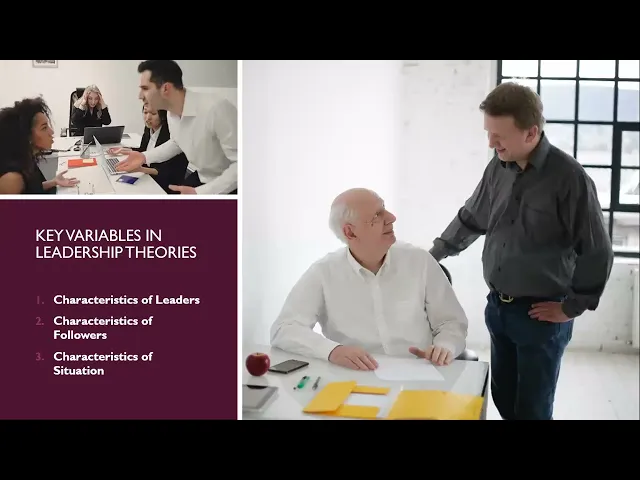
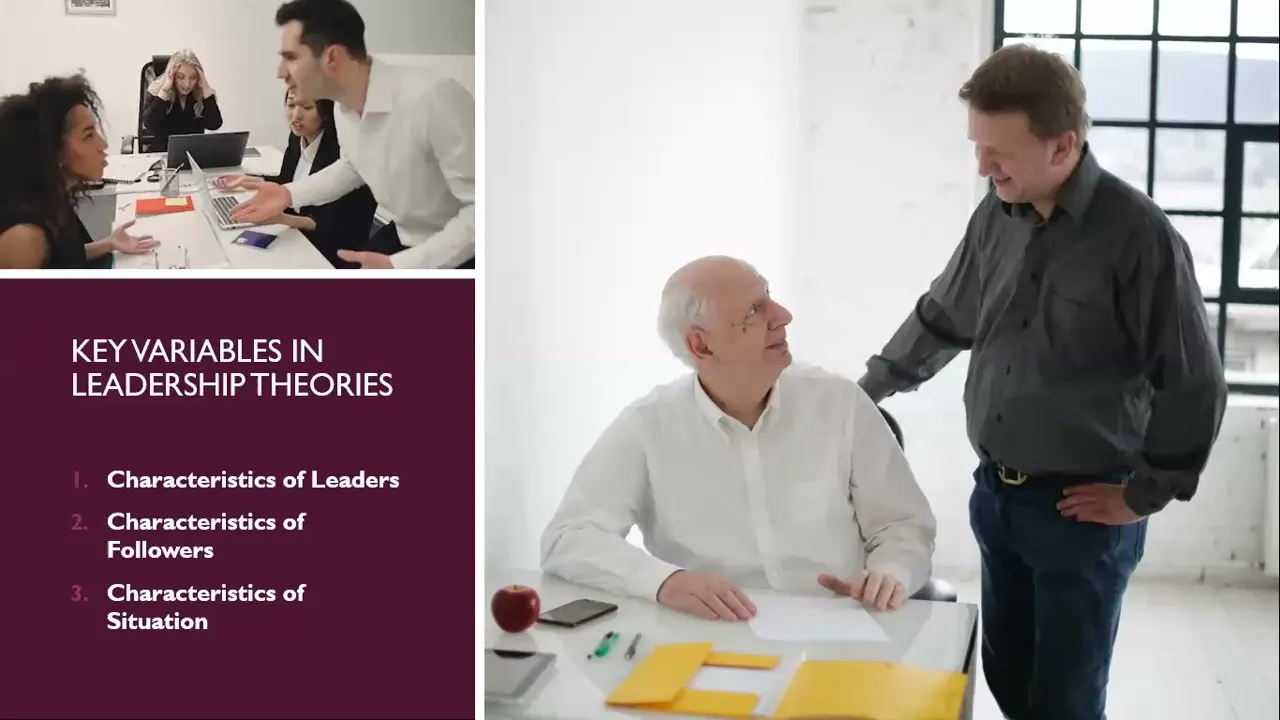
a look at the first key variable this was something that we read about in our course text and it the key variables actually fell into three categories one under the the uh characteristics of of the leaders then the characteristics of the followers and then the characteristics of the situations that uh were occurring and I like the uh the two photos that I chose here because one we can see uh the larger photo is you know some sort of congenial conversation taking place uh looks like just by the sons of body language and and eye contact
and facial expressions that there's um uh a uh a cooperation between these two individuals but we look at the smaller picture in the upper left-hand corner and you almost wonder if this individual if if he is the leader uh if he is chastising her um or correcting her about something in public you know what's going on because when you look at again facial expressions and body language here and even look at the the hands you know he seems to be almost lunging and leaning forward and if you look at the expression on his face but
then she seems to be I'm not sure but maybe a little baffled confused they've even taken back by his approach and maybe the approach because he's doing it in public with with the uh uh her co-workers around her so this is a these two pictures amazingly enough actually can demonstrate if you will um those characteristics of leaders followers and even the situation so let's look at those characteristics of leaders you know initially um the traits that we have that we're born with was accredited to um leadership uh it was believed that um you know these
traits is uh that some of us were born with allowed us if you will to kind of go into leadership but that evolved over time and he eventually did start to include values of the of the leader uh the actual confidence that the leader uh had within his or her abilities to to do the job even their emotional well-being came into play we're going to take a look at emotional intelligence and then later on in the course because I think that's important for all of us to have a basic understanding you don't need to be
an expert in it but I think you need to have a basic understanding so that you can develop in areas around emotional intelligence that you feel are not necessarily your strongest but also even our own mental capacities um you know our mental contributions like our personal beliefs even assumptions that we make about situations or about people um also I find that uh you know some leaders uh based on an old study but it's a study that is certainly well um worth you know mentioning again that McGregor did many years ago about Syria and Theory X
and Theory why um employees you know Theory X employees were seen as uh more uh lazy they had to have much more supervision so that they would get the work done we had to have penalties to apply to them but we could also have some rewards for them as well they did a good job you know we can you know reward them for doing that good job where the theory why uh employee is one that wants to do the job well because of of that satisfaction they get from doing that from doing a good job
they're also motivated by the encouragement that they receive whether that encouragement comes from their leader or co-workers or maybe even internally so a very different mindset on the theory X and Theory why then we have the characteristics of the followers you know and we have the traits involved here too things that you know we are innately born with but we also the studies also pointed out to us that their confidence as well as even their optimism to succeed in the role that they had is key so um also you know how do they think about
leadership you know are they uh you know some people are really um against uh leadership or or people in Authority they just you know they they have a an adverse reaction to that um and then often react accordingly because of that um but also this involves we have to consider their emotional well-being as well um but then we also need to think about what's their level of um uh engagement as far as wanting to uh to achieve uh to achieve the results that's required of their job and what about their level of cooperation are they
willing to cooperate with others in order to um reach that end result or they uh you know an individual thinker and it's only all about me rather than about the team succeeding um so all of that comes into play when we're thinking in terms of the characteristics of the following hours and then the situation comes in here too because you know the size of an organization can influence how leaders are are leading um but also the level of authority that a leader actually possesses um and you know how does that align with the the power
bases and we're going to talk a lot more again um in a upcoming module about power bases and how it's important to understand what they are and their role that they play in in leadership but we also need to consider What's the culture of the organization so that can certainly Drive certain things uh with a within a certain uh within a situation um and um are the expectations clearly communicated um and are they known if you will um I can't tell you how many organizations that I've consulted with and worked with where you know some
leaders are extremely good at communicating uh the overall goals and the expectations uh that they want from their team but it's also a dialogue whereas there's other organizations that I've worked leaders that I've worked with that just seem to think well you know they have a job to do and they're here to do a job and they ought to know what's expected of them I shouldn't have to tell them all the time what's necessary um you know it's it's um it should be as plain as as you know the sun coming up in the morning
but that's not necessarily the case you know as individual contributors as team members we want to know we want to know what's really expected of me and it's not just results but we're also wondering what behaviors are expected of me so it's both and it's a balancing actor again we're going to learn more about that as we go deeper into the course you know what's that balance between you know going after the result but also exhibiting the appropriate behaviors to attain those results so conceptualized leadership I think is another key point that was raised in
chapter one and so um just a quick review on this we have the intra-individual theories which is um you know it involves the leaders um traits and it involves the leader's personal values uh that that we often will see uh manifest themselves when they're making decisions how they manage their time even their openness to feedback you know as a direct report we certainly can give feedback or should be able to feel like it's safe to give feedback to our leaders and so how does our leader receive that feedback if a leader is open to that
feedback well that's going to encourage us to build a relationship with that leader and and to you know provide more feedback when appropriate but if they're um you know uh there if they resist that feedback if they belittle us when we give feedback guess what we're going to show right now we're not going to probably want to step into that again another um conceptualized leadership concept is the dietic theories and this is where uh the leader uh motivates the direct report so and how do that's how do how does that leader motivate the direct report
you know how do they work with them um and also how do they interpret um the infra the knowledge the experience the skills that the direct report brings to the table but it also involves um the development that a leader provides for his or her direct reports on the team and it can certainly because of the engagement that can take place between leader and direct report it certainly can help us to establish a much stronger opportunity for dialogue and for cooperation and that all helps to build trust and even today even though we don't hear
this spoke of very much it actually can build loyalty maybe not so much loyalty to the organization or to the industry but loyalty to that person you know think about those strong relationships you have and I bet there is a level of loyalty that you have in those relationships whether they be personal or professional or social you know they're they're there's that Dynamic that's taking place and then we have the group level theories you know this is um really focused on you know the different relationships that are built within um the individuals that are within
that group uh and how um the everyone in the team if you will interacts with the leader uh and it really uh helps to provide that leader with ways that they can organize and coordinate the activities of the team but it's also how the leader goes about uh resolving any just agreements that might occur because let's face it we bring together a group of people there are going to be disagreements on on things there's going to be disagreements on ideas on approaches um on even results are on the metrics that we want to measure to
determine if we've actually you know reached success for the the project that we're working on uh but the other thing I think that comes in this group level conceptualized theory is that it involves the need for Innovation to be in uh you know present and for ongoing learning ongoing development for everyone and when I say for everyone I mean everyone I mean not only the group members but also the leader you know that ongoing constant growth learning opportunities that we often do from uh you know that occurs because of the interactions that we have with
others so very important on on that particular concept and then we have the organizational level theories so um and this is how leaders influence other leaders in their organization so how are they influencing their peers and what about the organization's culture how does that come into play you know and how does that influence the leaders um uh ability to lead and how does the leader influence the culture within the organization um I think it's important too to realize that it involves behaviors that are very conducive if you will that we well we want to see
them to be conducive of effective human relations and that demonstrates the value of the human capital and what I mean about that is that direct reports are not just a means to an end but they are an important contributors to the overall success of the organization and again uh this also uh focuses on how leaders make decisions around strategies and how they manage conflict and uh and the conflict that I'm talking about here is the conflict that actually occurs leader to leader uh because again just like in the groups of a leader in direct report
there will be conflicts with the groups of leaders leader to leader and so the same thing is true here and then lastly the the last point I want to mention here and you know I had to put Stephen Covey on here and I had the great opportunity of working with him and and um spending some time with him and and actually delivering a workshop that was built around his very very successful and popular book Seven Habits of a effective of management and so it's um he pops up often in in things that I talk about
especially when it comes to uh to leadership so let's talk about some of these theories so we have the trade approach the trade approach is you know our personalities our personal motives the values that we bring to the table even the skills that we have and you know again I mentioned earlier is that it was the belief and there were some studies around this whole trade approach back in the 30s 1930s I have to remember that we're in the in the 21st century so the 1930s 1940s um that said oh you know leaders are born
you can't develop leaders and I can't tell you how many times I've sat down with one particular CEO in an organization and he and I used to go round and round because he believed that leaders were born in uh me I'm coming to the table believing now leaders can be developed so we have some pretty pretty um animated uh conversations if you will um but eventually though through time you know and through additional studies that were conducted uh you know there there is a lot of the data that tells us that you know if there's
motivation on behalf of an individual and if they're mentored and provided with development opportunities you know leaders can certainly be developed over time yeah you know there are some specific soft skills that they you know need to bring to the table but you know what we all need to develop um various soft skills or strengthen our soft skills and soft skills are are things like you know uh listening and um decision making and managing conflict and and you know resolving problems you know those are those are the kinds of things that we refer to as
soft skills and then we have the behavioral approach and this was studied back oh around 1950 ish in that neck of the woods and so this began to focus on you know how did the leaders actually achieve the goals so what were their actions what did they do what did they say um how do they act how do they influence their followers what kind of uh things could we observe this leader saying or doing that told us by our observation that he or she were influencing uh their direct reports and then we come into the
the power influence uh approach um and you know this really examined if you will that true level of power and its Effectiveness on leadership and um so you know you may have legitimate power um in a leadership position but how you apply it can make a world of difference because if you apply a legitimate power that you have in a moral laws a fair you know kind of standoffish approach um you may end up not actually getting the results that you want because everyone you know there's no guidance there's no Direction being given uh there's
no uh recommendation in terms of you know the the steps that need to be achieved or you can you know come across really harsh with that um legitimate power and you could be seen as a dictator you know that you're just constantly telling everyone what to do and when that happens of course then people will shut down and not give share their opinions with you and often some of those opinions might be you know the fact that something's going wrong or something needs to be fixed and then by the time you find out about it
as a leader it's too late because it's already now negatively impacted the results that you were going after and the next one we have is the situational approach and this involves leading based on you know the individual's Readiness to do the job do they have a skills knowledge and experience to do it but then also we have to blend into that the willingness are they motivated to do it just because I can do something doesn't mean I want to you know I know how to change a tire on my car but that doesn't mean I
want to go work down at you know the local tire store to be you know installing people's tires on their cars I I don't have any uh motivation to want to do that but I can do it um and we also have to realize that this is a case-by-case scenario so today a particular direct report in the situational approach we might approach them with uh you know just motivating them encouraging them because we know that they have the the ability to do the job and so we just want to help build that confidence that they
can do it but then you know a week later they may be assigned an another task and this might be something really new for them and so they lack that experience they lack that ability to do it so we're going to have to be a little bit more directive we're going to have to give them some step-by-step guidance so it's very situational and it's situational even for the same person so so you know it because it is it's taking into account what that individual needs to or needs to accomplish and then the um uh last
one is value-based approach and you know this one really if you will kind of encompasses those deep personal values uh of the leader and how they use those values if you will to um determine how they're going to influence their followers so for example if I'm a leader who values you know getting those results I you know that's that's something that's just really kind of ingrained in me and and that's where I I go after and I'm charge Full Ahead then I might make that assumption that all of my followers feel the same and that
will be how I lead them but if I'm a leader who also has a deep value of providing recognition or praise um you know for uh work that's being done then I'm going to assume that perhaps every one of my direct reports might feel that way when that that may not be the case so that's why we have to be able to differentiate if you will uh between our personal values as well as then how do they manifest themselves in our ability to lead our our teams so I hope that this kind of if you
will kind of brought some of that reading to life for you from chapter one because I know that you know when you're reading through some of these Concepts and you know there's bullet points after bullet points and a chapter it can become a little you know uh mundane and maybe a little dry and and I want to just kind of bring this to life so if you have any questions on anything shared absolutely reach out to me and let me know thanks have a super day