Nate Hagens: You're listening to The Great Simplification with Nate Hagens, that's me. On this show, we try to explore and simplify what's happening with energy, the economy, the environment and our society. Together with scientists, experts, and leaders, this show is about understanding the bird's eye view of how everything fits together, where we go from here and what we can do about it as a society and as individuals. Nate Hagens: As listeners of The Great Simplification are aware, I spend a lot of time debunking economic theory as the explanatory story for how the human ecosystem functions.
But joining me today is a real economist, Steve Keen, who pretty much full-time writes And speaks on debunking economics. In addition to teaching heterodox economics, Steve is also currently a research fellow at the Institute for Strategy, Resilience and Security at University College in London. Today, Steve and I discuss how mainstream economics misses the centrality of energy to our economy and to our futures, the naive treatment of the risks of money and debt creation by standard economists and the disconnect economic theory has with respect to climate change risks. I hope you enjoy this wide ranging conversation
where Steve Keen does not hold back any punches on explaining how our world really works. Nate Hagens: Hello, Steve. Steve Keen: Hi, Nate. Good to see you. Nate Hagens: Good to see you. Can't remember the last time I saw you. It was quite a while ago. Steve Keen: Yeah. Well, the COVID has done that to quite a few relationships. Nate Hagens: That's right. Where are you now? Maybe, for our listeners, you could give a brief background of what you currently do and your work. Steve Keen: Well, I'm actually in Amsterdam right now. A long story.
I moved out of here because of COVID. We've moved back, because we're looking to sell an apartment, now we're staying in it. Europe tends to be where I do most of my work so I'll be based, what looks like, possibly between Amsterdam and Budapest. My work really is on two things, building up systems for doing proper, non-linear, non-equilibrium monetary modeling of capitalism, and then working on how we bring energy properly into economic theory and castigating the complete neglect of that in mainstream economics, which has led to total understatement of the dangers of climate change. Nate
Hagens: Excellent. Well, our work is highly aligned and overlaps. I assume, at some point back in the day, that you were an orthodox economist. What happened? Can you explain your own path to where you are now when you're debunking economics? Steve Keen: I think I was an orthodox economist until I was 18 years and three months old. What we now know about how people learn, your neural pathways end up being reshaped by the paradigm that you live inside, whether that's believing in God or believing in equilibrium, which is the God of neoclassical economics. I was
just lucky to have a brilliant lecturer, a guy called Frank Stilwell, who was a ... I think he was about 28 when he gave the lecture that had the impact on me that changed my perspective on economics. I was a serious believer in neoclassical economics, without even knowing that it was neoclassical economics at the time, it was just economics, so I thought. Frank, in the middle of a first year lecture explained what's called the theory of the second best. Steve Keen: What that meant was neoclassical economics makes you ... You try to bring in perfect
competition. Your ideal is to make the real world look like your textbooks. What the theory of the second best said, and the way Frank explained it, well, let's just consider that actually, we're not at perfection right now. We're at least two steps away. If you look at say the wage bargain, you don't have competitive workers facing competitive firms. You have workers and unions facing firms in industrial organizations and negotiating overpay rates. Then the theory of the second best would apply to that example, say, well, what happens if you remove one, but not both of those
imperfections. The answer was, according to advanced, but still conventional neoclassical economics, you'd make social welfare worse. Steve Keen: Now, you don't normally learn this particular thing until you're doing an Honors or a PhD program. By that stage, you're willing to fix that virtually anything. When I got that right in the middle of the first year, I thought, "Hang on a second. Something that I thought was obvious from the theory, which is that you should abolish both trade unions and monopolies, suddenly looks ridiculous. You can't get rid of all the worlds and perfection in one swipe.
If you try to change the world to make it better, you'll make it worse. What's going on here?" Steve Keen: This wasn't mentioned in my textbook. I went down to the university library instead, and I just looked for ... Then I was looking for articles critical on economics. I found one by one radical inverse person called Paul Samuelson called A Summing Up. I read that paper. In this paper, Paul Samuelson conceded defeat over the issue of how you measure capital and what's noted the capital controversies. That was written in 1966. I was studying in 1971.
There was no mention of that in this textbooks. The mainstream conceded it had lost the debate over how you measure capital and how that impacts on income distribution and production theory and so on. I thought this is crazy. I'm being lied to. I broke away literally at the age of 18 years and three months. Nate Hagens: Let me ask you this. If you had discovered the things that you just described when you were 28 years and three months, would that have changed things? Steve Keen: Yeah, I might hope that I'm somewhat different, but the more
you go through neoclassical economics, the more you get used to accepting what they call simplifying assumptions, which are actually fantasies. If you become rapidly oriented around maintaining that paradigm, that way of looking at the world, then you'll get to something like this and just accept it. I've seen plenty of examples of that since then, when I've shown both extremes neoclassical at one extreme, Marxist's at the other. I've shown them logical flaws in their arguments, either developed by me or developed by other people and they'll just throw their hands out. Oh, it doesn't matter. We can
assume our way around that problem. Steve Keen: This is really a human flaw. You become wedded to the way in which you view the world, more than the world itself. When you face a contradiction between it, for most people, they'll turn their eyes from the contradiction. In my case, I might be different, there are some indication that I am, more contrarian by nature. Having that so early, I didn't go through the inculcation of another 10 years of being fashion to think in a mainstream way. Nate Hagens: I think there is some truth to that, because
I've always been kind of a contrarian by nature. Not contrarian per se, as much as curious and skeptical of the conventional stories. I always want to look around the edges. For our listeners who might not be fluent in these issues, can you just briefly define what you mean by neoclassical economics and that is in contrast to what else? Steve Keen: Okay. Well, the easiest way to say, if you think in terms of supply and demand curves, you're a neoclassical economist. This goes right back to Alfred Marshall back in the 1800s and early 1900s. It's a
vision of economy as a self equilibrating system, which will, given left alone to its own devices, it will reach a situation where producers and consumers become as well off As they can be, subject to the constraints of their own income, where people earn their marginal product and under therefore paid fairly. It's a vision of an equilibrium system, which disturbed from equilibrium will return to that equilibrium. It's sees capitalist society as a means to maximize people's welfare, subject to the constraints of their income, which as I've said, is fairly distributed. That's the vision. When you look
at it from this point, from a political science point of view, it's a vision of a self-managing, anarchist society. Nate Hagens: Do practicing neoclassical economists assume that will hold indefinitely in the future? Steve Keen: They have no real concept of time. I think the answer has to be yes, because the future is just a projection of today. I mean, I'm sure there'll be neoclassical economists choking on the cornflakes right now after the summaries that I've provided. They'll say you, "This is caricature." Yes, they are, frankly. I don't think it deserves anything better than a caricature,
but fundamentally they have an ahistorical view of society and an ahistorical view of their own discipline. Most of them aren't even aware of how their own theories developed over time, let alone that there are rival ways to think about the economy. Nate Hagens: Okay. Let's dive into this, Steve. What are the core flaws? We only have an hour and a half, so you can't list all of them, but what are the core flaws that you've discovered in the main macroeconomic explanations of our economies? Steve Keen: Well, I might actually go back to micro to start
to answer that question, because these days macroeconomics has become applied micro. Dynamic, stochastic general equilibrium models and real business cycle models, which are the ones that dominate, the former much more so than the latter, dominate how neoclassical economists think about the economy today. They are all models which are derived from the idea that you should be able to start from the concept of a utility maximizing individual and a profit maximizing firm, and derive your macroeconomics from all the optimization behaviors that are supposed to rule, both consumers, and producers at the micro level. They will often
reason as if the entire economy is a single, utility maximizing individual Who works in the factory that he owns for a wage rate set by his marginal products and invests for an indefinite future for an infinitely long lived dynasty. Again, that's a caricature, but that is, again, a summary of what you can find, is the way they think. Their macro is applied micro. The problem is all the micro is wrong. Nate Hagens: To me, the micro completely misses who we are as biological animals. We can't just parse everything of value in the human experience into
utility and assume that it will somehow be Pareto optimal, because utility in our current economy is another deep dish pizza for a 400 pound person, plus a six pack of beer. Whereas, other people in Africa and other places are starving, number one. Number two is we are not self interested. We are, to an extent, but we're very other regarding. When you smile at a baby human, the baby human will smile back at you. We deeply evolved in a tribal, group setting. How we care about others is not part of the equations. Steve Keen: Even if
it was, they're still wrong. This is the point that I emphasize in my debunking economics. I'll start from the point, which will when I'm writing the third edition, it's where I'll start. That's the theory of supply. Because in the theory of supply, which it says, given a certain price, how many units will be provided to the market by the firms, in an industry. Again, that's supposed to be set by profit maximizing behavior by the individual firms. What they're supposed to experience, according to the theory, is as they increase output, they are buying factor inputs, labor,
and capital at the same price. But they've got a fixed number of machines, are adding more and more labor to those machines, and each new worker adds more output, but at a lesser amount than the previous worker. Steve Keen: What that means is you're paying a constant wage, you are getting less productivity per person out of each additional worker you hire so you have diminishing marginal productivity. What that translates to is rising, marginal cost. That is the foundation of the supply curve. Now, every empirical survey that has ever been done, of the actual cost structures
of actual firms, finds their marginal costs are falling. Constant or falling. The very last time that was done on a grand scale was actually by leading conservative economist Alan Blinder, who has been deputy president of the America Economic Association, he's been a vice chairman of the Federal Reserve, so absolutely impeccable orthodox credentials. Steve Keen: He did a survey, what he called, asking about prices, where he surveyed when he did the numbers, 15% of America's manufacturing sector. That's a pretty good survey. His conclusion was, and I'll quote from his book, "The overwhelmingly bad news here (for
economic theory) is that the vast majority of the manufacturing goods are produced under conditions of falling marginal cost." Now, what does his textbook say? This guy wrote a textbook 15 years later, he talks about diminishing marginal productivity And rising marginal costs and completely ignores his own research. The reason is, if you have falling marginal cost, then marginal cost is below average cost and therefore, there is no segment of the supply marginal cost curve above average cost, which is called the supply curve. The very foundation of the theory empirically falls. You'd find the same thing in
demand. Everything about the theory is unsound. Nate Hagens: What is the implication if the truth is that the falling marginal costs is the reality. What does that imply for the whole system and for distribution and et cetera? Steve Keen: Well, it implies, first of all, they don't maximize profit by equating marginal cost and marginal revenue, which is the litany They get toward in first year microeconomics. Because if they do, their price will be below average cost and they'll lose money. What firms actually do, rather than choosing a profit maximizing output level, they try to flog
as many units as they can, because in a competitive industry, the more units you sell, the more profit you make. Your average costs are falling as your output level rises. This is an explanation for large firms evolving and for the competitive behavior of firms, where they always try to sell as many units as they can. Steve Keen: If the neoclassicals were right, the main job of a marketing manager would be to sell stuff. Stop selling. We've reached the point where marginal cost exceeds the marginal revenue. Okay? Now, no sales manager who says, "Stop producing output
and stop selling," would keep his job for a nanosecond in American capitalism, because it's a completely false guise as to how you actually maximize profits. You maximize profits by selling as many units as you can. Steve Keen: The behavior of firms is different. It can't be doing this equilibrating of marginal utility against marginal costs that can't comply. The demand curve can't be derived. The market demand curve doesn't exist in the shape that they draw in the textbooks. That's been proved by logical arguments by near classical economists. The whole thing is a belief system, which has
undermined itself using mathematics and Empirical research, but they continue pumping it out there because it's a vision to them of the perfect society. Nate Hagens: I'm going to come back to that, but on this falling marginal cost, wouldn't that also imply that the most efficient structure would be a monopoly or one firm producing everything? Steve Keen: Well, that's where, when you see what your competition actually is, it's product diversification. It's not uniform products. The whole idea of a market where you've got a infinite number of firms producing a standard commodity just doesn't apply. There are
cars, okay? Are you talking an ICA or an electric car? Are you're talking Tesla or Volkswagen, et cetera, et cetera. Product differentiation and innovation is the way you compete, not by price so much. What you'll get is you'll get a dominant firm in the industry. Then that sets up a target for other firms to move into that industry. Throughout, the form of competition is one over innovation, product differentiation, not over price. Nate Hagens: What would 100 respected neoclassical economists say, if confronted with your anecdote about Alan Blinder's research and his subsequent book? Steve Keen: They
simply don't look at the data. This is what I find absolutely stunning about them. They will just dismiss it and say, "Well, you can't trust what the firms say. The firms might say that they think they know how to maximizing profit, but according to our assumptions, they can't maximize profit unless the following, they must be misunderstanding our question." That was actually what blinder wrote himself and his survey as well. He was having a theory explained to senior managers of large corporations, by students with postdocs and students doing PhDs in economics. Uniformly, they got the result
that for 89% of the firms they purported either constant or falling marginal cost. The students would continue explaining, and the staff would continue saying, "No, we don't face rising marginal cost." Nate Hagens: It sounds kind of like a religion or a cult, which wouldn't be a problem, except it is the cargo cult that is ruling and steering The leaders of our world right now into an abyss, the way that you and I see it. Steve Keen: That's right. That's the real dilemma, is that if we had realistic economics, which actually understood the relationship between the
economy and the physical biosphere, we would never have got into the severe situation we are in now where we could be on the brink of a collapse in the capacity of the biosphere to support our sedentary civilizations. Nate Hagens: I want to get into different paths for economics going forward, but I do want to really unpack your work and views on energy, as it pertains to our standard Cobb–Douglas, general equilibrium models, as well as how neoclassical economics treats climate change and environmental costs. What are the core flaws in macroeconomic, or any economic theories, with respect
to energy? Steve Keen: The fundamental one is they don't include energy as an input. Nate Hagens: Other than its dollar cost. Steve Keen: Not even its dollar cost. But they simply don't include energy as the factor of production in their standard theories. If you go back 40 years, economists used to use what they call computable general equilibrium models at their core, they had an input output matrix. As part of the input-output matrix, you had the other industrial sectors, which were inputs to your own industrial sector. You also had raw materials turning up there. So before
the so-called rational expectations revolution, there was a tendency to see equilibrium as being the result today of the interaction of numerous input-output dynamics and markups And product prices to give you an equilibrium at a point in time. Steve Keen: Then what they went through is this, what they call, intertemporal equilibrium. What took over there were Cobb–Douglas production functions and what they call constant elasticity of substitution production functions. The Cobb–Douglas is the pure form of it, where there's a high substitutability. That says that output is technology, which they use the symbol A for, times labor, times
capital where labor and capital are both raised to powers, so that if you double all imports, all labor and all capital, you'll double output. In its own way, that's a reasonable, that's a reasonable assumption. Okay? But the exponents for labor and capital are derived from marginal productivity theory, Which says that the wage of the worker is the marginal product of labor and the rate of profit on capital is the marginal product of capital. So that your values for those exponents reflect the wage, the income share of workers into the GDP and the income share in
capital. The share for labor tends to be 0.7. The share for capital tends to be 0.3. That's just the arbitrary numbers they've stuck with from what income distribution was roughly in the sixties. Steve Keen: Now, there's no role for energy there. When they tack in energy, what they'll do is add it onto another factor. They say, "Well, all the exponents still have to sum to 1. The contribution of energy is about three or 4% of GDP, so the exponent of energy is 0.03 or 0.04." There's a brand new paper actually by Rudy Bachmann and a
few others, it's a working paper, but what it does is apply neoclassical theory to say what would happen to Germany if Russian embargo and energy, reduced energy input by 10%. Now, according to standard Cobb–Douglas production theory, a 10% fall in the energy input to German industry would reduce German GDP by 0.4%. When they use the high substitution, they'll say it might reduce it by 2%, but in other words energy is pretty irrelevant. Steve Keen: My contribution on this theory was just the simple insight, labor without energy is a corpse. Capital with that energy is a
sculpture. Energy is not an independent factor of production that you throw into a factor with labor and Capital. Energy is an input to labor and an input to capital, without which they can do no work. When you do that, just at the very simple level, even using the same exponents they do, the exponent for energy is 10 times the exponent they use rather than being 0.03 it's 0.3. The same of capital. Energy is much more significant than they realize. Then when you try to look at the empirical data, you find that in fact, the relationship
between energy and GDP, or change in energy and change in GDP, is one for one. If there's a 10% fall in energy, there will be a 10% fall in GDP. Their theory trivializes the importance of the major factor of production, which is energy. Nate Hagens: Excellent. A few comments to that. Number one, are you familiar with the work of Reiner Kümmel? Steve Keen: Oh, yes. Yeah. Definitely. Nate Hagens: Because he did a similar paper, back in the day, he was an advisor to our organization, where he came up with the factor of energy at around
0.6. You just said, 0.3 for Germany and Japan. I actually think it's higher than that if you include ... Steve Keen: It's 1. Nate Hagens: Well, it's also not 1, because we get more Energy efficient over time, so it's like 0.99 is how I like to say it. Steve Keen: Look, at the global level, it's so close to 1, it's ridiculous. Nate Hagens: You, and I think the factor relationship of energy to GDP is 0.99 or 1, whereas a neoclassical economist would think it's 0.03 or 0.04. These are two worldviews with a planet with 8
billion people, CO2 420 parts per million, collapsing ecosystems, no plan for the future, other than continued economic growth. I think it's a pretty major assumption differential between those two world views. Steve Keen: It's a huge differential. There's no way to convince them otherwise. As usual, they'll just stick with their conventional 0.7 and 0.3 and ignore energy. But it's such simple mathematics to simply say if energy's and input to labor and capital, How do you then say what is labor providing to production? Well, it's the number of workers, times the energy consumption per worker, times how
much of that energy consumption actually goes into their labor. When you look at the amount of energy you and I consume, it's enormous compared to what a Roman slave would consume. But the amount of our energy we actually put into manufacturing is trivial. Whereas, of course, back in the Roman slaves day, virtually all the energy they got in was the output they'd have to provide to the slave owner. That's about a hundred Watts per person, but machinery gone up radically. That, of course is where our productivity has come from, the increased amount of energy harnessed
per machine over time, but of course that means waste. Steve Keen: If we had that framework, we would never allow The level of energy consumption to reach the level it is, because with the level of waste production, we'd also be acknowledging that. Of course, that's again, absent from mainstreaming thinking. Nate Hagens: Here's one thing that I never quite get. Any sixth grader or ninth grader or 12th grader or college student could be listening to this conversation and they could, in five minutes, on their own, from a credible source, find out on the internet that a
barrel of oil is 5.7 million British thermal units worth of energy potential. If you translate that to work, 1,760 kilowatt hours of work. Where you and I, digging ditches or hauling manure, or building a house generate around 0.6 kilowatt hours worth of energy in a day. Meaning without any conversion factors, a barrel of oil is 11 years worth of work potential. If you handicap it, because humans are more efficient at directing their energy, it's four or five years of work. Yet, we pay a hundred dollars for it and the average laborer in the United States
makes $50,000 a year, yet we're generating four or five years of that person's physical labor from this barrel of oil that all we do is pay for the cost of extraction, not the cost of creation, nor the pollution. How does an economist not see and understand what I just said? Steve Keen: Because they have a nonphysical view of the economy. It's all stuff you can write on a whiteboard when you have terms, labor and capital and ... But energy's not one of the terms they even look at. It's a mindset that I trace right back
to Adam Smith, in fact. Because if you go before Smith, you'll find you had the physiocrats. The physiocrats, Quesnay, Cantillon, there's quite a few others, they argue that all wealth comes from the soil, but what they fundamentally meant was all wealth comes from the sun. If you imagine you're at the Aquacultural Society of France, which was the main location that developed the physiocratic theory, you plant one, one seed corn, you get a thousand pieces of corn back and if you simply sit there and watch it'll happen over time, even if you barely do anything with
the soil. Steve Keen: This became obvious to them that what was causing the wealth in human societies, what they literally call the free gift of nature. Now, in that sense, the free gift of nature that predates the understanding we have at the laws of the conservation of energy. They're aware of it. They're saying, "We're simply exploiting energy we find in the universe, turning it into useful work." Then along comes Smith and says, "Oh ... " Living in Scotland, industrial, hardly agricultural Scotland, he couldn't accept that land was the source of value. He said, "Labor is
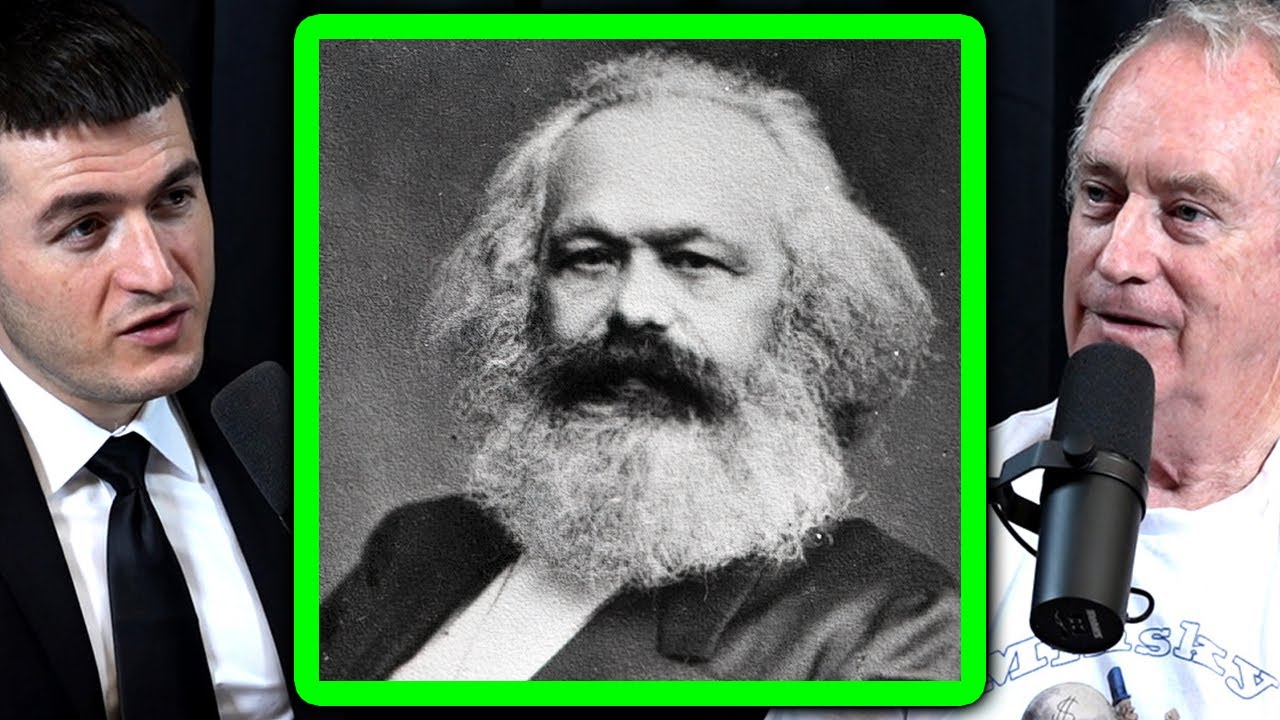
the source of value." You then had the classical school of thought coming along. Steve Keen: Now Marx then took over and said labor is the only source of value. Therefore, labor should get the entire rate of profit. The neoclassicals come along and say, "No, both labor and capital contribute to output. Labor gets its marginal product and capital gets its marginal product and that's all just." We've wasted 250 years arguing about the wrong stuff. The physiocrats rights were right. We only have an advanced economy because we exploit free energy and all we're paying is the cost
of extraction and therefore those enormous differentials you mentioned earlier come about. Nate Hagens: They were right that our wealth comes from the sun or the soil. Had we grown very slowly, decade by decade, instead of this moonshot that ensued, maybe we would've recognized fossil carbon and hydrocarbons as an extension of ancient sunlight that were buried under the soil. Please tell me what happened. I think we grew so fast and so high that there was this tendency, or direction to attribute some of this largesse to human creativity and technology, because they didn't understand The math of
these fossil armies that came out of the ground to support our economies. How did economic models evolve into the biophysically delusional ones we have today? Steve Keen: Largely, because it became part of the ideology of the contest between workers and capitalists over the distribution of income. When Marx turned the classical school, the labor theory of value against capitalism, then in the 1870s, that was when neoclassical economics, which came out, which said, "No, it's the marginal productivity that determines the income, both factors of production, labor, and capital get what they deserve." The whole thing was seen
well, productivity is coming out of three elements; labor, capital, and technology. When they tried to then quantify that, and this is probably in the 1950s and sixties with Robert Solow, they have what they called the Solow residual, that when they look how Change in GDP comes about, it had very little relationship with change in labor or change in capital, but what came is change in technology. This A term which was undifferentiated became the magic source that enabled growth to occur over time. When you asked economists about it they say that's human ingenuity. Yes, there is
ingenuity there, but if it wasn't fossil fuels to harness, we wouldn't be producing this volume of output. Nate Hagens: The standard explanation of the Solow residual is they don't really know what created our massive wealth, but it looks like it's in that technology part of the equation, yet to borrow your phrase, technology without energy is a sculpture. Steve Keen: Yeah. Exactly. I must admit, I struggled with this for a long time, myself, because I was actually working with Bob Ayres, he's one of Kümmel's co-authors. I thought Bob had done the most advanced work on this
area, but if you look at Kümmel's paper, they still, at one point, reduce output to an index system. Rather have a capital 'Y' which is the way that the economists proceed, he has lowercase 'y' and it's k*l*e, at one point. Lowercase, k, l and e, where they're index numbers. Even in their work, they still had energy as an independent factor of production. Literally in Bob Ayres' house, which is full of sculptures, as it happens, that insight occurred to me. Then 10 minutes later, I had, it was, Y=K(C*L)C where the E in that is the energy
input to Both labor and capital. Then what comes out of that is what the economist call the technology component is actually the exergy, the energy useful work done by the representative machine of a particular time. Steve Keen: If you go back to James Watson's steam engine, then the energy was coal. It was about nine tons a day was consumed by the average machine, about 30% efficiency. You've fast forward to today, it's 10 tons of kerosene per second, passing through a Falcon nine and the efficiency's a bit higher, maybe about 0.4, 0.45, but fundamentally that technology
term can be reseen as the useful energy derived from a machine. That's where our wealth has come from. Nate Hagens: I understand that. I agree with that. I wonder if everyone in the world understood what you and I do, that technology is a vector for more energy use, and we do improve and innovate, but it's all predicated on a growing amount of energy and a cheap amount of energy. If we have processes like aluminum smelting or air travel, that require lots of units of adding fossil energy to replace things that humans used to do, those
processes break down and become unprofitable if energy prices double or triple. Look at what's happening in Germany right now with lots of firms going out of business, because they can't afford this level of energy cost, because their whole system was predicated on low energy prices continuing. But what if everyone in the world understood what you just said, that it's actually energy that is close to, I could argue, as low as 0.6, as high as 0.1 in the economic formulas. What if everyone understood that? What would happen? Steve Keen: I think a lot would happen because
further ago we had that realization the more we'd realize that there are limits to how much energy we can consume, because when you consume energy, you generate waste. The second law of thermodynamics, fundamentally. That amount of energy consumption means more than that amount of waste being dumped in the biosphere. One of the many manifestations that is carbon dioxide, of course, but all the other wastes from everything we can produce and consume turns up in the biosphere. The question is, how much capacity does the biosphere have to cope with that? We would be much more reasonable
conversations about just how large human civilization can Get. The answer would be, "Oh my God. We're massively overshot what's sustainable." Nate Hagens: That's where I was going. I'm going to come back to climate, because that's a separate and very important aspect of this. Where I was going is if you and I, and all the listeners and young people and factory workers and small business owners and everyone understood what you're describing, that it's energy and non-renewable materials at the core, the leaders of the world would still be flanked by PhDs in economics and MBAs. The power
structure wouldn't necessarily adopt this view. The implications are too threatening for the status quo. Steve Keen: They are. This is where the role economists play. They're not doing it deliberately to support the status quo, but the status quo is very happy to have this religion being the underpinning of how people think about capitalism. Nate Hagens: Yeah. Okay. Climate. We've talked about how energy is misdiagnosed in the standard, core assumption in neoclassical economics. How does neoclassical economics miss the peril and reality of adding CO2 to the biosphere? Steve Keen: I must admit that the work that
I've read on climate change by neoclassical economists is the worst work I've read in 50 years of Reading economics. Literally the worst. Nate Hagens: And yet they win Nobel prizes on it. Steve Keen: Yeah. It's mainly because they're defending the religion, not because they're doing anything particularly sensible. Nate Hagens: Can you give me an example? Steve Keen: Yeah. First of all, William Nordhaus played a huge role in dismissing the limits to growth and stopping that particular approach, becoming something that might become a part of the toolbox of economists one day. But in 1991, he started
providing his own variations on how he modeled the economic Impact of climate change. In that he said it's very hard to find any impact of climate change on the vast majority of the economy over the next 50 to 75 years, manufacturing services, et cetera, et cetera. Very hard to find any potential impact of climate change on those sectors. He broke the American economy into three divisions, severely exposed to climate change, peripherally exposed to climate change, not exposed to climate change. He included 87% of industry in the not exposed to climate change, all of manufacturing, all
of wholesale and retail services, all of the finance sector, except part of real estate on the coastal fringe, of course. Even mining he said would be unaffected by climate change. Steve Keen: Now, the only things that government, finance, services, manufacturing have in common is a roof. Fundamentally, he's saying a roof will protect you from climate change. Now that is a child's level understanding of what climate change actually amounts to. Children should be spanked for having ideas like that. But in economics that was accepted as a simplifying assumption and that article was published in The Economic
Journal. Nate Hagens: It was cheered and respected. Steve Keen: When he would add up all the various sectors that would be affected was basically agriculture, but he said, well, some parts the temperature rise will improve productivity in some parts, it'll diminish it in others, forestry and so on. His empirical conclusion that three degrees of global warming would reduce global GDP by 0.25% compared to what it would be in the complete absence of climate change. Then he threw in a few fudge factors, which he said were just a guess. He said at most 2% fall in
GDP from a three degree increase in temperature, compared to what it would've been in the complete absence of climate change. That became the ballpark that most of them make their estimates at. They are completely ignoring the role of energy, trivializing the dangers, and saying only if you're exposed to the weather are exposed to climate change. Nate Hagens: Well, that's kind of like saying that the people working in the agricultural sector of the United States are only 3% of our economy so if we had no food, it would only drop GDP by 3%. Steve Keen: Yeah.
Even Larry Summers made a joke out of that at one point. In one of the few times I've agreed with Larry Summers, he said that there'd be ... He thought About the financial crisis of being a bit like a power shock and energy fall. He said if you had a complete collapse in the energy systems of the United States, there'd be people in Chicago publishing papers saying, "Well, that's only 5% of the economy. So it can't reduce it GDP more than 5%." He said, "And there'd be people publishing those papers, but they'd be stupid." Well,
he's right. They would be stupid, but that's nonetheless the sort of thing they do. This recent paper by Rudy Bachmann and friends of course said that 10% fallen energy for Germany, at most 2% of GDP, any people saying anything more they just fear mongering and their research doesn't meet academic standards. Well, this is neoclassical academic standards. Nate Hagens: Well, by the time that we actually do drop 10% from peak to trough in global energy use, it might be too late to mitigate some of the impacts of that. It's like, let's go all in with Jack,
Six, Off Suit until our bluff is called. I mean, I don't know how else to characterize it. What would a model that uses a biophysical underpinning look like on the energy and climate aspects, from your perspective? Steve Keen: Well, the first thing is that you have to have energy and matter as and input to the production system. If you don't have energy and matter going in, you don't have goods coming out the other end. You therefore have both physical constraints, the energy has to be available, the energy return and energy investment has to be enough
for you to actually get a net energy boost Out of your mining of energy. You necessarily generate waste out of the production. Waste gets put back into the biosphere and then will undermine the productivity of the biosphere. That's the basic starting point. I've done the mathematics for that, with working with Matheus Grasselli and Tim Garrett. We've done a set of models of a pure energy economy and then energy plus matter economy to show those interrelationships. That's actually your very starting point. There's no output without biophysical input. Energy is absolutely crucial, is the input without which
nothing else happens. That would be the starting point. And then from that framework, you would never have let level of energy usage reach the scale that it is today. Nate Hagens: Right. So there's two ways to look at this. One is what should we have done 50 or a hundred years ago? What would've been the models that made sense, but now we're in this overshoot situation and these models are going to be very threatening to people that want to be elected and not say these things. That's a little bit of a separate proposal. I almost
think there has to be a lot of funding and research put into this that's like a break glass in case of emergency. We are going to hit a crisis this decade. Here is a biophysical framework that explains our reality with some pathways forward on what to do. What do you think? Steve Keen: Well, I actually think that it's late for that, frankly. I think there's two things we need to do. One is to realize that the limits to growth was actually correct. If you've seen the work by Graham Turner in Australia, two papers that he's
put together on how well the model fits time. There's Gaya Herrington, who's done work working with one of the major consulting firms. They've both shown that the business as usual or BAE2, which is where you had twice as many resources, or the other one with the technology, those three of the seven runs that they did For the limits to growth study, we are somewhere in the ballpark of all of those, which means a breakdown driven by either excessive pollution, which is the carbon dioxide sort of things or running out of raw materials, which is the
declining of energy return on energy investment, which we're also seeing. That's realistic. Steve Keen: What we're getting out of the climate side is just saying a lot of the potential tipping points that they saw coming forward, are coming forward much more rapidly than they thought. We're losing the Arctic. It's fairly accepted we're not going to have a white Arctic in summer by 2030 or 2040, sometime in that range. All the scientists are saying, "Do not exceed two degrees. Whatever you do for God's sake, don't let the temperature go past two, because at that point, the
tipping points that we know will cause catastrophic change. The climate will be triggered and we'll have forces far beyond what we can deal with." We should be saying to economists, "Okay. Tell us how to finance the sort of very, very immediate attenuation, mitigation change in energy source proposals we need to prevent exceeding 2°C and then tell us what the resource implications are. If we do want to go from a internal combustion engine world to a electric vehicle world, do we have the resources for it?" Steve Keen: No mainstream economist can answer either of those questions
because mainstream economics has ignored the how money is created and live with a toy model of money creation. So they're useless on the issue of government finance and because they've got this non-bio physical model that dominates how they think today, at the heart of all these dynamics, sarcastic general remodels is normally a Cobb-Douglas production function, not something that includes input-output dynamics and physical inputs and so on. They're useless there too. We've really got to kick them out and ask the heterodox economists and some of the engineers, those questions. That's more important than a new economic
model. Nate Hagens: I happen to agree. I've asked you this a couple times. I'll rephrase because just genuinely, this question bothers me all the time. Why do we listen? Why does the world listen so much to neoclassical economists? Why aren't there people just saying, "You know what? This is bullshit. Let's get some real answers here." Why isn't that happening? Steve Keen: I think it's got a whole lot of reasons behind it. One is that genuine sciences are aware of the limitations of their own knowledge when applied to another field. If you have engineers, they're not
about to jump in and tell a chemist how to concoct chemicals in the laboratory or biologists and so on. So there's a level of professional respect for another theory, which means that genuine Scientists don't go and look at economic theory, because they think, "Well, there's things economists know that I don't know. They'll make choices that I can't understand. I'd be an amateur so I keep out of that." Then what it sells to the world is a beautiful vision of capitalism. Steve Keen: Now, it's a completely inappropriate vision of capitalism because if you, as a proverbial
alien coming in and taking a look at our society, if you had an alien flying past the planet and taking a good look at capitalism, the last word they'd use to describe it is equilibrium. It's far from equilibrium. It's changing all the time compared to any other social system. What we've seen is a radical change in the means of production and a radical change in The nature of social relations over time, as well. So far from being an equilibrium dominated society, we're a change dominated society. It's the wrong picture of how our society functions, but
what it implies is a perfect world. Steve Keen: If only we can get rid of trade unions, monopolies, and government, the free market, get rid of all those non-market interventions the market system will reach equilibrium, where we produce the right amount of everything compared to what people's tastes are, where people's maximize their utility subject to their income and where their income is gained by their worthwhile contributions to society, as measured by the marginal product of their social class. It's a vision of harmony. Humans seem incredibly biased towards imagining a perfect world. Religions talk about a
nirvana or a heaven, et cetera, et cetera, neoclassical economists talk about equilibrium now. It's heaven on earth. That is a incredibly seductive vision for our crazy species. Nate Hagens: They use math to defend it. Steve Keen: Oh yeah. What looks like math. This really annoyed me cause so many radical economists said, "Oh, it's all the mathematics that's the problem." When you take a good look, they jump over absurd errors in their mathematics. I describe what they do as not mathematics, but mythematics. Nate Hagens: Are you finding traction? Your email is debunking. You are blogging and
doing podcasts. I wrote my PhD on net energy and a biophysical measuring of our reality, so I understand and deeply appreciate your work, but are you finding traction in the general public about some of these messages? Steve Keen: I'm finding it amongst the young students. I spoke in Poland two weeks ago to movement organized by a group which is called Rethinking Economics, the same group invited me up in Denmark. So I spoke in Denmark last week. I'll be giving a summer school in Poland later on this year again. There are enough young students who are
looking and saying, "There's something wrong with this," and they go looking for an alternative. One of the great advantages of our time is of course the web. When you search criticisms of neoclassical economics, bang, you'll get a couple of million hits on Google. Any student who's sitting through a lecture theater thinking, "This just doesn't make sense. This is strange. There's something being left out here." They go searching. They'll find your work. They'll find my work. As a result of that, they're aware that they're not crazy. That's a great advantage of today. Steve Keen: Also the
financial crisis led to people like George Soros funding, the Institute For New Economic Thinking and a whole range of progressive charities also providing finance to these groups. These students can maintain a support structure over time. I'm getting traction with them, but you can't get through to the journalists, you can't get through to the politicians. You certainly can't get through to the neoclassical economists. The finance sector rolls on as always. Nate Hagens: Perhaps someone even listening to this conversation. But what if there was funding to really do it right and do a multifactor, incredible researched, $10
million project to actually reformulate the Cobb-Douglas function using the premises that you said before that energy's at the core of it and it was published in An economics journal, it was co-authored with some orthodox economists who are open-minded, maybe some young 32 year old tenured economists. Could that happen? Would that be helpful? Steve Keen: It wouldn't happen and it wouldn't be helpful in terms of changing their minds. Because once you have a paradigm in your head, it's incredibly hard for somebody to break away from it. I see this in Marxists as well. Okay? Marxist, believe
in the labor theory of value. I did a philosophical critique of that saying it actually contradicts Marx's own logic. That was 30, 40 years ago now, and Marxists continue pumping out the same ideology. It's simple to show that the labor theory of value contradicts Marx's philosophy, but they'd rather contradict his philosophy or ignore it and go in with that belief system than change it. Same for neoclassicals, so you won't change their minds. I've given up on that. What you have to do is say, "Yes, it is possible to build an alternative way of modeling the
economy." That's why I built the software Minsky, which I'm wearing a t-shirt for. Nate Hagens: Oh, I thought that your t-shirt referenced Hyman Minsky. Steve Keen: It's both, but it's actually a Minsky software. Pardon. I'm going to stand up here a bit and I can just show further down the system. There's my advertisement for Minsky. Nate Hagens: Okay. Steve Keen: The idea is, what we should really be using in economics to model the economy is not equilibrium concepts, it's system dynamics. We need to have systems dynamics that can handle financial flows, because again, one thing
that the mainstream have convinced itself on is that you don't need to have money in your models to model capitalism. Nate Hagens: Why? Steve Keen: Because they say this veil over barter, and I'll send you a tweet from a very nice guy, David Endolfatto, I think his name is. He's a research economist at the Fed Reserve and a very nice bloke. I've met him and I like him as a human being. But when somebody said how it's important understand the monetary system, he said being confused by the veil of money. What they're concerned, the money
is just a veil over barter. If you get forget about the money system, what you see is people trading goods for goods. That's the way you analyze capitalism and finance and money is a confusion that doesn't have any real impact. They teach students this in first year with what they call the money illusion, showed that money doesn't change the ... Absolute prices don't matter only relative prices. They leave out the entire financial system in their economics. Nate Hagens: Right. So it's the endogenous theory of money. Money doesn't really matter. Two comments there. Steve Keen: No,
that's the exogenous theory of money that it doesn't matter. Nate Hagens: Oh, exogenous. Yes. Steve Keen: Yeah. Yeah. Yeah. Nate Hagens: Yeah. Two comments there. One, I've met, with over the years, over the past 15 years, a federal board governor, the head of the Chicago Fed, I've met and interacted with lots of Federal Reserve people. The people I've met were wonderful people. Steve Keen: They're all good people. This is one of the dangers. They are good people. Nate Hagens: Yeah. What's your economic growth forecast? And they have a 2% going forward in the future with
0.25% bands. I said, "Well, what if it's zero? Or what if it's below zero?" There was this blank stare. He's like, "That would be bad." But the implication of his reaction was, well, that would never happen, of course. We wouldn't have it below zero. Nate Hagens: Let's quickly, briefly move to the money side of things, because as the Bank of England has now very well articulated, which I'm grateful for because 10 or 15 years ago, people didn't believe me when I was talking about that money is not lent out from existing capital. Money is lent
into existence or at least 90, 95% of it from commercial banks, but what's not lent into existence is the interest. There's an imperative in our system to grow, because we have to pay back, not only the principle, but the interest on money. You will have studied Hyman Minsky, who is an expert on credit and debt cycles. What are your one or two key insights from studying Minsky? How worried are you about our widening divergence between our monetary claims on reality and the energy and materials that support it? Steve Keen: The key insight that I've got
out of Minsky is that credit is part of aggregate demand and aggregate income. Nate Hagens: Can you explain what that means? Steve Keen: Credit is change in debt, change in private debt. Okay? If you look at debt, that's how many dollars you owe. Your credit is how many new dollars you borrow each year. Okay? Mainstream economics ignores that on the basis of what they call the loanable funds model, which says that banks are simply intermediaries between savers and borrowers. If Nate is a saver and Steve is a borrower, then Nate lends to Steve, Nate's spending
power goes down, Steve's spending power goes up, one cancels out the other, unless I'm a much more propagate spender than you are. It all comes down to differing margin propensity to consume. That is the model that they stick with, despite the Bank of England saying back in 2014, "That's not how banks work. Banks are not intermediaries. They're money originators. They create money by creating debt at the same time." Steve Keen: Nate's out of the picture. Steve goes to the bank because he wants to buy a house in Bangkok, borrows a million dollars from a bank.
The bank says here's a million dollars to hand over to the owner. You also owe us a million dollars on which we're going to charge you interest. Okay? But that million dollars is spent by the borrower and becomes part of aggregate demand and aggregate income. Now, I'm using an example of buying a property, but if I shouted you coffee when you were in Amsterdam and I swipe my credit card, then what happens is €7, let's say €10 money is created, which is spent. It's expenditure by me. It's income by the coffee shop owner. The level
of debt goes up by €10, which is the increase in my credit card debt. Steve Keen: The change in debt is literally a one for one contribution to demand right now. Of course, credit can be positive or negative. If you have rising debt, credit is positive and adding to demand. But if you have falling debt, credit is negative and subtracting from demand. That's what caused the financial crisis. That's number one. Nate Hagens: It will be what causes the next financial crisis. Steve Keen: Yeah. Every time there's negative credit, we have a downturn. America, actually, when
you look at the rate of change of private debt between 1945, pretty much 46 and 2007, there was never a period of negative credit. But when the financial crisis hit, it went from plus 15 to minus five, over a two year period. That was what caused the severity of the downturn. Nate Hagens: In the animated movie I sent you, I say that credit allows us to consume things we, otherwise, wouldn't have been able to afford to consume and produce things we couldn't have afforded to produce. We will continue to grow our economy as long as
we issue credit in sufficient amounts that we grow our energy. But at some point, this decade, in my opinion, either the financial markets themselves will say, "No más." We won't be able to grow credit. Queue what's happening in Japan right now with JGBs. At some point, the financial markets are going to pull a George Soros versus the Bank of England and say, "Interest rates are going to go up, we can't continue to borrow. This is untenable." But so far they have taken the neoclassical economist route of all's good, let's continue. It's a belief system. It
could last another decade. I don't know. Nate Hagens: But the other side of it is the oil depletion side. If we have Russia, Saudi Arabia, the United States, if that whole thing, A geopolitically Changes or B the underlying decline rate of oil in the world is 7%. We are offsetting that by infill drilling and drilling tertiary wells and drilling new wells, but eventually depletion will win. We're still going to have plenty of oil. From a climate perspective, we could argue we'll have too much oil, but we won't have a hundred million barrels a day at
$50, $60 the way that our system has been built on. So I see this divergence growing. I'm obviously very worried about it. All my work is trying to meet the future halfway of when this recalibration happens. That was a lot. What do you have to say to that? Steve Keen: A similar attitude. We are running out of easily available energy. The cost of getting energy out of the ground is rising in energy terms. The energy return in energy invested is becoming a serious issue. At the same time, and this is work that's been done by
another Australian engineer called Simon Michaux. What we've had is a declining energy return and increasing need for energy to process minerals, which are lower grade than they were back in the days of cheap oil. That's one of, and cheap coal, that's one of Simon's main points. Putting that all together, we only can produce output if we've got free energy to exploit and easy minerals to mine, and because we're running out of both, we create a crunch point where suddenly that just is not available anymore and then it will not be profitable. Steve Keen: The cost
of production are going to rise radically. That'll turn up as inflation in the real world. That's what's happening right now to some large degree, but it's not inflation driven by wage demands or by profit markups. It's driven by the simply it's costing more and more to actually turn those raw materials and energy into finish goods. That's going to squeeze all the margins, which enable us to have the surplus we live on, workers and capitalists, is that gap between the energy input we need to put in and what we get back out of it, but that
squeezes so do living standards. That could happen. I agree, in the next 10 years. I'm also thinking it's going to be a brutal experience and we have to find some way of preparing for it because that will mean a decline in living standards, quite radically. Nate Hagens: Of what magnitude roughly would you speculate? Steve Keen: I would say if we are going to get to a point of being within planetary boundaries, 70 or 80% fall in consumption levels. Nate Hagens: What if it's just based on energy and society still doesn't care about planetary boundaries? What
would just be the physical side of it, if we still didn't include externalities? Steve Keen: The trouble is, in terms of energy, we are going to run out of our oil as you're aware, but we're not going to out of coal. If we don't take it seriously, then we can have people restarting coal fired power stations everywhere. Nate Hagens: Which is already happening, by the way, in France and Germany right now. Steve Keen: And Australia. Even though we've gone from a reactionary government to a progressive one, what they have in common is they're still supporting
opening more coal mines. About another 80 coal mines, I think, are being opened up, licenses are being opened up for them in Australia. We could have an acceleration in our carbon dioxide factor and then it's basically which wild card is going to hit us first from the climate. Nate Hagens: I mean, this is actually my default scenario is that the world economy drops 30 to 50% in the next 10 to 15 years because of the financial overshoot. We lose some complexity, but if things hold together and our cultural consciousness and our aspirations of what defines
the human entity don't change, we're going to have a Glide path to coal and we're going to have environmental ... We're going to spend energy on getting the dirty coal, and we're going to spend energy on trying to clean up the mess from the coal. A much larger percentage of society 20, 30 years from now will be the energy sector and the environmental mitigation sector, which will leave less energy for hospitals and movies and theater and leisure and education and other things, because we're going to be kind of a miniature Mordor economy. I hope that
doesn't happen, but I could see that happening. Steve Keen: So can I. This is one of the great fears I have, because if you impose the cost of that on the poor, then you're going to have the gilets jaunes times 10 happening globally because poor people are already finding they can't afford to heat their houses. They've got a choice. Do I heat the house or do I send my kid to school? When you start facing those sorts of choices and then make it even worse than that, you're going to get a revolt of the poor.
Poor are the bottom 60 or 70% of population quite feasibly. So the only way this is sustainable is if the cost of adjustment are put on the rich, and that is not exactly how capitalism has functioned. Nate Hagens: What would a more sustainable system look like? How would we get there either before, or more likely, during what I refer to as a Great Simplification, which is this kind of cascade downward. Steve Keen: I think we have to find ourselves rationing Resources. Effectively, we are in a war. We don't realize that. We're in a war, we
are losing, because we're fighting an unbeatable foe, which is the climate of the planet itself. The only way to adjust is that we've got to radically pull ourselves back and stop put pressuring on the climate. Therefore, the only way that can be done without causing complete social breakdown is A, most of the money that enables that is government created, not private debt, because there's no way to profit out of this overall. So the government money creation has to take over and we have to see it as effectively we're rationing resources so that the poor get
enough to survive. The rich, get enough to be slightly more affluent than the poor, but the wealth levels and consumption levels they're used to just have to be a thing of the past. Nate Hagens: So would that happen via just government decree or could that happen ... One of the projects that I'm involved in and I can send you some information on this is called untax.org, where we try to, over time, put a tax, not only on carbon, but on all non-renewable inputs and remove a tax on humans. The implications is this phone might cost
$2,500 because it has a lot of non-renewable inputs. But if I make $50,000 a year, I would keep all $50,000 a year. 95% of current taxes are on humans or corporations and those would go away. The tax would go on anything that's non-renewable on human time scales. What do you think about that idea? Steve Keen: Something of that nature is necessary. I mean, I'm working on a proposal for a parallel currency system. The idea would be that you would have the normal monetary economy you have right now, but everything would have two prices; a money
price, and a carbon price. The carbon price, reflecting the actual carbon content of the good you are purchasing. We'd all get a tradeable carbon credit on a daily basis from the treasury or central bank. We'd have to spend both amounts. Now, of course, because of the skewed nature of the distribution of income, if you gave it out at the average for an economy right now, I wouldn't even bother trying to at the global level, but that's how you ... Global agreements are the way you manage to prevent things being done, they don't actually occur. But
do it at the national level so each economy gets ... Steve Keen: Each person, in say America, gets the average carbon credit for America. 95% of Americans would not reach that level of consumption, but the top 5% would. They would need to buy carbon credits off the poor to continue to buy what they're buying. That would be a way of putting enormous pressure to reduce carbon content and a redistribution for the poor, in that sense, through a market mechanism. Whatever we do, it has to provide more of a level of saying ... We have to
provide a minimum level of income, a standard living for the vast majority of people, and then the rich have to drop radically. Your idea, taxing everything else, not taxing labor that ends up meaning that the worker gets to keep a hundred percent of what their wage is. That gives them more buying power, anybody buying more extravagant goods, they face the larger cost. Overall, we have to find something where the burden is put on the rich, not the poor. Nate Hagens: Is that possible? If it happens in the UK or the US, doesn't it have to
be accepted by a large number of nations to actually be effective? What are your thoughts on that? Steve Keen: Our political systems work at the national level. As an American, you take part in the American political scene. When I was in Australia, I take part of the Australian political scene. We have institutions we can actually vote on and affect. National level is where things actually get done. I would prefer to say, let's work in within when the realms of where we can actually have an impact, because one of the reasons that I know that a
lot of the fossil fuel companies are happy to see things like COP26 and COP27 and COP28, because they're all cop outs. Nothing ever gets done, no agreement ever is made. At the national level, you've got a chance of bringing something in as a law or a change in behavior. I just don't think it's feasible to work at the international level, until we realize how serious this threat is. Nate Hagens: Well, we both are friends with Tim Garrett. The relationship between GDP and CO2 is so much that I say that trying to argue that we need
to reduce our emissions is like arguing with a forest fire, because the momentum of Economic growth is pulling all energy and materials into the consumption and waste CO2 into the biosphere on the other end. You mentioned students in Poland and in Amsterdam. Are you still currently teaching? Are you an active professor or ... Steve Keen: No. I'm retired from straight academic classes, but I do my work on Patreon. Whenever students ask me to give a course, I volunteer my time as long as they cover my expenses. I'm doing a lot of teaching on a sort
of one off basis. I'll be doing a workshop in Poland for about five days on how to model money, how to model energy, for young students that way. Nate Hagens: I've taught the last eight years at the University of Minnesota, a class called Reality 101. Teaching about energy, teaching about the environment, teaching about the human brain is the easy part until you get to the end of the semester where the kids want to know, what is the answer? What do we do? What recommendations do you give, specifically for young people who become aware of the
flaws and economic theory, the debt energy and environmental situation of our current world? Steve Keen: Pretty much I tell them to learn system dynamics, not economics. Don't waste your time doing an economics degree. Go into system dynamics instead. Apply that to economics if you want to work in economics itself, but do not learn economic theory directly. It's a waste of your time. It reorganizes your brain cells in a very unhealthy way. In terms of what to do, basically it's Greta Thunberg levels of activism. I have to accept that humanity never responds to a threat until
after the threats manifest itself. There are exceptions like the effort over the ozone layer, for example, which was something we did because it was moderately peripheral. The Y2K bug. We managed to get enough programs organized to rewrite all that cobalt code and we didn't have databases crashing on the year 2000. So we can do it when it's as small thing. Steve Keen: But when it's as large as global warming and the sustainability of a lifestyle built on massive over consumption of energy, people don't want to know. You only get a change when, "Holy shit. Where
did that city go?" Becomes people's realization. For example, in Australia, in the last federal election, the state of Queensland is regarded like a redneck state in this country. It's our Alabama. Okay. Our Alabama voted for three green members of parliament in the city of Brisbane. They turfed out the conservative party. We got greens, radical greens. Why? Because Brisbane was hit by four or five major environmental crises in one year. You had the river flooding and destroying large parts of the property. You had serious bush fires and people were thinking, "Jesus, something might really be happening
here. We've maybe got to take this seriously," and so people switched from voting conservative, to voting green. Steve Keen: Only when you see real catastrophes, like for example, California's drought and the fires that are coming out of that, are you likely to see a shift in mentality. Then we're going to be reacting after the event. We're not going to be preparing before it. Nate Hagens: Yeah. So we need a smoking gun, but really when enough people to change the voting on what our aspirations are and what we're willing to sacrifice, on the climate front. Once
we see enough of that, it's going to be too late to change. There's that. But what about the other side, which is that we're burning through our natural resource and energy inheritance 10 million times faster than it was sequestered, and maybe we should conserve it. What about that side of it? Are we also going to wait until it's too late to do that? Steve Keen: I think we're in overshoot. We've already gone past that point. This is the problem, that our sustainable level of consumption, in terms of fitting within the biosphere's capacity to handle the
waste we generate out of having an industrial civilization, probably one fifth of what we're consuming now. That's back to like 1970s level of consumption. Now, 1970s in the West, wasn't a period of poverty. We didn't have the same toys we have now, but nobody was starving on a mass scale in the Western world. That level of consumption was potentially sustainable. Maybe say one third of what we're consuming right now. People aren't going to willing to do that. We won't do it until the climate makes it inevitable to happen. Nate Hagens: For those people listening to
this that understand what you're saying and agree that we are at some point, to use your number, headed down to a third of our current material consumption, I would argue maybe two thirds and on route to one third in the future, do you have suggestions for people living in advanced economies on how they could prepare themselves or their communities for this trajectory? Steve Keen: They have to be as capable as possible of generating their own energy locally. The food sources, you have to be as close as you can to food sources. This is one reason
that I've moved both to Thailand and Amsterdam, as it happens, by the way. There's family reasons as well. But both those countries are very, very self-sufficient. Nate Hagens: As long as the ocean doesn't rise a meter or so. Steve Keen: That's the danger out here, because we've got to lose the AMOC then things could really go amuck in the ocean off the Netherlands. Yes, that's true. We do face enormous challenges. It is hard for individuals to do anything. It really is something where our society has to make those decisions and make it possible, for example,
to catch a train or a light rail, rather than driving a car to get from point A to point B. That's much easier in Europe than it is in America, as you'd should be aware. It's very difficult to say what individuals can do, but fundamentally it's be close to food sources, be able to produce some of the energy you need in your own environment. Solar's not going to solve our problems, but having some solar is going to be necessary. Various ways to be able to be closer. Don't be so far up the complexity scale that
you'll be crushed by part of the system falling out below you. Nate Hagens: It really does get back to governance. Doesn't it? We need new ways of governing. Yet, there are large barriers to changing the current momentum of the current political structure. Steve Keen: Yeah. I mean, we have people making decisions who are fools. We have scientists trying to tell fools how to manage an economy. Now, the fools I'm thinking of are people I personally know. The labor party and liberal party politicians in Australia, and quite a few that I've met in the UK as
well. You have people who are not experts. Our political system chooses people on the basis of personality, more than anything else, which means we assess for narcissist and sociopaths. Nate Hagens: Could we eventually select for physiocrats again, instead of a narcissist and sociopaths? Steve Keen: I think we could, but we have to realize we need be effectively a community of elders, society of experts, making these decisions Guided by system software that enables their views to be brought together. That's the vision that I have that I have, which would be functional. You don't want people getting
there, because they're narcissists and they can say, "I can lead you to the promised land." We need people who are aware of the complexity of the world in which we live. Nate Hagens: I like that idea. I don't know how to get there, but I do like that council of elders, conceptually. A few more questions. Professor Keen, what do you care most about in the world? Steve Keen: Human knowledge. I think the extent to which we have learnt in the last quarter of a millennium is absolutely stunning. I expect to see an enormous number of
deaths in the next 80 years, both of humans and other life forms. I see that basically as pretty much inevitable. What I want to have is some capacity to sustain what we've learned through the fossil fuel period. If there's some way that knowledge can be hung onto, then there's a chance for us to build a sustainable, life respecting, civilization on the other side of the catastrophe that I expect us to go through. It would be the greatest tragedy of all, to have learned as much as we know about the universe and then destroy our own
society, which enables us to put that knowledge into practice. I care about maintaining that knowledge more than anything else. Nate Hagens: I love that answer. That's awesome. I agree with you. You're the first person that has said it that way, but in addition to helping propel things of value through the bottlenecks of the 21st century, like ecosystems, other species, cultural ethics, its knowledge. The knowledge that we've accumulated is a gift. I mean, it's taken us 300,000 years to get to this point. Once, we're figuring it out at the moment, we're figuring it out, we're destroying
it simultaneously. Steve Keen: Absolutely. That is such a tragedy. Nate Hagens: Yeah. What are you specifically most personally concerned about in the coming 10 years or so in the world? Steve Keen: Climate breakdown causing social breakdown, because if we have climate catastrophes, meaning food production collapses, for example, which is potentially ... The Ukraine wars accelerated that in Europe right now. The drought in the western United States, if that extends, of course, to all sides of the wheat belt, then we could have a collapse in food output and therefore, we get a choice of high prices
causing starvation, or we go into rationing. Now that could lead, and particularly in as a divisive a society as America, that could lead to just social conflict. The law of the gun comes out as to who gets to eat or attempts to. Of course that would destroy your production and distribution system as well. Steve Keen: I'm worried about the climate breakdown leading to a social breakdown, ending up in a mad max world. In that case, I actually think the most sustainable societies are ones with a more cohesive social system, but also more acceptance of authoritarian
control. Because if the Chinese tell the Chinese people, "You've got to ration food," and it applies to everybody and it seemed to apply to everybody, they'll accept it. You tell Americans to ration food, they reach for their revolver. Nate Hagens: Yeah. I'm worried about that too. We're polarized, we're addicted and we're entitled. We're smart and hardworking and have resources and we produce 85% of our own energy, but Those three things are a nasty cocktail. Let me just ask you though, specifically, so you're more worried about the climate impacts on food production in the coming decade
than you are about energy decline and financial impacts on food? Steve Keen: I think we're going to have some financial crises as well. I mean, because the bloody interest rate rises, which are going to cause credit to collapse and the government's going back into austerity after the spending they did during the COVID pandemic, which was necessary spending. Those two factors are going to cause a financial decline. I'm seeing we're going through that right now. But that is in some ways transient if governments decide to go back to large government spending And realize they can't put
interest rates up, as much as they've done, then you could sort of rewrite that ship to some extent, but the thing you can't rewrite is the climate. Steve Keen: I expect climate results to hit us faster than energy shortages will. I could be wrong. You know the declining energy return and oil better than I do. I could be wrong on that front, but I have a feeling climate dynamics, the worst of which are the ones that James Anderson, the professor of chemistry at Harvard University, who discovered the hole in the ozone layer, his anticipations there
are the scariest I've ever seen. If things like that start happening then advanced civilization in the Northern hemisphere will start to fall apart. Nate Hagens: How do you articulate these things so clearly And maintain a equanimity about the severity of the sentences, you've just uttered and been doing it for a long time. Steve Keen: I've had to fight with depression in the last five years, because when I realized just how badly neoclassical economists had underestimated the dangers of climate change, it was one of those, "You bastards, you're going to kill us all," realizations. Seriously depressing
thought to wake up and imagine that as many people, as I think, could die out of this are going to die, as many other life forms are going to die. That's a very, very bleak vision, but I've got a fundamentally positive human nature. My wife actually intervened in a funny way. She's Buddhist. She has no interest in the work that I do, but she walks over - sitting literally at This desk, I read a paper for Richard Tol in which you said that one of the ways they develop their numbers for estimating impact of global
climate change is to imagine that the relationship between temperature and GDP that applies across space will apply through time as well. Steve Keen: I thought, "You absolute morons. That's so effing stupid. No wonder you're underestimating the dangers." I had my hands like this in my head. My wife walked in to bring me in a drink or something else. She said, "Why are you like that?" I said, "I'm just reading this stuff on climate change." She said, "Oh. Why are you read that stuff? Nobody's interested in that. People don't want to know. You can't change anything.
If we die, we die." There's a certain realism to that. Basically you just go on regardless. There's no point stopping and just being paralyzed, you have to continue doing something. At least I'm going to go down fighting. That's my attitude. Nate Hagens: Well, good for you. Your wife is Thai, right? Steve Keen: Yeah. Nate Hagens: Yeah. I spent some time in Thailand. I'll never forget, we went scuba diving because you can get insta certified there, with three hours and then you go scuba diving. We showed up and the guy who was going to bring us
out was late. An hour later he showed up and he's like, "I'm sorry, I'm late. My brother died yesterday, last night unexpectedly in an accident." He was smiling and happy and took us scuba diving. I was like, "What?" It's just a bizarre way of looking at the world. Steve Keen: Life continues. The Buddhists have an idea of a cycle of life. That, in its own way, is highly preferable to the linear perspective we have in the West about progress all the time. Death is part of life. Nate Hagens: Yeah. I think we do have a
deep phobia about death, personal death and death of a culture and death of ideas. In contrast to that, what are you most hopeful about in the coming decade or so? Steve Keen: I have to admit I'm an Elon Musk fan boy. My great worry's that we are on the wrong side of the great filter. The idea that why are there no civilizations in the solar system before us? Have they all collapsed at some point under their own momentum? I think we face the potential for collapse. The one possibility of avoiding it is if we get
a self-sustaining civilization on another planet where that can only exist, if we maintain all that human knowledge and we apply it to the nth degree, because if you make one wrong step on Mars, you are dead and you cannot allow a breakdown to occur, you cannot allow the type of excesses that beneficence of the Earth's biosphere has allowed us to do. I'm just hoping we get enough time to build a self-sustaining civilization there and then whatever catastrophes occur on earth, there will still be an outpost that can bring our knowledge back after we go through,
what I expect to be, a dark ages. Nate Hagens: I agree with you on the great filter, but in the worst post nuclear, Holocaust, 5°C runaway situation on Earth, Earth will still be a paradise next to Mars. Steve Keen: Of course, it will be. But that's part of the reason. If it's absolutely impossible to survive there without the highest level of possible technology, then you cannot let your technology levels fall, you cannot let social conflicts get out of control. There are incredible limits that being in such a poverty stricken environment put on you, which we
have not had to experience here, because there's been the beneficence of this biosphere. We've just taken it for granted and we've trashed it. What I'm worried about, if we do have the breakdown on the planet and we try to maintain the knowledge here, then the knowledge will be destroyed in various ways. Firstly, by outright destruction by the climate. Secondly, probably by a Luddite movement, which will develop saying this is all due to technology and blame technology and human knowledge for the situation we're in and say we've got to go back to a stone age mentality.
That's a possible outcome of a post industrial society. Nate Hagens: Have you seen, I think it's on Netflix or might be Amazon, a show Called Raised By Wolves. Steve Keen: No I haven't. Nate Hagens: You might check it out. It's about a Luddite, anti-Luddite war on Earth and then the descendants are in outer space. It's very interesting. The first season was excellent. The second one less so. One last question, Professor Keen, if you were a benevolent dictator and there was no personal recourse to your decisions, what is the one thing you would do to improve
human and planetary futures? Steve Keen: I'd bring in ration immediately. I'd reduce consumption levels drastically so that we have a potential to reduce the damage we're doing to the planet. Part of that will be targeting a controlled reduction in human numbers and ultimately reserving at least half the planet for non-human life forms to enable life to continue evolving without our intervention, without our damage. Nate Hagens: Thank you so much, Steve. We should talk more. I agree with almost all of what we've discussed today. Do you have any closing thoughts for our listeners? Steve Keen: Unfortunately,
if you are swallowing, the sort of nonsense that neoclassical economists are pumping out about the sustainability of modern society as Stuart Kirk from HSBC was recently. If you saw his speech saying we don't need to worry about it. It's 80 years in the future. It's real. It's very, very immediate. You have to take this seriously. That means getting behind accepting movements like Extension Rebellion, accepting we've overshot and getting prepared for it because if you're not psychologically prepared, you're Certainly not going to be physically prepared. Nate Hagens: Thank you for your speaking truth to power and
all your work on this. Hopefully, more people will start to realize the flaws in the underpinning neoclassical models that are steering our society. Steve Keen: Thank you, Nate. Nate Hagens: Thanks Steve. If you enjoyed, or learned from this episode of The Great Simplification, please subscribe to us on your favorite podcast platform and visit thegreatsimplification.com for more information on future releases.